25 Best Companion Plants for Carrots (And Why They Actually Work)
I have grown carrots for years, and I still remember the first season a swarm of carrot rust flies wiped out half my crop. That loss taught me something no seed packet ever mentions: carrots rarely thrive alone. They need the right neighbors.
If you only remember one thing, remember this. Onions, leeks, garlic, and chives are the single most effective companions for carrots. Research from mixed-cropping trials found that alliums planted beside carrots cut carrot fly damage by as much as 65 percent compared to carrots grown alone.
Beyond alliums, peas, beans, lettuce, radishes, and aromatic herbs like rosemary and sage round out a strong, well-tested companion planting plan.
This guide walks through 25 companion plants for carrots. I will also explain the science behind each pairing, so you are not just following a list blindly.
Why Companion Planting Works for Carrots
Carrots are slow growers. They take 14 to 21 days just to germinate. That slow start leaves bare soil exposed for weeks, which invites weeds and pests before the carrot has any chance to compete.
Companion planting solves several problems at once.
- It confuses pests. The carrot rust fly finds its host through smell. Strong-scented neighbors mask that signal.
- It saves space. Fast crops like radishes mature and get harvested before carrots need the room.
- It improves soil. Carrots have a deep taproot, while shallow-rooted companions use a different soil layer entirely, so they do not compete for the same nutrients.
- It attracts helpful insects. Flowering herbs bring in pollinators and predatory insects that keep aphids and other pests in check.
According to West Virginia University Extension, plants with taproots such as carrots help break up soil compaction, while their neighbors with different root depths pull nutrients and water from other parts of the soil profile. That is a genuine, measurable benefit — not folklore.
There is also an economic angle worth mentioning. The carrot rust fly is considered one of the most damaging pests to home-grown and commercial carrot crops worldwide. Because the larvae live underground and the adults do not linger near the plant after laying eggs, chemical control is notoriously difficult, which is exactly why so much research has gone into non-chemical solutions like companion planting, crop rotation, and physical barriers.
That research matters to home gardeners too. A well-planned bed does not just look tidier. It genuinely reduces the guesswork of dealing with pests after the damage is already done, which is a frustrating position to be in once the roots have already been tunneled through.
The 25 Best Companion Plants for Carrots
Here is the full list, grouped by category so you can plan your garden bed with a clear purpose in mind.
Allium Family — The Gold Standard
Nothing on this list has more research behind it than alliums. Their sulfur compounds are the main reason carrot rust flies struggle to find their target, and that single mechanism explains most of the benefit below.
1. Onions
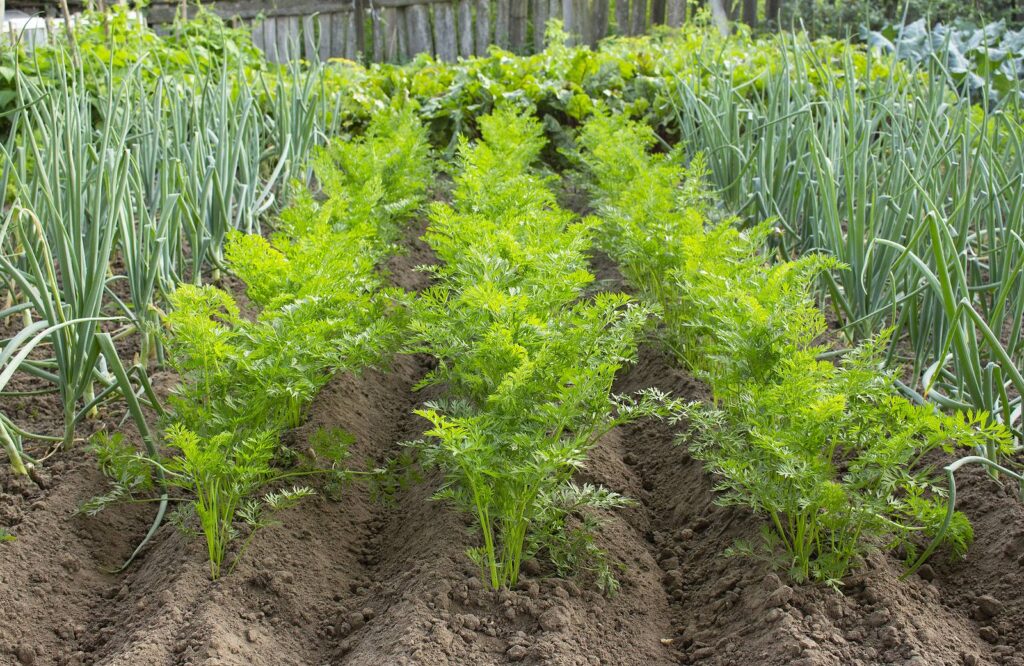
Onions are the classic carrot companion, and for good reason. Their strong sulfur scent masks the smell that carrot rust flies rely on to locate their host plants underground.
A study by Uvah and Coaker on mixed cropping found that interplanting onions with carrots reduced carrot fly attack significantly compared to growing the two crops in separate blocks.
I plant a row of onions between every two rows of carrots, and the difference in leaf damage by midsummer is easy to see.
Onions also mature at roughly the same pace as carrots, so neither crop rushes to overtake the other for light or root space.
2. Garlic
Garlic works through the same scent-masking principle as onions, releasing sulfur compounds that confuse pests searching by smell. It is one of the easiest companions to plant since a single clove goes a long way.
Beyond pest confusion, garlic has mild antifungal properties in the soil. Some gardeners report fewer fungal issues on nearby root crops after a season or two of interplanting garlic through the bed.
Plant garlic cloves in autumn if your climate allows it, so they are already established by the time carrot seedlings emerge in spring.
3. Leeks
Leeks share the allium family’s pungent aroma, which gives them the same pest-masking effect as onions and garlic. What sets leeks apart is their patience.
They grow slowly, much like carrots do, so neither plant rushes ahead and starves the other of nutrients or light. This matching pace makes leeks one of the least fussy companions on this entire list.
Leeks also tolerate cooler soil better than most alliums, which makes them a strong choice for early spring carrot beds in temperate climates.
4. Chives
Chives are compact, tidy, and remarkably easy to tuck directly into carrot rows without disturbing the roots. Their light onion scent adds a further layer of pest confusion around the bed.
I like planting a chive border around the entire carrot patch for exactly this reason. It looks neat, requires almost no maintenance, and the purple flowers draw in pollinators once the plant matures.
Chives are also perennial in most climates, so once established, they come back year after year with no replanting needed.
5. Shallots
Shallots offer the same protective benefits as onions but mature noticeably faster, which makes them a smart choice if you want an earlier harvest from the same bed.
Their smaller bulb size also means they take up less root space, so you can fit more of them along a carrot row without crowding either crop.
A useful rule of thumb, drawn from extension guidance, is to plant roughly one allium for every two or three carrot plants by density. You do not need a strict grid, since scattering alliums through the bed or alternating rows works just as well as a formal pattern.
Aromatic Herbs
Herbs earn their place on this list through scent alone. Most pests that trouble carrots hunt by smell, and a strong-smelling neighbor is often enough to send them elsewhere.
6. Rosemary
Rosemary’s strong, woody scent is well known to repel carrot flies and cabbage moths alike. The Old Farmer’s Almanac recommends planting sage and rosemary near carrots for exactly this purpose.
Because rosemary is a perennial shrub, it becomes a permanent fixture at the edge of a vegetable garden rather than something replanted each season. I keep mine along the sunniest border of my carrot bed, where it thrives with very little watering.
Its woody stems also make a nice physical windbreak for young carrot seedlings in exposed gardens.
7. Sage
Sage works in a similar way to rosemary, releasing essential oils that many flying pests find unpleasant. It pairs well visually with carrot foliage too, since the soft grey-green leaves contrast nicely with the feathery carrot tops.
Beyond pest deterrence, sage is drought-tolerant once established, which means it will not compete heavily with carrots for water during dry spells.
I trim mine back hard each spring, which keeps it from sprawling over the carrot rows as the season progresses.
8. Thyme
Thyme is low-growing, so it will never shade your carrots the way a taller herb might. Its aroma disrupts the scent trail that pests rely on to find their host plants.
It also doubles as a living mulch. The dense, spreading growth habit helps retain soil moisture and suppress small weeds around the base of your carrot rows.
Creeping varieties can be walked on occasionally without damage, which makes thyme a practical choice for path edges around a raised bed.
9. Lavender
Lavender attracts pollinators in large numbers while its strong fragrance deters several common garden pests at the same time. It genuinely earns its keep on both fronts.
It also brings welcome color and structure to what is otherwise a fairly plain-looking vegetable bed, which matters more than gardeners sometimes admit when you are looking at the same rows every day.
Give lavender well-drained soil, since it dislikes the consistently moist conditions that carrots often need.
10. Wormwood
Wormwood is intensely bitter and aromatic, and gardeners have used it for generations as a border plant to discourage a wide range of insects and even some small mammals from entering a bed.
A word of caution with wormwood, though. It can release compounds into the soil that affect the growth of nearby plants if it is planted too closely.
I keep mine along the outer edge of a bed rather than mixed directly among the carrot rows, and that small distance has worked well for me without any noticeable drawback.
Flowering Companions for Beneficial Insects
Flowers do not repel pests directly so much as they recruit an army of allies. A bed with a few blooms scattered through it tends to host more predatory insects than one planted with vegetables alone.
11. Marigolds
Marigolds are the most talked-about companion plant in gardening circles, and their reputation is a mixed bag. Research does support some of their benefits, but not all of the folklore holds up.
They reliably attract pollinators and certain predatory insects, and some marigold varieties release compounds that can suppress harmful soil nematodes over time. That nematode-suppressing effect, however, usually needs a full season of dense planting to show real results.
I still plant them every year, mainly because they are cheerful, low-maintenance, and genuinely do bring in more beneficial insects than they repel.
12. Nasturtiums
Nasturtiums act as a trap crop, meaning they lure aphids away from your carrots and onto themselves instead of leaving the pests to attack your vegetables directly.
They are also edible, with a peppery bite that works nicely in salads, which is a pleasant bonus once you have harvested them for garden duty first.
Let a few nasturtiums sacrifice themselves to aphids each season rather than pulling them at the first sign of trouble. That is the entire point of a trap crop.
13. Calendula
Calendula draws in hoverflies and ladybugs, both of which feed heavily on aphids throughout the growing season. It blooms for a long stretch, offering continuous support rather than a brief burst of activity.
The flowers themselves are also edible and have a long history of use in skin salves, so a calendula patch rarely goes to waste even outside the garden.
I scatter calendula seed directly along the carrot bed edges each spring, since it self-seeds readily and often returns the following year without any extra effort.
14. Sweet Alyssum
Sweet alyssum is a low, spreading flower that attracts hoverflies in large numbers. According to the Old Farmer’s Almanac, hoverfly larvae feed on aphids, which makes this modest little flower a genuinely useful pest-control ally near lettuce, brassicas, and carrots alike.
Its tight, ground-hugging growth also helps suppress weeds along carrot rows, filling gaps that would otherwise sit bare and exposed.
Sweet alyssum blooms almost continuously from early summer through the first frost, so its benefit does not fade partway through the season.
15. Chamomile
Chamomile is said to improve the flavor and vigor of nearby vegetables, and while that particular claim is more anecdotal than proven, it undeniably attracts hoverflies and parasitic wasps.
I find it also makes a lovely tea harvest on the side, which is more than most companion plants can offer once the growing season winds down.
Keep chamomile toward the edge of the bed, since its delicate roots prefer not to be disturbed by regular carrot bed maintenance.
16. Yarrow
Yarrow attracts ladybugs, lacewings, and parasitic wasps, three of the most effective natural predators against common garden aphids and mites.
It is also remarkably drought-tolerant and requires almost no care once established, which makes it a low-effort addition to any companion planting plan.
I think of this whole flowering group as a support system rather than a direct defense. None of them will single-handedly stop an infestation, but together they build a garden that hosts more good insects than bad ones, and that balance tends to matter more over a full season than any single plant.
Legumes — The Nitrogen Fixers
Legumes bring something none of the other companions can: free fertilizer. Their relationship with soil bacteria genuinely changes the chemistry of the bed around them.
17. Peas
Peas fix nitrogen in the soil through bacteria living in nodules on their roots, according to the University of Minnesota Extension. That nitrogen benefits the carrots growing nearby without requiring any added fertilizer.
Peas also climb, so a simple trellis lets you grow them vertically along one edge of the carrot bed without sacrificing ground space at all.
Once the pea harvest finishes, I cut the plants at soil level rather than pulling them, leaving the nitrogen-rich roots to break down in place.
18. Bush Beans
Bush beans offer the same nitrogen-fixing benefit as peas, though they grow lower to the ground and spread a bit wider. Keep them a modest distance from carrots so their foliage does not shade out the carrot tops.
Nitrogen fixation happens through bacteria living in nodules on the legume roots, which pull nitrogen from the air and convert it into a form plants can actually use. This means the soil benefit continues even after you harvest the beans themselves, since some of that nitrogen stays behind for the next crop.
Bush beans also mature quickly, giving you a second harvest from the same bed within a single growing season.
Fast-Growing, Space-Saving Crops
This group solves the biggest structural problem with carrots: their painfully slow start. Every plant here is finished and out of the ground before carrots even need the extra room.
19. Lettuce
Lettuce matures quickly and stays shallow-rooted, so it will not compete with a carrot’s deep taproot for water or nutrients. It also shades the soil just enough to help retain moisture while carrots germinate slowly underground.
I sow lettuce in the same row as carrots, spaced a little wider than usual, and treat it as a bonus harvest rather than the main event.
By the time the lettuce bolts in early summer heat, the carrots below have usually grown enough to take over the space entirely.
20. Radishes
Radishes are, in my experience, the single best practical companion for carrots on this entire list. Sow them together at roughly four carrot seeds to one radish seed along the same row.
Radishes sprout in just five to seven days, marking the row clearly while the far slower carrot seeds are still germinating underground. The University of Minnesota Extension documents this dual-sowing approach as an efficient space-saving technique, with some trials showing meaningfully improved yield per square foot compared to carrots grown alone.
Harvest the radishes as soon as their shoulders reach finger size, usually around week four, which frees the row for the carrots to expand without any further competition.
21. Spinach
Spinach is another quick, shallow-rooted crop that fits neatly between slower-growing carrot rows. It can be harvested well before carrots need the extra room to bulk up underground.
Spinach also tolerates partial shade reasonably well, so it does not mind sitting slightly beneath the emerging carrot canopy as the season progresses.
I treat spinach as a cut-and-come-again crop, taking outer leaves regularly rather than harvesting the whole plant at once.
22. Swiss Chard
Swiss chard grows well beside carrots without significant competition for nutrients, and it adds a genuine splash of color with its red, yellow, or white stems running through the bed.
Unlike lettuce or spinach, chard tolerates heat far better, so it can stay productive through the middle of summer when other leafy companions have already bolted.
What ties this whole fast-growing group together is timing. Each of these crops reaches harvest long before carrots need the full width of the bed, so you effectively get two harvests from the same patch of ground within a single season.
Vegetables and Herbs With Special Roles
The final group does not fit neatly into a single category, but each plant earns its spot for a distinct, practical reason.
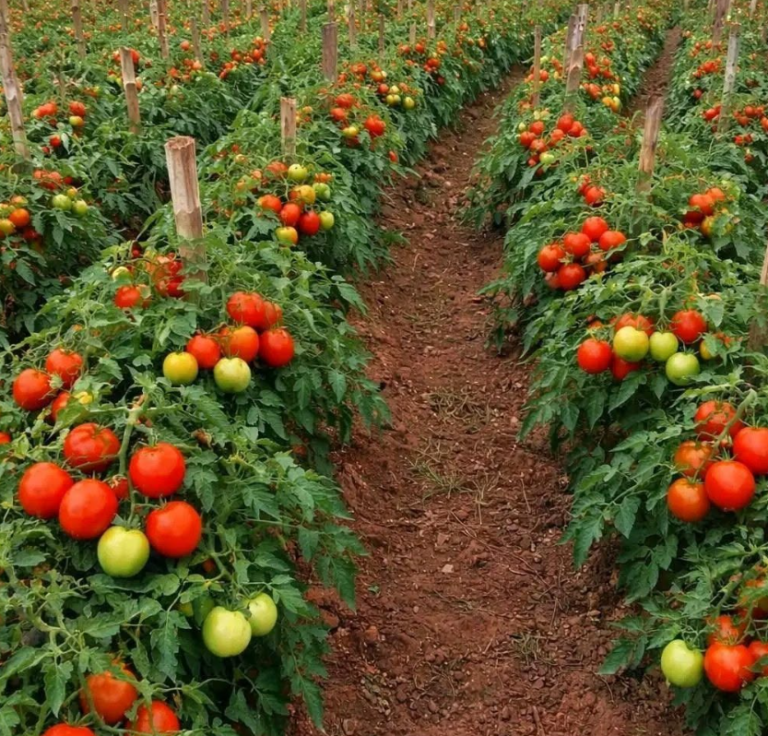
23. Tomatoes
Tomatoes are tall enough to offer light afternoon shade to carrots in hot climates, which can prevent the roots from turning bitter or woody under intense summer sun.
Position tomato plants on the western or southern side of a carrot bed, depending on your hemisphere, so the shade falls across the carrots during the hottest part of the day rather than blocking morning light entirely.
Keep enough distance between the two so tomato roots, which spread wide near the surface, do not crowd out the young carrot seedlings.
24. Cabbage and Other Brassicas
Brassicas such as cabbage or broccoli are not pest-repelling partners for carrots, but they make efficient use of garden space since their canopy and root habits differ enough to avoid direct competition.
Their upright, leafy growth habit also means they will not smother the low-growing carrot foliage nearby, even when planted fairly close together.
I use brassicas mainly as a space-filler in odd corners of the carrot bed, rather than as a deliberate pest-control choice.
25. Cilantro (Harvested Before Flowering)
Young cilantro can attract beneficial predatory insects while it remains leafy and low to the ground, adding one more layer of pest management to the bed.
Just harvest or remove it before it bolts and flowers, since a flowering cilantro plant shifts from a helpful neighbor to a competitive one that draws nutrients and water away from the carrots.
If you enjoy cooking with fresh coriander leaf anyway, this timing works in your favor, since you want to harvest it young for the kitchen regardless of its role in the garden.
ALSO READ: 40 Types of Carrots (With Pictures and Growing Tips)
Plants to Avoid Near Carrots
Not every neighbor is a good one. A few plants can genuinely hurt your carrot harvest, so it is worth a quick mention.
- Dill, once it flowers, releases compounds that can suppress germination in nearby seeds and may attract the same rust fly that onions are working to repel.
- Fennel is notoriously unfriendly to almost every garden neighbor and shares carrot’s pest and disease pressures.
- Parsnips share carrot fly, carrot weevil, and leaf blight susceptibility, so growing them side by side simply doubles the risk.
Common Mistakes Gardeners Make
I have made most of these mistakes myself, so consider this a shortcut around a few wasted seasons.
Planting companions too close together. Crowding still causes competition for light and water, even between plants that are technically “friendly.” Give each plant enough room to reach its mature size.
Forgetting to rotate carrot family crops. Carrots, parsnips, and celery share pests and diseases. Growing them in the same soil year after year lets problems build up rather than break down.
Ignoring bolted herbs. A flowering dill or cilantro plant behaves very differently from a young leafy one. Once herbs bolt, pull them or move them away from the carrot bed.
Skipping soil preparation. No companion plant fixes compacted, rocky, or poorly drained soil. Carrots need loose, stone-free soil to grow straight, so this step still comes first.
ALSO READ: 35 Yellow Vegetables You Should Know (With Pictures, and Nutrition Facts)
A Simple Layout to Try This Season
I like keeping this practical rather than theoretical. Here is a layout that has worked well in my own raised beds.
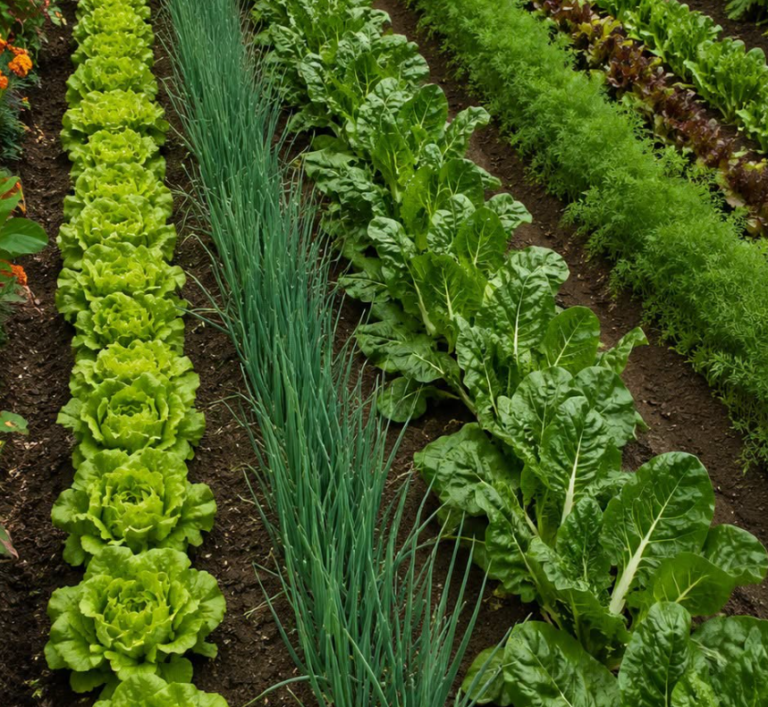
- Border rows: Chives, onions, or leeks around the outer edge of the bed.
- Interplanted rows: Carrots mixed with radishes at a four-to-one ratio.
- End caps: Marigolds or nasturtiums at each corner to draw in beneficial insects.
- Herb strip: A short row of rosemary, sage, or thyme along one side.
This kind of layout does not need much extra space. It simply asks you to think about what goes where, rather than planting carrots in a lonely, isolated row.
If you are working with a raised bed roughly four feet by four feet, this arrangement can produce noticeably more food than the same bed planted with carrots alone, while also cutting down on the pest pressure that usually causes gardeners to give up on carrots entirely.
I have found that the extra ten minutes of planning at the start of the season saves far more time later, since I am not out there hand-picking pests or replanting failed rows.
Timing matters as much as placement. Sow your alliums and herbs a week or two before or alongside your carrot seeds, so the scent barrier is already established by the time pests start scouting the area.
Fast crops like radishes and lettuce can go in on the very same day as your carrot seed, since they will be gone long before the carrots need the space.
Frequently Asked Questions
What is the best companion plant for carrots? Onions and leeks are generally considered the most effective, since their strong scent masks the smell carrot rust flies use to find host plants.
Can I plant carrots and tomatoes together? Yes. Tomatoes provide light shade during hot afternoons, which can protect carrots from turning bitter, and the two do not compete heavily for soil nutrients.
Do marigolds really protect carrots? Marigolds are more reliable as pollinator and beneficial-insect attractors than as a direct pest repellent. Some claims about marigolds are supported by research; others, particularly around Colorado potato beetles, have been disproven by multiple studies. It is fair to plant them, but do not expect them to be a cure-all.
How close should companion plants be to carrots? Most companions can be planted directly in the same row or in an adjacent row just a few inches away. Taller plants like tomatoes should sit far enough back that they do not fully shade the carrot bed.
Is it fine to plant radishes and carrots in the same row? Yes, and it is actually one of the most recommended combinations. Radishes germinate quickly and mark the row, then get harvested before carrots need the extra space.
Should I avoid planting dill near carrots? Young dill can be fine in small amounts, but let it flower nearby and it becomes a problem. Bolted dill can suppress seed germination in the surrounding soil and draws in the same rust fly that other companions are meant to repel.
Does companion planting replace crop rotation? No. Companion planting works alongside crop rotation, not instead of it. Even a perfectly companion-planted bed will build up soil-borne pests and diseases if carrots or their relatives are grown in the exact same spot every year.
Final Thoughts
Companion planting is not magic, and I will not pretend it solves every garden problem. But after testing many of these pairings myself, I can say the difference is real. A bed of carrots surrounded by the right neighbors simply performs better than one grown in isolation.
Start small. Pick three or four companions from this list, watch how your carrots respond this season, and build from there.
Gardening rewards patience more than perfection. You do not need all 25 plants in one bed to see a difference. Even a simple pairing of onions and radishes alongside your carrot rows will show you, within a single season, why so many growers swear by this practice.
References
- West Virginia University Extension — Companion Planting https://extension.wvu.edu/lawn-gardening-pests/gardening/garden-management/companion-planting
- University of Minnesota Extension — Companion Planting in Home Gardens https://extension.umn.edu/planting-and-growing-guides/companion-planting-home-gardens
- Washington State University Extension, Hortsense — Carrot: Carrot Rust Fly https://hortsense.cahnrs.wsu.edu/fact-sheet/carrot-carrot-rust-fly/
- Colorado State University Extension — Vegetable Garden Hints https://cmg.extension.colostate.edu/Gardennotes/719.pdf
- University of Massachusetts Amherst Extension — Companion Planting in the Vegetable Garden https://ag.umass.edu/sites/ag.umass.edu/files/fact-sheets/pdf/companion_planting.pdf
- Government of British Columbia, Ministry of Agriculture and Food — Carrot Rust Fly Small-Scale IPM Guide https://www2.gov.bc.ca/assets/gov/farming-natural-resources-and-industry/agriculture-and-seafood/animal-and-crops/plant-health/disease-factsheets/integrated-pest-management-factsheets/carrot_rust_fly_small_scale_ipm_guide.pdf
- Cornell University, New York State Integrated Pest Management Program — Carrot Rust Fly https://nysipm.cornell.edu/agriculture/vegetables/vegetable-ipm-practices/chapter-16/section-16-6-3/

Tim M Dave is a gardening expert with a passion for houseplants, particularly cacti and succulents. With a degree in plant biology from the University of California, Berkeley, he has vast experience in gardening. Over the years, he has cultivated a vast collection of desert plants and learned a great deal about how to grow and care for these unique companions.