25 Best Companion Plants for Beets (And Those to Avoid)
Beets are one of the most forgiving root vegetables you can grow. But even a forgiving crop does better with the right neighbors.
I have grown beets in tight raised beds and in wide-open plots, and the difference companion planting makes is real. The right pairings loosen soil, confuse pests, and use garden space more wisely. The wrong ones just compete for the same nutrients.
This guide walks through 25 companion plants for beets, why each one works, and which plants you should keep at a distance.
Why Companion Planting Works for Beets
Beets are shallow-rooted, fast-growing, and relatively light feeders once established. That makes them easy to tuck between slower, bulkier crops.
According to Clemson University’s Home & Garden Information Center, beets need loose, loamy soil, a pH between 6.0 and 6.5, and full sun to size up properly. The same guide notes that beets are typically harvested about 50 to 70 days after planting, once roots reach 1.5 to 2 inches in diameter.
That short timeline is actually an advantage. Beets mature quickly enough to slot in between longer-season crops without ever competing for the same window of soil space.
West Virginia University Extension notes that interplanting smaller, cool-season crops like beets between larger, slower-growing vegetables lets gardeners use the taller canopy for shade once the beets are established. Extension specialists add that interplanting works especially well to maximize space and improve productivity in small gardens.
Companion planting is not magic. It is mostly about root depth, nutrient needs, timing, and pest behavior lining up in your favor. Keep that logic in mind as you read through the list below.
Beets also need consistent boron levels to develop smooth, evenly colored roots, and they respond well to nitrogen early in the season followed by less nitrogen as the root begins to bulk. That is one reason legumes, which release nitrogen gradually as they break down, tend to pair so well with beets planted in the following rotation.
Choosing companions that do not compete heavily for boron or potassium keeps beet roots from developing the corky, discolored patches that poor nutrition often causes.

The 25 Best Companion Plants for Beets
I have grouped these into four categories — alliums, vegetables, herbs, and flowers — because each group tends to offer a different kind of benefit.
Alliums: The Pest-Repelling Group
1. Onions
Onions and beets share a growing season and neither one shades the other out. Onions’ sharp scent is widely believed to mask the smell beets give off, which can help confuse leaf miners and aphids searching for a host plant. Plant them in alternating rows about four inches apart, and you can often harvest both crops from the same narrow bed.
2. Garlic
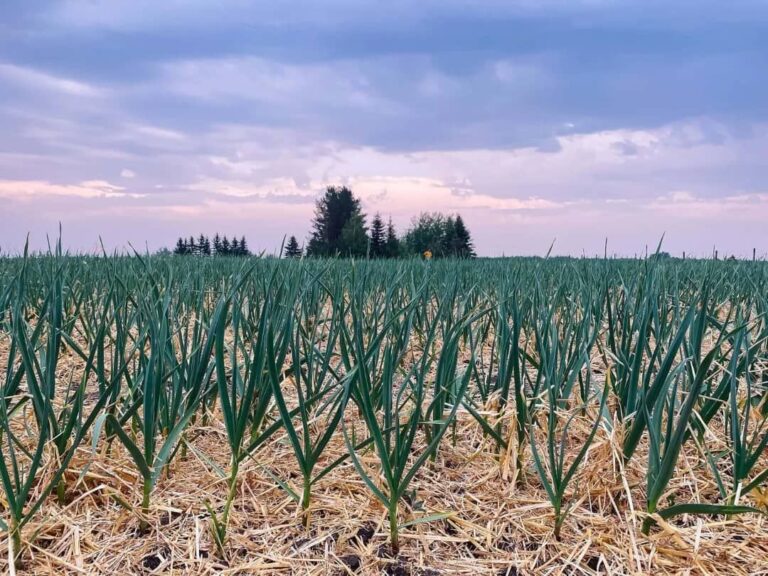
Garlic works on the same principle as onions but goes even further underground. Its narrow, upright leaves barely compete with beet foliage for light, so you can plant them closer together than most pairings allow. Fall-planted garlic also finishes its growth cycle before spring beets need the extra room.
3. Leeks
Leeks take longer to mature, but that is actually useful. You can harvest a quick beet crop from between the rows well before the leeks need the extra space. Their deep, narrow roots also stay well below the shallow zone where beets are actively bulking up.
4. Shallots
Shallots behave like a smaller, milder onion in the garden bed. They are compact, so they will not crowd young beet seedlings, and they add the same pest-masking benefit as their allium relatives. A single row of shallots along the edge of a beet bed is often enough to notice fewer aphid problems.
5. Chives
Chives are perennial, so once established, they keep contributing scent-based pest confusion year after year without replanting. Many gardeners tuck a small clump at the bed’s edge rather than mixing them directly into beet rows. Their edible purple blooms also draw in early-season pollinators before most other flowers open.
Vegetables: The Space-Sharing Group
6. Kohlrabi
Kohlrabi grows upward rather than sprawling outward, which means it will not shade or crowd beets planted nearby. Both crops also prefer similarly cool growing conditions, so a spring or fall planting schedule suits them equally well.
Cabbage’s broad outer leaves create light shade at soil level, which can help keep beet roots cool during warmer spells. Just give beets enough distance so cabbage’s wide canopy does not block too much sun. A gap of roughly a foot between the two usually strikes the right balance.
8. Broccoli
Broccoli and beets both like rich, well-drained soil and neither is a heavy nitrogen feeder in the way that corn or squash can be. That makes them reasonably compatible bed-mates for a cool-season vegetable rotation.
9. Brussels Sprouts
Brussels sprouts take months to mature, so a fast-growing beet crop planted at the base can be harvested and cleared out long before the sprouts need the room. This staggered timing squeezes two harvests out of a single patch of soil.
10. Cauliflower
Cauliflower shares beets’ preference for consistent moisture and a slightly cooler soil temperature. Planting them together simplifies your watering schedule, since neither crop demands drastically different care throughout the growing season.
11. Lettuce
Lettuce and beets are a classic pairing in small gardens. West Virginia University Extension specifically lists lettuce as a compatible companion for beets, since the two have different root depths and rarely compete for the same soil resources. Lettuce also tolerates the light shade beet foliage casts as it fills out, which can delay bolting during hot spells.
12. Bush Beans
Bush beans belong to a nitrogen-fixing family, and their roots host bacteria that pull nitrogen from the air into the soil. When the plants are cleared at the end of the season, that nitrogen becomes available to whatever you plant next, including a following beet crop.
This makes bush beans a smart choice for the season before, rather than the exact same season, if you want the biggest nutrient benefit.
13. Radishes
Radishes mature in roughly three to four weeks, so they come and go quickly, loosening compacted topsoil right where beet roots are trying to expand. They also draw flea beetles away from beet seedlings, acting as a simple trap crop. Because radishes germinate so fast, they also mark where slower beet rows will emerge, which helps with early weeding.
14. Swiss Chard
Chard and beets are close botanical relatives, which sounds risky, but in practice their compact growth habits mean they rarely fight for space. Just keep soil well-fed, since both are moderate feeders when planted together. Alternating chard and beet rows also adds visual variety to a bed without sacrificing productivity.
15. Garden Peas
Like bush beans, peas fix nitrogen in the soil as they grow. Plant them along a trellis or fence line so their vertical growth does not compete with beets for horizontal space. Once the pea harvest ends, the spent vines can be cut at the base and left to decompose, feeding the next round of beets.
Herbs: The Scent and Soil Group
Mint’s strong scent is thought to discourage several common garden pests, including some beetles. Grow it in a buried container or pot, though, since mint spreads aggressively and will overrun a shared bed within a season.
Even a single pot placed near the bed’s edge can offer some scent-based protection without the risk of it taking over.
17. Catnip
Catnip has a reputation among gardeners for repelling flea beetles, one of the more persistent pests that damage young beet foliage. Like mint, it can spread, so give it a contained corner of the bed. A few catnip plants along the perimeter is usually enough to make a noticeable difference in beetle activity.
18. Sage
Sage’s strong aromatic oils are commonly cited as a deterrent for several soil and leaf pests. It also tolerates the same well-drained soil beets prefer, so watering needs stay simple. Sage is drought-tolerant once established, so it will not compete with beets for soil moisture during dry stretches.
19. Dill
Dill attracts beneficial predatory insects, including parasitic wasps and hoverflies, which feed on aphids that would otherwise target young beet leaves. Let a few plants flower to draw the most pollinators. Dill’s tall, airy growth also casts very little shade, so it rarely interferes with beet foliage below.
20. Chamomile
Chamomile is often grown near root vegetables because its dense but shallow root system does not disturb developing beets underground. It is also thought to improve the flavor and vigor of neighboring plants, though this benefit is harder to measure precisely. Its small white flowers also bring in hoverflies, which help keep aphid numbers down.
Flowers: The Pollinator and Trap-Crop Group
21. Marigold
Marigolds are one of the most studied companion flowers. Their roots release compounds that may suppress certain soil nematodes, and their blooms draw in pollinators and predatory insects that help control aphid populations.
Planting a border of marigolds around a beet bed is one of the simplest ways to add this benefit without extra maintenance.
22. Nasturtium
Nasturtium is a textbook trap crop. Aphids and flea beetles strongly prefer nasturtium leaves over beet foliage, drawing pest pressure away from your main crop while sacrificing little more than a decorative flower bed. Its sprawling habit also works as a living mulch, shading out weeds around the base of beet plants.
23. Sweet Alyssum
According to a USDA blog on companion cropping research, sweet alyssum attracts and supports populations of beneficial insects that prey on costly crop pests. That makes it a low-maintenance way to build natural pest control into a beet bed. Its low, spreading habit fits neatly along bed borders without shading nearby beet rows.
24. Borage
Borage is a magnet for bees and other pollinators, and its presence nearby is often credited with boosting the productivity of surrounding crops. It self-seeds readily, so one planting can return for several seasons.
Borage leaves also break down quickly in compost, adding trace minerals back into the soil that later crops can use.
25. Thyme
Thyme forms a low, dense groundcover that shades out weed seedlings without competing for the deeper soil space beet roots need. Its scent is also thought to help mask beets from a few common flying pests.
Because thyme stays low to the ground, it works well as a living edge along the outside of a beet row.
Companion Planting Techniques That Actually Matter
Picking the right plant is only half the equation. Timing, spacing, and soil prep decide whether a pairing succeeds.
- Stagger your planting dates. Sow fast-growing companions like radishes a week or two before beets, so they are ready to thin or harvest before crowding becomes a problem.
- Match root depths. Pair beets, which root close to the surface, with deeper-rooted crops like leeks or Brussels sprouts to avoid underground competition.
- Test your soil first. Clemson HGIC recommends basing fertilizer and lime applications on an actual soil test rather than guesswork, since beets do best in soil limed to a pH of 6.0 to 6.5.
- Rotate root crops yearly. Planting beets in the same spot as other heavy root feeders season after season depletes the same nutrient layer repeatedly.
Illinois Extension frames trap cropping as one of the few companion planting strategies with genuine, demonstrated research support, since pests are drawn to the trap crop and can then be controlled or removed before reaching the main crop.
That is worth remembering. Not every companion planting claim is backed by hard data, but trap cropping and nitrogen fixation are two mechanisms that hold up well under scrutiny.
A few extra habits make companion planting more effective over an entire season, not just at planting time.
- Keep a simple garden log. Note which pairings thinned pest damage and which ones did not, since results shift with your climate, soil type, and the pest pressure specific to your region.
- Water at the base, not overhead. Crowded companion beds trap humidity around leaves, and damp foliage is more prone to fungal issues, especially with chard and cabbage-family neighbors.
- Thin seedlings early. Beets often germinate in clusters of two or three seedlings from a single seed cluster. Thin them to one plant every few inches so they are not competing with each other before you even factor in companions.
- Mulch between rows. A thin layer of straw or compost between beet rows and their companions helps retain moisture and suppresses weeds that would otherwise compete with both crops.
Growing Companion Plants in Raised Beds and Containers
Small-space gardening actually plays to companion planting’s strengths. Raised beds warm up faster in spring and drain more predictably, which suits beets and most of the companions on this list.
University of Minnesota Extension recommends loosening the soil in a raised bed with a broadfork or shovel before planting, turning over the top layer so roots can push through easily. That single step matters more for beets than for many other vegetables, since compacted soil often causes forked or stunted roots.
In containers, pair one beet plant with a single companion rather than crowding several species into a small pot. A 12-inch container can comfortably hold three or four beets alongside a couple of chive plants or a small clump of thyme.
Vertical companions like peas or pole-grown herbs work especially well on a balcony or patio, since they add a second layer of production without taking up more floor space. Just remember that containers dry out faster than garden soil, so check moisture levels more often during warm weeks.
Companion Plants to Avoid Near Beets
Not every pairing helps. A few plants are worth keeping at a distance from your beet bed.
- Pole beans climb aggressively and, unlike bush beans, tend to compete more directly for above-ground light and space right at beet height.
- Mustard greens grow fast and can shade out young beet seedlings before they get established, especially in a tightly packed bed.
- Other beets planted too closely compete for the same narrow band of nutrients, since they share identical root depth and feeding habits.
- Charlock and wild mustard relatives can host some of the same pests that target beet leaves, so keeping them out of the bed reduces shared pest pressure.
The general rule I follow: if a plant fights beets for the same root zone, the same nutrients, or the same season timing, it belongs somewhere else in the garden.
Frequently Asked Questions
What is the best overall companion plant for beets? Onions and lettuce are consistently recommended by university extension programs because they use different soil layers and growing habits than beets, avoiding direct competition.
Can I plant beets and beans together? Yes, but stick to bush beans rather than pole beans. Bush beans stay compact and add nitrogen to the soil once their roots break down after harvest.
Do marigolds actually help beets? Marigolds are among the better-researched companion flowers. Their root exudates are associated with reduced nematode populations in soil, and their blooms attract beneficial insects.
How close should companion plants be to beets? Most extension guides suggest a few inches of spacing between beets and small companions like onions or lettuce, with more room for larger plants like cabbage or broccoli.
Is companion planting scientifically proven? Some mechanisms, like nitrogen fixation from legumes and trap cropping for pests, are well documented. Others, like scent-masking, are more anecdotal and vary by garden.
Can beets grow well in a container garden alongside companions? Yes. A container at least 12 inches deep gives beet roots enough room to develop, and a small companion like chives or thyme fits comfortably along the edge without crowding the roots.
How long does it take to see the benefits of companion planting? Some benefits, like shade or trap cropping, show up within weeks of planting. Soil-building benefits, like nitrogen fixation from beans or peas, are usually most visible in the crop planted the following season.
Final Thoughts
Beets reward a little planning. Pair them with alliums for pest confusion, legumes for soil nitrogen, and low-growing herbs or flowers for pollinator support, and you get a bed that works harder without much extra effort on your part.
I always tell new gardeners the same thing: start with two or three pairings from this list, watch how they perform in your specific soil and climate, and build from there. Companion planting is not a rigid formula. It is an ongoing conversation with your own garden.
References
- West Virginia University Extension. Companion Planting. https://extension.wvu.edu/lawn-gardening-pests/gardening/garden-management/companion-planting
- Clemson University Cooperative Extension, Home & Garden Information Center. Carrot, Beet, Radish & Parsnip. https://hgic.clemson.edu/factsheet/carrot-beet-radish-parsnip/
- University of Minnesota Extension. Raised Bed Gardens. https://extension.umn.edu/planting-and-growing-guides/raised-bed-gardens
- University of Illinois Extension. Companion Planting: Combining Plants for a Healthy, Well-Balanced Garden. https://extension.illinois.edu/blogs/good-growing/2025-03-07-companion-planting-combining-plants-healthy-well-balanced-garden
- Utah State University Extension. Creating Sustainable School and Home Gardens: Companion Planting. https://extension.usu.edu/utah4h/research/creating-sustainable-school-and-home-gardens-companion-planting
- United States Department of Agriculture. Pairing Plant “Buddies.” https://www.usda.gov/about-usda/news/blog/pairing-plant-buddies
- Utah State University Extension. Fruit and Vegetable Guide Series: Beets. https://extension.usu.edu/nutrition/research/beets.pdf

Tim M Dave is a gardening expert with a passion for houseplants, particularly cacti and succulents. With a degree in plant biology from the University of California, Berkeley, he has vast experience in gardening. Over the years, he has cultivated a vast collection of desert plants and learned a great deal about how to grow and care for these unique companions.