35 Types of Cucumbers (Variety Identification, With Pictures)
Cucumbers seem simple until you actually start shopping for seeds. I remember standing in front of a seed rack a few summers ago, completely stuck between a “slicer,” a “pickler,” and something called a Beit Alpha, with no clue which one belonged in my garden.
There is no single “best” cucumber. The right type depends on how you plan to eat it — raw in a salad, fermented in a jar, or sliced thin for a sandwich.
Below, I have grouped 35 main types of cucumbers into six practical categories, with detailed notes on growing zones, plant characteristics, and care, so you can find your match quickly.
The Main Cucumber Categories
Before the full list, here is the short version. All cucumbers belong to the species Cucumis sativus, a member of the Cucurbitaceae (gourd) family native to the Himalayan foothills and northern Thailand, according to the North Carolina State University Extension Gardener Plant Toolbox.
From that single species, growers have bred dozens of distinct types, generally split into:
- Slicing cucumbers — long, smooth-skinned, eaten fresh
- Pickling cucumbers — short, bumpy, bred for brining
- English and Persian (burpless) cucumbers — thin-skinned, low-seed, mild
- Asian and Middle Eastern cucumbers — long, ridged, heat-tolerant
- Specialty and heirloom cucumbers — unusual shapes, colors, and flavors
- Bush and container cucumbers — compact plants for small spaces
Let’s go through all 35, one by one.
A Short History Worth Knowing
Cucumbers have a longer history than most people realize. South Dakota State University Extension notes that cucumbers are believed to have originated in India, later spreading through Greece and Italy before arriving in North America in the mid-1500s.
That long domestication history explains today’s diversity. Centuries of regional breeding produced distinct shapes, skin textures, and flavors suited to local climates and cuisines, from the ridged Armenian type of the Middle East to the compact gherkins of Western Europe.
Modern plant breeders built on that foundation. Universities such as Cornell continue developing disease-resistant lines, while seed companies focus on parthenocarpic hybrids that solve pollination problems in greenhouses and short growing seasons alike.
Growing Zones: Where Cucumbers Actually Thrive
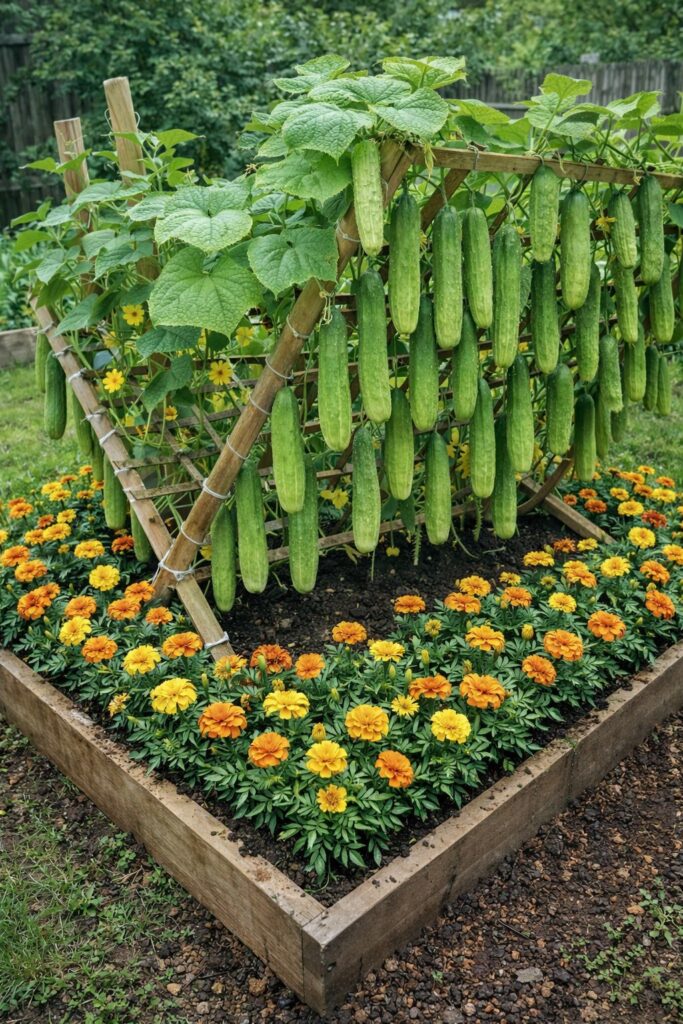
Cucumbers are grown as warm-season annuals across USDA Hardiness Zones 3 through 11. Because they die back completely at the end of each season, the hardiness zone matters less for winter survival and more for how long your frost-free window lasts.
As a general rule, soil temperature is the real trigger, not the calendar. Seeds germinate poorly below 60°F and fail entirely below 50°F, while the ideal germination range sits between 65°F and 85°F. A simple soil thermometer at a one-inch depth is more reliable than counting days from the last frost.
Zone-by-zone, the practical differences look like this:
- Zones 3–5 (short season): Plant in June once soil is reliably warm. Favor fast-maturing varieties (50–57 days) such as Spacemaster 80 or Salad Bush, and consider starting seeds indoors 3–4 weeks ahead.
- Zones 6–7 (moderate season): Plant in mid-to-late May. Most slicing and pickling varieties mature comfortably within a single season here.
- Zones 8–9 (long season): Plant from March through April, with a second succession possible in late summer for fall harvests.
- Zones 10–11 (near year-round): Gardeners in South Florida, South Texas, and coastal Southern California can plant as early as February and often run two full cucumber cycles per year.
Regardless of zone, cucumbers need 6 to 8 hours of direct sunlight daily, well-draining soil with a pH between 6.0 and 6.8, and roughly 1 to 2 inches of water per week delivered consistently rather than in occasional heavy soakings.
ALSO READ: Small Space, Big Harvest: How to Grow Cucumbers in Containers Successfully
Slicing Cucumbers (Best for Fresh Eating)
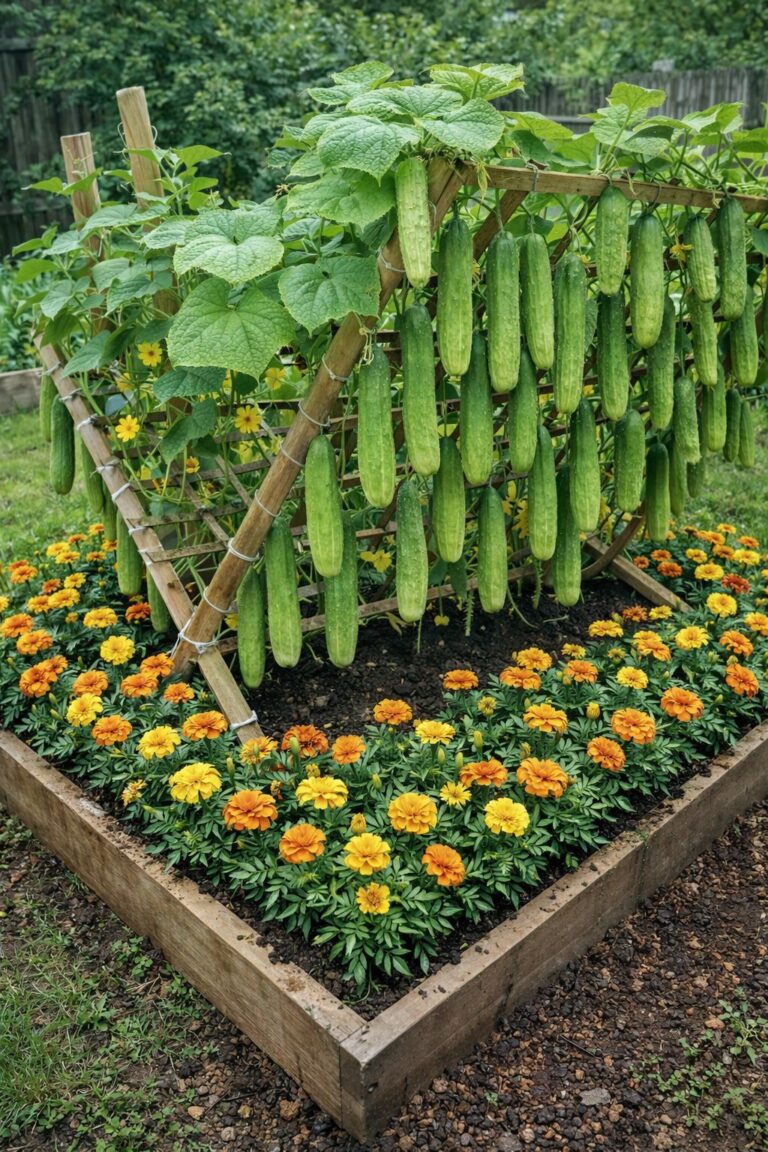
Slicing cucumbers are the ones you picture in a salad bowl. They are longer, smoother-skinned, and bred for low bitterness, with higher water content and fewer seeds than pickling types.
1. Straight Eight
Straight Eight is an heirloom, open-pollinated vining variety and an All-America Selections winner, producing uniform 8-inch fruits with smooth, dark green skin and fine-grained, sweet flesh. Vines are vigorous, reaching 4 to 6 feet, and typically mature in about 60 days.
This variety performs reliably well across Zones 4 through 10 once soil temperatures hold above 65°F. It handles moderate humidity well but benefits from a trellis in the humid Southeast to reduce fungal pressure.
Care tips: Give it a sturdy trellis or cage, water at the base rather than overhead, and mulch heavily to keep soil moisture even. Uneven watering is the single biggest cause of bitter fruit in this variety.
Best use: Fresh salads, sandwiches, and classic garden slicing. Its heirloom status also makes it a favorite for seed-saving gardeners.
2. Marketmore 76
Bred at Cornell University in 1976, this vining slicer produces 8-inch dark green fruit and carries documented resistance to angular leaf spot, anthracnose, cucumber mosaic virus, downy mildew, powdery mildew, and scab.
Marketmore 76 is a strong performer in Zones 3 through 9, particularly in humid, disease-prone regions like the Mid-Atlantic and Northeast where downy mildew pressure runs high.
Care tips: Space plants 12 inches apart on a trellis, keep foliage dry through drip irrigation, and rotate planting location yearly to reduce soil-borne disease buildup.
Best use: An excellent all-purpose garden slicer, especially where disease resistance matters more than novelty.
3. Marketmore 80
Marketmore 80 is a close relative of Marketmore 76 with similar vigor, smooth dark green skin, and comparable disease tolerance, maturing in roughly 60 to 68 days on vigorous vines. It is recommended for home gardens across Zones 4 through 9, including cooler Pacific Northwest microclimates.
Care tips: Provide full sun and consistent moisture; this variety tolerates slightly cooler nights better than many other slicers, making it a solid choice for maritime climates.
Best use: Reliable fresh eating in regions with shorter, cooler summers.
4. Sweet Success
Sweet Success is a parthenocarpic hybrid, meaning it sets fruit without pollination. It produces long, seedless, mild-flavored fruit on vigorous vines and carries broad disease resistance. This variety is well-suited to Zones 5 through 10, and especially valuable in greenhouse or high-tunnel production where pollinator activity is limited.
Care tips: Because it is parthenocarpic, avoid planting near standard varieties that could cross-pollinate and introduce seeds or bitterness. Trellising keeps fruit straight and clean.
Best use: Fresh eating for anyone who dislikes seeds; a strong choice for greenhouse growers.
5. Sweet Slice
Sweet Slice is a long, burpless slicer with thin, dark green skin and a notably sweet, low-bitterness flavor. Vines are vigorous and productive over a long harvest window. It is suited to Zones 4 through 9, performing especially well where summer nights stay reasonably warm.
Care tips: Harvest at 8 to 10 inches before seeds toughen; frequent picking every 2 to 3 days keeps the vine producing.
Best use: Fresh salads and snacking, particularly for households sensitive to bitterness.
6. Summer Dance
Summer Dance is a hybrid slicer bred specifically for consistent fruit set through hot, humid summer weather, producing smooth, uniform fruit on compact-to-medium vines. It is best suited to Zones 6 through 10, especially the humid southern and midwestern United States where heat stress commonly reduces yields in other varieties.
Care tips: Mulch heavily to keep root zones cool during heat waves, and increase watering frequency (without waterlogging) during extended hot spells to prevent blossom drop.
Best use: Reliable summer slicing in regions with intense, sustained heat.
7. Tasty Green
Tasty Green is a burpless hybrid slicer reaching up to 12 inches long, with thin, dark skin, minimal seeds, and documented mosaic-virus tolerance. It thrives in Zones 6 through 10, particularly hot, humid climates where it outperforms thinner-skinned European types.
Care tips: Provide a trellis to support the longer fruit and keep it straight; consistent moisture prevents the curling sometimes seen in long Asian-style slicers.
Best use: Fresh eating and light pickling in warm-climate gardens.
8. General Lee
General Lee is a dependable hybrid slicer producing uniform, dark green, 8-inch fruit on vigorous vines with good resistance to common cucumber diseases. It performs well across Zones 5 through 9 in typical home garden conditions.
Care tips: Standard trellising and consistent watering are sufficient; this variety is considered relatively low-maintenance among hybrid slicers.
Best use: An everyday slicing cucumber for beginner and experienced gardeners alike.
9. Dasher II
Dasher II is a widely recommended hybrid slicer noted by Oregon State University Extension for its smooth, glossy skin, reliable yields, and moderate vine vigor. It is well-adapted to Zones 4 through 9, including cooler coastal regions.
Care tips: Space plants generously (18–24 inches) to encourage airflow, which reduces powdery mildew risk in humid conditions.
Best use: Consistent home-garden slicing with minimal fuss.
10. Diva
Diva is a parthenocarpic hybrid producing smooth, seedless, non-bitter fruit around 6 inches long. It resists powdery mildew, scab, and cucumber mosaic virus, and is one of the few parthenocarpic types that performs well in open garden beds rather than only greenhouses.
This type of cucumber is suited to Zones 4 through 10; UGA Extension recommends it as a reliable vine slicer, while other extension programs list it among burpless types.
Care tips: No pollinator plants are needed, which makes it ideal for isolated raised beds or urban gardens with limited bee activity. Trellising keeps fruit clean and straight.
Best use: Fresh eating for gardeners without reliable pollinators nearby.
Pickling Cucumbers (Best for Brining and Fermenting)
Pickling cucumbers are shorter, blockier, and covered in small bumps or “warts.” That bumpy skin is not a flaw — it is engineered surface area that lets brine soak in evenly. Mississippi State University Extension notes that pickling types are bred with thinner skins and black spines specifically so the finished pickle looks and tastes right.
11. National Pickling
National Pickling is a classic dedicated pickling variety with dark green, spiny skin, dense flesh, and compact 4- to 6-inch fruit on moderately vigorous vines. It grows well across Zones 4 through 9, with a maturity window of roughly 50 to 55 days.
Care tips: Harvest small and often — every other day at peak season — since oversized fruit turns hollow and seedy quickly.
Best use: The standard choice for classic dill pickles and bread-and-butter pickles.
12. Calypso
Calypso is a gynoecious hybrid, meaning nearly all its flowers are female, producing heavy early yields of small, blocky, black-spined fruit. It is well-suited to Zones 5 through 9; because it is gynoecious, it requires a monoecious pollinator variety planted nearby unless a parthenocarpic type is substituted.
Care tips: Plant a pollinator variety within a few feet, and expect an earlier, more concentrated harvest compared with standard monoecious types.
Best use: Commercial-style pickling with high early yield.
13. Homemade Pickles
Homemade Pickles is an open-pollinated variety with excellent overall disease resistance, producing medium-sized, firm, spiny fruit on vigorous vines. It performs especially well in humid growing regions across Zones 5 through 9.
Care tips: Rotate planting beds yearly and avoid overhead watering to keep the strong disease resistance from being undermined by excess leaf moisture.
Best use: Home canning and fermentation, especially in humid climates prone to fungal disease.
14. Boston Pickling
Boston Pickling is a long-standing heirloom pickler grown commercially since 1888, with dark green, spiny skin and productivity across a long harvest season on vigorous vines. It is suited to Zones 4 through 9, with a maturity window of roughly 55 to 60 days.
Care tips: As an open-pollinated heirloom, seeds can be saved year to year if plants are isolated from other cucumber varieties to prevent cross-pollination.
Best use: Traditional whole and sliced pickles, with strong heirloom-garden appeal.
15. H-19 Little Leaf
H-19 Little Leaf is a compact-vine pickling variety with small leaves that allow denser planting, producing heavy yields of small, firm fruit in a limited footprint. It is well-adapted to Zones 5 through 9, and a favorite in raised beds and small-space gardens.
Care tips: Its parthenocarpic tendencies make it useful in covered or high-tunnel growing where pollinator access is inconsistent.
Best use: Small-space pickling production, including community gardens and raised beds.
16. Carolina
Carolina is a hybrid pickling cucumber bred for uniform fruit shape and size, with dense, crisp flesh suited to commercial-style processing. It performs reliably across Zones 6 through 9, particularly in the humid Southeast.
Care tips: Frequent harvesting keeps fruit uniform in size, which matters most for growers processing large batches at once.
Best use: Commercial and home canning where fruit uniformity is a priority.
17. County Fair
County Fair is a pickling type recommended by Oregon State University Extension, known for firm flesh that holds its crunch through processing, on compact-to-moderate vines. It is suited to Zones 5 through 9, including cooler Pacific Northwest gardens.
Care tips: Firm, consistent watering supports the dense flesh texture this variety is known for; drought stress will soften that advantage quickly.
Best use: Crisp dill and bread-and-butter pickles.
18. Muncher
Muncher is a burpless dual-purpose cucumber, sweet enough to eat fresh yet firm enough for the jar, producing smooth-to-lightly-bumpy medium fruit. This variety is adaptable across Zones 4 through 10 thanks to its dual-purpose flexibility.
Care tips: Harvest at 4 to 5 inches for the best balance between fresh-eating sweetness and pickling firmness.
Best use: Flexible households that want one variety for both salads and pickling.
Harvest tip: pick pickling cucumbers small — 2 to 4 inches for gherkins, 4 to 6 inches for standard dill pickles. Left too long, they turn hollow, seedy, and bitter.
ALSO READ: From Seed to Snack: How Long Does It Take for Cucumbers to Grow (And What Affects the Timeline)
English, Persian, and Burpless Cucumbers (Best for Snacking and Salads)
These types share one goal: minimal bitterness and minimal seeds. They contain lower levels of cucurbitacins, the natural compounds responsible for that sharp, bitter aftertaste some cucumbers develop under heat or drought stress.
19. English Cucumber
Also called the European or hothouse cucumber, it typically grows 10 to 14 inches long, with thin, edible, dark green skin and nearly no seeds. Vines are long and often grown vertically in greenhouses.
English Cucumber is best grown in Zones 5 through 10, though most commercial production happens in controlled greenhouse environments regardless of outdoor zone, since the thin skin bruises easily in open weather.
Care tips: Support the fruit individually if growing outdoors, since its length and weight can cause bending or curling without a trellis. It is usually shrink-wrapped commercially to protect its delicate skin from moisture loss.
Best use: Fresh eating, sandwiches, and thin garnish slices, since the skin never needs peeling.
20. Persian Cucumber
Persian Cucumber is a smaller relative of the English type, usually 4 to 6 inches long, with crisp, sweet flesh and few seeds, on moderately vigorous vines. It grows well in Zones 6 through 10, and has become increasingly common in American supermarkets over the past decade.
Care tips: Harvest young and often; this variety loses its signature crunch quickly if left on the vine past 6 inches.
Best use: Lunchbox snacking, salads, and quick pickles.
21. Beit Alpha Cucumber
This is a Middle Eastern type with thin, smooth skin and small seed cavities, typically 5 to 6 inches long on parthenocarpic vines. It is well-suited to greenhouse production in any zone, and to outdoor growing in Zones 7 through 10 where summers run consistently warm.
Care tips: As a parthenocarpic variety, isolate it from standard open-pollinated types to prevent unwanted cross-pollination and seed development.
Best use: Fresh Mediterranean and Middle Eastern-style salads.
22. Suyo Long
Suyo Long is an heirloom Chinese variety with deeply ridged, bumpy-yet-tender skin, growing long and curved, almost always burpless, on vigorous climbing vines. It performs well in Zones 5 through 10 and shows strong heat tolerance, making it a good fit for hot summer climates.
Care tips: Trellis vertically for the straightest fruit; this variety tends to curl dramatically if left to sprawl on the ground.
Best use: Fresh salads and quick Asian-style pickles.
Asian and Middle Eastern Long Cucumbers (Best for Heat Tolerance)
This group covers the long, slender, often ribbed cucumbers popular across Asian and Middle Eastern cuisine. Most are prized for heat tolerance and mild flavor, and several perform well even when standard slicers stall in extreme summer heat.
23. Armenian Cucumber
Technically Armenian Cucumber is a variety of muskmelon (Cucumis melo) rather than Cucumis sativus, but used exactly like a cucumber. It grows long, pale green, and ribbed, is virtually seedless, and vines vigorously with a maturity window around 70 days.
This variety is exceptionally heat-tolerant, thriving in Zones 7 through 11, including hot, arid climates where many true cucumbers struggle.
Care tips: Provide a strong trellis, since fruit can reach 12 to 36 inches and grows straighter when hung vertically.
Best use: Fresh salads and cool summer drinks; its mild flavor pairs especially well with citrus.
24. Japanese Cucumber
This is a category that includes types like Kyoto, long, slender, and dark green with thin skin and minimal seeds, on climbing vines bred for crisp texture. Japanese Cucumber is suited to Zones 6 through 10, with strong performance in humid summer climates.
Care tips: Trellis for straight fruit and harvest at 8 to 10 inches, before the skin begins to toughen.
Best use: Crisp salads and quick pickles in East Asian-style dishes.
25. Chinese Long Cucumber (Telegraph type)
Chinese Long Cucumber grows very long — sometimes 12 to 24 inches — with thin, pale-to-dark green skin on long, vigorous vines requiring substantial trellis support. It performs well in Zones 6 through 10, particularly where a long, warm growing season allows full-length fruit to develop.
Care tips: Provide at least 6 feet of vertical trellis space and harvest promptly, since overripe fruit becomes seedy and loses its mild flavor.
Best use: Stir-fries and fresh salads across East Asian cuisine.
26. Poona Kheera
This is an Indian heirloom that starts pale yellow-green and matures to a russet-brown, crisp skin, with a distinctive nutty sweetness, on moderately vigorous vines. Poona Kheera is well-suited to Zones 6 through 10, tolerating heat and humidity better than many Western slicing types.
Care tips: Allow the skin to fully brown before harvest for the best flavor development, unlike most cucumbers which are picked while still green.
Best use: Fresh eating for gardeners seeking a genuinely different flavor profile than standard slicers.
Specialty and Heirloom Cucumbers (Best for Unique Flavor and Garden Interest)
These are the cucumbers I personally find the most fun to grow. They rarely look like a “typical” cucumber, but each carries a specific culinary or historical charm.
27. Lemon Cucumber
Lemon Cucumber is round, yellow when ripe, and about the size of a lemon, with mild, sweet, crisp flesh on compact-to-moderate vines maturing in about 65 days. It is adaptable across Zones 4 through 10, and notably heat-tolerant during summer fruit-set.
Care tips: Harvest while still pale yellow-green; fully ripe, deep-yellow fruit can develop tough skin and a stronger flavor.
Best use: Fresh eating and salads, though it is not ideal for pickling due to its round shape and thinner flesh.
28. Dragon’s Egg
Dragon’s Egg is an heirloom producing oval, white-skinned fruit that genuinely resembles an egg, thin-skinned and prolific on vigorous, sprawling vines. It grows well in Zones 5 through 9, tolerating a range of summer conditions.
Care tips: Best eaten within a few days of harvest, since the thin skin does not store as long as standard slicers.
Best use: Fresh snacking and salads; a favorite novelty crop for kids in the garden.
29. Painted Serpent
Painted Serpent is a striped heirloom variety with pronounced color patterns along a long, curved fruit, valued for its crunchy, burpless flesh on long climbing vines. It performs well in Zones 6 through 10, particularly in warm, sunny climates.
Care tips: Trellis vertically for straighter fruit and easier harvest access among the long vines.
Best use: Fresh eating with strong visual appeal for market gardeners and home cooks alike.
30. Crystal Apple
This is a short, round, pale-skinned heirloom cucumber with a crisp, mild interior, growing on compact-to-moderate vines. Crystal Apple is suited to Zones 5 through 9, with reliable performance in typical home garden conditions.
Care tips: Harvest at a pale ivory color; if left too long the skin yellows and toughens.
Best use: Fresh snacking and novelty garden displays.
31. Mexican Sour Gherkin (Cucamelon)
This one has a grape-sized fruit that looks like a miniature watermelon but tastes tangy, almost lime-like. It belongs to a separate genus, Melothria scandens, on delicate, highly productive climbing vines. It thrives in Zones 4 through 10 and tolerates heat, drought, and poor soil better than most true cucumbers.
Care tips: Give it a trellis or fence to climb; a single vine can produce dozens of small fruits through the season with minimal care.
Best use: Whole pickling and fresh snacking; a low-maintenance choice for beginner gardeners.
32. West Indian Gherkin
West Indian Gherkin is a true gherkin from the species Cucumis anguria, small, spiny, and bumpy, on sprawling, highly branched vines. It is well-adapted to Zones 7 through 11, showing strong heat and humidity tolerance and some resistance to common cucumber pests.
Care tips: Allow ample sprawling space or trellis support, since vines branch extensively and can cover significant ground.
Best use: Traditional whole-fruit pickling.
33. Parisian Pickling (Cornichon)
Parisian Pickling is a French heirloom bred to be harvested extremely small — just 1 to 3 inches — for classic tangy cornichons, on moderately vigorous vines. It grows well in Zones 5 through 9, with a relatively short maturity window when harvested at cornichon size.
Care tips: Check vines daily during peak season, since fruit reaches ideal cornichon size quickly and turns oversized within a day or two.
Best use: Classic French-style cornichons served alongside pâté and charcuterie.
Bush and Container Cucumbers (Best for Small Spaces)
Not everyone has room for sprawling vines. Bush varieties stay compact, usually 2 to 3 feet tall, and skip the trellis entirely, making them well suited to patios, balconies, and raised beds.
34. Spacemaster 80
Spacemaster 80 is a bush-type slicer with compact 2- to 3-foot vines, producing full-sized 8-inch fruit despite its small footprint. It carries resistance to powdery and downy mildew, scab, and mosaic virus.
It is well-suited to Zones 3 through 9, including short-season northern gardens, thanks to its relatively fast 60-day maturity.
Care tips: A single large container (at least 5 gallons) is sufficient; feed regularly with a balanced fertilizer since container soil depletes nutrients faster than garden beds.
Best use: Small-space fresh eating without sacrificing fruit size.
35. Bush Champion
This is a compact, high-yielding bush slicer that fits comfortably in a large pot or raised bed, with vines rarely exceeding 3 feet. Bush Champion is adaptable across Zones 4 through 10, and a popular choice for urban and balcony gardening nationwide.
Care tips: Position in full sun (6–8 hours minimum) and water consistently, since containers dry out faster than in-ground beds, especially during summer heat.
Best use: Patio and balcony gardening for fresh, everyday slicing cucumbers.
Slicing vs. Pickling: The Difference That Actually Matters
If you remember only one distinction from this guide, make it this one. Slicing cucumbers have thin skin and high water content, so they turn soft and mushy in a brine. Pickling cucumbers have thicker, denser flesh built to survive the acid and heat of canning.
According to University of Maryland Extension research summarized across land-grant university programs, cucumbers typically reach harvest 50 to 65 days from seed, depending on the variety and growing conditions. Bush types tend to mature slightly faster than vining types.
How Cucumbers Are Grown: Pollination Types Explained
Understanding pollination habits helps explain why some varieties behave differently in the garden.
- Monoecious varieties produce both male and female flowers on the same plant and need bee activity to set fruit.
- Gynoecious varieties (like Calypso) produce mostly female flowers and need a nearby pollinator plant for a heavy early harvest.
- Parthenocarpic varieties (like Diva, Sweet Success, and Beit Alpha types) set fruit without pollination at all, which makes them ideal for greenhouses or areas with few pollinators.
Oregon State University Extension notes that temperatures below 50°F can reduce bee activity, while rainy weather and improper insecticide use both hinder pollination efficiency in the field.
Verifiable Statistics Worth Knowing
Numbers help put cucumber farming into perspective, and I think they are genuinely surprising.
- U.S. cucumber production in 2024 totaled 11.3 million hundredweight, down 21 percent from 2023, according to USDA’s National Agricultural Statistics Service.
- Planted area in 2024 reached 84,800 acres, valued at roughly $226 million nationwide.
- The 2022 Census of Agriculture recorded cucumber production spanning 105,647 total acres across 16,391 operations in the United States.
- Michigan leads the country in cucumber acreage at 29,558 acres, mostly grown for pickling, while Florida leads fresh-market production with 21,243 acres.
- U.S. per-capita fresh cucumber availability reached approximately 11 pounds per person in 2022, according to USDA’s Economic Research Service.
- U.S. fresh cucumber production fell from 1,087 million pounds in 2000 to 314 million pounds in 2020, a 71 percent drop over two decades, as documented by University of Florida IFAS Extension.
- A single well-tended 10-foot row of vining cucumbers can yield 8 to 10 pounds of fruit across a season when harvested consistently every two to three days.
These figures show a crop that Americans eat more of every year, even as domestic farms produce less of it — a gap increasingly filled by imports, particularly from Mexico.
How to Choose the Right Cucumber Type
I always tell first-time gardeners to start with the end goal, not the seed packet. Ask yourself three questions:
- Will I eat it fresh, pickle it, or both? Fresh eating favors slicers, English, or Persian types. Preserving favors true pickling varieties.
- How much space do I have? Vining types need a trellis and real ground space; bush types fit patios and containers.
- Do I have reliable pollinators nearby? If not, choose a parthenocarpic variety so fruit sets regardless.
Bitterness is almost always a stress response, not a variety flaw. Oregon State University Extension explains that drought, uneven watering, and temperature swings above 90°F or below 60°F increase cucurbitacin levels, the compound responsible for that sharp bitter taste. Consistent watering solves most bitterness problems before they start.
I have learned this the hard way in my own raised beds. One dry week during a heatwave turned an otherwise reliable Marketmore harvest noticeably bitter, while a neighboring row watered on a strict schedule stayed sweet the entire season. Consistency matters more than the variety label on the seed packet.
Disease resistance is worth checking too, especially in humid climates. Cornell University’s cucurbit breeding program has documented resistance traits across angular leaf spot, anthracnose, downy mildew, powdery mildew, scab, and cucumber mosaic virus in modern hybrid lines, which explains why so many current slicers trace back to Cornell-bred parent varieties.
Storage and Handling Tips That Extend Shelf Life
Even the right variety can go soft or bitter fast if stored poorly. A few simple habits make a real difference.
Keep fresh slicing cucumbers in a perforated plastic bag inside the refrigerator to maintain crispness. South Dakota State University Extension recommends an ideal storage temperature around 55°F, meaning a cool basement can work almost as well as a fridge.
Avoid washing cucumbers until you are ready to use them, since surface moisture speeds up spoilage. Most fresh cucumbers stay crisp for about a week under proper refrigeration before texture begins to decline.
For English or Persian cucumbers, thin slicing and freezing works well if you plan to use them later in smoothies or chilled soups. Pickling varieties, by contrast, should be processed within a day or two of harvest for the best crunch.
Nutrition Snapshot
Cucumbers are prized partly for what they don’t contain. One cup of raw cucumber slices carries roughly 15 calories, virtually no fat, and under a gram of fiber, according to figures compiled by North Dakota State University Extension.
That low-calorie, high-water profile — cucumbers are well over 90 percent water by weight — explains their popularity in salads, infused water, and light summer dishes. Pickled cucumbers carry more sodium due to the brining process, so those watching sodium intake should favor fresh varieties when possible.
Frequently Asked Questions
What is the sweetest type of cucumber to eat raw? Persian, English, and lemon cucumbers are consistently rated among the sweetest and least bitter, thanks to naturally low cucurbitacin levels and thin, tender skin.
Can I pickle a slicing cucumber? Yes, but the results will be softer. Slicing cucumbers hold more water and have thinner skin, so pickles made from them turn out noticeably less crisp than those made from dedicated pickling varieties.
How many types of cucumbers exist in total? Beyond these 35 widely grown types, seed catalogs list hundreds of named cultivars. However, nearly all of them fall within the six practical categories covered in this guide.
Do all cucumbers belong to the same plant species? Almost all do, falling under Cucumis sativus. A few well-known exceptions exist, including the Armenian cucumber (a melon) and the cucamelon (a different genus entirely), both grown and used like true cucumbers.
Why do some cucumbers taste bitter? Bitterness comes from cucurbitacins, compounds that increase under drought, heat stress, or uneven watering. Trimming and discarding the blossom end, where bitterness concentrates most heavily, often solves the problem immediately.
Which cucumber type is best for a small garden or balcony? Bush varieties such as Spacemaster 80 and Bush Champion are built for compact spaces. They stay under 3 feet tall, skip the trellis, and still produce a respectable harvest in a single large container.
What USDA zones can grow cucumbers? Cucumbers grow as warm-season annuals across Zones 3 through 11. The zone itself affects planting timing and season length far more than whether the plant can grow there at all.
Final Thoughts
Thirty-five types is a lot to take in in one sitting, and I don’t expect anyone to memorize the list. What matters is picking the category that matches your purpose — a crisp Persian for lunchboxes, a bumpy National Pickling for the canning jar, or a compact Spacemaster 80 for a sunny balcony.
Once you know the category, the specific variety becomes a matter of personal taste, climate, and a bit of trial and error in the garden.
References
- North Dakota State University Agriculture Extension. Field to Fork: Cucumbers. https://www.ndsu.edu/agriculture/extension/publications/field-fork-cucumbers
- Oregon State University Extension Service. Grow Your Own Cucumbers. https://extension.oregonstate.edu/gardening/vegetables/grow-your-own-cucumbers
- South Dakota State University Extension. Cucumbers: How to Grow It. https://extension.sdstate.edu/cucumbers-how-grow-it
- Mississippi State University Extension Service. How Do Pickling and Slicing Cucumbers Differ? https://extension.msstate.edu/agriculture/crops/commercial-horticulture/watermelon-cantaloupe-and-cucumber/how-do-pickling-and-slicing-cucumbers-differ
- Penn State Extension. Cucumber Production in the United States. https://extension.psu.edu/cucumber-production-in-the-united-states
- USDA Plants Database. Cucumis sativus Plant Profile. https://plants.usda.gov/home/plantProfile?symbol=CUSA4
- North Carolina State University Extension Gardener Plant Toolbox. Cucumis sativus. https://plants.ces.ncsu.edu/plants/cucumis-sativus/

Tim M Dave is a gardening expert with a passion for houseplants, particularly cacti and succulents. With a degree in plant biology from the University of California, Berkeley, he has vast experience in gardening. Over the years, he has cultivated a vast collection of desert plants and learned a great deal about how to grow and care for these unique companions.