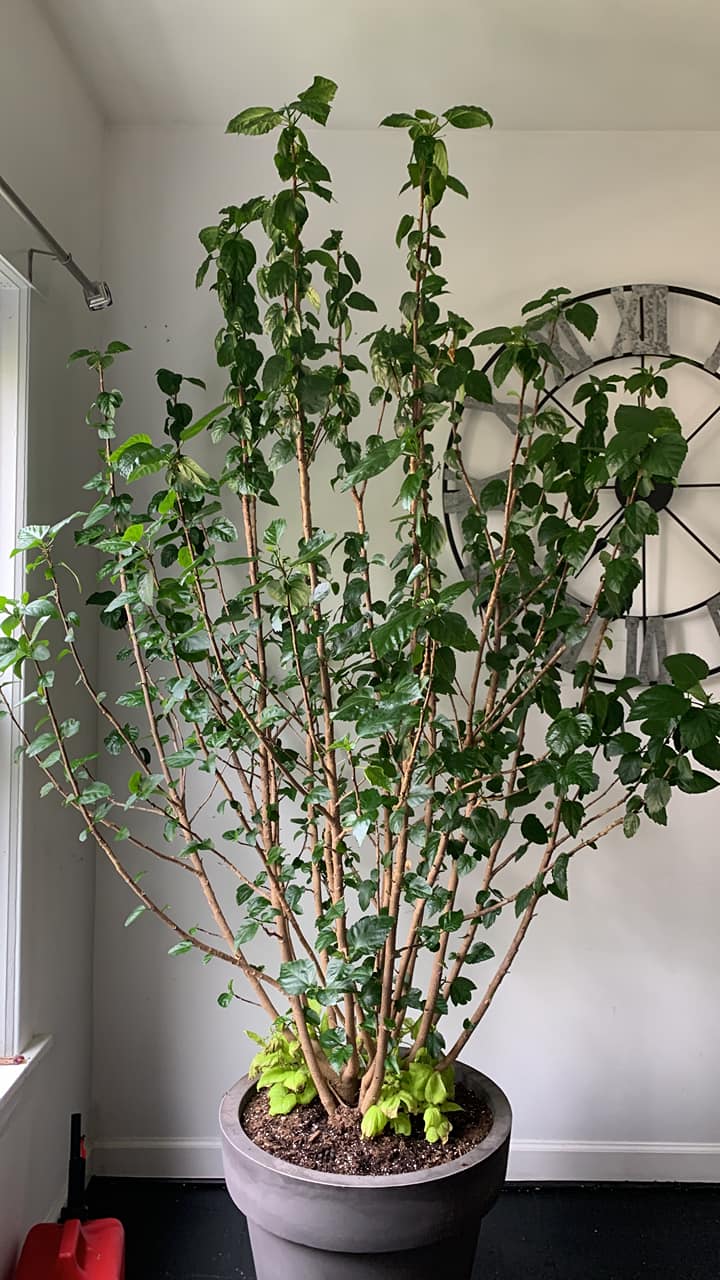
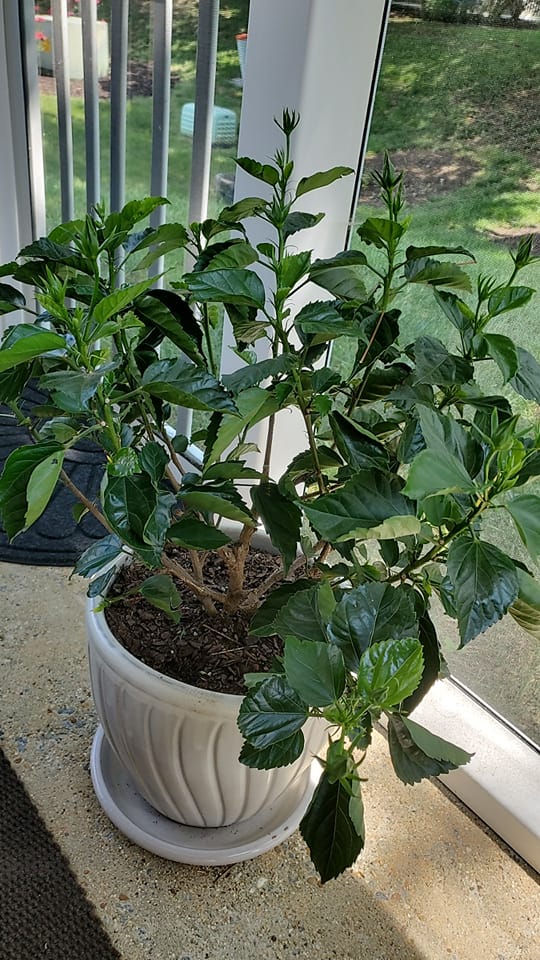
35 Popular Types of Hibiscus Plants (Tropical, Hardy, and Exotic Varieties)
Hibiscus is one of those flowers that stops people in their tracks. I have seen gardeners pause mid-conversation just to admire a single bloom. That reaction is not an accident — it is botany doing exactly what it is built to do.
The genus Hibiscus belongs to the Malvaceae, or mallow, family. This family also includes okra and cotton, which explains why hibiscus leaves sometimes look familiar to home gardeners.
There are hundreds of hibiscus species worldwide, but only a fraction are commonly grown. This guide covers 35 of the most popular types, grouped by category, with growing zones, plant characteristics, and detailed care tips for each one.
Whether you want a tropical patio showpiece, a cold-hardy perennial, or an edible variety for tea, this list has you covered. Let’s get into it.
Why Hibiscus Remains So Popular
Part of the appeal is simple math. A single hardy hibiscus plant can produce dozens of blooms across one season, even though each flower lasts only a day.
That daily turnover creates a strange kind of reliability. You lose yesterday’s flower, but three more usually open today. Gardeners rarely feel like they are watching a plant “finish” blooming.
Pollinators respond to this too. Hummingbirds, butterflies, and specialized native bees are drawn to the wide, open flower shape, and several native hibiscus species support pollinator species that depend almost entirely on this one genus.
There is also a cultural layer. Hibiscus shows up in Hawaiian leis, West African hibiscus tea traditions, and Chinese ornamental gardens alike. Few flowering plants carry that much geographic range in popular use.
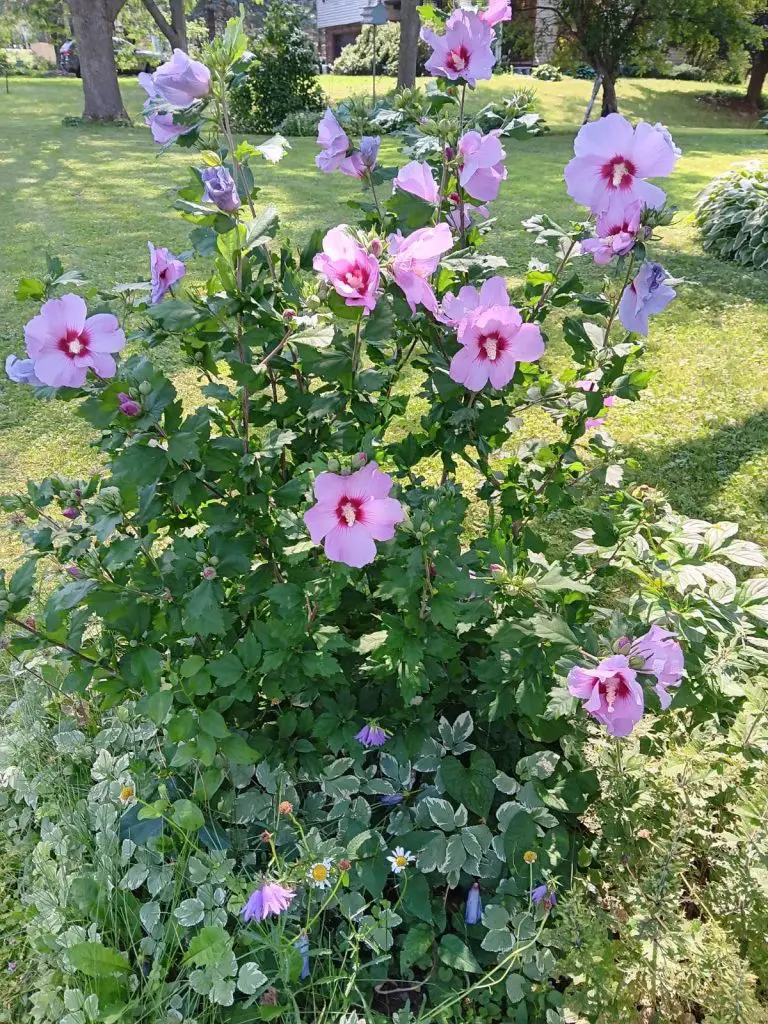
Quick Answer: What Are the Main Types of Hibiscus?
Before the full list, here is the short version. Hibiscus plants generally fall into five groups:
- Tropical Hibiscus (Hibiscus rosa-sinensis) — not frost-hardy, grown as houseplants in cold climates
- Hardy Hibiscus — native North American perennials that die back and return each year
- Rose of Sharon (Hibiscus syriacus) — a woody, cold-tolerant flowering shrub
- Edible and Fiber Hibiscus — grown for tea, food, or textile fiber
- Exotic and Rare Species — lesser-known types prized by collectors
Now let’s look closely at 35 specific varieties within these groups, including how to grow and care for each one.
Tropical Hibiscus Varieties (Hibiscus rosa-sinensis Group)
Tropical hibiscus is what most people picture first. It is a broadleaf evergreen shrub native to East Asia, and it is not built for cold winters.
Clemson Cooperative Extension describes the genus as a large group of flowering plants in the mallow family, related to okra and cotton grown for food and fiber. That family connection is one reason the leaves feel so familiar to anyone who has grown a vegetable garden.
North Carolina State University Extension notes that Chinese hibiscus typically grows between 4 and 10 feet tall and 5 to 8 feet wide outdoors, with flowers that attract hummingbirds and butterflies. That is a serious size for a plant many people keep in pots.
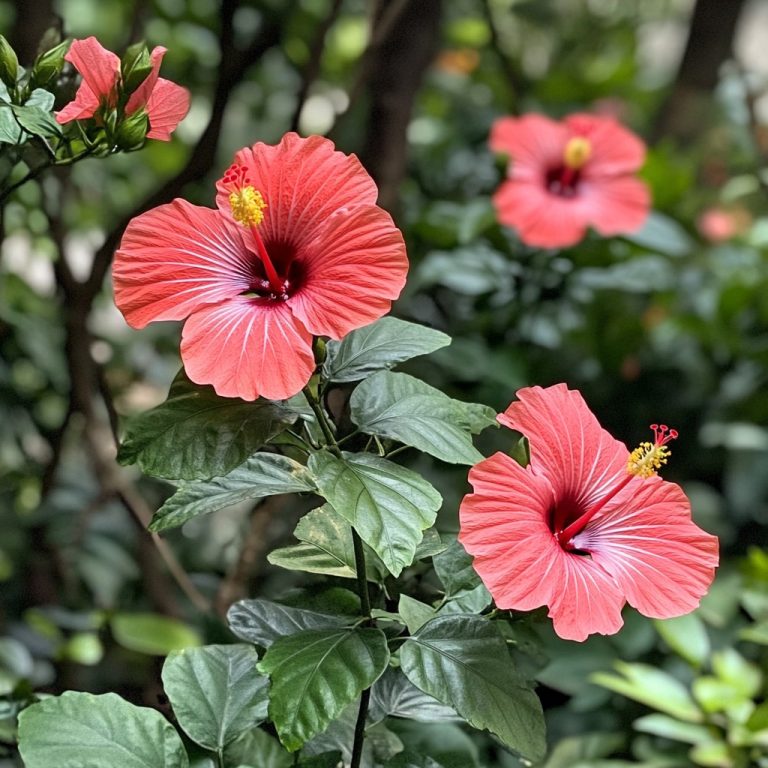
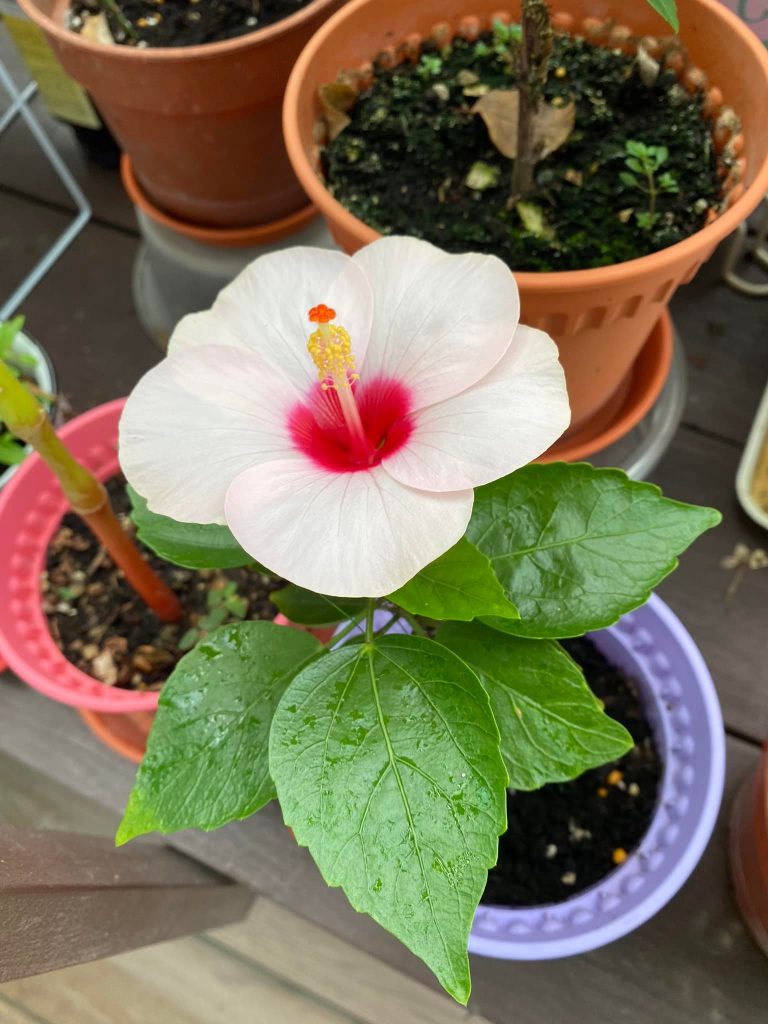
1. Chinese Hibiscus (Hibiscus rosa-sinensis)
This is the classic tropical hibiscus, hardy outdoors only in USDA Zones 9 to 11 and grown as a houseplant everywhere else. In the ground, it can reach 4 to 10 feet tall and 5 to 8 feet wide, though container specimens stay considerably smaller.
Its glossy, dark green, dentate leaves set off single-day flowers that open in the morning and close by evening, in colors ranging from red and pink to orange, yellow, and white, often with a contrasting throat.
Give it full sun with at least six hours of direct light daily, and water deeply once the top inch of soil dries out. Feed monthly during the growing season with a hibiscus-specific or balanced fertilizer low in phosphorus, and bring container plants indoors before temperatures drop below 50°F, keeping them near a bright window through winter.
2. Hawaiian Hibiscus
Hardy in USDA Zones 9 to 11 and frost-sensitive elsewhere, Hawaiian Hibiscus is a cultivated group of H. rosa-sinensis bred for larger, more ruffled petals and vivid, multi-toned colors. Plants typically reach 4 to 8 feet tall and 3 to 6 feet wide, depending on the cultivar.
Many nurseries market these under Hawaiian-sounding names, though true native Hawaiian species are botanically different plants.
These cultivars need consistent warmth and humidity to flower well, so mist container-grown plants occasionally in dry climates. Avoid letting the root ball dry out completely, since Hawaiian hybrids tend to drop buds under drought stress.
3. Double-Flowered Hibiscus
Grown outdoors in USDA Zones 9 to 11 and as a houseplant in cooler regions, Double-Flowered Hibiscus reaches 3 to 6 feet tall in containers and larger when planted in the ground. It is a hybrid form with layered, rose-like petals instead of the usual five-petal single bloom, and while the extra petals create a fuller look, they sometimes reduce pollinator access to the nectar.
Prune lightly after each flush of blooms to encourage branching, which increases the total number of flowers per season. Because the dense petals hold moisture longer, watch for botrytis, or gray mold, in humid, poorly ventilated spots.
4. Braided or Standard Tree-Form Hibiscus
Braided or standard tree-form hibiscus suits USDA Zones 9 to 11 outdoors and works well as a patio container specimen elsewhere. It is not a separate species but a training style, where nurseries braid multiple young stems into a trunk shape to create a small ornamental tree, typically 3 to 6 feet tall with a rounded canopy 2 to 4 feet wide.
Stake young trunks until the braid stiffens, and rotate the container periodically so the canopy grows evenly on all sides. Trim the top canopy after flowering cycles to maintain its rounded shape.
5. Confederate Rose (Hibiscus mutabilis)
Confederate Rose, also called Cotton Rose Mallow, grows well in USDA Zones 7 to 9, where it behaves as a perennial that dies back in winter in the cooler parts of its range. It can reach 8 to 15 feet tall on the coast, somewhat shorter inland, and produces flowers that open white and darken to pink or red as they mature. I find this color-shifting trick one of the more theatrical things a shrub can do.
Plant it in full sun to partial shade with loamy, well-drained soil. Rejuvenation pruning in early spring keeps the plant from becoming leggy, and cuttings root easily, which is why it is often passed from gardener to gardener.
6. Japanese Lantern Hibiscus (Hibiscus schizopetalus)
Strictly tropical, Japanese Lantern Hibiscus thrives in USDA Zones 10 to 11 and grows 6 to 10 feet tall with an arching, somewhat sprawling habit. It is instantly recognizable by its deeply fringed, reflexed petals that dangle like a lantern below a long, protruding staminal column.
This species does best in warm, humid climates with filtered light rather than harsh midday sun. Stake or trellis the arching branches if you want a tidier shape, and protect it from wind, which can easily damage the delicate petals.
7. Cajun Cocktail Hibiscus
Cajun Cocktail Hibiscus is suited to USDA Zones 9 to 11 outdoors and makes a fine container plant elsewhere, staying compact at 3 to 5 feet tall and wide compared to older tropical cultivars. It belongs to a popular tropical cultivar line known for multi-color, painterly blooms that often blend orange, pink, and yellow on a single flower, sometimes with a ruffled edge.
Feed it lightly but frequently, since these hybrids are heavy bloomers that exhaust nutrients quickly. Deadhead spent flowers to keep the plant looking tidy and to redirect its energy into new buds.
8. Kauai White Hibiscus (Hibiscus waimeae)
Native to Hawaii and rare outside it, Kauai White Hibiscus is hardy in USDA Zones 10 to 11 and can reach 15 to 20 feet in ideal conditions, though it usually stays smaller in cultivation. It is a fragrant, native Hawaiian species with pure white petals and a red-tinged center, and that fragrance is unusual among hibiscus flowers, which makes this species stand out.
It prefers consistent moisture and rich, well-drained soil similar to its native forest understory. Protect it from strong, drying winds, and avoid overhead watering late in the day to reduce fungal risk.
9. Native Hawaiian White Hibiscus (Hibiscus arnottianus)
Native Hawaiian White Hibiscus grows in USDA Zones 10 to 11, reaching 10 to 15 feet as a large shrub or small tree. Like its Kauai cousin, it is a fragrant native species, valued for its delicate scent and pure white, five-petaled flowers with a red staminal column.
Grow it in part shade to full sun with humus-rich, well-drained soil. Because it grows more slowly than common tropical hybrids, avoid heavy pruning; light shaping is usually enough.
10. Yellow Hibiscus (Hibiscus brackenridgei)
Yellow Hibiscus is native to Hawaii, considered rare in the wild, and hardy in USDA Zones 9 to 11, growing 10 to 15 feet tall as a shrub or small tree. It holds the honor of being Hawaii’s official state flower, producing bright yellow blooms with a slightly crepe-like petal texture.
Unlike many of its wetland-loving relatives, this species prefers dry, well-drained soil and full sun. Avoid overwatering, and source plants only from reputable native plant nurseries, since wild populations remain limited.
ALSO READ: 4 Methods of Propagating Hibiscus + Success Tips
Hardy Hibiscus Varieties (Cold-Tolerant Perennials)
This is my favorite category, honestly. Hardy hibiscus survives winters that would kill a tropical variety outright, then comes back each summer with flowers the size of dinner plates.
The National Garden Bureau confirms that hardy hibiscus can be traced primarily back to Hibiscus moscheutos, a species native to wetlands and riverbanks throughout the Midwest and East Coast, extending into Texas and Florida. These are true North American natives, not imports.
A native-plant education resource notes that there are approximately 31 species and sub-species of hibiscus native to the United States, of which about six are considered hardy. That is a smaller club than most people assume.
11. Rose Mallow (Hibiscus moscheutos)
Rose Mallow, also called Crimson-Eyed Rosemallow, is hardy across USDA Zones 4 to 9 and dies back to the ground each winter, returning to 3 to 7 feet tall and 2 to 4 feet wide the following season. It serves as the backbone species for most hardy hibiscus hybrids sold today, producing flowers up to 10 inches wide in white, pink, or red, usually with a striking red center.
Plant it in full sun with consistently moist, even boggy, soil. Cut stems back to 3 to 4 inches in late autumn, or leave them standing through winter to support overwintering insects, then trim in early spring before new growth appears.
12. Scarlet Rosemallow (Hibiscus coccineus)
Also known as Texas Star Hibiscus, Scarlet Rosemallow is hardy in USDA Zones 6 to 9 and grows 5 to 8 feet tall in an upright, somewhat narrow form. Its flowers open six to eight inches wide in brilliant red, with petals more separated than other hibiscus, giving the bloom a distinctive star shape, while the leaves are deeply divided into narrow, toothed, finger-like lobes.
This species tolerates less drought than H. moscheutos, so keep the soil cool and consistently damp, especially near ponds or rain gardens. Full sun with good air circulation produces the strongest stems and the best disease resistance.
13. Halberd-Leaved Rosemallow (Hibiscus laevis)
Halberd-Leaved Rosemallow is hardy in USDA Zones 4 to 9, reaching 3 to 6 feet tall and spreading slowly by rhizomes in favorable wetland sites. It takes its name from its arrow-shaped, halberd-like leaves, and produces pale pink flowers with a deep red or maroon center from early to midsummer.
Site it along pond edges, rain gardens, or low spots that collect water. It tolerates occasional flooding better than most hardy hibiscus, making it a good choice for problem-wet areas of the yard.
14. Woolly Rosemallow (Hibiscus lasiocarpos)
Woolly Rosemallow is hardy in USDA Zones 6 to 9 and grows 3 to 6 feet tall, similar in scale to Rose Mallow. The U.S. Forest Service describes this species as a self-compatible herbaceous perennial native to fresh and brackish marshes of the southern and eastern United States, distinguished by soft, velvety hairs covering its leaves and stems.
Full sun to partial shade suits it well, and it prefers wet, marshy soil. Because seed capsules remain on the plant through much of the dormant season, you can collect seed easily for propagation.
15. Swamp Rosemallow (Hibiscus grandiflorus)
Swamp Rosemallow is hardy in USDA Zones 8 to 11, forming a tall, upright clump 6 to 8 feet high. This wetland perennial has velvety, green leaves and large, pale pink flowers, and notably, it can tolerate brackish, salty conditions where other plants struggle.
That salt tolerance makes it one of the better hardy hibiscus choices for coastal gardens or areas with occasional saltwater intrusion. Keep the soil consistently wet, and avoid planting it in dry, sandy sites.
16. Comfortroot (Hibiscus aculeatus)
Comfortroot thrives in USDA Zones 6 to 9, growing 3 to 5 feet tall in a bushier form than many of its hardy relatives. This southeastern wildflower produces blooms that shift from cream to yellow to pink over the season, typically flowering from late spring through fall.
Grow it in full sun with moist, sandy, or loamy soil. It is relatively pest-resistant compared to other hardy species, so minimal spraying or intervention is usually needed.
17. Neches River Rosemallow (Hibiscus dasycalyx)
Neches River Rosemallow is rated for USDA Zones 7 to 9, though it is rarely available outside conservation or specialty nurseries, and grows 4 to 6 feet tall. It ranks among the rarest native hibiscus species, found only in a handful of counties in East Texas, and conservationists consider it critically imperiled due to habitat loss and hybridization with related species.
If you can source ethically propagated stock, plant it in consistently wet, marshy soil in full sun to mimic its native creek-bottom habitat. Avoid planting it near other hardy hibiscus species if seed purity matters to you, since cross-pollination is a known conservation concern.
18. Halberdleaf Hibiscus (Hibiscus militaris)
Halberdleaf Hibiscus is hardy in USDA Zones 4 to 9 and reaches 3 to 6 feet tall. Closely related to H. laevis, it grows along riverbanks and pond margins across the central United States, producing pale pink to white flowers with a dark red throat.
Treat it the same way as Halberd-Leaved Rosemallow: full sun, wet soil, and minimal fuss once established. It naturalizes well along water features.
19. Desert Rosemallow (Hibiscus coulteri)
Desert Rosemallow is a surprising find for a genus so associated with wetlands. Hardy in USDA Zones 8 to 10 and adapted to arid climates, it stays smaller and more delicate than its wetland relatives at 2 to 4 feet tall. The U.S.
Forest Service highlights this species growing in isolated mountain ranges in southeastern Arizona known as Sky Islands, where its pale yellow flowers, often marked with a maroon center, bloom against a dry, rocky backdrop.
Unlike most hibiscus on this list, it needs excellent drainage and minimal supplemental water once established. Overwatering is the most common way to lose this plant, so treat it more like a desert perennial than a bog plant.
20. Hardy Hybrid Hibiscus
Hardy Hybrid Hibiscus spans USDA Zones 4 to 9 depending on the specific cultivar, reaching 3 to 8 feet tall and 3 to 6 feet wide. North Carolina State Extension explains that these hybrids are complex mixtures of species native to the United States, including H. coccineus, H. laevis, H. militaris, H. moscheutos, and H. palustris, and popular named varieties include ‘Kopper King,’ ‘Lord Baltimore,’ and ‘Disco Belle.’
Plant in full sun with rich, moisture-retentive soil, and mulch in colder zones to protect the crown over winter. Deadhead individual flowers daily during peak bloom to keep the plant looking fresh, since each flower lasts only one day.
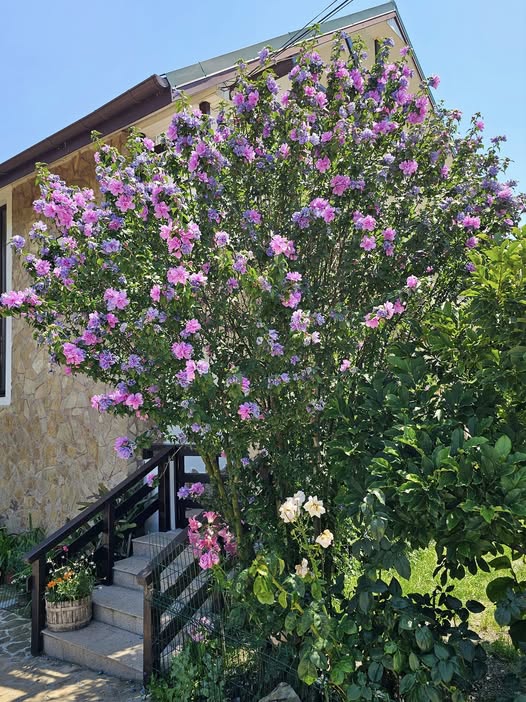
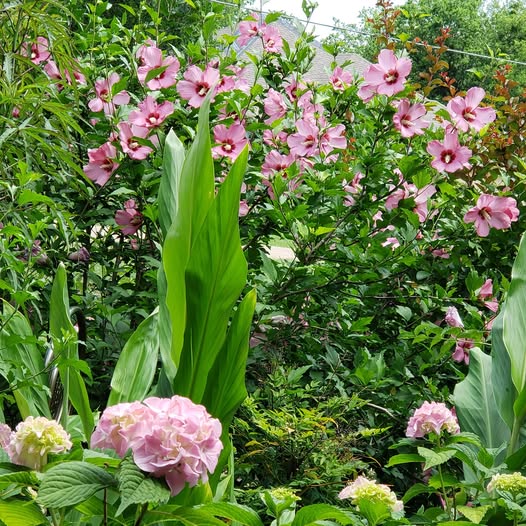
Rose of Sharon Varieties (Hibiscus syriacus)
Rose of Sharon is technically a hibiscus, but it looks and behaves differently from its tropical cousins. It is woody, deciduous, and remarkably cold-tolerant.
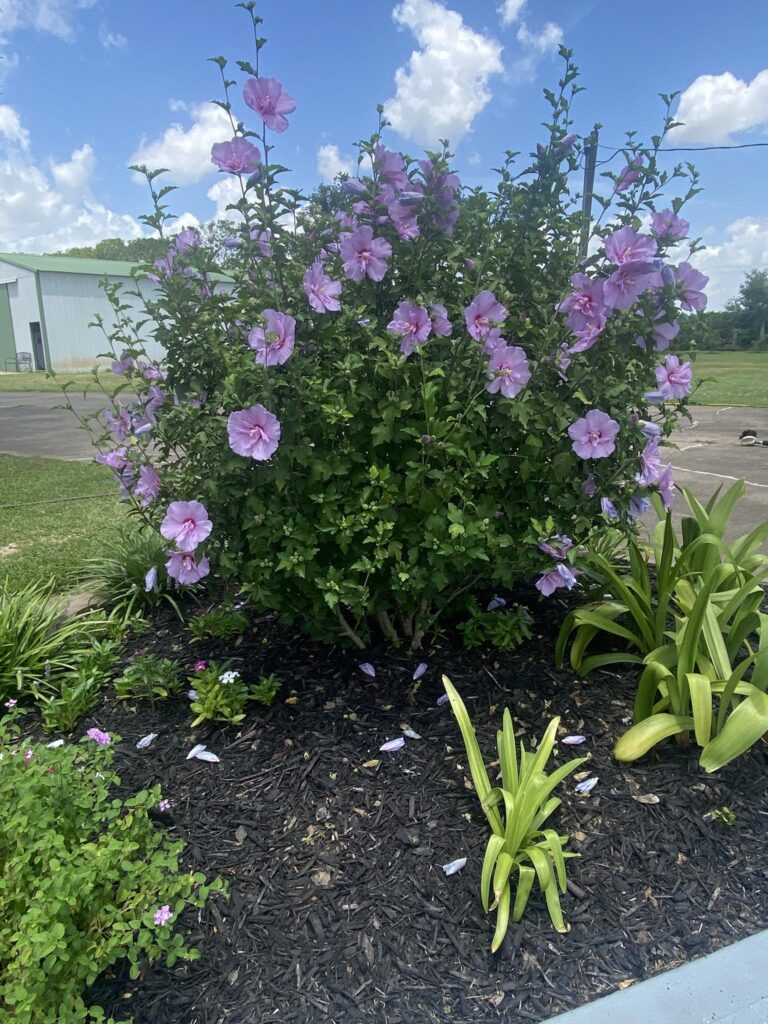
Clemson Cooperative Extension describes it as a durable deciduous shrub native to China and Taiwan that grows 8 to 10 feet tall and 6 to 10 feet wide, hardy in USDA Zones 5 through 9. That hardiness range is a major reason it shows up so often in northern gardens.
21. Classic Rose of Sharon (Hibiscus syriacus)
The classic Rose of Sharon is hardy in USDA Zones 5 to 9 and reaches its full 8 to 10 feet tall and 6 to 10 feet wide as the standard species form. It produces small, 2½-inch-wide lavender-pink flowers in abundance from June through October.
Plant it in full sun for the heaviest bloom. Prune in late winter before new growth starts, since flowers form on new wood, and this species tolerates fairly hard pruning without losing vigor.
22. Blue Chiffon Rose of Sharon
Blue Chiffon Rose of Sharon is hardy in USDA Zones 5 to 9 and grows a bit more compactly than the species form, reaching 6 to 8 feet tall and 4 to 6 feet wide. This popular cultivar produces soft blue-lavender, semi-double blooms with a ruffled center on a tidy growth habit.
It is largely sterile, which means it produces far fewer unwanted seedlings than older Rose of Sharon varieties. Light annual pruning keeps its shape neat without sacrificing bloom count.
23. Diana Rose of Sharon
Diana Rose of Sharon is hardy in USDA Zones 5 to 9, growing 8 to 10 feet tall and 4 to 6 feet wide in a slightly more upright habit than other cultivars. It was bred for pure white flowers that stay open longer during the day compared to older cultivars.
Give it full sun and well-drained soil. Because Diana is also a low-seeding cultivar, it is a good choice for gardeners who want the look of Rose of Sharon without volunteer seedlings popping up nearby.
24. Lil’ Kim Rose of Sharon
Lil’ Kim Rose of Sharon is a true dwarf, hardy in USDA Zones 5 to 9 and staying just 2 to 3 feet tall and wide. This compact variety produces white flowers with a red-pink center, making it useful for small gardens or container growing where a standard Rose of Sharon would outgrow the space.
It works well in mixed borders or large containers where a full-size shrub would be impractical. It still needs full sun for best flowering, even at its smaller size.
Edible and Fiber Hibiscus Types
Not every hibiscus is grown just for looks. Some are grown for the table, the teapot, or the textile mill.
25. Roselle (Hibiscus sabdariffa)
Roselle, also called Florida Cranberry, grows as a perennial in USDA Zones 8 to 11 and as a fast-growing annual in Zones 3 through 7, typically reaching 5 to 7 feet tall and 3 to 5 feet wide. North Carolina State Extension notes that the calyx and flowers are used for flavoring, coloring, and tea, while the leaves are consumed as a spicy, spinach-like vegetable in tropical regions.
A UF/IFAS Extension program in Orange County, Florida even reported harvesting over 150 gallons of roselle in a single season, supplying local restaurants and community farms.
Sow seed in spring once the danger of frost has passed, and space plants 3 to 4 feet apart in full sun. Roselle is a short-day plant, meaning it needs 12 or more hours of darkness to flower heavily, so blooming typically concentrates in fall. Harvest calyces promptly after flowering, since they become fibrous if left too long on the plant.
26. Cranberry Hibiscus (Hibiscus acetosella)
Cranberry Hibiscus grows as a perennial in USDA Zones 9 to 11 and as an annual elsewhere, reaching 3 to 6 feet tall and 2 to 4 feet wide. It is grown mainly for its deep red-purple, maple-shaped foliage rather than its small pink flowers, and the leaves are edible with a tart, cranberry-like flavor often used in salads.
Full sun brings out the deepest foliage color, though it tolerates part shade in hot climates. Pinch young plants to encourage bushiness, and harvest leaves regularly to keep new, tender growth coming.
27. Kenaf (Hibiscus cannabinus)
Kenaf is grown as a warm-season annual in most climates, thriving in USDA Zones 8 to 11 for a full growing cycle and reaching 8 to 14 feet tall in a single season with an upright, cane-like form. This industrial fiber crop, related to okra and cotton, is used for rope, paper, and textiles, and produces pale yellow flowers with a dark maroon center.
It needs a long, warm growing season and full sun to reach full size. It is typically direct-seeded in rows for fiber production rather than transplanted, and requires minimal fertilizer once established in fertile soil.
28. Sudan Roselle (Hibiscus sabdariffa var. altissima)
Sudan Roselle grows in USDA Zones 9 to 11, similar to standard roselle, but is often cultivated as a warm-season annual for fiber, reaching a taller, more upright 8 to 12 feet compared to culinary roselle strains. It was bred specifically for high-quality bast fiber rather than food production, which sets it apart from the shorter, bushier culinary varieties.
Grow this variety with wider spacing, since dense plantings favor fiber quality over calyx size. Harvest stems for fiber processing before flowering fully diverts the plant’s energy into seed production.
ALSO READ: Beginners Guide: When and How to Prune Hibiscus
Exotic and Rare Hibiscus Species
These varieties are less common in garden centers but well worth knowing, especially for collectors and native-plant enthusiasts.
29. Sea Hibiscus (Hibiscus tiliaceus)
Sea Hibiscus is a true coastal tropical species, hardy in USDA Zones 10 to 11 and capable of reaching 20 to 30 feet as a tree in ideal conditions, though it often stays smaller and more shrub-like near the coast. Found along tropical shorelines worldwide, its flowers open yellow with a dark center and fade to deep red-orange within a single day.
It tolerates salt spray and sandy soil extremely well, making it a strong choice for beachfront landscaping in frost-free regions. It needs little care beyond occasional pruning to control its size near structures.
30. Swamp Hibiscus (Hibiscus diversifolius)
Swamp Hibiscus is hardy in USDA Zones 9 to 11 and grows 3 to 6 feet tall in a somewhat sprawling, spiny-stemmed habit. Found in wetlands across the Pacific and parts of Africa, it produces pale yellow flowers marked by a dark purple throat, with stems covered in small prickles.
Keep the soil consistently wet, and wear gloves when handling this plant due to its spiny stems. It suits bog gardens or pond margins better than standard garden beds.
31. Phillip Island Hibiscus (Hibiscus insularis)
Phillip Island Hibiscus is hardy in USDA Zones 9 to 11 but remains extremely rare in cultivation, forming a dense, bushy shrub or small tree up to 13 feet tall in its native habitat, though often smaller in gardens.
It ranks among the rarest hibiscus species on Earth, native to a single tiny island near Norfolk Island in the South Pacific, and its flowers open pale green with a dark magenta center before gradually turning reddish-purple with age. Juvenile plants can take many years before producing their first bloom.
It prefers well-drained, humus-rich soil and bright, indirect light if grown in a container. Water only after the soil surface dries out, since it is sensitive to soggy roots, and be patient, since young plants may not flower for years.
32. Flower-of-an-Hour (Hibiscus trionum)
Flower-of-an-Hour is grown as an annual across nearly any climate, from USDA Zones 2 to 11, staying low and bushy at 1 to 2 feet tall. This small annual species produces pale cream petals with a dark purple center, and it earns its name from an extremely short-lived bloom that can close within just a few hours of opening.
It self-seeds readily, so deadhead spent flowers if you want to control its spread in garden beds. It tolerates poor soil and needs little supplemental fertilizer.
33. Monarch Rosemallow (Hibiscus radiatus)
Monarch Rosemallow grows as a perennial in USDA Zones 9 to 11 and as an annual in cooler climates, typically reaching 3 to 5 feet tall. This ornamental species has deeply lobed, maple-like leaves and pink or white flowers marked by a striking dark eye at the center.
Grow it in full sun with well-drained soil. It performs well in containers and mixed borders, and benefits from light deadheading to maintain a tidy appearance through the season.
34. Turk’s Cap (Malvaviscus arboreus var. drummondii)
Turk’s Cap is hardy in USDA Zones 8 to 10 and grows 3 to 6 feet tall and wide, sometimes larger in favorable conditions. It is a close hibiscus relative rather than a true Hibiscus species, and Clemson Cooperative Extension notes its flowers never fully open, featuring long, protruding stamens that make it a favorite of butterflies and hummingbirds.
This plant tolerates part shade better than most hibiscus relatives and is easy to propagate from cuttings or seed. It is rarely found in nurseries and is often shared between gardeners instead.
35. Luna Series Hardy Hibiscus
Luna Series Hardy Hibiscus is bred for USDA Zones 4 to 9 and stays notably compact at 2 to 3 feet tall, making it well suited to container gardens and small yards. It offers the same classic dinner-plate blooms as full-size hardy hybrids, in red, pink, and white, on a shorter, more manageable plant.
This series suits container growing better than most hardy hibiscus, provided the pot is large enough to prevent the roots from drying out quickly. Full sun and consistent moisture remain essential, just as with full-size hardy hybrids.
Hibiscus Types at a Glance
Here is a quick reference table to compare the major categories covered above.
| Category | Example Species | Typical Height | USDA Zones | Best Use |
| Tropical Hibiscus | H. rosa-sinensis | 4–10 ft | 9–11 | Patio, houseplant |
| Hardy Hibiscus | H. moscheutos | 3–8 ft | 4–9 | Perennial border, bog garden |
| Rose of Sharon | H. syriacus | 8–10 ft | 5–9 | Hedge, screening shrub |
| Roselle | H. sabdariffa | 5–7 ft | 8–11 (perennial) | Tea, food, fiber |
| Rare/Exotic | H. insularis | Varies | Varies | Collector specimen |
This table is a starting point, not a substitute for checking your specific microclimate. Local extension offices, like the ones cited at the end of this article, remain the most reliable source for zone-specific advice.
How to Choose the Right Hibiscus for Your Garden
With 35 options on the table, picking one can feel overwhelming. Here is a simple way to narrow it down.
- Check your USDA hardiness zone first. Tropical hibiscus generally needs Zones 9 through 11 outdoors, while hardy hibiscus and Rose of Sharon tolerate Zones 4 through 9. This one factor eliminates most of the guesswork.
- Think about purpose next. If you want tea or edible leaves, roselle or cranberry hibiscus makes sense. If you want a bold summer perennial, hardy hybrids deliver the biggest blooms.
- Consider maintenance level. Tropical hibiscus in cold climates must move indoors for winter. Hardy types and Rose of Sharon simply die back and regrow on their own schedule.
Common Hibiscus Care Basics
Most hibiscus types share a few core needs, regardless of category. Full sun produces the best flowering, though a few native wetland species tolerate partial shade.
Consistent moisture matters more than people expect, especially for hardy and wetland species. Clemson Cooperative Extension notes that mature hardy hibiscus clumps can reach heights of eight feet or more once established, typically reaching mature height within two or three growing seasons.
Pruning timing depends on the type. Hardy hibiscus and Rose of Sharon are typically cut back in late winter or early spring, right before new growth emerges.
Soil preference varies by species, but most hibiscus dislike sitting in dry, compacted ground. Wetland natives like Swamp Rosemallow and Woolly Rosemallow actually prefer soil that stays consistently moist, even soggy, through the growing season.
Fertilizing needs are moderate. A balanced, slow-release fertilizer applied once in spring is usually enough for tropical and hardy types alike. Overfeeding tends to produce lush leaves at the expense of flowers.
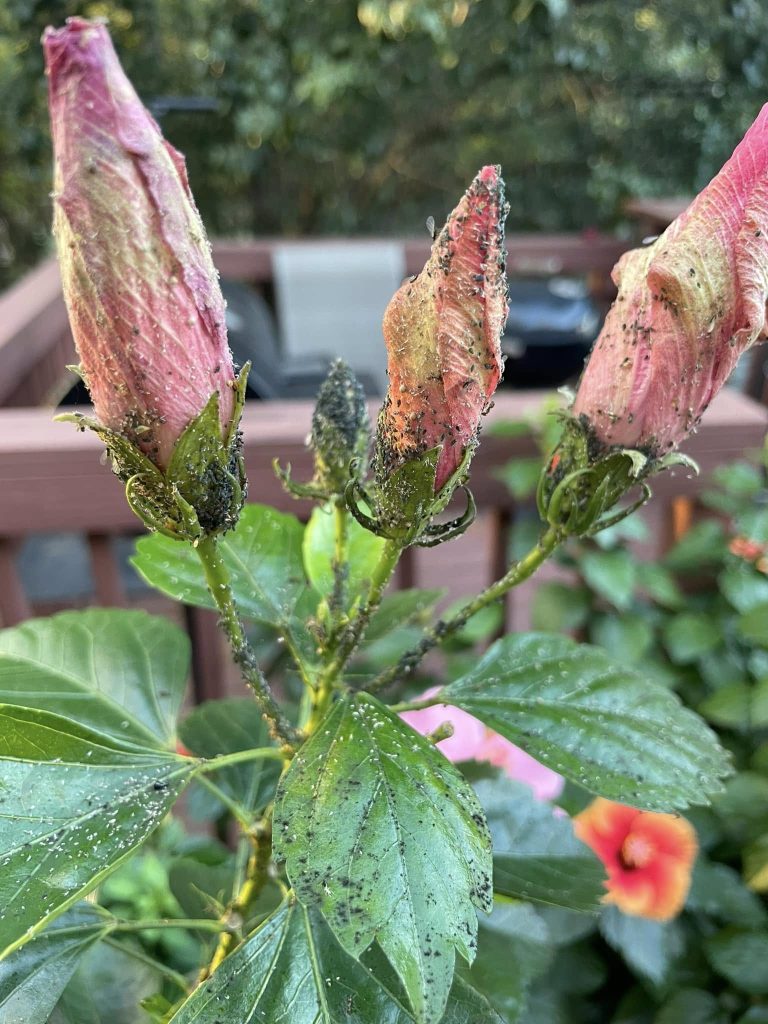
Pests are a manageable concern rather than a constant battle. Clemson Cooperative Extension lists aphids, whiteflies, and Japanese beetles as the most common insect issues, along with occasional leaf spot fungi that respond well to basic sanitation, such as removing fallen leaves.
Container-grown tropical hibiscus need more frequent watering than in-ground plants, since pots dry out faster in full sun. Checking soil moisture with a finger, rather than a fixed schedule, tends to work best.
ALSO READ: 6 Reasons Hibiscus Leaves are Curling + How to Fix Fast
A Note on Native Species and Conservation
Not every hibiscus on this list is thriving equally well in the wild. Some, like the Neches River Rosemallow and Phillip Island Hibiscus, are considered rare or critically imperiled.
Choosing native species for your own garden, where climate allows, does more than add beauty. It can support local pollinator populations and preserve genetic diversity that ornamental hybrids sometimes lack.
Before purchasing a rare or native hibiscus, it is worth checking with a state extension office or native plant society to confirm the plant was propagated responsibly, rather than collected from a wild population.
Frequently Asked Questions
How many types of hibiscus are there? Botanists recognize several hundred hibiscus species worldwide, though home gardeners typically encounter a few dozen popular cultivars and native species.
Is hardy hibiscus the same as tropical hibiscus? No. Hardy hibiscus refers mainly to North American native species like Hibiscus moscheutos, while tropical hibiscus refers to Hibiscus rosa-sinensis from Asia. They differ significantly in cold tolerance.
Can I drink tea from any hibiscus flower? No. Hibiscus tea is made specifically from the calyx of Hibiscus sabdariffa (roselle). Other ornamental species are not confirmed safe for regular consumption.
Why do hibiscus flowers only last one day? This is a natural trait of the genus. Individual blooms typically open and close within 24 hours, but healthy plants produce a steady succession of new flowers throughout the season.
Which hibiscus is best for cold climates? Rose of Sharon and hardy hibiscus hybrids, both rated for USDA Zones 4 through 9, are the most reliable choices for gardeners in colder regions.
Do hibiscus plants need full sun? Most types flower best with at least six hours of direct sun daily. A few wetland natives tolerate partial shade, but blooming usually decreases without strong light.
Can hibiscus be grown in containers? Yes. Tropical hibiscus and compact hardy hybrids, such as the Luna series, both adapt well to pots, provided the container allows room for root growth and consistent watering.
Final Thoughts
Hibiscus is a genus that rewards curiosity. Once you look past the common tropical variety at the garden center, there is a whole world of hardy natives, rare island species, and edible cousins waiting to be discovered.
I would encourage any gardener to try at least one hardy native species alongside a tropical favorite. The contrast between the two says a lot about how adaptable this genus really is.
Whichever type you choose from this list of 35, you are picking a plant with a genuine botanical story behind it, not just a pretty flower.
References
- Clemson Cooperative Extension, Home & Garden Information Center — Hibiscus https://hgic.clemson.edu/factsheet/hibiscus/
- North Carolina State University Extension Gardener Plant Toolbox — Hibiscus hybrid (Dinner Plate Hibiscus, Hardy Hibiscus, Rose Mallow, Swamp Mallow) https://plants.ces.ncsu.edu/plants/hibiscus-hybrid/
- North Carolina State University Extension Gardener Plant Toolbox — Hibiscus rosa-sinensis (Chinese Hibiscus) https://plants.ces.ncsu.edu/plants/hibiscus-rosa-sinensis/
- North Carolina State University Extension Gardener Plant Toolbox — Hibiscus sabdariffa (Roselle, Florida Cranberry) https://plants.ces.ncsu.edu/plants/hibiscus-sabdariffa/
- United States Department of Agriculture, Forest Service — Hairy-Fruited Hibiscus (Hibiscus lasiocarpos), Celebrating Wildflowers https://www.fs.usda.gov/wildflowers/plant-of-the-week/hibiscus_lasiocarpos.shtml
- United States Department of Agriculture, Forest Service — Desert Rosemallow (Hibiscus coulteri), Sky Islands https://www.fs.usda.gov/wildflowers/beauty/Sky_Islands/plants/Hibiscus_coulteri/index.shtml
- United States Department of Agriculture — PLANTS Database, Hibiscus rosa-sinensis L. Classification https://plants.usda.gov/classification/65968

Tim M Dave is a gardening expert with a passion for houseplants, particularly cacti and succulents. With a degree in plant biology from the University of California, Berkeley, he has vast experience in gardening. Over the years, he has cultivated a vast collection of desert plants and learned a great deal about how to grow and care for these unique companions.