25 Types of Heirloom Tomatoes (Popular Varieties, Flavor, and Growing Tips)
I still remember the first heirloom tomato I ever sliced open. It was a Cherokee Purple, dusky and almost bruised-looking on the outside. Inside, it was deep garnet red, sweet, smoky, and nothing like the tomatoes I grew up eating.
That single slice changed how I thought about tomatoes entirely. Grocery store tomatoes are bred for shipping and shelf life. Heirlooms are bred for none of that. They exist purely because someone, somewhere, thought the flavor was worth saving.
This guide walks through 25 heirloom tomato varieties worth knowing, organized by color and type, so you can pick based on flavor, use, or simply curiosity.
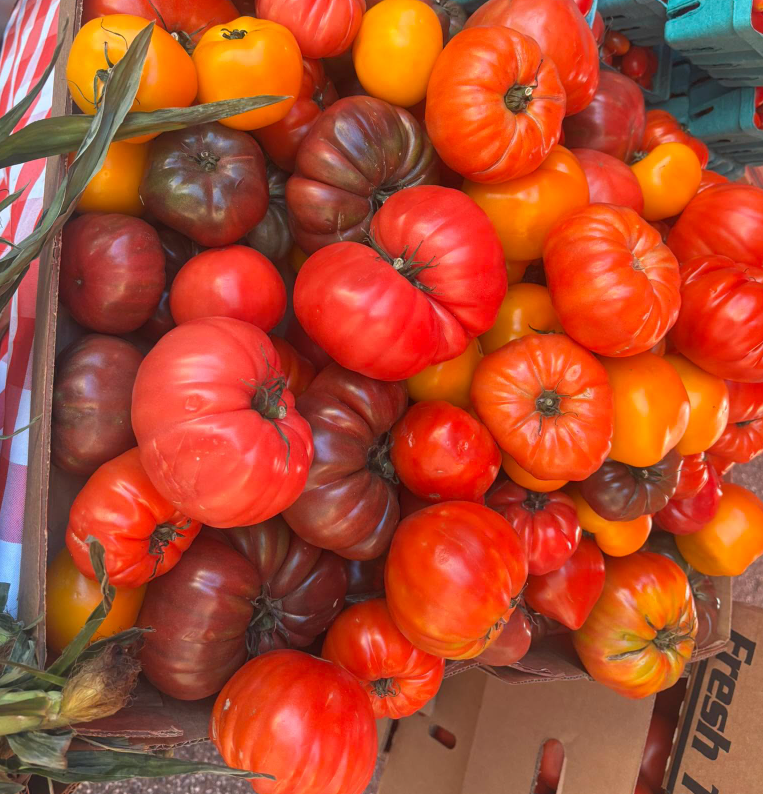
Part One: Pink and Red Heirloom Tomatoes
1. Brandywine
Brandywine is arguably the tomato most responsible for the entire heirloom tomato revival. It produces large, often over a pound, with deep pink skin, smooth red flesh, and a rich, old-fashioned tomato flavor that many gardeners still measure other varieties against.
Its exact history is somewhat clouded, but it is widely traced back to the late 1800s, and it grows on distinctive potato-leaf foliage rather than the standard serrated tomato leaf most people expect.
Brandywine is an indeterminate variety, meaning the vine keeps growing and producing throughout the season. It needs sturdy staking, a long warm growing season, and rewards patient gardeners with some of the best slicing tomatoes available.
2. Mortgage Lifter
Mortgage Lifter carries one of the best origin stories in the heirloom world. It was developed in the early 1930s by M.C. “Radiator Charlie” Byles of Logan, West Virginia, according to West Virginia University Extension.
Byles crossed four large tomato varieties over roughly six years, then sold the resulting plants for a dollar each, reportedly paying off his six-thousand-dollar mortgage in the process, which is exactly where the name comes from.
The fruit itself is a dark pink beefsteak, often weighing a pound or more, with a mild, meaty flavor and few seeds. It remains a favorite for sandwiches, since a single slice can cover an entire piece of bread.
3. Rutgers
Rutgers is a rare heirloom with an institutional origin story. It was developed at Rutgers University in 1934 and went on to become one of the most widely grown commercial tomato varieties in American history.
Unlike many heirlooms bred purely for flavor, Rutgers was also selected for disease resistance and reliable yields, which explains why it dominated commercial tomato fields for decades before newer hybrids took over.
Today it remains popular in home gardens for its balanced, classic tomato flavor and firm texture, making it a strong choice for both fresh eating and canning.
4. Arkansas Traveler
Arkansas Traveler is a classic pink heirloom dating back over a century, prized for performing well in hot, humid climates where many other tomatoes struggle with cracking and disease.
Its resilience in difficult growing conditions made it a Southern garden staple long before “heirloom” became a marketing term, and it remains a reliable choice for gardeners in warmer regions today.
The fruit is medium-sized with a good balance of sweetness and acidity, making it a versatile, everyday slicing tomato rather than a specialty variety grown just for looks.
5. German Johnson
German Johnson is a large, pink-red beefsteak tomato believed to be one of the parent varieties behind Mortgage Lifter, giving it a quiet but significant place in heirloom tomato history.
It is known for producing consistently large fruit with a mild, sweet flavor and relatively few seeds, characteristics that made it valuable to breeders looking to improve other varieties decades ago.
Home gardeners still grow German Johnson today specifically for slicing, since its size and low acidity make it an easygoing, crowd-pleasing tomato for sandwiches and salads.
6. Eva Purple Ball
Eva Purple Ball is a German heirloom producing medium-sized, rounded, rosy-pink fruit with a balanced, slightly tart flavor that distinguishes it from larger, sweeter beefsteak types.
Its smaller, uniform fruit size makes it more practical for canning and preserving than some of the oversized heirloom varieties, which can be awkward to process in bulk.
The plant is also known for reliable, heavy production throughout the season, giving gardeners a steady supply rather than the occasional giant fruit some heirlooms are known for.
ALSO READ: 35 Yellow Vegetables You Should Know (With Pictures, and Nutrition Facts)
Part Two: Black and Purple Heirloom Tomatoes
7. Cherokee Purple
Cherokee Purple has a deep, dusky rose-purple color with green shoulders and a rich, smoky-sweet flavor that helped kick off much of the modern interest in “black” tomatoes.
According to its documented history, the seeds were mailed in 1990 to heirloom tomato expert Craig LeHoullier, who was told the variety originated with the Cherokee more than a century earlier, and the name stuck from there.
Southern Exposure Seed Exchange first offered it commercially in 1993, and despite its unusual, bruised-looking appearance, it quickly became one of the most requested heirloom varieties among chefs and home gardeners alike.
8. Black Krim
Black Krim produces deep brown-red, almost purple-black fruit weighing 8 to 16 ounces, with an intensely rich, slightly salty-sweet flavor that fans often describe as one of the most distinctive among all heirlooms.
Its origins trace back to the Crimean peninsula, and the variety has since become a favorite among gardeners specifically seeking the darkest, most dramatic-looking tomatoes for their garden and table.
Black Krim performs best with consistent warmth, and many growers note the color deepens further in hot, sunny weather, making it a rewarding variety for peak summer harvests.
9. Paul Robeson
Paul Robeson is named after the celebrated singer and activist, and the tomato itself lives up to that legacy with a smoky-sweet flavor carrying subtle notes of citrus and earthiness.
Its dark brick-red to purple flesh places it firmly among the “black” tomato category, a group of heirlooms prized specifically for their unusually complex, less acidic flavor profile.
Originating from Russian breeding lines, Paul Robeson has become a favorite on farmers market tables, valued as much for its striking appearance as for its exceptional taste.
10. Black Ethiopian
Black Ethiopian is a lesser-known dark heirloom that has earned strong regional followings, including successful trial results reported by Mississippi State University Extension horticulturists testing varieties for hot, humid Southern gardens.
Its deep mahogany coloring and rich flavor place it firmly in the same family as Cherokee Purple and Black Krim, though it remains less widely available through mainstream seed catalogs.
For gardeners in warmer, humid climates specifically, Black Ethiopian’s demonstrated performance makes it worth seeking out over more famous varieties that may struggle in similar conditions.
11. Purple Calabash
Purple Calabash is one of the more unusual entries on this list, with deeply ruffled, pleated fruit in a muted purple-pink shade that looks almost prehistoric compared to modern round tomatoes.
Believed to be one of the oldest tomato varieties still in cultivation, its heavily ribbed shape reflects an older lineage, before modern breeding smoothed tomatoes into the uniform round shapes people expect today.
Its flavor is intensely rich and tomato-forward, making it a favorite among chefs for sauces, even though its irregular shape makes it less practical for uniform slicing.
ALSO READ: 35 Purple Vegetables You Should Know (With Pictures, and Nutrition Facts Explained)
Part Three: Green Heirloom Tomatoes
12. Green Zebra
Green Zebra ripens to a bright chartreuse-green base overlaid with deep green stripes, and its flavor lives up to its striking looks, offering a bright, zesty, tangy bite with a sweet finish.
It is one of the more recently developed heirlooms on this list, bred by Tom Wagner in the 1980s specifically to create a green-when-ripe tomato with genuinely excellent flavor.
Because Green Zebra ripens to green rather than red, gardeners need to check firmness and slight softening, rather than relying on color alone, to know when the fruit is ready to pick.
13. Aunt Ruby’s German Green
Aunt Ruby’s German Green is a large, green-when-ripe beefsteak with a sweet, complex, almost spicy flavor that many heirloom enthusiasts consider one of the best-tasting tomatoes available.
Its exact origin traces back to a family in Greeneville, Tennessee, and the tomato remains a favorite specifically among gardeners chasing the deepest, most complex tomato flavor rather than dramatic color.
Because it ripens green with a slight yellow blush, timing the harvest takes practice. Most growers rely on a gentle give when squeezed rather than any obvious color shift.
14. Green Grape
Green Grape is a small, green cherry-type heirloom that ripens to a translucent yellow-green color, offering a sweet, tangy bite similar in size and habit to Yellow Pear.
Its compact size and productivity make it well suited to container gardening or smaller garden plots, where a full-sized beefsteak variety would take up too much space.
Because the ripe color is subtle, harvesting relies on a light give under gentle pressure, similar to other green-fleshed heirlooms, rather than a dramatic color cue.
ALSO READ: Roma Tomatoes Identification: Are Roma Tomatoes Determinate or Indeterminate?
Part Four: Yellow and Orange Heirloom Tomatoes
15. Kellogg’s Breakfast
Kellogg’s Breakfast produces large, golden-orange beefsteak fruit with a rich, sweet, low-acid flavor that has made it one of the most requested orange heirlooms among serious tomato growers.
Its name traces back to a Michigan railroad engineer named Kellogg, who passed the seeds down through his family long before the variety became widely available through seed catalogs.
Its low acidity and creamy texture make it particularly well suited to fresh eating, especially for people who find standard red tomatoes too sharp or acidic for their taste.
16. Persimmon
Persimmon is a large, deep orange-red beefsteak tomato prized for its sweet, mild flavor, standing out as a favorite even among gardeners who typically prefer traditional red varieties.
Louisiana State University AgCenter trial evaluations have specifically highlighted its strong flavor among yellow and orange varieties tested for regional home garden performance.
Its size and sweetness make Persimmon an excellent slicing tomato, and its mild acidity pairs particularly well in salads alongside sharper greens or a simple vinaigrette.
17. Hillbilly
Hillbilly, sometimes called Hillbilly Potato Leaf, produces large, bicolor fruit in swirling shades of yellow and red, with a sweet, fruity flavor and relatively low acidity.
Its origin traces back to West Virginia, continuing a regional pattern seen with Mortgage Lifter, of Appalachian home gardeners developing and preserving distinctive large-fruited heirloom varieties.
Its marbled interior makes for a strikingly beautiful slice, which is part of why it has become a favorite at farmers markets and heirloom tomato tasting events.
18. Big Rainbow
Big Rainbow produces enormous bicolor fruit, often exceeding a pound, with vivid yellow skin streaked with red, and flesh nearly as colorful once sliced open.
Its dramatic appearance makes it a standout at farmers markets and heirloom tomato festivals, where its size and color contrast draw attention even among other unusual varieties.
Flavor-wise, it offers a sweet, mild taste with low acidity, making it another strong choice for gardeners specifically seeking a milder alternative to classic red tomatoes.
19. Pineapple
Pineapple tomato produces large, yellow fruit streaked with red throughout the flesh, offering a sweet, fruity flavor that has earned it comparisons to its tropical namesake.
Its marbled yellow-and-red interior makes it visually similar to Big Rainbow, though many gardeners note Pineapple leans slightly sweeter and less acidic on the palate.
Because of its size and soft texture, Pineapple tomatoes are best used fresh, in salads or simply sliced with salt, rather than cooked down into sauce.
ALSO READ: Beginners Guide: How Do You Grow Tomatoes Indoors?
Part Five: Striped and Bicolor Heirloom Tomatoes
20. Mr. Stripey
Mr. Stripey, closely related to varieties like Tigerella, produces large, yellow-orange fruit with subtle red striping and a mild, sweet flavor that appeals to gardeners wary of overly acidic tomatoes.
Its striped appearance and gentler flavor have made it a popular entry point for people trying heirloom tomatoes for the first time, since it feels familiar while still looking distinctive.
Because it tends to be lower in acid than most red tomatoes, Mr. Stripey works particularly well for people who enjoy tomatoes but find classic varieties too sharp.
21. Striped German
Striped German is a large bicolor beefsteak with yellow and red marbling both outside and in, offering a sweet, low-acid flavor similar in spirit to Big Rainbow and Hillbilly.
Its exact lineage connects it to a broader family of German-origin heirlooms that share a preference for mild sweetness over the sharper acidity found in many red varieties.
Its size and soft flesh make it best suited for fresh eating, since it tends to break down quickly when cooked, unlike firmer paste-type tomatoes.
Part Six: Paste and Sauce Heirloom Tomatoes
22. San Marzano
San Marzano is an indeterminate heirloom paste tomato, prized specifically for sauce-making, with dense, meaty flesh and comparatively few seeds compared to slicing varieties.
Michigan State University Extension Master Gardener guidance specifically recommends it for home gardeners in the Midwest looking for a reliable paste-type variety with strong culinary reputation.
Its lower moisture content compared to slicing tomatoes makes it ideal for cooking down into sauce, since it requires less time on the stove to reach a thick, rich consistency.
23. Amish Paste
Amish Paste is a classic heirloom sauce tomato, producing medium to large, oxheart-shaped fruit with dense flesh and relatively few seeds, similar in purpose to San Marzano.
Its origins trace back to Amish farming communities, particularly in Wisconsin, where it was preserved and passed down for generations before entering broader seed catalogs.
Unlike San Marzano, Amish Paste is also large enough to enjoy fresh, giving gardeners a rare paste tomato that doubles as a reasonably good slicing variety too.
24. Costoluto Genovese
Costoluto Genovese is a deeply ribbed Italian heirloom, producing red, fluted fruit with a bold, rich tomato flavor well suited to both sauce-making and fresh eating.
Its distinctive pleated shape reflects older Mediterranean tomato varieties, before modern breeding smoothed most tomatoes into the round, uniform shapes seen in grocery stores today.
Its high acidity and strong flavor make it especially popular in Italian cooking, where its intensity holds up well against garlic, olive oil, and long-simmered sauces.
ALSO READ: Understanding Tomato Pollination: Do Tomatoes Need to be Pollinated?
Part Seven: Small and Cherry-Type Heirlooms
25. Yellow Pear
Yellow Pear is one of the oldest documented heirloom tomatoes still grown today, producing small, pear-shaped, pale yellow fruit with a mild, slightly tangy flavor.
Its history stretches back centuries, and its distinctive shape makes it instantly recognizable even to people who otherwise know little about heirloom tomato varieties.
Because the plant is highly productive and compact enough for container growing, Yellow Pear remains a popular starter variety for gardeners curious about heirlooms but not ready to commit to a full-sized beefsteak.
Heirloom vs. Hybrid: What Actually Sets Them Apart
I find this distinction easiest to explain through breeding, not marketing. Heirloom tomatoes are open-pollinated, meaning they reproduce naturally through insects or wind, and their seeds grow true to the parent plant year after year.
Hybrid tomatoes, by contrast, are deliberately cross-bred for specific traits like disease resistance, uniform ripening, or extended shelf life, according to Iowa State University Extension guidance for home gardeners.
Neither type is objectively “better.” Hybrids often outperform heirlooms in disease resistance and yield consistency, while heirlooms typically win on flavor complexity and the ability to save seeds season after season.
How to Choose the Right Heirloom for Your Garden
If you want the classic heirloom experience: Brandywine or Cherokee Purple deliver the rich, old-fashioned flavor most people associate with heirloom tomatoes.
- If you’re gardening in a hot, humid climate: Arkansas Traveler and Black Ethiopian have documented success in Southern growing conditions.
- If you want a milder, low-acid tomato: Kellogg’s Breakfast, Big Rainbow, or Mr. Stripey suit people who find red tomatoes too sharp.
- If you’re cooking sauce rather than eating fresh: San Marzano or Amish Paste are built specifically for that purpose.
- If you have limited space: Yellow Pear or Green Grape grow well in containers and smaller garden beds.
Basic Growing Notes for Heirloom Tomatoes
Most heirloom varieties are indeterminate, meaning they keep growing and producing fruit until frost, which means they need sturdy staking or caging from the start.
Days to maturity vary widely, generally ranging from 70 days for early varieties like Yellow Pear to 85 or more for large beefsteaks like Mortgage Lifter and Brandywine.
Because heirlooms generally carry less built-in disease resistance than hybrids, rotating planting locations each year and providing good airflow around plants matters more than it does for modern disease-resistant cultivars.
Final Thoughts
Twenty-five varieties barely scratch the surface of what exists in the heirloom tomato world, but they represent a solid, flavorful starting point for any gardener or curious cook.
What stays with me most is how much personal history rides along with each variety. A tomato named after a mortgage payoff, or passed down by a specific Tennessee or West Virginia family, carries a story that a supermarket tomato simply never will.
Whether you grow one plant on a balcony or a full row in a backyard garden, heirloom tomatoes offer something increasingly rare in modern food: a direct, unbroken link to the exact flavor someone decided was worth saving.
References
- Mississippi State University Extension Service. “What are Heirloom Tomatoes?” https://extension.msstate.edu/blog/what-are-heirloom-tomatoes
- University of Delaware Cooperative Extension. “Tomatoes – Heirloom.” https://www.udel.edu/academics/colleges/canr/cooperative-extension/fact-sheets/heirloom-tomatoes/
- Iowa State University Extension and Outreach. “Recommended Cultivars and Types of Tomatoes for the Home Garden.” https://yardandgarden.extension.iastate.edu/how-to/recommended-cultivars-and-types-tomatoes-home-garden
- West Virginia University Extension. “Mortgage Lifter Tomato.” https://extension.wvu.edu/lawn-gardening-pests/news/2024/08/01/mortgage-lifter-tomato
- USDA Agricultural Research Service. “PGRU Tomato Collection.” https://www.ars.usda.gov/northeast-area/geneva-ny/plant-genetic-resources-unit-pgru/docs/tomato-collection/
- Rutgers New Jersey Agricultural Experiment Station. “Growing Tomatoes in the Home Garden” (FS678). https://njaes.rutgers.edu/fs678/
- National Institutes of Health, National Center for Biotechnology Information (PMC). “Morphological Diversity, Genetic Characterization, and Phytochemical Assessment of the Cypriot Tomato Germplasm.” https://www.ncbi.nlm.nih.gov/pmc/articles/PMC8401825/

Tim M Dave is a gardening expert with a passion for houseplants, particularly cacti and succulents. With a degree in plant biology from the University of California, Berkeley, he has vast experience in gardening. Over the years, he has cultivated a vast collection of desert plants and learned a great deal about how to grow and care for these unique companions.