15 Weeds That Grow in Rocks (How to Identify and Remove Them)
You lay fresh gravel on a path or driveway, and it looks perfect. A few weeks later, green shoots appear between the stones. I have seen this happen many times, and it still surprises me. How can anything grow in rock?
The answer is simple. Rocks are rarely just rocks. Dust, leaves and soil settle between the stones. Rain adds moisture, and wind brings seeds. That is all a tough weed needs.
This guide covers 15 weeds that grow in rocks, gravel and cracks. For each one, I explain how to identify it and why it survives.
Why Do Weeds Grow in Rocks?
Weeds do not need rich soil. They only need a thin layer of dirt, some water and light. Gravel provides all three over time.
Purdue University turfgrass experts explain why edges of pavement are such good weed spots. During construction, extra gravel and concrete are often left behind. As a result, there may be only 2 to 3 inches of soil in the 6 to 12 inches next to the pavement. Warm soil there also helps summer weeds germinate.
Cornell University adds that weeds grow easily in cracks, joints and depressions where soil settles. Weeds near the edge of a hard surface also spread inward more easily. So the first line of defense is clean edges and clean surfaces.
15 Weeds That Grow in Rocks, Gravel and Cracks
1. Spotted Spurge (Euphorbia maculata)
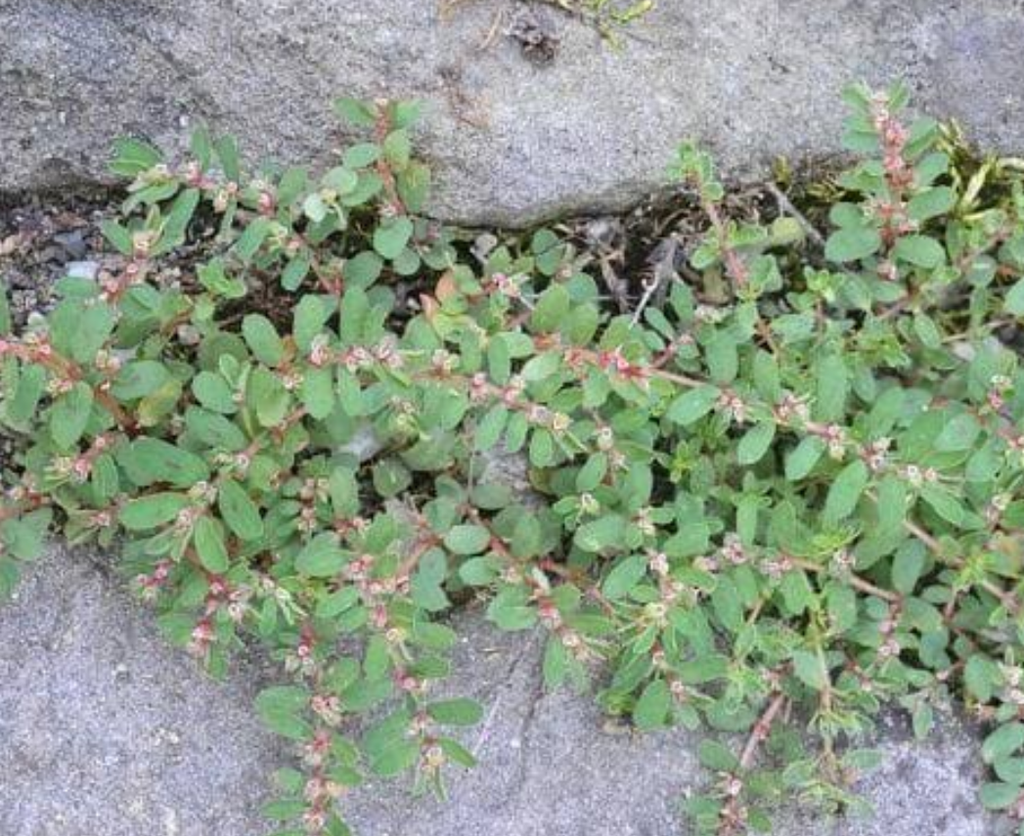
Spotted spurge is a low, flat weed that forms thick mats. It is one of the most common weeds in rocky and paved areas. The leaves are small and often have a dark spot in the middle.
University of Idaho Extension lists sidewalk cracks, roadsides and thin lawns as its usual homes. It is a summer annual, so it dies each winter but leaves many seeds. It can keep sprouting through summer and early fall.
To identify it, break a stem. A milky white sap appears. Wear gloves, because the sap can irritate skin and eyes. Pull it early, before seeds form, and bag the plants.
2. Prostrate Knotweed (Polygonum aviculare)
This weed is also called common knotweed, matweed or doorweed. It forms tough, wiry mats that lie flat on the ground. The stems are thin and highly branched.
University of California IPM experts note that it often germinates in cracks in compacted soil. It can look like spotted spurge. The easy test is the sap. Knotweed does not have milky sap.
It handles foot traffic very well. Mowing does not stop it, because it stays low and spreads. Pull young plants early, and sweep soil out of cracks so seeds cannot settle.
3. Common Purslane (Portulaca oleracea)
Purslane is a succulent weed with thick, fleshy leaves and reddish stems. It spreads across gravel like a green carpet. I always find it surprisingly pretty, even though I do not want it there.
The numbers explain why it is so hard to beat. West Virginia University Extension reports that one plant can produce over 200,000 seeds. Those seeds can stay alive in the soil for 20 to 40 years.
The University of Arizona adds that broken pieces can re-root at the nodes. So do not just chop it up and leave it. Pull the whole plant and remove it from the site.
4. Dandelion (Taraxacum officinale)
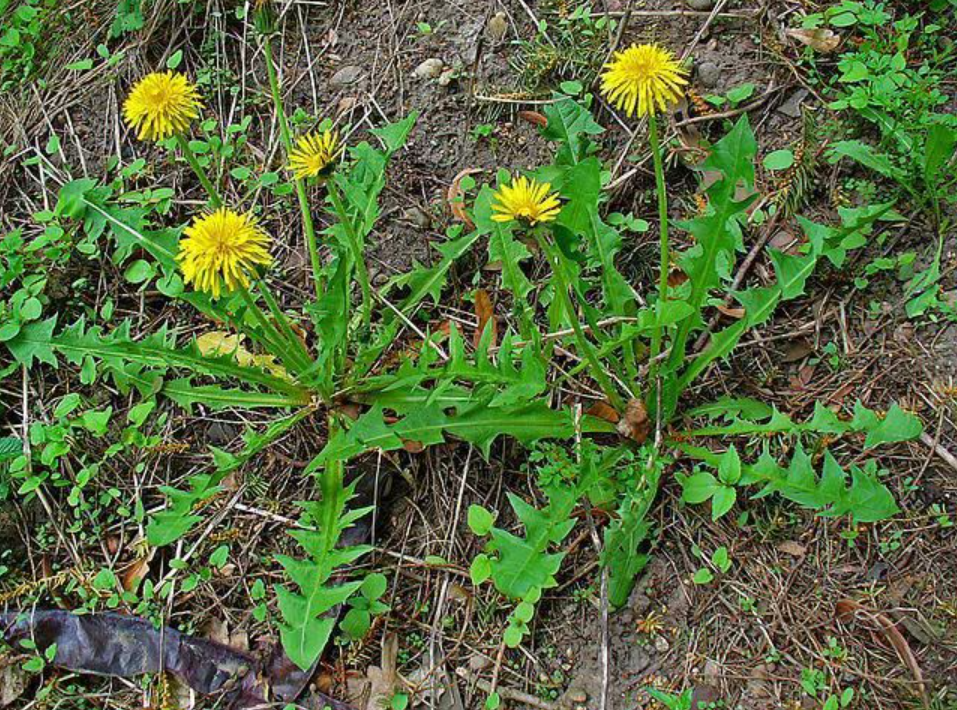
Everyone knows dandelions. They have yellow flowers, white puffball seed heads and jagged leaves in a ring. They are a regular sight in gravel, lawn edges and cracks.
The secret is the deep taproot. Purdue turf specialists point out that dandelions can regrow from pieces of taproot left in the ground. So hoeing at the surface often fails. The plant simply returns.
Dig out as much root as you can. A narrow weeding tool works well. Remove flower heads before they turn to seed, because the wind carries seeds far.
5. Crabgrass (Digitaria species)
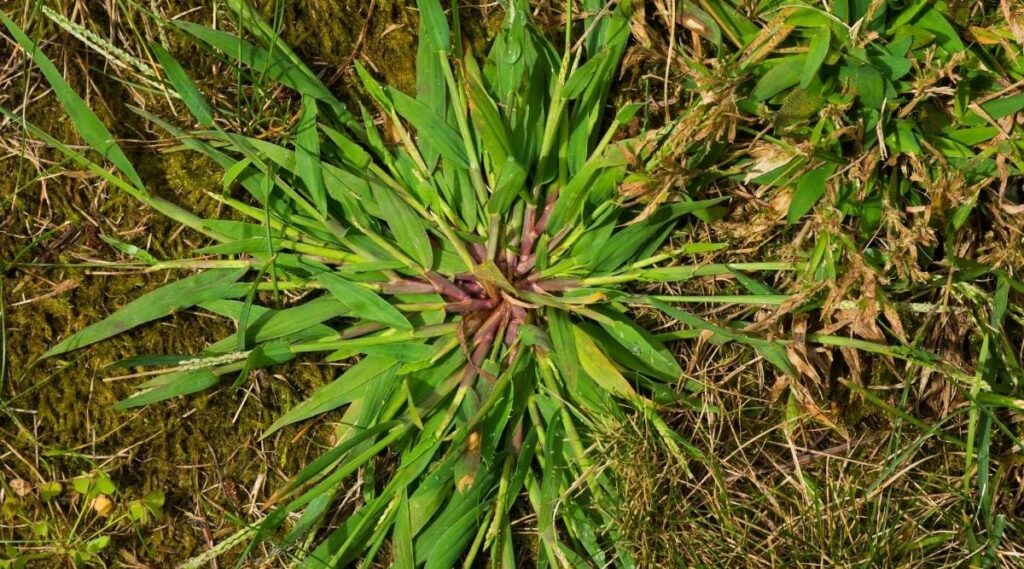
Crabgrass is a grassy weed that spreads outward from a center point, like crab legs. It loves heat and thrives in the warm zones beside driveways and paths. It is an annual and returns from seed each year.
Purdue lists crabgrass among the common weeds next to sidewalks and driveways. Hot, compacted soil suits it. Gravel edges that bake in the sun are ideal.
Pull it while it is small. Once it matures, it sets thousands of seeds. In landscape beds, a pre-emergent product applied in spring can prevent new seedlings.
READ MORE ON: 10 Types of Crabgrass in Your Lawn (Identification With Pictures)
6. Goosegrass (Eleusine indica)
Goosegrass looks like crabgrass but is tougher. The center of the plant is often pale and flattened, which gives it a silvery look. Its stems lie close to the ground.
Purdue also names goosegrass as a typical weed in these tough spots. It thrives in hard, compacted ground where little else grows. Heavy foot traffic does not bother it.
Because the stems are so tough, pulling by hand can be difficult. Use a hoe or a weeding knife to cut the roots. Loosen compacted gravel to make the area less friendly.
7. Yellow Nutsedge (Cyperus esculentus)
Yellow nutsedge looks like grass but is not a grass. Its stems are triangular, and the leaves grow in three ranks. It grows fast and looks bright yellow-green.
Purdue lists it among the common weeds near pavement. It spreads by small underground tubers called nutlets. That is why pulling often leaves new shoots behind.
Remove the plant and as much of the root zone as you can. Keep gravel dry and well drained. Wet spots are where it thrives.
8. Black Medic (Medicago lupulina)
Black medic looks like clover. It has three small rounded leaflets and tiny yellow flowers. It grows low and spreads into mats along gravel edges.
University of Wyoming Extension notes that it is a low-growing plant with a long taproot. It flowers for most of the growing season. The flowers turn into small black pods, which gives the plant its name.
It prefers thin, poor soil, so gravel margins suit it well. Pull it before the pods form. A knife that reaches deep helps you remove the taproot.
9. Broadleaf Plantain (Plantago major)
Plantain forms a rosette of wide, oval leaves with strong parallel veins. Slim flower spikes rise from the center. It is easy to spot, even in a crack.
It handles compacted ground better than most plants. That is why it thrives on footpaths and gravel tracks. It also makes a lot of seed.
Dig it out with a narrow tool, lifting the whole root. Cut the seed spikes if you cannot remove the plant right away. This prevents it from spreading further.
10. Canada Thistle (Cirsium arvense)
Canada thistle is a serious perennial weed. It has spiny leaves and pink-purple flowers. It often invades gravel pits, roadsides and disturbed ground.
Michigan State University reports an enormous root system. Roots can run 15 feet or more sideways and go up to 20 feet deep. A single plant can release more than 5,000 seeds.
Because of this, one pull is never enough. Remove top growth repeatedly and prevent flowering. Colorado State Extension suggests regular hand-pulling combined with other methods over several years.
11. Tree of Heaven (Ailanthus altissima)
This one starts as a tiny seedling in a crack and becomes a large tree. It is a fast-growing invasive species from China. Many gardeners meet it first as a small plant in a wall or paved joint.
The U.S. National Park Service says it can reach 80 feet in height. It occurs in 42 states, from Maine to California. It spreads by seed and by root sprouts.
Pull young seedlings early, while the soil is soft. For larger plants, check local guidance before cutting. Cutting alone often causes more shoots to grow from the roots.
12. Common Chickweed (Stellaria media)
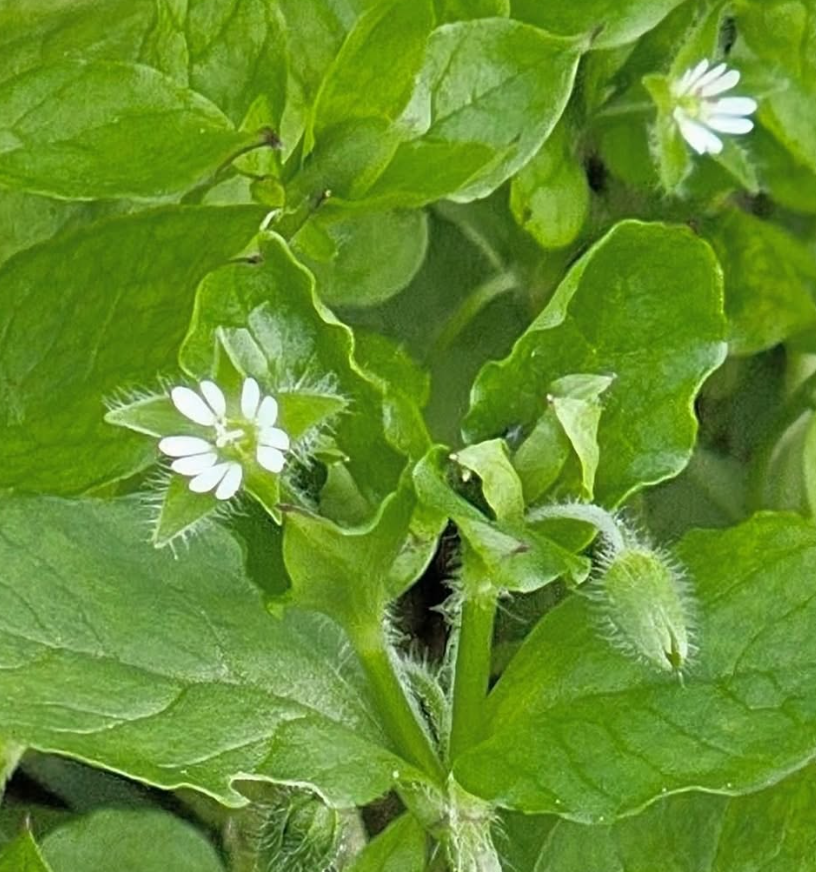
Chickweed is a soft, low plant with small oval leaves and tiny white star-shaped flowers. It forms a loose mat and likes cool, damp conditions. You often see it in spring and autumn.
It grows well in shaded gravel areas that stay moist. Gravel under trees or beside walls can suit it perfectly. The stems root where they touch the ground.
Rake it out gently, including the stems. It comes out easily when the ground is damp. Improve drainage so the area dries out between rains.
13. Henbit (Lamium amplexicaule)
Henbit has square stems and rounded leaves with scalloped edges. Small purple-pink flowers appear in early spring. It belongs to the mint family.
It is a cool-season weed. It sprouts in autumn or very early spring, so many people notice it before other weeds wake up. It often grows in thin, bare patches.
Pull it early in spring, before the flowers set seed. A hoe slid just under the surface works well on gravel. Repeat every few weeks.
14. Sandbur (Cenchrus species)
Sandbur is a grassy weed with spiny burrs that stick to shoes, clothes and pet fur. It loves sandy, gravelly and dry soil. Walking barefoot near it is not a good idea.
It thrives where soil is poor and drainage is sharp. That makes gravel paths and dry edges a natural fit. I have learned to wear gloves when removing it.
Pull plants before the burrs form. Once they appear, bag them carefully to avoid spreading seeds. Do not compost the burrs at home.
15. Field Bindweed (Convolvulus arvensis)
Field bindweed is a twining vine with arrow-shaped leaves and white or pale pink funnel flowers. It climbs over anything nearby. It can also spread along the ground through gravel.
It is a deep-rooted perennial. This makes it one of the hardest weeds to remove. New shoots appear from root pieces left in the soil.
Pull or cut it often to weaken the roots. Never let it reach the flowering stage. Persistence is the only real answer, and it can take a full season or more.
ALSO READ: 36 Weeds With Yellow Flowers (Identification, With Pictures)
How to Remove Weeds from Rocks and Gravel
Start with the safest and simplest methods. They work well when you act early.
Pull by hand. Do this after rain, when the soil is soft. Remove the whole root. Small weeds are easy, and large ones are not.
Use the right tools. Cornell University suggests a block paving knife or brush for joints and crevices. A hoe slid under loose gravel also works. The Royal Horticultural Society recommends these methods over weedkillers.
Try heat. Cornell notes that flame weeding can be used on hard surfaces such as pavement, brick and pavers. Follow safety rules closely. Never use it near dry plants or buildings.
Think carefully about chemicals. Always read the label and check that the product is allowed for gravel and driveway use. Ohio State Extension volunteers note that no solution is truly permanent. Homemade mixtures also lack safety labels.
How to Prevent Weeds in Gravel
Prevention saves far more effort than removal. A few habits make a big difference.
- Sweep regularly. Cornell advises removing soil that collects in cracks and joints. Without soil, seeds struggle to root.
- Cut weeds before they seed. One flowering weed can create thousands of new ones. Early action matters most.
- Keep edges clean. Weeds spread inward from nearby vegetation. Watch for plants that creep under pavement.
- Seal cracks. Filling gaps removes the place where weeds start. It is not permanent, but it helps.
- Use a thick gravel layer. A deeper layer blocks light. Lay a weed barrier underneath when building a new area.
- Improve drainage. Standing water helps seeds germinate. Direct lawn irrigation away from gravel.
Frequently Asked Questions
What weeds grow in gravel the most? Spotted spurge, knotweed, purslane, crabgrass and dandelion are very common. Purdue University lists several of these as typical near pavement.
Why do weeds keep coming back in gravel? Seeds arrive by wind, water and birds. Organic debris collects between stones and feeds them. Some seeds, like purslane, survive for decades.
Is it safe to pull spurge by hand? Yes, but wear gloves. The milky sap can irritate skin and eyes.
Can I stop weeds permanently? No method is permanent. Regular care and good prevention keep the problem small.
Final Thoughts
Weeds in rocks look small, but they are very determined. Most of these 15 plants share a few traits. They love heat, tolerate poor soil and make huge numbers of seeds.
My advice is simple. Act early, remove roots, and keep the surface clean. A short check every two weeks in spring and summer beats a major clean-up in autumn. With steady care, even a stubborn gravel path can stay tidy.
References
- Purdue University Turfgrass Science. “Weed Management Next to Sidewalks and Driveways.” https://turf.purdue.edu/weed-management-next-to-sidewalks-and-driveways
- Cornell University, Turfgrass Weed ID and Management. “Hard Surfaces.” https://turfweeds.cals.cornell.edu/pfm/hard-surfaces
- University of California Statewide IPM Program. “Common Knotweed.” https://ipm.ucanr.edu/home-and-landscape/common-knotweed/
- University of Idaho Extension. “Spotted Spurge” (Bulletin 998). https://www.uidaho.edu/extension/publications/bul/bul998
- West Virginia University Extension. “Common Purslane.” https://extension.wvu.edu/lawn-gardening-pests/weeds/common-purslane
- Michigan State University Extension. “Canada Thistle” (Weed Control Guide). https://www.canr.msu.edu/weeds/extension/weed-control-guide/2019WG-canada-thistle.pdf
- U.S. National Park Service, Shenandoah National Park. “Tree of Heaven.” https://www.nps.gov/shen/learn/nature/tree-of-heaven.htm

Tim M Dave is a gardening expert with a passion for houseplants, particularly cacti and succulents. With a degree in plant biology from the University of California, Berkeley, he has vast experience in gardening. Over the years, he has cultivated a vast collection of desert plants and learned a great deal about how to grow and care for these unique companions.