15 Weeds That Look Like Hollyhocks (Spot The Difference)
Hollyhocks are one of the most recognizable cottage garden flowers. Their tall spikes and wide, funnel-shaped blooms have charmed gardeners for centuries.
But hollyhocks belong to the mallow family, and this family is huge. Many weedy relatives share the same lobed leaves, tall growth habit, or funnel-shaped flowers.
I have pulled what I thought was a stray weed, only to realize later it was a distant hollyhock cousin quietly spreading through the garden bed. It happens more often than people expect.
This guide covers 15 weeds that look like hollyhocks. Each one has distinct traits that set it apart, once you know what to look for.
Weeds That Resemble Hollyhocks
Hollyhocks belong to the Malvaceae family, commonly known as the mallow family. This family includes over 4,200 species worldwide, spread across nearly 250 genera.
Many weedy mallows share the hollyhock’s signature traits. These include rounded or lobed leaves, five-petaled flowers, and a central column of fused stamens.
Because of this shared ancestry, confusion between hollyhocks and mallow weeds is common. Some of these weeds even escaped cultivation themselves, long ago.
Let’s dig in.
1. Common Mallow (Malva neglecta)
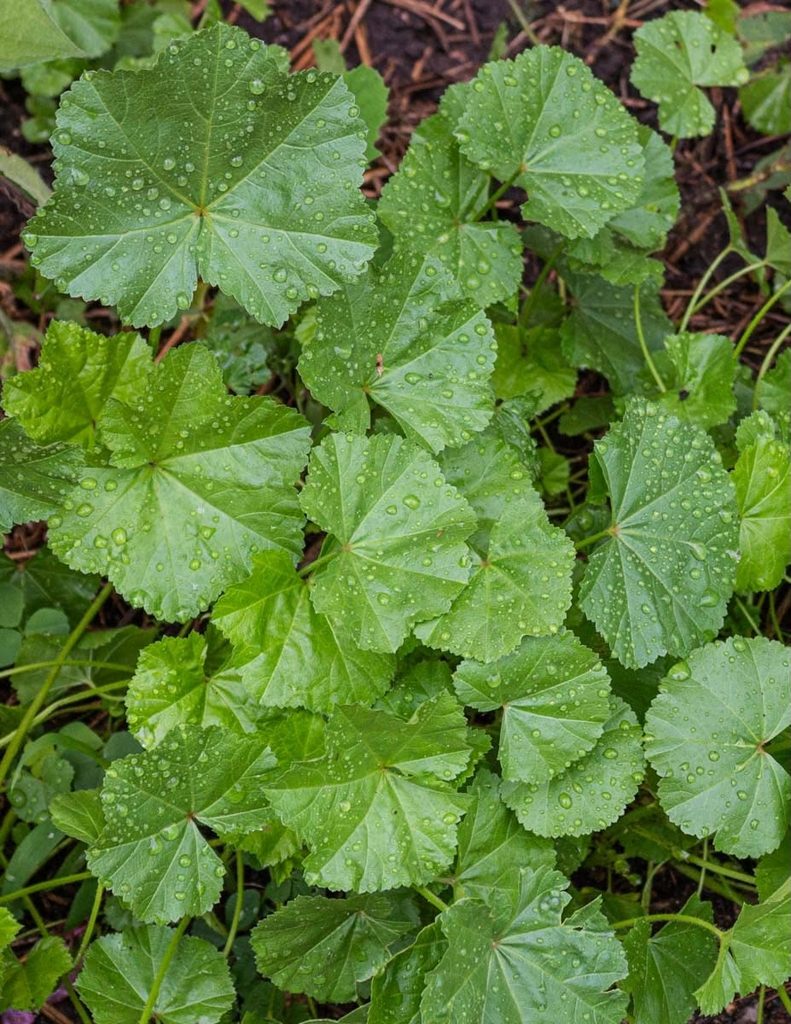
Common mallow is one of the most widespread hollyhock lookalikes in North America and Europe. Its rounded, lobed leaves closely resemble young hollyhock foliage.
I have seen this weed pop up in sidewalk cracks and neglected garden beds alike. It grows low and sprawling rather than tall, which is one clue that separates it from true hollyhocks.
The flowers are small, pale pink to lavender, with five notched petals. Unlike hollyhocks, common mallow rarely grows past 12 inches tall, staying closer to the ground.
2. Musk Mallow (Malva moschata)
Musk mallow produces delicate pink or white flowers that genuinely echo a hollyhock’s shape, just on a smaller scale. The blooms give off a faint, musky fragrance when crushed.
I find this weed easy to mistake for a hollyhock seedling in early spring. The deeply cut, feathery leaves are more finely divided than a hollyhock’s broader foliage, though.
Musk mallow typically reaches 1 to 2 feet tall. It spreads through self-seeding, and a single plant can produce hundreds of seeds in one growing season.
3. High Mallow (Malva sylvestris)
High mallow is often the closest match to a true hollyhock on this list. It can grow up to 4 feet tall, with striking purple-pink flowers streaked with darker veins.
I have genuinely paused in a field, unsure whether I was looking at a wild hollyhock or this weed. The flower shape and coloring overlap that closely.
The key difference lies in the flower spacing. High mallow blooms cluster more loosely along branching stems, while hollyhocks stack tightly along a single, unbranched stalk.
4. Cheeseweed Mallow (Malva parviflora)
Cheeseweed mallow gets its name from its round, cheese-wheel-shaped seed pods. Its leaves are broad, lobed, and crinkled, closely matching young hollyhock foliage in appearance.
This weed is considered a serious agricultural pest in many regions. In parts of Australia and California, it competes aggressively with crops and reduces yield in affected fields.
Unlike hollyhocks, cheeseweed mallow rarely exceeds 2 feet in height. Its flowers are also much smaller and less showy, usually a pale lilac rather than bold pink.
5. Dwarf Mallow (Malva pusilla)
Dwarf mallow, sometimes called round-leaved mallow, is a low-growing weed with small, rounded leaves. From a distance, young plants can resemble hollyhock seedlings before they bolt upward.
I have noticed this weed thriving in compacted, disturbed soil, especially along driveways and garden borders. It tolerates poor conditions far better than a cultivated hollyhock ever could.
The flowers are tiny, pale pink or white, and easy to overlook. Dwarf mallow rarely grows taller than 8 inches, making height the clearest way to rule it out.
6. Marsh Mallow (Althaea officinalis)
Marsh mallow is actually a close botanical relative of the hollyhock, sharing the same genus family lineage. Its soft, velvety leaves and pale pink flowers make the resemblance especially strong.
I think this is one of the most convincing lookalikes, since marsh mallow can reach heights of 3 to 4 feet. That puts it in a similar range as many hollyhock varieties.
Historically, marsh mallow root was used to make the original marshmallow confection. Today, it is considered a weed in some regions but still cultivated for herbal use in others.
7. Tree Mallow (Malva arborea)
Tree mallow is a robust, shrubby plant that can tower up to 8 feet tall in favorable coastal conditions. Its height alone makes it one of the most hollyhock-like weeds around.
I have encountered this plant growing wild along cliffside paths, where salty air and poor soil seem to encourage it rather than hold it back. It thrives where little else survives.
The flowers are deep pink with dark purple veining, arranged along the upper stem much like a hollyhock. Tree mallow is classified as invasive in parts of the United States.
8. Velvetleaf (Abutilon theophrasti)
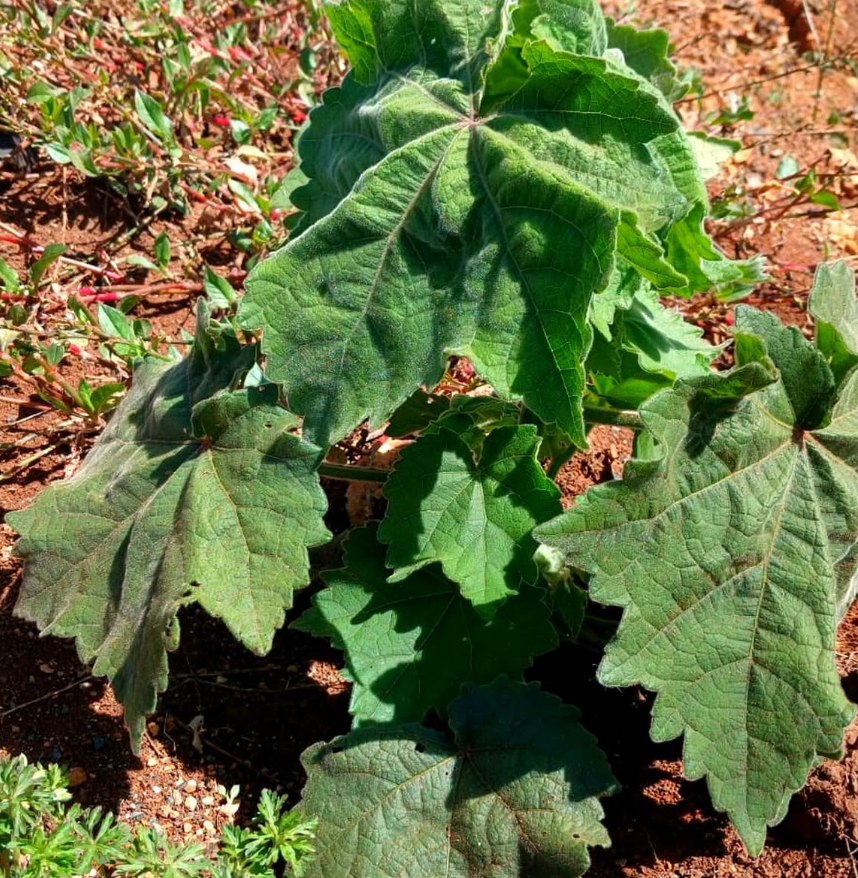
Velvetleaf is named for its soft, fuzzy leaves, which feel almost like felt to the touch. The leaf shape is broad and heart-like, echoing the lower foliage of a young hollyhock.
I have pulled this weed from vegetable gardens more times than I can count. It is considered one of the top ten most troublesome agricultural weeds in the United States corn belt.
Unlike hollyhocks, velvetleaf produces small, yellow-orange flowers rather than large, showy blooms. The plant can still reach 3 to 7 feet tall, matching hollyhock height closely.
9. Indian Mallow (Abutilon indicum)
Indian mallow is a close cousin of velvetleaf, common throughout tropical and subtropical regions. Its broad, downy leaves and upright growth habit mirror a hollyhock’s early growth stage.
I have seen this weed used medicinally in some cultures, despite being classified as invasive in others. It has a long history in traditional Ayurvedic practices across South Asia.
The flowers are small and yellow, quite different from a hollyhock’s larger blooms. Height is the more convincing similarity, with plants often reaching 3 to 6 feet tall.
10. Prickly Sida (Sida spinosa)
Prickly sida is a wiry, upright weed with small, oval leaves and tiny yellow flowers. It shares the hollyhock’s tendency to grow tall and narrow, often reaching 2 to 3 feet.
I find this weed particularly stubborn, since it develops a tough, fibrous stem that resists hand-pulling once established. Farmers often battle it in cotton and soybean fields.
The flowers are far smaller than a hollyhock’s, only about half an inch wide. Still, the plant’s upright silhouette can create confusion from a distance in an overgrown bed.
11. Spiny Sida / Wireweed (Sida acuta)
Wireweed, also called spiny sida, is closely related to prickly sida but grows with a more branching, bushy structure. Its narrow leaves taper to a point, unlike a hollyhock’s broader foliage.
This weed has spread aggressively across tropical regions worldwide. In parts of Africa and Southeast Asia, it is classified among the most invasive agricultural weeds, choking out native vegetation.
I have noticed that wireweed rarely grows a single dominant stalk the way hollyhocks do. Instead, it branches repeatedly, which is often the fastest way to rule out a hollyhock mix-up.
12. Venice Mallow / Flower-of-an-Hour (Hibiscus trionum)
Venice mallow gets its nickname because each flower opens for just a few hours before wilting. The pale cream petals with a deep purple center resemble a miniature hollyhock bloom.
I have grown genuinely fond of this weed, despite its aggressive self-seeding habit. Watching the short-lived flowers open each morning feels like a small daily surprise in the garden.
Unlike hollyhocks, Venice mallow stays fairly short, usually under 2 feet. The deeply lobed leaves are another giveaway, appearing more feathery than a hollyhock’s rounder foliage.
13. Bristly Mallow / Carolina Mallow (Modiola caroliniana)
Bristly mallow, also known as Carolina mallow, is a low, creeping weed common in lawns and garden edges. Its small, deeply cut leaves bear only a passing resemblance to hollyhock foliage.
I usually spot this weed hiding among turf grass rather than standing upright like a hollyhock. It spreads along the ground instead of growing a single vertical stalk.
The flowers are tiny and brick-red to orange, quite different from typical hollyhock colors. This weed rarely grows taller than 6 inches, making height the easiest identifying factor.
14. Volunteer Okra (Abelmoschus esculentus)
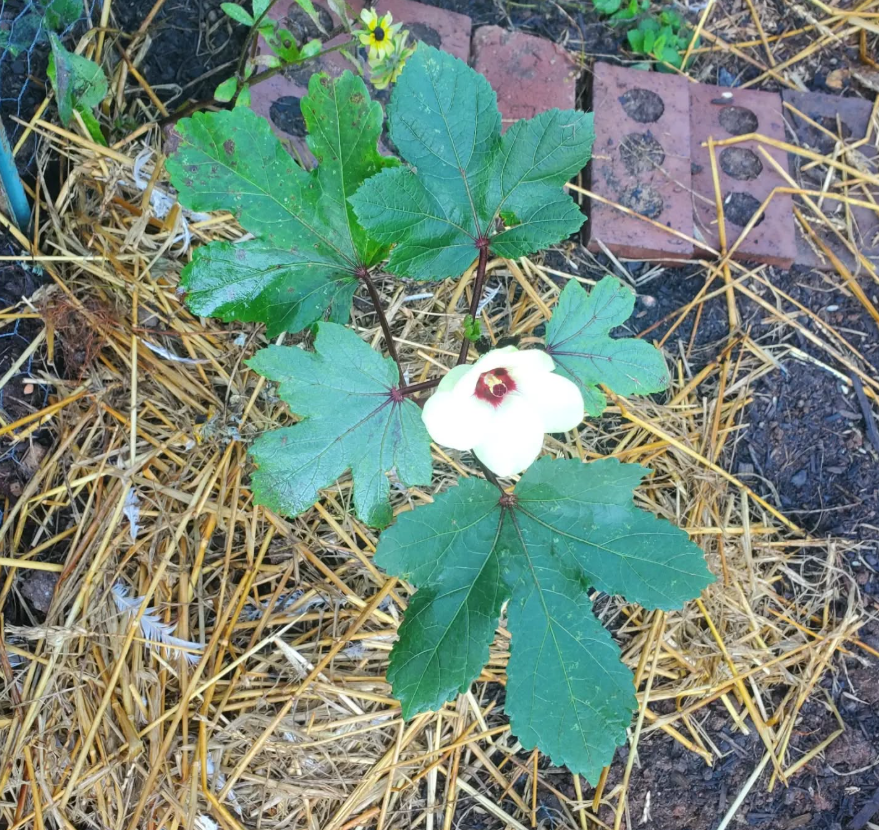
Okra is a cultivated crop, but it belongs to the same Malvaceae family as hollyhocks and often self-seeds into “volunteer” plants the following season. Its broad, lobed leaves closely resemble hollyhock foliage.
I have found volunteer okra sprouting in unexpected corners of the garden, especially where pods were left to dry and drop seed the year before. The resemblance to hollyhocks surprised me the first time.
Okra flowers are pale yellow with a dark red or maroon center, structurally similar to a hollyhock bloom. The plant can grow 3 to 6 feet tall, matching hollyhock height in many gardens.
15. Common Milkweed (Asclepias syriaca)
Common milkweed is not a close botanical relative of hollyhocks, but its tall, unbranched stalk creates a similar silhouette from a distance. Both plants often grow along fences and untended borders.
I have had visitors ask if a patch of milkweed was actually a hollyhock before it bloomed, simply because of the upright, single-stem growth pattern early in the season.
Once milkweed flowers open, the resemblance disappears quickly. The blooms form rounded clusters rather than the hollyhock’s stacked, funnel-shaped flowers along the stem.
ALSO READ: 15 Weeds That Look Like Grass: How to Identify and Deal With Each One
How to Tell Hollyhocks and Lookalike Weeds Apart
The clearest identifier is flower arrangement. True hollyhocks produce large, funnel-shaped blooms stacked tightly along a single unbranched stalk, often reaching 6 to 8 feet tall.
Leaf texture matters too. Hollyhock leaves are broad, rough, and deeply lobed, while many weedy mallows have smaller, softer, or more finely divided foliage.
Finally, consider growth pattern. Hollyhocks rarely branch, while most weedy relatives on this list spread outward or stay low to the ground rather than growing one dominant stalk.
Managing Hollyhock Lookalike Weeds in Your Garden
If you want to keep true hollyhocks and remove the weedy impostors, early identification is key. Most mallow weeds are easiest to pull before they establish deep taproots.
I recommend checking new seedlings closely each spring. Comparing leaf shape and early growth habit against a known hollyhock seedling can prevent years of unwanted spreading.
Mulching garden beds heavily also helps. It suppresses weed seed germination without affecting established hollyhock plants, which tolerate mulch well once their root systems mature.
Final Thoughts
Hollyhocks have plenty of botanical cousins that can easily fool an untrained eye. From common mallow to volunteer okra, these 15 weeds share enough traits to cause genuine confusion in the garden.
Knowing what sets a true hollyhock apart, its height, flower stacking, and leaf texture, makes identification much easier over time. I hope this guide helps you tell the difference with confidence.

Tim M Dave is a gardening expert with a passion for houseplants, particularly cacti and succulents. With a degree in plant biology from the University of California, Berkeley, he has vast experience in gardening. Over the years, he has cultivated a vast collection of desert plants and learned a great deal about how to grow and care for these unique companions.