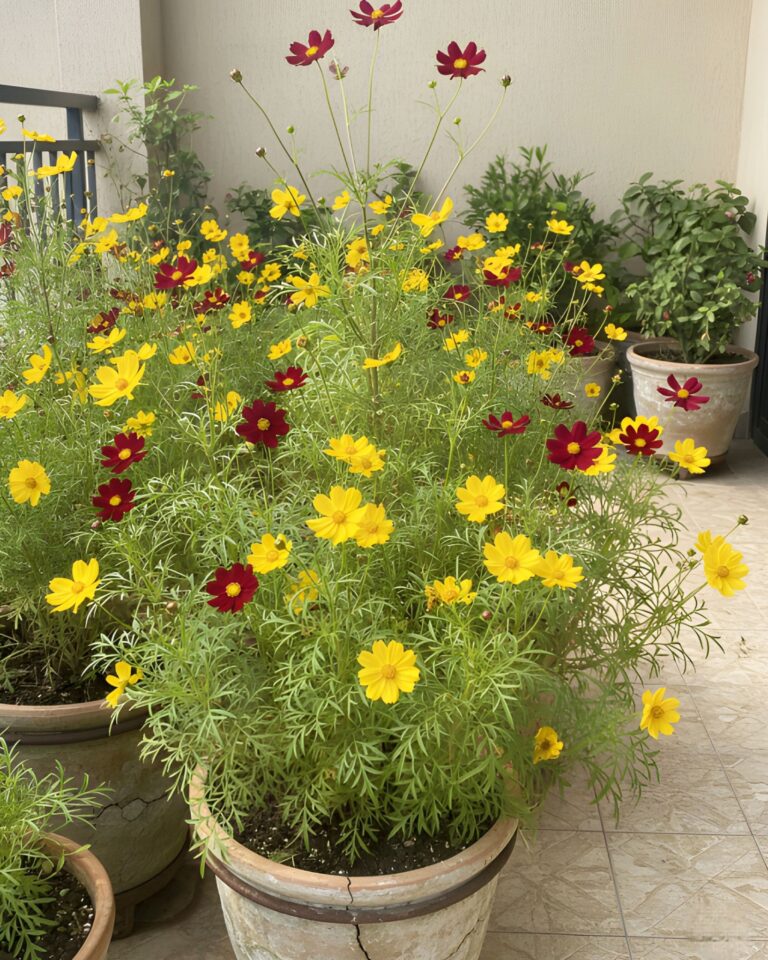
40 Deer Resistant Perennial Flowers (Names, With Pictures)
You plant a bed of flowers in spring. A few weeks later, the tips are gone, and the stems look torn. If you have seen this, you know the feeling. I have felt it too, and it is hard not to take it personally.
The good news is that deer are picky eaters. Many perennials taste bitter, smell strong, feel fuzzy, or are toxic. Deer usually skip them.
This guide lists 40 deer-resistant perennial flowers, explains why deer avoid these plants and how to protect your garden when deer get hungry.
Why Deer-Resistant Plants Matter
Deer are not a small problem. A Rutgers fact sheet reports more than 1 million deer-related vehicle collisions in the U.S. in a single year (July 2010 to June 2011). It also states that wildlife damage costs U.S. agriculture about $4.5 billion each year, and deer cause most of it.
A USDA environmental assessment adds that deer thrive in suburbs. Fertilized lawns, gardens, and ornamental plants give them high-quality food. Your flower bed is part of their menu.
Deer also eat a lot. Rutgers estimates they eat about 2 to 7 pounds of food per 100 pounds of body weight each day. A small herd can clear a flower bed in one night.
NOTE: No plant is deer-proof. Oregon State says plainly that deer-resistant does not mean deerproof. Hungry deer, young deer, and new plants all change the result.
40 Deer-Resistant Perennial Flowers
1. Lavender (Lavandula)
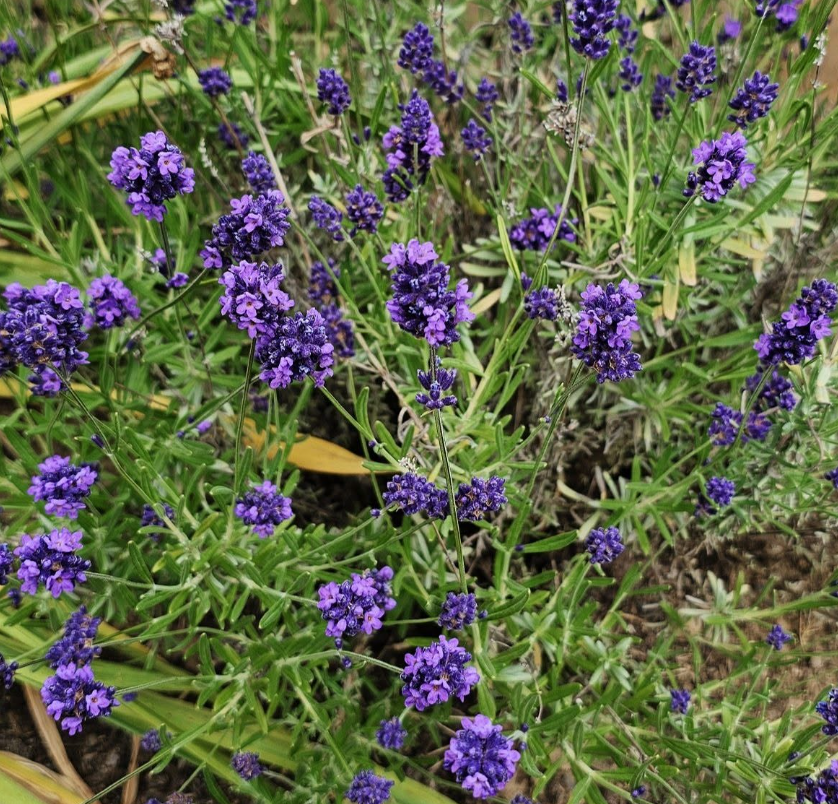
Lavender is my first choice for any deer-prone garden. The leaves are full of aromatic oil, and deer dislike the strong scent.
Oregon State also names lavender as a plant deer avoid. It grows best in full sun and well-drained soil. Wet roots will kill it faster than any deer.
Plant it along paths or at the edge of a bed. The scent works as a fence, and you get purple flowers for pollinators and fragrance for you.
2. Catmint (Nepeta)
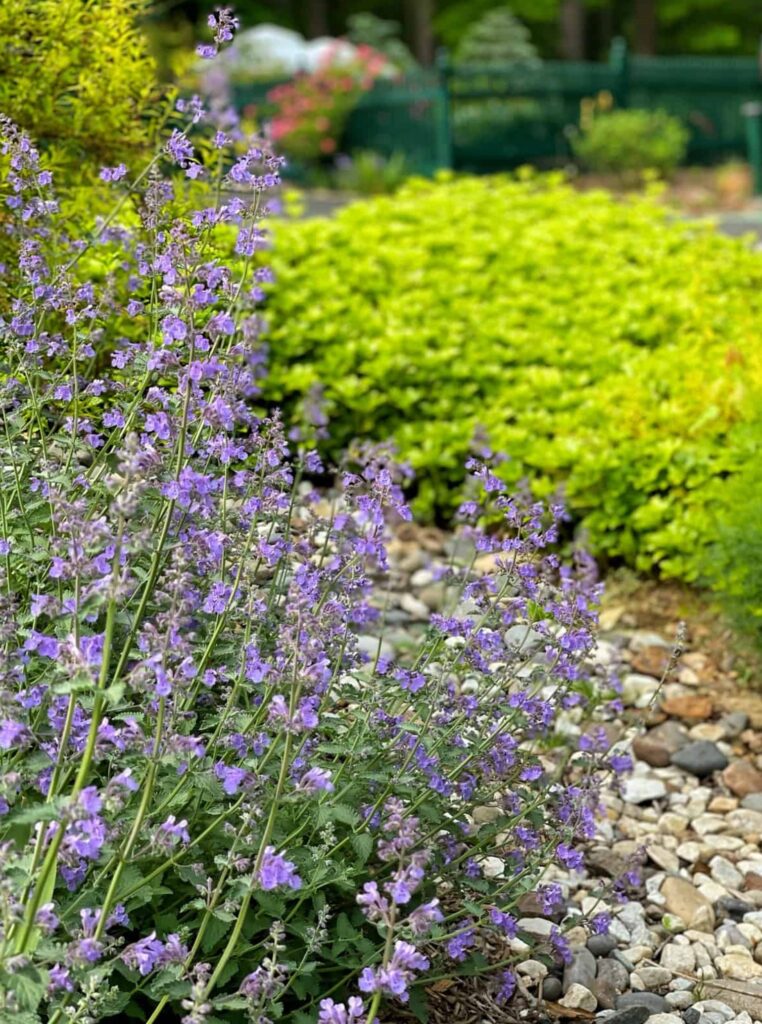
Catmint blooms for weeks with soft blue-purple flowers. It is tough, easy to grow, and almost carefree.
The leaves smell minty when brushed. Deer do not like the taste, and Oregon State also lists catmint as resistant.
Cut it back after the first bloom to get a second flush. I like it in front of roses, where it hides bare stems and adds a layer of protection.
3. Anise Hyssop (Agastache)
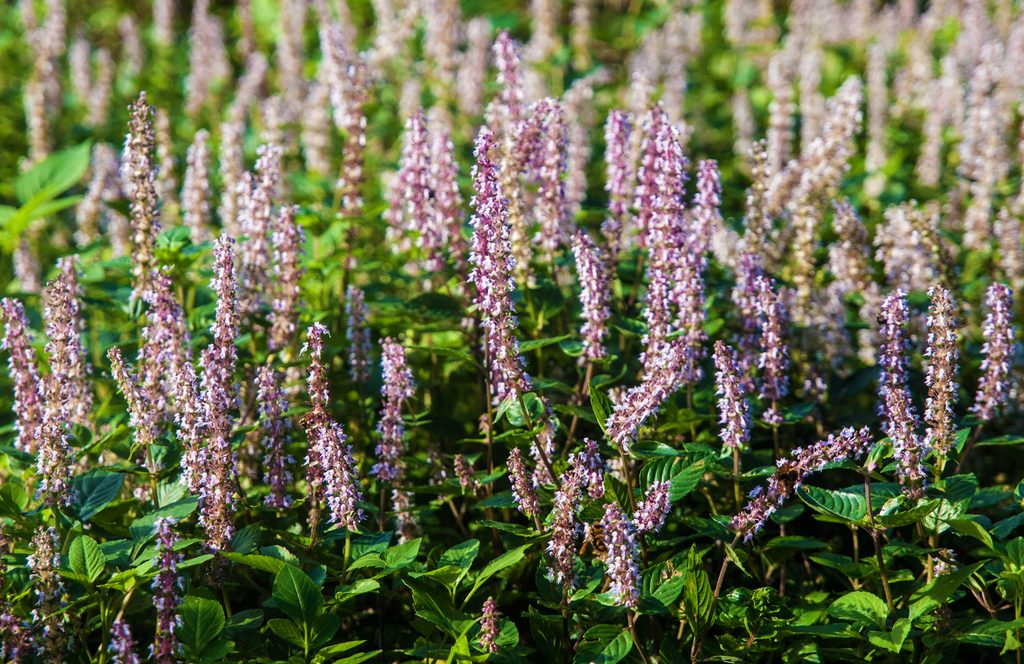
Anise hyssop has licorice-scented leaves and tall purple flower spikes. Bees and hummingbirds visit it all summer.
The strong aroma is its shield. Oregon State lists a related species, Agastache rupestris, among its deer-resistant perennials.
Give it full sun and average soil. It tolerates dry spells once established. It is a good plant for the back of a border.
4. Peony (Paeonia)
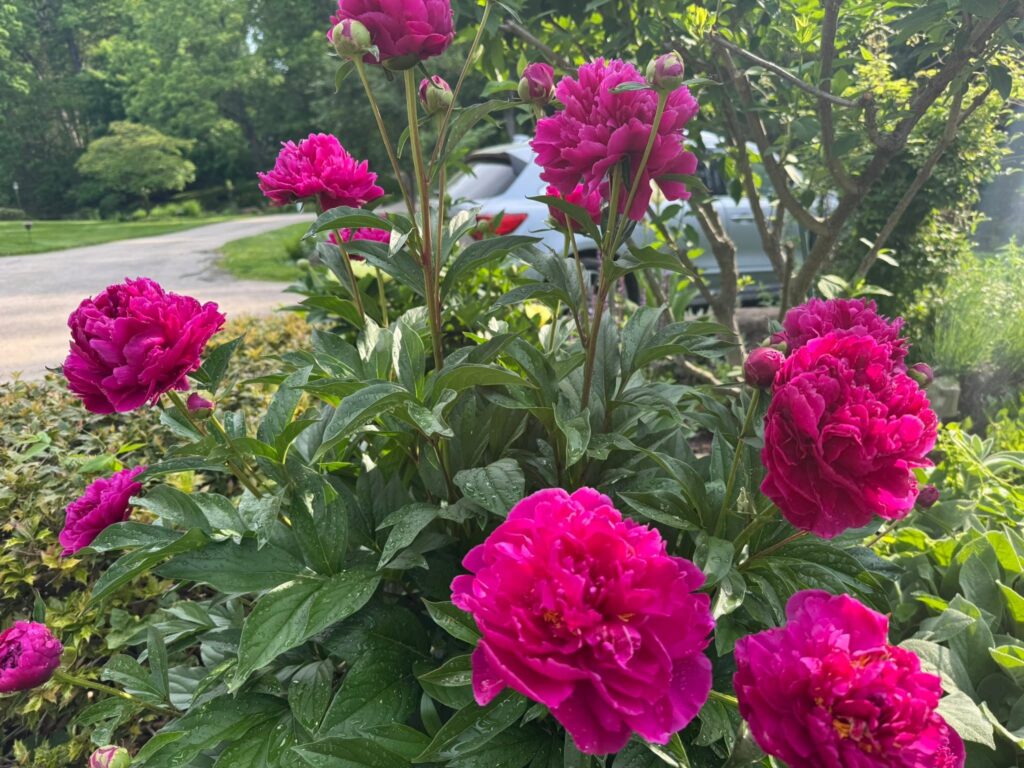
Peonies are long-lived and very reliable. Many gardeners enjoy the same plants for decades.
The foliage and buds are not a deer favorite. Oregon State also lists peony. Ants on the buds are normal and harmless.
Plant the roots shallowly, with the buds just below the soil surface. Planting too deep is the top reason peonies fail to bloom. Be patient, because they may take a few years to settle.
5. Iris (Iris)
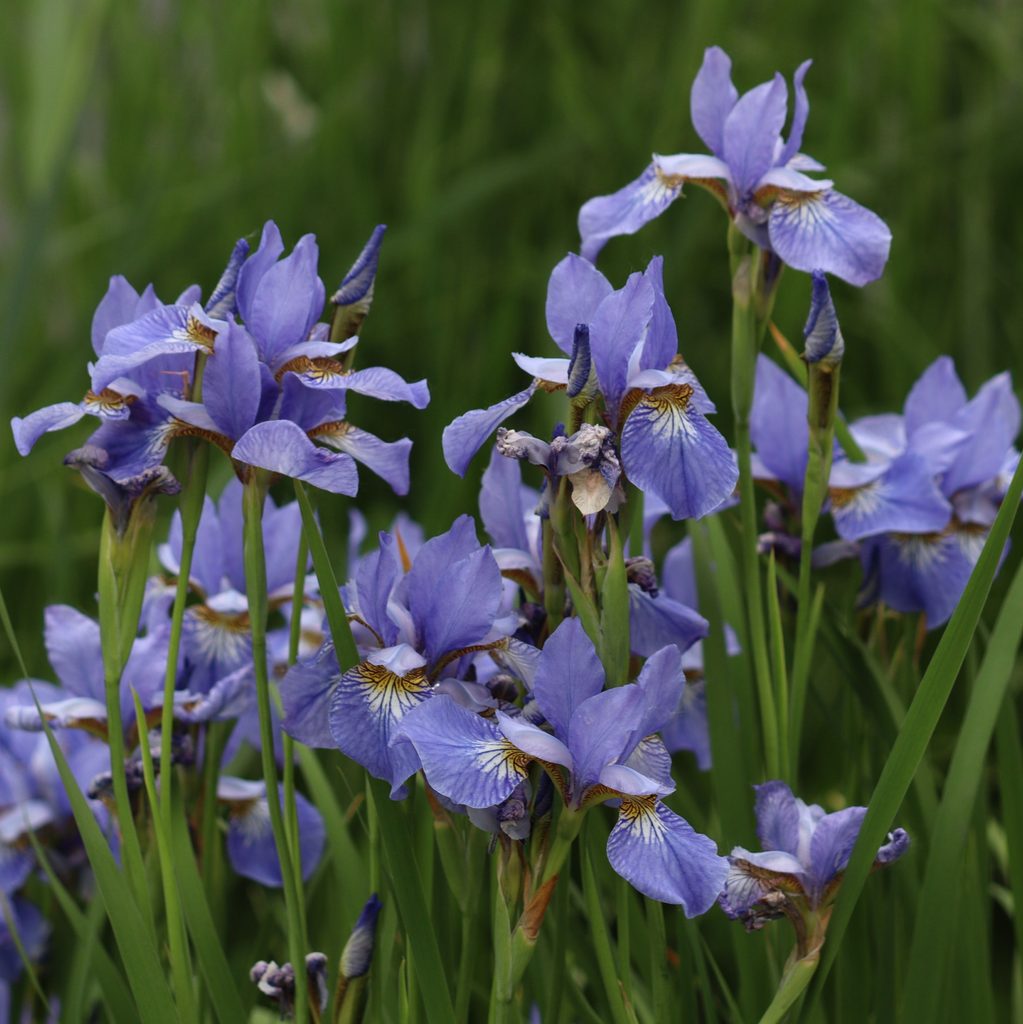
Irises bring bold color in spring and early summer. Their sword-shaped leaves are tough and bitter to deer.
Oregon State’s deer-avoided list names irises as well. Parts of the plant are mildly toxic, which adds to their defense.
Plant rhizomes shallowly, with the tops in the sun. Divide crowded clumps every few years. This keeps the plants healthy and gives you free plants to share.
ALSO READ: 20 Deer Resistant Trees (Identification, With Pictures)
6. Lamb’s Ear (Stachys byzantina)
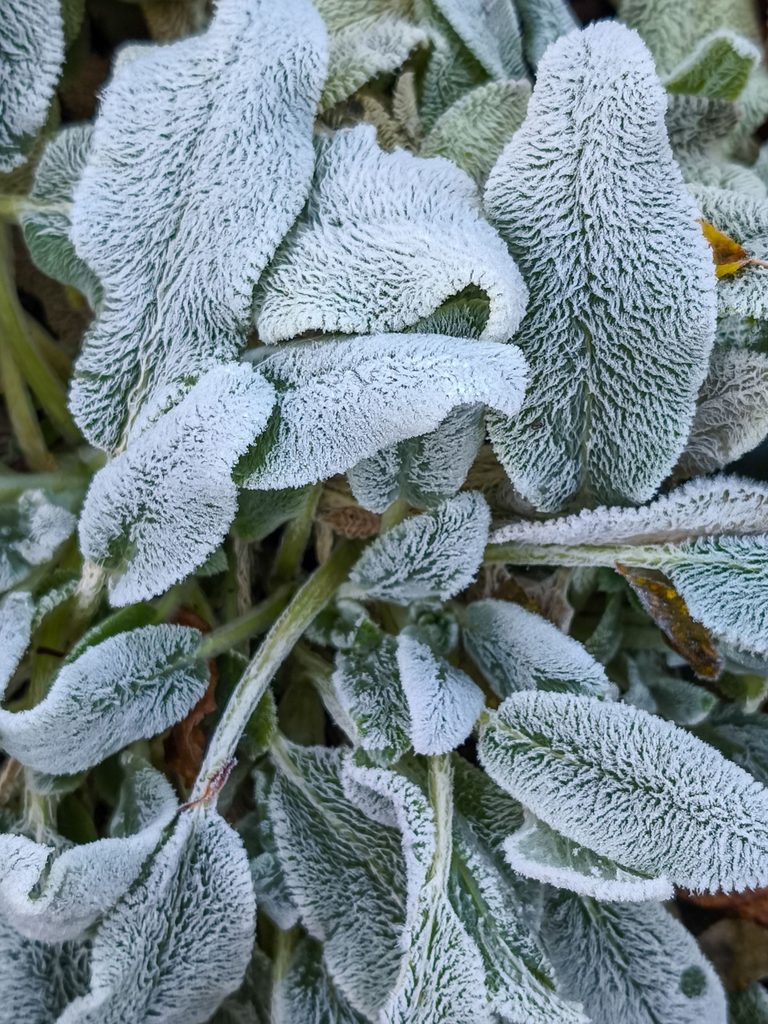
Lamb’s ear has soft, silvery leaves that feel like velvet. Deer dislike the fuzzy texture.
It is a great edging plant. It also gives silver contrast next to green leaves and purple flowers. Children love to touch it.
Plant it in sun with good drainage. Avoid overhead watering, because wet, fuzzy leaves can rot in humid weather. Oregon State also lists it as resistant.
7. Foxglove (Digitalis)
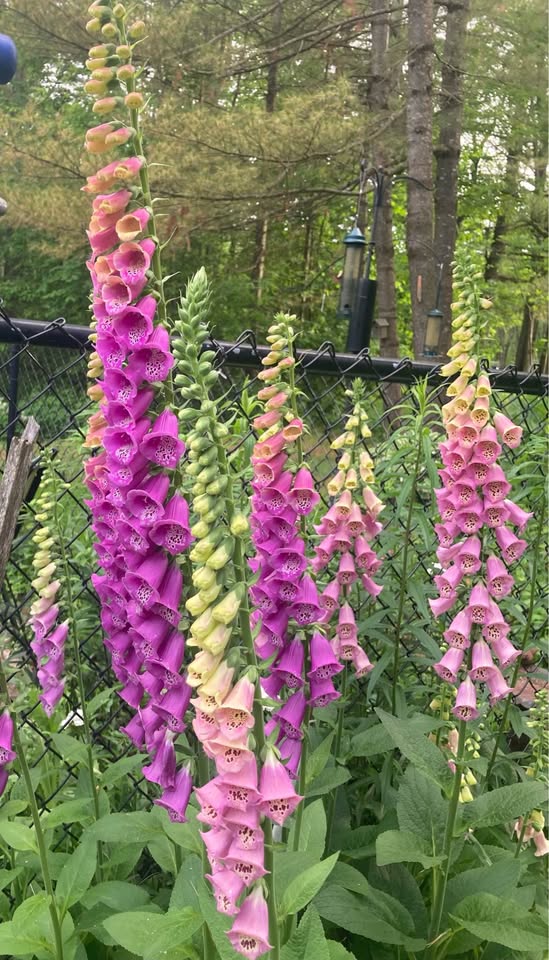
Foxglove makes tall spikes of bell-shaped flowers. It is short-lived, so it often acts like a biennial.
The plant is poisonous, and deer instinctively avoid it. Keep it away from curious children and pets, and wear gloves when handling it.
Let a few seed heads drop in the garden. New plants will appear each year. It looks best in part shade at the back of a bed.
8. Bleeding Heart (Dicentra spectabilis)
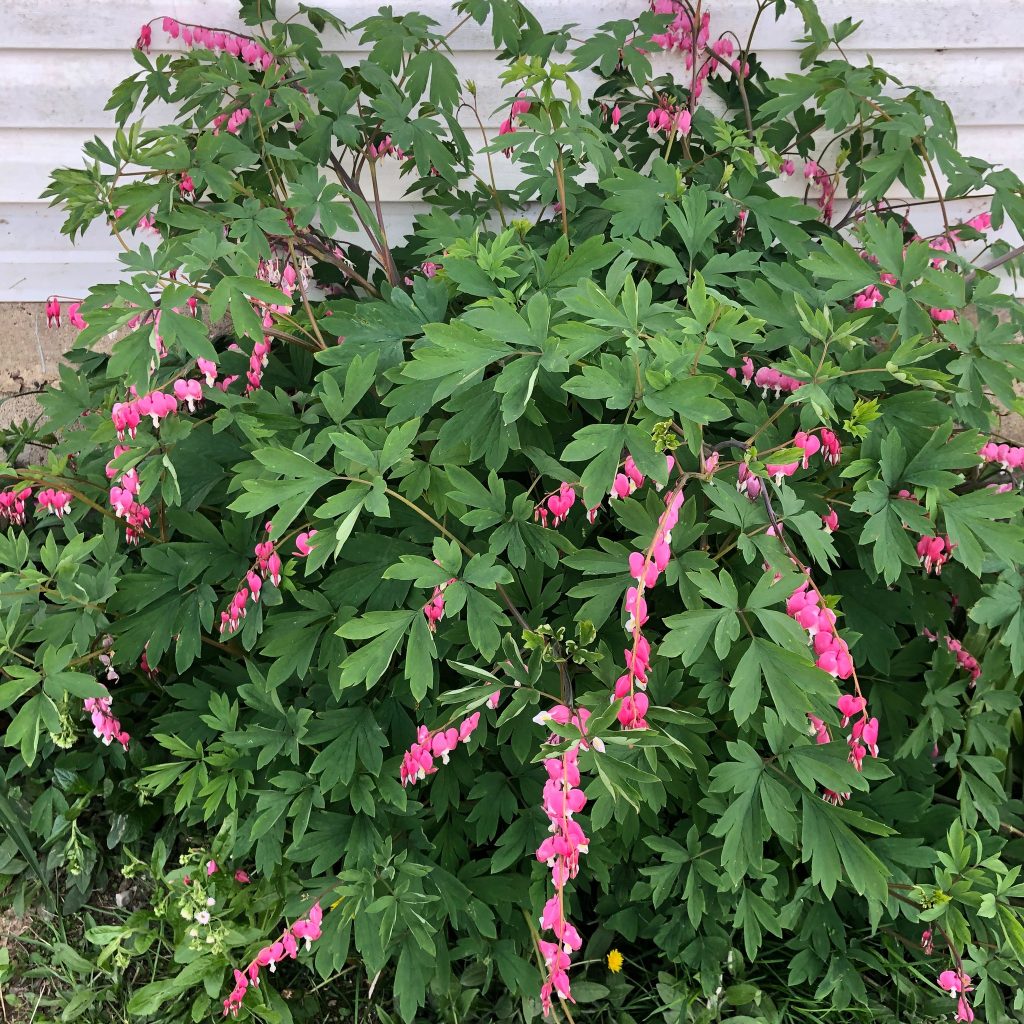
Bleeding heart has pink, heart-shaped flowers that hang from arching stems. It is a classic shade plant.
The plant contains compounds that make it unpleasant and toxic to eat. Deer seem to know this. Oregon State also lists Dicentra species.
It blooms in spring and can fade by midsummer. Plant it with hostas or ferns to fill the gap later. Keep it away from pets.
9. Fringed Bleeding Heart (Dicentra eximia)
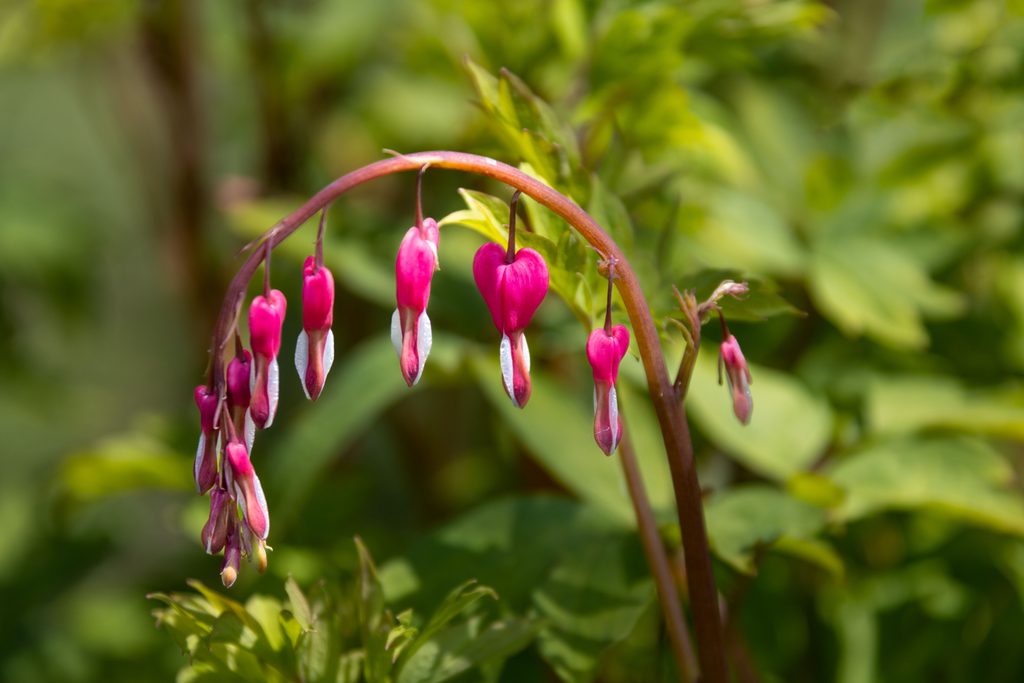
This smaller cousin has fern-like leaves and pink flowers. It blooms longer than the classic bleeding heart.
It gives you the same deer resistance in a tidy, low form. It is a good plant for woodland edges and shady paths.
Plant it in moist, rich soil with partial shade. It stays attractive through summer, so it fills space well after spring bulbs fade.
10. Monkshood (Aconitum)
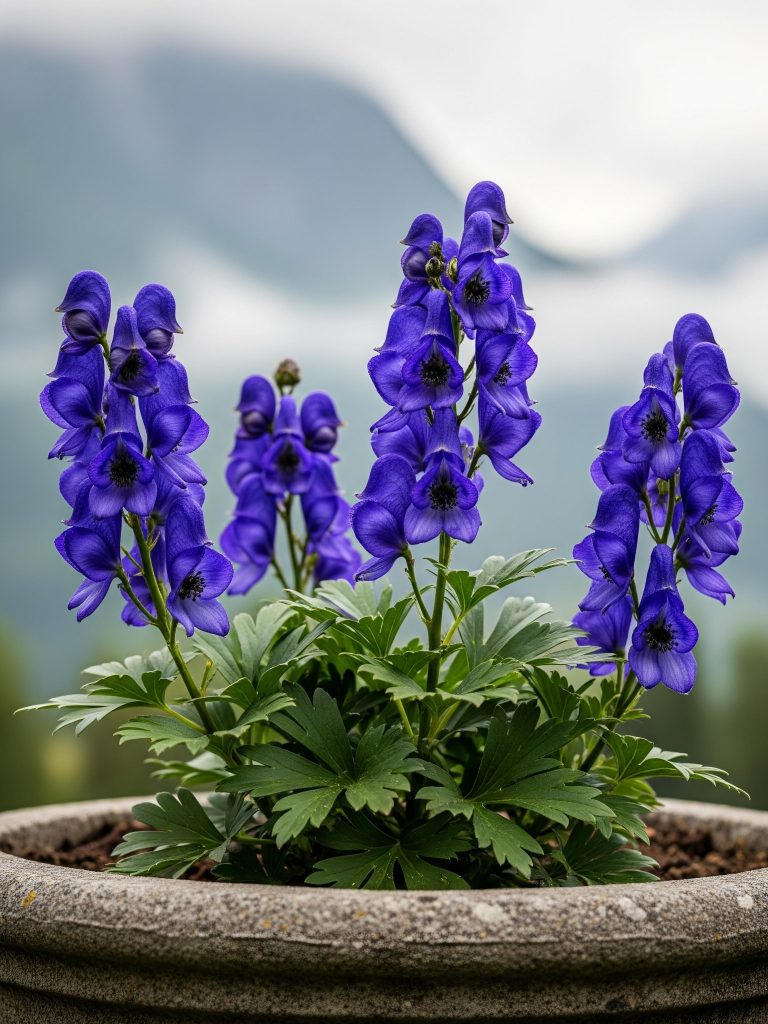
Monkshood has deep blue, hooded flowers on tall spikes. It blooms in late summer when many plants are tired.
All parts are highly poisonous, and that is why deer leave it alone. Oregon State also lists it as resistant. Wear gloves when you handle it.
Plant it in cool, moist soil and part shade. Do not grow it near vegetables, play areas, or places where children or pets roam.
11. Meadow Rue (Thalictrum)
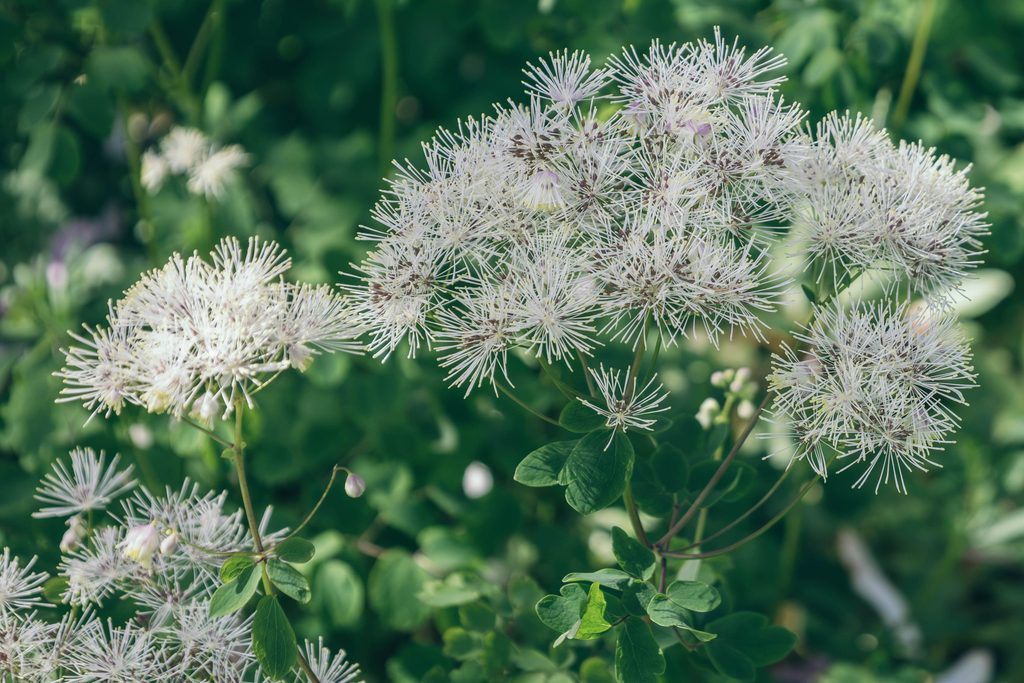
Meadow rue has airy, lavender flowers that float above delicate, blue-green leaves. It looks light and graceful.
Deer pass it by, even though it looks soft. It is a great way to add a delicate texture to a bold garden.
Give it part shade and steady moisture. Tall types may need staking in windy spots. It pairs well with astilbe and ferns.
ALSO READ: 25 Rabbit Resistant Flowers (Identification, With Pictures)
12. Globe Thistle (Echinops ritro)
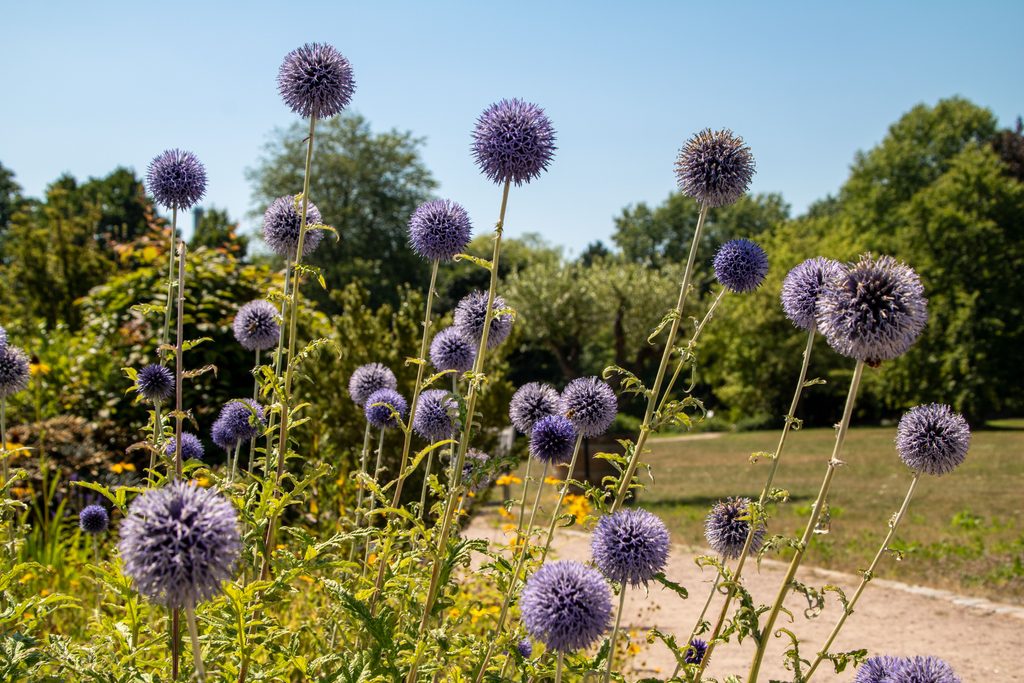
Globe thistle produces round, steel-blue flower heads. They look like small planets on spiky stems.
The prickly, rough leaves are not pleasant to chew. Bees and butterflies enjoy the flowers.
Plant it in full sun and well-drained soil. It handles dry weather well. The dried flower heads also look nice in arrangements.
13. Rose Campion (Lychnis coronaria)
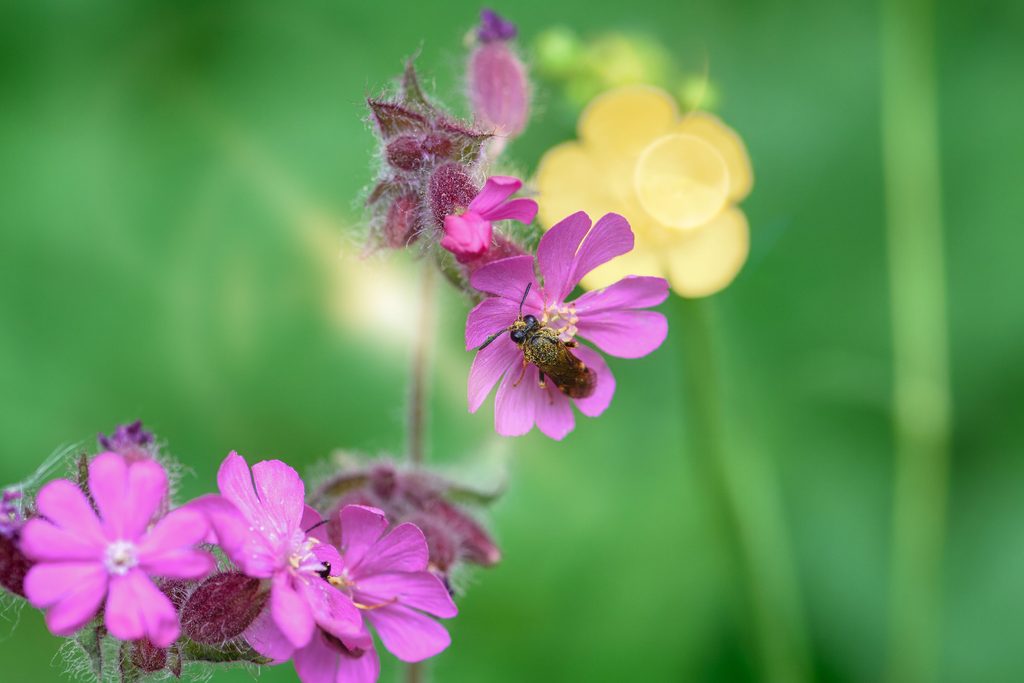
Rose campion has gray, woolly leaves and bright magenta flowers. The color is hard to miss.
The fuzzy foliage puts deer off. Oregon State also lists Lychnis. It often self-seeds, so you may get new plants without effort.
It thrives in sun and poor soil. Remove extra seedlings if it spreads more than you want. It is short-lived but easy to replace.
14. Basket of Gold (Aurinia saxatilis)
Basket of gold covers itself in bright yellow flowers in spring. It forms a low, spreading mat.
Deer rarely touch it. Oregon State lists it too. It is a cheerful plant for rock gardens, walls, and borders.
Give it full sun and sharp drainage. Trim it lightly after flowering to keep it compact. It does not like heavy, wet soil.
15. Rock Cress (Arabis caucasica)
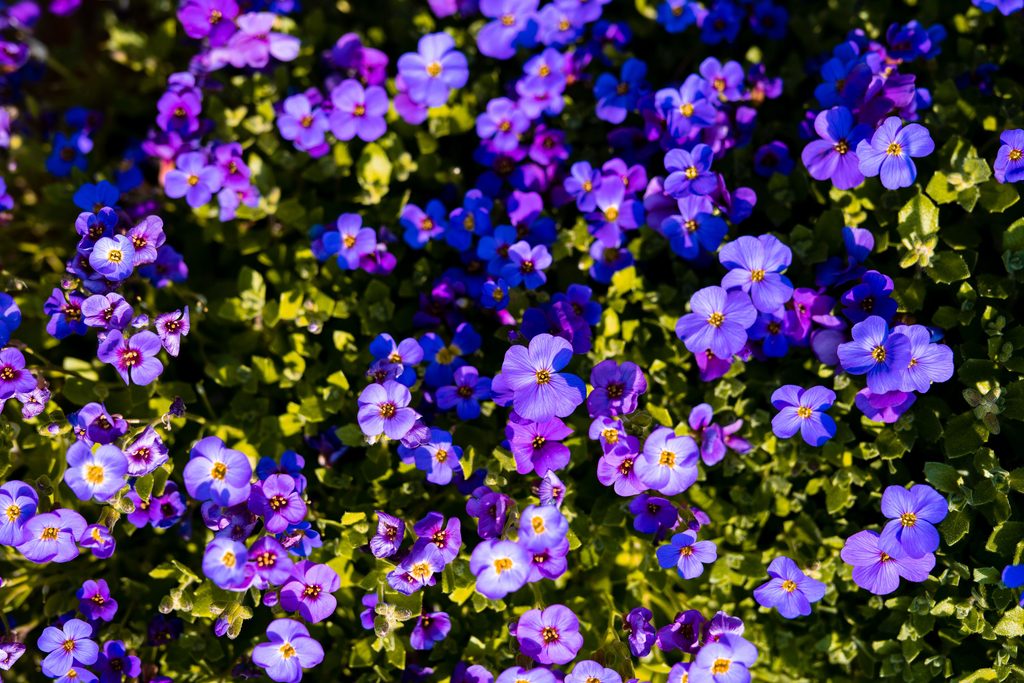
Rock cress is a low, spreading plant with white flowers in early spring. It is one of the first perennials to bloom.
Deer do not usually eat it. It works well on slopes, along walls, and at the front of a border.
Plant it in sun with good drainage. Shear it after flowering to keep it tidy. It pairs nicely with daffodils.
16. Lavender Cotton (Santolina chamaecyparissus)
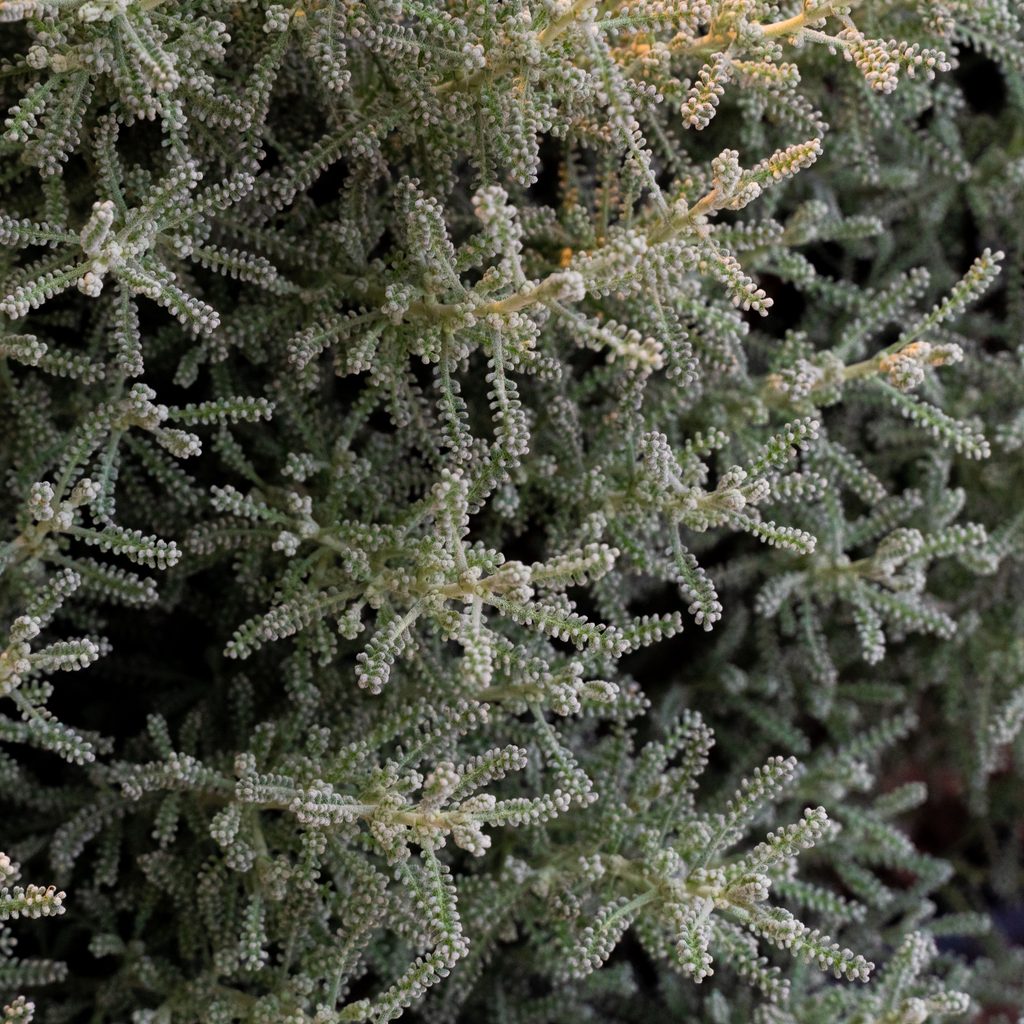
Lavender cotton has silvery, finely cut leaves and small yellow button flowers. The foliage smells strongly of herbs.
The scent is the main defense. Oregon State lists it as well. It looks great in dry, sunny gardens.
Plant it in full sun and well-drained soil. Prune it in spring to keep it from getting woody. It also makes a neat, low hedge.
17. Jerusalem Sage (Phlomis)
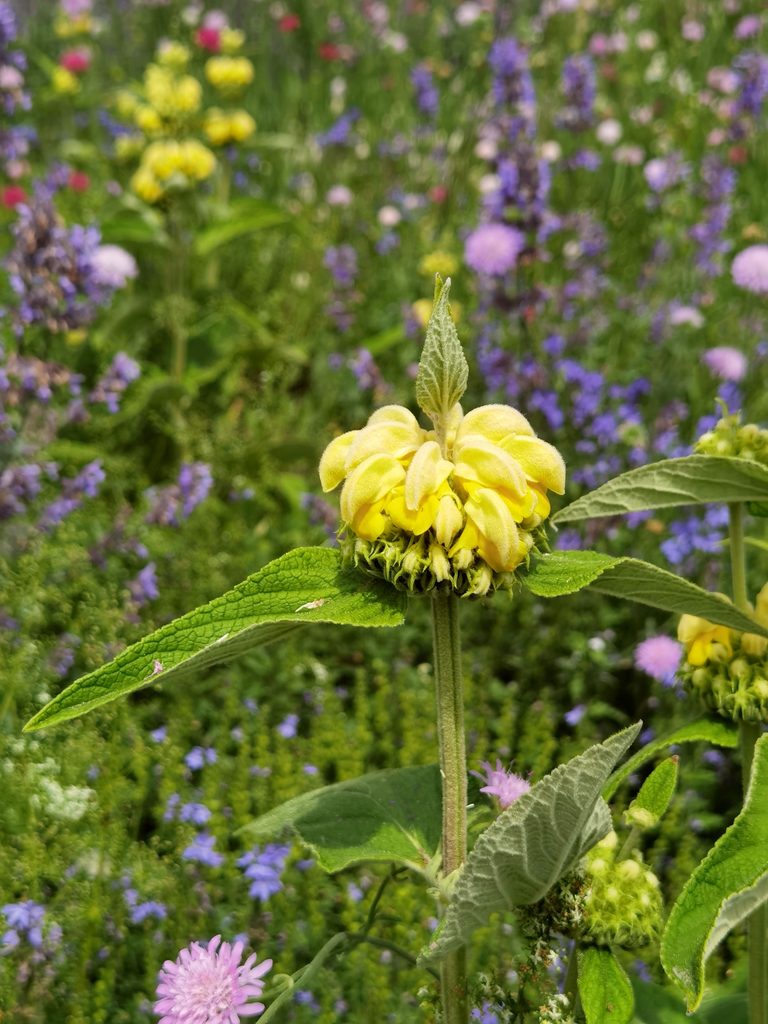
Phlomis has fuzzy, gray-green leaves and whorls of yellow flowers. It brings a Mediterranean look.
Deer avoid the textured leaves. The plant also handles heat and drought very well, which makes it a good low-water choice.
Plant it in full sun with sharp drainage. Leave the seed heads in place for winter interest. Cut back old growth in spring.
18. Threadleaf Coreopsis (Coreopsis verticillata)
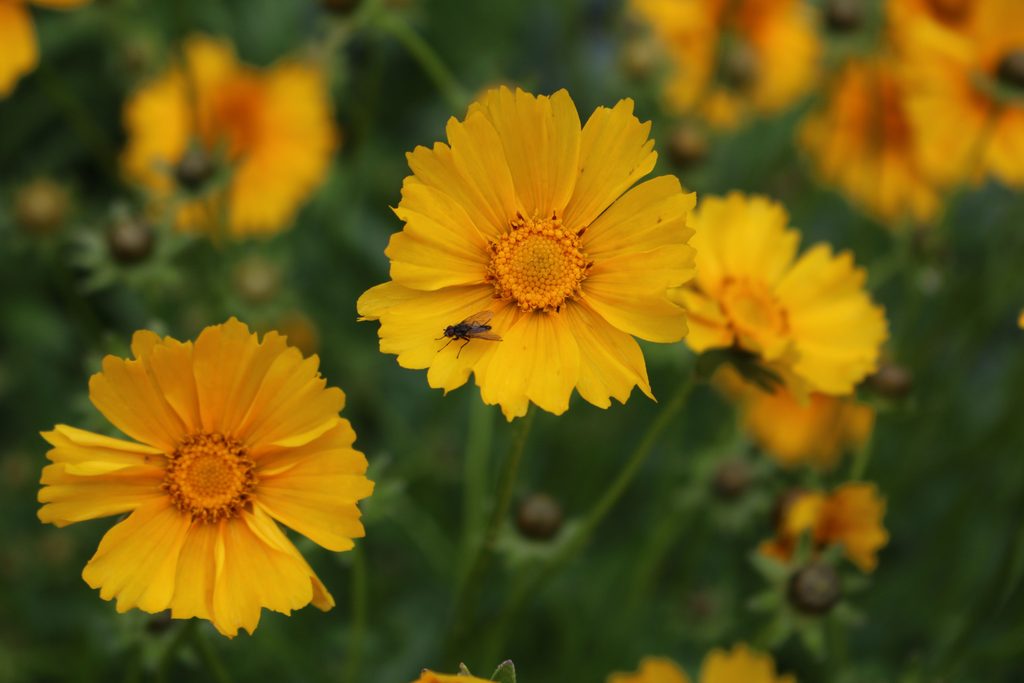
This coreopsis has fine, needle-like leaves and golden-yellow flowers. It blooms for a long time in summer.
Deer rarely browse it. Oregon State also lists threadleaf coreopsis. It is a cheerful, low-care plant.
It thrives in sun and average soil. Trim the spent flowers to keep it blooming. Divide clumps every few years to keep them vigorous.
19. Germander (Teucrium)
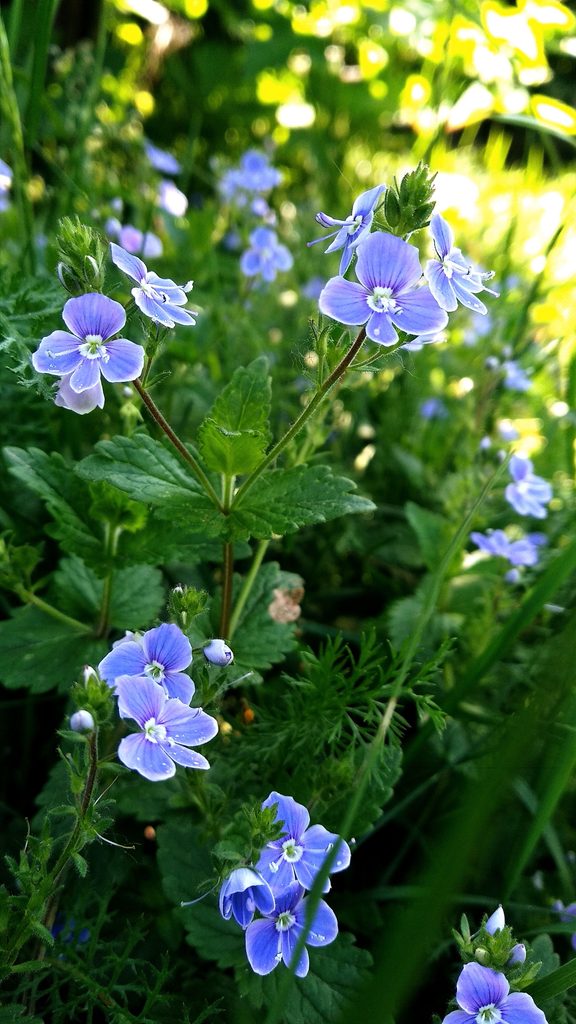
Germander has glossy, aromatic leaves and spikes of pink or purple flowers. It is often used as a low edging.
The scent keeps deer away. Oregon State lists germander as deer-resistant. It also tolerates trimming, so it works for formal designs.
Grow it in full sun and well-drained soil. Shear lightly in spring. It handles dry spells once established.
20. Garden Sage (Salvia)
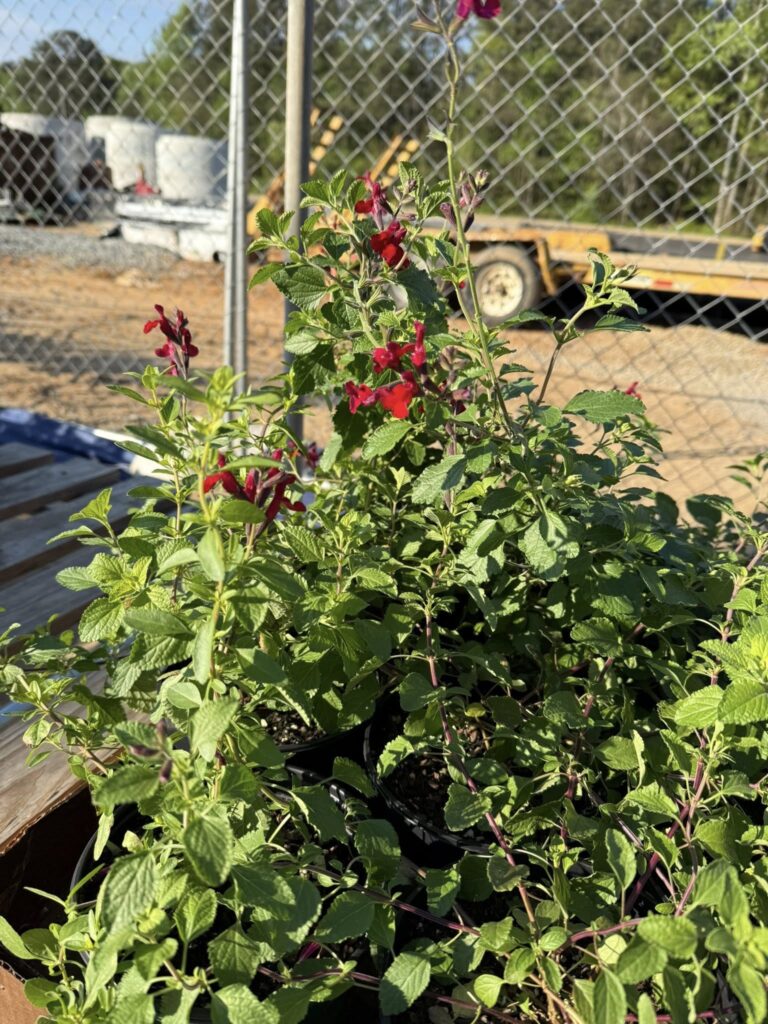
Garden sage is an herb, but many types have beautiful flowers. Leaves are aromatic and slightly rough.
Oregon State lists sages, including Salvia nemorosa. Bees and hummingbirds love the blooms. Deer find the taste unpleasant.
Plant sage in full sun and good drainage. Trim after the first flowers to encourage more. It is one of the easiest ways to add color with low risk.
ALSO READ: 40 Flowers That Come Back Every Year (Reliable Perennials, With Pictures)
21. Bigleaf Ligularia (Ligularia dentata)
Ligularia has huge, round leaves and bright orange-yellow daisy flowers. It makes a bold statement.
Deer rarely eat it, even though the leaves look lush. It is a strong choice for moist, shady places.
Give it constant moisture. The leaves wilt in hot sun and dry soil, but they often recover at night. Slugs may chew them, so check regularly.
22. Rodgers Flower (Rodgersia)
Rodgersia has large, textured leaves that look like horse chestnut. In summer, it sends up plumes of creamy flowers.
Deer pass it by. It gives you a tropical look in a cool, shady spot, with a low risk of browsing.
Plant it in rich, moist soil near a pond or stream. It slowly forms a bold clump. Protect it from hot afternoon sun.
23. Corydalis (Corydalis)
Corydalis has delicate, ferny leaves and small tubular flowers. Some types bloom nearly all summer.
The foliage contains bitter compounds. Deer ignore it. It does well in shade and in small, tricky corners.
Plant it in part shade with moist, well-drained soil. It may self-seed gently. Blue types can be fussy, but yellow types are easy.
24. Bugleweed (Ajuga)
Bugleweed is a fast, low groundcover with blue flower spikes in spring. The leaves can be green, bronze, or purple.
The University of Arizona’s deer ratings show 100% of 6 sources reporting bugleweed as never or rarely damaged. Oregon State also lists carpet bugle.
Plant it in sun or shade. It spreads quickly, so give it room. It is great for filling bare areas under trees.
25. Forget-Me-Not (Myosotis)
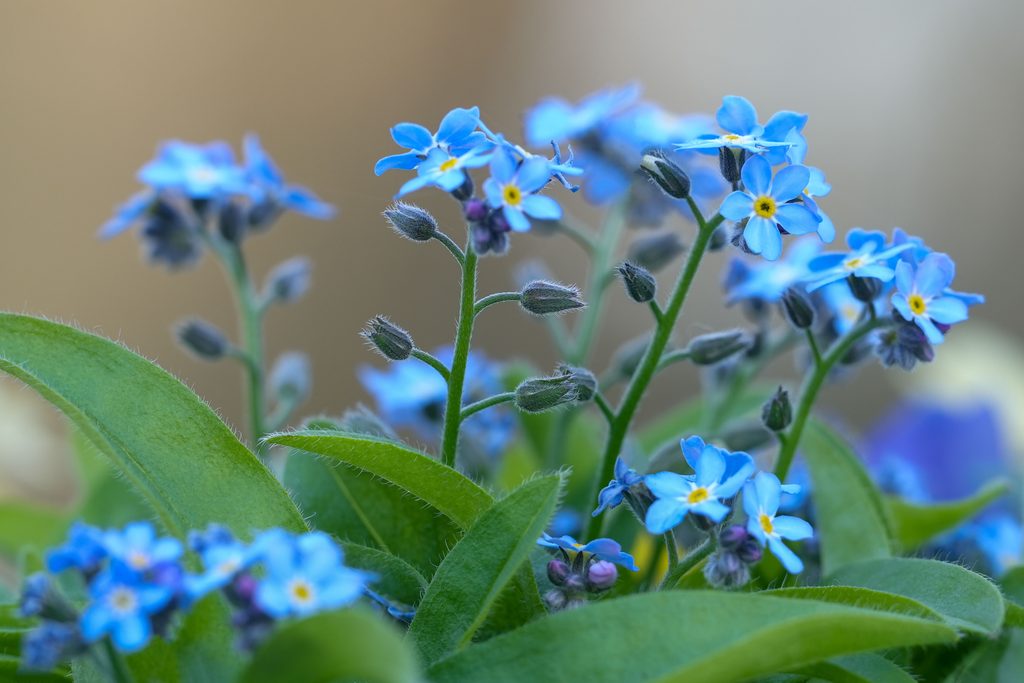
Forget-me-nots have tiny, sky-blue flowers with yellow centers. They bloom in spring and look lovely with tulips.
Deer leave them alone, even though tulips nearby are popular deer food. They make a good living carpet around vulnerable bulbs.
They like moist soil and part shade. They self-seed freely, so thin the extra seedlings if needed. Pull them out after flowering to keep things tidy.
26. Hyssop (Hyssopus officinalis)
Hyssop is an aromatic herb with spikes of blue-purple flowers. Bees and butterflies flock to it.
The strong, minty scent keeps deer away. Oregon State lists Hyssopus officinalis too. It is useful in herb gardens and perennial beds.
Plant it in full sun and well-drained soil. Trim it in spring to keep it neat. It also makes a nice low hedge.
27. Spotted Deadnettle (Lamium)
Lamium has silver-marked leaves and pink or white flowers. It brightens dark corners.
Deer do not usually eat it. Oregon State lists deadnettle as well. It is a useful groundcover for shade.
Plant it in part shade and moist soil. It spreads steadily, so give it space. Cut it back in midsummer if it looks tired.
28. Aster (Aster)
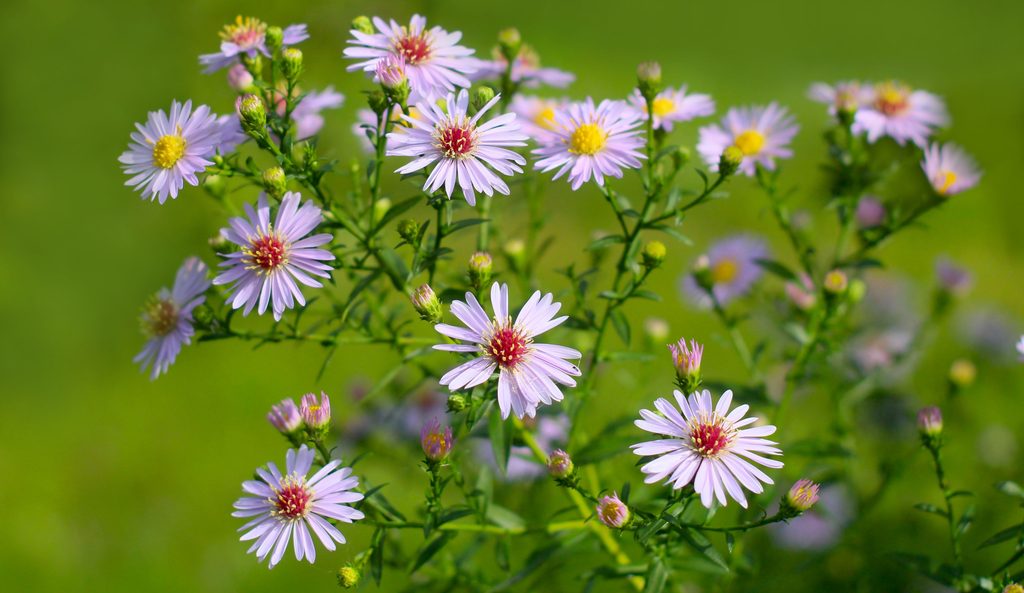
Asters bring color in autumn when many flowers fade. The small daisy-like blooms attract late-season pollinators.
Deer usually leave them alone, although young plants may get nibbled. Pinch the stems in early summer for bushier plants.
Plant asters in full sun with average soil. Good air movement helps prevent mildew. They pair well with goldenrod and grasses.
29. Astilbe (Astilbe)
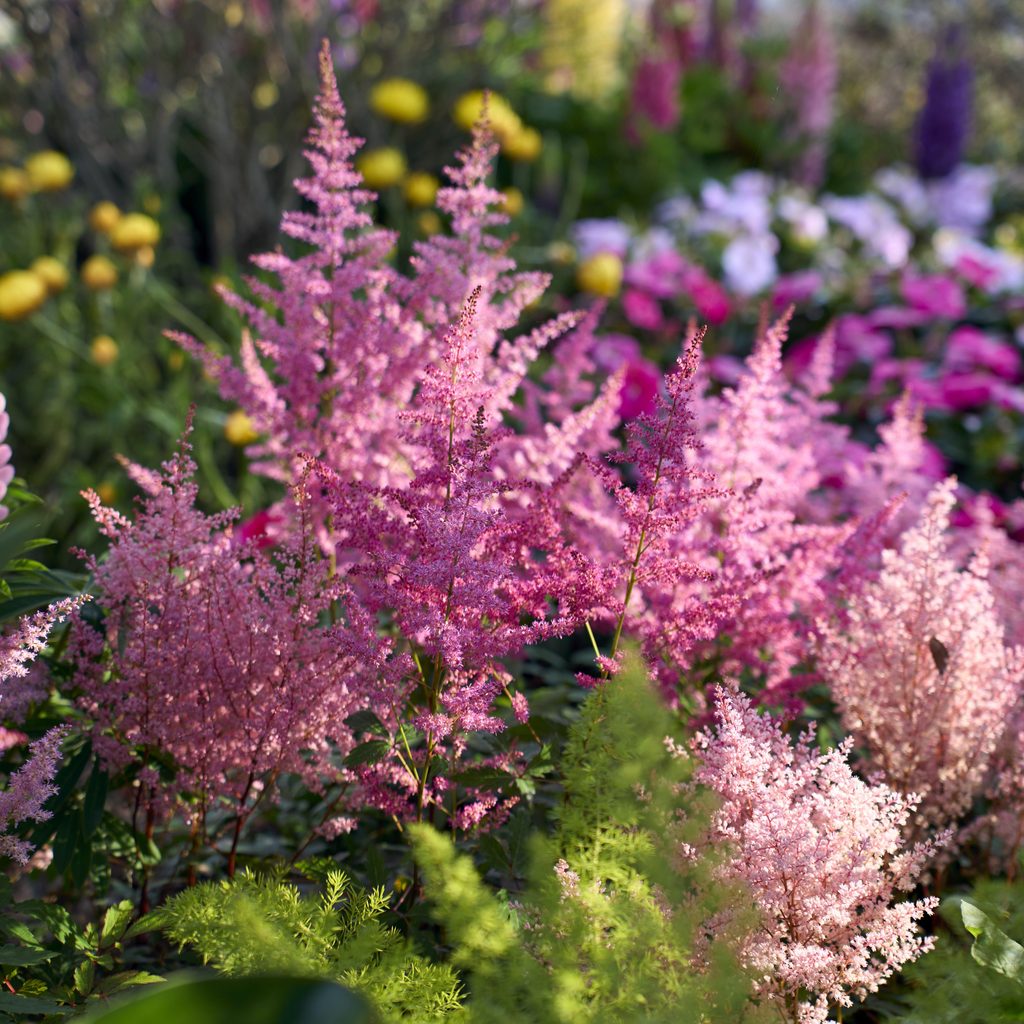
Astilbe has feathery plumes in pink, red, and white. It is one of the best flowers for shade.
The fern-like leaves are tough and not a favorite of deer. It is a good way to add color where many sun plants fail.
Give it moist, rich soil and part shade. Dry soil causes brown leaf edges. Mulch helps keep the roots cool.
30. Butterfly Weed (Asclepias tuberosa)
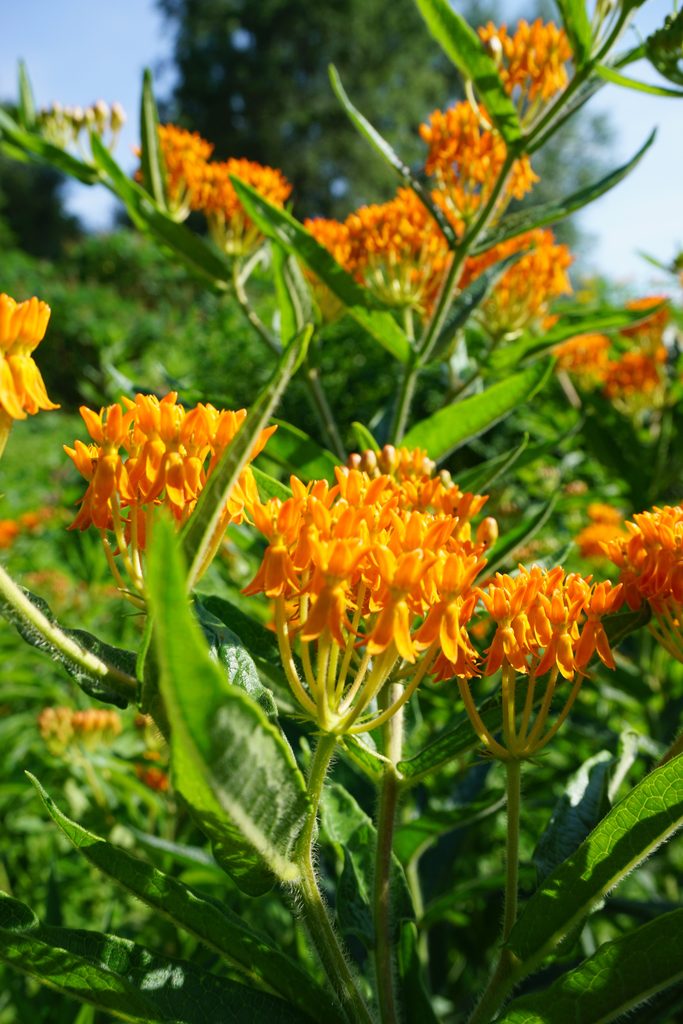
Butterfly weed has bright orange flowers that draw monarch butterflies. It is a native plant in much of North America.
The plant contains milky sap that deer dislike. It is toxic if eaten, so keep it away from pets and livestock.
It has a deep taproot, so plant it once and leave it. It thrives in dry, sunny places. It may be slow to appear in spring.
31. Candytuft (Iberis sempervirens)
Candytuft forms an evergreen mat with bright white flowers in spring. It looks crisp and clean.
Deer seldom damage it. It is a good edging plant, especially on walls and slopes.
Plant it in sun with good drainage. Shear it after flowering to keep it compact. It dislikes soggy soil.
32. Pinks (Dianthus)
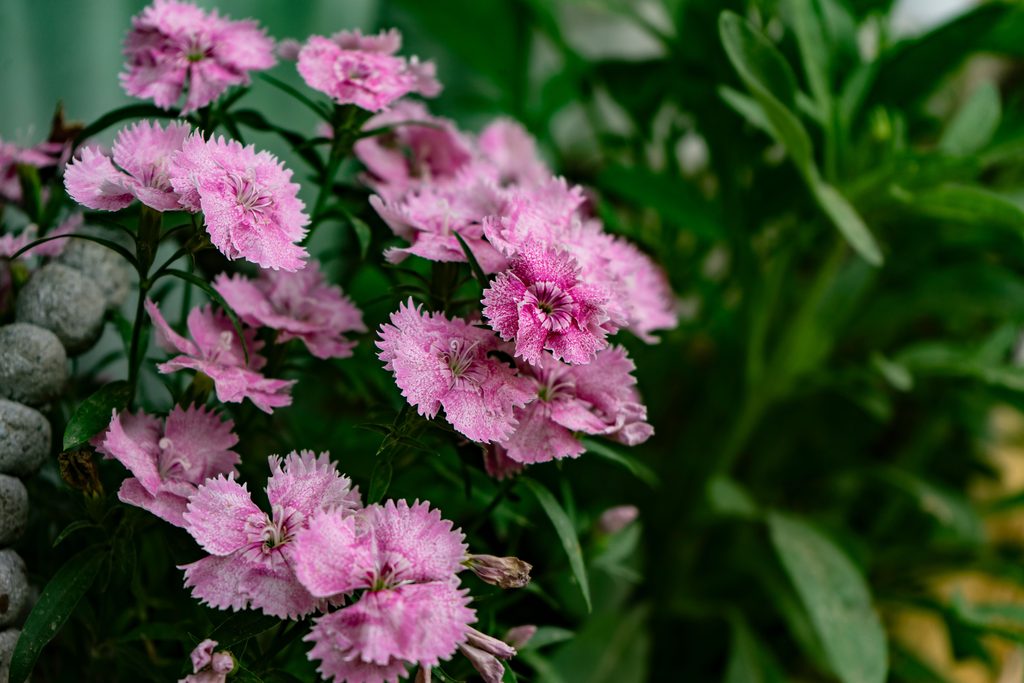
Pinks have fragrant flowers and silvery, grass-like leaves. They bloom in pink, red, and white.
Deer usually skip them. Oregon State lists several Dianthus types, including maiden pinks and sweet William. The spicy scent is part of their defense.
Plant pinks in full sun and well-drained soil. Deadhead to keep them blooming. They look lovely at the front of a border.
33. Delphinium (Delphinium)
Delphiniums make tall spikes of blue, purple, and white flowers. They are the stars of cottage gardens.
The plants are toxic, which keeps deer away. Oregon State lists delphinium as well. Keep them away from pets and children.
Give them full sun, rich soil, and shelter from wind. Tall spikes often need staking. Cut them back after flowering for a second bloom.
34. Jacob’s Ladder (Polemonium caeruleum)
Jacob’s ladder has ladder-like leaves and nodding blue flowers. It is soft and pretty in spring.
Deer seldom browse it. It does well in cool, partly shaded spots, and it mixes well with ferns and columbine.
Plant it in moist, well-drained soil. Cut back the foliage if it looks tired in summer. It may self-seed gently.
35. Japanese Anemone (Anemone x hybrida)
Japanese anemones bloom in late summer and fall. Their pink or white flowers float above dark green leaves.
Deer seldom damage them. They offer color when many other plants have finished. They are a good choice for part shade.
Plant them in rich, moist soil and give them time. They can be slow to establish. Once settled, they may spread.
36. Pincushion Flower (Scabiosa)

Pincushion flower has lavender-blue blooms that look like tiny pincushions. Butterflies love them.
Deer rarely eat them. Oregon State also lists Scabiosa. It blooms for a long time if you remove the old flowers.
Plant it in full sun and well-drained soil. It does not like wet feet. It makes a pretty cut flower.
37. Primrose (Primula)
Primroses bring bright color in early spring. They come in nearly every color, from pale yellow to deep red.
Deer seldom damage them. They are ideal for shady beds, borders, and containers.
Plant them in moist, rich soil and part shade. Water during dry spells. Divide them after a few years to keep them blooming.
38. Sea Thrift (Armeria maritima)
Sea thrift forms neat grassy tufts topped with round pink flowers. It is tough and compact.
Deer seldom browse it. It is a good plant for rock gardens, edges, and containers.
Plant it in full sun and sharp drainage. It tolerates poor soil and salt spray. Remove old flowers to keep it blooming.
39. Sneezeweed (Helenium autumnale)
Sneezeweed has warm, golden-orange daisy flowers that bloom in late summer. Despite the name, it does not cause hay fever.
Deer seldom damage it. Oregon State lists Helenium as well. It is a great way to add fall color.
Give it full sun and moist soil. Pinch the stems in early summer to control height. Tall types may need support.
40. Virginia Bluebells (Mertensia virginica)
Virginia bluebells are native spring wildflowers. They have pink buds that open into sky-blue bells.
Deer seldom damage them. The plants go dormant by early summer, so combine them with hostas or ferns to fill the gap.
Plant them in moist, shady, woodland-style spots. They like rich soil. Once established, they form lovely colonies.
How to Protect Your Garden Even Better
Choosing resistant plants is smart. Combining methods is smarter. A few simple habits will improve your results.
First, use a fence where you can. Oregon State says a deer fence should stand at least 76 inches (6.3 feet) where deer can get a running start. Rutgers describes high-tensile woven wire fences of 8 to 10 feet as very effective.
Second, protect new plants. Oregon State notes that deer damage usually occurs from late fall through early spring. New and young plants are also more vulnerable. Cage them for the first season.
Third, plant resistant flowers at the edge. Oregon State’s Extension writers suggest using unpleasant plants on the outside of a yard. Deer may pass by without seeing the tastier plants inside.
Fourth, treat repellents as a short-term helper. Oregon State says most repellents are only somewhat effective. You must reapply them every two weeks or after heavy rain.
Fifth, make the yard less welcoming. Clemson Extension suggests motion-activated lights and sprinklers, removing bird feeders, and using dogs. Rotate your tactics, because deer get used to repeated devices.
Plants to Be Careful With
Regional differences matter. Rutgers rates daylily and fall mums as occasionally severely damaged (C). Yet Oregon State lists daylily among its resistant plants.
This is a good reminder to watch your own garden. Ask neighbors what survives in your area. Local experience often beats any list.
Final Thoughts
A deer-resistant garden does not have to be dull. With lavender, catmint, peonies, irises, and the other perennials above, you can build a garden full of color and scent.
My advice is simple. Choose strong-scented, fuzzy, bitter, or toxic plants. Protect the young ones. Add a fence where deer pressure is high. With these steps, you will spend more time enjoying flowers and less time mourning them.
References
- Rutgers Cooperative Extension. Landscape Plants Rated by Deer Resistance (Bulletin E271). https://extension.rutgers.edu/deer-resistant-plants
- Rutgers Cooperative Extension. An Overview of White-Tailed Deer Status and Management in New Jersey (FS1202). https://extension.rutgers.edu/fs1202
- Oregon State University Extension Service. Deer-resistant plants for Central Oregon (EM 9661). https://extension.oregonstate.edu/catalog/em-9661-deer-resistant-plants-central-oregon
- Oregon State University, Solve Pest Problems. Deer & Elk. https://solvepestproblems.oregonstate.edu/rodents-wildlife/deer-elk
- University of Arizona Cooperative Extension. Deer Plant Resistance Ratings (2025). https://extension.arizona.edu/publication/deer-plant-resistance-ratings
- Clemson University Cooperative Extension. White Tailed Deer Damage. https://www.clemson.edu/extension/wildlife/deer/damage.html
- USDA APHIS Wildlife Services (.gov). White-tailed Deer Damage Management in New York (Environmental Assessment, 2015). https://www.aphis.usda.gov/sites/default/files/ny-2015-deer-damage-mgt-ea.pdf

Tim M Dave is a gardening expert with a passion for houseplants, particularly cacti and succulents. With a degree in plant biology from the University of California, Berkeley, he has vast experience in gardening. Over the years, he has cultivated a vast collection of desert plants and learned a great deal about how to grow and care for these unique companions.