25 Alabama Native Flowers (With Growing Details)
Alabama does not get enough credit for its wildflowers. I have hiked its ravines and paddled its rivers, and I can tell you this state hides some of the most striking native blooms in the American Southeast.
This is not a small claim. Alabama ranks fourth in the nation for overall species diversity, and it stands first among every state east of the Mississippi River, supported by 64 types of terrestrial ecosystems, including 25 forests and woodlands, 11 wetlands, and seven glades and prairies.
For plants specifically, the numbers are just as impressive. Alabama is home to over 3,000 species of native plants, and 28 of those species grow nowhere else on Earth.
That mix of rivers, ridges, coastal plains, and limestone bluffs creates pockets of botanical rarity found in few other places. Below, I have gathered 25 native flowers that define Alabama’s landscape, blooming season by blooming season.
25 Alabama Native Flowers
1. Oakleaf Hydrangea (Hydrangea quercifolia)
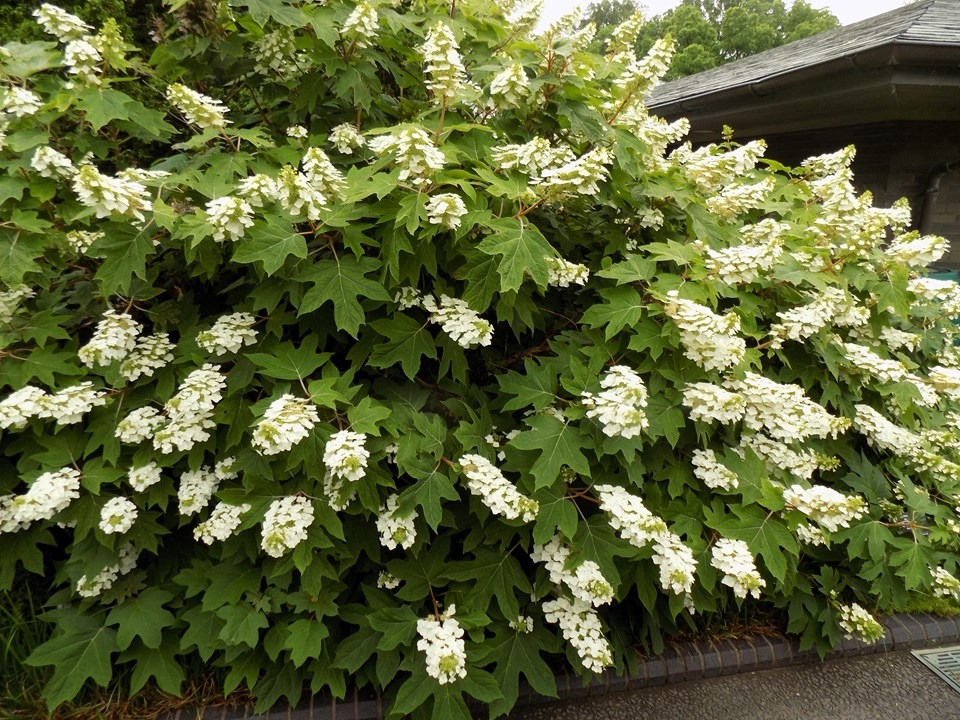
I have to start here, because this shrub carries an official title. The oak-leaf hydrangea was designated the official state wildflower of Alabama, alongside the camellia as state flower.
This deciduous shrub is impossible to miss in late spring. Its pearl-white blooms seem to glow beneath the forest canopy, and the shrub can be found in every part of the state, from the coastal plains to the Appalachian foothills.
The flower clusters do not stay white for long. They shift to a soft rose color through summer, and the oak-shaped leaves turn deep burgundy in fall, giving the plant three seasons of interest.
Gardeners love it for another reason too. Unlike its cousin the bigleaf hydrangea, its flower color never changes with soil pH, so it stays reliably predictable in any Alabama garden bed.
2. Cahaba Lily (Hymenocallis coronaria)
If Alabama had an unofficial floral mascot, this would be it. Locals call it the Cahaba lily, and I would argue it is more recognizable to native Alabamians than the state flower itself.
This aquatic plant only grows where fast, shallow water rushes over rocky shoals. In Alabama, it is restricted to the Black Warrior, Cahaba, Coosa, Tallapoosa, and Chattahoochee river systems, making it a true habitat specialist.
Each flower opens for a single night and closes by the next afternoon, which gives it a fleeting, almost theatrical beauty. The blooming season peaks from mid-May through early June.
Sadly, the species is under real pressure. Only around 50 extant populations remain across Alabama, Georgia, and South Carolina, largely because dam construction has wiped out entire colonies. The Cahaba River, with no major dams, remains its strongest stronghold.
3. Alabama Snow-Wreath (Neviusia alabamensis)
This shrub has a genuinely fascinating origin story. It was discovered in Tuscaloosa County in 1857, and its blooms are made entirely of white stamens rather than petals, which is an unusual trait even within the rose family.
Botanists call this an apetalous flower. Dozens of feathery white filaments burst from each bloom, creating a frothy, snow-like appearance across the arching branches every spring.
It remains rare in the wild. Alabama lists it as an S2 species, meaning it typically has only six to twenty known occurrences statewide, largely confined to limestone bluffs and streambanks in the northern third of the state.
I find this one particularly moving to grow, precisely because it carries the state’s name and its story of discovery in every bloom. It thrives in partial shade and needs almost no maintenance once established.
ALSO READ: 25 Native Trees in Alabama (With Growing Details)
4. Alabama Azalea (Rhododendron alabamense)
This deciduous azalea is one of the true jewels of Alabama’s spring woodlands. Its fragrant, funnel-shaped flowers are white with a soft yellow blotch on the upper petal, blooming from April into May.
You will most often find it growing on dry, sandy slopes and in oak-pine woodlands across the central part of the state. Bibb County in particular hosts strong populations worth seeking out.
The fragrance is what stays with me most. Walking past a blooming colony in the woods feels like stepping through an invisible perfume cloud, sweet and faintly spicy at once.
Gardeners prize it for naturalized woodland borders. It pairs beautifully with other native shrubs and tolerates the acidic, well-drained soils common across much of Alabama.
5. Purple Coneflower (Echinacea purpurea)
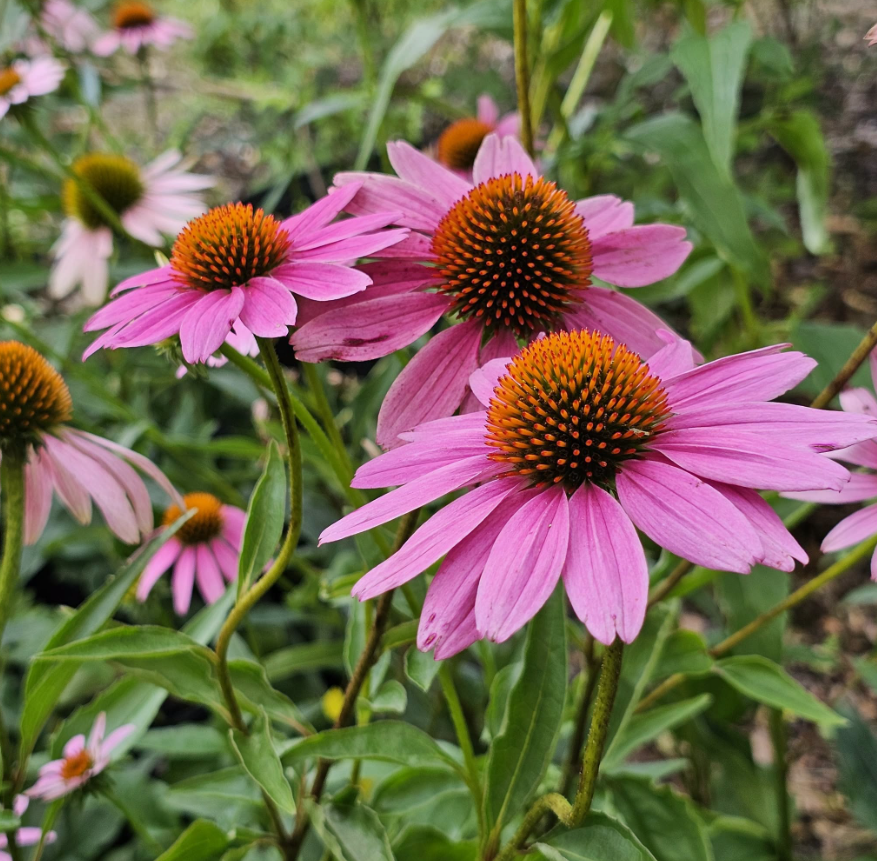
Few native perennials work as hard for pollinators as purple coneflower. Its daisy-like, rose-purple petals droop gracefully around a spiny, cone-shaped center that darkens to bronze as summer progresses.
Butterflies and bees flock to it constantly, and once the flowers fade, goldfinches arrive to strip the seed heads. I always leave mine standing through winter for exactly this reason.
It tolerates drought remarkably well once established, making it one of the easiest native flowers to grow in Alabama’s hot, humid summers. Full sun and average, well-drained soil are all it really needs.
Herbalists have also long valued the plant’s roots, though I will simply say its greatest gift to a garden is months of steady, reliable color from June through September.
6. Black-Eyed Susan (Rudbeckia hirta)

This is the flower most people picture when they think of a Southern wildflower meadow. Bright golden-yellow petals surround a deep brown, domed center, and the plant blooms from late spring through fall.
Black-eyed Susan is a biennial or short-lived perennial, but it reseeds so freely that established patches feel permanent. Roadsides and abandoned fields across Alabama fill with it naturally every summer.
I appreciate how little this plant asks for. It handles poor soil, drought, and blazing sun without complaint, which explains why it thrives along Alabama’s highways with zero cultivation.
For pollinator gardens, it is nearly essential. Bees work the flowers constantly, and the seed heads feed songbirds well into winter if you resist the urge to deadhead everything.
7. Cardinal Flower (Lobelia cardinalis)
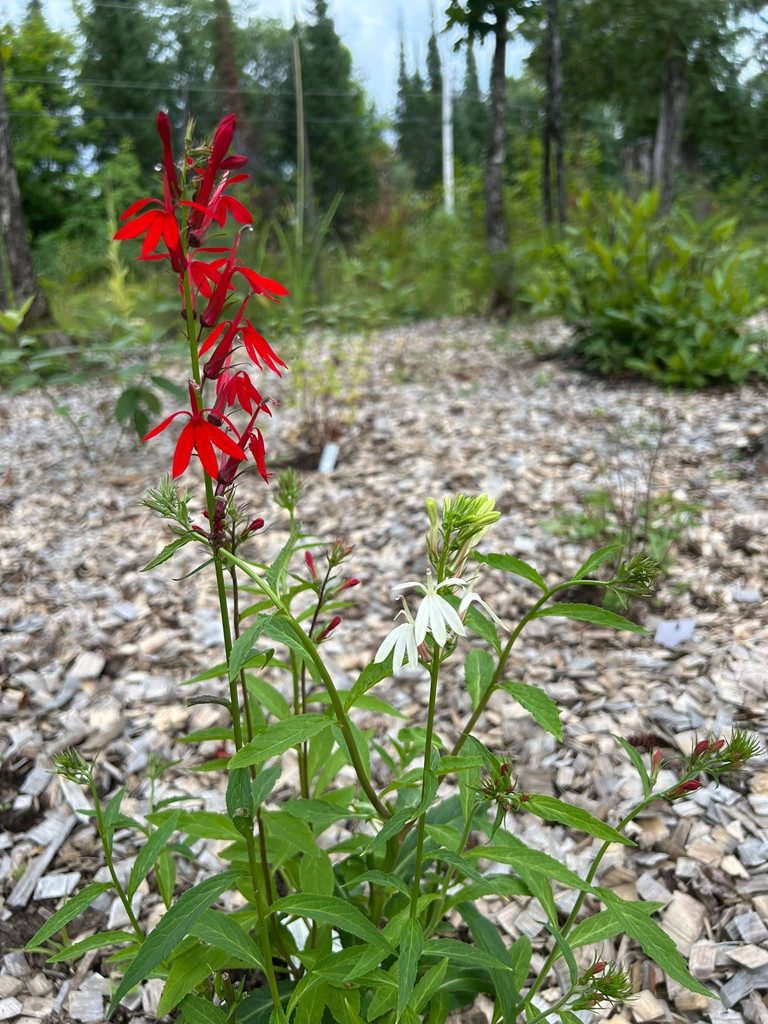
There is nothing subtle about this flower, and that is precisely the point. Its tall spikes of brilliant scarlet blooms are built specifically to attract hummingbirds, which are its primary pollinators.
You will find cardinal flower growing along Alabama’s stream banks, in wet ditches, and at the edges of ponds. It genuinely needs consistent moisture, so it is not a plant for dry garden beds.
Each spike can reach three to four feet tall, blooming from midsummer into early fall. Watching a ruby-throated hummingbird work its way up one of these spires is a small, reliable joy.
I recommend it for anyone with a boggy corner of the yard that never seems to grow anything well. Cardinal flower turns that problem spot into the garden’s brightest feature.
8. Butterfly Weed (Asclepias tuberosa)
This is one of the most important native flowers in Alabama, and not just for its looks. Butterfly weed is a milkweed species, meaning it is an essential host plant for monarch butterfly caterpillars.
Its clusters of vivid orange flowers bloom atop sturdy stems from June through August. The color is almost electric, standing out clearly against summer’s green backdrop in any prairie or garden bed.
Unlike many milkweeds, butterfly weed handles dry, poor soil exceptionally well and actually resents overly rich or wet conditions. It sends down a deep taproot, so it dislikes being transplanted once mature.
Given the well-documented decline of monarch populations across North America, planting butterfly weed is one of the most concrete things an Alabama gardener can do to help.
9. Indian Pink (Spigelia marilandica)
Indian pink might be the most underused native flower in Alabama gardens, and that is a shame. Its tubular red flowers flare open into a bright yellow star, a color combination hummingbirds cannot resist.
It grows naturally in rich, shaded woodlands, particularly along stream bottoms in the central and southern parts of the state. Deer tend to leave it alone, which is a real bonus.
The blooming window runs from late spring into early summer, and the plant forms neat, well-behaved clumps rather than spreading aggressively. That makes it ideal for shaded borders and woodland gardens.
I consider this one of Alabama’s most elegant native perennials. It deserves far more attention than it typically gets from home gardeners and nursery growers alike.
10. Wild Columbine (Aquilegia canadensis)

Wild columbine has an almost architectural quality, with red and yellow nodding flowers shaped like little bells trailing backward spurs. It blooms in April and May across Alabama’s rocky slopes and bluffs.
Hummingbirds returning from their spring migration rely on this flower as one of their earliest nectar sources. The timing is not accidental; the two species evolved together over a very long time.
It favors partial shade and rocky, well-drained soil, often growing directly out of cracks in limestone outcrops. This toughness makes it a great choice for rock gardens or dry shade areas.
Once established, wild columbine self-seeds gently, filling in gaps without becoming a nuisance. I have never met a gardener who regretted adding it to a shaded bed.
11. Jack-in-the-Pulpit (Arisaema triphyllum)
This is one of Alabama’s strangest and most memorable native flowers. A hooded, striped spathe curls protectively over a spike called the spadix, giving the plant its distinctive pulpit-and-preacher look.
It grows in moist, shaded woodlands throughout the state, usually blooming in April. Later in the season, the plant produces a cluster of bright red berries that stand out against the forest floor.
Interestingly, individual plants can change sex from year to year depending on their stored energy reserves. Smaller plants tend to produce male flowers, while larger, more established plants shift to female.
I always tell curious hikers to look for this one on shaded, north-facing slopes near creeks. Once you learn to spot the hooded shape, you will start noticing it everywhere.
12. Virginia Bluebells (Mertensia virginica)

Few native flowers announce spring as clearly as Virginia bluebells. Clusters of pink buds open into true sky-blue, bell-shaped flowers, carpeting shaded floodplains across northern Alabama in March and April.
The color shift itself is part of the charm. Buds emerge pink, then transition to blue as they mature, so a single cluster often displays both colors at once.
This plant is ephemeral, meaning it disappears entirely by early summer once the tree canopy fills in overhead. Do not worry if it vanishes; it is simply resting until next spring.
Bluebells thrive in rich, moist soil along rivers and streams. Planted in drifts beneath deciduous trees, they create one of the most photographed native wildflower displays in the state.
13. Wild Blue Phlox (Phlox divaricata)
Wild blue phlox carpets Alabama’s woodland floors with soft lavender-blue flowers each spring, usually blooming alongside trilliums and bluebells in a coordinated seasonal show that lasts several weeks.
The five-petaled flowers give off a gentle, sweet fragrance, especially in the evening. It is one of the few native spring ephemerals that also does reasonably well in cultivated garden settings.
Unlike some woodland natives, wild blue phlox tolerates a bit more sun and slightly drier soil than true bottomland species. That flexibility makes it easier to establish in an average home garden.
I like pairing it with ferns and other shade-loving perennials. The contrast of soft blue against green foliage is simple, but it never fails to look intentional and polished.
ALSO READ: 25 Shrubs With Orange Flowers (With Pictures)
14. Fire Pink (Silene virginica)
Fire pink is one of Alabama’s most vivid native wildflowers, and honestly, the name undersells it. The star-shaped flowers are a deep, saturated scarlet red, not pink at all in the usual sense.
It grows on rocky slopes, bluffs, and open woodland edges throughout the state, blooming from April through June. Hummingbirds and long-tongued moths are its primary pollinators.
The plant stays relatively low and clumping, rarely exceeding eighteen inches in height. That makes it well suited to rock gardens, dry slopes, and the front edge of a native perennial border.
I have found fire pink to be surprisingly resilient once established, handling Alabama’s rocky, thin soils far better than most cultivated perennials ever could.
15. Bloodroot (Sanguinaria canadensis)
Bloodroot is named for the reddish-orange sap found in its roots and stems, historically used by Native Americans as a dye and in traditional remedies. The flower itself, though, is pure white simplicity.
Each bloom opens briefly in early spring, often lasting only a few days before petals drop. A single large, lobed leaf wraps protectively around the flower stem before and after blooming.
You will find it in rich, moist deciduous woodlands across Alabama, typically flowering in March. It spreads slowly by rhizome, forming small, tidy colonies over several years.
I consider bloodroot one of the true harbingers of spring in Alabama forests. Spotting that first white bloom against bare brown leaf litter never gets old, no matter how many springs pass.
16. Trout Lily (Erythronium americanum)
Trout lily gets its name from its mottled, brown-and-green leaves, which resemble the markings on a brook trout’s back. The nodding yellow flowers appear just above the leaves in early spring.
It grows in large colonies across Alabama’s moist, deciduous forests, often carpeting entire hillsides. Interestingly, a colony can take years, sometimes over a decade, before individual plants mature enough to flower.
Because of this slow maturity, most plants in a colony are non-flowering leaves only. Finding an actual bloom feels a little like a reward for patient observers who know where to look.
The flowering window is short, typically just two to three weeks in March. I always plan woodland walks carefully around this window, because the display disappears quickly once trees leaf out.
17. Pink Lady’s Slipper (Cypripedium acaule)

This native orchid is arguably Alabama’s most elegant wildflower, and also one of its most particular. Its pouch-shaped pink flower depends on a very specific relationship with soil fungi to survive.
Because of that fungal dependency, pink lady’s slipper almost never survives transplanting from the wild, and attempting to dig one up will typically kill the plant. Admire it, but never remove it.
It grows in acidic, well-drained soil beneath pines and oaks, usually blooming in April and May. Finding one in the wild feels like discovering a small secret tucked into the forest floor.
I would encourage anyone who spots one on an Alabama trail to photograph it, note the location, and leave it exactly as found. Its rarity is precisely what makes it special.
18. Southern Blue Flag Iris (Iris virginica)
Southern blue flag iris brings a splash of true purple-blue to Alabama’s wetlands, swamps, and pond margins every spring. Its large, showy flowers feature distinctive yellow-and-white markings at the base of each petal.
This iris thrives in standing water and consistently moist soil, making it an excellent choice for rain gardens, pond edges, or any low spot in the yard that stays soggy after storms.
Beyond its beauty, the plant plays a real ecological role. Its dense root systems help filter runoff and stabilize shorelines, reducing erosion along Alabama’s rivers, creeks, and lake margins.
Blooming typically runs from April into June. I recommend it highly for anyone dealing with a wet, difficult corner of their property that resists more typical garden plants.
19. Swamp Sunflower (Helianthus angustifolius)
Swamp sunflower closes out the growing season with a burst of golden color just as most other flowers are fading. Tall stalks, often reaching six feet, are topped with dozens of bright yellow blooms.
True to its name, it prefers moist to wet soil, thriving along ditches, pond edges, and low-lying meadows throughout Alabama. It tolerates occasional flooding far better than most garden perennials.
The flowering period runs from September into November, making it one of the last major native nectar sources before frost. Late-season butterflies and bees depend heavily on plants like this one.
I always recommend giving it plenty of room to grow, since it can spread into substantial colonies over a few seasons. In the right spot, that spreading habit becomes a genuine asset.
ALSO READ: 25 Shrubs With Orange Berries (Details Explained)
20. Joe Pye Weed (Eutrochium purpureum)
Joe Pye weed is a towering native perennial, often reaching five to seven feet tall, topped with dusty pink-purple flower clusters that bloom from midsummer through early fall across Alabama.
The flowers have a subtle vanilla-like fragrance, and they attract an enormous range of pollinators, including swallowtail butterflies, which seem to favor this plant above almost anything else in a summer garden.
It grows naturally in moist meadows, stream banks, and woodland edges. Given its height, it works best toward the back of a border or as a dramatic standalone specimen near a water feature.
I have watched clouds of butterflies gather on a single Joe Pye weed plant at once. Few native flowers deliver that kind of concentrated pollinator activity in one location.
21. Spiderwort (Tradescantia virginiana)
Spiderwort produces three-petaled, violet-blue flowers that open fresh each morning and close by early afternoon, a rhythm that gives the plant an oddly punctual, almost clockwork personality throughout its bloom season.
It grows readily across Alabama in fields, roadsides, and open woodlands, blooming from April through June. The grass-like foliage remains attractive even when the flowers are not actively open.
This plant tolerates a wide range of conditions, from full sun to partial shade, and adapts to both moist and moderately dry soil. That flexibility makes it forgiving for beginner native gardeners.
I like recommending spiderwort to anyone new to native plants. It is nearly impossible to kill, and the daily opening and closing gives even young children something to watch and enjoy.
22. Coral Honeysuckle (Lonicera sempervirens)
Coral honeysuckle is the native alternative to Japanese honeysuckle, and Alabama gardeners should know the difference matters. This vine produces tubular, coral-red flowers without becoming the invasive tangle its Asian cousin creates.
Hummingbirds treat this vine as a primary food source, especially during spring migration. The flowers bloom in flushes from spring through summer, with occasional rebloom continuing into early fall.
Unlike its invasive relative, coral honeysuckle is well behaved on a trellis or fence, climbing politely rather than smothering everything nearby. Bright red berries follow the flowers, feeding birds in fall.
I always encourage anyone with invasive honeysuckle on their property to remove it and replace it with this native version instead. The ecological trade-up is significant and genuinely worthwhile.
23. Wild Bergamot (Monarda fistulosa)
Wild bergamot, also called bee balm, produces shaggy, lavender-pink flower heads that look almost like small fireworks frozen mid-burst. The aromatic foliage smells faintly of mint and oregano when brushed against.
It blooms from June through August across Alabama’s fields, prairies, and open woodland edges. Bees, butterflies, and hummingbird moths visit constantly, making it a genuine pollinator magnet in any garden.
The plant spreads by rhizome and can form substantial colonies over time, so it works well in naturalized meadow plantings rather than tightly controlled formal beds.
I steep the leaves for tea occasionally, a practice with real historical roots among Native American communities. Beyond that practical use, it is simply one of the liveliest native flowers to watch in bloom.
ALSO READ: 15 Herbs That Repel Bugs (Naturally, With Details)
24. Maypop / Passionflower (Passiflora incarnata)
Maypop produces one of the most intricate flowers in the entire plant kingdom, with a fringed purple-and-white corona surrounding a complex central structure that looks almost otherworldly up close.
It grows as a vigorous vine across Alabama’s fields, fence lines, and roadsides, blooming from June through September. The plant is also the host for the gulf fritillary and zebra longwing butterflies.
After flowering, it produces an egg-shaped fruit, also called a maypop, which is edible and has a tart, tropical flavor when fully ripe. Many rural Alabamians grew up snacking on them.
Given room to spread, this vine can be aggressive, so I recommend giving it a dedicated trellis or fence line rather than letting it wander freely through a mixed garden bed.
25. Blazing Star (Liatris spicata)
Blazing star closes out this list with tall, dense spikes of fuzzy purple-pink flowers that bloom from the top downward, an unusual pattern that sets it apart from most other native perennials.
It thrives in full sun and well-drained soil, appearing naturally in prairies, meadows, and roadside ditches across Alabama from midsummer into early fall. Butterflies, particularly swallowtails, visit it heavily.
The flower spikes also make excellent cut flowers, holding their color and shape well after being brought indoors. Many gardeners grow it specifically for this reason, alongside its wildlife value.
I always plant blazing star in clusters rather than single stems. Grouped together, the vertical purple spikes create one of the most striking native flower displays available to any Alabama garden.
Why Native Flowers Matter in Alabama
Native flowers are not just pretty additions to the landscape. They feed pollinators, stabilize soil, and support the food chains that native wildlife depends on.
Alabama’s native plants evolved alongside its birds, bees, and butterflies over thousands of years. Non-native ornamentals, however attractive, rarely offer the same ecological value.
Growing native flowers in your own yard also means less water, less fertilizer, and far less maintenance. These plants are already adapted to Alabama’s clay soils, humidity, and rainfall patterns.
Growing Native Flowers Successfully in Alabama
Timing matters more than most gardeners expect. Fall planting generally gives native perennials a stronger head start, letting roots establish before summer heat arrives.
Match each plant to its natural habitat. A wetland native like cardinal flower will struggle in dry, sandy soil, no matter how much care you give it.
Resist the urge to over-fertilize. Alabama natives evolved in unimproved soil, and excess fertilizer often produces weak, floppy growth rather than healthier plants.
Finally, be patient. Many native perennials spend their first year establishing roots below ground before putting on visible growth above it.
Final Thoughts
Alabama’s native flowers tell a story that stretches back long before European settlement, shaped by rivers, fire, and limestone geology found almost nowhere else on the continent.
Growing even a handful of these 25 flowers supports pollinators, conserves water, and connects your garden to the state’s genuine botanical identity. I would call that a worthwhile trade for any yard.

Tim M Dave is a gardening expert with a passion for houseplants, particularly cacti and succulents. With a degree in plant biology from the University of California, Berkeley, he has vast experience in gardening. Over the years, he has cultivated a vast collection of desert plants and learned a great deal about how to grow and care for these unique companions.