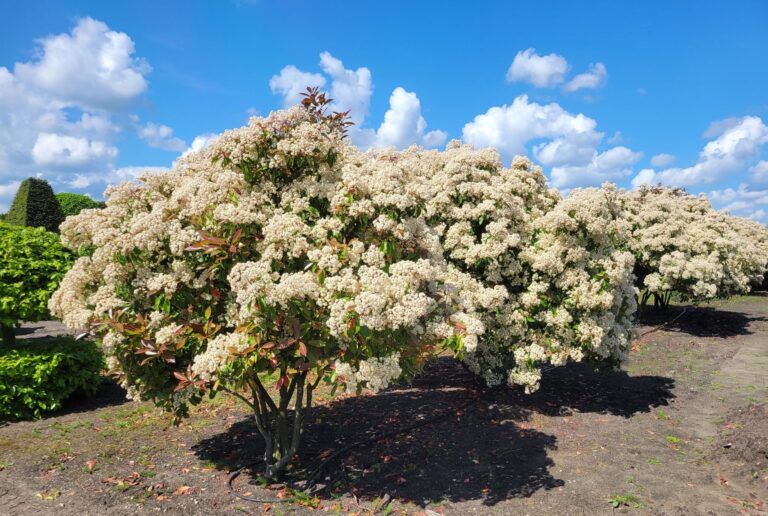
25 Shrubs With Orange Flowers (With Pictures)
Orange is a bold colour. It doesn’t hide in a border the way soft pastels do. When I walk past a shrub covered in orange blooms, I stop. It demands attention, and honestly, that’s exactly why so many gardeners chase it.
If you’re looking to bring warmth, energy, and a touch of drama to your yard, you’re in the right place. Below, I’ve gathered 25 shrubs with orange flowers, each one chosen for its reliability, beauty, and garden value.
Let’s get into the list.
1. Firebush (Hamelia patens)
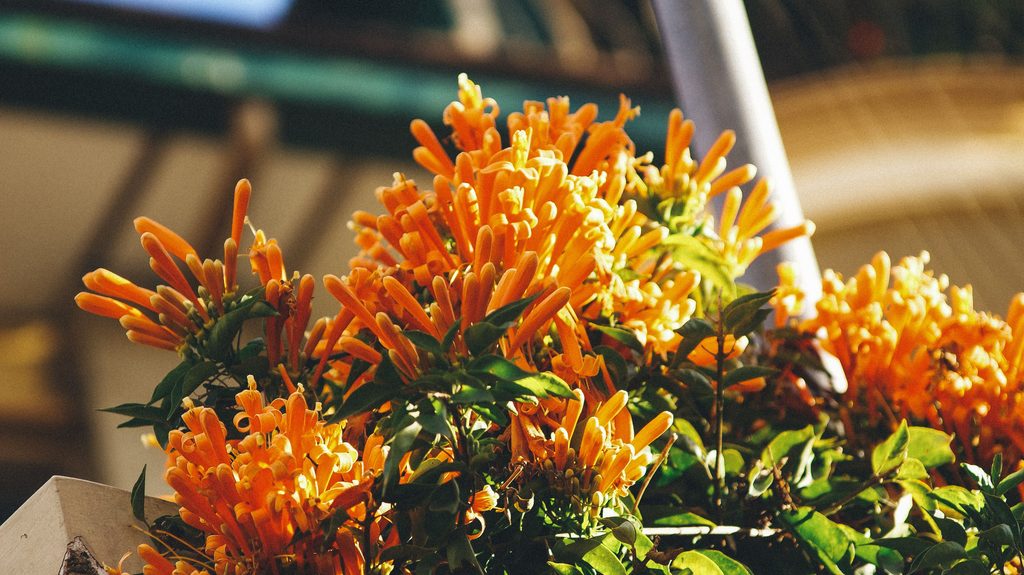
Firebush is a favourite in warm climates, and it earns that spot honestly. Its tubular orange-red flowers bloom nearly non-stop from late spring through the first frost.
This shrub thrives in USDA zones 8 to 11, though gardeners in cooler regions often grow it as an annual. It can reach 6 to 12 feet tall in frost-free areas.
What I appreciate most is how it keeps working for wildlife. Hummingbirds visit firebush constantly, and a single mature plant can produce hundreds of blooms across a single season.
2. Cape Honeysuckle (Tecoma capensis)
Cape honeysuckle isn’t a true honeysuckle, but its clusters of trumpet-shaped orange flowers make the comparison understandable. It’s native to South Africa and adapted to sunny, dry conditions.
It grows fast — sometimes 3 feet in a single season — and can be trained as a hedge, screen, or sprawling groundcover. Zones 9 through 11 suit it best.
Butterflies and hummingbirds are drawn to it in large numbers. If you want movement and colour in the same corner of your garden, this shrub delivers both.
3. Orange Trumpet Honeysuckle (Lonicera sempervirens ‘Major Wheeler’)
This variety produces bright orange-red tubular flowers that appear in flushes from late spring into fall. It’s a true honeysuckle, and a well-behaved one at that.
Unlike invasive honeysuckle species, ‘Major Wheeler’ is a North American native cultivar, hardy in zones 4 to 9. It climbs and sprawls, so a trellis or fence helps keep it tidy.
Hummingbird researchers have noted that native Lonicera species rank among the top nectar sources for ruby-throated hummingbirds during their spring migration.
ALSO READ: 25 Shrubs With Orange Berries (Details Explained)
4. Orange Ball Tree (Buddleja globosa)
Unlike the familiar butterfly bush with its cone-shaped purple spikes, this species produces round, orange-yellow flower balls that look almost artificial up close.
Native to Chile and Peru, it’s hardy in zones 6 to 8 and prefers full sun with well-drained soil. It can grow 10 to 15 feet tall if left unpruned.
The fragrance is honey-sweet and carries surprisingly far. I’d recommend planting it near a patio or path where you’ll actually catch the scent.
5. Flowering Quince (Chaenomeles speciosa)
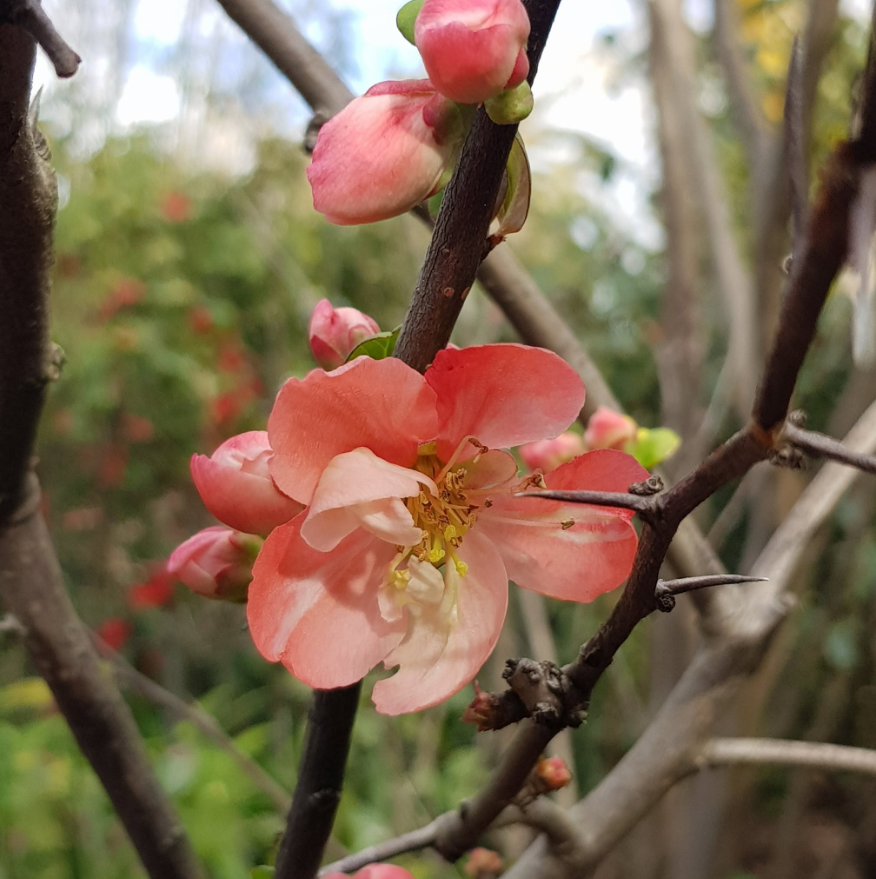
Flowering quince blooms early, often before the leaves emerge, which makes its orange flowers stand out dramatically against bare branches in late winter or early spring.
This deciduous shrub is tough. It tolerates poor soil, drought, and cold down to zone 4, making it one of the hardiest entries on this list.
After flowering, it produces small, fragrant quince fruits that some gardeners use for jams. It’s a two-season plant, really — flowers first, fruit later.
6. Red Bird of Paradise (Caesalpinia pulcherrima)
This is a showstopper. Feathery orange-and-red flowers with long, spidery stamens cover the shrub from summer through fall in warm climates.
Popular across the American Southwest, it thrives in zones 8 to 11 and handles intense heat and poor soil without complaint. Mature plants reach 8 to 10 feet.
Gardeners in cooler regions grow it as a container plant, bringing it indoors before frost. It’s worth the extra effort for the colour alone.
7. Firecracker Plant (Russelia equisetiformis, orange forms)
With its arching, almost leafless green stems and clusters of small tubular orange flowers, firecracker plant has a distinctive silhouette unlike most shrubs on this list.
It suits zones 9 to 11 and works beautifully cascading over walls or the edges of raised beds. Established plants tolerate drought remarkably well.
Hummingbirds treat this shrub like a buffet. A single feeding bird can visit hundreds of tubular flowers like these in one hour, according to ornithological field studies.
8. Firecracker Flower (Crossandra infundibuliformis)
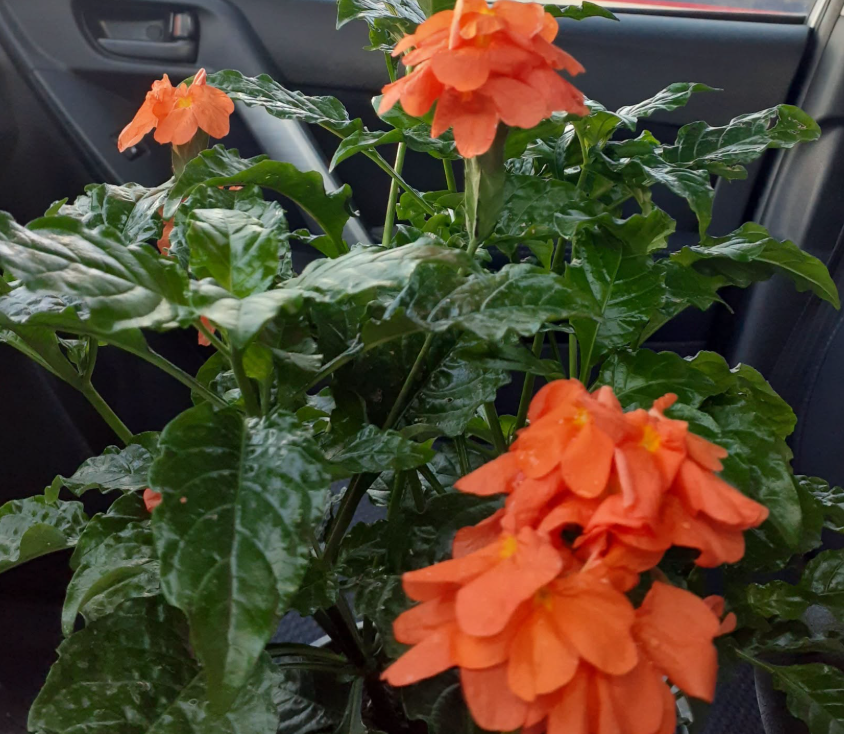
Native to India and Sri Lanka, crossandra produces layered, fan-shaped orange flowers atop glossy dark green foliage. It’s compact, usually staying under 3 feet.
This shrub prefers warmth and humidity, suited to zones 10 and 11, or as a houseplant elsewhere. It blooms nearly year-round indoors with enough light.
I find it especially useful for small gardens or patio containers, where its tidy habit and long bloom period earn its space without overwhelming the area.
9. Lion’s Tail (Leonotis leonurus)
Lion’s tail is unmistakable. Whorls of fuzzy, tubular orange flowers stack up the stem like tiered crowns, giving the plant its dramatic common name.
Native to South Africa, it grows in zones 8 to 11 and reaches 4 to 6 feet tall. It’s drought-tolerant once established and thrives in poor, sandy soil.
Sunbirds pollinate it in its native range, but in North America, hummingbirds and bees take over that role enthusiastically during late summer bloom.
10. Orange Cestrum (Cestrum aurantiacum)
Also called orange jessamine (though unrelated to true Murraya jessamine), this shrub produces clusters of small, fragrant orange tubular flowers, especially fragrant at night.
It suits zones 9 to 11 and can grow quickly into a rounded shrub 6 to 10 feet tall. Regular pruning keeps its size manageable.
A word of caution: all parts of this plant are toxic if ingested, so keep it away from areas where pets or children play unsupervised.
ALSO READ: 25 Stunning Shrubs With Red Flowers: Identification and Pictures
11. Flowering Maple (Abutilon ‘Orange Hot Lava’)
Despite the name, this isn’t a true maple — the resemblance is only in the leaf shape. Its bell-shaped orange flowers dangle attractively among maple-like foliage.
Hardy in zones 9 to 11, it’s grown as an annual or container plant further north. It flowers almost continuously with regular feeding and consistent moisture.
I like this one for hanging baskets and mixed containers. The nodding flower shape gives it a graceful, slightly shy character compared to bolder shrubs on this list.
12. Exbury Azalea (Rhododendron ‘Gibraltar’)
Exbury azaleas are deciduous, and ‘Gibraltar’ is one of the most celebrated orange cultivars, producing ruffled, fragrant flowers with a golden-orange flare.
It performs best in zones 5 to 8, in acidic, well-drained soil with dappled shade. Full sun in cooler climates can also work, provided moisture is consistent.
Spring bloom on this shrub is genuinely striking. Whole plants can appear entirely covered in orange for two to three weeks straight.
13. Tropical Hibiscus (Hibiscus rosa-sinensis)
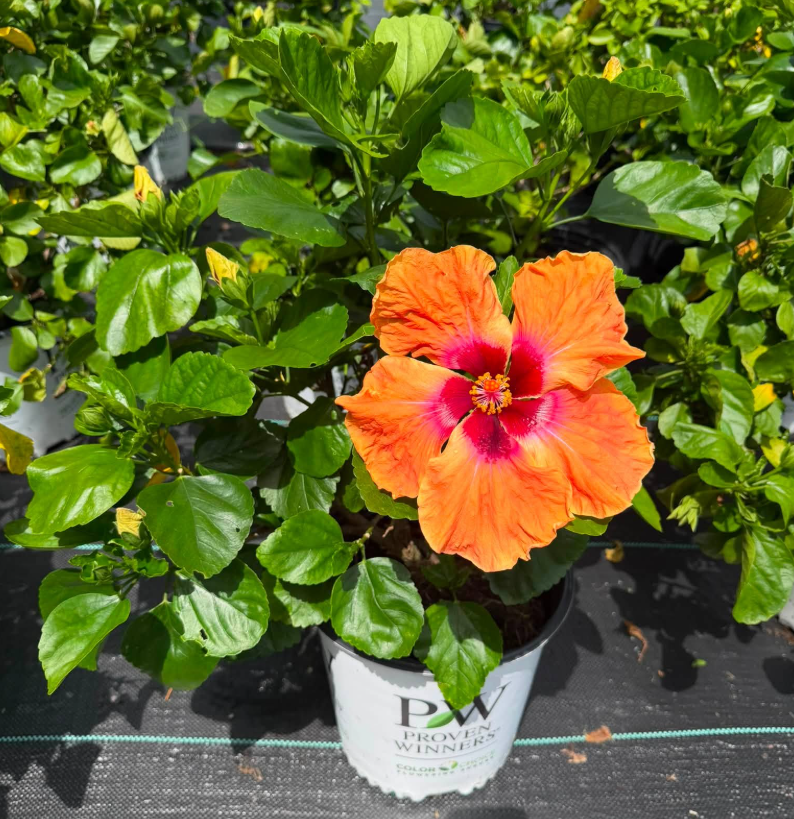
Orange-flowered hibiscus cultivars, such as ‘Fiesta’ and ‘Orange King’, produce enormous single-day blooms — often 4 to 6 inches wide — in near-constant succession.
This shrub suits zones 9 to 11, though it’s widely grown as a patio plant elsewhere. Full sun and regular watering keep it flowering heavily.
Each flower only lasts a day, but a healthy shrub produces so many buds that the display rarely looks thin. It’s a plant that rewards attention.
14. Orange Shrub Rose (‘Westerland’)
Roses aren’t usually thought of as “shrubs” first, but ‘Westerland’ is a true shrub rose, producing large, ruffled apricot-orange blooms with strong fragrance.
Hardy in zones 5 to 9, it can climb or be kept as a freestanding shrub 8 to 10 feet tall. It repeats bloom through summer into fall.
According to the American Rose Society, roses remain the best-selling flowering shrub in the United States, and orange cultivars like this one are gaining popularity fast.
15. Angel’s Trumpet (Brugmansia sanguinea)
This species produces enormous, pendulous orange-red trumpet flowers that can reach 8 inches long — among the most dramatic blooms of any shrub on this list.
It grows in zones 9 to 11 and can reach small-tree size if left unchecked. Cooler climates grow it in containers, overwintered indoors.
Every part of this plant is highly toxic. It’s stunning, but it demands careful placement, away from children, pets, and curious foragers.
16. Trumpet Creeper (Campsis radicans)
Technically a vigorous woody vine, trumpet creeper is often trained and pruned as a shrub form. Its orange-red trumpet flowers are hummingbird magnets.
Hardy in zones 4 to 9, it tolerates poor soil, drought, and neglect. It can also become aggressive, so regular pruning is essential to keep it contained.
Cornell Lab of Ornithology data lists trumpet creeper among the top native plants for attracting ruby-throated hummingbirds during their breeding season.
17. Witch Hazel (Hamamelis × intermedia ‘Jelena’)
Witch hazel blooms when almost nothing else does — its spidery orange flowers open on bare branches in late winter, often through light snow.
This deciduous shrub is hardy in zones 5 to 8 and tolerates part shade, unlike many sun-loving shrubs on this list. Fall foliage colour is an added bonus.
I find real value in a plant that blooms during the dead of winter. It’s a reminder, honestly, that the garden isn’t as asleep as it looks.
18. Orange Bougainvillea (‘Orange King’)
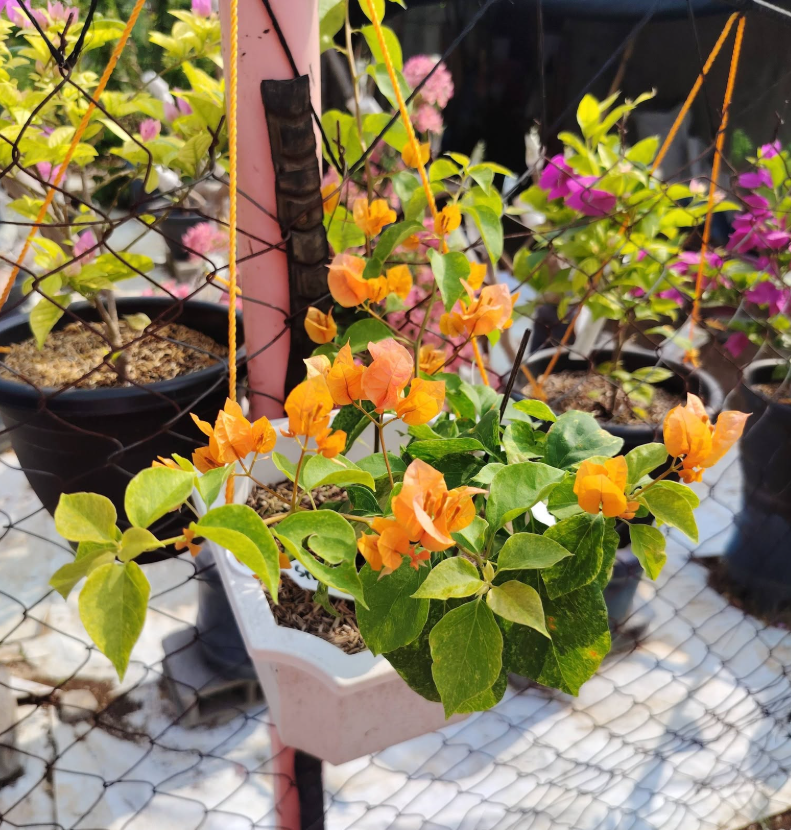
Bougainvillea’s colour actually comes from papery bracts, not true petals, but the effect is no less spectacular. ‘Orange King’ produces vivid, saturated orange clusters.
It thrives in zones 9 to 11, in full sun and lean, well-drained soil. Overwatering or overly rich soil tends to reduce flowering significantly.
Grown on a trellis or wall, a mature bougainvillea can cover an entire structure in colour within just two to three growing seasons.
19. Orange Jubilee (Tecoma ‘Orange Jubilee’)
This fast-growing hybrid produces long clusters of trumpet-shaped orange flowers almost continuously from spring through fall in warm regions.
Suited to zones 8 to 11, it can grow 15 to 20 feet tall if left unpruned, though regular trimming keeps it as a manageable hedge or specimen shrub.
Its bloom period is one of the longest on this list — often six months or more — which makes it a favourite among landscapers in the Southwest.
20. Darwin’s Barberry (Berberis darwinii)
Small but prolific, Darwin’s barberry produces dense clusters of tiny orange-yellow flowers in spring, followed by dark blue berries later in the season.
Hardy in zones 7 to 9, this evergreen shrub tolerates wind, coastal exposure, and poor soil, making it a practical hedge choice in tougher climates.
It’s less flashy than tropical entries on this list, but its reliability and hardiness make it a workhorse shrub for gardeners in cooler regions.
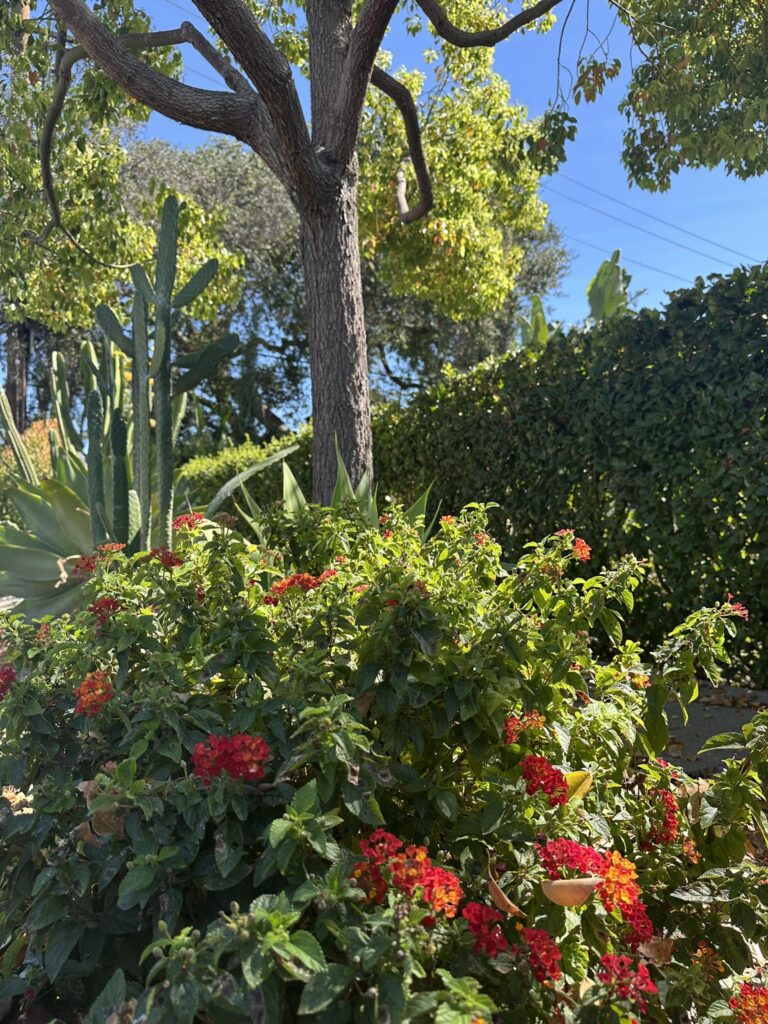
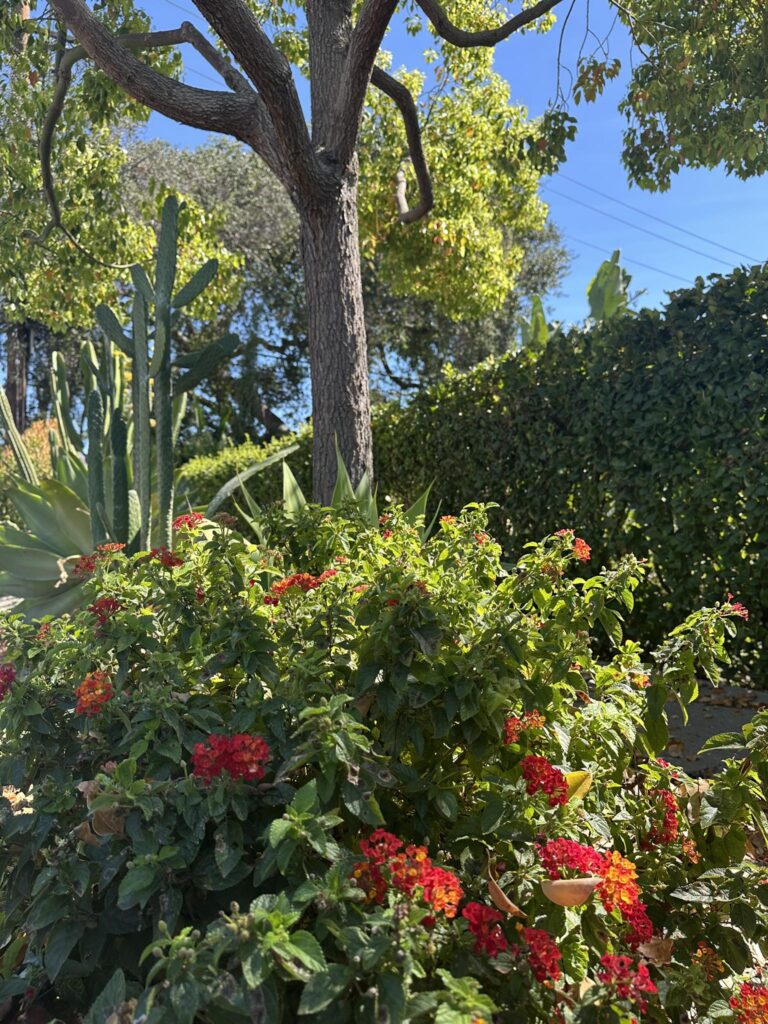
21. Lantana camara
Lantana’s clustered flower heads often shift colour as they age, moving through yellow, orange, and pink on the same cluster — a genuine visual signature.
It grows in zones 8 to 11 as a perennial shrub, or as an annual further north. Drought tolerance is excellent once the plant is established.
A widely cited pollinator study found lantana attracts over 30 documented butterfly species in North America alone, making it one of the best wildlife shrubs available.
22. Grevillea ‘Robyn Gordon’
Native to Australia, this evergreen shrub produces unusual, spider-like orange-red flower clusters that curl outward in an almost sculptural way.
It suits zones 9 to 11, preferring sharp drainage and low-phosphorus soil — standard fertiliser can actually harm this plant, so care requires a slightly different approach.
Nectar-feeding birds are drawn to it strongly in its native range, and in suitable climates, hummingbirds take on that same role enthusiastically.
23. Geiger Tree (Cordia sebestena)
Often grown as a large shrub rather than a tree, the Geiger tree produces clusters of crinkled, bright orange flowers year-round in tropical climates.
Native to the Caribbean, it grows in zones 10 and 11 and tolerates salt spray well, making it a popular coastal landscaping choice in Florida.
Its rough, textured leaves and near-constant bloom cycle make it a low-maintenance option for gardeners in consistently warm, humid regions.
24. Ixora (Ixora coccinea, orange cultivars)
Ixora produces tight, rounded clusters of small star-shaped orange flowers, often called “jungle flame” for its intense colour saturation.
This evergreen shrub suits zones 9b to 11 and prefers acidic, well-drained soil. It flowers most heavily in full sun with consistent moisture.
Butterflies, particularly swallowtails, are frequently seen feeding on ixora clusters, and its dense growth habit also makes it a popular low hedge in tropical landscaping.
25. Weyer’s Butterfly Bush (‘Honeycomb’)
This hybrid butterfly bush produces dense, honey-scented orange-yellow flower spikes, differing from the more familiar purple-flowered Buddleja davidii varieties.
Hardy in zones 5 to 9, it blooms from summer through fall and tends to be less invasive than some traditional butterfly bush species.
The Royal Horticultural Society has recognised several Buddleja x weyeriana cultivars for garden merit, citing their strong pollinator appeal and extended bloom period.
Final Thoughts
Choosing among 25 shrubs with orange flowers really comes down to your climate, your space, and honestly, how bold you want your garden to feel.
If you live somewhere warm, tropical options like firebush, ixora, or bird of paradise will reward you generously. Cooler climates still have strong choices — flowering quince, witch hazel, and azaleas hold their own beautifully.
Whatever you pick, orange has a way of pulling a garden together. It’s warm, it’s confident, and it rarely goes unnoticed. That, I think, is exactly the point.

Tim M Dave is a gardening expert with a passion for houseplants, particularly cacti and succulents. With a degree in plant biology from the University of California, Berkeley, he has vast experience in gardening. Over the years, he has cultivated a vast collection of desert plants and learned a great deal about how to grow and care for these unique companions.