25 Types of Actaea Plant (Identification, With Pictures)
Few plant genera confuse gardeners as much as Actaea. One name covers tall bugbanes, low baneberries, and the famous black cohosh. Labels change, and old names linger.
I have often stood in a nursery aisle staring at tags that read Cimicifuga on one pot and Actaea on the next. They were the same plant. This guide clears up that confusion.
Below, you will find 25 types of Actaea, with details on where the plant grows, how to recognize it, and what to know before you buy.
How Many Types of Actaea Are There?
The number depends on who you ask. Botanists once split this group into Actaea, Cimicifuga, and Souliea. Later, DNA studies led many experts to merge them into one genus. Under that view, the genus holds roughly 25 to 30 species.
Plants of the World Online, run by Kew, lists more than 30 accepted names today. I chose 25 well-recognized species for this guide. Together they show the full range of the genus.
One simple rule helps. True baneberries have fleshy fruit. The bugbanes, by contrast, have dry fruit. Some botanists still use this difference to keep the groups apart.
READ MORE: Understanding Actaea Plant (Baneberry and Black Cohosh)
North American Types of Actaea
North America holds some of the best-known members of the genus. Most grow in cool, rich forests. Several are rare, so their conservation status matters.
1. Black Cohosh (Actaea racemosa)
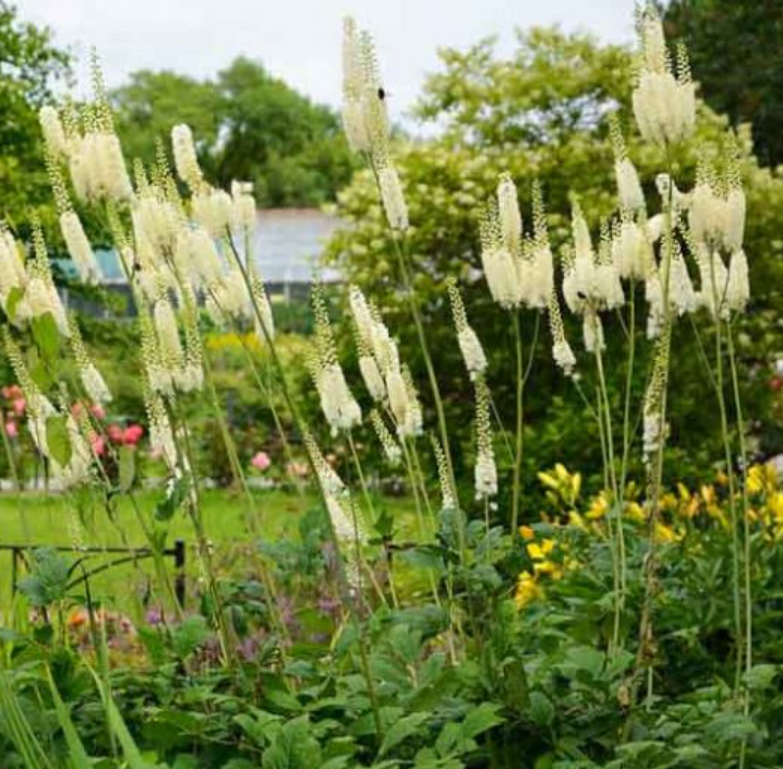
Black cohosh is the star of the genus. NC State reports it grows 4 to 7 feet tall and 2 to 4 feet wide. Tall white spires rise above fern-like leaves in summer.
It is native to eastern forests, from Maine south to Georgia and west to Missouri and Arkansas. It thrives in USDA zones 3 to 8. Deer rarely bother it, which gardeners appreciate.
It also helps wildlife. The plant serves as a host for Spring Azure and Appalachian Azure butterflies. If you buy only one Actaea, this is the one I would suggest.
2. White Baneberry (Actaea pachypoda)
White baneberry is better known as doll’s eyes. Its white berries carry a dark dot, and they are about 1 cm across. The stalks turn bright red as the fruit ripens.
This species stays low, usually about one to three feet tall. It prefers shade and rich, moist soil. NC State also lists a cultivar called ‘Misty Blue’, which has bluish-green foliage.
Please treat it with care. NC State rates it as having high severity poison characteristics. Keep children and pets away from the berries.
3. Red Baneberry (Actaea rubra)
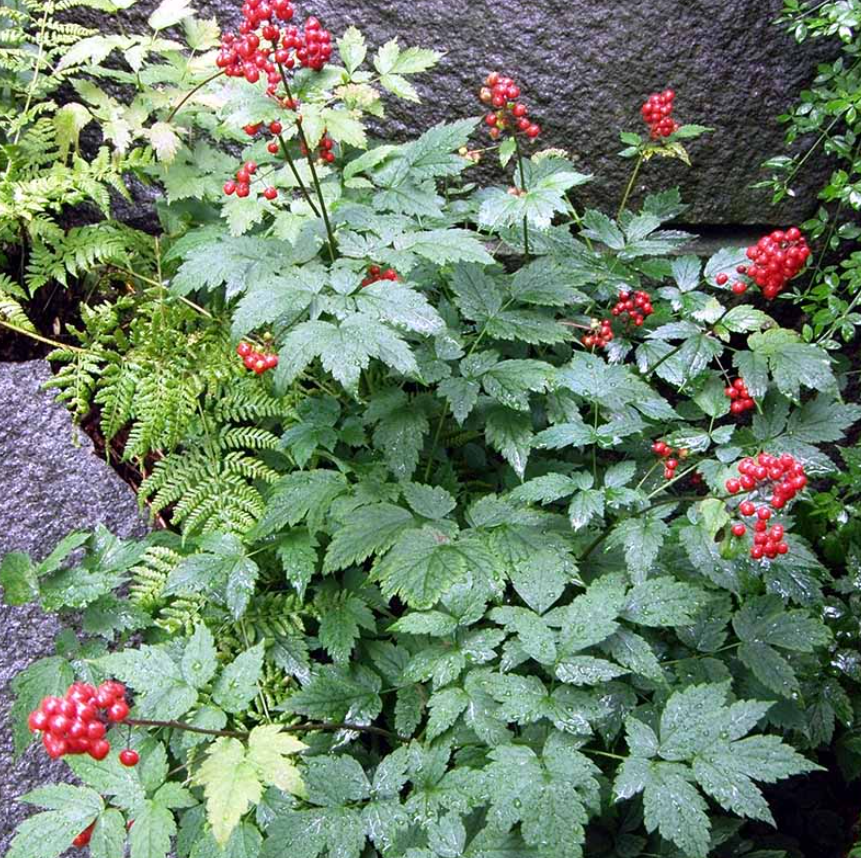
Red baneberry looks much like its white cousin. The key difference is the fruit, which turns glossy red. It grows in cool, damp woods across much of North America.
Some regions protect it. Indiana, for example, lists it as rare at the state level. It is another reminder to buy nursery-grown plants rather than dig from the wild.
Historically, people used its roots as a stand-in for black cohosh. One source notes that Native Americans used the roots as an alternative to black cohosh. Today, I would admire it only as a garden plant, since the berries are toxic.
4. Appalachian Bugbane (Actaea rubifolia)
Appalachian bugbane is a rare woodland native. It has broad, lobed leaves and white flower spikes. It grows in rich forests in the southeastern United States.
Its rarity is well documented. Indiana lists it as endangered at the state level. Alabama’s atlas gives it a state rank of S1 and a global rank of G3. Those ranks signal a limited range.
For gardeners, the lesson is simple. Never collect this plant from the wild. If you want it, ask a specialist native-plant nursery about legally propagated stock.
5. Mountain Black Cohosh (Actaea podocarpa)
This species is also called late black cohosh. The name hints at a later bloom than common black cohosh. It grows in the southern Appalachian region.
It is uncommon. The South Carolina plant atlas lists it as rare at the state level, with a rank of S1. Its leaves and flower spikes resemble black cohosh, so identification can be tricky.
Because it is rare, you will seldom find it in garden centers. I include it here because it shows how much variety hides inside this genus. Enjoy it on a woodland walk, and leave it where it grows.
6. Tall Bugbane (Actaea elata)
Tall bugbane is a western North American species. As its name says, it grows tall, with strong flower spikes. It favors moist, shaded forest settings.
It is much less common in gardens than black cohosh. Most plant sales focus on eastern species and Asian garden forms. Western natives like this one reach mainly specialist growers.
If you garden in a cool, wet western climate, it may suit you well. Check local native-plant societies for reputable sources. As always, buy nursery-propagated plants and avoid wild collection.
7. Cutleaf Bugbane (Actaea laciniata)
Cutleaf bugbane is another northwestern native. The common name points to its deeply cut leaves. Like other bugbanes, it carries white flower spikes above the foliage.
It grows in damp, shaded woods and along forest edges. Its needs mirror those of its relatives: cool air, rich soil, and steady moisture. It dislikes hot, dry sites.
Information on this species is thinner than for eastern relatives. I would call it a plant for enthusiasts. If you spot it for sale, ask the grower about its origin and care.
8. Arizona Bugbane (Actaea arizonica)
Arizona bugbane is the southwestern member of the genus. It surprises many people, since Actaea is usually linked with damp northern forests. This species grows in cooler, higher-elevation woodlands in its region.
Its common name makes its home clear. It shows that the genus can adapt to quite different climates. Still, it likely needs shade and moisture like its relatives.
It is rare in cultivation. Gardeners in dry regions should not assume it will tolerate heat and drought. I would test any plant on a small scale first.
European and Eurasian Types of Actaea
Europe and northern Asia share several members of the genus. Some are true baneberries. Others are bugbanes.
9. Herb Christopher (Actaea spicata)
Herb christopher is the type species of the genus. This means the whole genus is anchored to it. Sources list “baneberry” and “herb christopher” as its common names.
It grows across Europe and into western Asia. It has black berries and a low, bushy habit. It also appears under the older name Actaea alba in some texts.
The genus name itself has a tidy story. It comes from the Greek name for elder, because the leaves look similar. Like other baneberries, its fruit is poisonous.
10. European Bugbane (Actaea europaea)
European bugbane is a dry-fruited bugbane rather than a baneberry. It was once placed in the genus Cimicifuga. It grows in parts of Eastern Europe.
Its flower spikes are slender and pale. The plant likes shaded, humus-rich forest soil. In the wild, it is not common, and cultivated plants are rare.
For most home gardeners, this species is a curiosity. It does show the broad reach of the genus across Europe. I would classify it as one for botanical gardens.
11. Red-Fruited Baneberry (Actaea erythrocarpa)
This species is a red-berried baneberry of northern Eurasia. Its name means “red fruit.” It resembles North American red baneberry in many ways.
Taxonomy is murky here. Some sources treat it as a synonym of Actaea rubra. Kew’s list, in contrast, keeps it as a separate name. Experts still debate the boundary.
For gardeners, the practical advice is the same. Treat the berries as poisonous. Give the plant shade, rich soil, and room to spread.
12. Stinking Bugbane (Actaea cimicifuga)
This is the species Linnaeus named, and it was once known as Cimicifuga foetida. The old name hints at a strong smell from the flowers. It grows across Siberia and parts of East Asia.
It matters beyond the garden. A U.S. National Library of Medicine resource warns that some black cohosh products have been found to contain Chinese Actaea species instead, such as C. foetida. Mislabeling is a real concern in the supplement trade.
In the garden, it is rarely grown. I mention it mainly for identification and safety reasons. If you buy herbal products, choose reputable, well-tested brands.
13. Garden Bugbane (Actaea simplex)
Actaea simplex is behind many of the dark-leaved garden bugbanes you see in catalogs. Cultivars like ‘Brunette’ belong here. One source notes that ‘Brunette’ is a variety of A. simplex.
These plants often flower later than black cohosh. Many gardeners value them for their purple-bronze foliage and fragrant, bottlebrush blooms. They fit well at the back of a shady border.
Care is simple: shade, moisture, and rich soil. Give them mulch and space. They are among the easiest Actaea types for beginners to find and grow.
Asian Types of Actaea
Asia has the greatest diversity in the genus. Many species are known mostly from regional floras. I have kept claims modest where garden information is limited.
14. Sheng Ma (Actaea dahurica)
Actaea dahurica is known in Chinese as Sheng ma (升麻). It grows across northeastern Asia. It was formerly called Cimicifuga dahurica.
It has a long history in traditional Chinese herbal practice. The same safety note applies as before. A medical resource lists C. dahurica among the Chinese species found in some mislabeled black cohosh products.
In the garden, it is a tall, shade-loving bugbane. Availability is limited outside specialist nurseries. If you grow it, treat it as an ornamental plant only.
15. Heracleifolia Bugbane (Actaea heracleifolia)
This species is a northeast Asian bugbane. Its species name refers to leaves that resemble those of Heracleum, a genus of hogweeds. It is another plant once placed in Cimicifuga.
Like A. dahurica, it appears in discussions of herbal product mix-ups. The same medical source names C. heracleifolia among the Chinese species found in mislabeled products.
In cultivation, it follows the same rules as other bugbanes. Give it cool shade and constant moisture. It is uncommon in Western gardens.
16. Japanese Bugbane (Actaea japonica)
Actaea japonica was described by the Swedish botanist Thunberg. It grows in Japan and nearby parts of East Asia. It is a true bugbane with upright flower spikes.
Do not confuse it with Actaea matsumurae, which also carries “Japanese bugbane” as a common name. Common names overlap often in this genus. Always rely on the scientific name when you buy.
It is not widely sold. Specialist collectors seek it for its woodland character. Plan on a cool, shaded spot with good soil.
17. Biternate Bugbane (Actaea biternata)
The species name describes the leaves. “Biternate” means the leaf divides twice into groups of three. It was named from East Asian material by Siebold and Zuccarini.
It is a woodland perennial with white flower spikes. Like its relatives, it prefers shade and moist soil. It is mostly a plant of regional floras.
I could not find much garden-specific guidance for it. That alone is useful to know. If a seller promises detailed care notes, ask where they come from.
18. Kamchatka Bugbane (Actaea matsumurae)
Sources list this species under the names Kamchatka bugbane and Japanese bugbane. It is one of the more garden-friendly Asian types. It often flowers late in the season.
Several cultivars come from this species. Gardeners often grow forms with white or pinkish flower spikes in autumn. Late bloom is a real asset, since the shade garden is usually quiet by then.
Give it the same care as the rest of the group. Moist soil and light shade keep it happiest. It is a fine choice if you want to extend the season of interest.
19. Asian Bugbane (Actaea asiatica)
Actaea asiatica was named by the Japanese botanist Hiroshi Hara. It is a woodland species from East Asia. Gardeners seldom grow it.
Scientists have studied its chemistry. One journal paper examined chemical constituents of Actaea asiatica and their anti-osteoporosis activities. This is laboratory research, not a medical recommendation.
I include it to show how much research interest this genus attracts. Lab findings do not equal safe home remedies. If you have health concerns, speak with a doctor.
20. Southern Korean Bugbane (Actaea austrokoreana)
The name means “southern Korean.” This species is tied to the Korean peninsula. It was once described under a different genus before the merger.
It is among the least known types on this list. You are unlikely to find it in a nursery. Most information sits in botanical papers and regional floras.
I list it here for completeness. It reminds us that taxonomy keeps moving. New data can change names, ranges, and even species boundaries.
21. Bifid Bugbane (Actaea bifida)
Actaea bifida was described by the Japanese botanist Nakai, who worked extensively on Korean plants. It also began in the older genus Cimicifuga. The species name hints at a divided, or “bifid,” feature.
It is a regional woodland perennial. Garden use is very limited. Few English-language growing guides exist for it.
If you come across it, treat it like other bugbanes. Provide cool shade, humus-rich soil, and even moisture. Always ask the seller for the plant’s source.
22. Short-Fruited Bugbane (Actaea brachycarpa)
The name means “short fruit.” This species was named by the Chinese botanist P.K. Hsiao and is linked to China. It is another species that came into Actaea after the genus merger.
It belongs to the dry-fruited group. Information in English is scarce. Most data comes from Chinese floras and technical papers.
For gardeners, it is more of a botanical footnote. Still, it shows how widely this group spreads across East Asia. Many of its members remain poorly known outside their home regions.
23. Himalayan Bugbane (Actaea frigida)
Actaea frigida was first described by the botanist Royle from the Himalayas. The name “frigida” means cold, a fitting hint at its high-elevation home. It grows in cool mountain settings.
It is an upright perennial with pale flower spikes. It likely prefers moist, cool conditions. Hot summers are probably not to its liking.
Cultivation is rare, and reliable growing data is hard to find. If you try it, start with a small plant. Protect it from heat and drying winds.
24. Kashmir Bugbane (Actaea kashmiriana)
The name points to the Kashmir region of the western Himalayas. It is one of the newer additions to the genus list. Kew’s list includes it as an accepted species.
Like its neighbors, it is a mountain woodland plant. It is almost absent from the nursery trade. Most information comes from botanical sources.
I include it because it rounds out the Himalayan group. Knowing where a species comes from helps you judge its needs. Cool, moist, shaded sites are a safe starting point.
25. Vaginate Bugbane (Actaea vaginata)
This species was once placed in the genus Souliea. The merger moved it into Actaea. Sources note the genus was redefined to include Cimicifuga and Souliea.
It grows in the Himalayan and western Chinese mountain regions. As a former Souliea, it looks somewhat different from the classic spired bugbanes. That makes it interesting to collectors.
Garden use is rare. I would call it a plant for botanical gardens and dedicated enthusiasts. It rounds out our list as a good example of how reclassification reshapes familiar names.
Which Type of Actaea Should You Grow?
For most home gardeners, the choice is easy. Black cohosh and garden bugbanes (A. simplex and A. matsumurae) are the most available and reliable. They offer height, fragrance, and long-lasting interest.
If you want fruit for woodland charm, choose white baneberry. Do so only if no small children or pets will reach it. Its berries are attractive, but they are poisonous.
Rare species like Appalachian bugbane and mountain black cohosh deserve protection. Please buy only nursery-propagated plants. The U.S. Forest Service notes that nearly 100 percent of black cohosh raw material is wild harvested, which puts pressure on wild stands.
Basic Care for Most Actaea Types
Most species share the same needs. Plant them in part to full shade. Use rich, moist soil with plenty of organic matter.
NC State advises a soil pH of 5 to 6 for black cohosh, and raised beds in heavy clay. Mulch well and water during dry spells. The same source notes the plant can grow 18 to 22 inches per month in the growing season.
Division in spring or fall is the easiest way to multiply plants. Leaf spot and rust are occasional problems. Good air flow and drainage solve most of them.
Safety Notes
Baneberries need respect. Penn State Extension notes that in white baneberry, all parts are poisonous if eaten, especially the roots and berries. Keep fruit away from children.
Black cohosh is also sold as a supplement. The NIH reports that a 2023 review of 22 studies found potential benefit for menopause symptoms. It also notes that cases of liver damage have been reported, though they are rare and it is uncertain whether black cohosh caused them.
This article is not medical advice. Please talk with your doctor before using any herbal product. Do the same if you have liver problems.
Frequently Asked Questions
How many types of Actaea are there? Estimates range from about 25 to 30 under the broad definition. Kew’s database lists over 30 accepted names.
What is the difference between a baneberry and a bugbane? Baneberries have fleshy fruit. Bugbanes have dry fruit and usually taller flower spikes.
Is Cimicifuga the same as Actaea? In the modern broad view, yes. Many plants once called Cimicifuga now carry the name Actaea.
Which Actaea is best for beginners? Black cohosh and garden forms of Actaea simplex are the easiest to find and grow.
Are all Actaea plants poisonous? The baneberries are clearly toxic. Treat every species with caution, and never eat any part of an ornamental plant.
Final Thoughts
The genus Actaea is bigger and more varied than most people expect. From the tall spires of black cohosh to the odd white berries of doll’s eyes, each type has its own charm. Many Asian species remain little known outside botanical circles.
My advice is simple. Choose a species that suits your climate, buy from responsible growers, and give it shade and moisture. Do that, and these graceful woodland plants will repay you for years.
References
- NC State Extension. Actaea racemosa (Black Cohosh), Plant Toolbox. https://plants.ces.ncsu.edu/plants/actaea-racemosa/
- NC State Extension. Actaea pachypoda (White Baneberry), Plant Toolbox. https://plants.ces.ncsu.edu/plants/all/actaea-pachypoda/
- Penn State Extension. Not-So-Nice Native Plants. https://extension.psu.edu/not-so-nice-native-plants
- University of South Florida, Plant Atlas (Indiana). Actaea genus page. https://indiana.plantatlas.usf.edu/Genus.aspx?id=11
- University of South Florida, Plant Atlas (Alabama). Actaea genus page. https://dev.alabama.plantatlas.usf.edu/genus/2391
- U.S. Forest Service, Research & Development. Black Cohosh (Actaea racemosa): An Annotated Bibliography. https://research.fs.usda.gov/treesearch/26166
- National Center for Complementary and Integrative Health (NIH). Black Cohosh. https://www.nccih.nih.gov/health/black-cohosh

Tim M Dave is a gardening expert with a passion for houseplants, particularly cacti and succulents. With a degree in plant biology from the University of California, Berkeley, he has vast experience in gardening. Over the years, he has cultivated a vast collection of desert plants and learned a great deal about how to grow and care for these unique companions.