25 Types of Alocasia (Identification, With Pictures)
Alocasia plants are some of the most dramatic foliage plants you can grow. Their large, sculpted leaves bring a tropical feel to any room. I still remember the first time I saw a mature Alocasia in person. I stood there for a full minute, just looking at the leaves.
The genus is also huge. According to University of Florida extension specialists, Alocasia includes more than 91 species, and they are native to the Asia-Pacific region. Add the many hybrids and cultivars sold today, and choosing one can feel overwhelming.
This guide makes that choice easier. Below, you will find 25 types of Alocasia, each with its look, size, and key care tips.
What Is an Alocasia?
Alocasia belongs to the Araceae (arum) family. People often call these plants “elephant ears” because of their large, arrow-shaped or heart-shaped leaves. They grow from underground stems called corms or rhizomes.
Most types are tropical, so they like warmth, humidity, and bright, indirect light. UF/IFAS lists the USDA hardiness range as zones 8A through 11 for outdoor growing. In cooler climates, most people grow them indoors as houseplants.
A quick tip before we begin: Alocasia and Colocasia are not the same plant. Alocasia leaves usually point up or outward. Colocasia leaves usually hang down. This small detail helps when you shop.
25 Types of Alocasia
Below are the varieties I find most useful for home growers. I have mixed popular favorites with a few rarer picks. Sizes are typical indoor ranges and can vary.
1. Alocasia × amazonica ‘Polly’ (African Mask Plant)
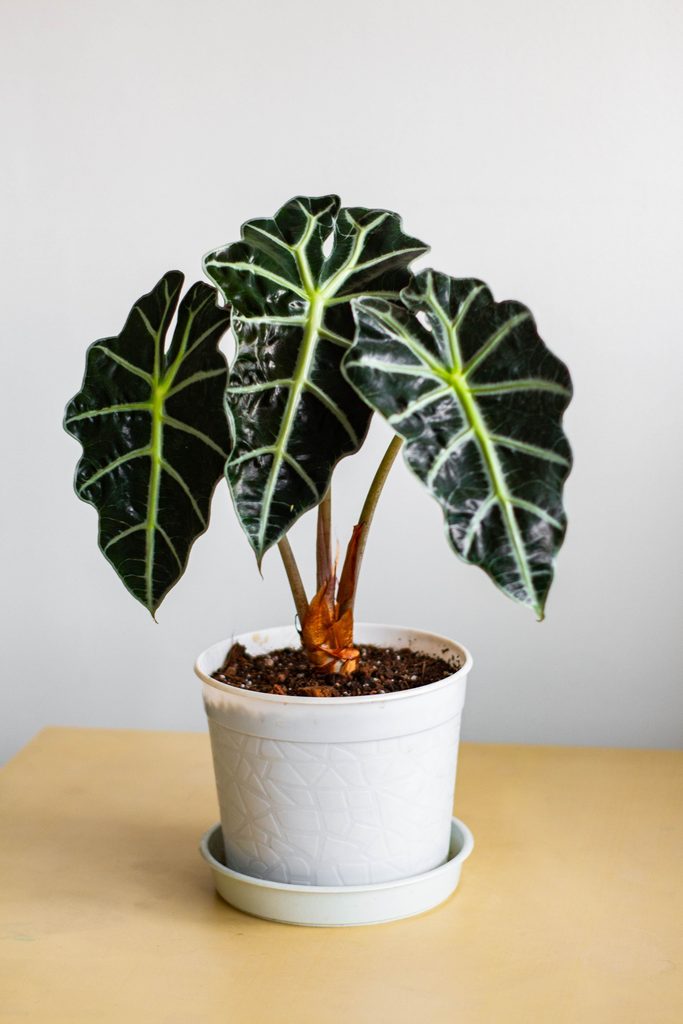
Polly is the best-known Alocasia in the world. It has dark green, arrow-shaped leaves with bold white veins. The leaf edges are wavy, which gives the plant a lively shape.
It usually reaches 1 to 2 feet (30 to 60 cm) indoors. That makes it a good fit for desks, shelves, and small apartments. It is also easy to find in garden centers.
Here is my honest view: Polly is a great starter, but it is not careless. It dislikes cold drafts and soggy soil. Give it bright, indirect light and let the top layer of soil dry slightly between waterings.
2. Alocasia zebrina (Zebra Plant)
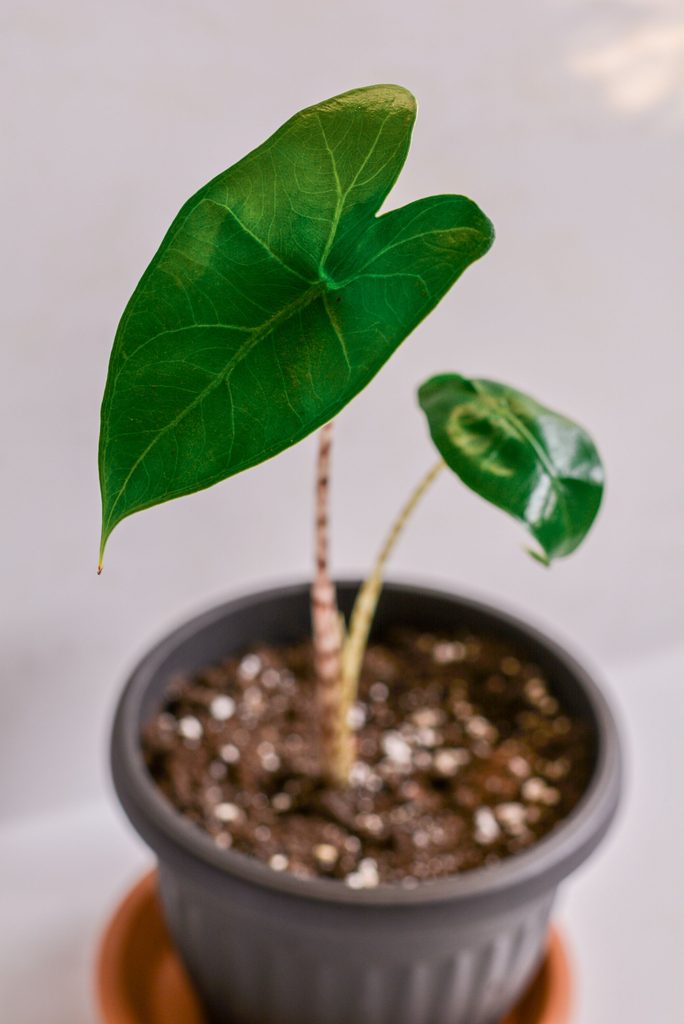
Zebrina is easy to spot because of its striped stems. The patterns look like zebra markings, with dark bands on a lighter stalk. The leaves are large, green, and arrow-shaped.
This plant can grow 3 to 4 feet (about 1 to 1.2 m) tall indoors. It is a good floor plant for a bright corner. Outdoors in warm zones, it can grow even larger.
It enjoys steady moisture, but never wet feet. Use a pot with drainage holes and a chunky, airy soil mix. I also wipe the leaves now and then, because dust blocks light.
3. Alocasia macrorrhizos (Giant Taro)
This is the giant of the group. Its leaves can be huge, and the plant can look like a small tree in warm gardens. Singapore’s National Parks Board notes that a related golden cultivar can reach up to 4 meters in height.
It is often called “giant taro” or “giant elephant ear.” The name “macrorrhizos” comes from Greek words meaning “large roots.” Indoors, it needs a lot of space and a very bright room.
This plant suits patios, large conservatories, and tropical gardens. It likes heat and regular water. Keep it away from curious pets and children, as the sap can irritate skin and mouth.
4. Alocasia odora (Night-Scented Lily)
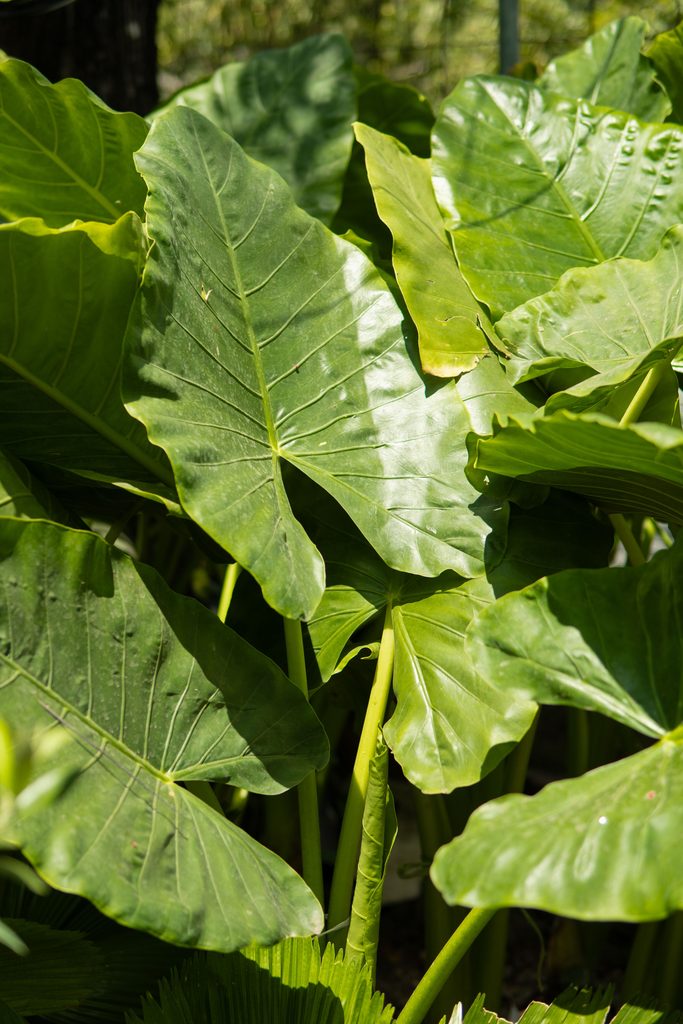
Alocasia odora has tall, upright leaves on thick stalks. The leaves are glossy and bright green. It often grows in lowland tropical forests across Asia.
The name “odora” refers to the scent of its flowers, which is stronger in the evening. Outdoors, the plant can grow 3 to 6 feet (1 to 2 m) tall or more. It looks bold in a large pot.
A 2024 medical report from Japan describes poisoning from this species. The cause was calcium oxalate needle crystals. I mention this because it shows why you should never eat ornamental Alocasia.
5. Alocasia cuprea ‘Red Secret’
Red Secret is a showstopper. Its leaves have a metallic, copper-purple shine with deep green veins. The surface looks almost like polished metal.
It stays fairly compact, usually about 1 to 2 feet (30 to 60 cm) indoors. The leaves are thick and slightly puckered. Because of its beauty, it is often sold at a higher price.
This plant loves humidity and warm air. I keep mine near a bright window, away from harsh sun. Direct sun can bleach that lovely metallic color.
6. Alocasia baginda ‘Dragon Scale’
Dragon Scale gets its name from its textured leaves. The deep ridges between the veins look like scales on a dragon’s back. The color is dark green with a silvery tone.
It grows around 1 to 2 feet (30 to 60 cm) tall. The leaves are thick and sturdy, so the plant feels more robust than many other Alocasia types. It is a favorite among collectors.
It does well in warm rooms with moderate to high humidity. Avoid overwatering, because thick leaves can hide early root stress. Feel the soil before you water.
7. Alocasia reginula ‘Black Velvet’
Black Velvet is small, dark, and elegant. Its leaves are heart-shaped, with a deep green-black velvet texture. White veins run across the surface and create a sharp contrast.
It usually stays under 1 foot (30 cm) tall, so it fits on a small shelf or terrarium-style setup. It is one of the best choices for tight spaces. Its slow growth is part of its charm.
This plant prefers high humidity and gentle watering. Mist is not enough on its own. A humidifier or a pebble tray nearby works better in my experience.
8. Alocasia micholitziana ‘Frydek’ (Green Velvet)
Frydek, also called Green Velvet, has bright, velvety leaves with crisp white veins. The leaves are narrow and arrow-shaped. The soft texture makes people want to touch them.
It can grow 1 to 2 feet (30 to 60 cm) tall indoors, and sometimes taller. The plant tends to grow upright with a tidy shape. A variegated form also exists and is highly sought after.
Frydek likes bright, indirect light and warm temperatures. It may drop leaves in winter if the air gets cold. That is normal, so do not panic. Reduce watering and wait for new growth.
9. Alocasia sanderiana (Kris Plant)
The Kris plant is named after the wavy-bladed Malay dagger. Its leaves are glossy, deeply lobed, and metallic green with pale silver veins. The edges look sharply cut.
It can reach 2 to 4 feet (60 to 120 cm) indoors, which gives it real presence. The plant is native to the Philippines. It is a striking choice for a bright living room.
This variety is a little fussy about humidity and consistent care. Place it away from cold windows. Use a well-draining soil mix and water when the top inch feels dry.
10. Alocasia longiloba
Alocasia longiloba has long, narrow, arrow-shaped leaves with pale veins. The leaves are dark green and stand upright on slender stalks. It has an elegant, slightly wild look.
It often grows 2 to 3 feet (60 to 90 cm) tall indoors. Many popular hybrids, including some in the Polly family, have this species in their background. That makes it an important parent plant.
It is a good option if you like a lighter, more graceful shape. Give it bright, indirect light and steady moisture. I find it forgiving if you are consistent.
11. Alocasia lauterbachiana (Purple Sword)
Purple Sword is easy to recognize because of its long, wavy leaves. The tops are dark green, and the undersides are deep purple. The narrow shape looks like a sword blade.
It can grow 2 to 3 feet (60 to 90 cm) tall. The ruffled edges add movement, and the colors look rich in warm light. It works well in a group of mixed foliage plants.
It grows well in bright, indirect light and moderate humidity. Let the top layer of soil dry out a little between waterings. Overwatering is the most common cause of trouble.
12. Alocasia portodora
Portodora is a large and bold hybrid. It has big, upright leaves on thick stalks, much like a smaller giant taro. The leaves are glossy green with a strong, clean outline.
It can reach 4 to 6 feet (1.2 to 1.8 m) outdoors in warm climates. Indoors, expect it to stay smaller, but it still needs space. It is perfect for tropical garden designs.
Provide warmth, bright light, and plenty of water during active growth. In cooler months, cut back on watering. I always check the soil before I water in winter.
13. Alocasia wentii (Hardy Elephant Ear)
Alocasia wentii has upright, leathery leaves in green, with a purple-toned underside. The stems are sturdy and often have a purple hue. It comes from New Guinea.
It can grow 3 to 5 feet (about 1 to 1.5 m) tall. Many growers consider it more tolerant than other Alocasia types. That makes it appealing for beginners with a large, bright space.
It prefers warm temperatures and consistent moisture. Still, it should not sit in water. Use a pot with good drainage and a loose, airy soil mix.
14. Alocasia ‘Silver Dragon’
Silver Dragon is a close relative of Dragon Scale. It has a similar textured surface, but the color is lighter. The leaves look silvery-green with darker veins.
It usually stays around 1 to 2 feet (30 to 60 cm) tall. The leaves are thick and slightly raised between the veins. It is a compact plant, which suits small spaces.
Treat it as you would Dragon Scale. Give it bright, indirect light and moderate humidity. A light, airy mix helps the roots breathe.
15. Alocasia sarawakensis ‘Yucatan Princess’
Yucatan Princess has glossy, deep green leaves with a slightly wavy edge. The veins are light, and the stems are strong. It has a tidy, upright habit.
It usually grows 2 to 3 feet (60 to 90 cm) tall. NC State Extension lists this cultivar in its Plant Toolbox, which is a handy resource for checking care details. It is a good choice for a bright office or living room.
It likes steady moisture and warm air. Avoid cold drafts and dry heating vents. A weekly wipe of the leaves keeps them shiny.
16. Alocasia melo
Alocasia melo is a rare and unusual plant. Its thick, bumpy, blue-green leaves look almost like a succulent. The texture is the main attraction.
It grows slowly and stays small, often under 1 foot (30 cm) in leaf size. Its odd look makes it a conversation piece. It appeals to collectors who enjoy rare foliage.
It needs a very well-draining mix and careful watering. Because the roots are sensitive, I water lightly and wait for the soil to dry. Warmth and humidity help it thrive.
17. Alocasia nycteris
Alocasia nycteris has dark, thick leaves with a bumpy surface. The veins are light, which creates a strong contrast. It looks bold but compact.
It generally grows to 1 to 2 feet (30 to 60 cm) tall. It is a collector’s plant, so it may take some effort to find. Expect a slow, steady growth rate.
Provide bright, indirect light and high humidity. Keep the soil lightly moist, never soggy. I would not recommend it as a first Alocasia, but it rewards patient growers.
18. Alocasia infernalis ‘Kuching Mask’
Kuching Mask has very dark, glossy leaves with a bumpy texture. Some leaves show a deep green or almost black tone. The look is dramatic and a little mysterious.
It grows about 1 to 2 feet (30 to 60 cm) tall. The leaves are thick, which gives the plant a sculpted shape. It fits well in modern, minimal interiors.
It prefers warm, humid conditions. Avoid direct sun, which can scorch the dark leaves. A grow light can help in darker rooms.
19. Alocasia azlanii
Alocasia azlanii is a small plant with striking color. Its leaves show a metallic red-purple tone with green veins. The look is rich and unusual.
It usually stays under 1 foot (30 cm) tall, and the leaves are small. It is a good option for shelves and terrarium-style setups. The plant is not very common, so prices can be high.
It needs humidity, steady warmth, and gentle care. Do not let the soil dry out fully. A bright spot with filtered light keeps the colors strong.
20. Alocasia ‘Stingray’
Stingray is named for its leaves, which have a long, pointed tip like a stingray’s tail. The leaves are glossy and upright, and they have a unique shape. It is easy to recognize.
It can grow 3 to 5 feet (about 1 to 1.5 m) tall. In warm climates, it grows well outdoors in partial shade. Indoors, it needs a bright room and plenty of space.
Keep the soil evenly moist, and feed lightly during the growing season. I prefer a diluted fertilizer every few weeks. Reduce feeding in winter.
21. Alocasia clypeolata (Green Shield)
Green Shield has heart-shaped, shield-like leaves that are bright and glossy. The color is a fresh green, with clear veins. The plant has a clean, simple beauty.
It typically grows 1 to 2 feet (30 to 60 cm) tall indoors. It comes from the Philippines and has a softer look than many dark-leaved types. It suits bright, modern spaces.
It needs warmth and even moisture. It is one of the easier Alocasia types if you avoid overwatering. Bright, indirect light keeps the leaves firm.
22. Alocasia ‘Regal Shields’
Regal Shields is a hybrid with large, dark, shield-shaped leaves. The leaves are thick and glossy, and they stand upright. The plant has an impressive, regal look.
It can grow 3 to 4 feet (about 1 to 1.2 m) tall indoors. It makes a strong focal point in a large room. Many gardeners like it for its size and strength.
Give it bright, indirect light and consistent watering. Use a roomy pot and a well-draining mix. I like to rotate the pot so all sides get light.
23. Alocasia cucullata (Buddha’s Hand)
Alocasia cucullata has heart-shaped, glossy green leaves with a slightly hooded tip. The leaves are soft in shape and form a dense clump. It is common in gardens across tropical Asia.
It usually grows 2 to 3 feet (60 to 90 cm) tall. It is often considered one of the tougher Alocasia types. That makes it a good option for beginners.
It handles a range of light levels, but bright, indirect light is best. Water when the top inch of soil feels dry. In my view, it is a calm, reliable plant.
24. Alocasia ‘Maharani’ (Grey Dragon)
Maharani, also known as Grey Dragon, is compact and textured. Its leaves are thick, puckered, and grey-green. The surface looks like a hammered metal bowl.
It generally stays around 1 foot (30 cm) tall, which suits small spaces. The thick leaves store some moisture, so the plant can handle slightly drier soil. Still, avoid long dry periods.
Provide bright, indirect light and warm temperatures. Use a gritty, free-draining mix. It is a lovely choice if you want texture without a large plant.
25. Alocasia ‘Bambino’ (Arrowhead)
Bambino is a tiny, charming plant with narrow, arrow-shaped leaves. The leaves are dark green with pale veins. It stays neat and upright.
It usually grows 8 to 12 inches (20 to 30 cm) tall. That is perfect for a desk, bookshelf, or windowsill. It is a popular gift plant for this reason.
It prefers bright, indirect light and light, even moisture. Its small size means the soil dries quickly. Check it often, especially in warm weather.
How to Care for Alocasia: Quick Essentials
Most Alocasia types share similar needs. If you remember the basics, you can keep almost any variety healthy. Here is what I recommend.
Light: Bright, indirect light is best. Direct afternoon sun can burn the leaves. Very low light causes weak, stretched growth.
Water: Keep the soil lightly moist, but never soggy. Overwatering is the most common problem and often leads to root rot. Always use a pot with drainage holes.
Humidity and temperature: Aim for warm rooms, ideally 65 to 80°F (18 to 27°C). Avoid cold drafts and heating vents. Extra humidity helps, especially for velvet and dark-leaved types.
Soil: Use a chunky, airy mix. A blend of potting soil, perlite, and orchid bark works well. Good drainage protects the corms.
Dormancy: Many Alocasia drop leaves in winter. This is often normal, not a sign of death. Water less and wait for spring growth.
Are Alocasia Plants Toxic?
Yes. All parts of Alocasia contain calcium oxalate crystals. These tiny, needle-shaped crystals can irritate the mouth, throat, and skin if chewed or handled roughly.
Research supports this concern. A retrospective study from Taiwan reviewed 27 cases of Alocasia macrorrhiza poisoning between 1985 and 1993. The most common symptoms were a sore throat and numbness in the mouth.
So, place your plants out of reach of pets and small children. Wear gloves when pruning or repotting. If someone eats part of a plant, contact your local poison control center or a doctor.
Frequently Asked Questions
What is the easiest type of Alocasia for beginners? Alocasia cucullata and Alocasia wentii are often considered more forgiving. Polly is also popular, but it needs steady care. Start with one and learn its habits.
Why are my Alocasia leaves turning yellow? The most common cause is overwatering. Poor drainage, low light, or cold drafts can also cause yellow leaves. Check the soil and roots first.
How big do Alocasia plants get? Sizes range widely. Small types like Bambino stay under 1 foot. Giant types such as Alocasia macrorrhizos can grow several meters tall in warm climates.
Can Alocasia grow outdoors? Yes, in warm regions. UF/IFAS lists hardiness zones 8A through 11 for the genus. In colder areas, grow them in pots and bring them inside before frost.
Final Thoughts
Alocasia plants offer something for everyone. You can choose a tiny Bambino for a desk or a giant taro for a tropical garden. The key is to match the plant to your light, space, and time.
If you are unsure, start with a tougher type and build confidence. Then, explore the rarer varieties. I think you will find, as I did, that these plants quickly become addictive.
References
- University of Florida IFAS Extension. Alocasia spp.: Elephant’s Ear, Alocasia, Taro (FPS 33). https://ask.ifas.ufl.edu/publication/FP033
- NC State Extension. Alocasia (Elephant’s-ear, Giant Taro), Extension Gardener Plant Toolbox. https://plants.ces.ncsu.edu/plants/alocasia/
- National Library of Medicine (PubMed). Calcium oxalate is the main toxic component in clinical presentations of Alocasia macrorrhiza poisonings. Vet Hum Toxicol, 1998. https://pubmed.ncbi.nlm.nih.gov/9554063/
- National Library of Medicine (PubMed Central). Alocasia odora poisoning due to calcium oxalate needle crystals in Japan. Journal of Rural Medicine, 2024. https://pmc.ncbi.nlm.nih.gov/articles/PMC11222628/
- Singapore National Parks Board. Alocasia macrorrhizos (Giant Taro), Flora and Fauna Web. https://nparks.gov.sg/florafaunaweb/flora/1/6/1636
- Singapore National Parks Board. Alocasia macrorrhizos ‘Lutea’ (Golden Giant Taro). https://www.nparks.gov.sg/florafaunaweb/flora/1/6/1641
- Centre for Food Safety, Hong Kong SAR Government. Beware of Food Poisoning Related to the Giant Alocasia. https://www.cfs.gov.hk/english/whatsnew/whatsnew_fst/whatsnew_fst_Beware_Food_Poisoning_Giant_Alocasia.html

Tim M Dave is a gardening expert with a passion for houseplants, particularly cacti and succulents. With a degree in plant biology from the University of California, Berkeley, he has vast experience in gardening. Over the years, he has cultivated a vast collection of desert plants and learned a great deal about how to grow and care for these unique companions.