25 Native Nebraska Flowers (With Growing Details)
Nebraska rewards patience. Drive across the state and the land seems to repeat itself, mile after mile of grass, until you stop and actually look down. That is when the prairie shows its hand.
I once pulled over near the Sandhills just to photograph a patch of blazing star, and within minutes I had counted six other wildflower species I had not even noticed at highway speed. Nebraska’s prairies hide their color in plain sight.
The Nebraska Sandhills alone cover roughly 19,300 square miles, making it the largest stabilized dune system in the Western Hemisphere, according to conservation surveys of the region. That single ecosystem shelters an outsized share of the state’s native flowers.
This guide covers 25 of the most iconic, historically meaningful, and ecologically vital native flowers found growing wild across Nebraska.
Let’s walk through the full list.
25 Native Nebraska Flowers
1. Goldenrod
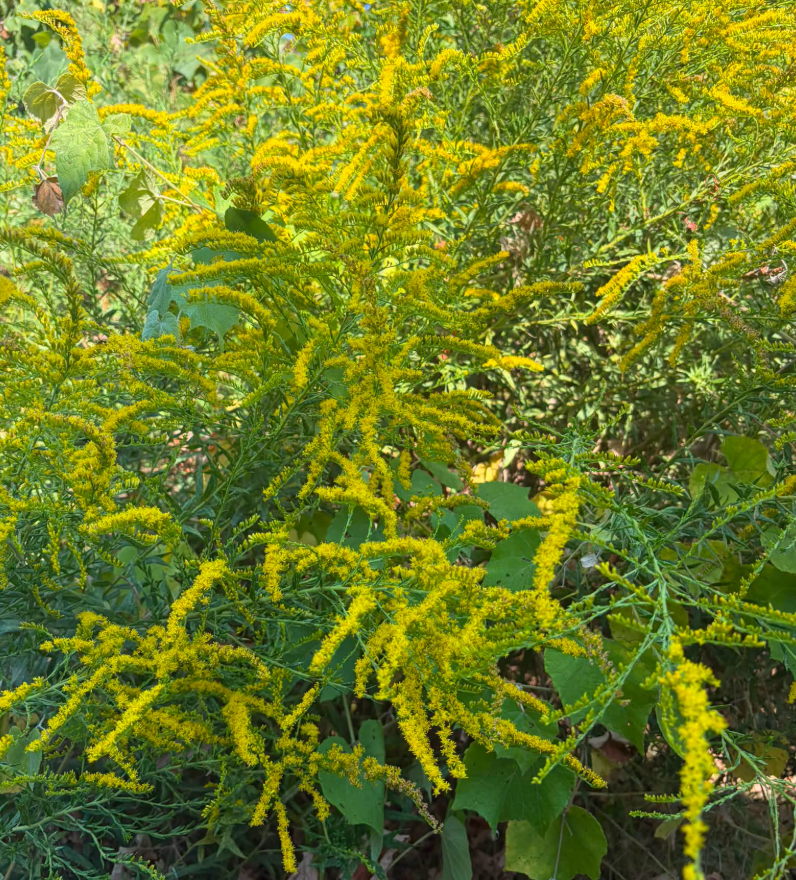
Goldenrod (Solidago gigantea, originally recorded as Solidago serotina) became Nebraska’s official state flower on April 4, 1895, signed into law by Governor Silas A. Holcomb after a resolution introduced by Representative L. P. Judd.
University of Nebraska botanist Charles Bessey supported the choice, and lawmakers reportedly debated the violet as an alternative before goldenrod won out. Its long bloom season, stretching from July through October, was cited as proof of pioneer-like endurance.
Goldenrod does not cause hay fever, despite its reputation. Ragweed, which blooms at the same time and relies on wind pollination, is the real culprit behind most autumn allergy symptoms across the state.
I find something fitting in Nebraska’s choice. Goldenrod does not need rich soil or careful tending. It simply shows up in ditches, pastures, and roadsides every single year, which feels like the whole point.
2. Pasque Flower
Pasque flower (Anemone patens) is one of the very first wildflowers to bloom on Nebraska’s prairies, sometimes pushing through late snow with soft lavender-purple petals in March.
Its fuzzy stems and leaves act as natural insulation, trapping warmth around the flower’s reproductive parts on cold early-spring days when few pollinators are active yet.
You will find pasque flower on dry, gravelly hillsides and upland prairie sites across western and central Nebraska. Its brief bloom window makes spotting one feel like a small, well-earned reward for an early hike.
3. Prairie Blazing Star
Prairie blazing star (Liatris pycnostachya) sends up dense purple flower spikes that can reach four feet tall, blooming from the top downward, an unusual pattern among native wildflowers.
Nebraska’s tallgrass prairie remnants often list blazing star among their signature species, alongside big bluestem and Indian grass, in ecological surveys of the state’s eastern grasslands.
Bees and butterflies swarm this plant through late summer, and its tough, deep root system allows it to survive both drought and the periodic prairie fires that maintain healthy grassland ecosystems.
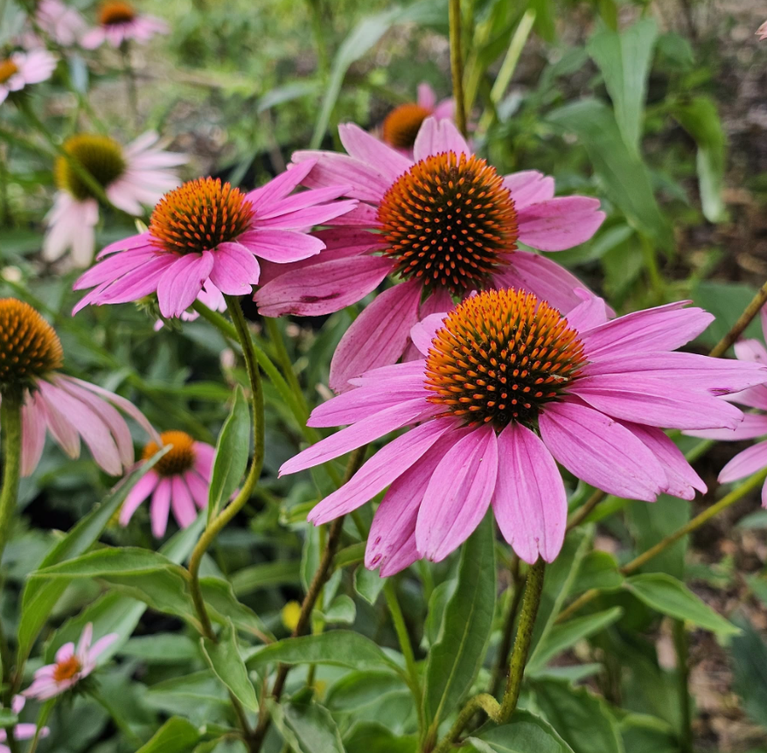
4. Purple Coneflower
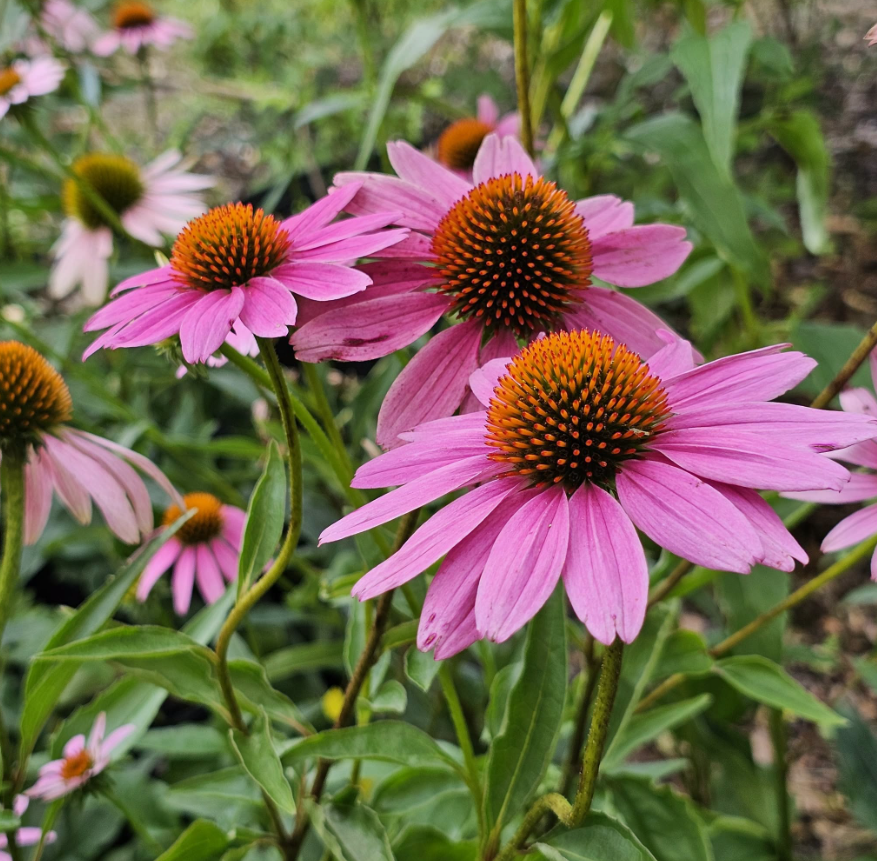
Purple coneflower (Echinacea angustifolia, the species most common to Nebraska’s plains) produces slender, drooping pink-purple petals around a spiky, cone-shaped center.
Indigenous Plains communities used this plant medicinally for generations, and it remains one of the most commercially harvested native prairie plants in North America today, valued for its roots and foliage.
It blooms from June through August in dry, well-drained prairie soil, and its long taproot makes it remarkably resistant to Nebraska’s periodic summer droughts once established.
5. Blowout Penstemon
Blowout penstemon (Penstemon haydenii) is one of Nebraska’s rarest native flowers, growing almost nowhere else on Earth outside the open sand “blowouts” found atop Sandhills dunes.
This federally listed species is nearly endemic to Nebraska, according to conservation surveys of the region, making it one of the state’s most botanically significant wildflowers despite its limited range.
Its fragrant, tubular lavender-blue blooms appear in early summer, adapted specifically to loose, shifting sand that would bury or starve most other flowering plants within a single season.
ALSO READ: 35 Best Perennial Flowers for Zone 5 (With Growing Details)
6. Butterfly Milkweed
Butterfly milkweed (Asclepias tuberosa) produces clusters of bright orange blooms on stiff stems, standing out sharply against Nebraska’s green summer grasslands from June through August.
Monarch caterpillars depend entirely on milkweed species like this one, since they cannot develop on any other host plant, making butterfly milkweed critical to the monarch migration route that crosses Nebraska each fall.
This plant prefers dry, sandy soil and full sun, which explains why it thrives so well across the Sandhills region and other well-drained prairie sites statewide.
7. Common Milkweed
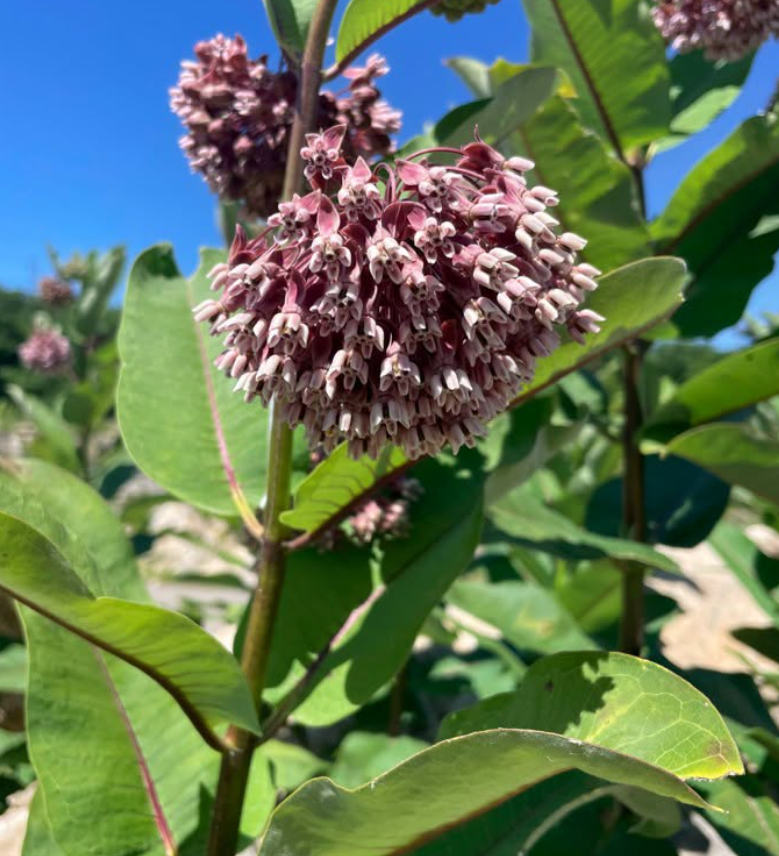
Common milkweed (Asclepias syriaca) produces rounded clusters of dusty pink flowers with an unusually sweet fragrance, often growing along roadsides, fence lines, and pasture edges statewide.
A single plant can produce dozens of seed pods by late summer, each releasing silky-tufted seeds that drift for considerable distances on Nebraska’s near-constant prairie wind.
Like its orange-flowered cousin, common milkweed serves as essential monarch caterpillar habitat, and its nectar draws bees, wasps, and a wide range of native butterfly species through midsummer.
8. Wild Prairie Rose
Wild prairie rose (Rosa arkansana) produces simple, five-petaled pink blooms with a light, classic rose fragrance, growing low along roadsides and open prairie throughout Nebraska.
This tough native rose tolerates mowing, grazing, and even prairie fire, resprouting reliably from its root system each spring, unlike cultivated roses that require careful winter protection.
It blooms in late spring through early summer, followed by small red rose hips that persist into winter, offering food for grouse, pheasants, and other prairie birds during the coldest months.

9. Prairie Coneflower
Prairie coneflower (Ratibida columnifera) produces drooping yellow petals around a tall, thimble-shaped brown center, sometimes called Mexican hat for its distinctive silhouette.
Crushed leaves release a mild anise-like fragrance, a trait early settlers reportedly used to brew a simple prairie tea, according to regional folk-history accounts passed down across the Plains.
It blooms from June through September in dry, disturbed soil, and its cheerful, long-lasting flowers make it a favorite in native seed mixes used for Nebraska roadside restoration.
10. Compass Plant
Compass plant (Silphium laciniatum) produces tall, sunflower-like yellow blooms atop stems that can reach ten feet, with deeply cut leaves that famously orient north to south.
Early settlers reportedly used the plant’s leaf orientation to navigate the open prairie, since the leaf edges, rather than the flat faces, tend to face east and west to reduce midday sun exposure.
Its deep taproot, sometimes extending more than 15 feet underground, allows compass plant to survive drought conditions that would kill most shallow-rooted prairie species within a single season.

11. Purple Prairie Clover
Purple prairie clover (Dalea purpurea) produces dense, thimble-shaped purple flower spikes that bloom in a distinctive ring pattern, moving upward along the spike through summer.
This legume fixes nitrogen in the soil, naturally improving fertility for neighboring grasses and forbs, which is one reason ranchers value it as both forage and a soil-health indicator species.
It grows across dry to moderately moist prairie sites statewide, blooming from June through August, and remains a favorite nectar source for native bees throughout the growing season.
12. Wild Bergamot
Wild bergamot (Monarda fistulosa) produces shaggy, lavender-pink flower heads above aromatic, mint-scented foliage, filling prairie air with a sharp, citrusy fragrance on warm afternoons.
Crushed leaves have long been used in herbal teas across the Plains, valued for their strong aroma and traditional use in soothing preparations passed down through generations of prairie households.
It blooms from July through September and attracts hummingbirds, bees, and butterflies in large numbers, making it one of the more reliable pollinator magnets on Nebraska’s tallgrass prairie remnants.
13. Maximilian Sunflower
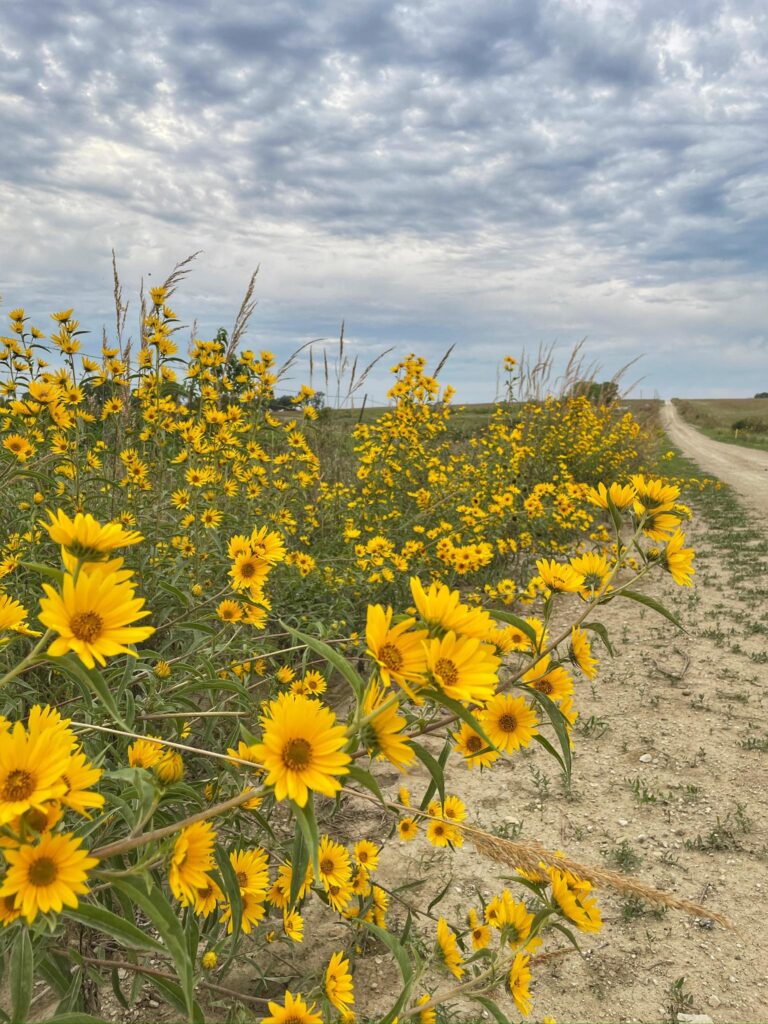
Maximilian sunflower (Helianthus maximiliani) produces tall, arching stems lined with bright yellow blooms from top to bottom, often reaching heights of six to eight feet by late summer.
The species was named after Prince Maximilian of Wied, a German explorer who documented plants along the Missouri River during an 1830s expedition through what is now Nebraska and the surrounding region.
It blooms from August through October, offering one of the last major nectar sources before frost, and its dense growth provides excellent cover for pheasants and other ground-nesting birds.
14. Sky-Blue Aster
Sky-blue aster (Symphyotrichum oolentangiense) produces clouds of small, pale blue-violet flowers with yellow centers, blooming across Nebraska’s prairies just as most summer flowers begin fading.
It is one of the last major nectar sources available before frost, making it critical for late-season pollinators, including bees preparing for winter and migrating monarch butterflies passing through the state.
This aster tolerates dry, rocky soil better than many prairie natives, and its airy, drought-tolerant growth habit makes it a popular choice for low-maintenance native gardens.
15. Leadplant
Leadplant (Amorpha canescens) produces slender spikes of deep purple flowers with prominent orange anthers, growing as a low, silvery-leaved shrub across Nebraska’s tallgrass and mixed-grass prairies.
Ecologists consider leadplant an indicator species of healthy, undisturbed prairie, since it disappears quickly from land that has been heavily plowed, overgrazed, or otherwise degraded over time.
Its extensive root system, which can extend more than five feet deep, helps it survive drought and fire, both of which historically shaped Nebraska’s grassland ecosystems for thousands of years.
16. Rocky Mountain Bee Plant
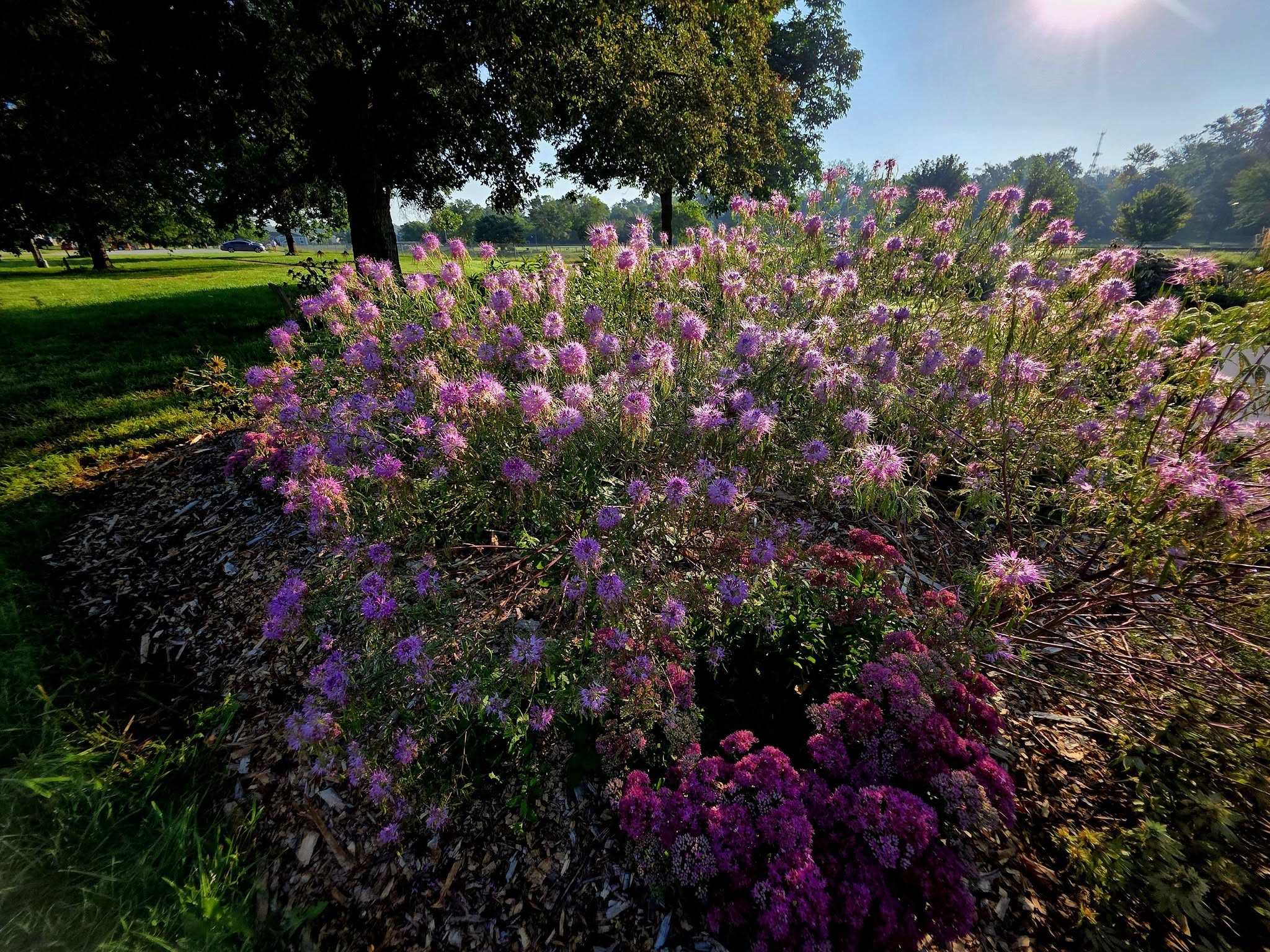
Rocky Mountain bee plant (Cleome serrulata) produces tall, showy clusters of pink to purple flowers, often colonizing disturbed soil along roadsides and recently burned prairie sites.
Bees find this plant so attractive that beekeepers in the region specifically seek out fields where it grows, since its nectar produces a notably light, mild-flavored honey prized by local producers.
It blooms from June through September and was historically used by Indigenous communities across the Plains as both a food source and a natural dye plant.
17. Prairie Phlox
Prairie phlox (Phlox pilosa) carpets dry to moderately moist prairie sites with clusters of pink to lavender blooms each late spring, often appearing alongside prairie clover and blazing star.
Its gentle fragrance intensifies in the evening, drawing moths as well as the daytime bees and butterflies that visit throughout Nebraska’s warm late-spring afternoons.
This phlox spreads gradually through creeping stems, forming loose, natural drifts across undisturbed prairie remnants, particularly in the state’s eastern tallgrass regions.
18. Soapweed Yucca
Soapweed yucca (Yucca glauca) produces tall stalks of creamy white, bell-shaped flowers rising dramatically above its stiff, sword-like leaves, a defining sight across the Sandhills each early summer.
This plant depends entirely on the yucca moth for pollination, a relationship so specialized that neither species can complete its life cycle without the other, making it a textbook example of co-evolution.
It thrives in the driest, sandiest soils in the state, and its deep, tough root system historically provided settlers with a natural source of soap when boiled and processed.
ALSO READ: 20 Nebraska Native Trees (With Growing Details)
19. Prairie Larkspur
Prairie larkspur (Delphinium virescens) produces tall spikes of creamy white flowers with a faint greenish tinge, standing out against the surrounding grasses of Nebraska’s drier prairie sites.
Every part of this plant is toxic to livestock, particularly cattle, which makes it a genuine concern for ranchers managing grazing land across the state’s mixed-grass regions.
It blooms from May through July and tends to concentrate in ungrazed or lightly grazed pastures, since cattle generally avoid it once they learn to recognize its bitter taste.
20. Downy Gentian
Downy gentian (Gentiana puberulenta) produces deep, almost electric blue trumpet-shaped flowers that stay closed on cloudy days, opening fully only when direct sunlight reaches them.
This species blooms later than almost any other Nebraska prairie wildflower, often appearing in September and October, well after most summer blooms have already faded completely.
It grows in undisturbed tallgrass prairie remnants, particularly in the eastern part of the state, and its late, vivid color makes it a genuine highlight for autumn prairie walks.
21. Prairie Violet
Prairie violet (Viola pedatifida) produces deep purple, five-petaled blooms low to the ground each spring, with distinctive, deeply lobed leaves that set it apart from woodland violet species.
It serves as a host plant for several native fritillary butterfly species, whose caterpillars feed exclusively on violets, linking this small spring flower directly to the state’s summer butterfly populations.
You will find prairie violet in undisturbed tallgrass prairie sites from April through June, often growing low enough that it hides beneath taller emerging grasses by midsummer.
ALSO READ: 35 Best Perennial Flowers for Zone 4 (With Growing Details)
22. Prairie Spiderwort
Prairie spiderwort (Tradescantia occidentalis) produces three-petaled, deep blue-violet flowers that open in the morning and close by early afternoon on hot Nebraska days.
Each individual bloom lasts only a single day, though the plant continuously produces new flowers through its spring and early summer flowering period across dry prairie sites statewide.
Its grass-like foliage and drought tolerance make it a reliable, low-maintenance choice for naturalized borders, thriving in both full sun and light shade.
23. Evening Primrose
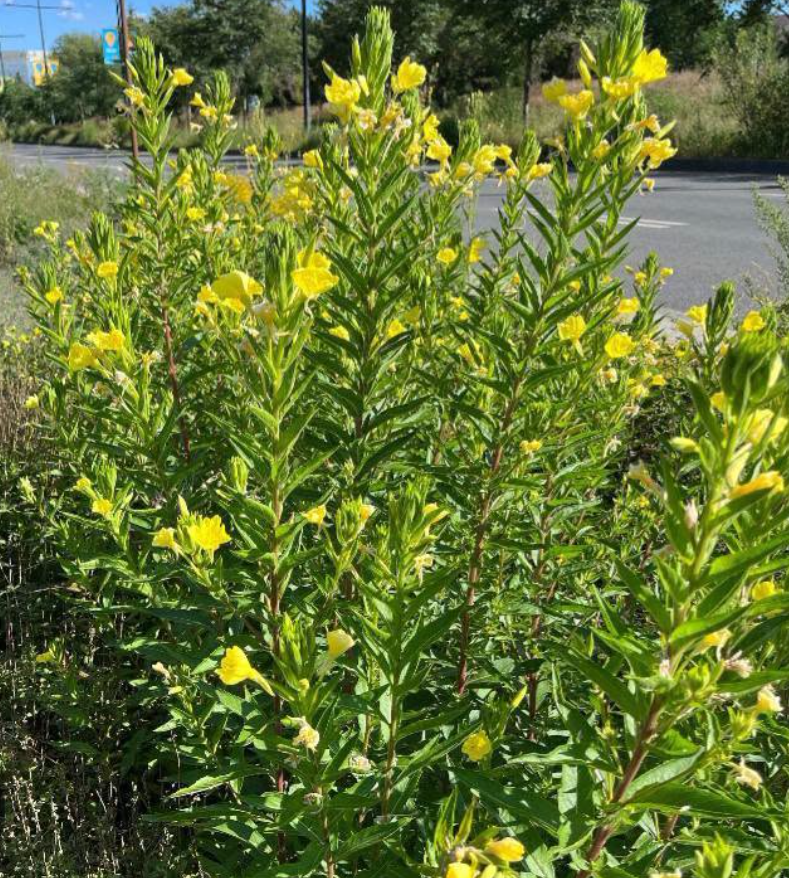
Common evening primrose (Oenothera species) produces pale yellow, four-petaled blooms that unfurl rapidly at dusk, sometimes visibly opening within minutes as light fades.
Its flowers are pollinated almost exclusively by night-flying moths, particularly sphinx moths, which are drawn to the pale color and strong fragrance that intensify after sunset.
It grows readily in disturbed soil, roadside ditches, and dry pastures throughout Nebraska, blooming from June through September across nearly every region of the state.
24. Prairie Turnip
Prairie turnip, also called breadroot (Pediomelum esculentum), produces small clusters of pale blue-violet flowers atop a plant historically valued far more for its edible, starchy root.
Indigenous Plains communities relied on this root as a staple food source, drying and storing it for winter use long before European settlement reshaped the region’s agriculture.
It blooms in late spring across dry upland prairie sites, and its deep taproot allows it to survive the same droughts and fires that have shaped Nebraska’s grasslands for millennia.
25. Shooting Star
Shooting star (Dodecatheon meadia) produces distinctive, swept-back pink to white petals surrounding a pointed yellow center, resembling a small comet frozen mid-flight above the leaves.
Its unusual flower shape requires buzz pollination, a technique where bees vibrate their flight muscles at a specific frequency to release pollen, a method only certain native bee species can perform correctly.
It grows in moist prairie remnants and open woodland edges, mostly in eastern Nebraska, blooming briefly from April through May before disappearing entirely until the following spring.
Why Native Nebraska Flowers Deserve a Place in Your Garden
Prairie natives consistently outperform imported ornamentals in Nebraska’s demanding climate.
They tolerate drought without complaint. Much of Nebraska receives well under 25 inches of rain a year in the west, and native prairie flowers evolved deep root systems specifically to survive long dry spells.
They anchor the soil against wind erosion. Prairie natives developed alongside constant Great Plains wind, and their extensive root networks hold sandy or loess soils together far better than shallow-rooted lawn plants.
They feed pollinators that non-natives cannot. Bees, butterflies, and moths across the Plains rely on specific native blooms for nectar and larval food, a relationship built over thousands of years.
Bringing These Prairie Natives Into Your Own Yard
Planting even a small patch of Nebraska natives helps rebuild habitat that decades of agriculture and development have steadily chipped away across the state.
Match your soil to the plant. Sandhills natives like soapweed yucca and blowout penstemon need loose, well-drained sand, while tallgrass species like blazing star and shooting star prefer richer, moister soil.
Reach out to the Nebraska Statewide Arboretum or your local Nebraska Extension office before planting. They can confirm which species genuinely suit your region, from the Panhandle to the Missouri River bluffs.
Nebraska’s prairie flowers have survived drought, fire, and more than a century of changing land use. Giving them space in your garden helps carry that resilience forward for the pollinators that still depend on it.
Frequently Asked Questions
What is Nebraska’s official state flower? Goldenrod (Solidago gigantea) has held this title since April 4, 1895.
Does goldenrod cause allergies? No. Ragweed, which blooms at the same time and relies on wind pollination, is the actual cause of most seasonal hay fever symptoms in Nebraska.
Are Nebraska native flowers difficult to grow? No. Most require far less water and fertilizer than non-native ornamentals, since they evolved specifically to survive the state’s droughts, wind, and temperature swings.
Can I dig up wild flowers from Nebraska’s prairies? It is best not to, especially in remnant tallgrass sites, since so little original prairie remains. Buy nursery-propagated natives instead, or collect seed responsibly with landowner permission.

Tim M Dave is a gardening expert with a passion for houseplants, particularly cacti and succulents. With a degree in plant biology from the University of California, Berkeley, he has vast experience in gardening. Over the years, he has cultivated a vast collection of desert plants and learned a great deal about how to grow and care for these unique companions.