30 Flowers Native to Georgia (With Growing Details)
I have spent enough spring mornings on north Georgia trails to know one thing for certain: this state does not do wildflowers halfway. From the foggy ridges of the Blue Ridge Mountains to the blackwater swamps near the coast, Georgia grows some of the richest native flora in the entire country.
Georgia is home to more than 3,500 documented native plant species, according to the 2023 edition of Flora of the Southeastern United States. That number keeps climbing as botanists catalog more of the state’s coastal plain and mountain regions. Few states this size can match that variety.
Native flowers always do something ornamental imports cannot. They feed local pollinators, host butterfly larvae, and stabilize soil that has evolved alongside them for thousands of years.
This guide walks through 30 flowers that are truly native to Georgia.
30 Georgia’s Native Flowers
1. Flame Azalea (Rhododendron calendulaceum)
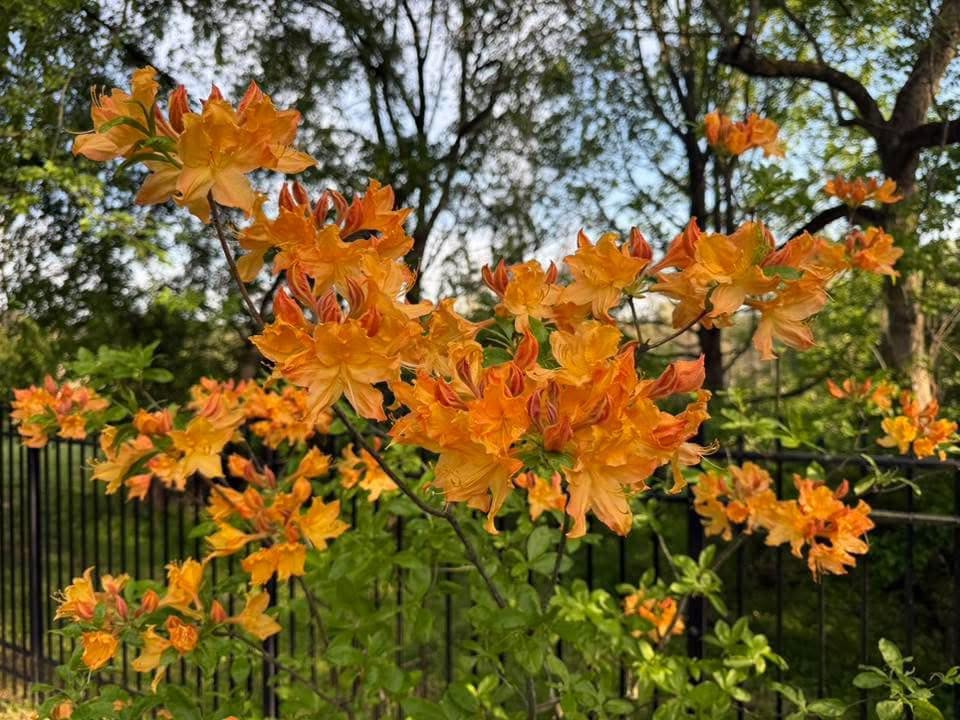
The flame azalea earns its name honestly. In May and June, mountain slopes across north Georgia light up with clusters of orange, yellow, and red blooms that genuinely look like small fires caught in the branches.
I remember hiking near Brasstown Bald and rounding a bend to find an entire hillside glowing this way. It stops you mid-step every time.
This shrub prefers acidic, well-drained soil and dappled shade, which makes it a natural fit under a canopy of oaks or pines. It rarely exceeds 10 feet in height.
Flame azaleas are pollinated almost exclusively by butterflies and bees drawn to their strong, sweet fragrance, making them a genuine asset for any pollinator garden in the Georgia mountains.
2. Piedmont Azalea (Rhododendron canescens)
Also called the mountain azalea or wild honeysuckle, this species blooms earlier than the flame azalea, usually in March and April, with soft pink to white flowers.
It grows across the Piedmont and mountains, often near stream banks and woodland edges. The scent is intensely sweet, sometimes noticeable from yards away before you even see the plant.
Georgia’s native azalea was designated the state wildflower in 1979, a nod to just how deeply this genus is tied to the state’s identity.
Unlike many ornamental azaleas sold in nurseries, this native variety is deciduous, dropping its leaves each winter rather than staying evergreen.
3. Oconee Bells (Shortia galacifolia)
Oconee bells are one of the rarest wildflowers in the southeastern United States, restricted to a handful of counties along the Georgia, South Carolina, and North Carolina border.
The plant produces delicate, bell-shaped white flowers with fringed edges in early spring, usually growing in dense mats along shaded streambanks.
Botanist André Michaux first collected this species in the 1780s, but it went unidentified in the wild for nearly a century afterward, earning it a reputation as a “lost” flower among naturalists.
If you find it, treat it gently. Oconee bells are considered a species of special concern in Georgia, and disturbing wild populations can set colonies back for years.
4. Georgia Aster (Symphyotrichum georgianum)
This late-season bloomer produces deep purple, daisy-like flowers from September through November, right when most other wildflowers have already faded.
Georgia aster once thrived in open, fire-maintained woodlands across the Piedmont and Coastal Plain. Decades of fire suppression have shrunk its range considerably.
It is currently under review for federal protection, though conservation partnerships between private landowners and agencies have helped stabilize several populations in recent years.
For gardeners, Georgia aster rewards patience. It needs full sun and periodic disturbance, mimicking the natural fires that once kept its habitat open.
ALSO READ: 20 Georgia Native Shrubs (With Growing Details)
5. Georgia Calamint (Calamintha georgiana)
Sometimes called Georgia savory, this small mint-family plant is endemic to the southeastern Coastal Plain, meaning it grows naturally nowhere else on Earth outside this region.
Its pale lavender flowers are tiny but numerous, blooming from late summer into fall along sandy pine flatwoods.
Crush a leaf between your fingers and you will notice a sharp, minty aroma, a clue to its family lineage even before the flowers appear.
Because it depends on longleaf pine savanna habitat, Georgia calamint’s survival is closely tied to prescribed burning programs across the state’s remaining pine ecosystems.
6. Rocky Shoals Spider Lily (Hymenocallis coronaria)
Few native flowers create a scene quite like this one. Rocky shoals spider lilies grow in dense colonies directly in fast-moving river shoals, their white, spidery blooms rising straight out of rushing water.
The Broad River near Watson Mill Bridge State Park hosts one of the most photographed colonies in the state, drawing visitors specifically during the May bloom window.
This species requires very specific conditions: rocky river shoals with consistent current and clean water. Dams and pollution have eliminated many historic colonies across the Southeast.
Each flower only lasts about a day, so timing a visit right takes a bit of luck and a good weather forecast.
7. Trailing Arbutus (Epigaea repens)
This low, creeping evergreen hides its pale pink to white flowers beneath leathery leaves, so you often smell it before you spot it.
Trailing arbutus blooms in early spring across acidic, sandy woodlands, particularly in the mountains and upper Piedmont.
Colonial settlers reportedly called it the “mayflower,” and it held enough cultural weight to become Massachusetts’s state flower, though it grows just as naturally in Georgia’s forests.
It spreads slowly and dislikes disturbed soil, which is why wild populations have declined sharply wherever logging or development has disrupted the forest floor.
8. Bloodroot (Sanguinaria canadensis)
Bloodroot gets its name from the reddish-orange sap inside its roots and stems, historically used by Indigenous communities as a dye and in traditional medicine.
The flower itself is strikingly simple: a single white bloom with a yellow center, emerging before the leaves even fully unfurl in early spring.
It is one of the first wildflowers to appear each year across Georgia’s hardwood forests, often pushing through leaf litter while nights are still cold.
Bloodroot flowers only last a few days once open, so catching them requires paying close attention to late-February and March forest walks.
9. Wild Columbine (Aquilegia canadensis)
Wild columbine produces nodding, bell-shaped red and yellow flowers that hummingbirds find almost impossible to resist.
It grows naturally on rocky slopes, bluffs, and open woodlands throughout north Georgia, often rooting directly into cracks in exposed granite.
The plant’s unusual shape, with backward-pointing spurs holding nectar, evolved specifically to accommodate long hummingbird bills and certain long-tongued moths.
Ruby-throated hummingbirds time their spring migration to overlap closely with columbine’s bloom period, making the two nearly inseparable in Georgia’s ecology.
10. Cardinal Flower (Lobelia cardinalis)
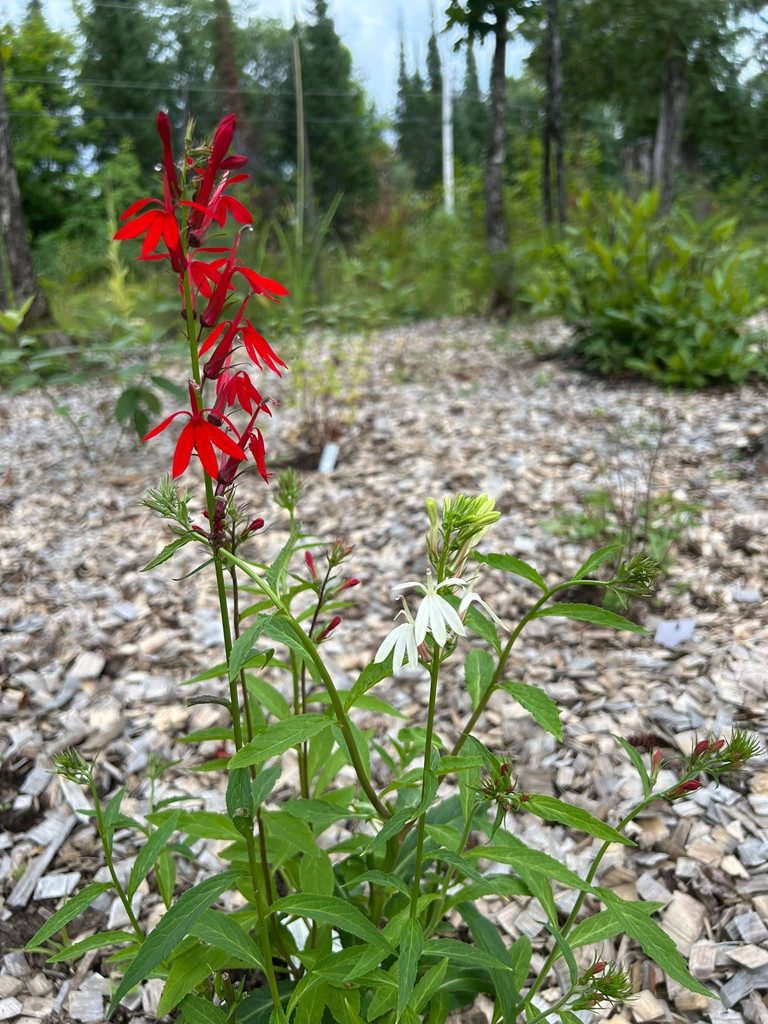
Cardinal flower produces tall spikes of brilliant red blooms from midsummer into early fall, usually found along streambanks, wet meadows, and pond edges.
The color is genuinely striking, closer to fire-engine red than the muted tones common in most native wildflowers.
Like columbine, cardinal flower depends heavily on hummingbirds for pollination, since its deep, tubular flowers are shaped specifically for their long bills.
I have watched hummingbirds work an entire stand of these near a creek in Habersham County, moving flower to flower without ever seeming to pause.
11. Black-Eyed Susan (Rudbeckia hirta)
This is likely the most recognizable native wildflower in Georgia, with its golden-yellow petals and dark brown, domed center appearing in fields, roadsides, and gardens statewide.
It blooms from June through October, tolerating heat, drought, and poor soil better than almost any other native species on this list.
Black-eyed Susan is a biennial or short-lived perennial, meaning individual plants may not survive more than a year or two, but they reseed prolifically.
Pollinator surveys consistently rank it among the top nectar sources for native bees across the southeastern United States.
12. Trumpet Honeysuckle (Lonicera sempervirens)
Not to be confused with invasive Japanese honeysuckle, this native vine produces coral-red, tubular flowers with yellow-orange interiors, blooming from spring through fall.
It climbs fences, trellises, and small trees without becoming aggressively invasive, unlike its non-native cousin.
Trumpet honeysuckle attracts hummingbirds and swallowtail butterflies alike, offering nectar over an unusually long season compared to most native vines.
If you want to distinguish it from the invasive version, check the leaves near the flower cluster, which fuse together on the native species but stay separate on the Japanese variety.
13. Carolina Jessamine (Gelsemium sempervirens)
Carolina jessamine is one of the earliest bloomers each year, sometimes flowering as early as January in south Georgia and typically peaking in February and March statewide.
Its bright yellow, trumpet-shaped flowers carry a light, sweet fragrance and cover fences and tree trunks in cascading vines.
Despite its cheerful appearance, every part of this plant is toxic if ingested, a fact worth knowing if you have curious pets or children in the yard.
South Carolina officially adopted it as a state flower, though Carolina jessamine grows just as commonly across Georgia’s woodlands and roadside edges.
ALSO READ: 25 Trees Native to Georgia (With Growing Details)
14. Swamp Rose Mallow (Hibiscus moscheutos)
This native hibiscus produces enormous flowers, often 6 to 8 inches across, in shades of white, pink, or red with a deep maroon center.
It thrives in wet soil along marshes, ditches, and pond margins, blooming from midsummer into early fall.
The scale of the bloom genuinely surprises people who assume such large, tropical-looking flowers must be imported ornamentals rather than a true Georgia native.
Bumblebees are the primary pollinators, and you can often watch them disappear entirely inside a single bloom while foraging.
15. Sweetbay Magnolia (Magnolia virginiana)
Sweetbay magnolia produces creamy white, lemon-scented flowers from late spring through summer, smaller and less showy than its cousin, the southern magnolia, but arguably more fragrant.
It grows naturally in wet woodlands and swamp margins across most of the state, tolerating flooding better than almost any other magnolia species.
This tree serves as a host plant for the eastern tiger swallowtail caterpillar, directly supporting Georgia’s state butterfly through its lifecycle.
Because of this ecological role, the Georgia Native Plant Society has proposed replacing the Cherokee rose with sweetbay magnolia as the official state flower.
16. Southern Magnolia (Magnolia grandiflora)
Southern magnolia produces the flower most people picture when they think of the Deep South: enormous, waxy white blooms with a rich, lemony fragrance that can carry across an entire yard.
It is native to the Coastal Plain and lower Piedmont, though it has been widely planted throughout Georgia and much of the Southeast.
Flowers can reach 12 inches across, and the glossy evergreen leaves make the tree a year-round landscape feature even outside bloom season.
A single mature tree can produce hundreds of blooms across a single summer season, each one lasting just a few days before browning.
17. Mountain Laurel (Kalmia latifolia)
Mountain laurel forms dense evergreen thickets across the north Georgia mountains, producing clusters of pink and white cup-shaped flowers in May and June.
Each individual flower has a clever mechanical trigger: stamens are held under tension and snap forward to dust pollinators with pollen when disturbed.
It shares habitat with rhododendron and often blooms alongside it, creating a layered effect of pink and white across mountain balds and ridgelines.
Like Carolina jessamine, every part of mountain laurel is toxic, a defense mechanism that has not stopped it from becoming one of Georgia’s most photographed spring shrubs.
18. Fringe Tree (Chionanthus virginicus)
Fringe tree earns its nickname “old man’s beard” from its wispy, cascading white flower clusters that bloom in April and May.
It grows as a small understory tree or large shrub, typically found along forest edges and stream banks throughout the state.
The bloom display is unusually delicate for a woody plant, with narrow, ribbon-like petals that flutter visibly in even a light breeze.
Female trees follow their bloom with clusters of dark blue, olive-like fruit that wild birds strip within days of ripening in late summer.
19. Flowering Dogwood (Cornus florida)
Flowering dogwood might be Georgia’s most beloved native tree, its white or occasionally pink bracts opening each April across forests, yards, and roadsides statewide.
What looks like four large petals are actually modified leaves called bracts, surrounding a small cluster of true flowers at the center.
The tree has faced serious pressure from dogwood anthracnose, a fungal disease that has reduced wild populations significantly since the 1970s and 80s.
Despite that decline, dogwood remains central to Georgia’s identity, with entire festivals in cities like Atlanta built around its brief but spectacular bloom window.
20. Sweet Betsy Trillium (Trillium cuneatum)
Trillium species follow a strict rule of three: three leaves, three petals, three sepals, and Sweet Betsy is no exception, with mottled leaves and a deep maroon, upright flower.
It emerges in early spring across rich, moist woodlands, often carpeting entire hillsides in north Georgia forests.
Despite the flower’s dark color suggesting a foul smell, Sweet Betsy actually carries a faint banana or apple-like fragrance up close.
Trilliums grow extremely slowly, often taking seven years or more to produce their first flower, which is why disturbing a wild patch can set a colony back for generations.
21. Jack-in-the-Pulpit (Arisaema triphyllum)
This unmistakable woodland plant forms a hooded, striped spathe, the “pulpit,” curling protectively over a central spike called the spadix, the “Jack.”
It grows in moist, shaded forests throughout Georgia, typically flowering in April and producing a cluster of bright red berries by fall.
Jack-in-the-pulpit can actually change sex from year to year depending on the plant’s energy reserves, producing male flowers in leaner years and female flowers when resources allow.
Every part of the plant contains calcium oxalate crystals, which cause intense burning if eaten raw, so admire this one strictly with your eyes.
22. Purple Passionflower / Maypop (Passiflora incarnata)
Maypop produces one of the most intricate flowers in North America, with a fringed purple and white corona surrounding a complex central structure of stamens and pistils.
It blooms from midsummer into fall on a fast-growing vine, often scrambling over fences and roadside brush across the state.
The plant is the sole host for the Gulf fritillary and variegated fritillary butterfly caterpillars, making it essential habitat rather than just a pretty bloom.
Its edible fruit, also called a maypop, has a tart, tropical flavor and was used traditionally by Indigenous peoples across the Southeast.
23. Butterfly Weed (Asclepias tuberosa)
Butterfly weed produces clusters of bright orange flowers from June through August, standing out sharply against dry, sandy soils where it thrives best.
As a milkweed species, it serves as an essential host plant for monarch butterfly caterpillars during their long migration through Georgia each fall.
Unlike some other milkweed species, butterfly weed’s sap is not milky, which is actually where its scientific separation from the true “milkweed” texture comes from.
Monarch populations have declined by an estimated 80% since the mid-1990s, according to Xerces Society monitoring data, making native host plants like this one increasingly important for conservation gardens.
24. Joe Pye Weed (Eutrochium purpureum)
Joe Pye weed towers over most native wildflowers, often reaching 5 to 7 feet tall with large, dusty pink flower clusters blooming from midsummer into fall.
It grows naturally in moist meadows, ditches, and forest edges, tolerating both full sun and partial shade with equal ease.
The plant is named after a legendary Indigenous healer said to have used it to treat fevers, though historical records on the exact figure remain uncertain.
Swallowtail and monarch butterflies visit Joe Pye weed heavily, making it one of the most productive late-season nectar sources in any Georgia pollinator garden.
25. New York Ironweed (Vernonia noveboracensis)
Despite its name, New York ironweed grows abundantly across Georgia, producing vivid purple flower clusters atop tall, sturdy stems from August through October.
It favors moist soils along stream edges, wet meadows, and roadside ditches, often growing alongside Joe Pye weed and goldenrod.
The name “ironweed” comes from its tough, rust-colored stems, which remain upright through wind and rain long after the blooms fade.
Late-season butterflies rely heavily on ironweed, and it consistently ranks among the top nectar plants in southeastern pollinator studies conducted each fall.
26. Wild Bergamot (Monarda fistulosa)
Wild bergamot produces shaggy, lavender-pink flower heads from midsummer into early fall, with a fragrance reminiscent of oregano and mint combined.
It belongs to the mint family and grows across dry fields, open woodlands, and roadsides throughout Georgia’s Piedmont and mountain regions.
The crushed leaves have long been used to make herbal tea, and the plant’s common name references its scent similarity to bergamot orange, the flavoring in Earl Grey tea.
Hummingbird moths visit wild bergamot constantly during daylight hours, hovering in a way that often confuses first-time observers into thinking they are watching an actual hummingbird.
27. Indian Pink (Spigelia marilandica)
Indian pink produces one of the most vividly two-toned flowers in Georgia’s native flora: a scarlet-red tube that opens into five sharp, star-shaped yellow points.
It blooms in late spring and early summer, favoring rich, moist woodland edges across the Piedmont and mountains.
Despite its striking appearance, Indian pink remains relatively uncommon in the wild and has become increasingly popular in cultivated native gardens as a result.
Hummingbirds are drawn to it almost immediately once established, making it a reliable centerpiece for anyone building a dedicated hummingbird garden.
28. Green-and-Gold (Chrysogonum virginianum)
Green-and-gold is a low, spreading groundcover producing bright yellow, star-shaped flowers from spring through early summer, with sporadic rebloom into fall.
It thrives in partial shade beneath deciduous trees, making it a practical native alternative to non-native groundcovers in wooded Georgia landscapes.
The plant spreads gradually by runners, filling in bare patches without becoming aggressive or difficult to control.
Because it tolerates both drought and moderate foot traffic, green-and-gold has become a favorite among Georgia native plant nurseries for shaded slopes and pathway borders.
29. Wild Geranium (Geranium maculatum)
Wild geranium produces soft pink to lavender, five-petaled flowers each spring across rich, moist woodlands in the Piedmont and mountain regions.
Unlike hybrid garden geraniums, this true native species blooms briefly but reliably, usually across a three to four week window in April and May.
Its seed pods have an unusual mechanism, splitting open explosively to fling seeds several feet from the parent plant once mature.
Early native bees rely on wild geranium as one of the first substantial pollen sources available after a long winter.
30. Pink Lady’s Slipper (Cypripedium acaule)
Pink lady’s slipper is Georgia’s most striking native orchid, producing a single pouch-shaped pink bloom above a pair of broad, ribbed basal leaves each spring.
It grows in acidic, well-drained soil beneath pines and oaks, typically in the mountains and upper Piedmont, and depends on a specific soil fungus to germinate at all.
That fungal relationship makes transplanting nearly impossible, which is why this orchid should never be dug up or removed from the wild under any circumstances.
Populations can take decades to establish, and a single flower may represent a plant that has been growing quietly, unseen, for ten years or more before its first bloom.
Frequently Asked Questions
What is Georgia’s official state flower? The Cherokee rose has held that title since 1916, though it is native to China rather than Georgia. The native azalea has served as the official state wildflower since 1979.
How many native plant species does Georgia have? Botanists have documented more than 3,500 native plant species across the state, based on the 2023 Flora of the Southeastern United States catalog, with new discoveries still being added.
What is the best time to see native wildflowers in Georgia? Peak bloom generally runs from late March through June for spring species, with a second wave of asters, ironweed, and goldenrod blooming from August through October.
Are Georgia’s native flowers good for pollinator gardens? Yes. Species like butterfly weed, Joe Pye weed, and cardinal flower are specifically valued for supporting monarch butterflies, hummingbirds, and native bee populations throughout the growing season.
Can I dig up native wildflowers from the wild? No. Many species, including pink lady’s slipper and Oconee bells, depend on specific soil conditions or fungal partners and rarely survive transplanting. Buying from native plant nurseries is the responsible alternative.
Final Thoughts
Thirty flowers barely scratch the surface of what grows wild across Georgia. I have left out dozens of equally deserving species simply for the sake of space.
What strikes me most, writing this list out, is how much of Georgia’s identity is tied up in these blooms, from festivals built around dogwoods to butterflies that cannot complete their lifecycle without a single host plant.
Planting even a handful of these natives does more for local ecosystems than an entire yard of imported ornamentals ever could. Start with one or two suited to your soil and light conditions, and let the rest follow naturally.
Georgia’s wild spaces are still full of surprises. The next hillside you walk past in April just might be glowing orange with flame azalea, waiting to stop you mid-step the way it once stopped me.

Tim M Dave is a gardening expert with a passion for houseplants, particularly cacti and succulents. With a degree in plant biology from the University of California, Berkeley, he has vast experience in gardening. Over the years, he has cultivated a vast collection of desert plants and learned a great deal about how to grow and care for these unique companions.