35 Best Flowers for Hanging Baskets (With Pictures)
A hanging basket can change a porch, balcony, or patio in a single afternoon. I still remember my first basket. It looked lovely for two weeks and then collapsed in a heat wave. The plants were not the problem. I had chosen the wrong ones for the spot.
The best flowers for hanging baskets share a few traits. They trail or mound neatly, bloom for months, and handle the limited soil in a container. Light and watering needs matter most.
Climate also plays a role. The USDA Plant Hardiness Zone Map, updated in 2023, divides the country into 13 zones. Check your zone before you buy, especially if you want perennials.
Baskets dry out faster than garden beds because air moves around them on all sides. Pick a 12-inch or larger basket, use quality potting mix, and water often. Feed every one to two weeks.
Best Flowers for Hanging Baskets: Sun-Loving Choices
1. Petunia (Petunia × hybrida)
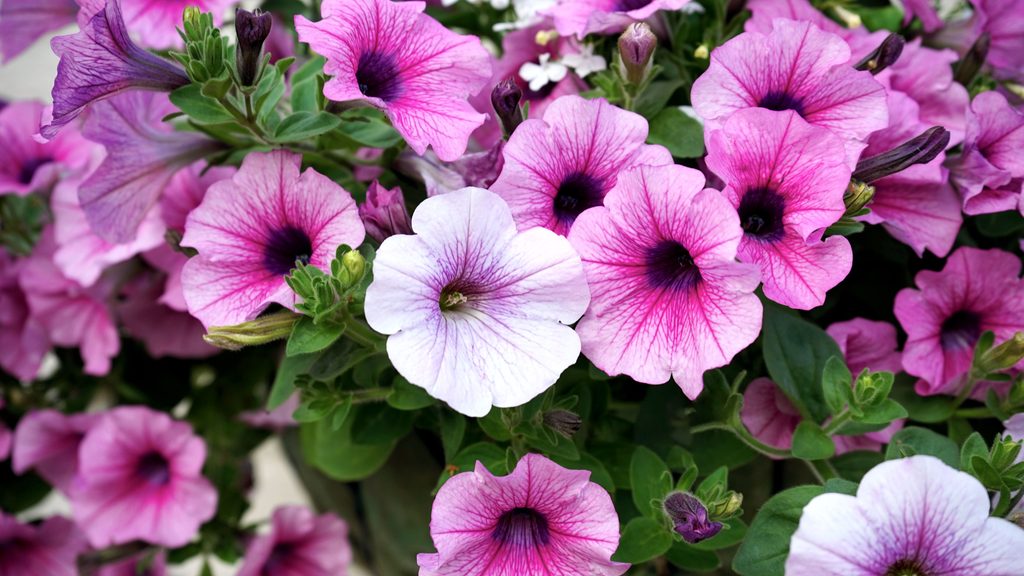
Petunias are the classic hanging basket flower. Trailing types such as Wave and Supertunia varieties can spill two to three feet over the edge. They bloom from spring until frost.
Give them full sun and regular water. Feed weekly, because petunias are heavy feeders. Pale, yellowing leaves usually signal hunger.
Older types needed deadheading, but many modern varieties do not. If plants look stringy in midsummer, trim them back by a third. They usually bounce back within two weeks.
2. Calibrachoa (Calibrachoa, “Million Bells”)
Calibrachoa looks like a tiny petunia, with hundreds of small blooms. It comes in bright colors, including coral, yellow, and deep purple. It is a favorite of hummingbirds.
It prefers full sun and slightly acidic soil. Yellowing leaves with green veins often mean an iron problem. A fertilizer for acid-loving plants usually fixes it.
Do not let the soil stay soggy. Water when the top inch feels dry. I find calibrachoa less forgiving than petunia, but the flower show is worth the care.
3. Trailing Verbena (Verbena × hybrida)
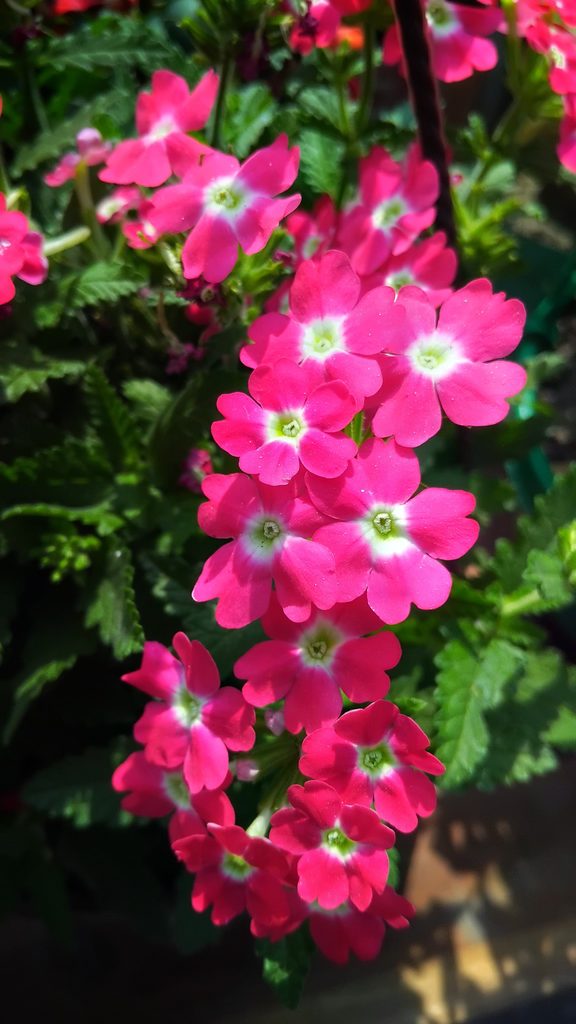
Trailing verbena makes dense clusters of flowers in pink, purple, red, and white. It spreads wide and covers the basket edge quickly. Bees and butterflies visit it often.
It loves full sun and good drainage. Water deeply, then let the top of the soil dry. Powdery mildew can appear in humid weather, so give it good airflow.
Trim spent flower clusters to encourage new buds. A light feeding every two weeks is enough. Choose mildew-resistant varieties if your summers are humid.
ALSO READ: 25 Flowers That Survive Winter Outside (With Pictures, and Details)
4. Trailing Lantana (Lantana montevidensis)
Trailing lantana is built for heat. Its clusters of lavender, white, or yellow flowers bloom nonstop in summer. It is one of the toughest basket plants available.
Give it full sun and let it dry between waterings. It handles hot, windy porches better than most. Pollinators love it.
Note that some lantana species are invasive in warm regions. Check local guidance before planting. In a basket, it is easy to contain.
5. Portulaca (Portulaca grandiflora, “Moss Rose”)
Portulaca is a succulent flower that thrives where others burn out. Its blooms look like small roses in vivid pink, orange, and yellow. Flowers open fully in bright sun.
It needs full sun and very little water. Overwatering is the main way to lose it. A gritty, fast-draining mix helps.
This is my pick for busy gardeners. Plant it in a shallow basket and nearly forget it. It blooms from late spring through fall.
6. Scaevola (Scaevola aemula, “Fan Flower”)
Scaevola has fan-shaped flowers in blue, purple, or white. The blooms look as if they were cut in half. It trails gracefully and blooms all summer.
It handles heat and some dry spells well. Provide full sun to light afternoon shade. Water when the top inch of soil feels dry.
Rarely does it need deadheading. Pinch back long stems to keep growth full. Its cool blue tones pair well with yellow and orange flowers.
7. Trailing Lobelia (Lobelia erinus)
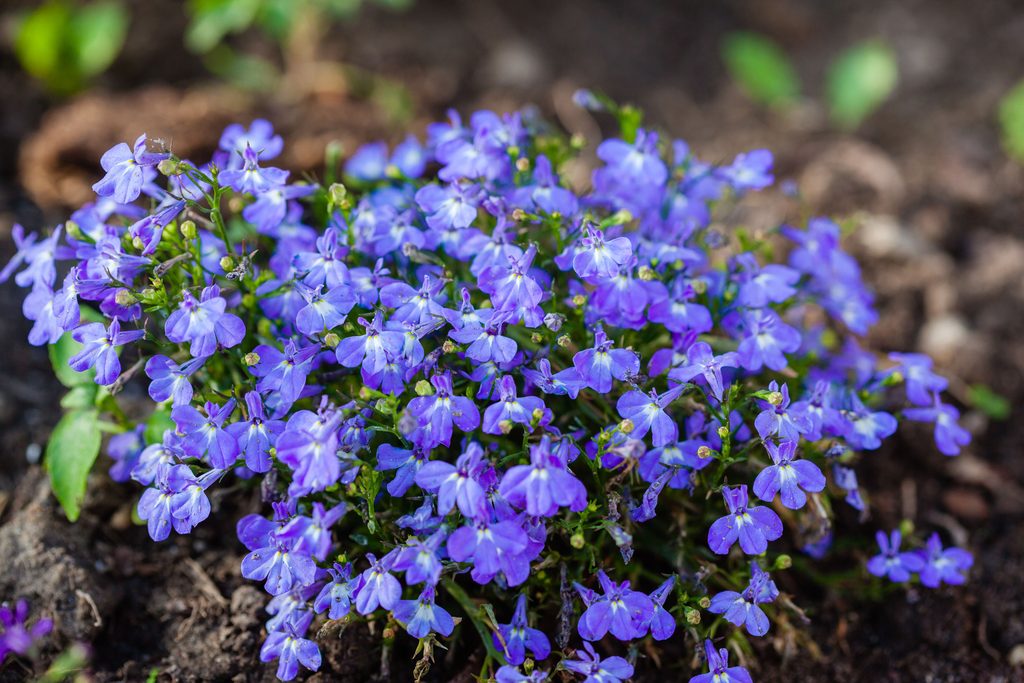
Lobelia produces tiny, intense blue flowers that cover the plant like a cloud. White, pink, and violet types also exist. It is a long-time favorite for cascading edges.
It prefers cool weather and part sun. In hot summers, it may stop blooming. Shear it back by half and it often returns in fall.
Keep the soil evenly moist. Lobelia dislikes drying out completely. I like to plant it with geraniums for a classic look.
8. Sweet Alyssum (Lobularia maritima)
Sweet alyssum forms a soft carpet of tiny flowers in white, pink, and purple. It has a light honey scent. It spills over the basket edge beautifully.
It likes full sun to part shade. It does best in cool weather and may pause in peak summer heat. A mid-season trim brings it back.
Hoverflies, which eat garden pests like aphids, are drawn to alyssum. That makes it a helpful companion plant. It is also very easy to grow from seed.
9. Nasturtium (Tropaeolum majus)
Nasturtiums are bold, easy, and edible. Both the leaves and flowers have a peppery taste. Blooms come in red, orange, and yellow.
They prefer full sun and poor to average soil. Too much fertilizer produces leaves instead of flowers. Water moderately.
Choose trailing varieties such as ‘Alaska’ or ‘Jewel’ for baskets. They grow fast from seed. Watch for aphids, and rinse them off with water.
10. Zinnia, Trailing Types (Zinnia ‘Profusion’ and ‘Zahara’)
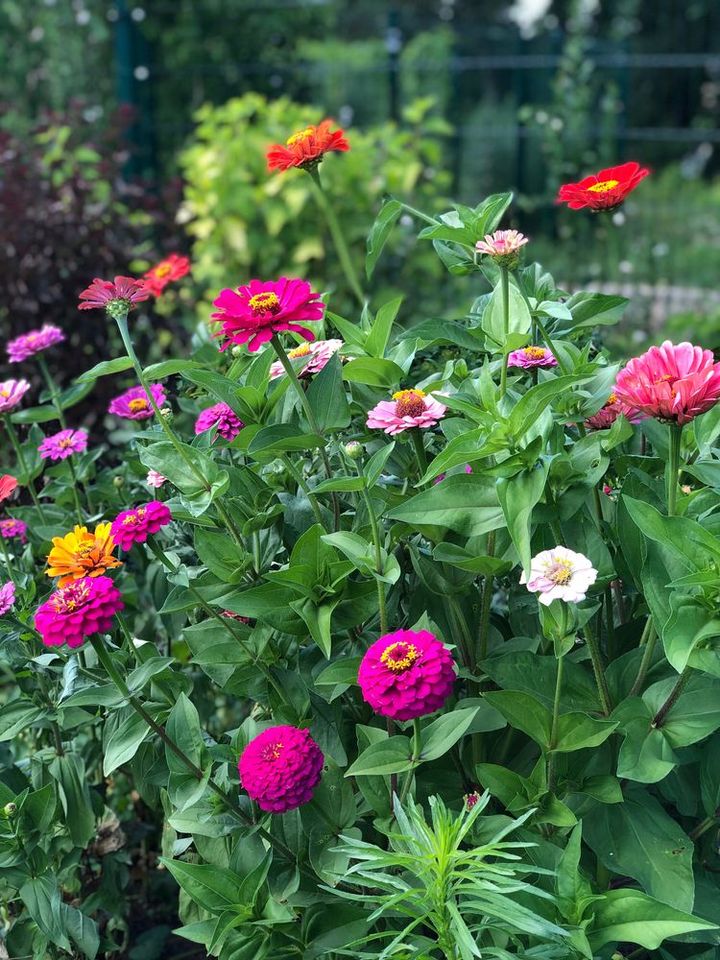
Compact zinnias like Profusion and Zahara make excellent heat-loving basket plants. They bloom in orange, yellow, pink, and white. They resist the mildew that troubles taller zinnias.
Give them full sun and moderate water. Water at the soil level instead of over the leaves. Good airflow helps keep the foliage clean.
They are not true trailers, but they mound and drape slightly. I like them as the center of a mixed basket. Deadhead to keep the display fresh.
11. Dwarf Marigold (Tagetes patula)
Dwarf marigolds bring warm yellow and orange tones to baskets. They are cheerful and almost indestructible. Their scent also helps deter some insects.
Plant them in full sun after the last frost. They tolerate heat and need only moderate water. Pinch off old flowers to keep blooms coming.
Choose French marigolds for small baskets because they stay compact. They work well in kitchen herb baskets. Gardeners have used them this way for generations.
ALSO READ: 35 Flowers That Thrive in Full Sun (Tough Varieties for Hot Climates)
12. Gazania (Gazania rigens)
Gazania produces large, daisy-like flowers in bold stripes of orange, red, and gold. The blooms open in sun and close at night. They are native to South Africa.
It needs full sun and sharp drainage. It handles drought better than most flowers. Avoid overwatering.
Place the basket where it gets strong morning and midday light. On cloudy days, the flowers stay closed. That is normal, not a sign of trouble.
13. Angelonia (Angelonia angustifolia)
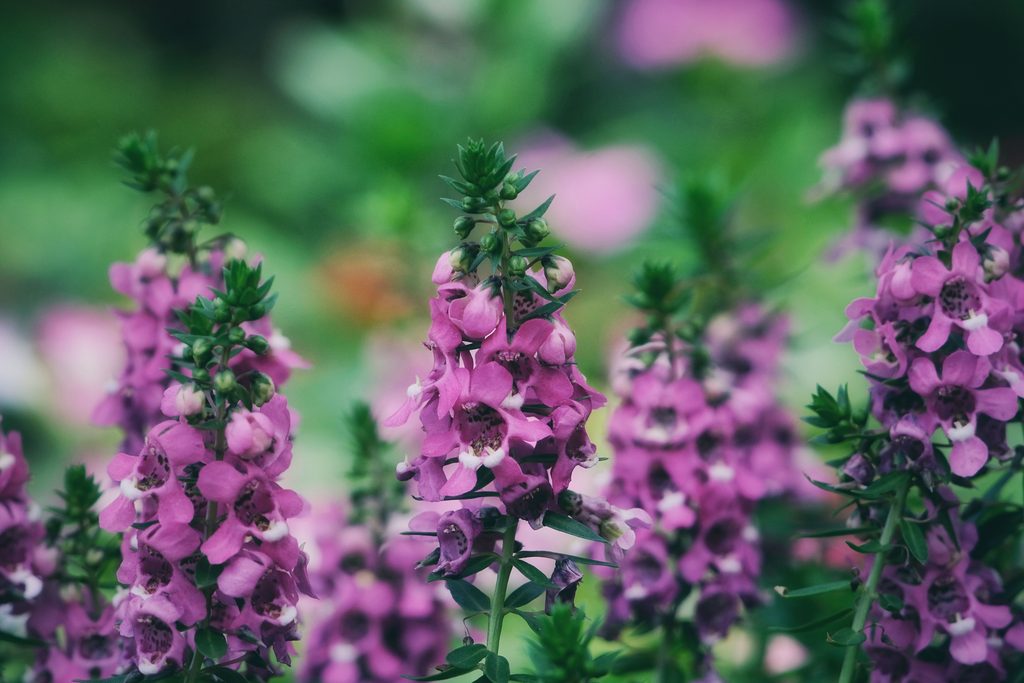
Angelonia, or “summer snapdragon,” makes upright spikes of purple, pink, or white. It adds height to a mixed basket. It loves heat and humidity.
Plant it in full sun with regular water. It blooms from late spring until frost. It rarely needs deadheading.
Use it as the “thriller” in the center. Surround it with trailing petunias or sweet potato vine. The mix looks full and professional.
14. Heliotrope (Heliotropium arborescens)
Heliotrope has dark, vanilla-scented flowers in deep purple or lavender. I like to hang it near a seating area so the fragrance drifts by. Butterflies visit it often.
It needs full sun to light shade and steady moisture. It is tender and cannot take frost. Plant it only after the weather warms.
Pinch the tips early to encourage bushy growth. Feed every two weeks. The scent alone makes it worth the effort.
15. Million… Mandevilla (Mandevilla × amabilis)
Mandevilla is a tropical vine with large, trumpet-shaped flowers in pink, red, and white. A small trellis in the basket lets it climb. It blooms from late spring through fall.
It loves heat, sun, and regular water. Feed it every two weeks with a bloom fertilizer. It cannot survive frost.
In cold climates, treat it as an annual or bring it indoors for winter. It makes a dramatic focal point. A single plant can fill a large basket.
Best Flowers for Shady Hanging Baskets
16. Fuchsia (Fuchsia × hybrida)
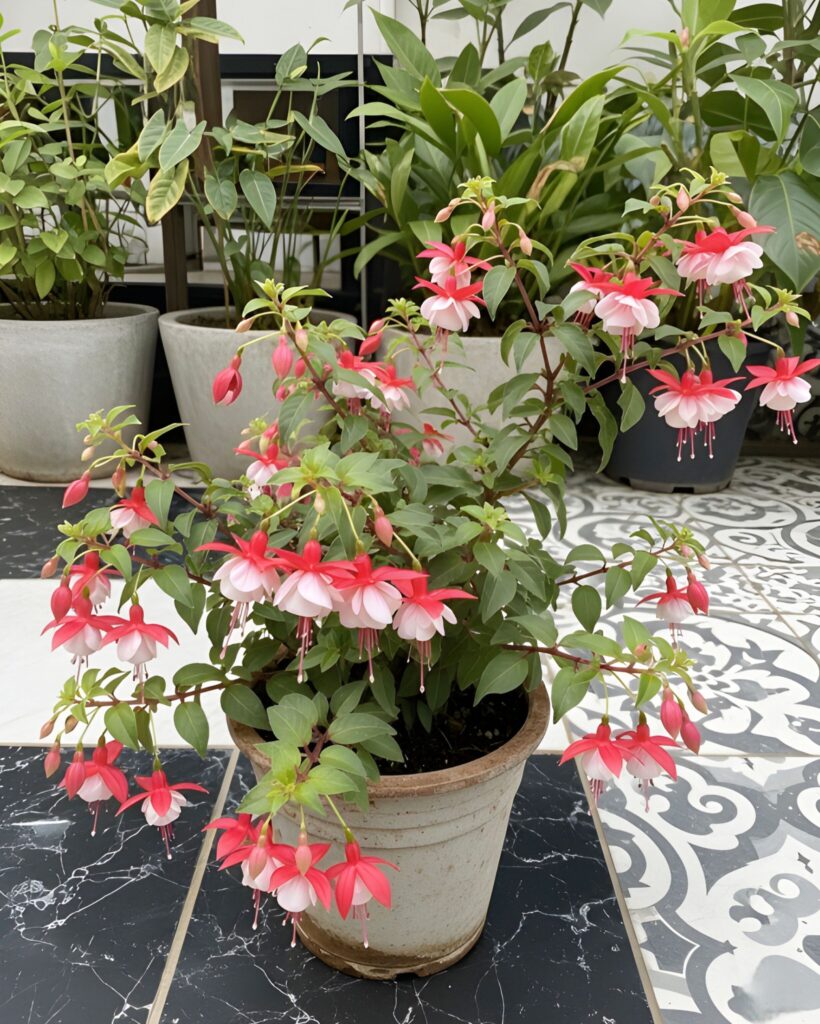
Fuchsias are the queens of shady baskets. Their dangling, two-tone blooms look like tiny ballerinas. Hummingbirds adore them.
They need part shade, cool air, and steady moisture. Hot afternoon sun can scorch the plants. Mist the foliage in dry weather.
Pinch the tips in spring to build a full shape. Feed regularly. In my experience, a fuchsia basket on a shaded porch is hard to beat.
17. Tuberous Begonia (Begonia × tuberhybrida)
Tuberous begonias have large, rose-like blooms in red, pink, orange, and white. Pendula types cascade beautifully. They thrive in bright shade.
Keep the soil moist but never soggy. Avoid wetting the leaves, which can lead to mildew. Morning sun and afternoon shade are ideal.
The tubers can be saved over winter in a cool, dry place. That makes the plant a good long-term investment. Replant them in spring.
18. Impatiens (Impatiens walleriana)
Impatiens are classic shade flowers with nonstop blooms in almost every color. They brighten dark corners. They fill baskets quickly.
They need shade and consistent moisture. Plants wilt dramatically when thirsty but recover after watering. Avoid planting where downy mildew is a known problem.
Downy mildew has affected many garden impatiens since 2011, according to university plant clinics. Choose disease-resistant types such as SunPatiens, listed next. Check plants before buying.
19. New Guinea Impatiens (Impatiens hawkeri)
New Guinea impatiens have larger flowers and bolder foliage than common impatiens. Leaves can show bronze or variegated patterns. They are resistant to downy mildew.
They tolerate more sun, especially in cooler regions. Keep the soil moist and feed every two weeks. Part shade suits them best.
Hang them where they get morning light. They bloom from late spring until frost. They are among my most dependable shade picks.
20. Torenia (Torenia fournieri, “Wishbone Flower”)
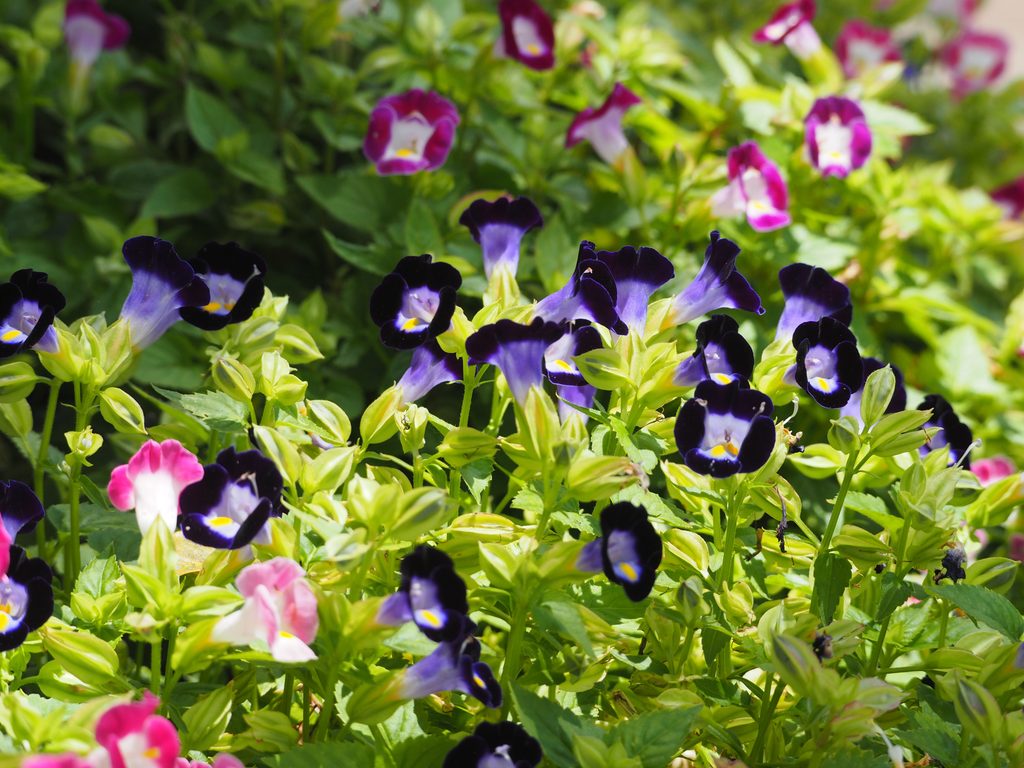
Torenia has small, snapdragon-like flowers in purple, blue, pink, and white. It blooms heavily in shade and heat. It is less well known than it deserves to be.
It prefers part shade and moist soil. Afternoon shade is helpful in hot areas. Pinch back stems to promote branching.
It rarely needs deadheading. Hummingbirds sometimes visit the blooms. It suits baskets under porch roofs and trees.
21. Browallia (Browallia speciosa)
Browallia offers bright blue and violet flowers that stand out in dim spots. White types also exist. It is sometimes called “bush violet.”
It grows best in part shade and moist, rich soil. It does not like drying out. Give it regular feeding.
Combine it with white impatiens for a cool, calm look. It blooms all summer. Pinch young plants for fuller growth.
ALSO READ: 15 Flowers That Smell Like Vanilla (With Pictures, And Growing Details)
22. Trailing Campanula (Campanula isophylla, “Italian Bellflower”)
Campanula makes star-shaped flowers in blue or white that cover the plant in summer. It is a graceful trailer. It looks beautiful in hanging baskets.
It likes bright light without harsh afternoon sun. Water evenly and use well-drained soil. Cooler summers suit it best.
After flowering, cut back the stems to refresh growth. It may live for several seasons in mild areas. It is a lovely, old-fashioned choice.
23. Bacopa (Sutera cordata)
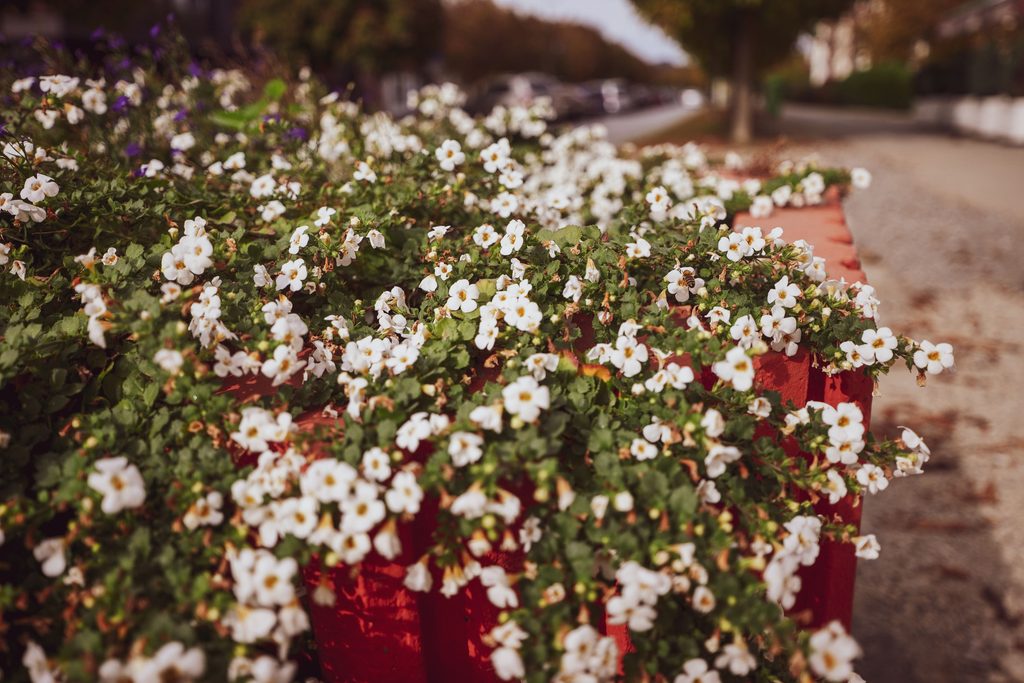
Bacopa has tiny white, pink, or lavender flowers on long, trailing stems. It forms a soft, cloud-like waterfall. It pairs well with almost any flower.
It prefers part sun and constant moisture. It wilts quickly if it dries out. Water every day in warm weather.
Bacopa can handle cooler temperatures than many annuals. I often use it as a “spiller” in mixed baskets. It softens bold colors nicely.
24. Creeping Jenny (Lysimachia nummularia ‘Aurea’)
Creeping Jenny is mostly grown for its golden, coin-shaped leaves. In early summer, small yellow flowers appear. It trails several feet.
It tolerates sun or shade and likes moisture. It grows fast and fills gaps quickly. It is hardy in many regions.
Note that it can spread aggressively in the ground. In a basket, it is easy to control. It adds a bright contrast to dark purple flowers.
Best Flowers for Cool-Season and Spring Baskets
25. Pansy (Viola × wittrockiana)
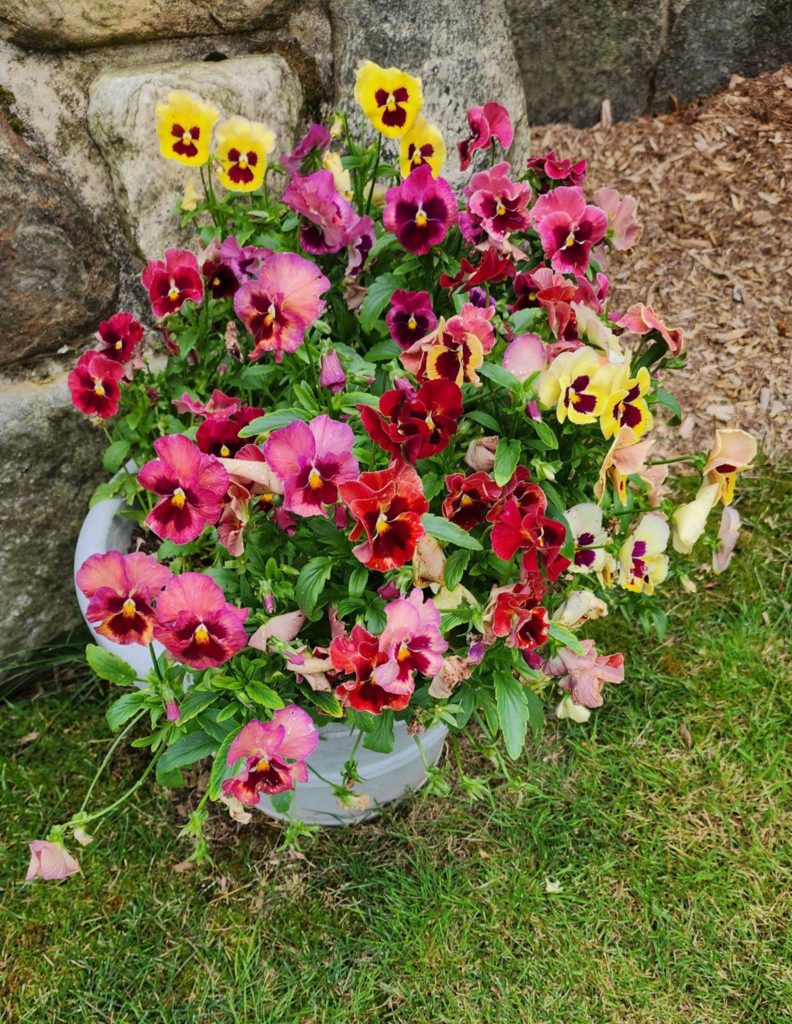
Pansies produce large, face-like blooms in nearly every color. They are one of the first flowers to appear in spring. They also work for fall baskets.
They prefer full sun to part shade in cool weather. They tolerate light frost. Water regularly and remove old flowers.
Pansies fade in summer heat. Replace them with heat-loving plants when temperatures rise. I plant them every year for early color.
26. Viola (Viola cornuta)
Violas are smaller than pansies but bloom more heavily. They cope better with both cold and mild heat. Many have a light fragrance.
They need part sun and moist soil. Pinch off spent flowers to keep them coming. They often last longer than pansies.
Their small faces look charming in mixed baskets. Edible varieties can decorate salads and desserts. Always confirm no pesticides were used.
27. Cyclamen (Cyclamen persicum)
Cyclamen has swept-back petals in red, pink, and white, over silvery heart-shaped leaves. It blooms in cool weather. It is a good choice for fall and winter baskets in mild climates.
It prefers bright, indirect light and cool nights. Avoid overwatering, which leads to rot. Water from below when possible.
It is not frost hardy in all areas. In cold regions, use it under a covered porch. It is a good choice for holiday decoration.
28. Trailing Snapdragon (Antirrhinum majus)
Trailing snapdragons make spikes of ruffled flowers in many colors. They are a cool-season favorite. Hummingbirds and bees visit them.
They prefer full sun and cool temperatures. Pinch the growing tips to encourage side branches. They perform best in spring and fall.
In hot areas, they may fade in midsummer. Cut them back and wait for cooler weather. They often bloom again.
29. Dianthus (Dianthus chinensis)
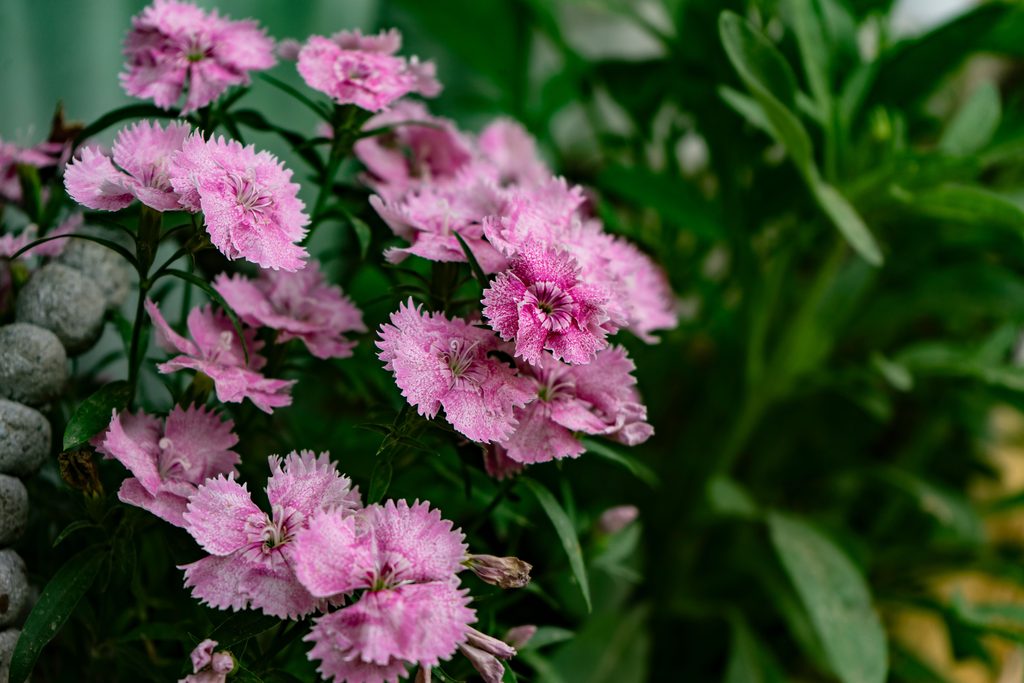
Dianthus has frilly, clove-scented flowers in pink, red, and white. Its blue-gray foliage looks attractive all season. It is a tidy, compact plant.
It likes full sun and well-drained soil. Water moderately. Do not overfeed it.
Deadhead for repeat bloom. It tolerates light frost, which makes it ideal for spring baskets. Some varieties survive mild winters.
30. Osteospermum (Osteospermum ecklonis, “African Daisy”)
Osteospermum has daisy flowers in purple, white, and orange, often with blue centers. It blooms in cool spring and fall weather. It can pause in midsummer.
It needs full sun and good drainage. The flowers close at night and on dull days. Water when the top inch is dry.
Cut it back if it slows in summer. Fresh blooms come when temperatures cool. It adds a cheerful, modern look.
31. Nemesia (Nemesia fruticans)
Nemesia produces small, fragrant blooms in pink, lavender, and bicolor shades. It likes cooler weather. It is excellent for spring baskets.
Give it full sun to part shade. Keep soil evenly moist but well drained. Fertilize lightly.
Shear it back after the first flush of blooms. It often returns in cooler weather. Its soft scent is a pleasant surprise.
32. Diascia (Diascia barberae, “Twinspur”)
Diascia has delicate, salmon-pink flowers on trailing stems. Each bloom has two small spurs. It is a long-blooming plant in mild climates.
It prefers cool temperatures and full sun to part shade. Keep it evenly moist. Heat can slow it down.
Trim it after the first flush for another round of flowers. It looks lovely with blue lobelia. I find it underused.
More Reliable Favorites
33. Ivy Geranium (Pelargonium peltatum)
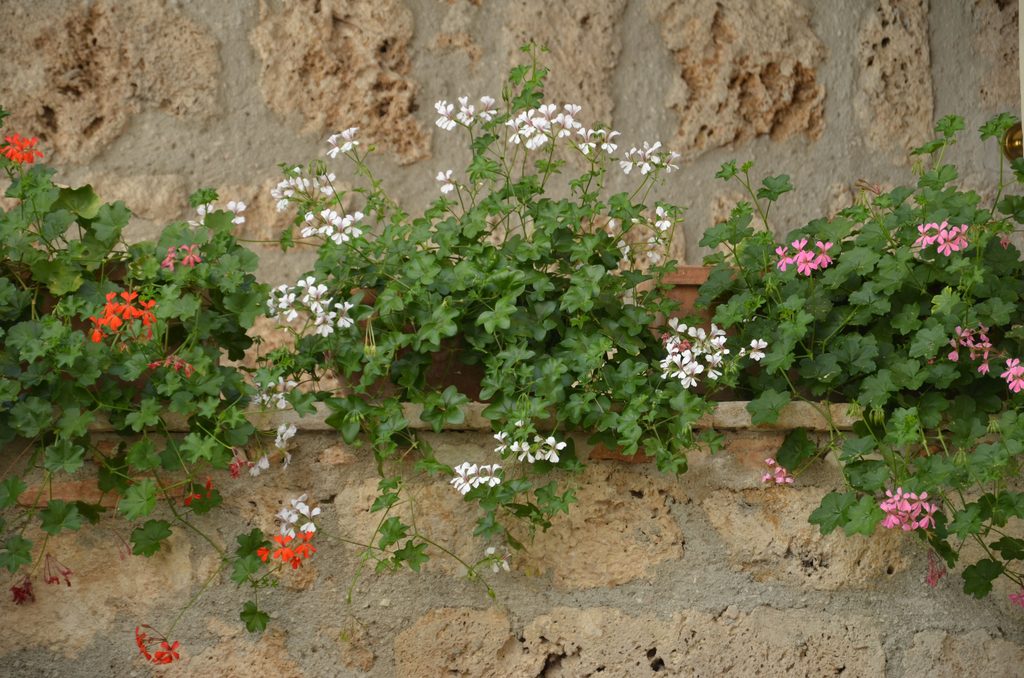
Ivy geraniums are glossy-leaved trailers with rounded flower clusters in red, pink, lavender, and white. They are a staple in European window boxes. They handle moderate heat well.
They prefer full sun to part shade. Let the soil dry slightly between waterings. Good drainage is a must.
They are less fussy about weather than petunias. Deadheading keeps them neat. A basket often lasts the whole season.
34. Zonal Geranium (Pelargonium × hortorum)
Zonal geraniums are upright, sturdy plants with bold blooms in red, pink, salmon, and white. Their rounded leaves often have a darker band. They are very drought tolerant.
They need full sun and well-drained soil. Water deeply but not too often. Overwatering is their most common problem.
Use them as the center of a mixed basket. Remove old flower heads to encourage more. Overwinter them indoors in cold regions.
35. Mimulus (Mimulus × hybridus, “Monkey Flower”)
Mimulus has speckled, trumpet-shaped blooms in orange, red, and yellow. It loves moisture and cooler weather. It is a fun, unusual choice.
It prefers part shade and constantly moist soil. Never let it dry out. A saucer under the basket can help.
It thrives in cooler summers and coastal regions. Choose it for a wet, shady spot. It is a conversation starter.
How to Choose Flowers for Your Basket
Start with sun exposure. Full sun means six or more hours of direct light. Part shade means three to six hours. Shade means less than that. Match the plant to the light, and half your work is done.
Then think about shape. Good baskets use the “thriller, filler, spiller” idea. A tall plant sits in the center, mounding plants fill the middle, and trailing plants hang over the edge.
Finally, consider your habits. If you travel often, choose drought-tolerant plants like portulaca. If you enjoy daily watering, thirstier plants like fuchsia will reward you.
Quick Care Tips for Healthy Hanging Baskets
A few simple habits make the biggest difference:
- Water often. Check daily in summer. Water until it drains from the bottom.
- Feed regularly. Use a balanced liquid fertilizer every one to two weeks.
- Use quality potting mix. Avoid garden soil, which compacts in containers.
- Deadhead or trim. Remove spent blooms and cut back leggy stems.
- Choose the right size. Larger baskets hold more water and need less frequent watering.
Frequently Asked Questions
What is the easiest flower for a hanging basket?
Petunias, portulaca, and ivy geraniums are very forgiving. They tolerate heat and need little fuss.
Which flowers bloom all summer in hanging baskets?
Calibrachoa, trailing lantana, scaevola, and bacopa bloom for months. Regular feeding helps them continue.
What flowers do best in shady baskets?
Fuchsia, begonias, impatiens, torenia, and browallia thrive in shade.
How often should I water a hanging basket?
In summer, daily watering is common. Check the soil with your finger and water when the top inch feels dry.
Final Thoughts
A great hanging basket is not about luck. It comes from matching light, water, and plant type. Start with two or three flowers from this list and build from there.
My advice is simple: water consistently, feed often, and trim when needed. The reward is months of color at eye level. Pick your favorites and enjoy the season.
References
- USDA Agricultural Research Service, Plant Hardiness Zone Map: https://planthardiness.ars.usda.gov/
- USDA Natural Resources Conservation Service: https://www.nrcs.usda.gov/
- University of Minnesota Extension: https://extension.umn.edu/
- Cornell University Gardening Resources: https://gardening.cornell.edu/
- Penn State Extension: https://extension.psu.edu/
- Oregon State University Extension, Gardening: https://extension.oregonstate.edu/gardening
- Clemson University Home & Garden Information Center: https://hgic.clemson.edu/

Tim M Dave is a gardening expert with a passion for houseplants, particularly cacti and succulents. With a degree in plant biology from the University of California, Berkeley, he has vast experience in gardening. Over the years, he has cultivated a vast collection of desert plants and learned a great deal about how to grow and care for these unique companions.