20 Trees That Attract Hummingbirds (Names, With Pictures)
Few sights in a garden match a hummingbird hovering at a flower. The bird is smaller than your thumb, and it moves too fast to follow. I still stop whatever I am doing when one appears.
Most people reach for a feeder first. Feeders help, but trees do far more work over the long term. A flowering tree produces thousands of blossoms, shelters insects, and gives the birds a safe place to perch and nest.
This guide lists 20 trees that attract hummingbirds, with their bloom time, growing notes, and the reason the birds visit.
20 Trees That Attract Hummingbirds
1. Tulip Poplar (Liriodendron tulipifera)

The tulip poplar is a tall native giant of the eastern United States. It can reach 70 to 90 feet or more. In late spring, it carries cup-shaped flowers in green, yellow, and orange.
Those blooms hold generous amounts of nectar. NC State Extension lists yellow poplar, another name for this tree, among the native trees that provide blooms and nesting areas. Mississippi State University Extension also names it as a hummingbird favorite.
Give it a large space and deep, moist soil. It grows well in roughly zones 4 to 9. I would not plant it near a house, but in a big yard, it is hard to beat.
2. Red Buckeye (Aesculus pavia)
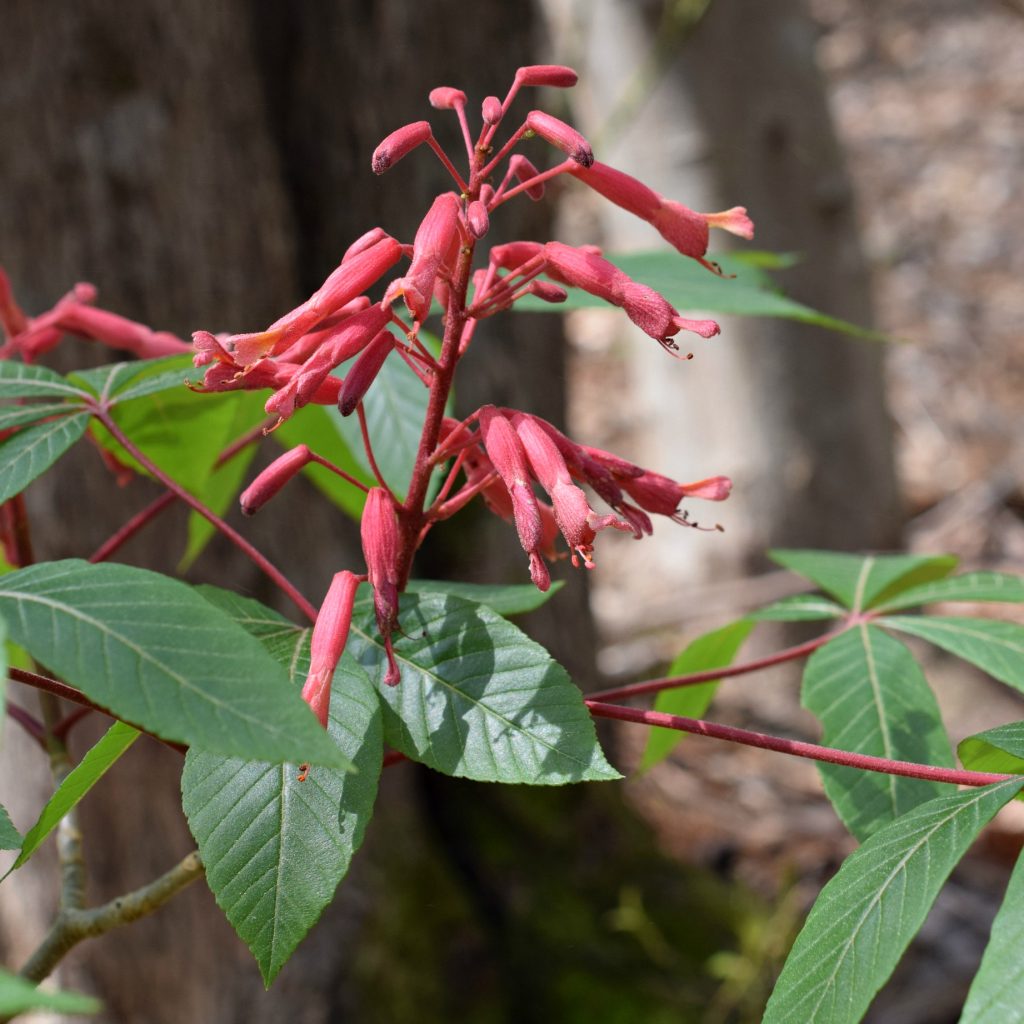
Red buckeye is a small native tree, usually 10 to 20 feet tall. In early spring, it produces upright clusters of bright red, tubular flowers. This is almost a perfect match for a hummingbird’s bill.
Its timing is its greatest strength. Red buckeye often blooms just as ruby-throated hummingbirds return from migration. Early food can make a real difference to tired birds.
It thrives in partial shade and moist soil. Take care with the seeds, as they are toxic to people and pets. Keep that in mind if children play nearby.
3. Eastern Redbud (Cercis canadensis)
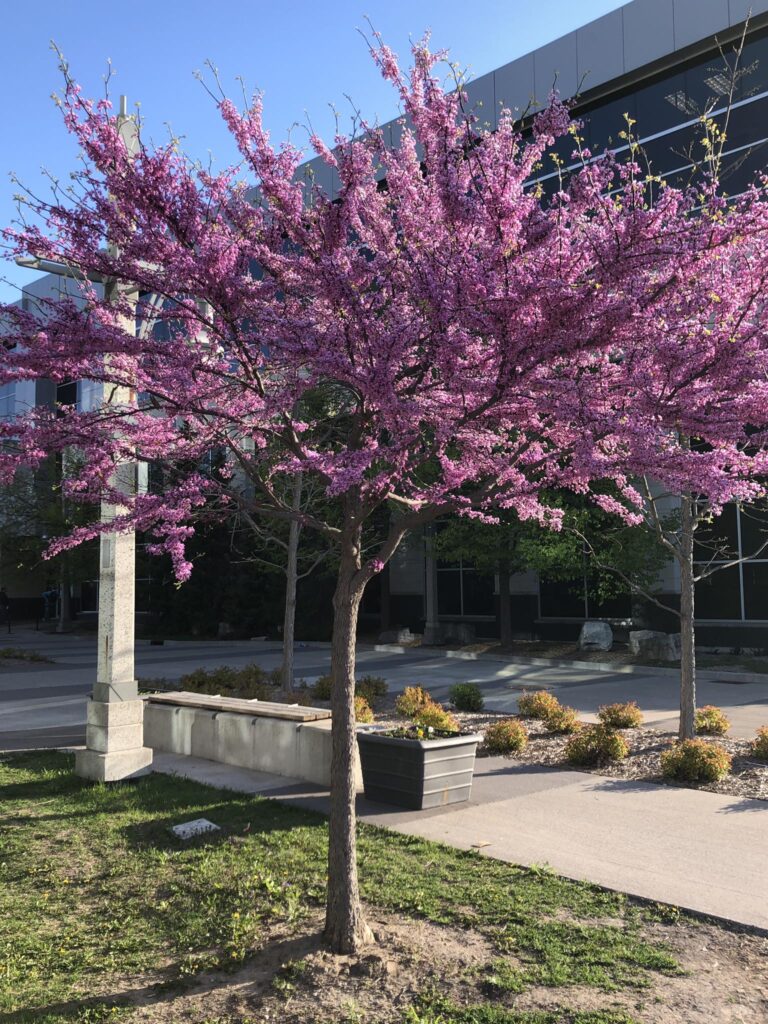
Eastern redbud covers its bare branches with pink-purple flowers in early spring. The display arrives before the leaves do. It is one of the first trees to signal that the season has turned.
Hummingbirds visit these early blossoms for nectar, and the flowers draw many small insects too. That gives the birds a second food source at a time when little else is open.
Redbud grows 20 to 30 feet tall and fits most home gardens. It tolerates many soils in zones 4 to 9. Plant it in full sun to light shade for the best flowering.
4. Crabapple (Malus species)
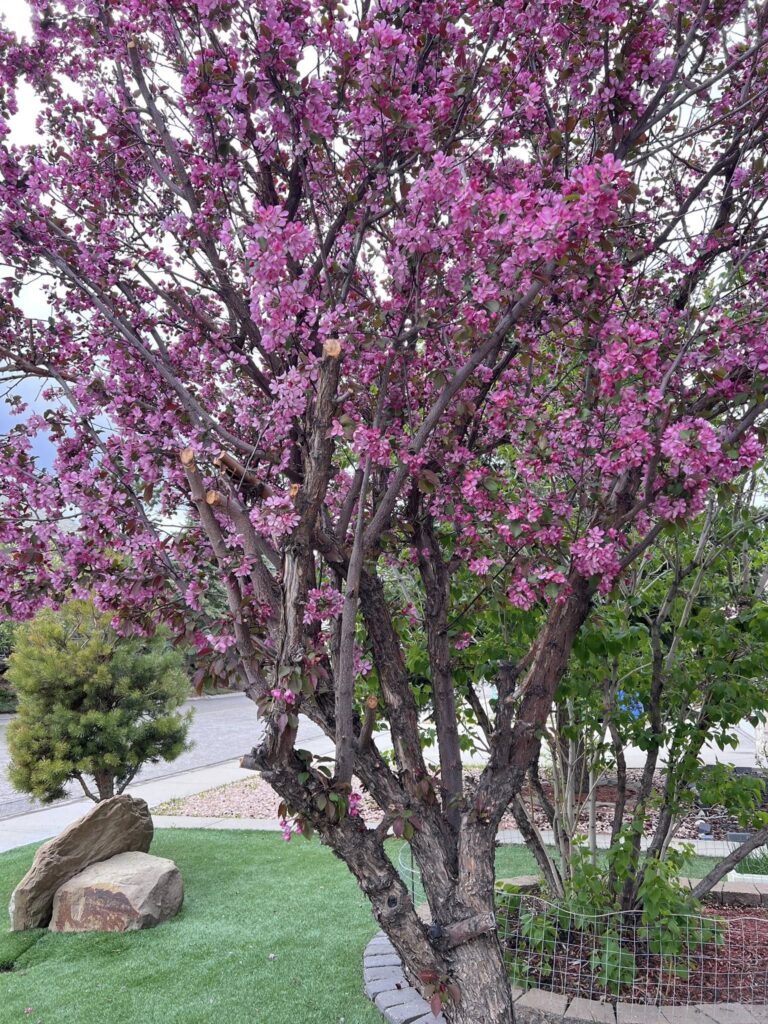
Crabapples are covered in pink or white blossoms each spring. Mississippi State University Extension describes the native southern crabapple as a very attractive spring-blooming tree that feeds hummingbirds.
The flowers are open and easy to reach. Bees and other insects gather there as well, so the birds can find both nectar and protein in one stop.
Choose a disease-resistant variety to avoid scab and leaf drop. Most crabapples grow 15 to 25 feet tall and prefer full sun. Many types are hardy from zone 4 through zone 8.
5. Hawthorn (Crataegus species)
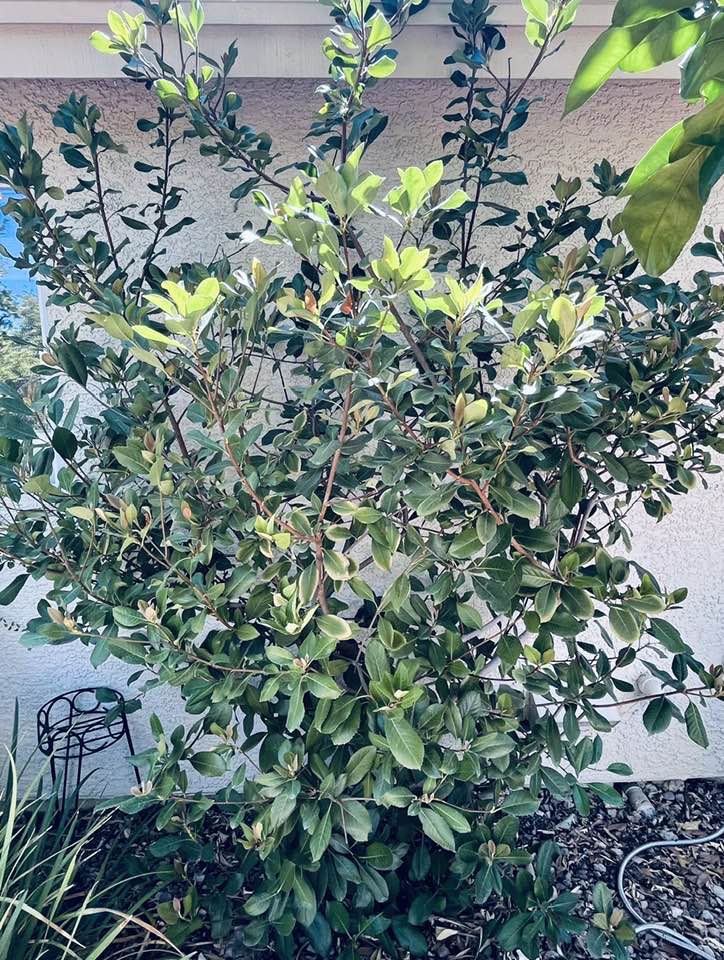
Hawthorns produce clusters of small white or pink flowers in spring. NC State Extension lists hawthorn among native trees that provide both blooms and nesting areas. That combination is valuable.
The tree supports a large number of insects. In autumn, the red berries also feed other birds. A single hawthorn can serve your garden across several seasons.
Most species stay between 15 and 30 feet tall. They are tough, adaptable, and hardy in many zones. Be aware of the thorns, and avoid planting near walkways.
6. Desert Willow (Chilopsis linearis)
Despite its name, desert willow is not a true willow. It is a small tree of the American Southwest with trumpet-shaped flowers in pink, lavender, and white. The blooms appear from late spring into early autumn.
That long season is a gift in dry regions. Hummingbirds visit the tubular flowers for a dependable meal when many other plants have faded in the heat.
Desert willow loves full sun and well-drained soil, and it needs very little water once established. It suits hot, dry climates, roughly zones 7 to 9 and warmer. Overwatering is the main mistake.
7. Catalpa (Catalpa speciosa)
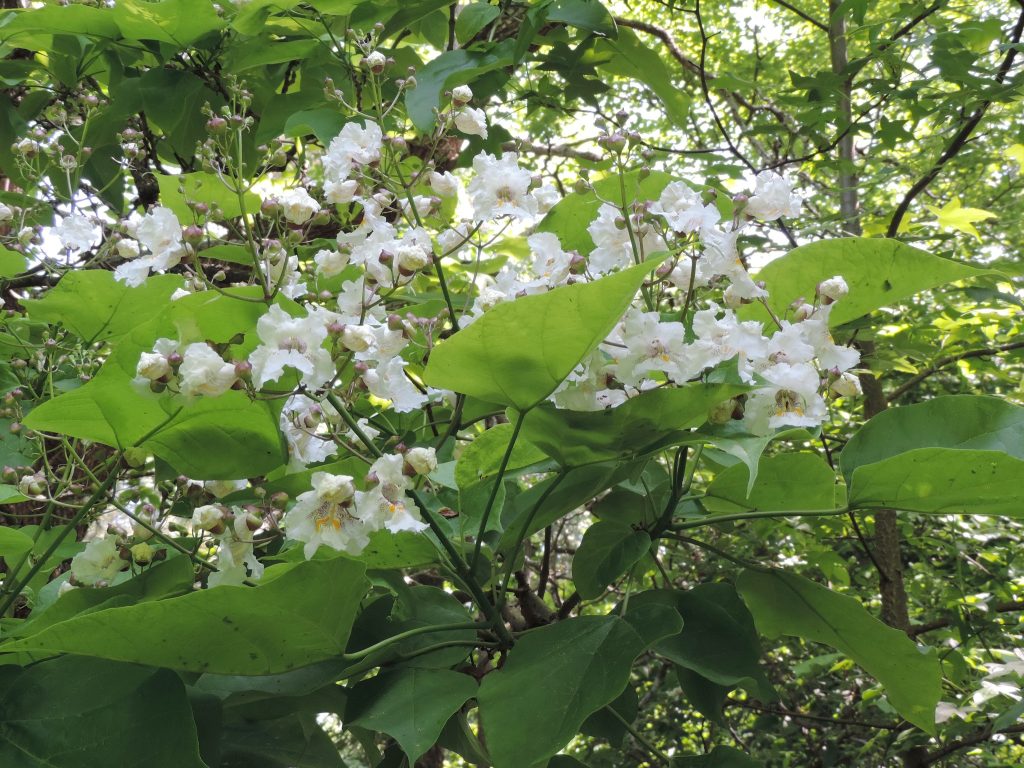
Catalpa is a fast-growing tree with large, heart-shaped leaves. In late spring or early summer, it carries showy white flowers with purple and yellow markings inside. The clusters are hard to miss.
The blossoms are rich in nectar and attract many insects. Hummingbirds take advantage of both. The tree also produces long seed pods that hang through winter.
Catalpa grows 40 to 60 feet tall and prefers full sun. It handles poor soil well in zones 4 to 8. Expect some mess from falling flowers and pods, so place it away from patios.
8. Black Locust (Robinia pseudoacacia)
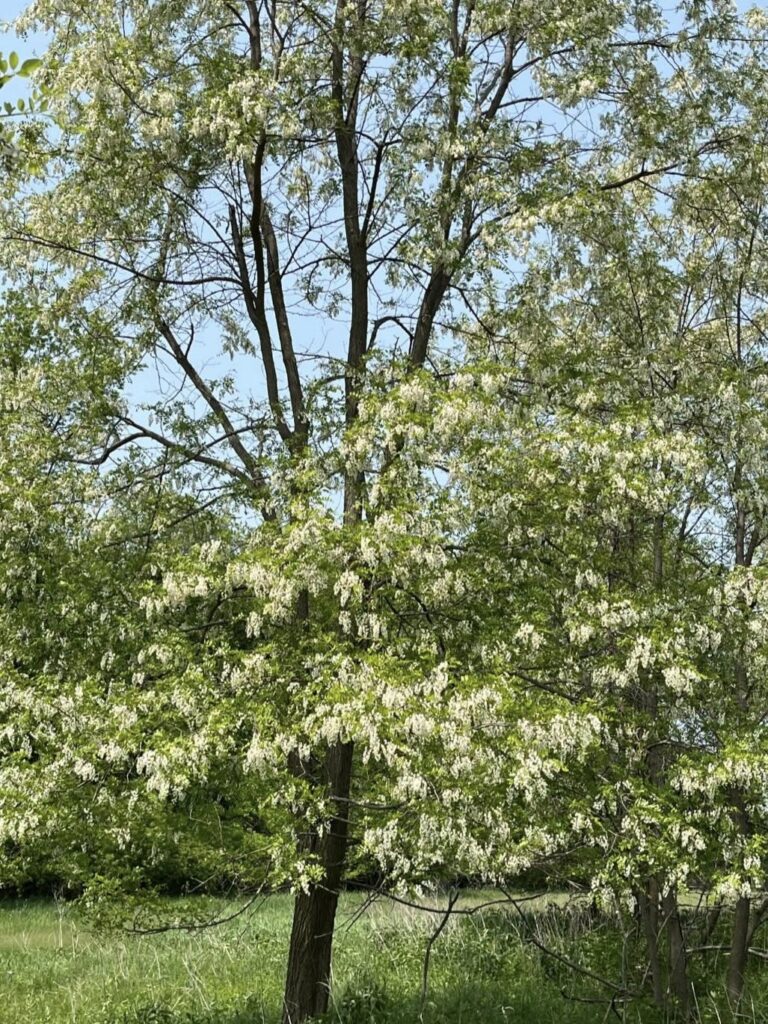
Black locust blooms in spring with long, hanging clusters of fragrant white flowers. The blossoms are heavy with nectar. Bees love them, and hummingbirds visit as well.
I need to be honest here. This tree can spread aggressively outside its native range in the Appalachians and Ozarks. It also has thorns and brittle wood.
Plant it only if you live where it is native, or check with your local extension office first. In the right place, it grows quickly to 40 to 70 feet. It tolerates poor, dry soil in zones 3 to 8.
9. Sourwood (Oxydendrum arboreum)
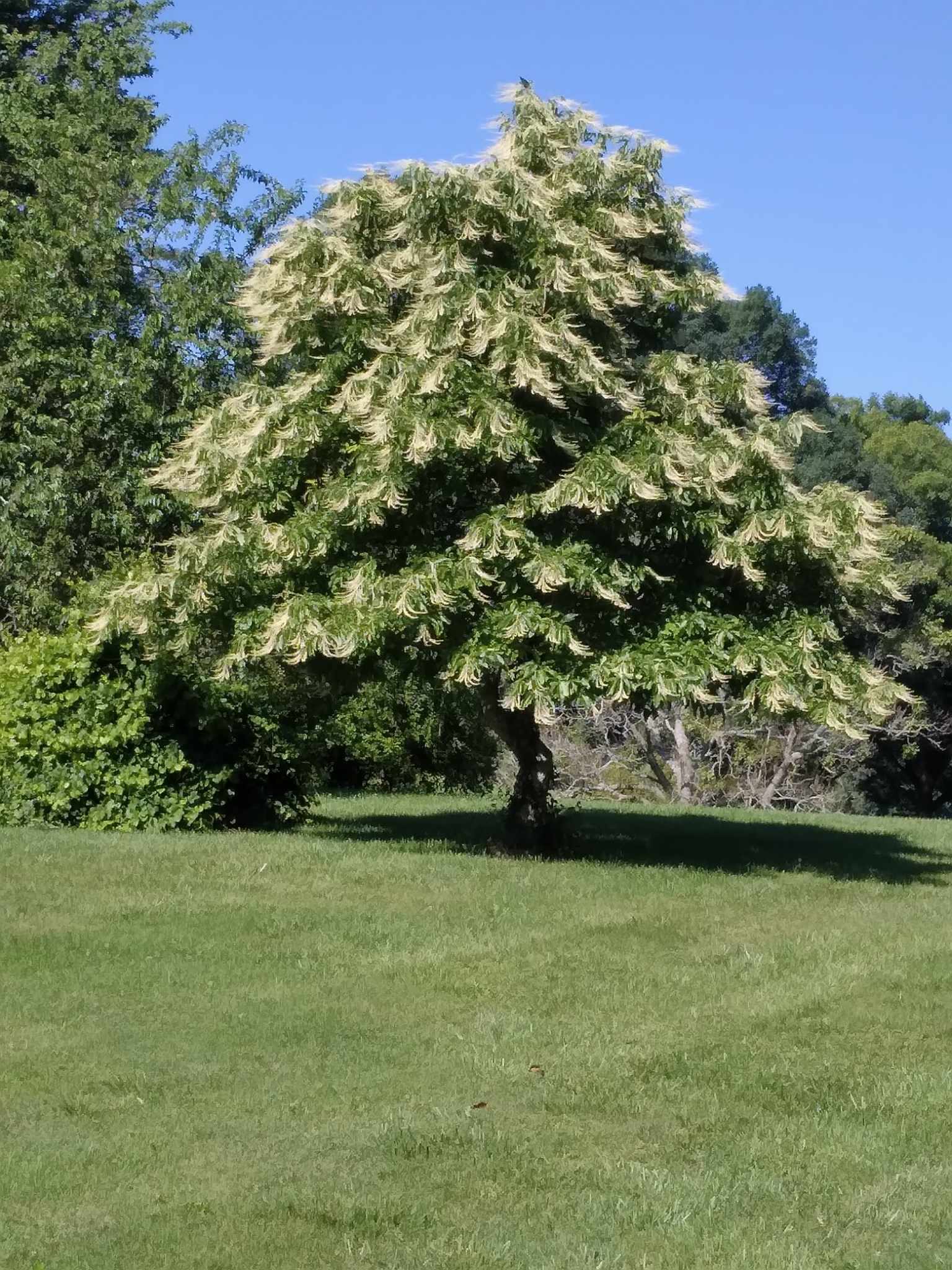
Sourwood is a medium-sized native tree of the southeastern United States. In mid to late summer, it displays long sprays of small, white, urn-shaped flowers. Fall brings brilliant red leaves.
The summer bloom is the key point. Many spring trees are finished by July, but sourwood offers nectar when food can run short. It is also famous among beekeepers for its honey.
It grows 25 to 30 feet tall and prefers acidic, well-drained soil. Zones 5 to 9 suit it best. Give it patience, because young trees grow slowly.
10. Red Maple (Acer rubrum)
Red maple flowers very early, often in late winter or early spring. The blooms are small and red, and they appear before the leaves. Few other trees offer anything at that time.
Hummingbirds benefit in a second way. Sapsuckers drill small holes in tree bark, and hummingbirds are known to drink the sap and catch insects that gather there. Red maple is a common host for this behavior.
It is a hardy native that grows 40 to 60 feet tall in zones 3 to 9. It tolerates wet or average soil. Choose a good location, because the roots can be strong.
11. Eucalyptus (Eucalyptus species)
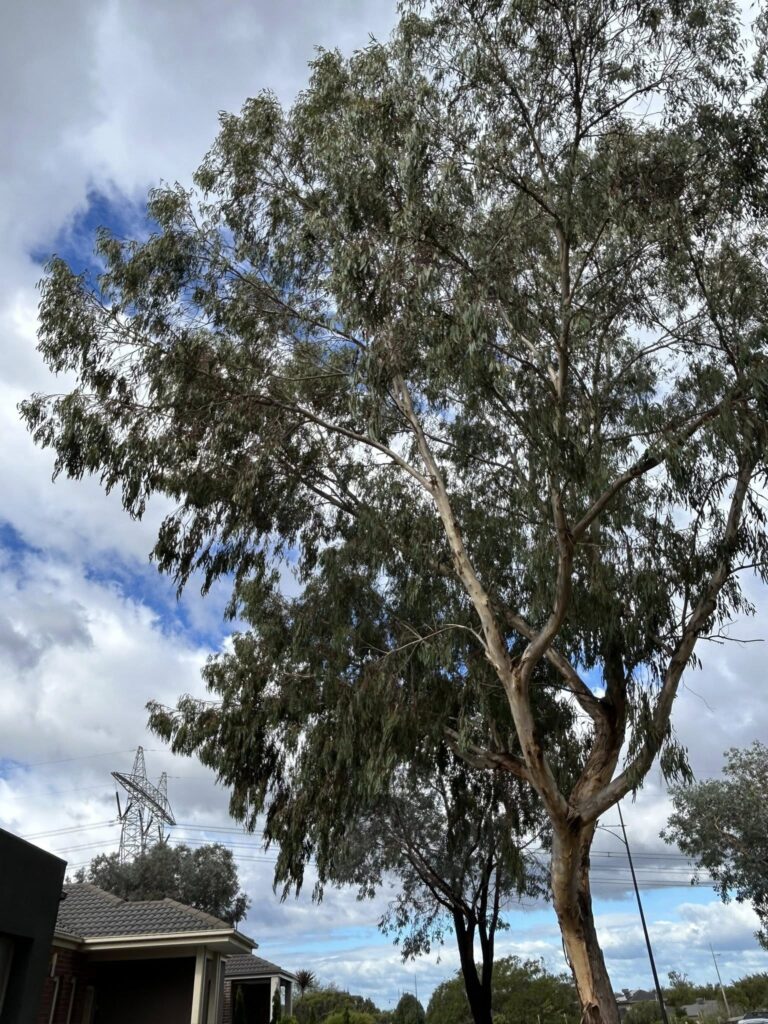
Many eucalyptus species, often called flowering gums, produce nectar-rich blossoms in winter. In California, Anna’s hummingbirds rely on them when little else is blooming. That winter role is the main reason people plant them.
The flowers come in red, pink, white, and cream. They are bold, brush-like, and full of nectar. Birds visit them in large numbers.
I will add a caution. Some eucalyptus species are invasive and increase fire risk in certain regions. Check local guidance and choose a suitable species before planting. They need warm climates and full sun.
12. Bottlebrush (Callistemon species)
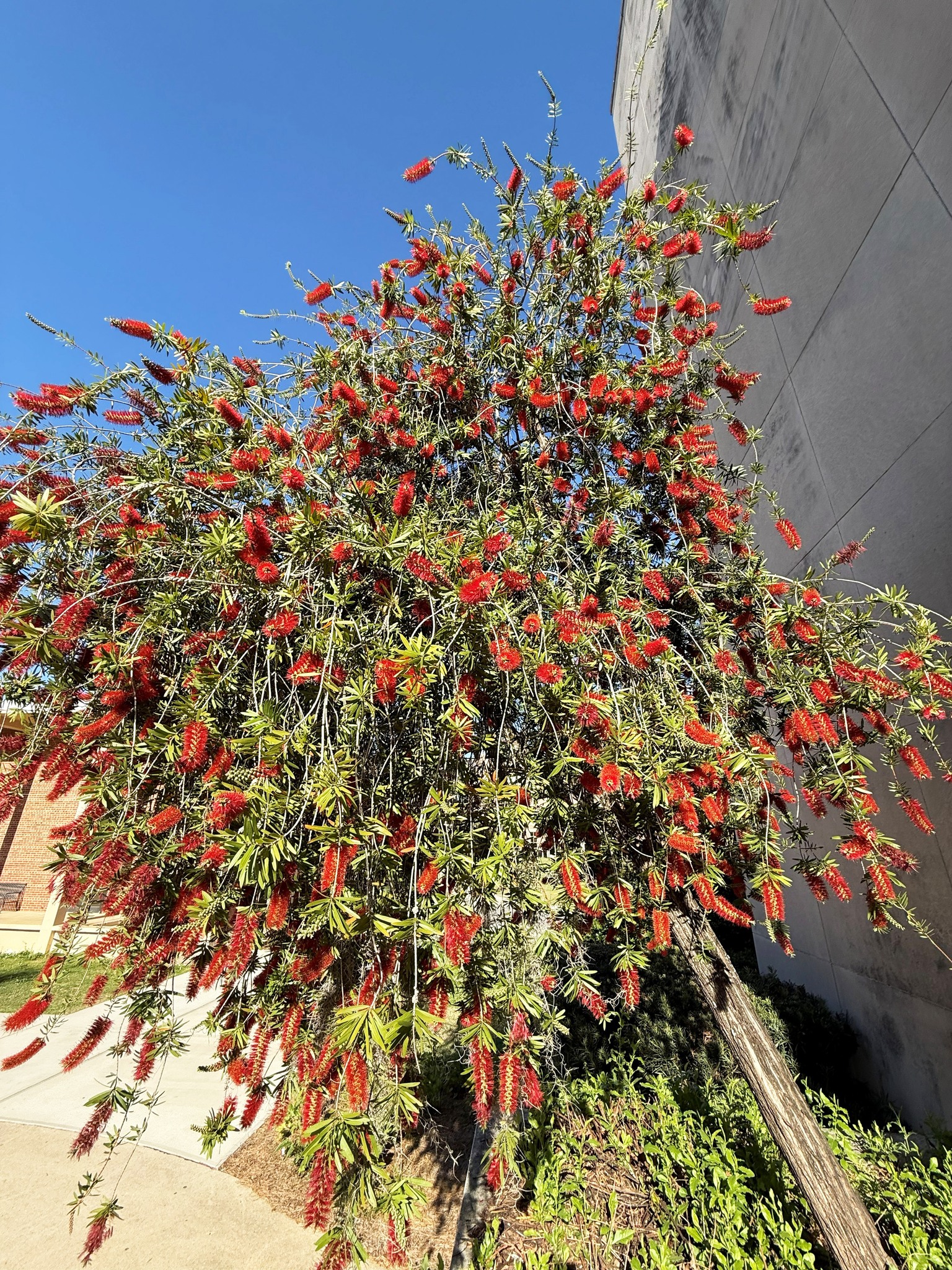
Bottlebrush gets its name from its flowers, which look like red brushes used to clean bottles. The blooms appear in spring and often again later in the year. Red is the color hummingbirds notice best.
Each brush is packed with nectar. The tree is small, usually 10 to 20 feet tall, and it can be trained as a single trunk. It works well in a small yard.
Bottlebrush needs full sun and well-drained soil. It grows in warm zones, roughly 8 to 11. Prune lightly after flowering to keep a neat shape and encourage more blooms.
13. Silk Tree, or Mimosa (Albizia julibrissin)
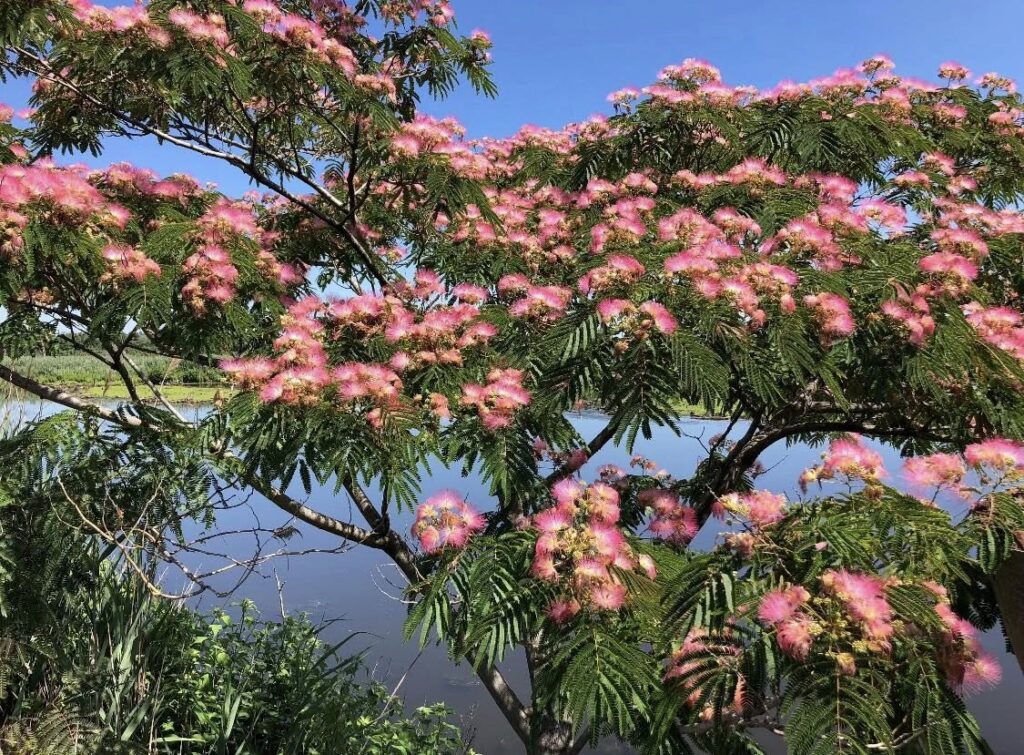
Silk tree produces fluffy, pink, pom-pom flowers in summer. The blossoms are soft and feathery. Hummingbirds visit them often for nectar, which is one reason the tree became popular in gardens.
The problem is that it is invasive across much of the southeastern United States. It seeds heavily and is difficult to remove. Many gardeners now avoid it for that reason.
If you live outside invaded areas, it can still be an option. Always confirm your local rules first. Native alternatives, such as redbud or sourwood, offer similar benefits without the risk.
14. Coral Tree (Erythrina species)
Coral trees are famous for bright red-orange flowers that stand out from far away. The blooms are shaped like tubes and packed with nectar. Hummingbirds find them easily.
Many Erythrina species grow in warm climates around the world. In Africa, they are loved by sunbirds. In the Americas, hummingbirds feed from them in warm regions such as the southern United States and Latin America.
Most coral trees need frost protection, with hardiness in roughly zones 8 to 10 or higher. They want full sun and well-drained soil. Many have thorns and soft wood, so plant with care.
15. Horse Chestnut (Aesculus hippocastanum)
Horse chestnut is a large, stately tree. In spring, it holds upright white flower spikes that look like candles. Each spike carries many individual blossoms.
Those flowers produce plenty of nectar for pollinators. Hummingbirds sometimes join the bees, especially in places where other food is scarce. It is a close relative of red buckeye.
It grows 50 to 75 feet tall and needs lots of room. Zones 3 to 7 suit it. Leaf scorch and spiny fruit are common, so I recommend it only for large properties.
16. Flowering Cherry (Prunus species)
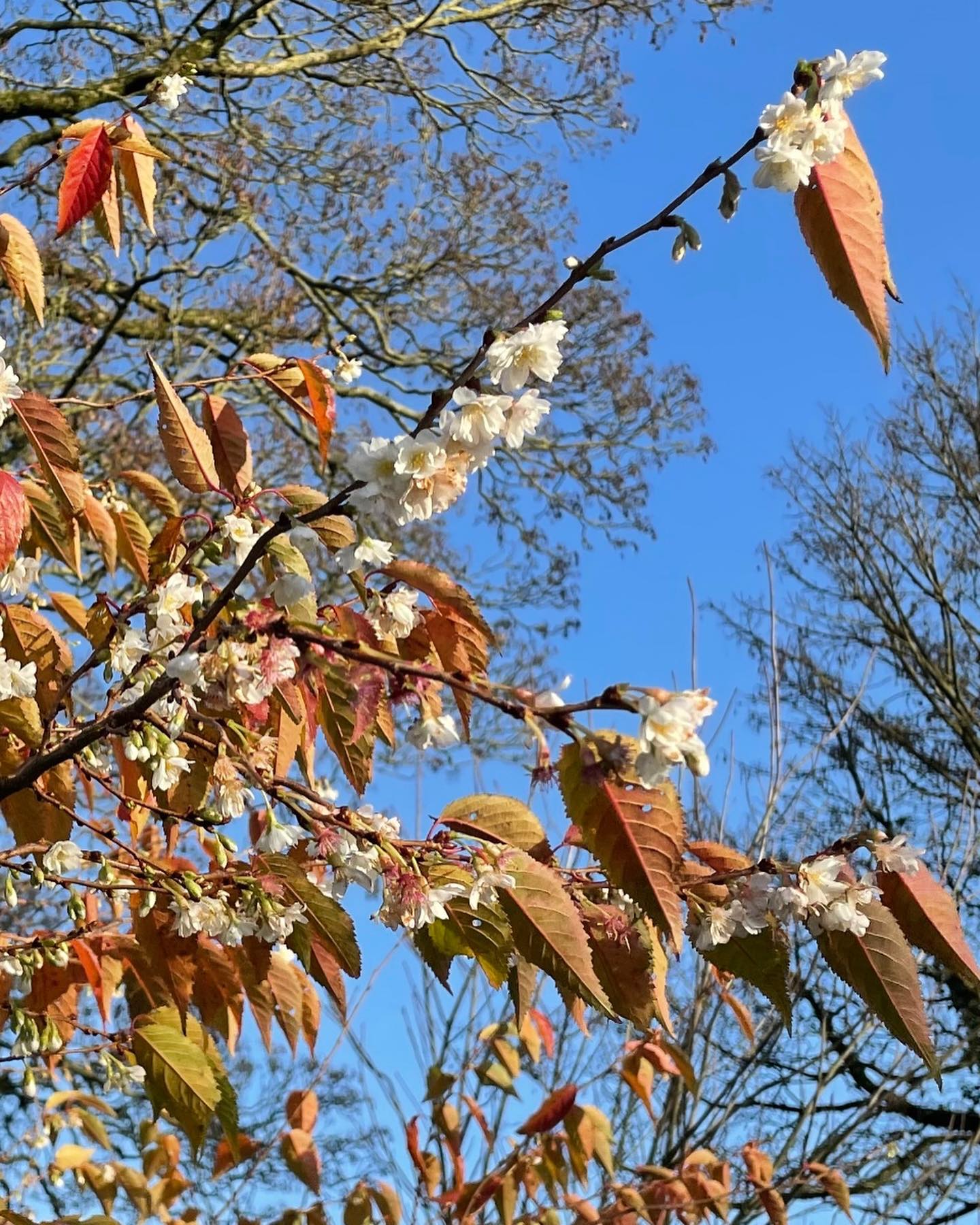
Flowering cherries put on a spectacular show in early spring. Pink or white blossoms cover the branches for a short, beautiful window. It is one of the most loved sights of the season.
Those early flowers feed insects and offer nectar when the first hummingbirds return. In places where migration begins early, this timing is useful.
Most ornamental cherries reach 15 to 30 feet. They need full sun and good drainage. Hardiness varies by variety, but many do well in zones 5 to 8. Choose a type known to thrive locally.
17. Peach (Prunus persica)
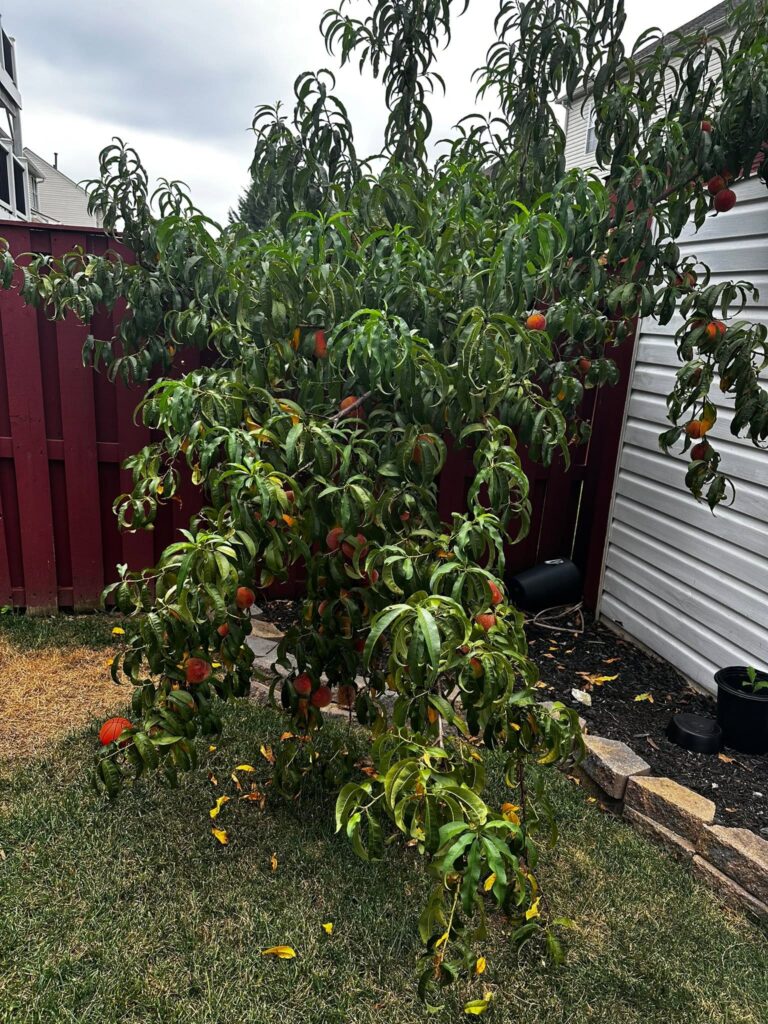
Peach trees bloom very early, often before many other plants have woken up. The pink flowers open in a burst and last for a couple of weeks. A small tree can provide a lot of food.
Hummingbirds visit these blossoms for nectar. You also get fruit later in the year, which makes this a practical choice. Fruit trees reward you twice.
Peaches stay compact, usually 10 to 20 feet tall. They need full sun and well-drained soil in zones 5 to 9. Avoid spraying insecticides during bloom, since poisons harm the very birds you want to help.
18. Rose of Sharon (Hibiscus syriacus)
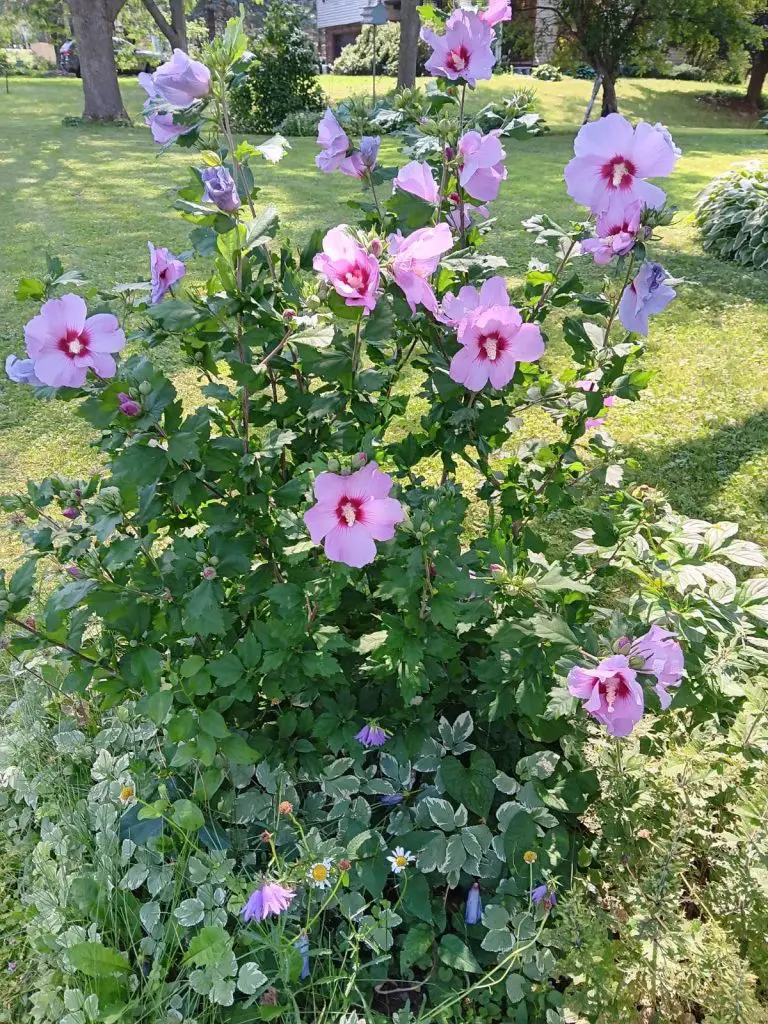
Rose of Sharon is technically a large shrub, but it is often trained as a small tree. It grows about 8 to 12 feet tall. Large, trumpet-shaped flowers appear in summer and continue into early autumn.
That late season is its main value. When spring trees have finished, this plant keeps feeding visitors. The flowers come in pink, purple, white, and blue-violet.
It is easy to grow in full sun and tolerates many soils in zones 5 to 9. It can self-seed freely, so remove unwanted seedlings. A little yearly pruning keeps it tidy.
19. Pineapple Guava (Acca sellowiana)
Pineapple guava is an evergreen large shrub or small tree, usually 10 to 15 feet tall. Its flowers are striking, with fleshy white-and-pink petals and bold red stamens. The petals are even edible.
Hummingbirds visit the blooms in late spring and early summer. The tree also has gray-green leaves that look attractive all year. It makes a good screen or hedge.
It prefers warm, mild climates, roughly zones 8 to 11. Full sun gives the best flowering. Once settled, it handles dry spells fairly well, and it produces tasty fruit.
20. Citrus Trees (Citrus species)
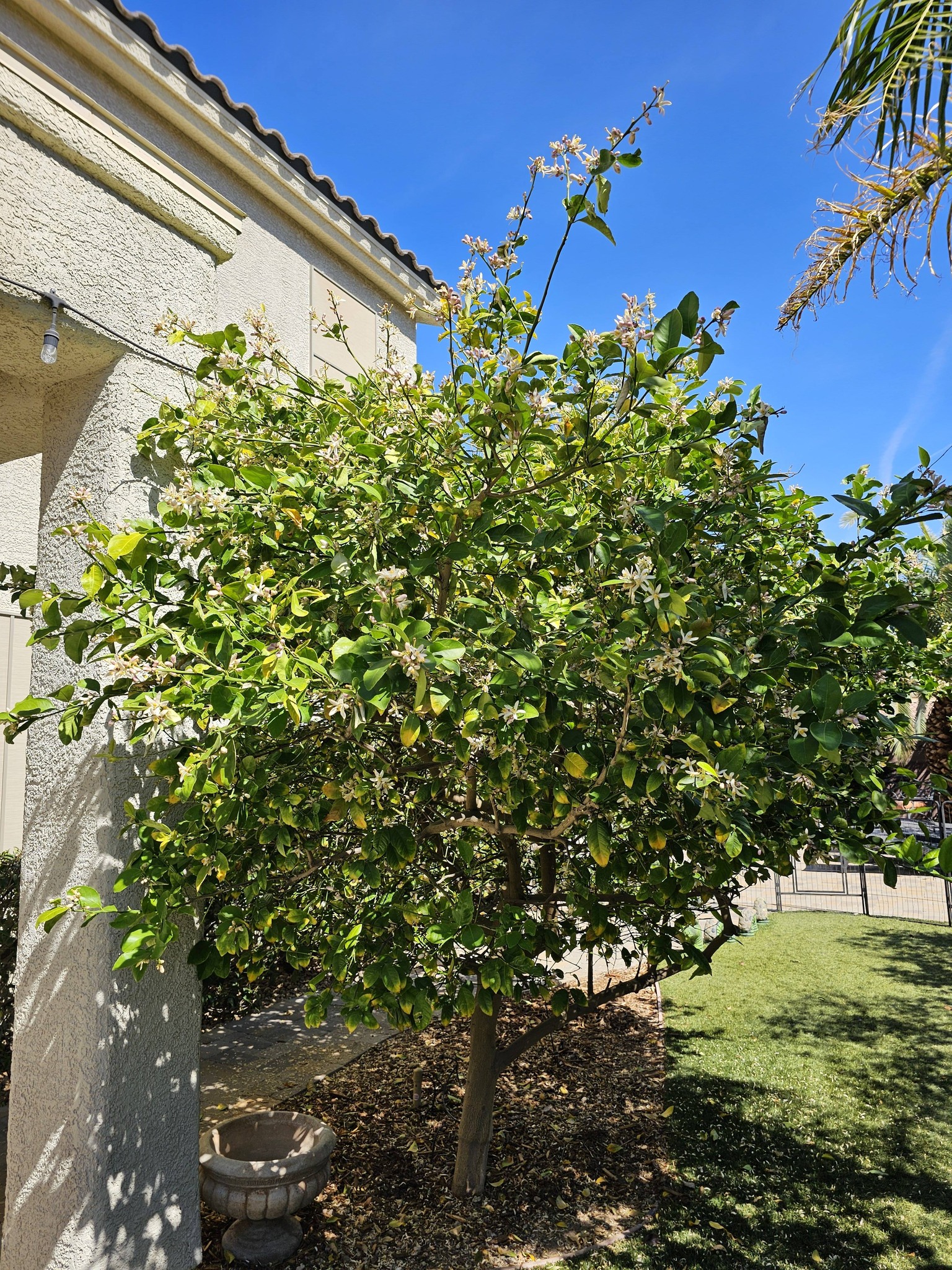
Orange, lemon, and lime trees bloom heavily in spring. The white flowers are fragrant and rich in nectar. Hummingbirds come for the nectar, not the scent.
Bees will crowd around the blossoms too, so expect a lively tree. The insects add to the food supply, and the birds benefit from that activity.
Citrus needs warm weather and full sun. Most types grow in zones 9 to 11, or in containers that move indoors for winter. Skip pesticide sprays, especially during flowering.
Why Trees Matter for Hummingbirds
Hummingbirds burn energy at a remarkable rate. The National Park Service notes that they can drink up to two times their body weight each day. That demand never stops during the season.
A single flower bed cannot meet it. A mature tree can carry hundreds or thousands of blooms at once. That is why a few well-chosen trees can support birds better than a dozen feeders.
Nectar is only half the story. Hummingbirds also eat small insects and spiders for protein. Extension specialists at Oklahoma State University point out that native plants provide nectar and also attract the insects that are a crucial part of the diet. Trees do both jobs well.
Native species deserve special attention. NC State Extension reports that native plants produce a greater amount of nectar than hybrids or exotic species. Whenever you can, start with a native tree for your region.
There is also a conservation reason. The USDA Forest Service warns that hummingbird numbers are declining because of habitat loss, shifting nectar plants, invasive plants, and pesticide use. Planting trees is one practical way to help.
ALSO READ: 35 Flowers That Attract Hummingbirds (And Keep Them Coming Back)
How Hummingbirds Choose Flowers
Hummingbirds find food mostly by sight. The National Park Service explains that they are not attracted by smell, so brightly colored flowers work best. Red, orange, and pink blooms are the strongest signals.
Shape matters too. Tubular and trumpet-shaped flowers hold nectar deep inside. Long bills and tongues reach it easily, while many insects cannot.
Timing is the third factor. The birds arrive in spring, stay through summer, and move on in autumn. A yard with trees that bloom in different months gives them a steady meal from the first arrival to the last departure.
Choosing the Right Trees for Your Yard
Start with your climate. Check your hardiness zone and pick trees that suit it. A tree that struggles will never bloom well enough to feed anyone.
Next, think about bloom timing. Try to combine an early bloomer, such as red maple or redbud, with a summer bloomer, such as sourwood or rose of Sharon. That overlap keeps nectar available for months.
Prefer native trees where possible. They support more insects, need less care, and rarely become a weed problem. Your local extension office can recommend the best natives for your area.
Be careful with invasive species. Mimosa, eucalyptus, and black locust cause trouble in some regions. A quick call to your extension office can save years of regret.
Tips to Make Your Trees Work Harder
Plant in layers. Combine tall trees, small trees, shrubs, and flowers. Extension specialists at the University of Tennessee recommend a layered garden for this reason. Different heights give hummingbirds feeding spots, perches, and cover.
Add water. A gentle mister or a dripping fountain attracts hummingbirds to bathe. The USDA Forest Service notes that hummingbirds will bathe in dripping water, so a small water feature helps.
Avoid pesticides. Insecticides kill the small insects that hummingbirds eat. They can also poison the birds directly. A little tolerance for bugs is part of a healthy habitat.
Keep feeders as a backup, not the main plan. If you use them, mix four parts water to one part white sugar. Skip red dye, and clean the feeder often to prevent mold.
Final Thoughts
Trees are a long-term gift to hummingbirds. They provide nectar, insects, perches, and nesting sites in one package. A single mature tree can support the birds for decades.
My advice is simple. Choose two or three trees from this list that suit your climate, and make sure they bloom at different times. Then give them a few seasons to grow.
I have found that patience is rewarded. The first time a hummingbird visits a tree you planted, the wait feels very small. It is one of gardening’s best moments.
References
- National Park Service. “Pollinators – Hummingbirds.” https://www.nps.gov/articles/hummingbirds.htm
- USDA Forest Service. “Attracting Hummingbirds to Your Garden Using Native Plants.” https://www.fs.usda.gov/wildflowers/pollinators/documents/AttractingHummingbirdsFS-1046April2015.pdf
- USDA Forest Service. “Maintaining and Improving Habitat for Hummingbirds in the Eastern U.S.” https://fs.usda.gov/wildflowers/pollinators/documents/HummingbirdBrochures/HummingbirdGuideEast.pdf
- Purdue University Extension. “Attracting Hummingbirds to Your Yard” (FNR-249-W). https://www.extension.purdue.edu/extmedia/FNR/FNR-249-W.pdf
- NC State Extension. “Plants to Attract Hummingbirds.” https://lee.ces.ncsu.edu/2021/04/plants-to-attract-hummingbirds
- Oklahoma State University Extension. “Hummingbirds Arriving Soon.” https://extension.okstate.edu/articles/2024/hummingbirds_arriving_soon.html
- Penn State Extension, Pollinators. “Attracting Hummingbirds.” https://pollinators.psu.edu/assets/uploads/documents/Attracting-Hummingbirds.pdf

Tim M Dave is a gardening expert with a passion for houseplants, particularly cacti and succulents. With a degree in plant biology from the University of California, Berkeley, he has vast experience in gardening. Over the years, he has cultivated a vast collection of desert plants and learned a great deal about how to grow and care for these unique companions.