35 Types of Cherry Trees (Sweet, Sour, and Flowering Varieties)
Cherry trees are among the most rewarding trees you can plant. Some give you juicy fruit for pies and snacking. Others give you a cloud of pink or white blossom every spring.
Choosing the right one can feel confusing. There are hundreds of cultivars, and each has its own size, climate needs and pollination rules. I have grouped 35 popular cherry trees into three clear categories to make the choice easier.
How to Choose a Cherry Tree
Cherry trees belong to the genus Prunus. That genus also includes plums, peaches, apricots and almonds. Most cherry trees fall into three groups:
- Sweet cherries are eaten fresh. They like mild winters and warm summers.
- Sour (tart) cherries are used for baking, juice and preserves. They are usually hardier and smaller.
- Flowering (ornamental) cherries are grown for blossom. Most produce little or no edible fruit.
Two questions matter most before you buy. First, what is your USDA hardiness zone? Second, does the tree need a pollination partner? A self-fertile tree is a smart choice for a small garden.
Oregon State University Extension advises that if you have room for only one cherry tree, Lapins, Sweetheart, Skeena and Staccato are good choices. All of them ripen several weeks after Bing.
Sweet Cherry Trees (16 Varieties)
Sweet cherries give the largest, juiciest fruit. They need full sun, well-drained soil and good airflow. Rain during ripening can split the fruit, so crack resistance is a useful trait.
1. Bing
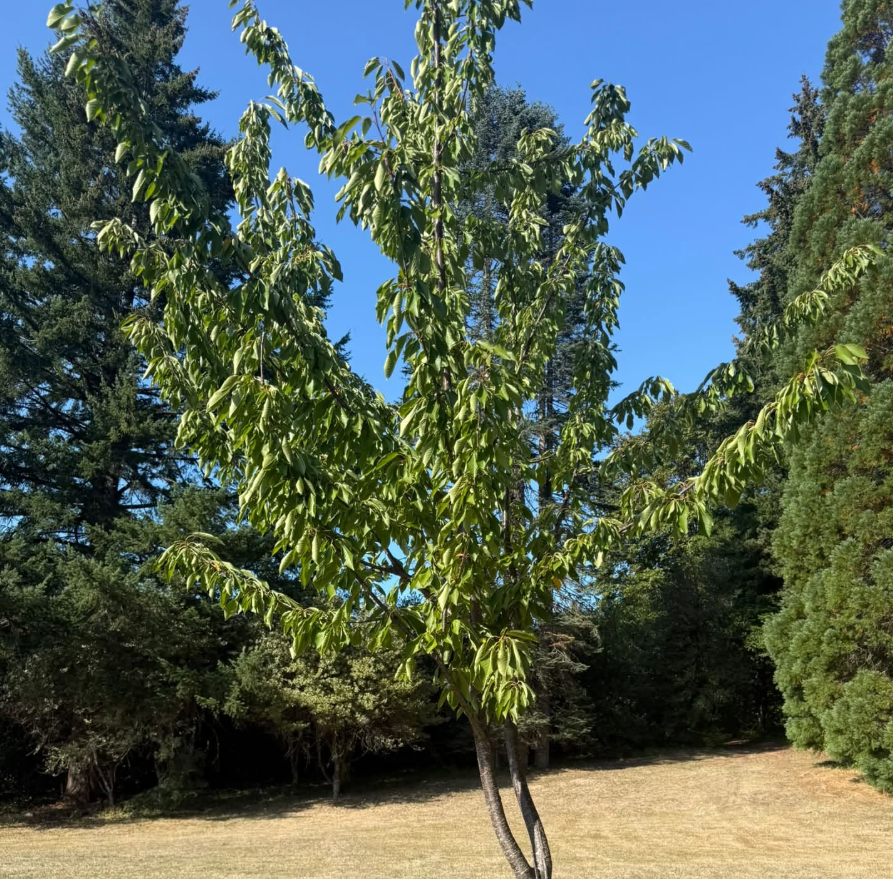
Bing is the classic American sweet cherry. It was raised in Oregon in the 1870s by the Lewelling family and named after a farm foreman, Ah Bing. It remains one of the best-known dark cherries in the world.
The fruit is large, glossy, deep red and firm. The flavour is rich and sweet with a slight tang. It ripens in mid-season, usually in early summer.
Bing is not self-fertile. Lambert and Royal Ann cannot pollinate it, so choose another partner. Ask your nursery for a compatible tree, such as Van or Black Tartarian.
The tree grows best in dry-summer regions and suits zones 5 to 8. It is sensitive to rain cracking, so wet climates can be a challenge. In the right place, Bing is hard to beat.
2. Rainier
Rainier is a yellow cherry with a red blush. It was bred at Washington State University in the 1950s from a cross between Bing and Van. Many people call it the best-tasting sweet cherry.
The flavour is honey-sweet and low in acid. The flesh is pale, juicy and delicate. Birds often pass over the light-coloured fruit, which is a small bonus.
Rainier needs a compatible pollinizer. Bing is commonly used for this job. Confirm the match with your nursery, because bloom time and genetics both matter.
The fruit bruises easily, so handle it gently at harvest. It is best eaten fresh, soon after picking. Rainier suits gardeners who care about eating quality above all.
3. Lapins
Lapins is a self-fertile sweet cherry bred in British Columbia, Canada. It is one of the easiest cherries for a home orchard. You need only one tree to get fruit.
The cherries are large, dark and firm. The taste is sweet and full. Oregon State University lists Lapins among the varieties with some resistance to rain cracking.
It ripens in mid to late season. That is a few weeks after Bing, which spreads the harvest. The tree is vigorous and crops well once established.
Lapins is a strong pick for wetter climates and small yards. I often suggest it to first-time growers. It removes two of the biggest worries: pollination and split fruit.
4. Stella
Stella is a historic self-fertile variety, released in Canada in 1968. It is often described as the first widely grown self-fertile sweet cherry. That changed home cherry growing for good.
The fruit is large, dark red and sweet. It has a good balance of sugar and acid. The tree flowers reliably and crops heavily once mature.
Stella grows tall and vigorous, so it needs space. A compact form called Compact Stella is available for smaller gardens. It stays neater and is easier to net and harvest.
Do not assume Stella will pollinate Bing, because the two are genetically closely related. Always check a compatibility chart. On its own, Stella will still set a good crop.
ALSO READ: 20 Common Cherry Tree Problems and Diseases: How to Spot, Treat and Prevent Them
5. Sweetheart
Sweetheart is a late-season self-fertile cherry from the Canadian breeding programme at Summerland. It was released in the 1990s. The fruit is bright red, firm and shaped a little like a heart.
Late ripening is its biggest strength. It usually ripens well after Bing. Planted with an early variety, it extends your picking season by weeks.
The flavour is sweet and clean, with good size. Oregon State University also notes some resistance to rain cracking. That helps in wet summers.
Sweetheart is a dependable tree for home use. I would recommend it to anyone who wants flavour and a long picking season from one self-fertile tree.
6. Skeena
Skeena is another Canadian introduction from the Summerland programme. It produces large, mahogany-dark cherries with firm flesh. The taste is sweet and rich.
The tree is self-fertile and reliably productive. Oregon State University lists it among the good choices for one-tree yards. It ripens several weeks after Bing.
Growers like Skeena for its size and firmness. The fruit holds up well after picking. It also looks impressive in a bowl.
Give the tree full sun and good drainage. Thin heavy crops to keep the fruit large. Skeena is a fine choice when you want bigger fruit without a second tree.
7. Black Tartarian
Black Tartarian is an old heirloom that reached England from Russia in the 1790s. It has stayed popular for over two centuries. That says a lot about its flavour.
The fruit is purple-black and medium in size. It is very sweet and juicy. The flesh is softer than modern varieties, so it is best eaten fresh, not shipped.
It ripens early to mid-season. The tree needs a pollination partner, and Bing and Van are common suggestions. It also works as a pollinizer for other sweet cherries.
Black Tartarian suits gardeners who value old-fashioned taste over shipping toughness. It is a good tree for a heritage orchard.
8. Van
Van is a reliable, firm, dark red cherry bred in Canada in the 1930s. For decades it has been used as a pollinizer for Bing and other sweet cherries. That makes it a handy second tree.
The fruit is medium to large, with a glossy finish. It handles picking and short storage well. The flavour is sweet and slightly tangy.
Van is not self-fertile. Pair it with another compatible variety that blooms at the same time. The tree performs well in cooler sweet cherry regions.
It is also the parent of several better-known cherries, including Rainier. If you want a workhorse variety, Van deserves a place on your list.
9. Chelan
Chelan is a very early sweet cherry from Washington State University. Oregon State University describes it as the earliest ripening major cultivar for Pacific Northwest growers. That is a real advantage for anyone who craves the first cherries of the year.
The fruit is very firm and ships well. It has moderate resistance to rain cracking. It also resists powdery mildew, a common fungal problem.
The tree has moderate to low vigour. The fruit can be small if the crop is heavy. Thin the branches early to improve size.
For home growers, Chelan means cherries weeks before other varieties. It pairs well with later types for a long season.
10. Benton
Benton is a self-fertile, rain-tolerant sweet cherry from Washington State University. Oregon State University lists it as self-fertile. It also names Benton among the varieties with better resistance to cracking.
The fruit is dark, large and firm. It ripens in mid to late season. The flavour is sweet and satisfying.
Because Benton sets fruit alone, it is easy to manage. It also suits regions where summer rain often splits cherries. That makes it useful in the Pacific Northwest and similar climates.
I see Benton as a low-stress choice for beginners. It asks for little and gives a lot.
11. Royal Ann (Napoleon)
Royal Ann is a classic yellow-red cherry of old European origin. In Europe it is often called Napoleon. The pale, firm fruit is famous as the base for canned and maraschino cherries.
The flavour is sweet with a hint of tartness. The flesh is crisp and juicy. It is good fresh, but it really shines in preserving.
The tree needs a pollinizer. Royal Ann cannot pollinate Bing or Lambert, so choose another partner. Van is a frequent suggestion.
It grows best in mild, dry-summer climates. Rain can cause cracking. Royal Ann is a smart pick for cooks and home canners.
12. Regina
Regina is a late-season German variety known for strong crack resistance. It was bred in Germany, where cherries often ripen in damp weather. That background shows in its toughness.
The cherries are large, dark and firm. The flavour is sweet and rich. It ripens long after most sweet cherries.
Late ripening extends the season. It also means you may be picking when most other cherries are gone. The tree is vigorous and productive.
Regina is not self-fertile. Choose a partner with overlapping bloom. It suits growers in rainy areas who have struggled with split fruit.
13. Staccato
Staccato is a late-ripening self-fertile cherry from the Canadian Summerland programme. Oregon State University notes that it ripens several weeks after Bing. It is also listed among the one-tree choices.
The fruit is large, firm and dark red. It stores well and tastes sweet with good balance. Late ripening also helps the fruit avoid some early-summer pests.
The tree blooms late. That can help it miss spring frosts, which damage many cherry blossoms. It is a valuable trait in colder sites.
I consider Staccato a top pick for frost-prone gardens. It combines late bloom, good flavour and self-fertility.
14. Selah
Selah is a newer self-fertile sweet cherry from Washington State University. Oregon State University confirms that it is self-fertile. That puts it in the same easy-care group as Lapins and Skeena.
The fruit is large and dark, with a sweet flavour. The tree is productive and has a manageable habit. It is one of several newer releases from Pacific Northwest programmes.
Selah is not as widely known as Bing or Lapins. Some nurseries may not stock it yet. It is worth asking, especially if you want a modern variety.
Treat it like other self-fertile sweet cherries. Give it sun, drainage and light annual pruning. It is a useful, easy-care option for home orchards.
15. Early Robin
Early Robin is a high-quality blush cherry. Oregon State University says it has the same sub-acid flavour as Rainier. Fruit size and appearance are similar, but it ripens 10 to 14 days earlier.
That earlier ripening is its main appeal. You get a gourmet yellow-red cherry before the main season begins. The flesh is sweet, juicy and mild.
The same source suggests pairing it with Cass to improve productivity. Not every pollinizer suits every tree, so check with your nursery. Good pollination makes a big difference.
Blush cherries bruise and pit more easily than dark ones. Pick carefully and eat quickly. Early Robin is a rewarding tree for the careful grower.
16. Lambert
Lambert is an old Oregon variety, introduced in the 1840s. It has large, dark red, heart-shaped fruit that ripens late. For generations it was a commercial staple in the western United States.
The flavour is firm, sweet and rich. The flesh holds up well. It is good for eating fresh and for cooking.
Lambert needs a pollination partner. It is closely related to Bing and Royal Ann, so those trees will not work. Choose a different variety that blooms at the same time.
The tree flowers late, which may help it avoid some frost damage. It is a fine choice if you want a heritage cherry with a long record.
Sour (Tart) Cherry Trees (7 Varieties)
Sour cherries are smaller and hardier than sweet ones. The University of Minnesota Extension says tart cherry trees reach only about 15 feet tall, and a few varieties only about 8 feet. That makes them ideal for small gardens.
Most are self-fertile, so one tree is often enough. The fruit is best cooked, though some types are pleasant fresh.
17. Montmorency
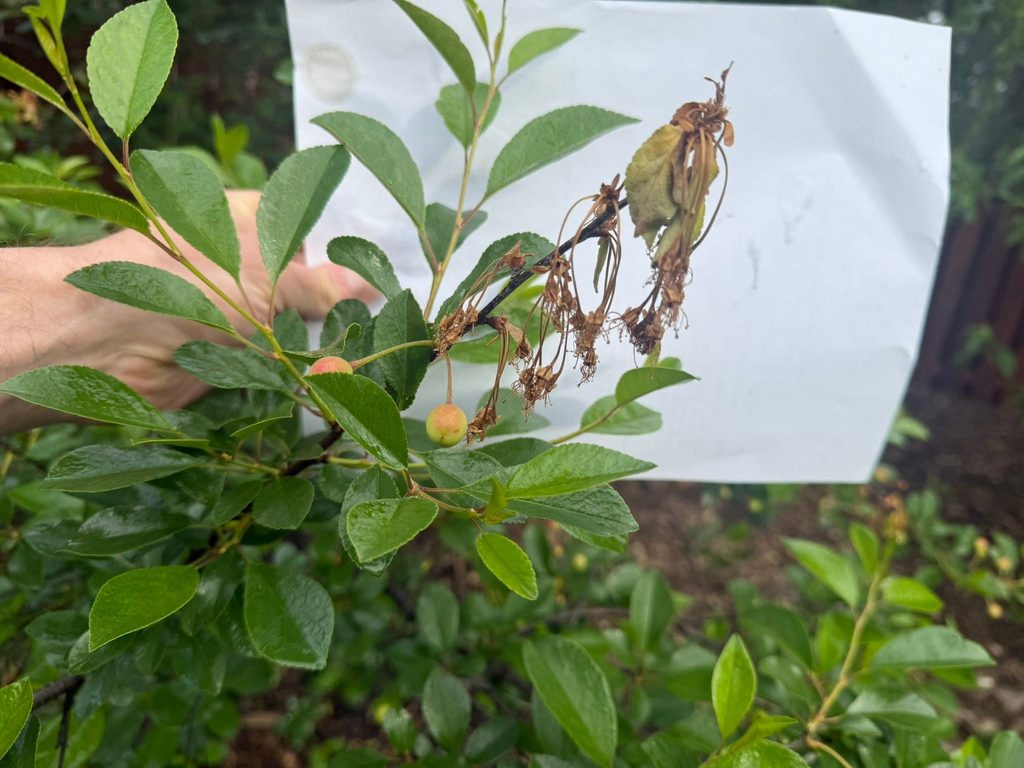
Montmorency is the king of tart cherries. It is a very old French variety, roughly 400 years old. It still dominates commercial production in the United States.
Michigan State University reports that Michigan grows about 75 percent of the nation’s tart cherry crop. Montmorency is the dominant variety there. The bright red fruit is the standard for cherry pie.
The tree is self-fertile and dependable. It suits zones 4 to 7. It grows well in sandy, well-drained soils and handles cold winters.
If you bake, this is the classic choice. The fruit freezes and dries well too. One tree can produce a surprising amount.
18. North Star
North Star is a compact, very hardy tart cherry developed at the University of Minnesota. It usually stays around 8 to 10 feet tall. That makes harvesting easy, even without a ladder.
The fruit is medium red with red juice. It is tart but pleasant. It makes excellent jams, pies and preserves.
The tree is self-fertile and thrives in cold zones. The University of Minnesota advises gardeners there to choose varieties hardy to zone 4 or zone 3. North Star fits that need well.
I would pick it for small yards and northern climates. It is also a good choice for large containers.
19. Meteor
Meteor is another Minnesota-bred sour cherry. It grows a little larger than North Star, often to about 12 feet. It has a strong, upright habit.
The fruit is large and light red, with a bright, tangy flavour. It is very good for pies and freezing. The juice is lighter in colour than Morello or North Star.
Meteor is hardy in zone 4, and it can handle colder sites with some shelter. It is self-fertile. It also blooms late, which helps in frosty springs.
Choose Meteor when you want bigger fruit on a still-compact tree. It is a sensible workhorse for cold gardens.
20. Balaton
Balaton is a Hungarian sweet-tart cherry, now grown widely in the United States. Michigan State University helped bring it to American growers. The fruit is dark red, plump and juicy.
It is less sharp than Montmorency. Many people enjoy it fresh as well as cooked. That flexibility makes it popular with home gardeners.
The tree is productive and hardy. It is self-fertile and reliable in most tart cherry regions. The flesh is firm, and the juice is deep red.
Balaton is a good option if you want a tart cherry that is pleasant straight from the tree. It also makes a rich jam.
21. Morello
Morello is an old European sour cherry with very dark fruit and juice. It is prized for cooking, brandy and liqueurs. The flavour is intense and acidic.
The fruit becomes rich and complex when cooked with sugar. It is not usually eaten raw. Bakers love its deep colour and strong taste.
The tree is self-fertile and fairly tolerant of shade. In Britain, gardeners often train it against a wall. Even a north-facing wall can work.
This makes Morello a great choice for fan training in tight spaces. A trained tree is easy to net against birds.
22. Mesabi
Mesabi is a University of Minnesota cherry with sweet-tart flavour. The University of Minnesota Extension describes its fruit as sweet-tart. It sits between classic sour and sweet types.
The fruit is dark red and large for a sour cherry. It is pleasant fresh and excellent for baking. It also freezes well.
The tree is hardy to cold zones and fairly compact. It is self-fertile, so one tree is usually enough. It suits northern gardens well.
I like Mesabi as a middle ground for cold-climate gardeners. You get real cherry flavour where sweet cherries struggle.
23. Evans (Bali)
Evans is a very hardy sour cherry that came from Edmonton, Canada. It is often sold under the name Bali. It can survive some of the coldest conditions of any cherry.
The tree forms a bushy shape around 10 to 15 feet tall. It suckers a little, so give it room. It is self-fertile and reliable in prairie climates.
The fruit is bright red and tart. It is best for jams, pies and juice. It ripens in mid-summer and crops heavily in good years.
Evans is a top choice when winter cold rules out other cherries. It proves that cherries can grow in tough places.
Flowering (Ornamental) Cherry Trees (12 Varieties)
Flowering cherries are grown for beauty, not fruit. They offer spectacular spring blossom, and some give autumn colour too.
Cherry blossom viewing has a long history. The U.S. National Arboretum notes that mountainside cherry viewing trips are recorded in Japan as early as 720 CE.
24. Yoshino
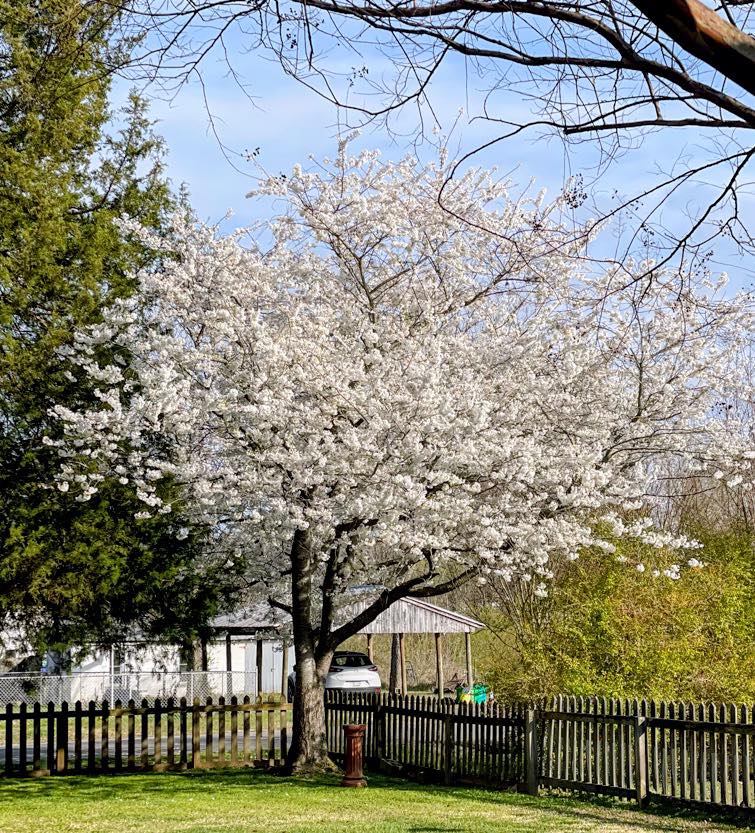
Yoshino is the famous cherry of Washington, D.C. The National Park Service says it makes up about 70 percent of the cherry trees in the park. It was first noticed in Tokyo around 1872.
The flowers are white with a faint pink tinge. They smell lightly of almonds. The U.S. National Arboretum says more than 1,400 Yoshino trees line the Tidal Basin.
It grows up to 50 feet and is hardy to zone 6, according to the Park Service. The crown is broad and upright, with young branchlets that descend.
Expect a modest lifespan of about 40 years, as USDA researchers note. Plant it where it has room to spread. Blossom peaks in early spring, before the leaves open.
25. Kwanzan
Kwanzan is a bold, double-flowered pink cherry. It is one of the most popular ornamental cherries in home gardens. The Park Service estimates it is about 13 percent of the trees in the park.
The flowers are large and ruffled, like small carnations. They open a couple of weeks after Yoshino, together with the young coppery leaves. That gives a richer, denser display.
It forms a vase shape and usually grows to about 25 feet. Fruit is rare. Autumn leaves often turn orange or bronze.
Choose Kwanzan for maximum colour impact. It is tough, adaptable and easy to find at garden centres.
26. Akebono
Akebono is a soft pink Yoshino hybrid. The name means “dawn” in Japanese, which suits its pale, glowing flowers. The Park Service says it makes up about 3 percent of the park’s trees.
It is hardy to zone 6. The tree is smaller and rounder than Yoshino. That makes it easier to fit into an ordinary garden.
The colour is more delicate than Kwanzan. The blossoms are mostly single and appear in a generous flush. They open slightly earlier than the classic Yoshino.
I find Akebono easier on the eye in small spaces. It is a gentle, elegant choice for those who prefer soft colour.
27. Okame
Okame is a very early-blooming hybrid. Its deep pink flowers can open in late winter, when little else in the garden is awake. It is a cross between two small Asian cherry species.
The Park Service lists it as hardy to zone 5. It is a compact tree, usually 20 to 25 feet tall. The shape is rounded and tidy.
Bees and early insects love the flowers. Autumn leaves turn orange or red, which adds a second season of interest. It is a good street or garden tree.
Okame is ideal for cheerful early colour and smaller spaces. Late frosts can nip the flowers, so choose a sheltered spot.
28. Weeping Higan Cherry
Weeping Higan (Prunus subhirtella var. pendula) has long, graceful, arching branches. In spring it drips with pale pink flowers. It is one of the most romantic trees in the cherry family.
The Park Service reports it makes up about 2.4 percent of the park’s cherry trees. It is a favourite specimen tree in lawns and near water. Reflections make the effect even better.
The tree needs space and full sun. It does best in well-drained soil. Prune lightly and only to remove dead or crossing branches.
It brings a soft, calm look to any garden. Many gardeners use it as a focal point. Give it a plain background so the branches show clearly.
29. Sargent Cherry
Sargent cherry (Prunus sargentii) is one of the hardiest ornamental cherries. The National Park Service lists it as hardy to zone 4. That makes it a good choice for colder regions.
It is a large, upright tree with rosy pink single flowers. The bark is glossy reddish-brown and adds winter interest. Autumn colour is a strong orange and crimson.
Sargent forms a broad crown, so give it room. It suits larger properties and parks. Young trees grow quickly.
It is a great option for cold regions and larger gardens. It gives blossom in spring and colour in autumn from a single tree.
30. Fugenzo
Fugenzo is a double-flowered pink cherry with a broad, spreading crown. The National Park Service says it grows up to 20 feet high and 20 feet wide. The branches often grow horizontally and intercross.
That habit gives it a wide, flat-topped look. The flowers are full and layered, with many petals. They hang in clusters along the branches.
It is hardy to zone 6. Young leaves often show a bronze tone that contrasts with the pink flowers. Autumn colour is usually mild.
Fugenzo is ideal for wide spaces where you want a canopy of blossom. It also casts a pleasant, dappled shade in summer.
31. Autumnalis
Autumnalis is a double-blooming cherry. It flowers lightly in autumn and again in full in spring. That extends the season of interest well beyond the usual few weeks.
The blossoms are semi-double and white to pale pink. The autumn show is subtle. Even so, it is a lovely surprise on a mild day.
The tree is small to medium in size and has a spreading habit. It fits gardens where space is limited. Give it sun and well-drained soil.
Autumnalis suits gardeners who want two seasons of flowers from a single tree. It is a charming, unusual choice.
32. Amanogawa
Amanogawa is a narrow, columnar cherry. It grows tall and slim, often to about 20 feet but only a few feet wide. The shape is like a green and pink pillar.
The flowers are pale pink, semi-double and lightly fragrant. They cluster along the upright branches in spring. In autumn, the leaves turn shades of yellow and orange.
It is a good tree for tight spaces, driveways and small courtyards. It can also form a striking line along a path. Do not prune hard, as it may lose its shape.
Amanogawa gives you vertical blossom without taking up room. It is one of the best cherries for modern small gardens.
33. Snow Fountains
Snow Fountains is a compact weeping cherry with pure white flowers. It usually reaches about 15 feet tall and wide. The branches cascade to the ground like a fountain.
In spring, it is covered with snowy blooms. Green leaves follow, then yellow autumn colour. Small dark fruits may appear, but they are not the point of this tree.
It is easy to place in small gardens. It also looks striking in a large pot when young. Full sun and good drainage keep it healthy.
Choose it for a neat, elegant weeping shape. It works beautifully near a patio, a gate or a pond.
34. Shirotae
Shirotae, also called Mt. Fuji, is a white, semi-double cherry. It has a wide, spreading habit with layered, horizontal branches. The shape is pleasing even in winter.
The blossoms are large, fragrant and clean white. New leaves are pale green, which gives a fresh look in spring. The flowers often hang in loose clusters.
It grows to around 20 feet. Give it plenty of width and full sun. It is generally tough and easy to care for.
Shirotae is perfect for a bright white display in a wider garden bed or lawn. It pairs well with pink cherries for contrast.
35. Ukon
Ukon is one of the most unusual flowering cherries. Its blossoms are pale yellow-green, sometimes with a touch of pink. The name means “yellow” in Japanese.
The flowers are semi-double and appear in mid-spring. They stand out among the usual pinks and whites. In autumn, the leaves turn bronze and purple.
It grows as a broad, spreading tree of moderate size. It likes sun and well-drained soil. It is hardy in many temperate regions.
Ukon is a great pick if you want something different. It draws attention every spring, and visitors always ask what it is.
Quick Tips for Growing Any Cherry Tree
- Plant in full sun. Cherries need at least 6 to 8 hours of direct light.
- Choose well-drained soil. Wet roots invite disease.
- Check pollination needs. Self-fertile varieties save space.
- Match the rootstock to your space. Oregon State University notes that dwarfing rootstocks are now available to home gardeners.
- Prune in late winter or summer. This lowers disease risk.
Final Thoughts
There is a cherry tree for almost every garden. Sweet types reward warm, dry climates. Sour types handle the cold. Flowering types bring beauty when winter ends.
If you have limited space, start with a self-fertile variety such as Lapins, Stella or North Star. If you want blossom above all, Yoshino or Kwanzan are hard to beat.
Whatever you choose, check your hardiness zone first. Then plant in the right spot and enjoy the show. I believe a cherry tree is one of the best long-term investments a gardener can make.
References
- Oregon State University Extension Service. Sweet cherry cultivars for the fresh market (PNW 604). https://extension.oregonstate.edu/catalog/pnw-604-sweet-cherry-cultivars-fresh-market
- University of Minnesota Extension. Growing stone fruits in the home garden. https://extension.umn.edu/gardening-minnesota/growing-stone-fruits-home-garden
- Michigan State University Extension. Don’t miss out on Michigan cherries. https://www.canr.msu.edu/news/dont_miss_out_on_michigan_cherries
- U.S. National Park Service. Types of Trees – Cherry Blossom Festival. https://www.nps.gov/subjects/cherryblossom/types-of-trees.htm
- U.S. National Arboretum (USDA). Stop 29. Prunus ×yedoensis (Yoshino Cherry). https://www.usna.usda.gov/visit/beyond-the-tidal-basin/prunus-yedoensis/
- USDA Agricultural Research Service. Cherry Blossoms—Restoring a National Treasure. https://agresearchmag.ars.usda.gov/1999/apr/cher

Tim M Dave is a gardening expert with a passion for houseplants, particularly cacti and succulents. With a degree in plant biology from the University of California, Berkeley, he has vast experience in gardening. Over the years, he has cultivated a vast collection of desert plants and learned a great deal about how to grow and care for these unique companions.