15 Types of Serviceberry Trees (With Pictures, And Care Tips)
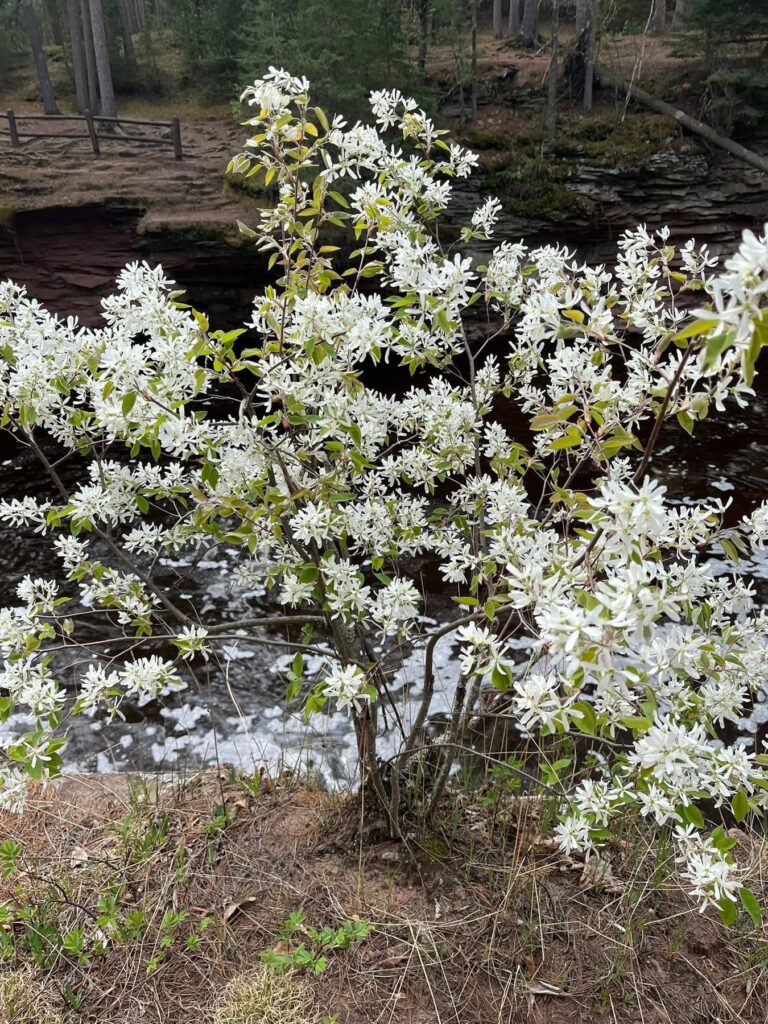
I still remember the first time I saw a serviceberry in full bloom. It looked like a soft snowfall had landed on a single tree in early spring, weeks before anything else in the yard had even woken up. That moment is why I wanted to write this guide.
Serviceberry, scientifically known as Amelanchier, is a genus in the rose family (Rosaceae). It is closely related to apples and pears. There are over 30 recognized species native to North America, according to Iowa State University Extension. A few more grow naturally in Europe, Asia, and North Africa.
You may also know this plant by other names. Shadbush, shadblow, juneberry, sarvis, and saskatoon are all common regional terms for the same genus. The names change by location, but the tree stays remarkably consistent in its charm.
This article walks through 15 types of serviceberry trees, covering their native range, size, fruit, and best garden use.
1. Downy Serviceberry (Amelanchier arborea)
Downy serviceberry is often called common serviceberry, and for good reason. It is one of the most widespread species across the eastern United States.
This tree typically reaches 15 to 25 feet tall, though it can grow as tall as 60 feet in ideal forest conditions, according to the Lady Bird Johnson Wildflower Center.
Its young leaves are covered in soft, woolly hairs, which is where the “downy” name comes from. These hairs disappear as the leaves mature.
I find this species especially useful in shaded woodland gardens. It tolerates partial shade better than several of its relatives, though flowering is best in fuller sun.
2. Shadblow Serviceberry (Amelanchier canadensis)
Also called Canadian serviceberry, this species is the most common one found across Maryland’s Mountain, Piedmont, and Coastal Plain regions, per University of Maryland Extension.
It grows as a multi-stemmed shrub that spreads through suckering, meaning new stems rise directly from the root system.
This adaptability is a real strength. It handles clay soils and sandy soils equally well, which makes it forgiving for less experienced gardeners.
If you live near a coastline or a low, wet spot in your yard, shadblow serviceberry is likely to thrive there.
ALSO READ: 13 Common Shadblow Serviceberry Problems: Diagnosis, Causes, and Solutions
3. Allegheny Serviceberry (Amelanchier laevis)
Allegheny serviceberry stands out for its smooth, hairless new leaves, unlike the fuzzy foliage of downy serviceberry.
The new leaves often emerge with a bronze or purplish tint, which slowly turns green as the season progresses. It is a lovely detail I always point out to first-time growers.
This species is one of three native to Pennsylvania, alongside downy and shadblow serviceberry, according to Penn State Extension.
Its fall color tends to be strong, often shifting into shades of orange and red that rival maples.
4. Saskatoon Serviceberry (Amelanchier alnifolia)
Saskatoon serviceberry is the western cousin of the group, native to much of northwestern North America.
Wisconsin Horticulture Extension notes this species is a multi-stemmed shrub or tree that grows to about 10 feet tall and spreads through underground rhizomes.
It is hardy across USDA zones 3 through 9, and select cultivars like ‘Altaglow’ can survive even colder zone 1 conditions.
Saskatoons are grown commercially in Canada and the north-central United States for their fruit, which many consider the best-tasting of the entire genus.
5. Apple Serviceberry (Amelanchier x grandiflora)
This one is a hybrid, a natural cross between downy serviceberry and Allegheny serviceberry.
The most popular cultivar, ‘Autumn Brilliance,’ is prized for two things: heavier flowering than either parent species, and vivid orange-to-red autumn color.
Apple serviceberry has become a favorite substitute for the invasive Bradford pear, offering similar early spring beauty without the ecological downsides.
I recommend this variety often because it combines the best traits of two native species into a single, reliable tree.
6. Running Serviceberry (Amelanchier stolonifera)
Running serviceberry is a smaller shrub, typically staying between 4 and 6 feet tall and wide.
Its defining trait is right in the name. It spreads through underground stolons, forming dense thickets over time.
This makes it a smart pick for erosion control on slopes or for naturalizing a wild corner of the property.
Because it stays low and colonizes ground quickly, it works well as a native alternative to invasive groundcover shrubs.
ALSO READ: 30 Best Shrubs That Grow in Shade (Bushes Identification, With Pictures)
7. Roundleaf Serviceberry (Amelanchier sanguinea)
Sometimes called red-twigged shadbush, roundleaf serviceberry grows across eastern and central North America.
It ranges from a 3 to 10 foot shrub to occasionally a small tree reaching 20 feet, and it often spreads by suckers to form thickets.
The species name “sanguinea” refers to blood-red twig coloring, which adds a subtle but attractive winter interest once the leaves drop.
I appreciate this one for naturalized hedgerows where a bit of untamed texture is welcome.
8. Utah Serviceberry (Amelanchier utahensis)
As the name suggests, Utah serviceberry is native to the western United States, particularly around the Colorado-New Mexico-Wyoming Rockies and the Utah front ranges.
It stays compact, reaching a maximum of about 10 feet in height, and has a spreading growth habit.
This species is notably drought-tolerant and fire-tolerant, since it can resprout after wildfire disturbance in its native dry, rocky habitats.
If you garden in an arid climate, Utah serviceberry is one of the more forgiving native shrub options available.
9. Mountain Serviceberry (Amelanchier bartramiana)
Mountain serviceberry, also called oblong-fruit serviceberry, grows in cooler northern regions, including parts of the Appalachians and Canada.
Its flowers appear singly or in small clusters of up to four blossoms, which is fewer than most other Amelanchier species.
The fruit ripens to a deep purple, pear-shaped pome, and it is fully edible raw or cooked.
This is a smaller, hardier species suited to cold, rocky, or boggy sites where other serviceberries may struggle.
ALSO READ: 60 Types of Berries: Every Variety Explained With Pictures
10. Low Serviceberry (Amelanchier humilis)
Low serviceberry is a smaller, thicket-forming shrub, generally staying under 6 feet tall.
It spreads through rhizomes and often grows in colonies, which makes it useful for stabilizing soil on slopes or open, disturbed ground.
This species is one of the parent plants behind the hybrid Amelanchier x spicata, discussed next on this list.
Its compact size makes it a practical choice for smaller residential landscapes that still want a native pollinator plant.
11. Dwarf Serviceberry (Amelanchier x spicata)
This naturally occurring hybrid results from a cross between saskatoon serviceberry and low serviceberry.
Also called low juneberry or thicket shadbush, it produces small clusters of white flowers in spring and edible pome fruit.
Historically, it was even nicknamed “pigeon berry,” since wild pigeons were known to feed heavily on its fruit.
It tends to form dense colonies, making it another strong candidate for naturalized plantings or wildlife gardens.
12. Coastal Serviceberry (Amelanchier obovalis)
Coastal serviceberry is native to the eastern seaboard of the United States, particularly sandy coastal plain habitats.
It is recognized by North Carolina State University Extension’s official plant toolbox as one of the core Amelanchier species found in the region.
This species tends to stay shrubby, adapting well to sandy, well-drained soils near dunes and coastal woodlands.
Gardeners near the coast often choose it specifically because so few flowering natives tolerate salt-influenced, sandy conditions this well.
13. Lamarck Serviceberry (Amelanchier x lamarckii)
Lamarck serviceberry is another naturally occurring hybrid, widely planted as an ornamental tree across parts of Europe and North America.
It is especially popular in the United Kingdom and continental Europe, where it is valued for coppery-bronze new growth that matures to green.
This species produces abundant white flowers followed by dark purple fruit, and its fall foliage turns brilliant shades of red and orange.
Landscape designers often choose it specifically for multi-season interest in a single, compact tree form.
14. Western Serviceberry (Amelanchier pallida)
Also called pale serviceberry, this species is native specifically to California and Arizona.
It typically grows as a shrub or small tree reaching about 10 feet tall, with attractive blue-green foliage that sets it apart visually from eastern species.
Western serviceberry is often found growing along mountain streams, sometimes at elevations up to 11,000 feet above sea level.
Its conservation status is currently listed as secure by NatureServe, meaning wild populations remain stable.
15. European Serviceberry (Amelanchier ovalis)
Rounding out this list is the one true European native in the group, sometimes called snowy mespilus.
Unlike most species on this list, Amelanchier ovalis originates in Europe rather than North America, though the genus name itself was actually taken from an old Savoy regional name for this exact species.
It grows as a small, hardy shrub with the same signature white spring flowers and dark, edible fruit found throughout the genus.
I like including this one because it shows just how far this plant family’s charm has traveled, connecting old-world orchards to modern American gardens.
ALSO READ: 13 Common Autumn Brilliance Serviceberry Tree Problems: What You Needs to Know Before It’s Too Late
Quick Comparison at a Glance
Here is a simplified snapshot of what we covered:
- Tallest growers: downy serviceberry, apple serviceberry, Allegheny serviceberry
- Best fruit flavor: saskatoon serviceberry
- Most drought-tolerant: Utah serviceberry
- Best for wet or coastal soil: shadblow serviceberry, coastal serviceberry
- Smallest, thicket-forming types: running serviceberry, low serviceberry, dwarf serviceberry
- Best ornamental fall color: apple serviceberry, Lamarck serviceberry
How to Choose the Right Serviceberry for Your Yard
Start with your climate zone. Most serviceberries handle USDA zones 3 through 9, but always confirm the specific species for your region.
Next, think about soil moisture. Some species, like shadblow serviceberry, tolerate wet clay. Others, like Utah serviceberry, prefer dry, rocky ground.
Consider your space too. A running or low serviceberry fits a small yard, while downy or apple serviceberry needs more room to reach its full height.
Finally, decide if fruit matters to you. If you want to eat the berries, saskatoon and Allegheny types are usually considered the tastiest.
Why Serviceberry Trees Deserve More Attention
I love this plant so much for many reasons. Serviceberries bloom earlier than almost any other flowering tree. Their white blossoms often appear before dogwoods, sometimes right as the ground thaws.
That early bloom time is actually where the name “serviceberry” comes from. Early American settlers noticed the flowers opened around the same time the ground softened enough to dig graves after winter, allowing burial services to resume.
The tree also supports wildlife in a big way. North Carolina State University Extension reports that around 120 species of Lepidoptera, meaning caterpillars that become butterflies or moths, use serviceberry as a host plant.
Birds love the fruit too. So do people. The berries taste similar to blueberries and can be eaten raw, baked, or turned into jam.
Common Questions About Serviceberry Trees
Are all serviceberry types edible? Yes, nearly all Amelanchier species produce edible, blueberry-like fruit, though flavor quality varies by species and cultivar.
How fast do serviceberry trees grow? Most species grow at a moderate rate, generally adding one to two feet of height per year under good conditions.
Do serviceberry trees need full sun? They perform best in full sun to partial shade. Deep shade reduces flowering, though the plant can still survive there.
Can serviceberry species hybridize naturally? Yes, and it happens often. This is part of why identifying exact species in the wild can be genuinely tricky, even for experts.
Final Thoughts
Serviceberry trees offer something rare: early spring flowers, summer fruit, and vivid fall color, all from one low-maintenance native plant. Whichever type you choose, you are adding real ecological value to your landscape, not just visual appeal.
I hope this guide helps you pick the right species for your climate and garden goals. Once you spot that first white bloom next spring, I think you will understand why so many gardeners fall for this tree.
References
- North Carolina State University Extension Gardener Plant Toolbox — Amelanchier. https://plants.ces.ncsu.edu/plants/amelanchier/
- University of Maryland Extension — Serviceberry: An Early-Flowering Maryland Native Tree. https://extension.umd.edu/resource/serviceberry-early-flowering-maryland-native-tree
- Iowa State University Extension and Outreach — Serviceberries. https://yardandgarden.extension.iastate.edu/how-to/serviceberries
- University of Wisconsin-Madison Division of Extension — Serviceberry, Amelanchier spp. https://hort.extension.wisc.edu/articles/serviceberry-amelanchier-spp/
- Penn State Extension — Serviceberry in the Garden and in the Kitchen. https://extension.psu.edu/serviceberry-in-the-garden-and-in-the-kitchen
- Maryland Department of Natural Resources — Native Plant Profile: Serviceberry. https://news.maryland.gov/dnr/2025/01/02/native-plant-profile-serviceberry/
- University of Kentucky Cooperative Extension — Juneberries (CCD-CP-11). https://publications.mgcafe.uky.edu/ccd-cp-11

Tim M Dave is a gardening expert with a passion for houseplants, particularly cacti and succulents. With a degree in plant biology from the University of California, Berkeley, he has vast experience in gardening. Over the years, he has cultivated a vast collection of desert plants and learned a great deal about how to grow and care for these unique companions.