25 Flowers That Symbolize Death (With Pictures, and Meanings)
Flowers have always sat close to grief. Long before sympathy cards, people laid blooms on graves and tucked them beside the dead.
If you are searching for flowers that symbolize death, you probably want one of three things. You may be choosing flowers for a funeral. You may be writing a story. Or you may simply be curious.
This guide covers all three. It explains 25 flowers linked to death, mourning, and remembrance, with the myths and customs behind each one.
Quick answer: The flowers most strongly tied to death are the chrysanthemum (Europe), the white lily (Christian funerals), the red poppy (war remembrance), the marigold (Mexico), and the red spider lily (Japan).
Why Flowers Became Symbols of Death
Meaning depends on place. The same flower can mean joy in one country and grief in another. N.C. Cooperative Extension notes that mums are festive in the United States. In parts of Europe, they mark remembrance and sit on graves.
The Victorians turned this habit into a system called floriography, the “language of flowers.” The CSUN Special Collections holds guides printed in Boston in 1852 and in London in 1884.
Those books gave each plant a fixed message. Some were gentle. Others were blunt enough to name death outright.
Because meanings shift, ask the family before you send flowers. When in doubt, choose white blooms. They carry respect in most cultures.
25 Flowers That Symbolize Death
1. Chrysanthemum: The Grave Flower of Europe
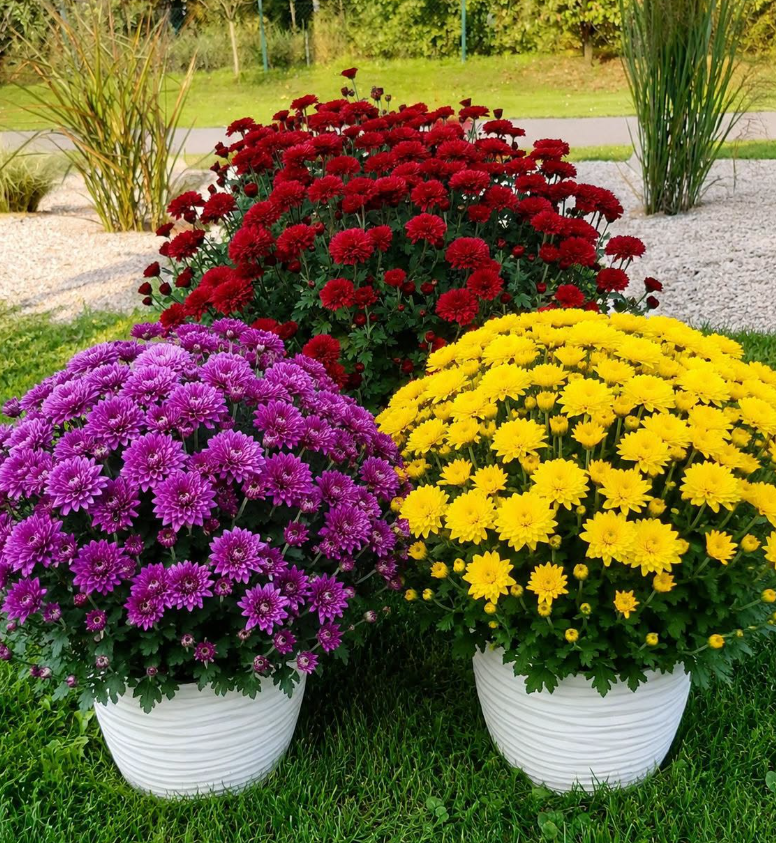
The chrysanthemum is the best-known death flower in much of Europe. In Austria and Belgium, people use it almost only as a memorial flower. Families place mums on graves, especially around All Saints’ Day on 1 November.
A guest there would never bring mums to a dinner party. The gesture would feel like carrying a funeral into the room.
Asia tells a different story. According to N.C. Cooperative Extension, mums began in China more than 2,500 years ago. Japan’s imperial seal shows a chrysanthemum with sixteen petals.
Mums reached Europe only in the 1600s. They soon became tied to cemeteries. I find it striking that one plant can honor an emperor in one country and a grave in another.
2. White Lily: Purity and the Restored Soul
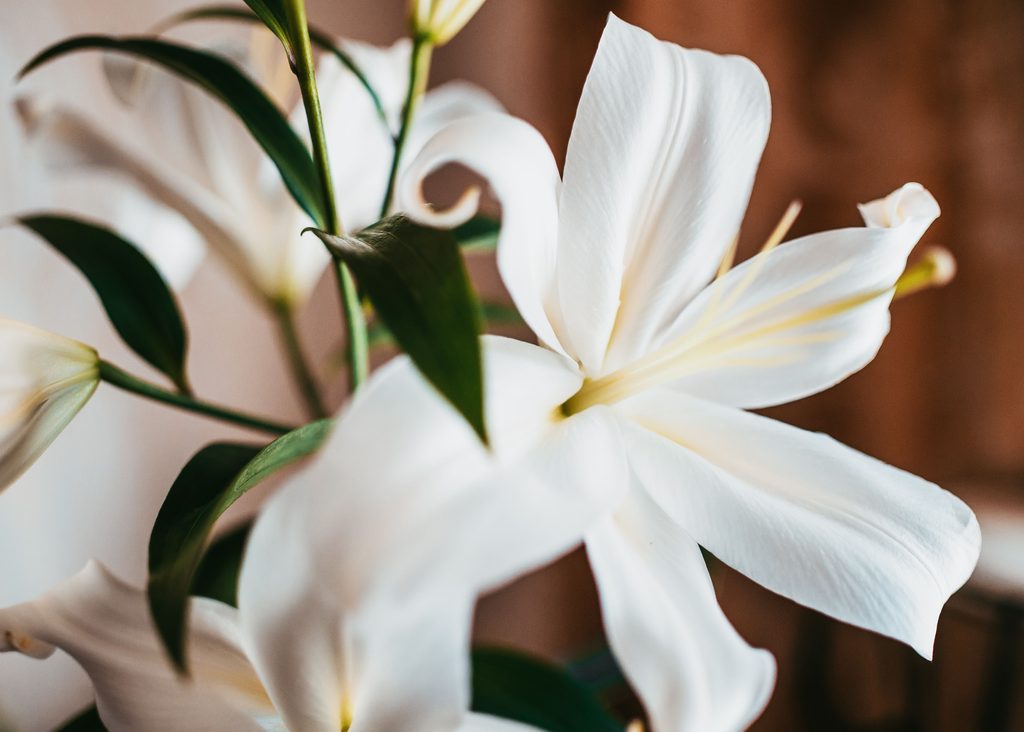
The white lily is the classic funeral flower in the West. It stands for purity and for the innocence of the soul after death. Christian art links it to the Virgin Mary, which explains its place in churches.
Its scent is strong. Many people say it smells like a funeral home. Some families find this comforting. Others find it heavy, so a softer arrangement may suit them better.
There is one serious warning. UC Davis veterinarians report that true lilies (the Lilium group) are lethal to cats. A cat that eats the toxin can face kidney failure within 36 to 72 hours without treatment.
Easter, Stargazer, and Asiatic lilies are the most hazardous. If the grieving family has a cat, choose another flower.
3. Calla Lily: A Symbol of Immortality
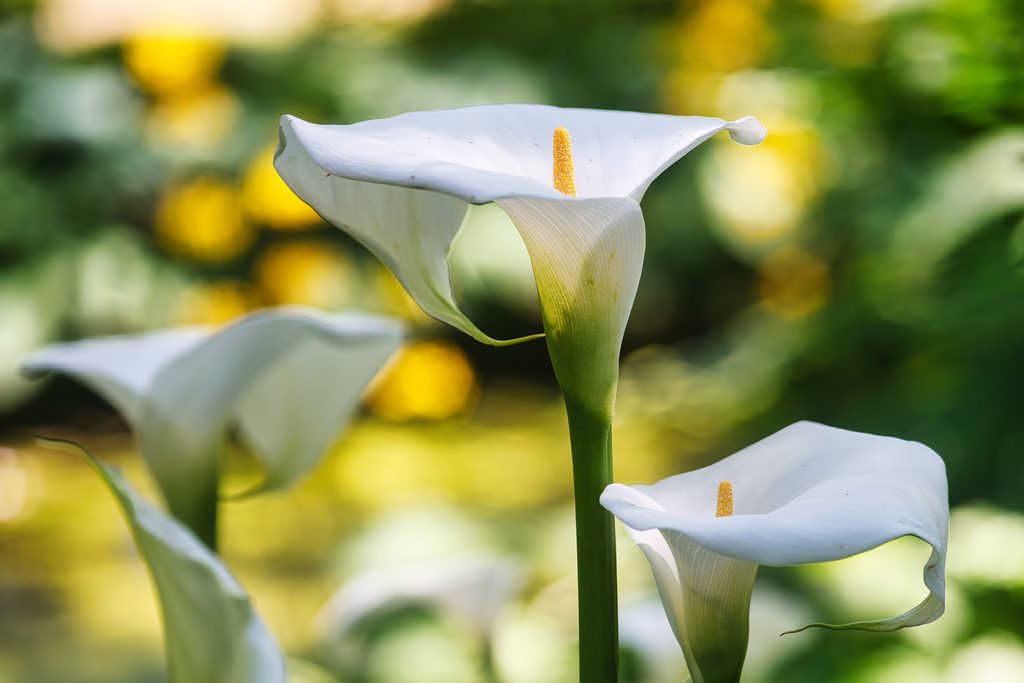
The calla lily has a smooth, trumpet-shaped bloom. Florists link it with immortality. Its clean lines also make it popular for quiet, modern memorials.
The name can confuse people. A calla is not a true lily. It belongs to a different plant family.
That difference matters for pets. UC Davis notes that calla and peace lilies are not in the Lilium group, so they are not fatal to cats. They can still cause harm if chewed, so keep them out of reach.
For mourners who want elegance without heavy perfume, I think the calla is a thoughtful choice.
4. Red Poppy: The Flower of the Fallen
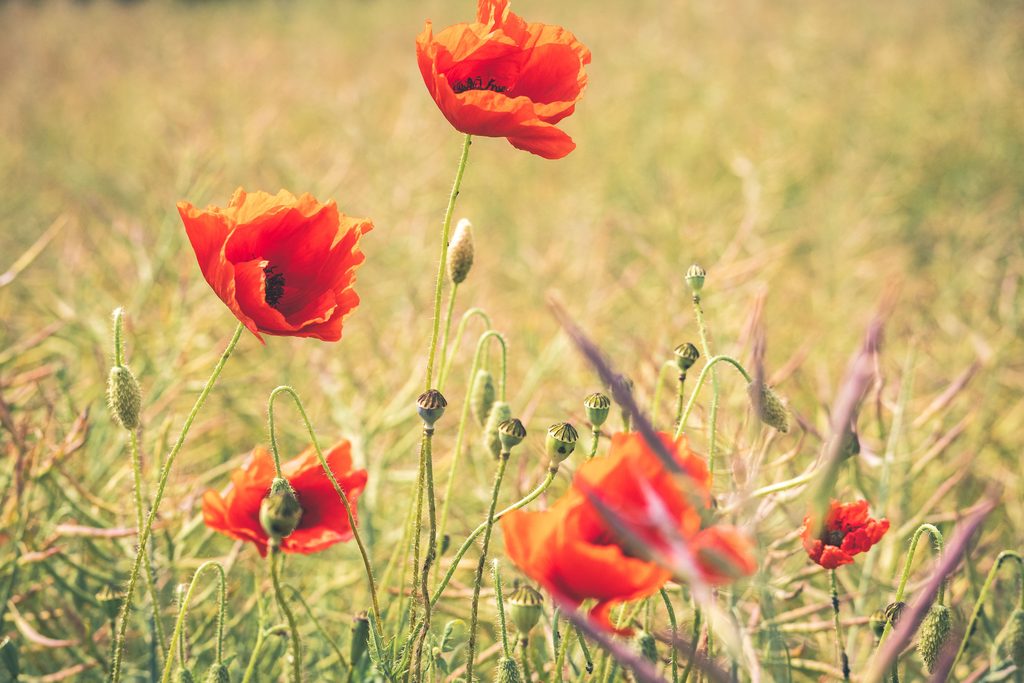
The red poppy is the world’s best-known flower of war remembrance. It grew in the churned soil of World War I battlefields in France and Belgium. In 1915, the sight inspired Canadian doctor John McCrae to write “In Flanders Fields.”
The tradition spread fast. In 1918, American teacher Moina Michael promised to wear a poppy for fallen soldiers. The first Poppy Day in the United Kingdom was held on 11 November 1921, according to the U.S. Congressional Record.
Today, the CSU Stanislaus library guide explains, the United Kingdom, Commonwealth countries, and France wear poppies on 11 November. In the United States, National Poppy Day falls on the Friday before Memorial Day.
The numbers show its reach. In 2004, 535 red poppies were donated to the U.S. Congress, one for every member. The flower also has ancient ties to sleep and death in Greek myth.
ALSO READ: 25 Flowers That Symbolize Strength (With Pictures, and Meanings)
5. Marigold: The Flower of the Dead in Mexico
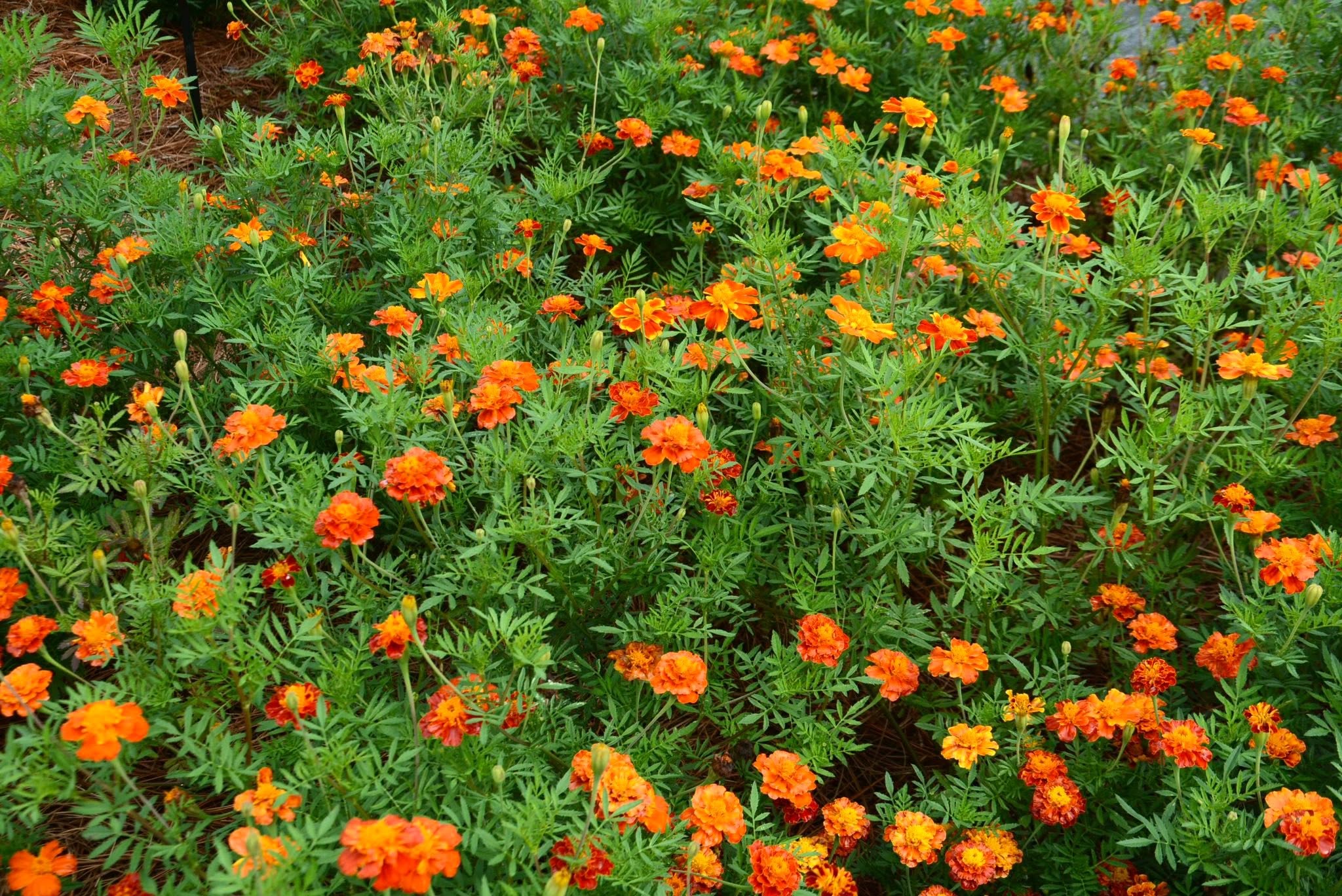
In Mexico, the marigold guides the dead home. It is the main flower of Day of the Dead on 1 and 2 November. Its Nahuatl name, cempasúchil, means “twenty flower.”
Families scatter the petals in a path from the front door to the altar. Our Lady of the Lake University explains that the bright color and strong scent are believed to attract the souls of the dead.
California State Parks adds a deeper history. The Aztecs treated marigolds as death flowers, and Maya descendants in Guatemala left petal trails from the graveyard to their homes.
Here death is not a threat. It is a visit. I find that deeply moving.
6. Asphodel: The Meadow of the Dead
In Greek myth, the asphodel grows across the meadows of the underworld. Homer places the shades of the dead there, wandering among its pale flowers. The plant became a sign of the afterlife itself.
The ancient Greeks planted asphodel near graves. They believed it was a favorite food of the dead. It was also sacred to Persephone, queen of the underworld.
Victorian guidebooks kept the idea alive. One gave asphodel a message of regret that follows a person to the grave. It is a quiet, sad flower, and I find its pale stars oddly gentle.
7. Daffodil (Narcissus): Vanity and the Underworld
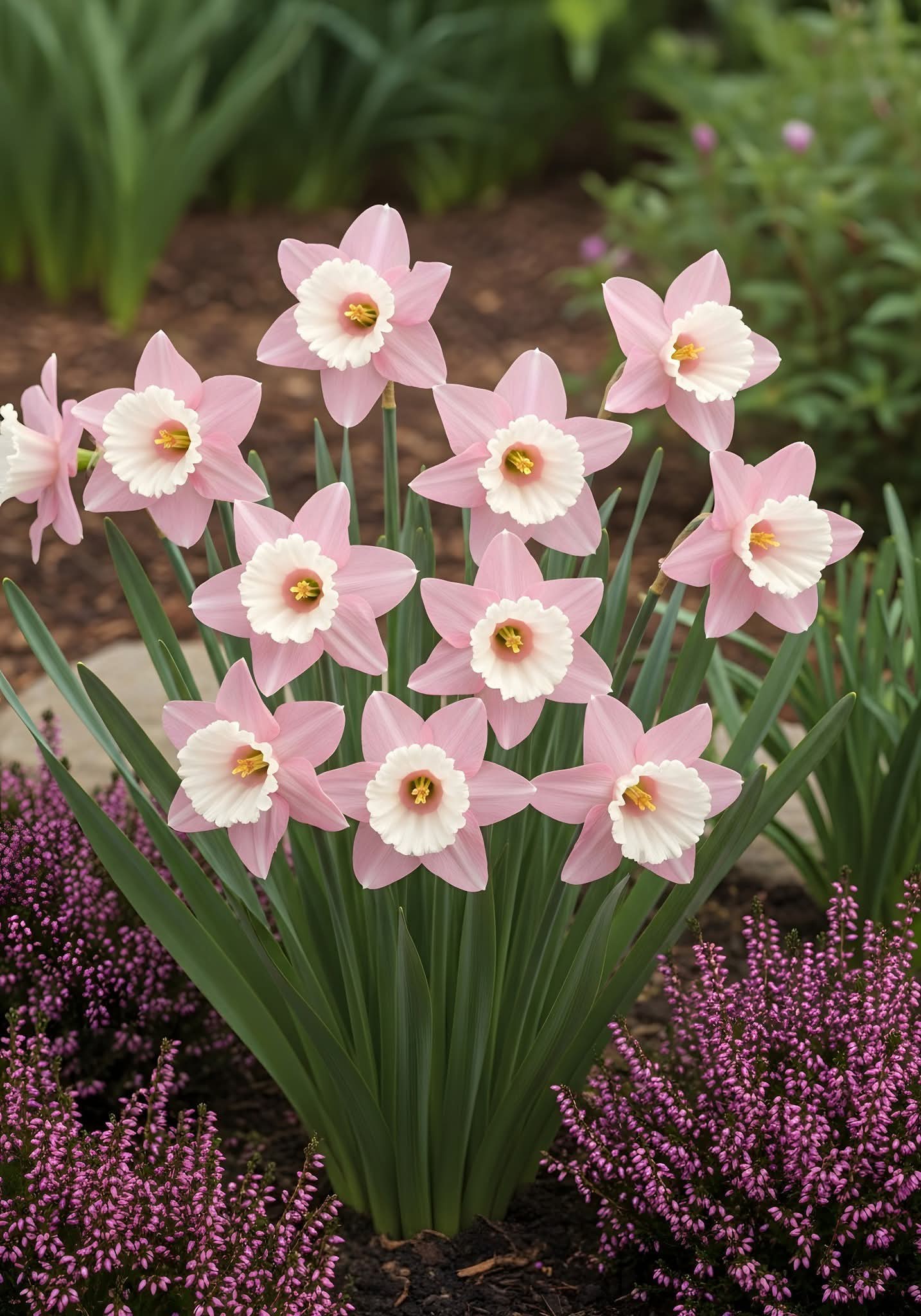
The daffodil belongs to the genus Narcissus, named for a young man in Greek myth. He fell in love with his own reflection and drowned. A flower rose where he died.
Another myth ties the bloom to Hades. Persephone was picking narcissus flowers when the god of the underworld seized her. For that reason, the flower has long carried a shadow of death.
Today most people see spring and hope. Yet the older meaning lingers. In the United Kingdom, the charity Marie Curie uses the daffodil to remember loved ones who have died.
8. Red Spider Lily: Japan’s Flower of the Other Shore
In Japan, the red spider lily is called higanbana. It blooms around the autumn equinox, during Higan, the week when families visit graves and honor their ancestors.
The flower often grows beside cemeteries and rice fields. Its bulbs are poisonous. Folk belief says this kept animals away from the graves, and the flower became linked with death and separation.
Chinese Buddhist tales add another layer. They describe a flower that blooms on the road between the living and the dead. I think this is the most haunting flower on the list. Its thin, curled petals look like red flames.
9. White Rose: Reverence Without Romance
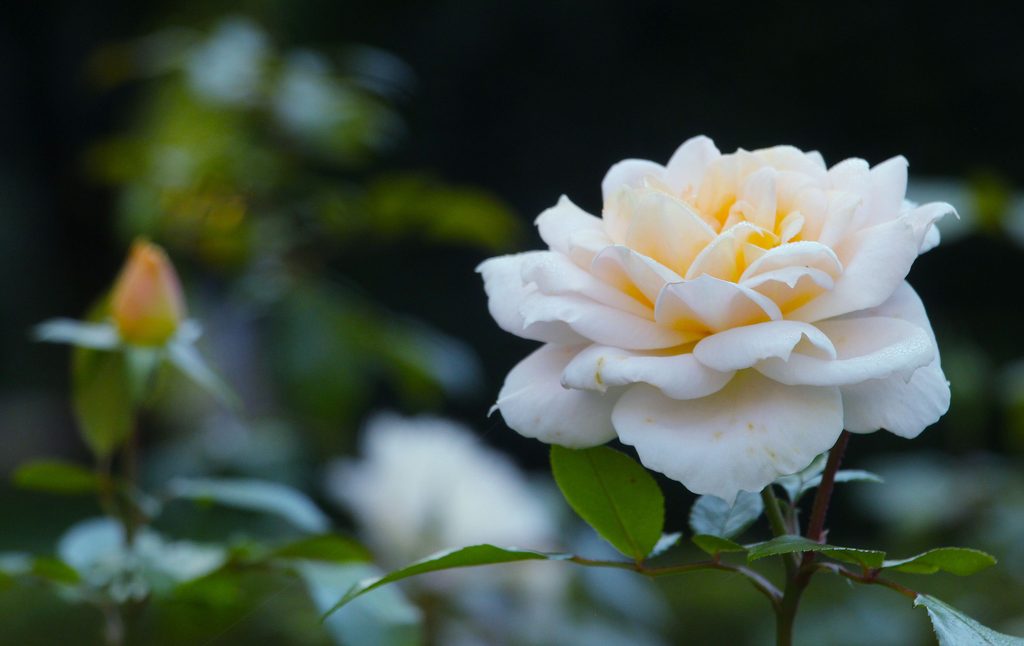
Roses usually say love. The white rose says something quieter. It stands for purity, youth, and respect, so it appears often at funerals, especially for young people.
Many mourners choose it because it feels gentle. It honors the person without the passion of a red rose. It also blends well with greenery in wreaths and sprays.
Color matters across cultures. In many Western countries, white means peace. In several Asian cultures, white is the color of mourning itself. Either way, the white rose fits.
10. Carnation: Remembrance and a Mother’s Memory
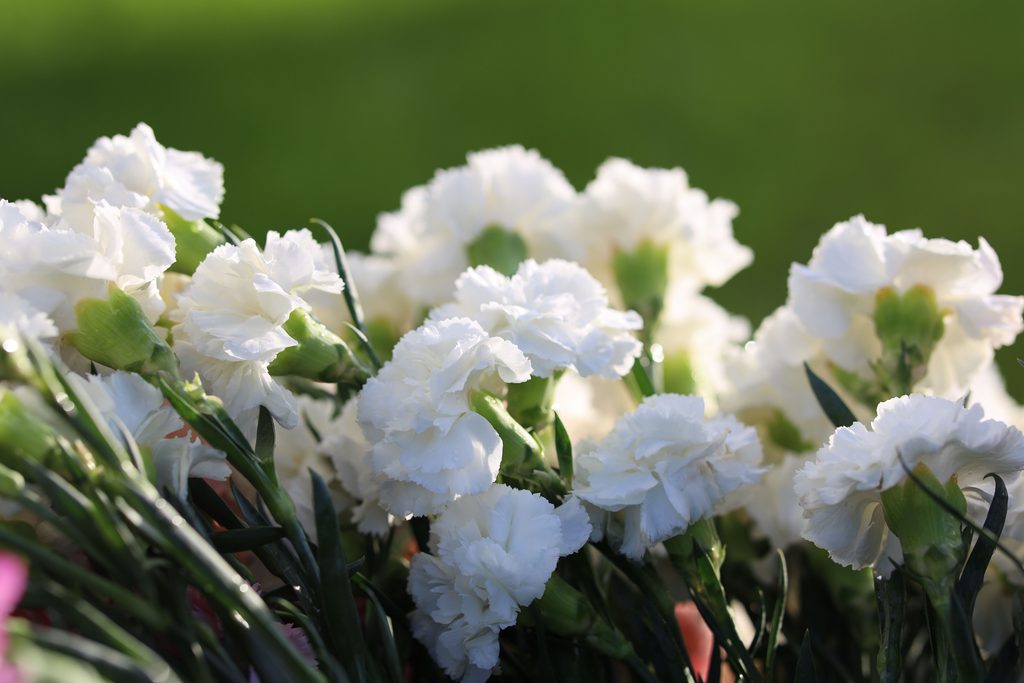
The white carnation stands for pure love and remembrance. It is a funeral staple because it is affordable and lasts well in a vase or a wreath.
Its best-known story comes from the United States. In 1908, Anna Jarvis held a memorial for her late mother and gave out white carnations. That event helped start Mother’s Day. White carnations came to honor mothers who have died.
Christian legend adds a sacred note. It says carnations first sprang up where Mary’s tears fell during the crucifixion. Red carnations, by contrast, usually speak of admiration, not grief.
ALSO READ: 25 Flowers That Symbolize Hope and Courage (With Ways to Use Them)
11. Gladiolus: The Sword Lily
The name gladiolus comes from the Latin word gladius, meaning sword. Its tall, pointed spikes stand upright in funeral sprays. To many mourners, the shape suggests a heart pierced by loss.
Folk tales add a fighting spirit. One story says gladiators wore the flower for protection from death. Whether true or not, the idea stuck.
In practice, florists love gladioli for their height. They add strong vertical lines to standing arrangements and casket sprays.
12. Hyacinth: A Flower Born from Grief
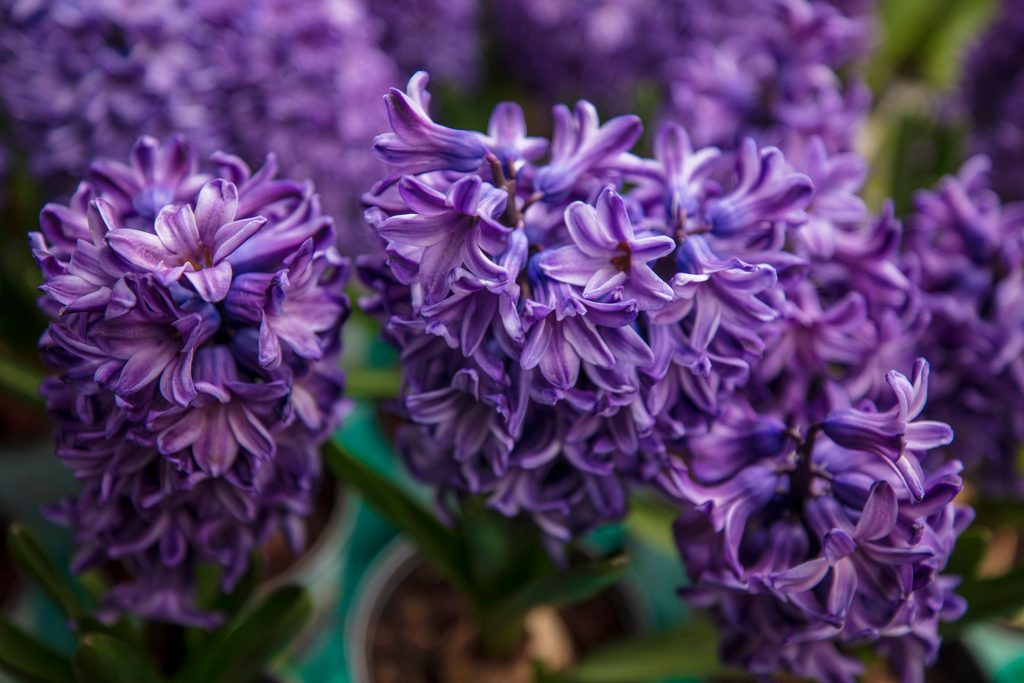
The hyacinth comes from a Greek tragedy. Hyacinthus, a beautiful youth loved by the god Apollo, was struck by a discus and died. Apollo wept, and a flower rose from the spilled blood.
In Sparta, a festival called the Hyacinthia honored him. It began with mourning and ended in celebration. Grief and joy shared one festival, as they often do in life.
In the Victorian language of flowers, the purple hyacinth meant sorrow and a plea for forgiveness. Its heavy scent still suits quiet, reflective spaces.
13. Anemone: The Wind Flower and Adonis
The anemone is tied to the death of Adonis. In Greek myth, a boar killed the young hunter, and red anemones grew where his blood fell. Aphrodite and Persephone both loved him.
The name means “wind flower.” Its delicate petals close at dusk and fall easily, which makes the bloom a symbol of short life.
Christian art borrowed the image. Red anemones sometimes appear beneath the cross, their petals standing for Christ’s blood. Victorian guides, meanwhile, linked the flower with feeling forsaken.
14. Forget-Me-Not: A Promise of Memory
The name says it all. The forget-me-not is a tiny blue flower that stands for true love and lasting memory. Mourners place it on graves and in memorial gardens.
A medieval legend gives it a tragic start. A knight picked the flowers for his lady by a river, fell in, and threw them to her as he drowned. His last words gave the plant its name.
Today, the flower has a modern meaning too. In the United Kingdom, the Alzheimer’s Society uses it as its emblem. The message is the same: please do not forget.
15. Lily of the Valley: Sweet and Dangerous
This small white bell stands for sweetness and humility. Victorian guides linked it with the return of happiness. It appears in bridal bouquets and in funeral sprays alike.
Its beauty hides a danger. Every part of the plant is poisonous and can harm the heart if eaten. That mix of charm and risk makes it a fitting flower for life’s fragile edge.
In France, people give it on 1 May for luck. So it is a flower of life as much as of death. I like that contrast.
16. Pansy: “Think of Me”

The word pansy comes from the French pensée, meaning thought. The flower asks one thing of the living: remember me.
Victorian dictionaries used it that way. The CSUN collection shows a bouquet of sweet pea and pansy that carried a farewell message. The sender was leaving and asked to be remembered.
Shakespeare used the same idea. In Hamlet, Ophelia says, “There is pansies, that’s for thoughts.” Pansies are also hardy in cold weather, so they often decorate graves in autumn and winter.
17. Rosemary: The Herb of Remembrance
Rosemary is an evergreen herb with small blue flowers. Its leaves stay green all year, so people linked it with faithful memory. Ophelia says it directly: “There’s rosemary, that’s for remembrance.”
In older European funerals, mourners carried sprigs and tossed them into the grave. The strong scent was also thought to protect the living.
The custom survives today. In Australia and New Zealand, people wear rosemary on ANZAC Day to remember fallen soldiers. A simple sprig can say more than a large bouquet.
18. Orchid: Grace and Lasting Respect
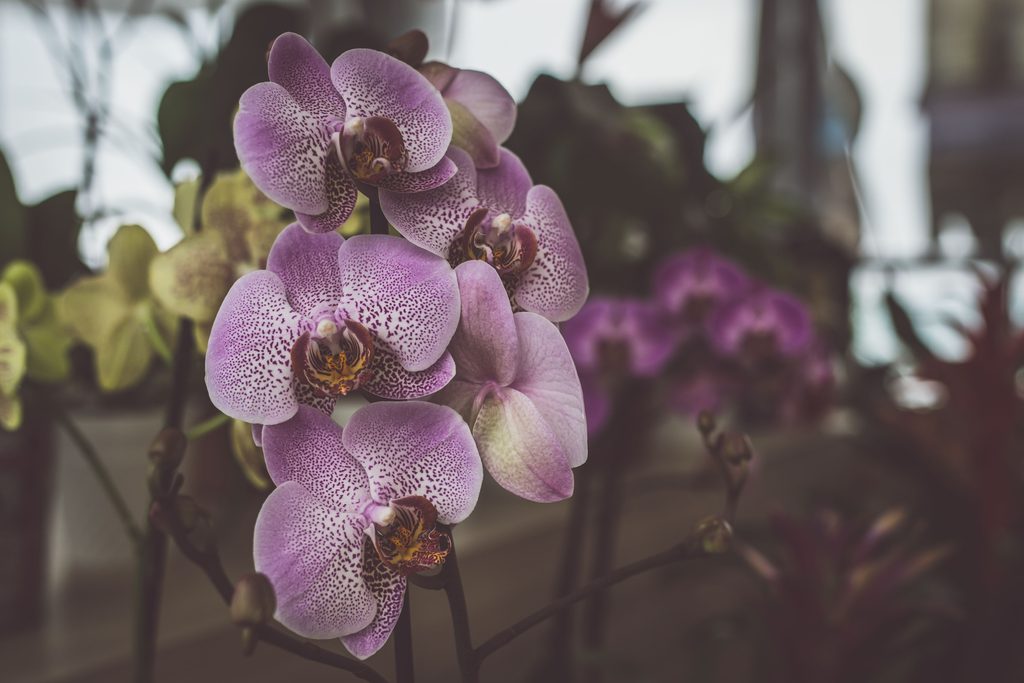
The orchid is a popular funeral flower across Asia. In China, it stands for integrity and refinement. It is one of the “Four Gentlemen” of Chinese art, together with the plum blossom, bamboo, and chrysanthemum.
That link explains why orchids and mums often appear together in memorial designs. Both carry a sense of dignity.
White orchids express respect and a wish for peace. A potted orchid also lasts for weeks. I like this choice because it becomes a living tribute, not a bouquet that fades in days.
19. Hemlock: The Poison of Socrates
The poison hemlock carries death in its history. In 399 BCE, Athens sentenced the philosopher Socrates to drink a hemlock mixture. The plant has stood for execution and fate ever since.
Victorian flower dictionaries were blunt about it. In the 1884 Kate Greenaway guide held at CSUN, a hemlock message reads, “You will be my death.”
This is a symbol to admire from a distance. Poison hemlock is highly toxic if eaten. Its sap can also irritate skin. Never use it in a bouquet.
20. Belladonna: The Deadly Nightshade
The name belladonna means “beautiful lady” in Italian. Renaissance women used its juice to widen their pupils. The plant’s scientific name, Atropa belladonna, honors Atropos, the Greek Fate who cuts the thread of life.
Every part of the plant is poisonous. Its shiny black berries can tempt children, and a few can cause serious harm. For this reason, writers often use it as a sign of hidden danger.
The purple bell flowers look sad and elegant. The plant is a lesson in how beauty and death can sit side by side. Admire it in books and gardens with warning signs, never in a vase.
21. Aconite (Monkshood): The Queen of Poisons
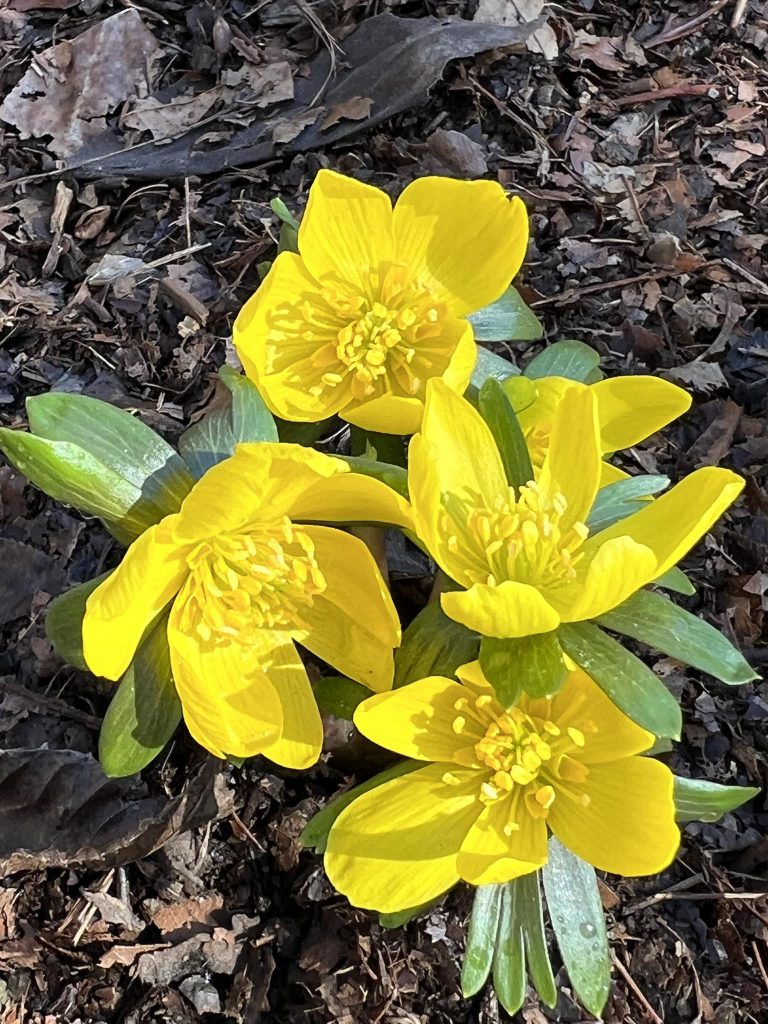
Aconite, also called monkshood or wolfsbane, is one of the deadliest garden plants. Hunters once used it to poison wolves, and its roots can kill a person. People nicknamed it the “queen of poisons.”
Greek myth traces it to the underworld. The story says it grew from the drool of Cerberus, the three-headed dog, when Heracles dragged him into daylight.
Its deep purple hoods look royal and calm. In symbol, aconite means danger and death by poison. Gardeners should wear gloves when they handle it.
22. Camellia: The Flower That Falls Whole
In Japan, the camellia (tsubaki) carries an uneasy meaning. Most flowers shed petals one by one. The camellia drops its whole head at once, and many people say this looks like a severed head.
Because of this image, the bloom is linked with sudden death. Many Japanese people avoid giving camellias to someone who is sick. The gift could feel like a bad omen.
The lesson is practical. Elsewhere the camellia means admiration. Check local custom before you send any flower to a family from another culture.
23. Lotus: Rebirth from the Mud
The lotus grows from muddy water and opens clean and bright. In Buddhism, this makes it a sign of purity and rebirth. The flower rises above hardship, as the soul hopes to do.
Lotus shapes appear at funerals across Asia. You may see them on altars, coffins, and floating memorial lanterns. They offer comfort more than fear.
The idea is very old. Ancient Egyptians linked the blue lotus with rebirth, and lotus images appear in tomb art. Few flowers carry hope this strongly.
24. Cherry Blossom: The Beauty of Fleeting Life
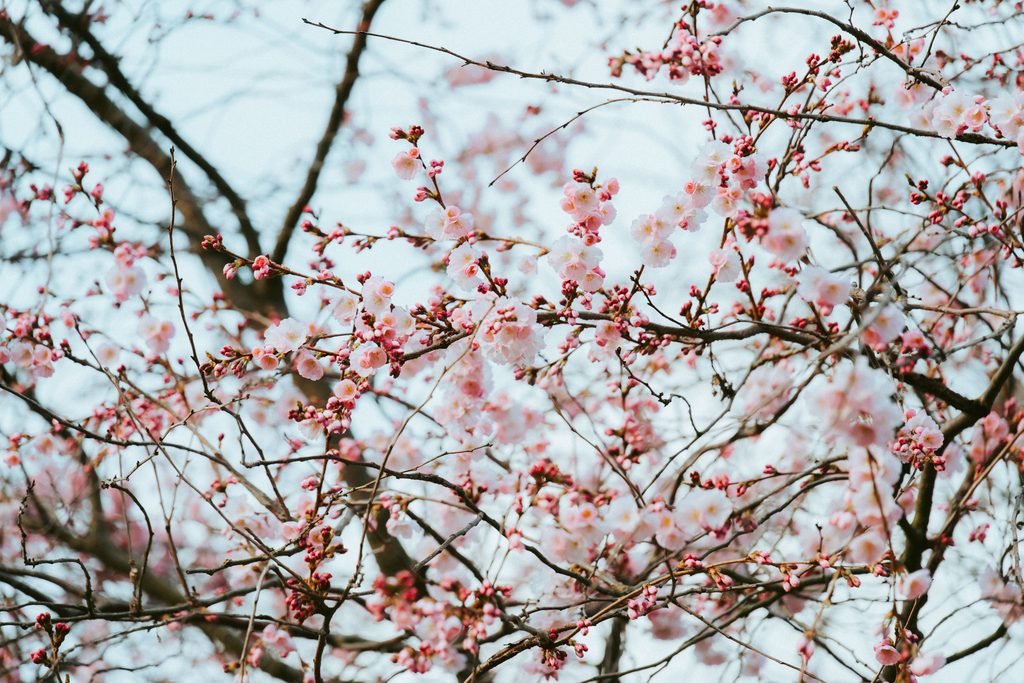
In Japan, the cherry blossom (sakura) blooms for only about one or two weeks. Then the petals fall in storms of pink. This is why the flower stands for the brevity of life.
Japanese culture has a name for the feeling: mono no aware, a gentle sadness at passing things. Samurai admired the blossom because it falls at its peak, without clinging.
That image was later used in wartime to honor fallen soldiers, which is a complicated legacy. Today, families gather for hanami picnics under the trees. The same bloom holds joy and mortality together.
ALSO READ: 15 Major Types of Cherry Blossom Trees: (With Pictures, and Full Growing Details)
25. Iris: Guide of Souls
The iris is named for Iris, the Greek goddess of the rainbow and a messenger of the gods. Myth also casts her as a guide who leads the souls of women to the afterlife.
Because of this role, ancient Greeks planted purple irises on the graves of women. The custom gave the flower a lasting tie to mourning and safe passage.
Victorian guides read the iris as a message, and its tall, regal form suggests faith and wisdom. It is a fitting flower to end the list: it points the way forward.
How to Choose Flowers Wisely
A flower’s meaning is never fixed. It changes with country, faith, and family tradition. These simple steps help you avoid mistakes:
- Ask the family first. Their wishes matter more than any rule.
- Learn the culture. White mums honor a life in Japan but may feel too grave at a Western dinner.
- Protect pets. Avoid true lilies if a cat lives in the home.
- Choose white when unsure. It signals peace and respect in most places.
- Skip poisonous plants. Hemlock, belladonna, and aconite belong in myths, not bouquets.
Final Thoughts
The 25 flowers in this guide show how people use nature to speak about death. Some, like the chrysanthemum and white lily, comfort mourners. Others, like hemlock and belladonna, warn of danger. A few, like the marigold and lotus, turn grief into hope.
I believe the best funeral flower is the one that fits the person who died. Use the symbols as a guide, then trust your heart.
Frequently Asked Questions
What is the most common flower that symbolizes death?
The chrysanthemum is the most common in Europe, where it is a grave flower. The white lily is the most common in Christian funerals in the West.
What flower symbolizes death in Japan?
The red spider lily (higanbana) is the flower most tied to death in Japan. White chrysanthemums are also used at funerals, and camellias are avoided as gifts for the sick.
What flower symbolizes death in Mexico?
The marigold (cempasúchil) is the flower of the dead. Families scatter its petals to guide souls home on Day of the Dead.
Which flower is a symbol of remembrance?
The red poppy, rosemary, and the forget-me-not are all symbols of remembrance.
References
- CSUN University Library, Special Collections & Archives. Floriography: The Language of Flowers
- UC Davis Weill School of Veterinary Medicine. UC Davis Veterinarians Warn of Lethal Toxicity of Lilies
- N.C. Cooperative Extension, NC State University. Chrysanthemums: More Than Just Festival Flowers
- Our Lady of the Lake University Library. Dia de los Muertos / Day of the Dead: Marigolds
- California State Parks (parks.ca.gov). Flor de muerto
- U.S. Government Publishing Office. Congressional Record, House, May 19, 2004 (H. Con. Res. 424, red poppies)
- CSU Stanislaus Library. Government Resources: Memorial Day, History of the Remembrance Poppy

Tim M Dave is a gardening expert with a passion for houseplants, particularly cacti and succulents. With a degree in plant biology from the University of California, Berkeley, he has vast experience in gardening. Over the years, he has cultivated a vast collection of desert plants and learned a great deal about how to grow and care for these unique companions.