35 Distinctive Types of Orchids (Names With Pictures)
Orchids have a way of stopping people in their tracks. I still remember the first time I saw a Cattleya in full bloom at a garden show — the color was almost too bold to be real. That single moment explains why this flower family has captured gardeners, scientists, and collectors for centuries.
The Orchidaceae family is genuinely massive. It contains roughly 28,000 accepted species spread across more than 700 genera, making it one of the two largest families of flowering plants on Earth, alongside the daisy family, Asteraceae.
Botanical researchers place the total number of currently accepted orchid species at around 28,000, distributed across roughly 763 genera worldwide.
That number is hard to picture. To put it in perspective, the number of orchid species is nearly equal to the number of bony fishes, more than twice the number of bird species, and about four times the number of mammal species combined.
Orchids alone make up a significant slice of all plant life, accounting for somewhere between 6 and 11 percent of all seed plant species on the planet.
This guide walks through 35 popular orchid types that home growers, collectors, and florists actually encounter. I have grouped them by ease of care, and for each one, I have added the growing zone it prefers, what the plant actually looks like, and the care habits that keep it thriving.
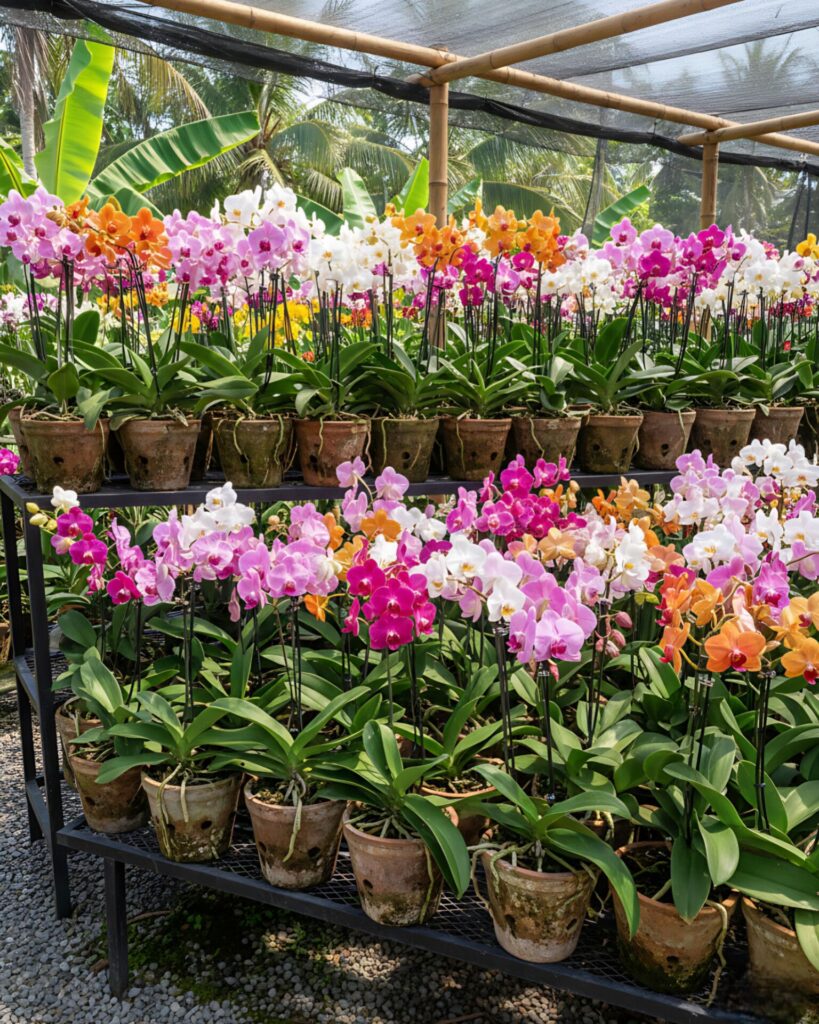
Why Orchids Deserve the Hype
Before jumping into the list, it helps to understand what makes orchids special. It is not just the flowers.
They grow almost everywhere. The orchid family is one of the largest plant families on earth, with more than 28,000 known species found on every continent except Antarctica. That kind of range is rare among flowering plants, and it explains why orchids have adapted to such wildly different climates, from steamy rainforest canopies to cool mountain cloud forests and even temperate woodlands.
They are ancient. The Orchidaceae family is one of the oldest families of flowering plants, believed to have first appeared sometime during the Late Cretaceous Period. Since then, native orchids have spread into nearly every climate except those that stay permanently frozen or permanently dry.
They rely on clever tricks. Many species do not offer real rewards to pollinators. Instead, orchids often produce flowers shaped to resemble a female pollinating insect, luring males in for a doomed mating attempt, or they promise nectar that simply does not exist, sending a hopeful bee away empty-handed, only to be fooled again a few yards later.
They are a top-selling houseplant. The phalaenopsis orchid is now the most popular flowering potted plant sold in the United States, based on statistics compiled by the U.S. Department of Agriculture. That popularity is well earned, since few houseplants bloom this reliably with so little daily fuss.
Now, on to the list.
Beginner-Friendly Orchids (Best for New Growers)
These orchids forgive small mistakes. If you are just starting out, begin here.
1. Phalaenopsis (Moth Orchid)
This is the orchid most people picture first, and honestly, it deserves the reputation. Flat, wide petals in white, pink, magenta, or spotted patterns sit gracefully on a gently arching stem, and a single spike can carry blooms for months without dropping.
Phalaenopsis is native to the humid lowland forests of Southeast Asia, the Philippines, and northern Australia, so it thrives indoors in USDA hardiness zones 10 through 12 outdoors, though most growers everywhere else simply keep it as a houseplant year-round. The leaves are broad, thick, and slightly rubbery, and they grow in pairs from a single central crown rather than from pseudobulbs.
Care is refreshingly forgiving. It does well under normal room temperatures with indirect light from an east or west window, and it actually prefers being slightly pot-bound rather than repotted too often.
Water it once the bark medium feels dry to the touch, roughly every seven to ten days, and avoid letting water sit in the crown of the leaves, since that is the most common cause of rot. With a little patience through a cooler autumn, most Phalaenopsis will send up a fresh flower spike every year.
2. Paphiopedilum (Slipper Orchid)
Named for its distinctive pouch-shaped lip, this orchid looks almost sculptural next to the flatter blooms of Phalaenopsis. It is native to the shaded forest floors of Southeast Asia, India, and parts of China, which means it has adapted to lower light than nearly any other popular orchid genus.
Suited to indoor growing in most climates, it can summer outdoors in zones 10 to 11 as long as it stays out of direct sun.
The mottled or solid green leaves grow in a low fan, and a single waxy flower rises from the center on a slender stalk. Because it grows on leaf litter rather than tree bark in the wild, the potting mix should stay lightly moist rather than drying out completely between waterings, unlike most other orchids.
An east or west window works well indoors, and a light monthly feeding during active growth keeps the foliage a healthy green rather than yellowing.
3. Cattleya
Known as the “corsage orchid” because its blooms were the classic choice for prom and wedding corsages for generations, Cattleya produces large, ruffled flowers that are often intensely fragrant, especially in the morning.
It is native to Central and South America, growing naturally as an epiphyte clinging to tree bark in tropical forests, and it does best in warm, humid conditions similar to zones 10 through 12.
The plant grows from thick pseudobulbs, which store water and energy between blooming cycles, so allowing the potting medium to dry out fully between waterings actually mimics its natural rhythm.
Cattleya needs brighter light than Phalaenopsis, closer to what you would find in a south-facing window filtered through a sheer curtain, or the leaves will stay dark green and refuse to flower. Once it settles into a good light spot, it rewards you with one of the showiest blooms in the entire orchid world.
4. Dendrobium
Dendrobium is a huge and remarkably varied genus, with well over a thousand recognized species spread across Asia, the Himalayas, and Australia. Canes covered in small, star-shaped flowers give this orchid an unmistakable look, and depending on the species, those canes can stand upright or arch gracefully outward.
Most commercially available Dendrobium hybrids grow well indoors in any climate, though outdoor container growing suits zones 10 through 11.
It needs slightly more light than a Phalaenopsis, along with a distinct cooler and drier rest period in the winter to trigger blooming the following spring. Skipping that rest period is the single biggest reason Dendrobium fails to flower for home growers.
Water thoroughly during active growth, then cut back significantly once new canes mature, letting the plant dry out almost completely between the occasional light watering through the cooler months.
5. Oncidium (Dancing Lady Orchid)
Clusters of small yellow and brown flowers give this orchid its nickname, and the resemblance really is uncanny — the blooms genuinely look like tiny dancers twirling in ruffled skirts.
Oncidium is native across Central and South America and the Caribbean, and it grows as an epiphyte on trees in a wide range of elevations, which is part of why it adapts so well to home growing conditions in zones 10 through 11 outdoors.
The plant produces flattened pseudobulbs and long, arching flower spikes that can carry dozens of blooms at once. It flowers generously once established, often blooming twice a year under good conditions.
Bright, indirect light and a slightly drier growing medium than Phalaenopsis will keep it healthy, and because the roots are fine and easily damaged, a light hand during repotting matters more here than with most other genera.
6. Cymbidium
Cymbidium stands apart from the rest of this beginner group because it is a cool-growing orchid rather than a tropical one.
Native to the cooler mountainous regions of Asia and northern Australia, it handles nighttime temperature drops far better than most other genera and genuinely needs that chill to set flower buds, which makes it a favorite for outdoor patios and unheated sunrooms in zones 9 through 11.
Tall, upright flower spikes rise from strappy, grass-like foliage and can carry a dozen or more waxy blooms in shades of green, pink, yellow, or deep burgundy. Because the plant is larger and heavier than most orchids, it usually needs a sturdier pot and slightly more frequent watering during the growing season.
Moving it outdoors for summer, then bringing it back in before the first real frost, is the simplest way to trigger a strong bloom the following winter.
7. Miltonia (Pansy Orchid)
Flat-faced blooms resembling garden pansies give this orchid its common name, and many varieties carry a striking “waterfall” pattern of contrasting color radiating from the center of each petal.
Miltonia is native to the cooler, higher-elevation forests of Brazil, which means it prefers cooler, more humid conditions than genera from lower tropical elevations, making it best suited to indoor growing or shaded zones 10 to 11 outdoor spots.
The foliage is thin and pale green, and it is notably sensitive to fertilizer salt buildup, so growers typically flush the pot with plain water every few weeks to prevent leaf tip burn. Consistent humidity around fifty to seventy percent and protection from direct afternoon sun keep the leaves supple and the blooms coming reliably through the cooler months of the year.
8. Brassia (Spider Orchid)
Long, narrow, twisting petals give this orchid a genuinely spidery silhouette, and it is one of the more unusual-looking plants on this list. Brassia is native to Central and South America and grows naturally as an epiphyte in warm, humid forest canopies, thriving outdoors in zones 10 through 12 and indoors everywhere else.
It shares similar cultural needs with Oncidium, preferring bright but filtered light and a potting medium that dries slightly between waterings. In the wild, its odd shape and faint scent actually mimic spiders to deter predatory wasps from the flower, an evolutionary trick that also makes it a fantastic conversation piece in a home collection.
ALSO READ: Are Orchids Toxic to Cats? What Every Pet Owner Needs to Read
Intermediate Orchids (For Growers Ready to Level Up)
These types need more precise light, humidity, or temperature control.
9. Vanda
Vanda is grown differently from almost every other orchid on this list, typically hanging in open slatted baskets with its thick roots left completely exposed to the air rather than buried in bark or moss.
Native to South and Southeast Asia, it demands strong, near-direct light and daily watering, which is why it suits outdoor growing only in the warmest parts of zones 10 through 12, or a dedicated bright greenhouse elsewhere.
The reward for that extra effort is considerable. Vanda produces flat, richly saturated flowers in blue, purple, orange, and speckled patterns that are genuinely rare among orchids. Because the roots stay exposed, humidity matters enormously, and most growers mist the roots at least once daily, sometimes twice in hot, dry weather, to keep them from shriveling.
10. Zygopetalum
Fragrant and boldly patterned, Zygopetalum combines green, purple, and white markings within a single bloom, and the scent alone can fill a room. It is native to the cooler forest regions of Brazil and neighboring countries, so it prefers cooler nights and consistently moist conditions, doing best in shaded outdoor spots in zones 10 to 11 or as an indoor plant elsewhere.
Unlike many epiphytic orchids, Zygopetalum tolerates, and even prefers, a potting medium that never fully dries out. Bright but indirect light and steady humidity around sixty percent will keep the ribbed, pleated foliage looking healthy and encourage repeat blooming through the cooler months of the year.
11. Brassavola
Star-shaped, intensely fragrant flowers make Brassavola instantly recognizable, especially at night, when the scent grows noticeably stronger to attract moth pollinators. It is native to Central and South America and the Caribbean, closely related to Cattleya, and often used as a parent plant in orchid hybrid breeding programs. It grows best outdoors in zones 10 through 12.
The narrow, cylindrical leaves store water efficiently, allowing the plant to tolerate brighter light and slightly drier conditions than many of its Cattleya relatives. Mounting it on a piece of cork or bark, rather than potting it in bark chips, often produces the best growth, since it mimics the way the plant clings to tree branches in its native habitat.
12. Epidendrum
Epidendrum is one of the largest orchid genera in existence, with roughly 1,500 recognized species spread from the southern United States through Central and South America. It produces clusters of small, colorful flowers almost continuously throughout the year once established, which makes it one of the most rewarding intermediate orchids for growers who want near-constant color.
Growing zones vary by species, but most reed-stem types thrive outdoors in zones 9 through 11 and tolerate more direct sun than the average orchid. It is also unusually tolerant of average household humidity, and unlike many orchids, some varieties even grow well planted directly in soil rather than bark, making it a nice bridge plant for gardeners more used to traditional flower beds.
13. Coelogyne
Pendulous flower spikes with white or cream blooms, some marked with contrasting brown, yellow, or orange, give Coelogyne a graceful, almost weeping habit that looks striking in a hanging basket.
It is native to the cool, humid mountain forests of the Himalayas and Southeast Asia, so it prefers cooler temperatures than most tropical orchids and grows best in zones 9 through 11 outdoors or in a shaded, humid indoor spot.
It grows well mounted on bark, mimicking its natural habitat on mossy tree trunks, though potted specimens also do fine with a very open, fast-draining mix. Because the flower spikes hang downward from the base of the pseudobulb, mounting or using a hanging pot lets the blooms display properly rather than getting crushed against the growing medium.
14. Encyclia
Fragrant and often shaped like a small octopus with twisting, curling petals, Encyclia has a wild, almost tropical-jungle look to it. It is native to Florida, the Caribbean, and Central America, and it tolerates a bit more neglect once mature than many of the earlier beginner types, making it a natural step up for growers ready for slightly more independence from their plants.
It thrives outdoors in zones 10 through 11 and appreciates bright, filtered light along with a distinct dry rest period after flowering. Allowing the pseudobulbs to shrivel slightly between waterings during dormancy actually encourages stronger blooming the following season, a trait that surprises growers used to keeping orchids consistently moist.
15. Masdevallia
Small but visually dramatic, Masdevallia produces triangular flowers that sometimes look like tiny brightly colored kites caught mid-flight. It is native to the cool, misty cloud forests of the Andes in South America, and that origin explains why it needs cool, humid, and shaded conditions rather than the warm windowsill spots that suit Phalaenopsis, making it best grown indoors or in a shaded greenhouse in most climates outside zones 9 to 10 at higher elevations.
Because it comes from consistently cool mountain air, Masdevallia struggles in typical warm, dry indoor heating during winter. A cool, bright bathroom or a spot near a humidifier tends to work better than a standard living room shelf, and it rewards that extra attention with unusually vivid, jewel-toned flowers.
16. Odontoglossum
Closely related to Oncidium, Odontoglossum produces intricate, often star-patterned blooms in white, yellow, or deep red, frequently marked with fine, lace-like detailing. It is native to the cooler cloud forests of the Andes, so it prefers cooler temperatures and steady humidity, thriving in shaded zones 9 to 10 outdoor spots at elevation or as a cool-room indoor plant elsewhere.
The pseudobulbs are compact, and the flower spikes tend to arch gracefully under the weight of the blooms. Because heat stress is the most common cause of failure with this genus, keeping it away from radiators, sunny south windows in summer, or any spot above roughly 80 degrees Fahrenheit will go a long way toward keeping it healthy.
17. Lycaste
Large, triangular flowers appear on bare canes before the new leaves emerge each season, giving Lycaste a distinctive, almost sculptural growth pattern that surprises growers unfamiliar with it. It is native to Central America and northern South America and grows best in zones 10 through 11 outdoors, or indoors with a clear seasonal rhythm respected.
This orchid has a pronounced dormancy period, and respecting it matters enormously. Watering should taper off sharply once the leaves drop in autumn, then resume gradually as new growth appears in spring. Growers who keep watering heavily through the resting phase are the ones most likely to lose the plant to rot.
18. Angraecum
Native mostly to Madagascar and nearby islands, Angraecum is known for its pure white, star-shaped flowers and unusually long nectar spurs, some stretching close to a foot in length. It grows outdoors in the warm, humid conditions of zones 10 through 12, and its waxy, strap-like leaves store water efficiently, helping it tolerate brief dry spells better than many tropical orchids.
The famous species Angraecum sesquipedale carries a particularly deep historical significance in botany. Its extraordinarily long nectar spur led Charles Darwin to predict, decades before anyone had seen evidence of it, that a moth with an equally long tongue must exist to pollinate it.
That moth, a subspecies of hawk moth, was eventually discovered, confirming Darwin’s theory and making this orchid a small but famous chapter in the history of evolutionary science.
ALSO READ: 11 Reasons Why Orchid Leaves Turn Yellow ( And Fixes That Work)
Advanced and Specialist Orchids
These types are best attempted once you have mastered watering, humidity, and light balance.
19. Cypripedium (Hardy Lady’s Slipper)
Unlike nearly everything else on this list, Cypripedium is a terrestrial, temperate-climate orchid, native to woodlands across North America, Europe, and parts of Asia. It grows directly in soil rather than bark or moss and genuinely needs a proper winter dormancy period, thriving outdoors in zones 3 through 8 depending on the species, which makes it one of the few orchids suited to a true garden bed rather than a pot indoors.
Cultivating it successfully requires patience and, often, a specific soil fungus present in the planting site, since Cypripedium relies on that fungal partnership even as a mature plant. For this reason, most successful growers buy nursery-propagated stock rather than attempting to transplant wild specimens, which rarely survive the move.
20. Disa
Native to South Africa, particularly the winter-rainfall regions of the Cape, Disa produces flame-orange or deep red blooms that stand out dramatically against its narrow, grass-like foliage. It needs constant moisture at the roots, unlike most orchids that prefer to dry out between waterings, and this unusual requirement is exactly why it is considered an advanced grower’s plant.
Because it grows naturally along mountain streams, many growers keep Disa standing in a shallow tray of water or use a constantly moist, fine sphagnum moss mix. It suits cooler, bright conditions similar to zones 9 through 10 outdoors, and consistent water quality, ideally rainwater or filtered water low in dissolved salts, matters enormously to its long-term health.
21. Bulbophyllum
Bulbophyllum is the largest orchid genus by species count, with around 2,000 recognized species found across the tropics of Asia, Africa, and South America. Some varieties produce a genuinely unpleasant odor, mimicking rotting flesh to attract fly pollinators instead of bees, which makes this genus an unusual but fascinating favorite among collectors drawn to novelty plants.
Growing conditions vary widely across such a large genus, but most species prefer warm, humid, shaded conditions similar to zones 10 through 12, mounted on bark or grown in shallow, well-draining pots. Because the roots creep horizontally rather than growing downward, a wide, shallow container almost always works better than a deep one.
22. Restrepia
A true miniature, Restrepia produces tiny, intricately patterned flowers that look almost hand-painted under close inspection. It is native to the cool, humid cloud forests of Central and South America, and it thrives in terrariums or humid greenhouse cabinets rather than open windowsills, doing best in indoor conditions or shaded zones 9 to 10 outdoor spots at elevation.
Because the plant itself stays small, it fits comfortably alongside other miniatures on a single humidity tray, which also makes it an efficient way for collectors to grow a wide variety of species without needing a large greenhouse.
23. Pleurothallis
Another giant genus, with roughly 1,000 recognized species, Pleurothallis includes many miniatures suited to small spaces and mounted growing. It is native to the cooler cloud forests of Central and South America, and most species prefer the same cool, consistently humid conditions as Restrepia and Masdevallia, best grown indoors or in shaded zones 9 to 10 spots.
Because so many species stay compact, collectors often grow dozens of different Pleurothallis specimens on a single mounted board or humidity tray, creating a miniature living wall that flowers in rotating waves throughout the year.
24. Dracula (Monkey Face Orchid)
Named for its dark, often eerie coloring and long, trailing petal tails, Dracula genuinely earns its dramatic reputation. Some varieties strikingly resemble small primate faces when viewed head-on, which has made this genus a novelty favorite among collectors looking for something beyond the standard showy bloom.
It is native to the cool, wet cloud forests of Central and South America and grows best in shaded, humid indoor conditions or zones 9 to 10 at elevation.
Because the flower spikes grow downward, Dracula is almost always grown in a hanging basket with an open weave, allowing the strange, drooping blooms to display properly rather than getting crushed against a solid pot.
25. Catasetum
Catasetum is known for its remarkable explosive pollination mechanism, in which the flower can literally launch a packet of pollen at a visiting insect with startling speed and force. It is native to Central and South America and grows outdoors in the warm, humid conditions of zones 10 through 12.
It also has a strong seasonal dormancy, dropping its leaves entirely in winter after a vigorous growing season. Watering should stop almost completely during this leafless rest period, then resume as soon as new growth emerges in spring, a rhythm that catches many growers off guard the first time they encounter it.
26. Stanhopea
Stanhopea is grown almost exclusively in hanging baskets, because its flower spike grows straight downward through the potting media rather than upward like most orchids. It is native to Central and South America, thriving outdoors in zones 10 through 11, and the blooms are large, waxy, and intensely fragrant, filling a room with a rich, spiced scent.
The catch is that those spectacular flowers last only a few days before fading, so timing matters if you want to enjoy the show, and many growers check their plants daily once a bud shows signs of opening.
27. Gongora
Pendant flower spikes with twisted, unusual blooms give Gongora a similar downward-growing habit to Stanhopea, and the two genera share nearly identical cultural needs. Native to Central and South America, it thrives in warm, humid conditions in zones 10 through 12, mounted or grown in an open, hanging basket to allow the flower spikes room to descend freely.
The flowers themselves have a slightly waxy, almost artificial-looking texture and a spicy fragrance that many growers find just as appealing as the visual display.
ALSO READ: Black Spots on Orchid Leaves Are a Warning Sign — Here Is What Your Plant Is Trying to Tell You
Terrestrial and Native Orchids
Not every orchid grows on trees. These species live in soil, often in temperate climates.
28. Cypripedium reginae (Showy Lady’s Slipper)
The state flower of Minnesota, Cypripedium reginae produces a bright pink pouch set against pure white petals, arguably one of the most striking wildflowers native to North America.
It grows naturally in wetlands and calcium-rich bogs across zones 2 through 7, and it requires very specific soil fungi to thrive, which makes it genuinely difficult to cultivate successfully outside its native range or without nursery-propagated stock.
Because wild populations are sensitive to disturbance, responsible growers never dig plants from natural habitats, and most conservation-minded nurseries now propagate this species from seed under controlled laboratory conditions instead.
29. Bletilla (Chinese Ground Orchid)
Bletilla is one of the easiest terrestrial orchids for outdoor garden beds in temperate zones, native to China, Japan, and Korea. It survives light frost and grows reliably in zones 5 through 9, multiplying readily once established into a modest clump of purple, pink, or white blooms each spring.
Unlike most orchids on this list, it asks for nothing exotic: ordinary garden soil with good drainage, partial shade, and a light winter mulch in the colder end of its range is usually enough to keep it thriving for years.
30. Calypso bulbosa (Fairy Slipper)
A tiny, single-flowered woodland orchid, Calypso bulbosa grows naturally across northern forests in zones 2 through 7, often tucked beneath conifers in cool, mossy soil. It produces just one delicate pink and purple flower per plant each spring, making a patch of them in bloom feel like a rare and fleeting discovery.
It is notoriously difficult to transplant or cultivate deliberately because of its dependence on a very specific fungal partner in undisturbed forest soil, so most people encounter it only in the wild rather than in a home garden.
31. Goodyera (Rattlesnake Plantain)
Grown more for its patterned, silver-veined leaves than for its modest spike of small white flowers, Goodyera is a native woodland species found across much of North America, thriving in the dappled shade of zones 3 through 8. The foliage forms a neat rosette that stays attractive year-round, even outside the brief summer bloom period.
It suits a shaded native plant garden or woodland border far better than a container, since it depends on the same leaf-litter soil conditions and fungal relationships found in its natural forest floor habitat.
32. Habenaria (Rein Orchid)
A terrestrial genus with fringed, often star-shaped flowers, Habenaria includes species native to grasslands and open woodlands across North America, Asia, and Africa, depending on the species in question. Growing zones vary widely by species, but many temperate types thrive in zones 6 through 9 in a sunny, moist meadow-style planting.
The delicate, fringed petals give the flowers an almost lacy appearance, and several species are night-fragrant, releasing their strongest scent after dusk to attract moth pollinators.
33. Spiranthes (Ladies’ Tresses)
Small white flowers spiral neatly around a slender stem in this genus, resembling a tightly braided ribbon, which is exactly where the common name comes from. Spiranthes is one of the most widespread native orchids in North America, found from zones 3 through 9 in damp meadows, roadside ditches, and lawns that are mowed only occasionally.
It is surprisingly tolerant of disturbed ground compared to most native orchids, which is part of why it remains one of the more commonly spotted wild orchids for casual hikers rather than only dedicated botanists.
Novelty and Collector’s Orchids
34. Psychopsis (Butterfly Orchid)
Psychopsis produces flowers that genuinely mimic a butterfly caught mid-flight, with tall, narrow petals that seem to flutter with the slightest breeze. Native to Central and South America, it grows outdoors in zones 10 through 12 and shares similar care needs to its close relative, Oncidium.
That butterfly-like bloom has made it a favorite subject in botanical exhibitions, appearing in displays specifically because of how convincingly it mimics a living insect rather than a static flower, a trait that never fails to surprise first-time visitors.
35. Vanilla planifolia (Vanilla Orchid)
Yes, vanilla flavoring really does come from an orchid. Vanilla planifolia and its Tahiti-grown hybrid relative are the species used to produce the familiar flavoring found in everything from ice cream to baked goods, and those tiny brown flecks visible in vanilla bean ice cream are actually the plant’s own seeds. It is native to Mexico and Central America and grows outdoors only in the warm, humid tropics of zones 11 through 12.
Unlike the showy tabletop orchids earlier on this list, Vanilla planifolia is a climbing vine that can stretch many feet along a support structure, and it needs hand pollination outside its native range, since the specific bee species that pollinates it naturally does not exist elsewhere. That single detail explains why real vanilla remains one of the more labor-intensive and expensive spices in the world.
Quick Care Comparison
| Orchid Type | Light Needs | Difficulty | Bloom Duration |
| Phalaenopsis | Low-medium, indirect | Easy | 2–4 months |
| Cattleya | Bright, filtered | Easy-moderate | 2–4 weeks |
| Dendrobium | Medium-bright | Easy-moderate | 4–8 weeks |
| Vanda | Very bright | Advanced | 2–6 weeks |
| Paphiopedilum | Low | Easy-moderate | 6–10 weeks |
| Cymbidium | Bright, cool | Moderate | 8–10 weeks |
How to Care for Popular Orchid Types
Most orchids share four core needs, regardless of genus.
Light matters more than people think. Light is typically one of the most limiting environmental factors when growing orchids indoors, because it directly affects how well the plant responds to watering and fertilizing, according to research from Iowa State University.
Watering is the trickiest part. Watering is widely considered the most critical and most challenging aspect of orchid care, since there is no universal schedule that works across species, size, light level, temperature, humidity, growing medium, container, and season. A good habit is checking the potting media by touch rather than following a fixed calendar.
Temperature swings trigger blooming. Orchids generally thrive around 75 degrees Fahrenheit with a gentle nighttime drop, and reduced daylight combined with cooler nights near 55 degrees in the fall is often what initiates flower bud formation, based on guidance from the University of Connecticut Extension.
Air movement prevents disease. Orchids need high humidity, but high humidity without adequate air movement tends to promote fungal and bacterial disease issues, so a small fan gently circulating air around the plants makes a real difference.
Fertilizing should be light and consistent. A standard approach is fertilizing with an orchid fertilizer, or a general houseplant fertilizer diluted to half strength, roughly once a month while the plant is actively growing, according to University of Wisconsin-Madison Plant Pathology guidance.
Repotting is not an annual chore. Most orchids only need repotting once roots appear to be bursting out of the pot, which typically happens every two years or so rather than annually.
A Few Surprising Orchid Facts
I found these genuinely fascinating while researching this piece.
- New species keep appearing. Botanists continue to formally describe new orchid species from tropical regions every year, a reflection of how much biodiversity remains undocumented in rainforests and cloud forests.
- Orchid seeds are dust-sized. Orchid seeds are so tiny that they cannot germinate or grow without help from a specific type of mycorrhizal fungus, and some orchid species never even produce green leaves, relying on their fungal partner for nutrition their entire lives.
- One museum collection alone holds thousands of orchids. The Smithsonian Gardens Orchid Collection contains more than 8,000 specimens gathered from all over the world, serving as a resource for education, exhibitions, and ongoing scientific research.
- China alone hosts over a thousand species. Research on Orchidaceae chloroplast genomes documents 1,247 species and subspecies of orchids across 171 genera within China alone, published through the National Institutes of Health.
- Fungi are doing more work than we realized. North America’s largest collection of orchid mycorrhizal fungi, holding around 500 distinct cultures, is housed at the Smithsonian Environmental Research Center in Edgewater, Maryland.
I will admit, learning about the fungal dependency changed how I think about orchid conservation. It is not enough to protect the flower — you have to protect its invisible fungal partner too.
Choosing the Right Orchid for Your Space
If you are picking your first orchid, match the plant to your home rather than chasing the prettiest bloom in the store.
Low light room? Choose Phalaenopsis or Paphiopedilum. Both tolerate east or north-facing windows without extra lighting.
Bright, sunny space? Vanda and Cattleya reward strong light with more frequent blooms.
Cooler climate or unheated sunroom? Cymbidium and Odontoglossum prefer cooler nights and will actually bloom better because of the temperature drop.
Small apartment with limited space? Miniature genera like Restrepia or Pleurothallis fit on a windowsill shelf and still deliver striking flowers.
There is no wrong choice here, honestly. Every genus on this list has its own charm, and half the fun of growing orchids is discovering which type suits your patience and your light conditions best.
Final Thoughts
Orchids reward attention without demanding perfection. Once you understand the basic rhythm — bright but indirect light, watering only when the media dries, and a bit of a nightly temperature dip — most of these 35 types will do the rest of the work themselves.
Start with one or two easy varieties. Once you see that first spike of buds open, it becomes very hard to stop at just one plant. I certainly never managed to.
References
- University of Maryland Extension — Care of Phalaenopsis Orchids (Moth Orchids)
- Iowa State University Extension and Outreach — Growing Orchids Indoors
- Pennsylvania State University Extension — Orchids as Houseplants
- University of Connecticut, College of Agriculture, Health and Natural Resources — Orchid Care and Repotting
- University of Wisconsin-Madison, Wisconsin Horticulture Division of Extension — Orchids
- Smithsonian Institution — Five Things to Know About Orchids
- National Institutes of Health, National Center for Biotechnology Information — Comparative and Phylogenetic Analyses of Nine Complete Chloroplast Genomes of Orchidaceae
- University of Michigan, LSA — Orchidaceae – Orchid Ecology

Tim M Dave is a gardening expert with a passion for houseplants, particularly cacti and succulents. With a degree in plant biology from the University of California, Berkeley, he has vast experience in gardening. Over the years, he has cultivated a vast collection of desert plants and learned a great deal about how to grow and care for these unique companions.