Coneflower Summer Maintenance: How to Keep Echinacea Healthy and Blooming All Season
Coneflower maintenance during summer comes down to a few habits: water about one inch per week during dry spells, deadhead selectively to extend bloom, and watch for Japanese beetles, leaf spot, and aster yellows.
I have grown coneflowers in three different gardens now, in three different soil types, and the plant has never once let me down. It survives my forgetfulness, my erratic watering schedule, and the occasional heat wave that wilts everything else in the bed.
That said, summer is the season where small mistakes show up fastest, so a little attention during these months pays off in a big way.
This guide walks through everything you need to know about caring for purple coneflower (Echinacea purpurea) and its many cultivars between June and September.
Why Summer Is the Make-or-Break Season for Coneflowers
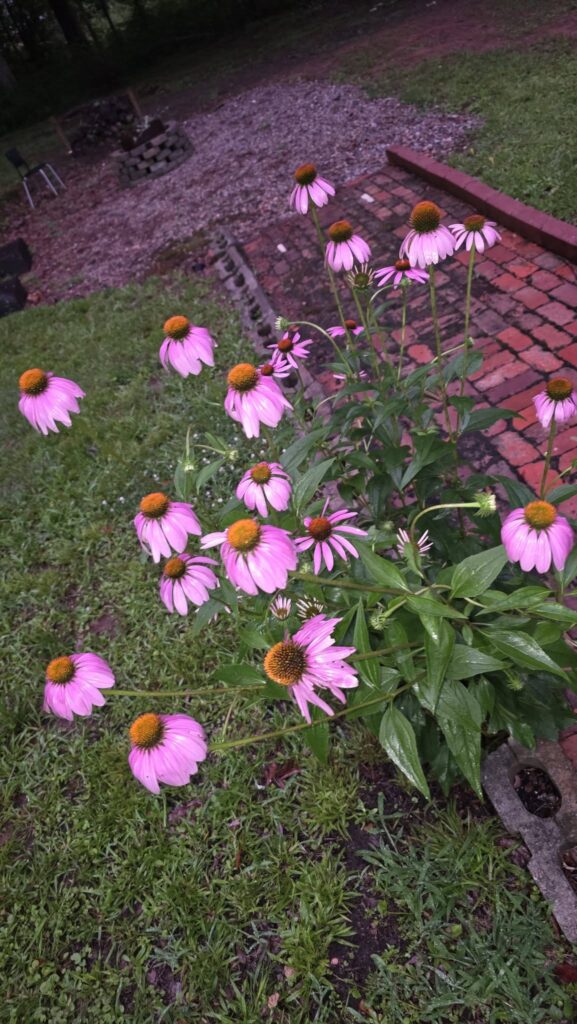
Coneflower is native to the prairies, meadows, and open woods of the central and eastern United States. It is a coarse, rough-hairy, herbaceous perennial that typically grows two to four feet tall, with showy daisy-like purple flowers that can reach five inches across.
Because it evolved in open grassland, the plant is genetically wired for heat and dry spells. It is an adaptable plant tolerant of drought, heat, humidity, and poor soil. Several university extension programs also note it handles deer, humidity, and salt exposure well.
That natural toughness is exactly why summer maintenance is so often skipped. People assume Echinacea takes care of itself. It mostly does, but a few targeted tasks during the hottest months will noticeably extend bloom time, reduce disease pressure, and keep the plant from looking tired by August.
I learned this the hard way after a summer of total neglect left my plants leggy and sparse by July.
Watering Coneflowers in Summer: How Much Is Actually Needed
This is the question I get asked most often, and the answer surprises people because it is less than they expect.
Established coneflowers need about one inch of water per week, including rainfall, during active summer growth. New transplants need more frequent watering until their root systems settle in.
A few practical rules I follow:
- Water deeply and infrequently rather than a light daily sprinkle. Frequent shallow watering encourages shallow roots, which makes the plant more vulnerable during a real dry spell.
- Check soil moisture before watering. Once established, water whenever the soil surface is dry to about two inches deep, rather than on a fixed schedule.
- Avoid overhead irrigation where possible. Wetting the foliage repeatedly raises the risk of leaf spot diseases, which are common on Echinacea in humid climates.
- Increase frequency during true heat waves. Several consecutive days above 90°F will dry soil faster than usual, and even drought-tolerant plants benefit from a deep soak.
Coneflower’s drought tolerance comes from its long taproot, which reaches deep into the soil profile to find moisture that shallow-rooted plants cannot access. This is part of what made it such a reliable medicinal and garden plant for Indigenous peoples of the Great Plains long before it became a garden staple.
The plant’s resilience does have limits, though. Container-grown coneflowers dry out far faster than those in the ground, sometimes daily in peak summer heat, simply because there is less soil mass to hold moisture.

Deadheading: Should You Bother, and How?
Deadheading is the single most debated coneflower task, and honestly, there is no universally correct answer. It depends on what you want from the plant.
The case for deadheading: Removing spent flowers right after they fade can encourage a second flush of blooms later in the season and keeps the bed looking tidy.
During the hot, humid stretch of summer, deadheading can make a real visible difference in a landscape’s appearance without much effort.
The case against deadheading: Leaving the seed heads in place lets the plant reseed naturally, and the dried cones provide food for goldfinches and other seed-eating birds through fall and into winter.
Many gardeners, myself included, like watching finches work over the spent blooms in September.
How to deadhead properly:
- Use clean, sharp pruners rather than snapping the stem by hand, since coneflower stems are too fibrous to break cleanly.
- Cut the stem back to just above the next set of leaves or a forming bud, not at random points along the stalk.
- Sanitize your pruners between plants if you suspect any disease in the bed, since tools can spread pathogens like aster yellows.
A middle-ground approach works well for most home gardens: deadhead about half the spent blooms to tidy the plant and encourage reblooming, while leaving the rest standing for seed and wildlife value.
Most coneflower varieties rebloom without deadheading anyway, so prompt removal of spent flowers is mainly about improving the plant’s general appearance rather than necessity.
Pest and Disease Watch: What to Look For Each Summer
Coneflower is genuinely one of the lower-maintenance perennials when it comes to pests, but summer heat and humidity bring out a short list of recurring problems.
Japanese Beetles
These metallic green-and-bronze beetles chew ragged holes in petals and foliage, typically peaking in July. Japanese beetle and leaf spot are noted as occasional problems for several Echinacea purpurea cultivars by horticultural researchers.
Handpicking beetles into a bucket of soapy water in the early morning, when they are sluggish, remains one of the most effective non-chemical controls.
Leaf Spot
Fungal leaf spot shows up as dark, irregular blotches on lower leaves, usually after extended wet or humid weather. Improving airflow by spacing plants properly and watering at the soil line instead of overhead reduces the problem considerably.
Aster Yellows: The One Disease Worth Taking Seriously
Aster yellows is a phytoplasma disease, not a fungus or typical bacterium, and it is by far the most concerning issue coneflower growers face in summer. This disease belongs to a group of plant pathogens called phytoplasmas, organisms similar to bacteria but lacking cell walls, and it is spread by the aster leafhopper.
The symptoms are unmistakable once you have seen them: malformed flowers with petals that turn an abnormal green color, and clusters of small, brush-like distorted growth emerging from the flower head.
University of Maryland Extension notes that gardeners notice this disease most often on purple coneflowers and their cultivars specifically among ornamental plants.
There is no cure once a plant is infected. Once a plant is infected with aster yellows, there is no cure, and impacted plants must be removed completely, including the roots, and destroyed.
Iowa State University Extension reported a notable spike in aster yellows cases across the state in recent summers, which researchers attribute to fluctuations in leafhopper populations rather than a change in the plant itself.
What I do the moment I spot it: remove the whole plant, roots included, bag it, and do not compost it. Compost piles do not get hot enough to kill the phytoplasma reliably, and leaving infected material nearby gives leafhoppers another source to spread from.
Dividing Overcrowded Clumps
Coneflower clumps thicken every year, and eventually the center of an older clump produces fewer and smaller blooms. Botanical garden research recommends dividing clumps when they become overcrowded, roughly every four years.
Signs it is time to divide:
- Fewer flowers than in previous summers, despite good weather
- A visibly dead or sparse center with healthy growth only around the rim
- The clump pushing into neighboring plants’ space
Late summer through early fall, after the main flush of blooms has passed, is generally the gentlest window for dividing, since the worst heat has broken but the plant still has time to establish roots before winter. Spring division also works well in cooler climates.
Whichever season you choose, water the new divisions generously for the first two to three weeks until you see fresh growth.
Fertilizing and Soil Care in the Summer Months
Coneflower is not a heavy feeder, and over-fertilizing tends to backfire by producing weak, floppy stems with fewer flowers.
What actually helps:
- A thin layer of compost worked around the base in spring, which carries most plants through summer without additional feeding
- Mulch to conserve soil moisture and moderate root-zone temperature during hot stretches, applied two to three inches deep but kept away from direct stem contact
- Well-drained soil above all else, since Echinacea is far more tolerant of poor, dry soil than of soggy, waterlogged conditions
If flowers are consistently small or sparse despite good watering, a light compost top-dress mid-season can help, but resist the urge to reach for high-nitrogen fertilizer. Excess nitrogen pushes leafy growth at the expense of blooms.
Leaving Some Blooms for Pollinators and Birds
This is the part of coneflower care I personally think gets undervalued. Echinacea is one of the better pollinator plants you can put in a garden bed, and summer maintenance decisions directly affect how much benefit local wildlife gets from it.
Pollinators are not a minor garden detail. Three-fourths of the world’s flowering plants and about 35 percent of the world’s food crops depend on animal pollinators to reproduce.
Native bees alone are estimated to pollinate roughly 80 percent of flowering plants worldwide, and a single coneflower stand in bloom can draw in bumblebees, butterflies, and the occasional hummingbird through July and August.
Stems matter as much as flowers here. North Carolina State University Extension notes that native bees frequently nest inside the dead, hollow stems of coneflower, which is why gardeners are encouraged to cut stems back to 12 to 24 inches rather than to the ground, and to leave them standing until they naturally break down.
My practical approach: deadhead the front-of-border blooms that face foot traffic for tidiness, and leave the back rows untouched through fall. It is a small compromise that keeps the bed looking intentional while still feeding birds and sheltering insects.
Common Summer Problems and How to Fix Them
- Plant looks leggy or floppy by midsummer. This usually means too much shade, too much nitrogen, or overcrowding. Coneflower wants full sun for the strongest, most upright stems; partial shade is tolerated but often produces weaker growth that leans toward the light.
- Flowers are smaller than last year. Almost always a sign the clump needs dividing, or that soil has become depleted. A light compost application plus division usually resolves this within one season.
- Leaves wilting in afternoon heat but recovering by morning. This is often normal heat response, not a watering problem. Check again the next morning before assuming the plant is drought-stressed.
- Strange green or distorted flowers. This is the telltale sign of aster yellows discussed above. Remove the plant rather than waiting to see if it improves, since it will not.
- Holes chewed through petals and leaves. Japanese beetles, most active in July. Handpicking in the early morning hours, when beetles are least active, remains the most reliable low-chemical control.
Caring for Container-Grown Coneflowers in Summer
Coneflowers do well in pots, but containers change the maintenance math considerably. Without the surrounding soil mass of a garden bed, pots heat up faster and dry out faster, sometimes within a single hot afternoon.
A few adjustments for container growers:
- Choose pots of at least two to three gallons to accommodate the plant’s long taproot
- Check soil moisture daily during heat waves rather than relying on a weekly schedule
- Move containers to a spot with afternoon shade if temperatures regularly exceed the mid-90s, even though coneflower is heat tolerant in the ground
- Repot or divide container plants more frequently than in-ground specimens, since root space runs out faster
Staking Tall Varieties Before Summer Storms
Some coneflower cultivars, particularly older heirloom types reaching three to four feet, can flop over after a heavy summer thunderstorm or a stretch of strong wind.
Newer compact cultivars rarely need this step, but taller varieties benefit from light staking before storm season rather than after a plant has already bent over.
A simple grow-through ring or a few bamboo stakes with soft garden twine, installed in early summer before the plant reaches full height, works better than trying to prop up a flopped stem later. Once a stem has bent at the base, it rarely straightens fully even with support.
Spacing also plays a role here. Plants crowded too closely tend to stretch toward available light and develop weaker, thinner stems that are more prone to storm damage.
Proper spacing at planting time, generally 18 to 24 inches apart depending on the cultivar’s mature width, reduces this problem before it starts.
Regional Climate Considerations
Summer maintenance shifts somewhat depending on where you garden, and I think this nuance gets lost in a lot of generic plant care advice.
Hot, humid Southeast and Mid-Atlantic gardens face the highest disease pressure. Leaf spot and aster yellows both thrive in humidity, so airflow, morning watering, and avoiding wet foliage at dusk matter more here than almost anywhere else. Gardeners in these regions should inspect plants more frequently, ideally weekly, through the peak humid months.
Hot, dry climates such as the inland West or High Plains put less disease pressure on coneflower but more drought stress. Watering consistency becomes the priority, and mulch plays an outsized role in keeping roots cool and moisture from evaporating too quickly between waterings.
Cooler northern summers, including much of the Upper Midwest and New England, generally see fewer pest and disease issues overall, but a late, intense heat spike can still stress plants that have not hardened against it the way Southern-grown coneflowers have. A single deep watering during an unexpected hot stretch usually resolves the issue.
Wherever you garden, the underlying principles stay the same: manage moisture deliberately, watch for the same handful of pests and diseases, and respond to your specific climate’s stress points rather than following a one-size-fits-all calendar.
Quick Summer Maintenance Checklist
- Water: roughly one inch per week, deeply and infrequently
- Deadhead: selectively, balancing tidiness against seed value for birds
- Inspect weekly: for Japanese beetles, leaf spot, and aster yellows symptoms
- Divide: clumps showing reduced blooming, ideally every three to four years
- Mulch: two to three inches to conserve moisture, kept off the stems
- Skip heavy fertilizer: a light spring compost top-dress is usually sufficient
- Leave some stems standing: to support native, stem-nesting bees
Frequently Asked Questions
How often should I water coneflowers in summer? Aim for about one inch of water weekly, counting rainfall, watering deeply rather than lightly and frequently. Newly planted coneflowers need more consistent moisture until established.
Do coneflowers need to be cut back in summer? Not entirely. Selective deadheading of spent blooms is optional and mainly cosmetic, since most varieties rebloom without it. Avoid cutting the entire plant down until fall or winter dormancy.
Why are my coneflowers turning green and distorted? This points to aster yellows, a phytoplasma disease spread by leafhoppers. There is no treatment, and the safest response is to remove and discard the entire plant, including the roots.
Can coneflowers survive a heat wave without extra watering? Established plants generally can, thanks to their deep taproot, but a deep soak during extended heat above 90°F helps maintain bloom quality and prevents stress-related dieback.
When is the best time to divide coneflowers? Late summer to early fall, once the heaviest bloom flush has passed, or in early spring before strong growth resumes. Most clumps benefit from division every three to four years.
Should I fertilize coneflowers during summer? Generally no. Coneflower performs best in average to poor soil, and heavy fertilizing, especially nitrogen-rich products, tends to produce weak stems and fewer flowers.
Do coneflowers attract bees and butterflies in summer? Yes, consistently. Coneflower is considered one of the more reliable nectar sources for bumblebees, butterflies, and the occasional hummingbird, and its hollow stems also provide nesting habitat for native bees once the season ends.
Why do my coneflowers look fine in the morning but wilted by afternoon? This is typically a normal heat response rather than a sign of drought stress, especially on days above 90°F. Recheck the plant the following morning before deciding it needs additional water.
Final Thoughts
Coneflower earns its reputation as a low-maintenance perennial, but “low maintenance” does not mean “no maintenance.”
A few minutes of attention each week through summer, mainly watching for pests, checking soil moisture, and making thoughtful deadheading choices, is the difference between a plant that limps through August and one that keeps blooming strong into October.
I still think of Echinacea as one of the most forgiving plants in any sunny border. Treat it kindly through the hottest months, and it tends to forgive almost everything else.
References
- North Carolina State University Extension Gardener Plant Toolbox. Echinacea purpurea (Eastern Purple Coneflower). https://plants.ces.ncsu.edu/plants/echinacea-purpurea/
- Missouri Botanical Garden. Echinacea purpurea – Plant Finder. https://www.missouribotanicalgarden.org/PlantFinder/PlantFinderDetails.aspx?kempercode=c580
- Clemson Cooperative Extension, Home & Garden Information Center. How to Grow Echinacea (Coneflower): Care, Cultivars & Common Problems. https://hgic.clemson.edu/factsheet/echinacea/
- USDA Natural Resources Conservation Service. Eastern Purple Coneflower (Echinacea purpurea) Plant Guide. https://plants.usda.gov/DocumentLibrary/plantguide/pdf/pg_ecpu.pdf
- University of Maryland Extension. Aster Yellows Disease on Flowers. https://extension.umd.edu/resource/aster-yellows-disease-flowers
- Iowa State University Extension and Outreach, Yard and Garden. Aster Yellows Wreaking Havoc in Iowa – What Gives? https://yardandgarden.extension.iastate.edu/article/2024/08/aster-yellows-wreaking-havoc-iowa-what-gives
- United States Department of Agriculture. The Importance of Pollinators. https://www.usda.gov/about-usda/general-information/initiatives-and-highlighted-programs/peoples-garden/importance-pollinators

Tim M Dave is a gardening expert with a passion for houseplants, particularly cacti and succulents. With a degree in plant biology from the University of California, Berkeley, he has vast experience in gardening. Over the years, he has cultivated a vast collection of desert plants and learned a great deal about how to grow and care for these unique companions.