50 Different Types of Mushrooms (Edible, Medicinal, and Wild Varieties)
Mushrooms are strange and wonderful. They are not plants, not animals, and yet they shape almost every ecosystem on earth.
I have always found fungi a little mysterious. One day a patch of soil is empty, and the next morning it holds a perfect little cap.
That quiet, almost magical growth is part of why people have foraged, farmed, and studied mushrooms for thousands of years across nearly every culture on earth.
There are over 148,000 identified fungal species worldwide, according to Species Fungorum, though scientists estimate millions more remain undiscovered. Only a small fraction are safe to eat.
This guide covers 50 popular types of mushrooms. You will find kitchen staples, medicinal varieties, wild forest finds, and a few dangerous ones you should learn to recognize and avoid.
Let’s walk through them together.
How Mushrooms Are Classified
Before jumping into the list, it helps to understand how mushrooms are grouped. Scientists generally sort them by gill structure, spore color, and growth habit.
Some mushrooms grow on wood and are called wood decomposers. Others grow in soil near tree roots, forming a partnership known as mycorrhizal association.
A few mushrooms are parasitic, feeding off living hosts, like cordyceps growing on insects. This variety in lifestyle explains why fungi appear in so many different environments.
Knowing this background makes the list below easier to appreciate. Each mushroom carries a story tied to how and where it grows.
Culinary Mushrooms: The Kitchen Favorites
These are the mushrooms you will most likely find at a grocery store or farmers market. Many form the base of everyday cooking around the world.
1. White Button Mushroom
The white button mushroom is the most consumed mushroom on earth, accounting for a large share of global commercial production. It has a mild, almost neutral flavor, which is exactly why it fits into so many dishes without overpowering anything else.
You will find it raw in salads, sliced into pasta, or simmered into gravies. Because it is farmed indoors year-round, it stays affordable and available in nearly every grocery store, regardless of season.
2. Cremini Mushroom
Cremini is simply a slightly matured white button mushroom, harvested a little later in its growth cycle. That extra time gives it a deeper, earthier taste and a noticeably firmer texture than its younger counterpart.
Cooks often prefer cremini for heartier dishes like stews, risottos, and meat-based sauces. It holds its shape well under heat, which makes it forgiving for beginner cooks experimenting with sautéing.
3. Portobello Mushroom
Portobello is the fully grown version of the same button mushroom species, left to develop until its cap widens dramatically. That size, sometimes reaching several inches across, makes it a popular stand-in for meat in burgers and grilling.
Its dense, meaty texture holds up beautifully on a grill or in the oven. Many home cooks stuff portobello caps with cheese, herbs, or vegetables, turning a simple mushroom into a full main course.
4. Shiitake Mushroom
Shiitake mushrooms originate from East Asia, where they have been cultivated for centuries on hardwood logs. They carry a rich, almost smoky flavor that intensifies further when the mushrooms are dried and rehydrated.
Beyond the kitchen, shiitake has drawn scientific interest for compounds like lentinan, which researchers have studied for potential immune-related benefits. Dried shiitake also produces a deeply savory broth, often used as a vegetarian substitute for meat stock.
5. Oyster Mushroom
Oyster mushrooms grow in overlapping clusters that resemble soft, layered fans, usually in shades of gray, brown, or pale yellow. They carry a delicate, slightly sweet taste with a subtle hint of anise, and they cook remarkably fast.
Because they grow easily on straw, sawdust, or coffee grounds, oyster mushrooms are one of the simplest varieties for home cultivation. Their tender texture makes them a favorite in stir-fries, soups, and even breaded, fried preparations.
6. Enoki Mushroom
Enoki mushrooms are thin, long-stemmed, and pale white, often sold in tight clusters attached at a single base. Their crisp, slightly crunchy bite holds up well even after simmering in broth.
They are a staple in Japanese and Korean hot pots, where they soak up flavor without turning mushy. Enoki should always be cooked thoroughly, since raw or undercooked enoki has occasionally been linked to foodborne illness in commercial batches.
7. King Oyster Mushroom
King oyster mushrooms stand apart from regular oysters thanks to their thick, meaty stem and comparatively small cap. That dense stem holds moisture well, which is why chefs often slice it into rounds to mimic scallops.
Searing king oyster slices in a hot pan creates a golden crust while keeping the inside tender. It is increasingly popular in plant-based cooking, precisely because of this satisfying, almost chewy bite.
8. Porcini Mushroom
Porcini, also called cep in France, is one of the most prized mushrooms in Italian and broader European cooking. Its nutty, woodsy flavor intensifies beautifully once dried, concentrating the aroma into something far stronger than the fresh version.
Dried porcini is often rehydrated in warm water, with the soaking liquid saved and added back into risottos, sauces, or soups. Fresh porcini season is short, which adds to why the mushroom is treated as a seasonal delicacy.
9. Chanterelle Mushroom
Chanterelles are golden-orange, trumpet-shaped, and carry a faint, fruity aroma that some describe as apricot-like. Their wavy, ridged underside sets them apart visually from mushrooms with true gills.
Foragers consider chanterelles a seasonal treasure, since they grow in specific forest conditions and cannot yet be reliably farmed commercially. Their delicate flavor pairs particularly well with butter, cream, and simple herb preparations.
10. Morel Mushroom
Morels have a distinctive honeycomb-like cap, riddled with pits and ridges, and a deep, nutty, almost meaty taste. Foragers eagerly search for them each spring, especially in areas recently touched by forest fires.
They must always be cooked thoroughly, since raw or undercooked morels contain compounds that can cause stomach upset. Once properly prepared, though, they are considered one of the finest wild mushrooms available.
11. Black Trumpet Mushroom
Also called “horn of plenty,” black trumpets are dark, funnel-shaped, and easy to miss on the forest floor because of their camouflaged color. Despite their unassuming look, they deliver an intense, almost truffle-like aroma once cooked.
They dry exceptionally well, concentrating their flavor even further for later use. Chefs often grind dried black trumpets into a powder, using it to season sauces, pasta, or roasted vegetables.
12. Wood Ear Mushroom
Wood ear mushrooms have a rubbery, jelly-like texture that stays springy even after long cooking. Their flavor is mild, which means they mostly absorb whatever seasoning surrounds them.
They are a common ingredient in Chinese stir-fries, hot and sour soup, and various braised dishes. Dried wood ear is widely available and rehydrates quickly, making it a convenient pantry staple in many Asian kitchens.
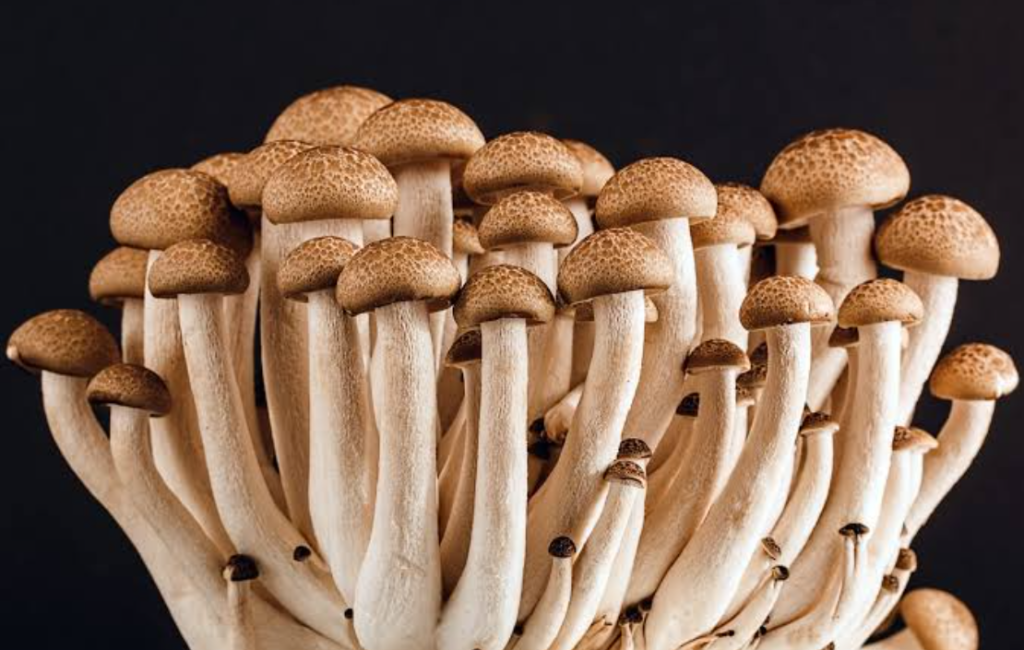
13. Beech Mushroom (Shimeji)
Shimeji mushrooms grow in small, tight clusters with tiny caps attached to a shared base. In their raw state, they carry a mild bitterness, which cooking removes almost entirely.
Once sautéed, they develop a pleasantly nutty flavor and a satisfying, slightly crunchy bite. Shimeji is a common addition to Japanese soups, rice dishes, and simple butter-based sautés.
14. Straw Mushroom
Straw mushrooms are traditionally grown on beds of rice straw across Southeast Asia, giving the species its name. Most people outside the region encounter them in canned form, already blanched and ready to cook.
They have a mild, slightly earthy taste and a texture that holds together well in stir-fries and soups. Straw mushrooms are especially common in Thai and Chinese cooking, often paired with tofu or light broths.
15. Nameko Mushroom
Nameko mushrooms are small, orange-brown, and coated in a naturally slippery, slightly gelatinous layer. That texture might seem unusual at first, but it thickens broths in a way many cooks appreciate.
They are a classic addition to Japanese miso soup, where their slight sliminess blends smoothly into the liquid. Nameko is also used in simple simmered dishes alongside tofu and green onion.
16. Matsutake Mushroom
Matsutake is one of the most expensive mushrooms in the world, largely because it resists commercial cultivation and must be foraged from specific pine forests. Its spicy, pine-like aroma is unlike almost any other mushroom, which is exactly why it commands such a premium.
In Japan, matsutake season is treated as a genuine culinary event each autumn. It is often prepared simply, steamed in rice or grilled, to avoid masking its distinctive scent.
17. Truffle (Black and White)
Truffles grow entirely underground, near the roots of specific trees, and are traditionally hunted using trained dogs or, historically, pigs. A single pound of prized white truffle can sell for thousands of dollars, depending on the season and region.
Their aroma is intense and unmistakable, strong enough that even a small shaving transforms an entire dish. Truffles are typically used raw, shaved thin over pasta, eggs, or risotto just before serving.
18. Hen of the Woods (Maitake)
Maitake grows in overlapping, feather-like clusters at the base of oak and other hardwood trees, often reaching impressive sizes. It has an earthy taste and a slightly chewy bite that holds up well to roasting.
Beyond the kitchen, maitake has drawn research interest for compounds that may support immune function. Its clusters separate easily into smaller pieces, making it simple to prepare in a hot, well-oiled pan.
19. Lion’s Mane Mushroom
Lion’s mane looks strikingly different from most mushrooms, forming a white, shaggy, almost pom-pom-like mass instead of a typical cap and stem. Once cooked, its texture is often compared to crab or lobster meat.
It has become popular in recent years for ongoing research into compounds that may support brain and nerve health. In the kitchen, lion’s mane is usually seared in butter until golden, then seasoned simply to let its texture shine.
20. Puffball Mushroom
Puffballs are round, smooth, and white, ranging from golf-ball size to noticeably larger specimens depending on the species. Younger puffballs, with pure white flesh inside, are edible when sliced and pan-fried like a simple cutlet.
Always cut one open before eating it, since a solid white interior confirms it is safe, while any coloring or gill-like structures signal it is not a puffball at all. Older puffballs turn yellow or brown inside and are no longer safe to eat.
Medicinal Mushrooms: Ancient Remedies, Modern Research
Many cultures have used mushrooms as natural remedies for centuries. Modern research continues to explore these traditional claims.
21. Reishi Mushroom
Reishi has a notably bitter taste and a glossy, reddish-brown, almost lacquered cap that sets it apart visually from most other fungi. Traditional Chinese medicine has used it for over 2,000 years, often referring to it as the “mushroom of immortality.”
Because it is too tough and bitter to eat as food, reishi is typically simmered into tea or processed into powders and extracts. Modern research continues to examine its role in supporting relaxation and general immune function, though it should never replace prescribed medical treatment.
22. Chaga Mushroom
Chaga grows almost exclusively on birch trees in cold climates like Siberia, Northern Europe, and parts of Canada. It appears less like a typical mushroom and more like a dark, charcoal-textured growth on the bark itself.
It is usually broken into chunks and brewed slowly as tea, producing an earthy, slightly bitter drink. Chaga has drawn scientific attention for its antioxidant content, and it remains a popular ingredient in wellness-focused coffee and tea blends.
23. Cordyceps Mushroom
Cordyceps naturally develops on insect larvae in high-altitude regions, particularly across the Tibetan Plateau, giving it one of the more unusual life cycles among fungi. This parasitic growth pattern once made wild cordyceps extremely rare and expensive.
It has a long history in Tibetan and Chinese herbal practice, traditionally associated with stamina and vitality. Today, most cordyceps sold commercially is lab-cultivated, making it far more accessible than the original wild-harvested variety.
24. Turkey Tail Mushroom
Turkey tail displays colorful, concentric rings in shades of brown, tan, and blue, arranged in overlapping fan shapes that genuinely resemble a turkey’s spread feathers. It grows commonly on dead logs and stumps across many forests worldwide.
Researchers have studied turkey tail extensively for polysaccharide-K, a compound investigated in Japan alongside conventional treatments. It is too woody to eat directly, so it is almost always consumed as tea, tincture, or powdered supplement.
25. Agaricus Blazei
This Brazilian mushroom is sometimes called the “mushroom of the sun,” reflecting its origin in sun-exposed grasslands rather than shaded forests. It resembles a slightly sweeter, more aromatic version of the common button mushroom.
It became particularly popular in Japan after research interest grew around its potential immune-supporting compounds. Agaricus blazei is most often found in dried, powdered, or capsule form rather than sold fresh in markets.
26. Shaggy Mane Mushroom
Shaggy mane is edible when young, with a delicate, almost meringue-like white cap covered in shaggy scales. As it ages, though, the entire mushroom dissolves into a black, inky liquid through a process called deliquescence.
Because of this rapid breakdown, it must be eaten fresh, ideally within a few hours of picking. Older cooks and foragers often treat shaggy mane as a race against time, cooking it the same day it is harvested.
27. Tremella (Snow Fungus)
Tremella looks strikingly different from typical mushrooms, forming a translucent, jelly-like structure that resembles a white flower or coral. It has almost no flavor of its own, which is exactly why it works so well in sweet applications.
It is a common ingredient in Chinese dessert soups, often paired with goji berries or rock sugar. Tremella also appears in traditional skin-care remedies, valued for its naturally high moisture-retaining polysaccharide content.
28. Poria Mushroom (Fu Ling)
Poria grows underground, often near pine tree roots, forming a hard, potato-like mass rather than a visible cap and stem. It has almost no odor or taste, which explains why it is rarely eaten on its own.
It has been a staple in traditional Chinese herbal formulas for centuries, frequently included in blends aimed at digestive comfort. Poria is typically sliced, dried, and boiled as part of a larger herbal decoction rather than prepared as a standalone food.
29. Birch Polypore
This hoof-shaped fungus grows almost exclusively on birch trees, forming a hard, rounded shelf along the trunk. Its tough, corky texture makes it unsuitable for regular cooking, though young specimens have occasionally been used in folk remedies.
Evidence of its use dates back to prehistoric times, most famously documented on “Ötzi the Iceman,” the well-preserved mummy found carrying birch polypore among his belongings. Today, it is more commonly processed into tea or tincture form.
30. Artist’s Conk
Named for its smooth white underside that darkens permanently when scratched, this hard, woody mushroom has long doubled as a natural canvas for artists. Its shelf-like shape can persist on a tree for many years, growing a new layer annually.
Traditional folk practices in various cultures have used artist’s conk in tea form, though it requires long simmering due to its dense structure. It remains more valued today for its ornamental use than for culinary purposes.
Wild and Foraged Mushrooms
These varieties are less common on store shelves. Foragers seek them out in forests, meadows, and grasslands, often with careful guidance.
31. Chicken of the Woods
This bright orange-yellow mushroom grows in wide, shelf-like clusters directly on tree trunks and stumps, often visible from a distance. Its firm, fibrous texture and taste genuinely resemble chicken once cooked, which explains its name.
Many foragers slice it and prepare it much like a cutlet, breading and frying it for a satisfying meat-free meal. It should always be cooked thoroughly, and foragers are advised to avoid specimens growing on certain tree species, since the mushroom can absorb compounds from its host.
32. Blewit Mushroom
Blewits have a striking lavender-blue color when young, fading to a more muted tan-purple as they mature. Their smell is often described as fruity or slightly perfumed, unlike most other foraged mushrooms.
They need thorough cooking and a confident, expert identification before eating, since raw blewits can cause digestive upset. Once cooked, they develop a soft texture and mild, pleasant flavor that pairs well with cream-based sauces.
33. Hedgehog Mushroom
Instead of gills, hedgehog mushrooms have tiny, tooth-like spines hanging beneath the cap, a feature that makes them easy to distinguish from lookalikes. This unusual underside is where the mushroom gets its name.
They carry a mild, nutty flavor and a firm texture that holds up well during cooking. Hedgehog mushrooms are considered one of the safer wild mushrooms for beginner foragers, since they have very few dangerous look-alikes.
34. Milk Cap Mushroom
Milk caps release a milky, latex-like liquid whenever their flesh is cut or broken, a defining trait of the group. The color and taste of that liquid, whether mild, peppery, or bitter, often determines whether a specific species is safe to eat.
Some species are edible after proper cooking, especially in parts of Eastern Europe where they are salted or pickled. Others remain bitter or mildly toxic, which is why species-level identification matters more with milk caps than with many other wild mushrooms.
35. Bolete Mushroom
Boletes have a distinctive sponge-like pore surface underneath the cap instead of traditional gills, making them fairly easy to recognize as a group. Many species beyond porcini are foraged across Europe and North America each season.
Most boletes are safe once properly identified, though a small number cause stomach upset if eaten raw or undercooked. Foragers often check for color changes when the flesh is cut, since certain boletes bruise blue, a helpful identification clue.
36. Parasol Mushroom
Parasol mushrooms have a large, umbrella-shaped cap covered in a distinctive scaly, snakeskin-like pattern as they mature. Their stem is unusually long and slender compared to the wide cap sitting on top.
They are popular breaded and pan-fried in parts of Europe, prepared much like a schnitzel. Careful identification matters here too, since a toxic, smaller lookalike called the green-spored parasol closely resembles young specimens.
37. Fairy Ring Mushroom
These small, tan-colored mushrooms grow in distinctive circular patterns across lawns, meadows, and grassy fields. The rings themselves form as the underground fungal network expands outward evenly in every direction over time.
Some fairy ring mushrooms are edible, with a mildly sweet, chewy texture once dried and rehydrated. The rings can expand for decades, and older, well-established rings are sometimes found spanning many meters across open fields.
38. Honey Mushroom
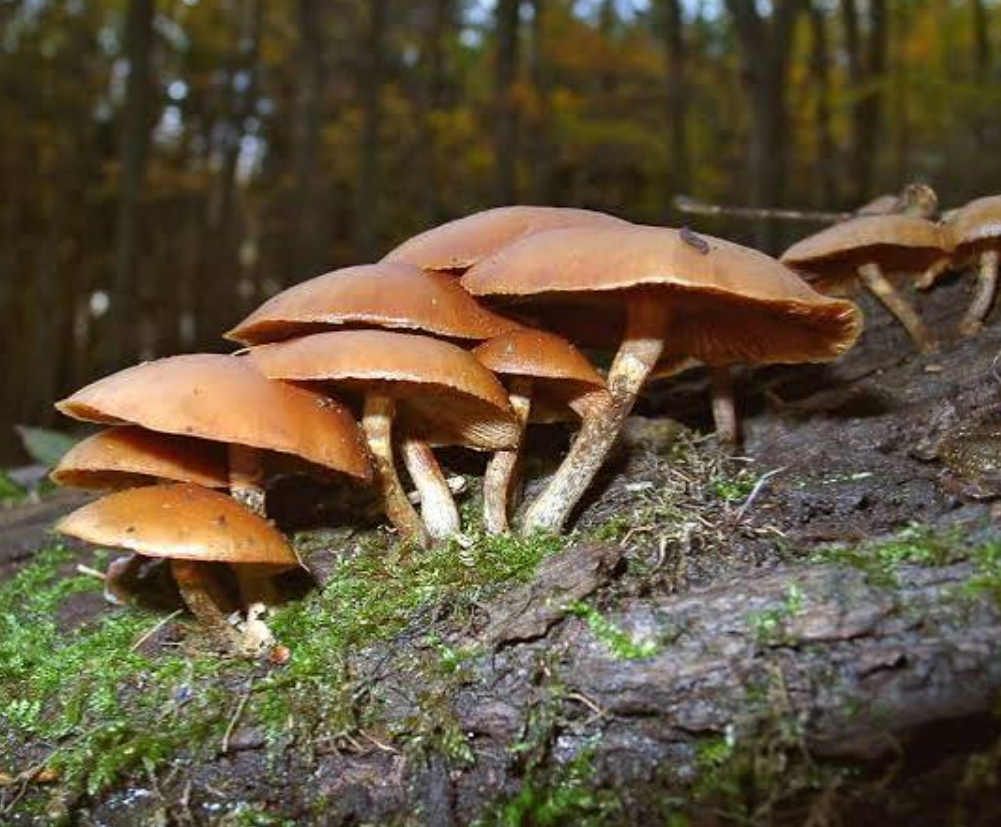
Honey mushrooms grow in dense, golden-brown clusters at the base of tree stumps and dying trees, often signaling root disease in the host tree. Their honey-colored caps and thin, dark stems make them a distinctive sight in autumn forests.
One honey mushroom colony in Oregon is considered among the largest living organisms on earth, with its underground network spanning several miles. Despite this massive size underground, the visible mushrooms themselves must still be cooked thoroughly before eating.
39. Giant Puffball
Giant puffballs can grow larger than a soccer ball, occasionally reaching the size of a beach ball under ideal conditions. A single specimen can weigh several kilograms when fully mature, making it one of the largest edible fungi foragers regularly encounter.
Like smaller puffballs, they are only safe to eat while the interior remains pure white and firm throughout. Slicing one open, cooking it like a thick steak, remains the most common preparation method among foragers who find them.
40. Indigo Milk Cap
This unusual mushroom bleeds a deep blue liquid whenever it is cut or broken, a trait that makes it instantly memorable to anyone who finds one. Its cap often fades from blue to a duller gray-green as it ages.
It is foraged and cooked in parts of North America and Asia, valued both for its striking appearance and mild flavor. Cooking mellows the color somewhat, though traces of blue often remain visible in the finished dish.
Poisonous Mushrooms: Know Them to Stay Safe
Some mushrooms look harmless but carry serious risk. Learning to identify these can genuinely save a life.
41. Death Cap Mushroom
The death cap is responsible for the majority of fatal mushroom poisonings worldwide, according to toxicology researchers who track global poisoning cases. Its pale green-tinged cap and unassuming appearance make it deceptively easy to overlook as harmless.
It resembles several edible species, including some prized wild mushrooms, which is exactly what makes misidentification so dangerous. Symptoms often do not appear until many hours after eating it, by which point serious liver damage may already be underway.
42. Destroying Angel
Pure white and deceptively elegant, the destroying angel could easily be mistaken for a delicate, harmless mushroom by an inexperienced forager. It shares the same deadly amatoxins found in the death cap, making it equally lethal.
It often grows near the base of hardwood trees, sometimes close to genuinely edible species, which increases the risk of accidental picking. Even small amounts can cause fatal organ damage if eaten and left untreated.
43. Fly Agaric
This bright red mushroom with distinctive white spots is instantly recognizable from folklore, fairy tales, and holiday imagery around the world. Despite its familiar, almost cartoonish look, it contains toxins that cause hallucinations, confusion, and significant illness.
It has a long history of ritual use in some cultures, though modern health authorities strongly advise against consuming it. Poisoning symptoms can include disorientation, vomiting, and in some cases dangerous shifts in heart rate.
44. False Morel
False morels resemble true morels closely enough to fool even some experienced foragers, particularly early in the season. Their cap looks more wrinkled and brain-like, rather than the neat honeycomb pattern of a genuine morel.
They contain a toxin called gyromitrin, linked to serious illness and, in rare cases, death if the mushroom is improperly prepared or eaten in large amounts. Some regions still consume false morels after specific parboiling techniques, though health experts generally advise avoiding them altogether.
45. Jack-o’-Lantern Mushroom
This bright orange mushroom grows in dense clusters at the base of trees and, remarkably, glows faintly in the dark under the right conditions. It is often mistaken for chanterelles, especially by foragers unfamiliar with the subtle differences between the two.
Unlike chanterelles, jack-o’-lanterns have true, sharp-edged gills rather than the shallow ridges chanterelles display. Eating one causes severe stomach cramping, vomiting, and diarrhea, though it is rarely fatal.
46. Autumn Skullcap
Small, brown, and easy to overlook, the autumn skullcap often grows on decaying wood alongside genuinely edible wood-loving mushrooms. That overlap in habitat is part of why accidental poisonings still occur.
It contains the same deadly amatoxins found in the death cap and destroying angel, despite its unassuming size. Because symptoms are delayed, victims sometimes feel briefly better before liver damage progresses further.
47. Deadly Webcap
This rust-colored mushroom looks fairly ordinary, with a cap and gill structure that does not immediately suggest danger. That ordinary appearance is precisely what makes it so hazardous to inexperienced foragers.
It causes kidney damage that may not appear for days or even weeks after eating it, delaying diagnosis significantly. By the time symptoms surface, some damage may already be irreversible, which is why any suspected exposure warrants immediate medical attention.
48. Panther Cap
Related closely to the fly agaric, the panther cap carries a similar cap shape but tends to appear in browner tones with fine white patches. It contains stronger concentrations of certain toxins than its more famous red relative.
It has caused documented poisoning cases involving confusion, vomiting, and disturbed sleep patterns. Foragers are generally advised to avoid the entire Amanita genus unless they have extensive, expert-level identification experience.
49. Common Earthball
Often confused with young puffballs at first glance, the earthball has a thicker, tougher outer skin and a dark, marbled interior once cut open. That dark interior is the clearest warning sign distinguishing it from a genuine, safe puffball.
Eating it causes notable digestive illness, including nausea and stomach cramps, though severe poisoning is uncommon. Its resemblance to puffballs makes cutting one open before consuming any similar-looking mushroom an essential safety habit.
50. Green-Spored Parasol
This mushroom closely resembles the edible parasol mushroom in size, shape, and scaly cap pattern, making the two easy to confuse. The clearest distinguishing feature only appears later, once its spores mature into a distinctive green tint.
It causes one of the most common non-fatal poisoning cases in North America, particularly among new foragers drawn to its lookalike’s reputation. Symptoms typically involve intense vomiting and diarrhea, usually resolving within a day or two with supportive care.
Quick Facts Worth Remembering
- The global mushroom market was valued at over USD 63 billion in 2023, with steady growth projected each year.
- Mushrooms are one of the few natural food sources of vitamin D when exposed to sunlight during growth.
- The U.S. produced roughly 832 million pounds of mushrooms in a recent growing season, according to USDA data.
- Poison control centers across the United States log thousands of mushroom exposure cases annually, many involving children or misidentified wild species.
These numbers show just how significant mushrooms are, both on the plate and in nature.
Beyond the kitchen, mushrooms also play a quiet but essential role in ecosystems. They break down fallen leaves, dead wood, and organic debris, recycling nutrients back into the soil.
Without fungi performing this work, forests would struggle to sustain new growth. In many ways, mushrooms are the unseen recyclers keeping entire ecosystems balanced and healthy.
Researchers have also started exploring mushroom-based materials for packaging and even building insulation. This growing field, sometimes called mycelium technology, shows how far fungi applications now reach beyond food alone.
Mushroom Nutrition at a Glance
Mushrooms are low in calories yet surprisingly rich in nutrients. A typical serving of raw white button mushrooms, about 100 grams, provides roughly 22 calories, 3 grams of protein, and notable amounts of potassium, selenium, and B vitamins, based on USDA FoodData Central figures.
Mushrooms exposed to ultraviolet light can also generate meaningful vitamin D, similar to how human skin produces it from sunlight.
This makes mushrooms one of the few plant-based foods offering this particular vitamin naturally. It is one reason nutritionists often recommend them as a regular addition to meals.
Unlike many vegetables, mushrooms also contain small amounts of umami-producing compounds, which is part of why they add so much depth to soups, sauces, and broths.
Buying and Storing Mushrooms the Right Way
Fresh mushrooms should feel firm, not slimy or spotted. A dry, slightly smooth surface usually signals good quality.
Avoid washing mushrooms until you are ready to cook them. Excess moisture speeds up spoilage and can make them turn mushy.
Store fresh mushrooms in a paper bag inside the refrigerator, rather than sealed plastic. Paper allows airflow and helps them last longer, typically five to seven days.
Dried mushrooms, such as porcini or shiitake, last much longer. Keep them in a sealed container away from light and moisture for extended shelf life.
When cooking, avoid overcrowding the pan. Overcrowded mushrooms release water and steam instead of browning properly, which affects both flavor and texture.
Mushroom Farming Around the World
Commercial mushroom farming has grown into a serious global industry. China alone produces the majority of the world’s cultivated mushrooms, followed by countries like the United States, Poland, and the Netherlands.
Farming mushrooms indoors allows for consistent quality year-round. Growers control temperature, humidity, and light with far more precision than nature ever offers outdoors.
Pennsylvania remains the top mushroom-producing state in the United States, according to USDA reports, thanks to its long history of mushroom farms and ideal growing conditions.
Button mushrooms, cremini, and portobello dominate commercial farming because they grow quickly and tolerate handling well. Specialty mushrooms like shiitake and oyster have grown rapidly in popularity over the past two decades.
Small-scale mushroom farming has also become popular among hobbyists. Growing kits for oyster or lion’s mane mushrooms are now widely available for home use, letting people harvest their own supply within weeks.
This growing interest reflects a broader shift toward understanding where food comes from. Mushrooms, once seen mainly as a simple pizza topping, are now viewed as a serious culinary and nutritional category.
A Word on Foraging Safety
Foraging can feel rewarding. Standing in a quiet forest, spotting a cluster of mushrooms, feels like a small discovery.
But identification mistakes happen, even to experienced foragers. Never eat a wild mushroom unless an expert confirms it is safe.
Spore prints, cap texture, and gill patterns all matter. A single missed detail can separate a delicious dinner from a hospital visit.
When in doubt, leave it out. This simple rule has protected countless foragers over the years.
Frequently Asked Questions
What is the most popular mushroom in the world? The white button mushroom holds this title, thanks to its mild flavor and widespread commercial farming.
Which mushroom is the most expensive? White truffles are typically the most expensive, sometimes selling for several thousand dollars per pound during peak season.
Are all wild mushrooms dangerous? No, many wild mushrooms are perfectly safe. However, some poisonous species closely resemble edible ones, so caution is always necessary.
Can mushrooms provide real health benefits? Some mushrooms, like turkey tail and reishi, are being actively researched for their compounds. Still, they should complement, not replace, medical care.
How can I tell if a mushroom is poisonous just by looking at it? There is no single universal rule. Some poisonous mushrooms look plain, while others look similar to popular edible species. Always confirm identification with a knowledgeable expert or reliable local guide, rather than relying on appearance alone.
Do mushrooms need to be cooked before eating? Most cultivated mushrooms can technically be eaten raw, though cooking often improves both digestibility and flavor. Certain wild types, including morels, must always be cooked thoroughly to be safe.
Why do some mushrooms glow or change color when cut? Certain species contain natural pigments and enzymes that react with air or light. The jack-o’-lantern mushroom, for example, produces a faint bioluminescent glow, while the indigo milk cap bleeds blue liquid once sliced.
Final Thoughts
Fifty mushrooms barely scratch the surface of what fungi offer the world. Yet this list covers the ones most people will encounter, cook with, or read about.
Whether you enjoy a simple sautéed button mushroom or dream of hunting truffles, understanding these varieties adds real value to your kitchen and your knowledge.
I find it remarkable how one kingdom of life can offer so much variety. A quiet grocery store shelf and a dense, damp forest floor can both hold treasures, just in very different forms.
Some mushrooms feed us. Some heal, or at least support the body in small ways science is still exploring. A few remind us that nature deserves respect, not casual assumptions.
Stay curious, stay careful, and always double-check before eating anything picked from the wild. That single habit protects both your health and your enjoyment of this fascinating natural world.
References
- USDA Forest Service – Fungi Overview: https://www.fs.usda.gov/wildflowers/fungi/index.shtml
- USDA FoodData Central – Nutritional Data on Mushrooms: https://fdc.nal.usda.gov/
- National Institutes of Health, PMC – Nutritional and Medicinal Value of Mushrooms: https://www.ncbi.nlm.nih.gov/pmc/articles/PMC4771780/
- Penn State Extension – Mushroom Growing and Facts: https://extension.psu.edu/mushrooms
- University of Minnesota Extension – Identifying Mushrooms: https://extension.umn.edu/yard-and-garden-news/identifying-mushrooms
- NC State Extension – Wild Mushrooms Guide: https://content.ces.ncsu.edu/wild-mushrooms
- Michigan State University Extension – Mushroom Hunting Guidance: https://www.canr.msu.edu/news/mushroom-hunting-in-michigan

Tim M Dave is a gardening expert with a passion for houseplants, particularly cacti and succulents. With a degree in plant biology from the University of California, Berkeley, he has vast experience in gardening. Over the years, he has cultivated a vast collection of desert plants and learned a great deal about how to grow and care for these unique companions.