70 Different Types of Ferns (With Pictures, and Growing Tips)
Ferns fascinate me every time I walk through a shaded garden or a rainforest trail. They were around long before flowers existed, and they still cover the earth in more forms than most people realize.
There are roughly 12,000 fern species known to science today, spread across about 225 genera worldwide. That number keeps shifting slightly as botanists reclassify species using DNA analysis, so older books and newer databases sometimes disagree.
If you searched for this guide, you probably want one of three things: help identifying a fern, ideas for your garden or home, or simple curiosity about how many kinds actually exist. This article covers all three.
I have organized 70 fern types into practical categories: houseplants, garden ferns, native woodland species, tree ferns, aquatic ferns, and a few unusual relatives. Every plant listed here is real, named, and grown or documented somewhere in the world.
Let’s get into it.
Popular Houseplant Ferns (1–8)
These are the ferns most people meet first, usually in a hanging basket or on a windowsill. They tend to tolerate indoor conditions better than most of their wild relatives, which is exactly why nurseries keep stocking them.
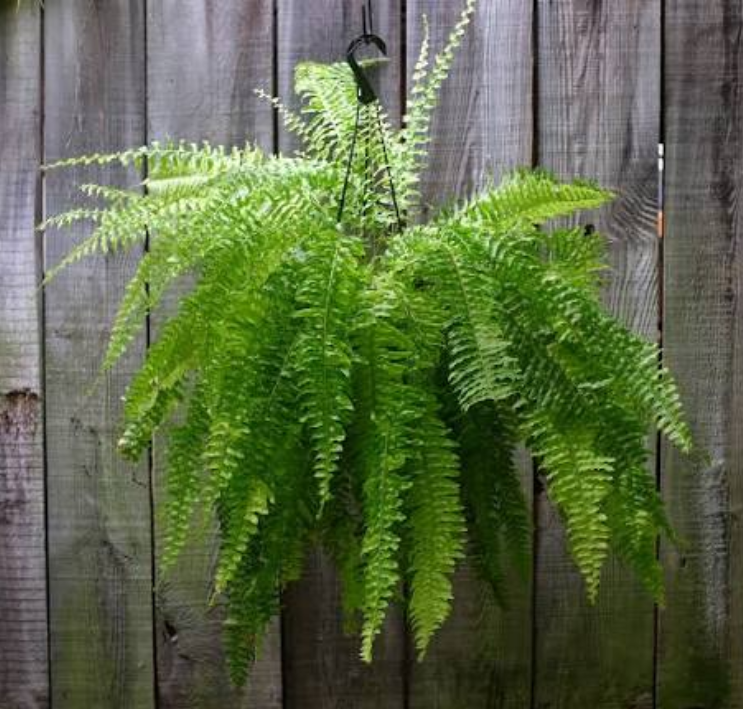
1. Boston Fern (Nephrolepis exaltata ‘Bostoniensis’)
The classic parlor fern, with long, arching fronds that made it a Victorian-era favorite still popular today. This natural variant of the species was discovered in a large shipment of ferns sent from Philadelphia to Boston in 1894, and the graceful, drooping form stuck around ever since. It loves humidity and indirect light, and it rewards consistent watering with steady, lush growth.
2. Kimberly Queen Fern (Nephrolepis obliterata)
A sturdier, more upright cousin of the Boston fern, with stiffer fronds that hold their shape well in containers. It tolerates drier indoor air far better than most ferns, making it a smart pick for offices or homes with less humidity. Gardeners in warmer climates also use it as a full-sun patio plant.
3. Bird’s Nest Fern (Asplenium nidus)
Broad, wavy, undivided fronds set it apart from the feathery look most people expect from ferns. It grows naturally as an epiphyte on tropical trees, collecting falling leaf litter and debris in its central rosette for nutrients. Indoors, it prefers a shallow pot and steady moisture rather than deep, constantly wet soil.
4. Staghorn Fern (Platycerium bifurcatum)
Mounted on wood boards in many homes, its antler-shaped fronds make it instantly recognizable even to people who know little about plants. It grows two types of fronds: flat, shield-like ones that anchor it to a surface, and the showy, forking ones that give the plant its name. Watering usually means soaking the mount rather than pouring water into a pot.
5. Rabbit’s Foot Fern (Davallia fejeensis)
Named for its fuzzy, creeping rhizomes that crawl over the pot’s edge like small furry paws. Those rhizomes store water, which makes this fern more forgiving of occasional neglect than many other houseplant ferns. Left to grow, the rhizomes will eventually cover the entire surface of the container.
6. Blue Star Fern (Phlebodium aureum)
Its blue-green, wavy fronds and unusual color make it stand out on a plant shelf full of ordinary greens. It handles lower humidity and irregular watering better than most true ferns, which explains its growing popularity among casual houseplant owners. The rhizomes are covered in coppery scales that add another layer of visual interest.
7. Button Fern (Pellaea rotundifolia)
Small, round leaflets resemble little coin-shaped buttons strung along wiry, dark stems. It grows slowly and stays compact, which makes it a good fit for small pots, terrariums, or desk corners. Unlike many ferns, it tolerates brief dry spells without dropping its foliage.
8. Lemon Button Fern (Nephrolepis cordifolia ‘Duffii’)
A compact Boston fern relative with tightly curled, rounded leaflets and a faint citrus scent when the fronds are brushed. Its small size makes it popular for terrariums and mixed plant arrangements. It also produces small tubers along its roots that help it survive short dry periods.
ALSO READ: 50 Different Types of Mushrooms (Edible, Medicinal, and Wild Varieties)
Garden and Landscape Ferns (9–16)
Shady borders, woodland gardens, and patio containers all benefit from these. Most tolerate a range of soil types as long as moisture stays consistent through the growing season.
9. Autumn Fern (Dryopteris erythrosora)
New fronds emerge copper-red before turning glossy green, giving the plant color through much of the year rather than a single spring flush. It holds up well in both sun and shade, which makes it more versatile than many woodland ferns. Established clumps stay attractive with very little maintenance beyond an annual cleanup of old fronds.
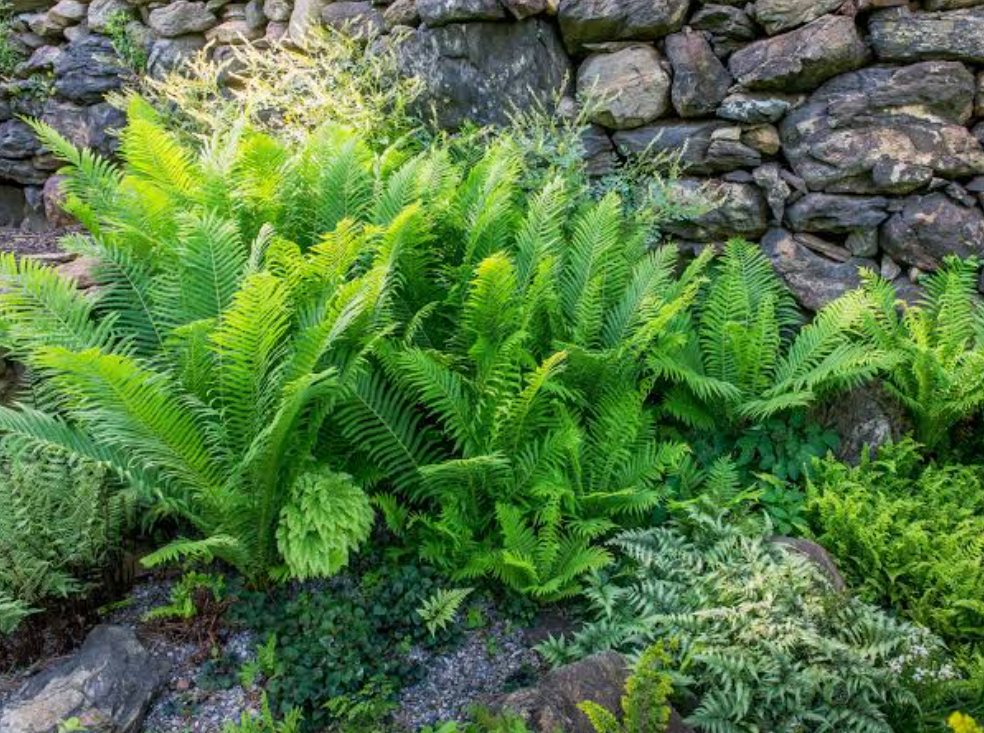
10. Japanese Painted Fern (Athyrium niponicum var. pictum)
Silver, burgundy, and green tones blend across each frond in a way few other ferns can match. Few plants bring this much color to shade gardens without a single flower involved. It pairs especially well with hostas and other shade perennials that share its moisture needs.
11. Ostrich Fern (Matteuccia struthiopteris)
Grown for its edible fiddleheads in spring, this fern can reach five feet tall in good conditions and forms dramatic, vase-shaped clumps. It spreads by underground runners, so it fills space quickly in a moist woodland bed. Gardeners who forage fiddleheads should harvest carefully, since overpicking weakens the plant.
12. Royal Fern (Osmunda regalis)
One of the largest hardy ferns, with fronds that resemble locust tree leaves rather than typical lacy fern foliage. It thrives at the edge of ponds and streams, where its roots can stay consistently damp. Mature clumps can persist in the same spot for decades with minimal care.
13. Cinnamon Fern (Osmundastrum cinnamomeum)
Named for the rusty, cinnamon-colored fertile fronds that stand upright at the plant’s center, distinct from the surrounding green sterile fronds. It favors wet, acidic soil and often grows alongside royal fern in boggy garden areas. The fertile fronds fade and disappear by midsummer, leaving only the leafy green fronds behind.
14. Christmas Fern (Polystichum acrostichoides)
Evergreen through winter in much of eastern North America, hence the festive common name that gardeners and foragers both use. Its leathery, dark green fronds hold their color even under snow, offering rare winter interest in a shade garden. It tolerates dry shade better than most ferns on this list.
15. Western Sword Fern (Polystichum munitum)
A Pacific Northwest staple, forming dense evergreen clumps under conifer canopies where little else grows. Its stiff, sword-shaped fronds can reach several feet long and stay green year-round in mild coastal climates. Indigenous communities in the region historically used its rhizomes and fronds for practical purposes beyond decoration.
16. Holly Fern (Cyrtomium falcatum)
Glossy, spiny-edged leaflets look more like holly leaves than typical fern fronds, which often surprises people seeing it for the first time. It tolerates salt spray and coastal conditions better than most ferns, making it popular in seaside gardens. It also handles low light indoors, doubling as a houseplant in cooler climates.
North American Native Woodland Ferns (17–24)
17. Lady Fern (Athyrium filix-femina)
Delicate and lace-like, it grows in loose clumps across temperate forests worldwide, not just in North America. Its finely divided fronds give it a soft, feathery texture that contrasts nicely with coarser woodland plants. It dies back completely in winter and returns reliably each spring.
18. Male Fern (Dryopteris filix-mas)
A rugged, widespread species documented across much of North America, Europe, and Asia in official plant databases. Despite the name, it has no connection to plant gender; older herbalists simply thought its coarser fronds looked more masculine than the finer lady fern. It tolerates a wide range of soils and light levels better than many woodland species.
19. Interrupted Fern (Osmunda claytoniana)
Fertile leaflets “interrupt” the middle of the frond, leaving a visible gap that gives this fern its unusual name. That gap appears only in spring, once the fertile leaflets have released their spores and withered away. The rest of the frond stays green and full through summer and into fall.
20. Sensitive Fern (Onoclea sensibilis)
So named because its fronds wilt quickly at the first frost, unlike hardier evergreen species that shrug off cold snaps. It spreads readily by rhizomes in moist soil, sometimes forming large colonies in wet meadows. Its separate, bead-like fertile fronds persist through winter long after the leafy fronds have collapsed.
21. Bracken Fern (Pteridium aquilinum)
One of the most widely distributed plants on the planet, found on every continent except Antarctica. It spreads aggressively through deep rhizomes, which makes it useful for erosion control but difficult to remove once established. Some parts of the plant are considered toxic to livestock, so it is generally avoided in pastures.
22. Hay-scented Fern (Dennstaedtia punctilobula)
Crushed fronds release a scent reminiscent of freshly cut hay, especially in warm weather, which makes a walk through a patch surprisingly pleasant. It forms dense, low colonies in sunny to partly shaded areas. Its light green, finely cut fronds turn a soft golden color in autumn before dying back.
23. Marsh Fern (Thelypteris palustris)
A wetland specialist that spreads readily through damp meadows and pond margins, often forming loose, open colonies. Its thin, delicate fronds are easy to overlook next to showier wetland plants. It tolerates standing water better than most ferns on this list.
24. New York Fern (Thelypteris noveboracensis)
Fronds taper at both ends, a helpful identification trick foragers and naturalists use in the field to separate it from similar species. It forms loose colonies in moist, shaded woods across much of the eastern United States. Despite the name, it is common well beyond New York State.
Rock, Cliff, and Ground-Cover Ferns (25–32)
25. Ebony Spleenwort (Asplenium platyneuron)
Named for its shiny, dark brown stem, common on rocky slopes and old stone walls throughout eastern North America. It stays small, rarely exceeding a foot tall, and tucks itself into narrow rock crevices where soil is thin. Its evergreen fronds make it easy to spot even in winter.
26. Maidenhair Spleenwort (Asplenium trichomanes)
A tiny, wiry-stemmed fern that tucks itself into cracks in limestone and mortar, often growing on old stone buildings as easily as natural rock. Its small, rounded leaflets line up neatly along each dark stem. It tolerates far less soil than most ferns, surviving on little more than moisture trapped in rock crevices.
27. Walking Fern (Asplenium rhizophyllum)
Its long, tapering fronds root at the tip and sprout new plants, “walking” across mossy rocks over the course of several seasons. This unusual reproductive trick lets a single plant spread sideways without producing seeds or relying only on spores. It favors shaded limestone outcrops with a steady layer of moss.
28. Resurrection Fern (Pleopeltis polypodioides)
It curls up and appears completely dead during drought, then unfurls green again within hours of rain, which is exactly how it earned its name. This ability lets it survive perched high on tree branches, where soil and stored water are scarce. It is common throughout the southeastern United States on oak and other hardwood trees.
29. Common Polypody (Polypodium vulgare)
A tough, evergreen species that grows directly on rocks and tree bark in cool climates, needing very little actual soil to survive. Its creeping rhizomes spread slowly across stone surfaces, anchoring the plant firmly in place. It stays green through winter in many regions, offering rare color on bare rock faces.
30. Licorice Fern (Polypodium glycyrrhiza)
Its rhizome tastes faintly of licorice and was historically chewed by Indigenous peoples of the Pacific Coast for its flavor and mild medicinal use. It grows on mossy tree trunks and rock faces throughout the Pacific Northwest. Unlike most ferns, it actively grows during the wet winter months and can go dormant in dry summers.
31. Purple Cliffbrake (Pellaea atropurpurea)
A drought-tolerant species with purplish stems, often found wedged into limestone cliff faces where few other plants can gain a foothold. Its leathery fronds handle both direct sun and long dry spells better than most rock ferns. It rarely grows anywhere except on calcium-rich stone.
32. Rusty-back Fern (Asplenium ceterach)
Named for the rust-colored scales coating the underside of each small, lobed frond, which give the plant a distinctly weathered look. Those scales help it survive drought by slowing water loss from the frond surface. It grows on old walls and rocky outcrops across Europe and parts of Asia.
Maidenhair Family Ferns (33–37)
Maidenhair ferns belong to the ribbon-fern family, Pteridaceae, and are found throughout North America and on most other continents. Their fan-shaped leaflets and wiry black or dark brown stems make them unmistakable, even to beginners.
33. Northern Maidenhair Fern (Adiantum pedatum)
Its horseshoe-shaped frond arrangement is one of the most elegant patterns in the plant world, with leaflets fanning out from a central point. It grows naturally in rich, shaded woodlands across much of North America. Established clumps can live for many years in the right conditions without much intervention.
34. Southern Maidenhair Fern (Adiantum capillus-veneris)
Named partly for its water-repelling foliage, since droplets bead and roll off almost instantly rather than soaking into the leaflets. It favors limestone seeps, waterfalls, and other consistently damp, mineral-rich sites. It is more heat-tolerant than its northern relative, which suits it to warmer climates.
35. Delta Maidenhair Fern (Adiantum raddianum)
A popular houseplant version, prized for its fine, triangular pinnules and airy, delicate appearance. It needs steady humidity indoors, which is why it often struggles in dry, heated homes during winter. Terrariums and bathrooms tend to suit it far better than an open living room shelf.
36. Rosy Maidenhair Fern (Adiantum hispidulum)
Young fronds emerge in a soft pink-bronze shade before maturing to green, adding seasonal color changes that most ferns lack. It is somewhat tougher than other maidenhair species, tolerating brief dry spells without severe damage. Its rounded leaflet shape sets it apart from the more triangular forms of its relatives.
37. Silver Dollar Maidenhair Fern (Adiantum peruvianum)
Its leaflets are noticeably larger and rounder than other maidenhair species, sometimes reaching two inches wide. The oversized foliage gives it a bolder, less delicate look compared to typical maidenhair ferns. It needs consistently high humidity to thrive, making it better suited to greenhouses than average homes.
Tree Ferns (38–45)
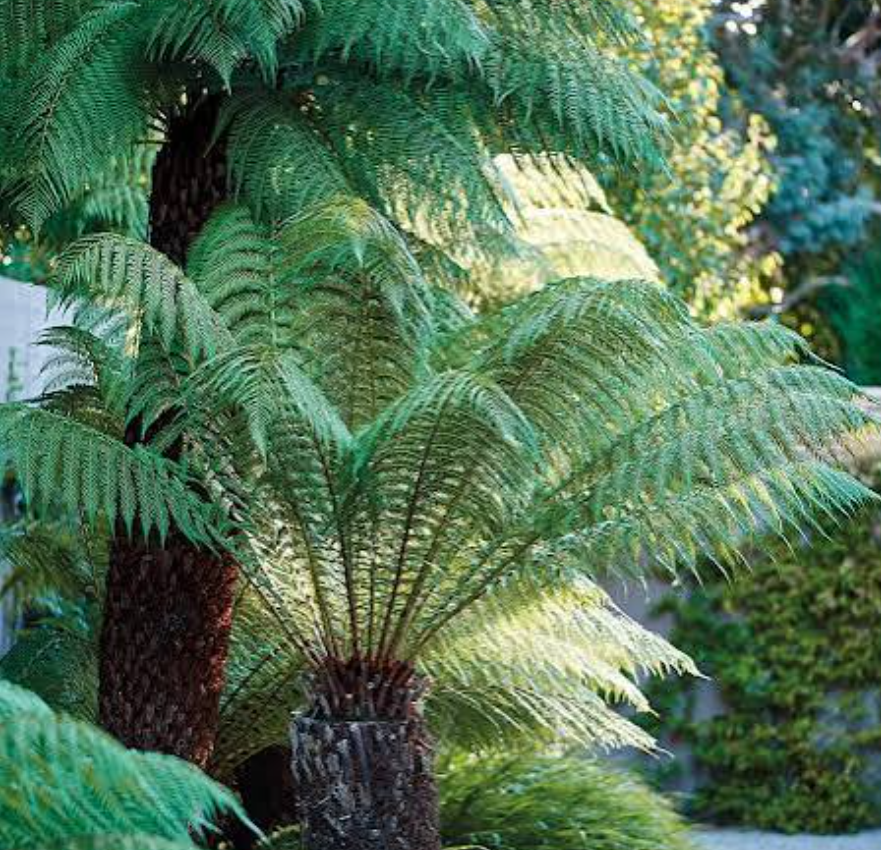
Tree ferns look like leftovers from the dinosaur age, and in a sense, they are. Their trunks are not true wood but tightly packed fibrous roots that build up slowly over decades.
38. Australian Tree Fern (Sphaeropteris cooperi)
Grows a slender trunk topped with a crown of arching fronds, sometimes reaching 30 feet in height under ideal conditions. It grows quickly compared to most tree ferns, adding noticeable trunk height within just a few years. Its fast growth has made it invasive in some regions outside its native range.
39. Tasmanian Tree Fern (Dicksonia antarctica)
Extremely cold-hardy for a tree fern, tolerating light frost far better than most tropical relatives. Its thick, fibrous trunk holds moisture well, which helps it survive brief dry or cold spells. It grows slowly, often adding just an inch or two of trunk height per year.
40. Silver Fern (Cyathea dealbata)
New Zealand’s national emblem, recognized instantly by the bright silver-white underside of its fronds. That silver coloring reflects moonlight, which locals say once helped early travelers find their way through forests at night. It grows in the wild almost exclusively within New Zealand’s native forests.
41. Mexican Tree Fern (Cibotium schiedei)
A soft, drooping tree fern popular in warm-climate landscaping and conservatories, valued for its finely textured, arching fronds. It prefers filtered light and consistent moisture, struggling in full sun or dry air. Its trunk stays relatively short and slow-growing compared to more vigorous tree fern species.
42. Hawaiian Tree Fern / Hapuʻu (Cibotium glaucum)
A keystone species in Hawaiian rainforests, providing habitat and food sources for native birds and insects found nowhere else. Its fibrous trunk holds water like a sponge, supporting other plants that grow directly on its surface. It plays a significant role in Native Hawaiian culture and traditional practices.
43. Black Tree Fern (Cyathea medullaris)
One of the fastest-growing tree ferns, capable of adding a foot of trunk height per year under good conditions. Its dark, almost black trunk and huge, glossy fronds make it a dramatic focal point in any landscape. It needs consistent moisture and shelter from strong wind to thrive.
44. Wheki Tree Fern (Dicksonia squarrosa)
Forms dense, spreading colonies in New Zealand forests, often thriving in disturbed ground where other plants struggle to establish. Its slender, dark trunks frequently grow in clusters rather than as single specimens. It tolerates more sun and wind exposure than many other tree fern species.
45. King Fern (Angiopteris evecta)
Not a true trunked tree fern, but its fronds can stretch nearly 20 feet, among the largest of any fern species alive today. It grows from a large, squat rhizome rather than a tall trunk, giving it a very different silhouette from typical tree ferns. It favors deep shade and constant moisture in tropical forest understories.
Aquatic and Wetland Ferns (46–52)
46. Java Fern (Microsorum pteropus)
A staple of freshwater aquariums, attached to driftwood or rocks rather than planted in substrate like most tank plants. Its tough, leathery leaves resist grazing by fish better than softer aquatic plants. It grows slowly but reliably, making it a favorite for beginner aquarists.
47. Water Clover Fern (Marsilea quadrifolia)
Its four-lobed leaves resemble true clover, though it is a fully aquatic fern that spreads across pond surfaces and shallow water. It can grow either fully submerged or with leaves floating on the surface, depending on water depth. Its clover-like appearance often confuses people unfamiliar with true ferns.
48. Mosquito Fern (Azolla filiculoides)
A tiny floating fern that turns red under stress and fixes atmospheric nitrogen through a partnership with cyanobacteria living inside its leaves. That nitrogen-fixing ability makes it useful as a natural fertilizer in some rice paddies. It can double its coverage on a pond within just a few days under warm conditions.
49. Giant Salvinia (Salvinia molesta)
A fast-spreading floating fern classified as a noxious weed in several countries due to its aggressive, mat-forming growth. It can choke waterways within weeks, blocking sunlight and depleting oxygen for fish and other aquatic life. Many regions now restrict its sale or cultivation because of this invasive potential.
50. Floating Fern (Salvinia natans)
A smaller, less aggressive cousin of giant salvinia, sometimes grown in ornamental ponds for its neat, compact floating mats. Its tiny, hair-covered leaves repel water, keeping the plant dry even while sitting directly on the surface. It rarely becomes invasive the way its larger relative does.
51. Water Sprite (Ceratopteris thalictroides)
Popular among aquarists for its rapid growth and its role in absorbing excess nutrients from tank water, helping keep algae in check. It can grow either rooted in substrate or freely floating, adapting to whatever conditions the tank provides. Its finely divided, lacy leaves also offer shelter for small fish and fry.
52. Netted Chain Fern (Woodwardia areolata)
Thrives in bogs and wet woodlands, identifiable by the netted vein pattern across its fronds, which is unusual among ferns. It spreads steadily through wet soil via creeping rhizomes, often forming loose colonies over time. Its separate fertile fronds stand taller and narrower than the sterile leafy ones.
Epiphytic and Hanging Ferns (53–58)
53. Regal Elkhorn Fern (Platycerium veitchii)
A silvery, upright staghorn relative better suited to drier, sunnier conditions than most of its shade-loving cousins. Its fine, silvery hairs help it retain moisture and reflect intense sunlight. It tends to grow more compactly than the common staghorn fern, making it easier to mount and display.
54. Giant Staghorn Fern (Platycerium grande)
One of the largest staghorn species, with shield fronds that can span several feet once the plant matures. It takes years to reach full size, but a mature specimen becomes a genuine centerpiece in any collection. Its size means it needs a sturdy mount and plenty of room to spread.
55. Fishtail Fern (Nephrolepis biserrata ‘Furcans’)
Its frond tips split repeatedly, creating a ragged, fishtail-like silhouette that sets it apart from smoother Nephrolepis relatives. It grows larger and more vigorously than the standard Boston fern, often outgrowing small hanging baskets quickly. Its unusual texture makes it a popular choice for collectors seeking something different.
56. Squirrel’s Foot Fern (Davallia trichomanoides)
Similar to the rabbit’s foot fern but with finer, more delicate foliage and slightly thinner creeping rhizomes. Its rhizomes are covered in fine, silvery hairs that give the plant its common name. It handles indoor conditions reasonably well, provided humidity stays consistent.
57. Kangaroo Paw Fern (Microsorum diversifolium)
Named for its paw-shaped fronds and fuzzy, creeping rhizomes that spread across the surface of its pot or mount. It tolerates lower light than many hanging ferns, making it a practical option for shadier corners. Its thick, leathery fronds resist wilting better than more delicate fern varieties.
58. Crocodile Fern (Microsorum musifolium ‘Crocodyllus’)
Deeply textured, scaly-looking fronds give this fern its reptilian nickname, with a pattern that genuinely resembles crocodile skin up close. It grows larger fronds than most houseplant ferns, often exceeding two feet in length. It prefers bright, indirect light and steady humidity to keep its texture looking crisp.
Climbing and Trailing Ferns (59–62)
59. Japanese Climbing Fern (Lygodium japonicum)
Unusual among ferns for its vining growth habit, climbing fences and shrubs by twining its fronds around any available support. It can grow surprisingly long in a single season, sometimes reaching ten feet or more. In parts of the southeastern United States, it has become invasive enough to warrant active control efforts.
60. American Climbing Fern (Lygodium palmatum)
A rare native climbing species found in scattered wetland pockets across the eastern United States, unlike its more aggressive Japanese relative. It grows far more slowly and stays confined to specific damp, acidic habitats. Because of its rarity, it is protected in several states where it still occurs.
61. Wart Fern (Microsorum scolopendria)
A trailing, wall-climbing species with leathery, deeply lobed fronds that vary considerably in shape from plant to plant. It spreads by creeping rhizomes that cling tightly to rock, bark, or masonry surfaces. Its tolerance for heat and humidity makes it common throughout tropical and subtropical regions.
62. Mother Fern (Asplenium bulbiferum)
Produces tiny plantlets directly on its fronds, which drop and root to form new plants nearby without any need for spores to germinate first. This makes propagation remarkably easy compared to most ferns, since a single frond can produce dozens of baby plants. Its finely divided, arching fronds also make it an attractive hanging basket specimen on their own.
Colorful and Ornamental Fern Cultivars (63–67)
63. Silver Lace Fern (Pteris ensiformis)
Variegated silver stripes run down the center of each narrow leaflet, creating a striking contrast against the darker green edges. It stays relatively compact, making it well suited to terrariums and small container displays. Bright, indirect light helps preserve its variegation better than deep shade.
64. Ribbon Brake Fern (Pteris cretica ‘Albolineata’)
A striking cream-and-green striped cultivar often grown as a terrarium centerpiece thanks to its bold, eye-catching pattern. Its fronds are more upright and rigid than many other Pteris varieties. It tolerates lower humidity than most variegated ferns, though its coloring is more vivid with consistent moisture.
65. Golden Fern (Pityrogramma calomelanos)
The underside of each frond is dusted with a fine, golden-yellow powder that rubs off slightly if touched. That powder is thought to help protect the fronds from excess sunlight and water loss. It naturalizes readily in warm, humid climates, sometimes spreading beyond where it was originally planted.
66. Tassel Fern (Polystichum polyblepharum)
Glossy, dark green fronds with a distinctive tasseled, drooping tip set this fern apart from other Polystichum species. New fronds emerge covered in golden hairs before unfurling into their mature, glossy form. It stays evergreen in most climates, adding structure to shaded winter gardens.
67. Crested Wood Fern (Dryopteris cristata)
A northern wetland species with slightly twisted, crest-like leaflet tips that give the fronds a ruffled appearance. It favors consistently wet, boggy soil more than most Dryopteris relatives. Its narrow, upright form fits neatly into tight spaces along pond edges or wet woodland borders.
Fern Allies Worth Knowing (68–70)
These are close relatives of true ferns, often mistaken for them at first glance despite belonging to separate plant lineages entirely.
68. Whisk Fern (Psilotum nudum)
One of the most primitive vascular plants alive, with no true leaves or roots at all, just small, forking green stems. Its simple structure has led some botanists to consider it a living link to some of the earliest land plants. It reproduces through spores held in small, yellow capsules along its stems.
69. Adder’s Tongue Fern (Ophioglossum vulgatum)
A single, tongue-shaped fertile spike gives this odd little plant its name, rising from the center of a single, smooth leaf. It is easy to overlook in the wild, since it lacks the divided, feathery fronds most people associate with ferns. It often appears briefly in spring before disappearing underground for the rest of the year.
70. Peacock Spikemoss (Selaginella uncinata)
Technically a spikemoss rather than a true fern, but its iridescent blue-green foliage earns it a spot on most fern-lover’s shopping lists anyway. It spreads as a low, trailing groundcover in shaded, humid spots. Its unusual metallic sheen is most visible in bright, indirect light.
How to Tell a True Fern From a “Fern” in Name Only
A few popular plants carry the word “fern” but are not true ferns at all. Asparagus fern and foxtail fern belong to the asparagus family and reproduce by seed, not spores, despite their feathery, fern-like appearance.
If you want to confirm a plant is a true fern, check the underside of a mature frond. True ferns display sori, small clusters of spore cases, arranged in patterns unique to each species.
No flowers, no seeds, no fruit. If a plant produces any of those, it is not a fern, regardless of what its common name suggests.
Quick Care Notes for Beginners
Most popular ferns share a few core needs, whether grown indoors or out. Getting these basics right solves the vast majority of problems before they start.
Light: Indirect or filtered light suits nearly all ferns. Direct sun scorches thin fronds quickly, often within a single afternoon.
Water: Consistent moisture matters more than quantity. Ferns dislike both drought and waterlogged soil, and they tend to show stress quickly when either extreme sets in.
Humidity: Indoor ferns, especially Boston and maidenhair types, thrive with 50 percent humidity or higher. A pebble tray or occasional misting can make a real difference in dry homes.
Soil: Rich, well-draining, organic soil mimics the forest floor most ferns evolved in. A mix heavy in peat or compost usually works better than standard potting soil alone.
I have killed more than one maidenhair fern through inconsistent watering, so I understand the learning curve. Once you find their rhythm, though, ferns are forgiving plants that reward patience more than perfection.
Common Problems and Quick Fixes
Browning frond tips usually point to low humidity or a buildup of minerals from tap water. Switching to filtered or rain water often solves it within a few weeks.
Yellowing fronds across the whole plant often mean overwatering rather than a lack of nutrients. Let the top inch of soil dry before watering again, and check that the pot drains properly.
Slow or stunted growth can signal insufficient light rather than a lack of fertilizer. Move the plant closer to a window, but keep it out of direct afternoon sun.
Pests are less common on ferns than on many houseplants, but scale insects and mealybugs occasionally appear on Boston and maidenhair varieties. Outdoor ferns like Boston fern generally resist deer and heavy shade well, though they can still face occasional trouble from fern caterpillars and fern scale insects.
Catching these issues early almost always saves the plant. Ferns tend to signal distress well before real, lasting damage sets in.
Frequently Asked Questions
How many types of ferns exist worldwide? Roughly 12,000 species are currently recognized, though estimates from different sources range between 10,500 and 15,000 as taxonomy continues to be refined through genetic research.
What is the most popular fern for indoor growing? The Boston fern remains the most widely sold houseplant fern, valued for its lush appearance and relatively forgiving care requirements compared to more delicate species.
Are all ferns safe for pets? Not all. Boston ferns are generally considered non-toxic, but asparagus fern, which is not a true fern, is toxic to cats and dogs, so it is worth verifying the exact species before bringing one home.
Do ferns need direct sunlight? No. Most ferns evolved under forest canopies and prefer filtered or indirect light rather than direct sun, which can quickly scorch their thin fronds.
Final Thoughts
Seventy ferns barely scratches the surface of a group this large, but this list covers the species you are most likely to encounter, buy, or stumble across on a hike.
Whether you’re filling a shady garden bed, decorating a bathroom shelf, or simply trying to name a plant you photographed on a trail, I hope this guide gave you a clear, reliable starting point.
Ferns have survived for hundreds of millions of years without flowers or seeds. That alone makes them worth a second look.
References
- PROSEA, Introduction to Ferns and Allies, Pl@ntUse – PlantNet: https://plantuse.plantnet.org/en/PROSEA,_Introduction_to_Ferns_and_allies
- USDA PLANTS Database, Dryopteris filix-mas (Male Fern) Plant Profile, U.S. Department of Agriculture: https://plants.usda.gov/plant-profile/DRFI2
- USDA PLANTS Database, Sensitive Fern Plant Profile, U.S. Department of Agriculture: https://plants.usda.gov/plant-profile/ONSE
- North Carolina State University Extension, Nephrolepis exaltata (Boston Fern) Plant Toolbox: https://plants.ces.ncsu.edu/plants/nephrolepis-exaltata/
- North Carolina State University Extension, Adiantum (Maidenhair Fern) Plant Toolbox: https://plants.ces.ncsu.edu/plants/adiantum/
- University of Florida IFAS Extension, Adiantum spp. Maidenhair Fern, Ask IFAS: https://ask.ifas.ufl.edu/publication/FP013
- University of Wisconsin–Madison Extension, Boston Fern, Nephrolepis exaltata ‘Bostoniensis’: https://hort.extension.wisc.edu/articles/boston-fern-nephrolepis-exaltata-bostoniensis/

Tim M Dave is a gardening expert with a passion for houseplants, particularly cacti and succulents. With a degree in plant biology from the University of California, Berkeley, he has vast experience in gardening. Over the years, he has cultivated a vast collection of desert plants and learned a great deal about how to grow and care for these unique companions.