50 Popular Types of Sedum Plants (Stonecrop Varieties, With Pictures)
Sedum is one of the largest succulent genera in the world. Researchers estimate the group contains around 470 species, most of them native to the Northern Hemisphere, with a handful reaching into Africa and South America.
That number keeps shifting because botanists are still discovering new sedum species in places like China every year. It is a genus that refuses to sit still, taxonomically speaking.
In gardens, though, sedum keeps things simple. It wants sun, well-drained soil, and dry conditions, and it rewards you with fleshy leaves and starry flowers that pollinators genuinely love.
This guide walks through 50 popular types of sedum, grouped by how you would actually use them: groundcovers, trailing varieties, upright border plants, rosette-forming succulents, and specialty colorful cultivars.
What Exactly Is Sedum?
Sedum, commonly called stonecrop, is a genus of succulent, herbaceous perennials with fleshy, flat or rounded leaves. According to North Carolina State University’s Extension Gardener Plant Toolbox, the genus historically included over 300 species, though many taller types have since been reclassified into the genus Hylotelephium.
This reclassification confuses a lot of gardeners, myself included at first. In plain terms, if a plant tag says “Sedum” but the plant is tall and clump-forming, like ‘Autumn Joy,’ botanically it may now be labeled Hylotelephium instead.
For this guide, I am using the common garden name “sedum” the way nurseries and gardeners actually use it. That means both true Sedum species and the reclassified Hylotelephium types are included.
Low-growing sedums spread by rooting stems and work beautifully on slopes, in rock gardens, as groundcover, in hanging baskets, and even on green roofs. Taller sedums produce large flower clusters in white, yellow, pink, or red, perfect for borders and pollinator gardens.
One quirk worth knowing: sedum leaves fall off easily underfoot. The upside is that fallen leaves root readily, so you can propagate new plants almost by accident.
Why Gardeners Keep Choosing Sedum
Sedum has quietly become one of the most requested succulents for drought-prone landscapes. A few reasons stand out.
Drought tolerance is exceptional. Once established, most sedums need little to no supplemental water, which matters more every year as regions face tighter water restrictions.
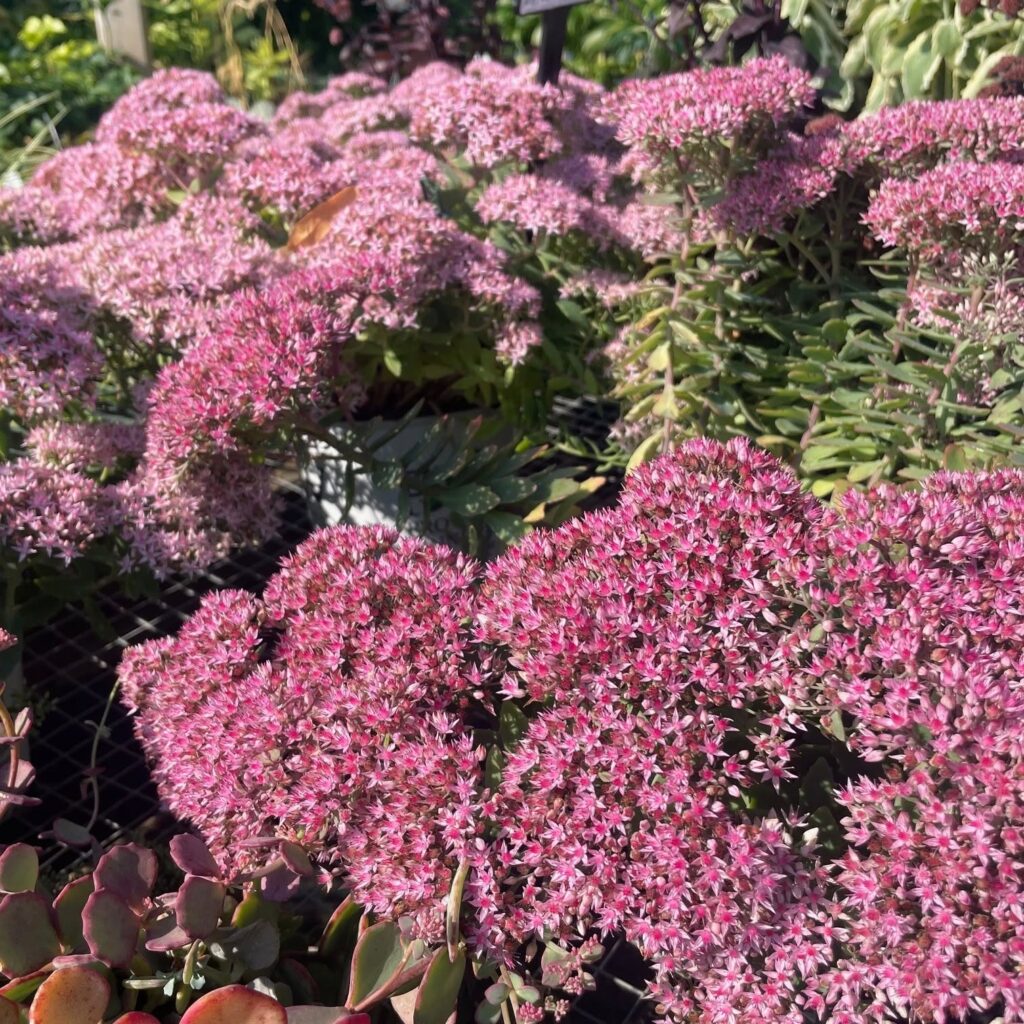
Pollinators genuinely rely on them. Butterflies, bees, and flies are drawn to sedum flowers, especially the late-season blooms of taller varieties when few other nectar sources remain.
Green roof performance is measurable. Pennsylvania State University’s green roof research center found that a 3.5 to 4-inch deep sedum green roof in central Pennsylvania can retain roughly 50 to 60 percent of annual rainfall, with retention reaching near 100 percent during summer months.
That stormwater statistic is not a small detail. It is one of the main reasons cities and universities keep specifying sedum for vegetated roofing systems.
Michigan State University Extension notes that green roofs deliver additional benefits beyond water retention, including energy conservation, reduced urban heat island effect, and longer roofing membrane lifespan.
Low maintenance also means low cost. Once sedum fills in a bed, mulching, weeding, and irrigation upkeep drop sharply compared to thirstier perennials, which matters for anyone gardening on a budget or a tight schedule.
Salt tolerance is another quiet advantage. Several low-growing types, including Sedum acre, handle roadside salt spray and coastal conditions that would scorch softer groundcovers.
With that context in mind, let’s get into the actual plants.
Sedum Through the Seasons
Sedum is not a one-season plant, which is part of what makes it so satisfying to grow. It earns its space across the whole calendar.
In spring, low-growing types push out fresh, plump foliage, and this is the best time to pinch back tall varieties to prevent later flopping.
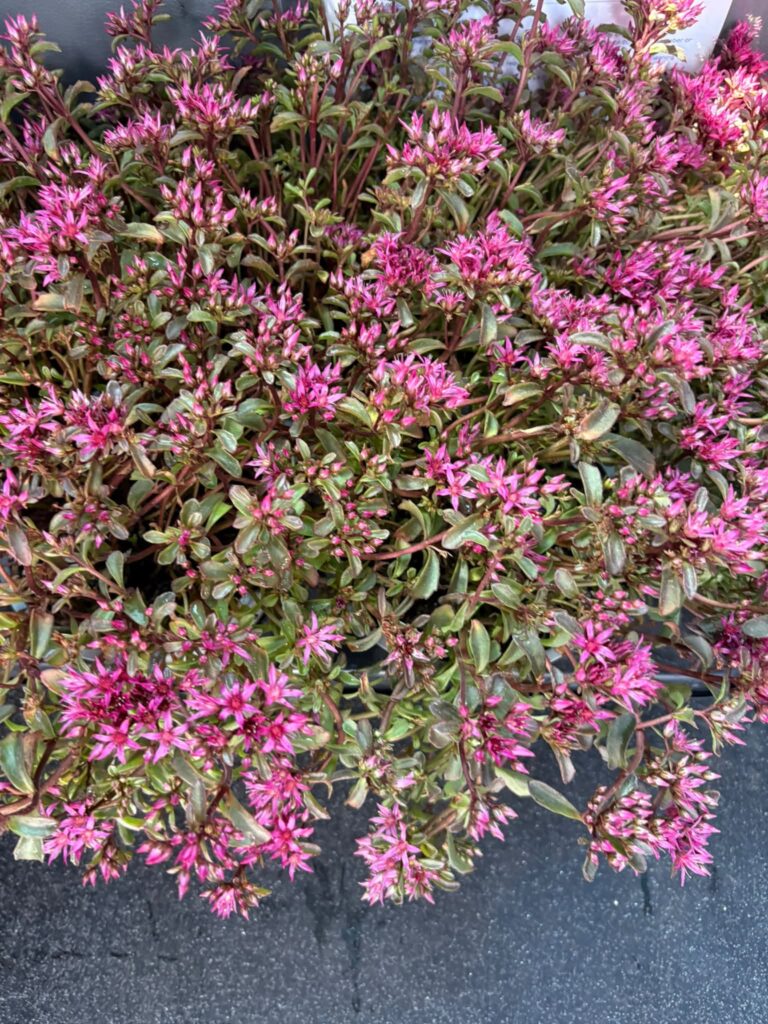
In summer, most sedums flower, drawing in bees and butterflies just as many other perennials start to fade in the heat.
In fall, tall sedums like ‘Autumn Joy’ steal the show, their flower heads deepening from pink to rust-red as temperatures drop.
In winter, dried seed heads on tall sedums add structure and texture to an otherwise bare border, and many low types stay evergreen or semi-evergreen under snow.
ALSO READ: 15 Best Sedum Ground Cover Plants: Tough, Beautiful, and Care-Free Varieties
Good Companion Plants for Sedum
Sedum pairs naturally with other plants that share its love of sun and dry soil. Matching needs prevents one plant from drowning another with excess water.
Ornamental grasses such as blue fescue or little bluestem echo sedum’s drought tolerance and add vertical contrast against its low, mounding form.
Lavender and Russian sage share the same well-drained soil preference and bring fragrance plus purple tones that complement sedum’s pinks and yellows.
Sempervivum (hens and chicks) is a classic rock garden partner, offering similar rosette textures at a slightly different scale.
Coneflowers and black-eyed Susans extend the pollinator appeal through summer, handing off nectar duty to sedum as autumn approaches.
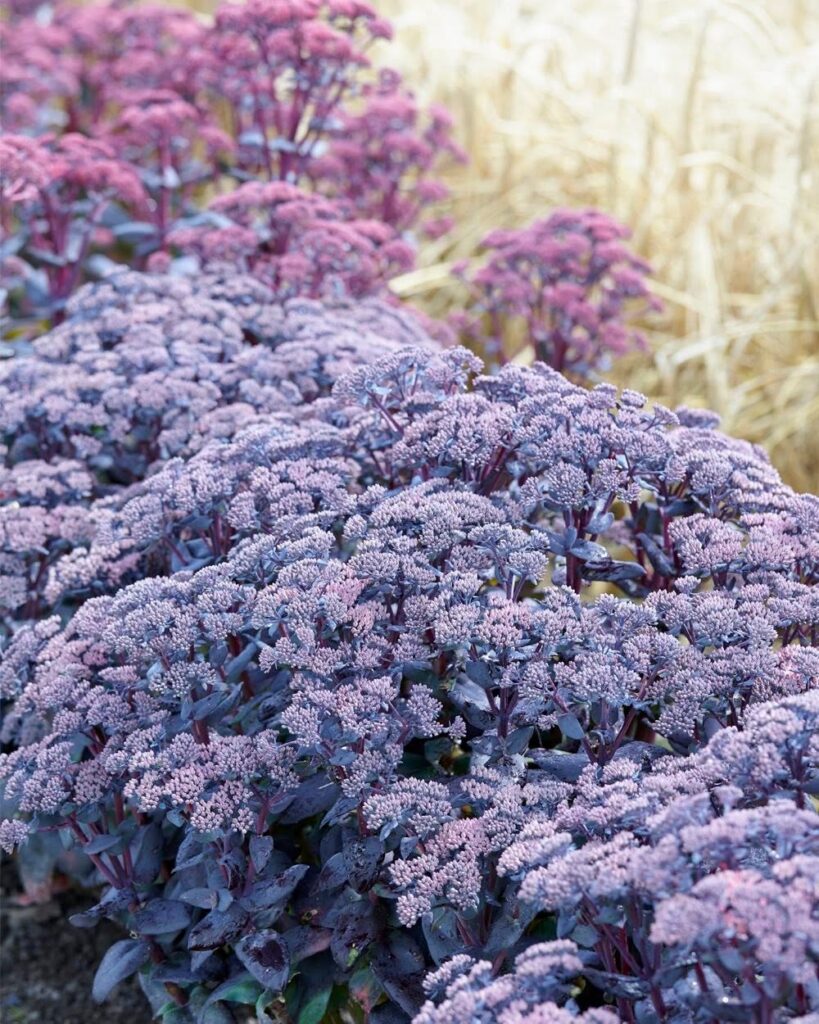
Low-Growing and Groundcover Sedums (1–15)
These are the spreaders. They hug the ground, root as they crawl, and fill gaps between pavers without complaint.
1. Sedum acre (Goldmoss Stonecrop)
This mat-forming classic rarely climbs past 2 to 4 inches tall, though it spreads sideways with real enthusiasm, often covering a foot or more in a single season. Tiny yellow, star-shaped flowers blanket the foliage in early summer, giving it the nickname “goldmoss.”
It grows reliably in USDA zones 3 through 8, tolerating cold winters far better than many succulents. The foliage stays evergreen in mild climates, fading to bronze where winters bite harder.
Plant it in lean, gritty soil and full sun, and resist the urge to feed it. Sedum acre self-seeds freely, so gardeners who want a contained patch should trim spent flowers before seed drops.
2. Sedum album (White Stonecrop)
White stonecrop forms a low, dense carpet only 2 to 6 inches tall, with small, round green leaves that blush deep red under strong summer sun. Clusters of white flowers open in summer and draw in bees by the dozen.
Hardy from zones 3 to 9, this species handles both cold winters and hot, dry summers with equal ease. Growth is steady rather than explosive, making it a good choice for gardeners who want groundcover without constant editing.
Full sun brings out the best foliage color, while partial shade keeps the leaves greener but less vivid. Water only during extended dry spells once it is established.
3. Sedum spurium (Two-row Stonecrop)
Two-row stonecrop stays low, around 2 to 6 inches, while spreading a foot or more through creeping stems that root as they go. The popular ‘Dragon’s Blood’ cultivar turns a deep wine-red in full sun, with pink to red summer flowers adding extra color.
It thrives in zones 3 through 8 and shrugs off both drought and light foot traffic, which makes it a favorite for filling gaps between stepping stones. Growth rate is moderate to fast once roots settle in.
Give it full sun and sharp drainage, and divide congested patches every few years to keep the planting vigorous and tidy.
4. Sedum reflexum (Blue Spruce Stonecrop)
The needle-like, blue-green foliage genuinely mimics a miniature conifer, reaching 4 to 8 inches tall with a slowly spreading, mounded habit. Yellow star-shaped flowers rise slightly above the foliage in summer, creating a nice color contrast.
This species is hardy in zones 3 to 9 and holds its blue tone best in full sun. It is slower to spread than Sedum acre or spurium, so it works well where a tidier, less aggressive groundcover is preferred.
Well-drained, slightly sandy soil suits it best. Overly rich soil tends to soften the foliage color and encourage floppy stems.
5. Sedum sexangulare (Tasteless Stonecrop)
Closely related to Sedum acre, this species forms a similar dense mat 2 to 4 inches tall, but with a milder taste that discourages foraging animals, hence the common name. Small yellow flowers appear in early summer above tightly packed, six-ranked foliage.
Hardy in zones 3 through 8, it is one of the most commonly recommended species for shallow green roof substrates because of its shallow roots and remarkable heat tolerance. Growth is fast and reliably even.
It needs very little beyond full sun and sharp drainage, and it rarely requires dividing unless it outgrows its allotted space.
6. Sedum kamtschaticum (Russian Stonecrop)
This tidy grower reaches about 4 to 6 inches tall, with glossy, scalloped green leaves that turn bronze-orange in fall. Orange-yellow flowers cover the plant in early to midsummer, creating a cheerful contrast against the foliage.
It performs well in zones 3 through 9 and holds its shape better than more aggressive spreaders, making it a good option for edging or small-scale groundcover. Growth is moderate and well-behaved.
Full sun and average, well-drained soil keep it happiest. Established plants tolerate short dry spells without any fuss.
7. Sedum ellacombianum
A close cousin of kamtschaticum, this variety grows to a similar 4 to 6 inches with brighter green foliage and slightly larger clusters of yellow summer flowers. Its habit is a touch more upright and mounding.
Hardy in zones 4 through 9, it suits rock gardens, edging, and small-space plantings where a compact, well-mannered sedum is needed. Growth rate is moderate.
Care mirrors kamtschaticum closely: full sun, well-drained soil, and minimal watering once roots are established.
8. Sedum hispanicum (Spanish Stonecrop)
Spanish stonecrop carries blue-gray, almost frosted foliage on stems that rarely exceed 2 to 4 inches, spreading quickly to form a soft, silvery mat. Small white to pale pink flowers appear in early summer.
It grows best in zones 5 through 8 and is less cold-hardy than Sedum acre, so gardeners in colder regions should expect some winter dieback. Growth is fast in the right conditions.
Sharp drainage is essential here, more so than for many other groundcover types, since the fine foliage rots quickly in soggy soil.
9. Sedum oreganum (Oregon Stonecrop)
Native to the Pacific Northwest, this species has paddle-shaped, glossy leaves that bronze attractively under sun stress, staying compact at 2 to 5 inches tall. Yellow flowers bloom in early summer on short stems.
It is hardy in zones 5 through 9 and prefers the cooler, moister summers of its native range, though it adapts reasonably well elsewhere with good drainage. Growth is slow to moderate.
Light afternoon shade in hot climates helps prevent scorching, while full sun in milder regions produces the best foliage color.
10. Sedum ternatum (Woodland Stonecrop)
This is one of the few sedums genuinely suited to shade, native to the woodlands of eastern North America. It stays low, around 3 to 6 inches, with whorled green leaves and white starry flowers in spring.
Hardy in zones 4 through 8, it prefers moister, humus-rich soil compared to its sun-loving relatives, making it a good option for woodland gardens or shaded rock gardens. Growth is slow and spreading.
Part shade to full shade suits it best, and it should not be treated like a typical drought-proof sedum, since it appreciates a bit more consistent moisture.
11. Sedum spathulifolium (Broadleaf Stonecrop)
Powdery blue-gray rosettes, often blushed purple at the edges, form low clumps 2 to 4 inches tall. The ‘Cape Blanco’ cultivar has been specifically studied for its survival on coastal green roofs.
Native to the West Coast, it grows best in zones 5 through 9 and tolerates coastal fog and mild winters better than harsh continental cold. Growth is slow and clumping rather than fast-spreading.
Full sun to light shade and excellent drainage are key. Avoid handling the leaves too much, since the powdery coating rubs off easily.
12. Sedum divergens (Cascade Stonecrop)
Rounded, pea-like leaves cover trailing stems that stay close to the ground, typically 2 to 4 inches tall. Yellow star flowers appear in summer, though the foliage itself carries most of the visual interest.
Native to the Cascade Mountains, it is hardy in zones 5 through 8 and prefers cooler summers with reliable drainage. Growth rate is moderate.
It suits alpine-style rock gardens especially well, where cooler root zones and sharp drainage mimic its native mountain habitat.
13. Sedum tetractinum (Chinese Sedum)
Round, flat leaves in soft green flush red under cold or dry stress, staying low at 2 to 4 inches while spreading gently across the soil surface. Yellow flowers appear in early summer.
Hardy in zones 5 through 9, it is a gentle, well-mannered spreader compared to more aggressive groundcover species. Growth is slow to moderate, and it rarely becomes invasive.
Full sun and average well-drained soil suit it fine, and it tolerates brief cold snaps better than some of the more tender Chinese species.
14. Sedum middendorffianum
Narrow, needle-like leaves and bright yellow summer flowers make this a useful filler for tight rock crevices, staying compact at around 4 to 6 inches tall. It forms small, dense clumps rather than sprawling widely.
It is hardy in zones 4 through 9 and handles both heat and cold reasonably well once established. Growth is slow and controlled.
Full sun and gritty, well-drained soil keep it compact and floriferous. It rarely needs dividing except for propagation purposes.
15. Sedum sarmentosum (Stringy Stonecrop)
This is one of the fastest, most assertive spreaders on the list, with trailing stems that root at every node and can cover significant ground within a single season. It stays low, around 2 to 4 inches, with bright green foliage and yellow summer flowers.
Best suited to zones 6 through 9, it is used in parts of Asia both ornamentally and as an edible leafy green. Growth is fast, sometimes to the point of becoming weedy in favorable conditions.
Plant it where its vigor is welcome, such as a green roof or a large slope, and keep it contained with edging or hardscape in smaller beds.
Trailing and Hanging Basket Sedums (16–23)
These varieties cascade rather than crawl, making them ideal for baskets, containers, and vertical walls.
16. Sedum morganianum (Donkey’s Tail)
Long, rope-like stems can trail 2 to 3 feet over time, densely covered in plump, overlapping blue-green leaves that give the plant its braided, tail-like look. Small pink to red flowers occasionally appear at the stem tips in warm weather.
It is only reliably hardy outdoors in zones 9b through 11, so most gardeners in cooler climates grow it as a houseplant or seasonal patio feature. Growth is slow, often just a few inches of new trailing length per year.
The leaves detach at the slightest bump, so hang the pot somewhere it will not be brushed against constantly, and water only when the soil is fully dry.
17. Sedum burrito (Burro’s Tail)
Often mistaken for donkey’s tail, this species has shorter, tighter, rounder leaves that grip the stem more securely, resulting in less leaf drop overall. Trailing stems reach 1 to 2 feet with regular care.
Hardy in zones 9b through 11 outdoors, it is otherwise grown indoors or moved inside before frost. Growth rate is similarly slow and steady.
Bright, indirect to full sun light and infrequent watering suit it well. Repot only when necessary, since disturbed roots take time to re-establish.
18. Sedum morganianum ‘Baby Donkey Tail’
This compact sport of the classic donkey’s tail keeps its leaves noticeably smaller and its trailing stems shorter, rarely exceeding 12 to 18 inches. It suits small pots, shallow bowls, and mixed succulent arrangements where a full-sized donkey’s tail would overwhelm the design.
Like its parent, it is hardy only in zones 9b through 11 and is typically grown as a houseplant elsewhere. Growth is slow.
Care matches standard donkey’s tail: bright light, minimal handling, and water only once the soil has dried completely.
19. Sedum lineare (Needle Sedum)
Thin, needle-like leaves in bright green, sometimes edged in cream variegation, cover trailing to mounding stems that reach 4 to 6 inches in height while spreading further. Small yellow flowers appear in late spring.
It is hardy in zones 6 through 9 and tends to handle both container life and ground planting well. Growth is moderate to fast in favorable conditions.
Full sun to light shade and well-drained soil work best, and regular trimming keeps the trailing stems from becoming leggy.
20. Sedum dasyphyllum (Corsican Stonecrop)
Tiny, blue-gray, bead-like leaves cover delicate trailing stems that rarely exceed 2 to 4 inches in height, native to rocky Mediterranean crevices. White to pale pink flowers appear in small clusters during summer.
Hardy in zones 6 through 9, it prefers hot, dry summers and resents heavy, wet soil more than most sedums on this list. Growth is slow and delicate.
Because the stems are fragile, plant it somewhere it can trail undisturbed, such as a raised wall or the edge of a container.
21. Sedum makinoi ‘Ogon’
Chartreuse-gold, rounded foliage trails gently over container edges, staying low at 2 to 4 inches while spreading steadily. Its bright color holds up surprisingly well even in partial shade, unlike most sun-loving sedums.
Hardy in zones 6 through 9, it is a popular choice for brightening shaded patio corners where other succulents would fade. Growth rate is moderate.
Part shade to full sun and consistently well-drained soil keep the foliage vivid. It tolerates slightly more moisture than many trailing types.
22. Sedum pluricaule
Compact rosettes sit atop short trailing stems that stay close to the ground, generally under 4 inches tall, with foliage that flushes deep purple-red under cool autumn temperatures. Small pink flowers appear in late summer.
Hardy in zones 5 through 9, it handles cold better than many of the tender rosette trailing types. Growth is slow and clump-forming.
Full sun and sharp drainage bring out the best color, and it works nicely trailing over the edge of a raised bed or rock wall.
23. Sedum japonicum
A fine-textured, mounding to trailing type that stays under 3 inches tall while spreading into a soft green carpet. It is frequently used as living wreath filler and in shallow succulent bowls because of its dense, tidy texture.
Hardy in zones 6 through 9, it adapts well to both ground planting and container culture. Growth is moderate.
Full sun and well-drained soil suit it best, and light shearing after flowering keeps the mat neat and encourages fresh new growth.
ALSO READ: 25 Best Plants for Hanging Baskets: Identification With Pictures
Tall and Upright Border Sedums (24–35)
These are technically Hylotelephium now, but garden centers still label them sedum, so gardeners still shop for them that way.
24. Sedum ‘Autumn Joy’ (Herbstfreude)
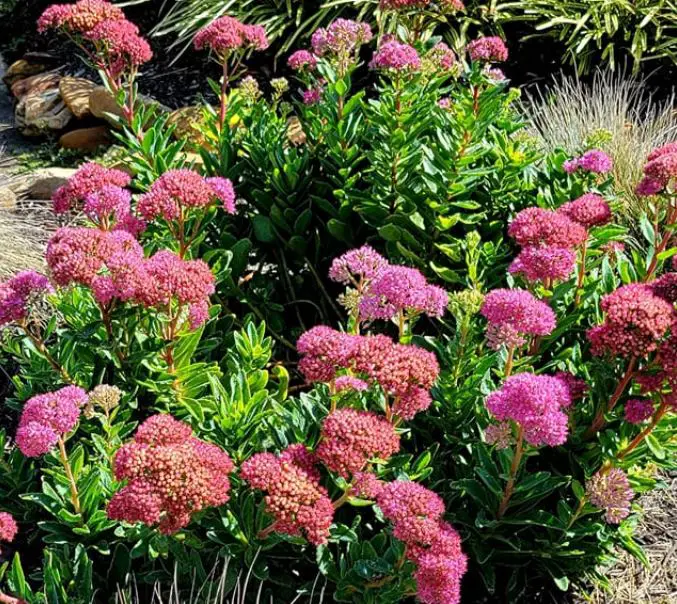
The most famous tall sedum on the planet, this hybrid reaches 18 to 24 inches tall with broad, gray-green succulent leaves and large, flat flower heads that open pink and deepen to rust-red through autumn. Clump width typically spreads 18 to 24 inches as well.
Hardy in zones 3 through 9, it is remarkably tough, tolerating heat, drought, and poor soil once established. Growth is moderate, with clumps thickening noticeably each year.
Pinch new growth back by a third in late spring to encourage sturdier stems, since the heavy flower heads can flop without this simple step.
READ MORE ON: Autumn Joy Sedum Care: How to Grow and Maintain the Stonecrop
25. Sedum ‘Matrona’
Purple-tinged stems and gray-green foliage support soft pink flower clusters atop a plant that reaches 18 to 24 inches tall and nearly as wide. Perennial designers favor it for its strong upright habit and rarely needing staking.
Hardy in zones 4 through 9, it handles both heat and cold well, making it a dependable border anchor. Growth rate is moderate, with a sturdier stem structure than many similar hybrids.
Full sun and well-drained soil keep the stems strongest. Division every three to four years keeps the clump vigorous.
26. Sedum ‘Purple Emperor’
Deep burgundy-purple leaves persist all season, reaching about 15 to 18 inches tall, topped with dusky pink flowers that pollinators find genuinely irresistible in late summer. The dark foliage color holds better in full sun.
Hardy in zones 4 through 9, it performs reliably in hot summer regions where foliage color on lesser cultivars can wash out. Growth is moderate and clump-forming.
Full sun, average well-drained soil, and a spring pinch keep the stems compact and upright through flowering.
27. Sedum spectabile (Showy Stonecrop)
This is the parent species behind many modern hybrids, with broad gray-green leaves and flat, dome-shaped pink flower clusters on stems reaching 12 to 18 inches. Clumps widen steadily over a few seasons.
Hardy in zones 4 through 9, it is a dependable, unfussy plant for beginner gardeners building a first pollinator border. Growth is moderate.
Full sun and average soil suit it fine, and it needs division only once clumps become crowded, typically every four to five years.
28. Sedum telephium (Orpine)
An old-fashioned European species, orpine carries fleshy, oval leaves along stems reaching 12 to 24 inches tall, topped with purplish-pink flower clusters in late summer. It has a slightly looser, more informal habit than modern hybrids.
Hardy in zones 4 through 9, it naturalizes readily in cottage-style gardens and tolerates a wider range of soil types than some named cultivars. Growth is moderate to vigorous.
Full sun to light shade and average soil work well, and self-sown seedlings often appear nearby if flower heads are left standing.
29. Sedum ‘Frosty Morn’
Variegated cream and green foliage brightens the border even before the pale pink flowers open in late summer, with plants reaching 12 to 18 inches tall. The variegation stays crisp through the growing season in good light.
Hardy in zones 4 through 9, it is slightly less vigorous than solid-green cultivars, so it benefits from a bit more attentive care. Growth is slow to moderate.
Full sun brings out the strongest variegation, though light afternoon shade in very hot climates can prevent leaf scorch.
30. Sedum ‘Neon’
Bright rose-pink flowers top sturdy stems reaching 18 to 24 inches, and this cultivar is known for holding its color and stem strength particularly well in hot summer regions. Foliage is a clean gray-green.
Hardy in zones 3 through 9, it is one of the more heat-tolerant tall selections available. Growth is moderate and reliably upright.
Full sun and well-drained soil suit it best, and it rarely requires staking even in exposed sites.
31. Sedum ‘Class Act’
Bred specifically to resist the flopping that plagues some tall sedums, this compact cultivar reaches only 12 to 15 inches with deep pink flowers held on notably sturdy stems. Foliage is a rich green.
Hardy in zones 4 through 9, it suits smaller borders or front-of-bed placement where taller cultivars would overwhelm the space. Growth is moderate.
Full sun and average, well-drained soil are all it really asks for, and staking is rarely necessary given its naturally strong stems.
32. Sedum ‘Chocolate Drop’
According to North Carolina State University’s plant database, this mounding cultivar reaches roughly 12 inches tall, with brown-toned foliage and pink flowers that contrast nicely against the dark leaves. Its habit stays neat and compact.
Hardy in zones 4 through 9, it works well in smaller borders, containers, and mixed succulent plantings alike. Growth is slow to moderate.
Full sun brings out the richest brown foliage tones, and average well-drained soil keeps the plant compact rather than leggy.
33. Sedum ‘Vera Jameson’
Dusky purple foliage pairs with dusky pink flowers on a shorter, trailing-upright habit that reaches only 9 to 12 inches tall, making it more of a groundcover-border hybrid than a true upright type. Stems arch gracefully rather than standing rigidly straight.
Hardy in zones 4 through 9, it fits nicely at the front of a border or spilling over a low wall. Growth is moderate and clump-forming.
Full sun deepens the purple foliage color, and well-drained soil prevents the fleshy stems from rotting.
34. Sedum ‘Xenox’
Nearly black foliage creates a dramatic backdrop for hot pink blooms on stems reaching 12 to 18 inches, making this one of the most striking color-contrast cultivars available for mixed borders. The dark leaf color intensifies with more sun exposure.
Hardy in zones 4 through 9, it performs best where summers are warm and consistently sunny. Growth is moderate.
Full sun, average soil, and a spring pinch keep the stems compact and the foliage color at its darkest.
35. Sedum ‘Black Jack’
Dark chocolate-purple leaves hold their color well into the growing season, topped by pink flower clusters on stems reaching 15 to 18 inches tall. It is prized for foliage color that persists longer than many similar dark-leaved cultivars.
Hardy in zones 4 through 9, it tolerates both heat and average garden soil without much fuss. Growth is moderate.
Full sun keeps the foliage darkest, while light afternoon shade in very hot regions can help prevent leaf bleaching.
ALSO READ: 25 Low Maintenance Ground Cover Plants for Full Sun: Stress-Free and Sun-Loving Varieties
Rosette-Forming and Architectural Sedums (36–43)
These species form tight rosettes and read more like small architectural sculptures than typical groundcovers.
36. Sedum pachyphyllum (Jelly Bean Plant)
Plump, blue-green, bean-shaped leaves tip in red when stressed by bright sun, forming loose rosettes on branching stems that reach 8 to 12 inches tall over time. It is a genuine conversation-starter in any mixed succulent bowl.
Hardy only in zones 9b through 11, it is grown as a houseplant in most of the country, brought outdoors during frost-free months. Growth is slow, typically just a few inches per year.
Bright light, whether outdoor sun or a sunny windowsill, and infrequent watering keep the leaves plump and well-colored.
37. Sedum rubrotinctum (Pork and Beans)
Similar in shape to the jelly bean plant, this species shows a more pronounced red flush across smaller, more rounded leaves, with branching stems reaching 6 to 10 inches tall. Stress from sun or cold intensifies the red coloring dramatically.
Hardy in zones 9b through 11, it is otherwise a container or houseplant succulent in cooler regions. Growth is slow to moderate.
Full sun deepens the red tones considerably, while shadier conditions keep the leaves mostly green. Water only when the soil is fully dry.
38. Sedum clavatum
Pale blue-gray rosettes carry a soft, powdery coating that should never be touched too much, since it rubs off and cannot regenerate. Rosettes stay compact, generally 3 to 4 inches across, forming slow-spreading clusters.
Hardy in zones 9b through 11, it is a slow grower even by succulent standards, making it well suited to small pots where dramatic size increases are not the goal. Growth is notably slow.
Bright, indirect light suits it better than harsh direct sun, which can occasionally scorch the delicate powdery leaves.
39. Sedum treleasei
Compact rosettes of chubby, pale green leaves dusted in a light bloom form small, shrubby clusters reaching 6 to 8 inches tall with age. Yellow flowers occasionally appear on mature plants in spring.
Hardy in zones 9 through 11, it is typically grown indoors or in containers elsewhere. Growth is slow and steady.
Bright light and well-drained, gritty soil keep the rosettes tight and the foliage color at its palest, most attractive shade.
40. Sedum adolphii (Golden Sedum)
Golden-yellow leaves blush orange under bright light, forming loose rosettes on woody stems that can reach 6 to 10 inches tall with age. The color shift between seasons makes it a favorite among collectors who enjoy watching succulents change.
Hardy in zones 9 through 11, it is commonly grown as a houseplant or patio succulent elsewhere. Growth is moderate for a rosette-forming type.
Full sun brings out the deepest gold and orange tones, while shadier spots keep the foliage a plainer, softer yellow-green.
41. Sedum nussbaumerianum (Coppertone Sedum)
Copper-orange foliage intensifies dramatically with sun exposure, making this one of the showier color-changing sedums, with rosettes forming on stems that reach 8 to 12 inches tall over time. Winter and stress conditions push the color toward deep rust.
Hardy in zones 9 through 11, it is grown indoors or as a seasonal container plant in cooler climates. Growth is moderate.
Full sun is essential for the best coppery color, since shade fades it back toward plain green.
42. Sedum stahlii (Coral Beads)
Tiny, bead-like reddish leaves densely pack trailing stems that stay under 4 to 6 inches tall while spreading further, creating a striking texture in hanging displays. The color deepens toward coral-red under strong light.
Hardy in zones 9b through 11, it is fragile and best handled minimally, since the small leaves detach easily at the slightest touch. Growth is slow.
Bright light and careful, infrequent watering keep the delicate stems intact and well-colored.
43. Sedum multiceps (Dwarf Joshua Tree)
This slow-growing curiosity mimics a miniature tree, complete with a woody, gnarled trunk topped by rosette “leaves,” typically reaching only 4 to 6 inches tall even after many years. It is prized more for novelty and structure than for flowers.
Hardy in zones 9 through 11, it is almost always grown in containers as a specimen or bonsai-style succulent. Growth is exceptionally slow, sometimes just an inch or two per year.
Bright light and very infrequent watering suit it best, and repotting should be rare, since the root system prefers to stay undisturbed.
Specialty and Colorful Sedums (44–50)
These varieties earn their spot through unusual color, foliage pattern, or niche popularity among collectors.
44. Sedum rupestre ‘Angelina’
Bright golden-yellow, needle-like foliage covers spreading stems that stay low, around 4 to 6 inches tall, turning a rich orange under cold autumn temperatures. It is one of the most photographed sedums online, and the color shift alone explains why.
Hardy in zones 6 through 9, it spreads at a moderate to fast pace once established, forming a dense, colorful mat. Growth is reliable across a range of soil types.
Full sun produces the brightest gold color, while shade tends to mute the foliage toward a plainer green.
45. Sedum confusum
Glossy, rounded green leaves form neat rosette clusters on stems reaching 6 to 10 inches tall, topped by bright yellow flower clusters in late spring. Its tidy habit makes it well suited to formal edging.
Hardy in zones 7 through 10, it is somewhat less cold-tolerant than many groundcover types, so gardeners in colder zones may need to treat it as an annual or container plant. Growth is moderate.
Full sun and well-drained soil keep the foliage glossy and the flowering reliable year after year.
46. Sedum floriferum ‘Weihenstephaner Gold’
Compact and genuinely floriferous, this cultivar lives up to its name with abundant golden-yellow blooms in early summer, on plants that stay low, around 4 to 6 inches tall while spreading into a tidy mat. Foliage is a fresh mid-green.
Hardy in zones 4 through 9, it is more cold-tolerant than many gold-flowered sedums, making it a dependable choice for northern rock gardens. Growth is moderate to fast.
Full sun and well-drained soil bring out the heaviest bloom coverage, and light shearing after flowering keeps the mat neat.
47. Sedum obtusatum
A West Coast native with rosettes that shift from green to a striking rosy red under stress conditions like drought or intense sun, staying compact at 2 to 4 inches tall. Yellow flowers appear on short stalks in summer.
Hardy in zones 6 through 9, it prefers the drier summers and mild winters typical of its native range along the Pacific coast. Growth is slow.
Full sun and rocky, fast-draining soil suit it best, closely mimicking the rocky outcrops where it grows naturally in the wild.
48. Sedum cauticola
Rounded, blue-gray leaves sit atop low, clumping stems that reach only 3 to 6 inches tall, producing vivid magenta-pink flowers in early fall when many other perennials have already finished blooming. The foliage color contrasts beautifully with the intense flower hue.
Hardy in zones 4 through 9, it is a reliable late-season bloomer for rock gardens and border edges. Growth is slow to moderate.
Full sun and well-drained soil keep the foliage its bluest and the fall flower display at its most vivid.
49. Sedum cyaneum ‘Rose Carpet’
Blue-green foliage flushed with purple forms a dense, low carpet only 2 to 4 inches tall, topped with rose-pink flowers in late summer. It spreads steadily without becoming aggressive.
Hardy in zones 4 through 9, it handles both heat and reasonably cold winters without much trouble. Growth is moderate.
Full sun deepens the purple foliage tones, and well-drained soil prevents the low mat from rotting in wetter climates.
50. Sedum sediforme
Silvery blue-green rosettes sit on upright stems reaching 8 to 12 inches tall, topped with pale yellow flower clusters in summer, giving it a slightly more architectural, upright presence than most low groundcover types. It is especially popular in Mediterranean-style gravel gardens.
Hardy in zones 6 through 9, it tolerates poor, rocky soil and long dry spells with ease. Growth is slow to moderate.
Full sun and sharp drainage are essential, since this species is particularly intolerant of soggy roots compared to some of its more forgiving relatives.
How to Choose the Right Sedum for Your Space
With 50 options, narrowing down can feel overwhelming. A few quick guidelines help.
For rock gardens and slopes, pick low-growing types like Sedum acre, spurium, or spathulifolium. They hug uneven ground naturally.
For hanging baskets, donkey’s tail and burro’s tail cannot be beaten for that dramatic cascading look.
For fall color in borders, tall Hylotelephium types like ‘Autumn Joy’ and ‘Matrona’ deliver the most reliable seasonal impact.
For green roofs, research from Michigan State University Extension lists Sedum acre, Sedum mexicanum, Sedum sarmentosum, and Sedum sexangulare among species proven to thrive on shallow, 2 to 4-inch roof substrates.
For collector’s shelves, jelly bean sedums, coppertone sedum, and the dwarf Joshua tree bring texture and novelty to a windowsill succulent arrangement.
Basic Sedum Care: What Actually Matters
Sedum is forgiving, but a few care basics make the difference between a plant that survives and one that thrives.
Sunlight should be full sun for most varieties. Colorful cultivars like ‘Angelina’ and coppertone sedum need bright light to develop their best foliage color.
Soil drainage matters more than soil fertility. Sedum roots rot quickly in heavy, wet clay, so sandy or gritty soil is far safer.
Watering should be infrequent. Let the soil dry out completely between waterings, especially for container-grown rosette types.
Pests are rarely a major issue, though NC State Extension notes that slugs and snails can damage soft new growth in damp conditions.
Pruning tall sedums in spring, by pinching back new growth, encourages sturdier stems and reduces the flopping that large flower heads sometimes cause.
Propagation is almost embarrassingly easy. A single fallen leaf or stem cutting will often root within a couple of weeks if left on dry soil.
Common Mistakes to Avoid
Even a plant this forgiving can suffer from a few predictable gardening habits. Watch for these.
Overwatering is the number one killer. Sedum’s fleshy leaves store water, so daily watering, especially in containers, invites root rot faster than drought ever would.
Planting in shade weakens stems and fades foliage color. Most sedums genuinely need six or more hours of direct sun to look their best.
Skipping drainage holes in pots traps moisture at the roots. A gritty, fast-draining potting mix solves most container problems before they start.
Letting tall varieties go unpinched in spring often leads to weak, floppy stems by the time flowers open in fall. A single pinch in late spring fixes this.
Ignoring overcrowding on groundcover types can invite fungal issues in humid climates. Thinning dense patches every few years keeps air circulating properly.
Frequently Asked Questions
How many types of sedum are there in total? Scientific estimates place the genus at roughly 470 species worldwide, though the true number keeps shifting as researchers reclassify species and discover new ones, particularly in China.
Is sedum the same as stonecrop? Yes. Stonecrop is simply the common English name used for most Sedum and Hylotelephium species.
Can sedum survive winter outdoors? Many hardy sedums, including Sedum acre, spurium, and the tall Hylotelephium hybrids, tolerate freezing temperatures and often stay evergreen or semi-evergreen through winter.
Is sedum toxic to pets? Most sedums cause only mild stomach upset if eaten in large quantities, though it is still wise to keep curious pets from grazing on any garden plant regularly.
Why is sedum used on green roofs? Its shallow root system, drought tolerance, and stormwater retention ability make it one of the most researched and reliable plant choices for extensive green roof systems.
Do all sedums flower? Nearly all do, though timing varies widely. Low-growing types typically bloom in late spring to early summer, while tall border types bloom from late summer into fall.
Can sedum grow indoors? Rosette-forming and trailing types, such as jelly bean sedum and donkey’s tail, adapt well to bright indoor windowsills, provided drainage and sunlight are adequate.
How fast does sedum spread? Groundcover types like Sedum acre and Sedum sarmentosum can cover bare soil within one to two growing seasons under favorable conditions, though spread speed depends heavily on climate and soil.
Does sedum need fertilizer? Rarely, and only sparingly. NC State Extension guidance suggests treating sedum as a low-input plant, since heavy feeding tends to produce weak, leggy growth rather than healthier plants.
Final Thoughts
Fifty types barely scratches the surface of what the sedum genus actually offers, yet it is enough to build an entire garden style around. I find that reassuring, honestly.
Whether you want a groundcover that never asks for water, a trailing basket that steals attention on a porch, or a fall border that glows red into November, there is a sedum built for that exact job.
Start with two or three types that match your space, let them establish, and expand the collection from there. Sedum rewards patience far more generously than most plants ever will.
References
- North Carolina State University Extension Gardener Plant Toolbox, “Sedum (Roseroot, Sedum, Stonecrop)” — https://plants.ces.ncsu.edu/plants/sedum/
- United States Department of Agriculture, PLANTS Database, “Sedum L.” Plant Profile — https://plants.sc.egov.usda.gov/plant-profile/SEDUM
- Pennsylvania State University, Center for Green Roof Research, “Stormwater Quantity” — https://plantscience.psu.edu/research/centers/green-roof/research/stormwater/stormwater-quantity
- Michigan State University Extension, “Selecting Plants for Extensive Green Roofs in the United States,” Bulletin E-3047 — https://www.canr.msu.edu/resources/selecting_plants_for_extensive_green_roofs_in_the_united_states_e3047
- North Carolina State University Extension, “Plant Selection for Extensive Green Roofs in the Research Triangle Area of North Carolina” — https://content.ces.ncsu.edu/plant-selection-for-extensive-green-roofs-in-the-research-triangle-area-of-north-carolina
- University of Nebraska–Lincoln Extension, “Green Roofs” Publication G2244 — https://extensionpubs.unl.edu/publication/g2244/na/html/view
- Minnesota Pollution Control Agency, Minnesota Stormwater Manual, “Plant Lists for Green Roofs” — https://stormwater.pca.state.mn.us/plant_lists_for_green_roofs

Tim M Dave is a gardening expert with a passion for houseplants, particularly cacti and succulents. With a degree in plant biology from the University of California, Berkeley, he has vast experience in gardening. Over the years, he has cultivated a vast collection of desert plants and learned a great deal about how to grow and care for these unique companions.