25 Stunning Fake Plants for Living Room (Artificial Flowers That Look Completely Real)
I used to feel guilty about fake plants. It felt like decorating with a lie. Then I killed my fourth fiddle leaf fig in two years, and my perspective changed completely.
A good artificial plant is not a compromise anymore. Modern faux greenery uses real bark, weighted trunks, and UV-safe silk leaves that fool guests from three feet away.
Industry analysts at Market Research Future estimate the global artificial plants industry was worth roughly 3.2 billion USD in 2024, and it keeps climbing as more homeowners choose convenience over upkeep.
This guide walks through 25 of the best fake plants for a living room, organized by size and style, along with styling advice that actually makes them look believable. No watering schedules, no dead leaves on the floor, no guilt.
Why More People Are Choosing Fake Plants
The shift toward artificial greenery is not just a fad born from lazy gardening. It reflects real lifestyle pressures that many of us share.
Busy schedules make plant care difficult. Between work, travel, and everyday life, watering on a strict schedule is easy to forget. A fake plant never wilts because you missed a week.
Low light rooms punish real plants. Many living rooms face north, sit under deep porches, or simply lack the six hours of bright light most houseplants need. Artificial versions do not care about your window orientation at all.
Allergies and pets change the equation too. Some real plants trigger sneezing, while others are mildly toxic to curious cats and dogs. Faux plants remove that risk entirely, which matters more than people expect.
Market data also points to rising urban demand, with online retailers reporting artificial plants as one of their fastest-growing home decor categories over the past few years. That growth is not surprising once you actually live with one.
Travel plays a bigger role than most people admit. A week away used to mean asking a neighbor to water everything or coming home to crispy leaves. Faux plants remove that entire worry from the equation, and I stopped asking favors from neighbors the moment I switched.
Renters benefit in a way owners often overlook. Moving apartments every year or two makes it hard to justify investing in large, slow-growing trees that may not survive the move. A faux tree packs into a box and looks identical on the other side.
Cost predictability matters more than people expect. A real fiddle leaf fig from a nursery can cost more than a comparable faux version, and then requires ongoing fertilizer, repotting, and pest treatment on top of that initial price. The math genuinely favors artificial greenery over several years.
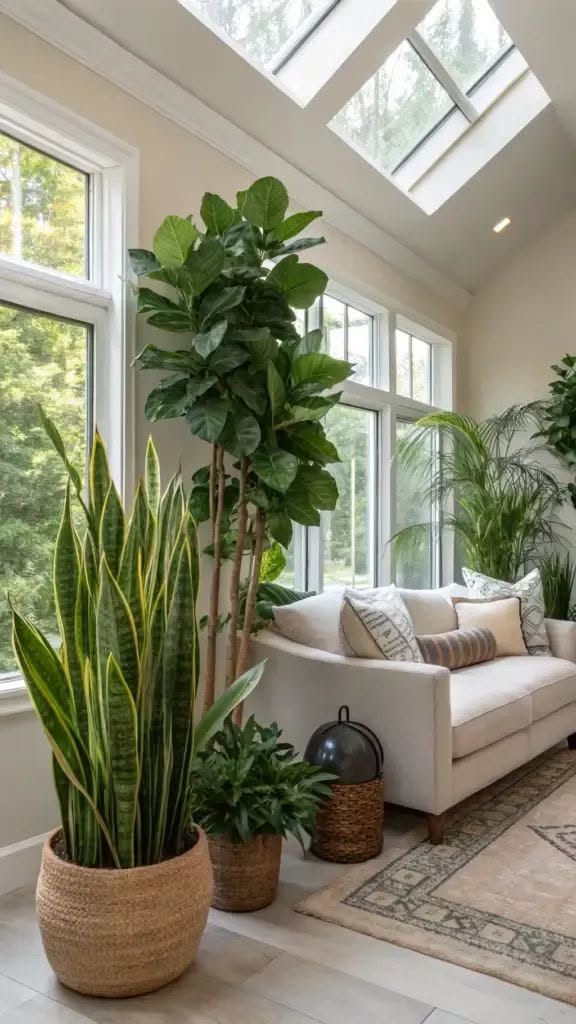
Large Statement Trees (1–8)
A single large tree can transform an empty living room corner faster than almost any other decor item. These are the anchors of the list.
1. Fiddle Leaf Fig Tree
The fiddle leaf fig remains the most requested plant in interior design right now, real or fake. Its broad, violin-shaped leaves add height and drama to any corner.
Choose one with a slightly bent trunk rather than a perfectly straight one; real fiddle leaf figs almost never grow arrow-straight, and the curve sells the illusion.
2. Monstera Deliciosa Tree
Monstera’s split leaves bring a tropical, jungle-like energy that few other plants match. A floor-standing faux Monstera works beautifully beside a reading chair or sofa.
I like pairing it with woven baskets underneath to soften the base and hide the pot entirely.
3. Olive Tree
Silvery-green leaves and a gnarled, twisting trunk give the faux olive tree a Mediterranean, sunbaked feel. It suits both modern and traditional living rooms equally well.
This is one of the most versatile trees on this list, since its muted color palette never clashes with existing furniture.
4. Bird of Paradise
Bold, paddle-shaped leaves on tall stems make bird of paradise a natural focal point. It reads as tropical and confident, never fussy or delicate.
Place it where sunlight would normally hit it anyway, since the plant looks most convincing in bright, airy corners.
5. Areca Palm
Feathery, arching fronds bring softness to rooms filled with hard furniture lines and sharp angles. Areca palm is one of the gentler-looking trees on this list.
It works particularly well near a television or fireplace, filling awkward negative space without stealing attention.
6. Ficus (Weeping Fig) Tree
Small, glossy leaves cover dozens of thin branches, creating a fuller, denser silhouette than most other faux trees. Ficus trees have decorated homes and offices for decades for a reason.
Choose a taller ficus for empty stairwell corners or tall windows, where its dense canopy fills vertical space effectively.
7. Banana Leaf Plant
Large, ribbed leaves in deep green give this plant an unmistakable tropical presence. It pairs beautifully with rattan furniture and warm, earthy color palettes.
I have seen it used to anchor entire “urban jungle” living rooms with striking results.
8. Tall Snake Plant
Stiff, upright leaves in a sculptural rosette make the snake plant look almost architectural. Unlike softer trees, it suits minimalist and modern interiors especially well.
Its narrow footprint makes it ideal for tight corners where a bushier tree simply would not fit.
Medium Foliage and Potted Plants (9–16)
These mid-sized plants fill shelves, side tables, and console tops without demanding an entire corner of the room.
9. Rubber Plant (Ficus elastica)
Thick, glossy, deep burgundy or green leaves give the rubber plant a bold, waxy look that photographs beautifully. It sits comfortably at coffee table or console height.
I appreciate how the deep color contrasts against lighter walls and neutral furniture.
10. Boston Fern (Potted)
Feathery, arching fronds add old-fashioned charm reminiscent of a wraparound porch. A potted faux Boston fern softens sharp bookshelf edges nicely.
Fluff the fronds by hand after unboxing, since shipping often compresses them flat for a few days.
11. Lucky Bamboo
Straight, segmented green stalks bring a calm, orderly feel to side tables and shelves. Lucky bamboo suits minimalist and Zen-inspired living rooms particularly well.
It requires almost no styling effort, which makes it a favorite for renters and first apartments.
12. Bird’s Nest Fern
Ruffled, wavy fronds form a rosette shape that looks strikingly different from typical fern varieties. It brings texture without height, which is useful on lower shelves.
I use it to break up rows of books, since its irregular shape contrasts nicely with straight spines.
13. Aloe Vera
Thick, pointed leaves in a compact rosette give aloe vera a clean, sculptural quality. It works especially well on kitchen-adjacent open shelving near the living room.
Pair it with a simple terracotta pot for the most authentic, sun-loving look, even indoors.
14. Agave
Spiky, symmetrical leaves radiate outward in a striking geometric pattern. Agave brings a desert, southwestern feel that pairs naturally with woven textiles and warm neutrals.
Its bold silhouette works particularly well as a single statement piece rather than in clusters.
15. Mixed Succulent Arrangement
A shallow bowl filled with varied faux succulents creates instant texture with almost no maintenance thinking involved. Different shapes and shades of green add visual interest in a small footprint.
I keep one on my coffee table permanently, since it never needs rotation toward light like real succulents do.
16. Eucalyptus Stems in a Vase
Soft, silvery-blue leaves on long stems bring a relaxed, farmhouse-meets-modern feel to a room. Simply place several stems into a tall glass or ceramic vase.
No pot, no soil, no fuss — this is the easiest entry point on the entire list for beginners.
Trailing and Hanging Plants (17–21)
Trailing plants add movement and softness, especially on shelves, mantels, or hanging planters near windows.
17. Pothos
Heart-shaped leaves cascade naturally over shelf edges, making pothos one of the most popular trailing houseplants of all time. The faux version captures that same relaxed, tumbling look.
I drape mine over a bookshelf edge, letting it spill down about a foot for the most natural effect.
18. String of Pearls
Tiny, bead-like leaves dangle from thin trailing stems, creating a completely unique silhouette among trailing plants. It suits modern, minimalist shelving beautifully.
Hang it where the beads catch afternoon light for a subtle, almost jewelry-like shimmer.
19. English Ivy
Small, lobed leaves on long vining stems bring a classic, slightly formal trailing texture. It works well cascading from a mantel or high bookshelf.
This plant has decorated European interiors for centuries, and the faux version carries that same timeless quality.
20. Spider Plant
Thin, arching, striped leaves with small plantlets dangling below give spider plant a distinctive, cascading look. It suits both hanging baskets and elevated shelf placement.
I find it works especially well in rooms with a slightly retro or eclectic personality.
21. Trailing Philodendron
Glossy, heart-shaped leaves on long vines create a lush, jungle-like cascade similar to pothos but slightly bolder in color. It fills empty vertical space above furniture beautifully.
Combine it with a taller tree nearby to create layered height throughout the room.
Flowering Faux Plants (22–25)
Flowers add color and softness that pure foliage cannot always provide. These four bring a finished, decorated feeling to any living room.
22. Phalaenopsis Orchid
Elegant, arching stems with wide white or purple blooms bring an upscale, refined look to entryway tables and shelves. Orchids remain one of the most gifted flowering plants worldwide, real or artificial.
A single well-made faux orchid can look more convincing than a struggling real one, since real orchids are notoriously difficult to rebloom.
23. Peony Stems
Full, ruffled blooms in soft pink or cream bring a romantic, garden-party feel to a vase arrangement. Peonies only bloom for a few weeks each spring in real gardens, making the faux version genuinely practical.
I keep a bundle in a simple glass vase on my dining table year-round for that reason alone.
24. Hydrangea Bush
Large, cloud-like flower clusters in blue, white, or pink create an instantly full, lush arrangement. A single faux hydrangea stem can fill an entire vase on its own.
Choose stems with slightly uneven petal coloring, since perfectly uniform color is often the giveaway of a lower-quality fake.
25. Lavender Bunch
Slender purple stems bring a soft, cottage-garden texture that works beautifully in rustic or farmhouse-style living rooms. Bundle several stems together in a ceramic pitcher or mason jar.
Unlike real lavender, this version never drops dried petals across your side table.
How to Choose a Fake Plant That Looks Real
Not every artificial plant is convincing, and I have brought home a few embarrassing ones myself. A little knowledge saves you from that mistake.
Touch the leaves before buying, if possible. Real-feel silk or polyethylene leaves have texture and slight color variation. Shiny, uniform plastic leaves almost always look cheap under natural light.
Look at the trunk and stems closely. High-end faux trees use actual dried or preserved wood for trunks, which is the single biggest factor separating a believable tree from an obvious fake.
Buy a size that fits the room, not just the corner. A tree that is too small looks like an afterthought, while one that is too large can overwhelm a modest living room. Measure your ceiling height first.
Add real dirt-textured potting soil on top of the base. Most fake plants ship with a foam block visible at the soil line. A layer of decorative moss or faux soil texture instantly upgrades the look.
Check how the plant behaves under different lighting. A plant that looks convincing under warm evening lamps might read as plasticky under bright daylight, and the reverse is also true. If you can, view it near a window before committing.
Keep these five points in mind as you shop, and every plant below will read as real to anyone walking through your door.
Styling Tips That Make Fake Plants Look Real
Buying the right plant is only step one. How you place and maintain it matters just as much.
Dust weekly with a soft, dry cloth or feather duster. Dust is the single fastest way an artificial plant reveals itself, since real leaves stay naturally cleaner through occasional rain and handling.
Vary the height across a room rather than lining everything up evenly. A tall tree in one corner, a trailing plant on a shelf, and a small succulent on a side table create a far more natural, collected-over-time feeling than matching everything.
Group plants in odd numbers. Interior designers consistently favor groupings of three or five over even numbers, since odd groupings read as more organic and less staged to the eye.
Choose pots that match your existing decor, not the plant’s original packaging pot. A cheap plastic nursery pot is often the biggest giveaway. Swap it for ceramic, woven, or concrete planters that match your room’s material palette.
Avoid placing fake plants in direct, harsh sunlight for years on end. While they will not die, cheaper materials can fade or warp under prolonged UV exposure, so choose UV-resistant labeling when a spot gets strong afternoon sun.
Bend and shape the leaves after unboxing. Most faux plants ship compressed flat in cardboard, which leaves branches looking stiff and unnaturally symmetrical. Spend five minutes gently bending stems outward and rotating leaves to different angles, the same way wind and gravity would shape a real plant over years of growth.
Rotate seasonal accents around a permanent structural plant. Keep one large tree as a fixed anchor, then swap smaller flowering pieces like peonies or hydrangea with the seasons. This mimics how real gardens change throughout the year, and it keeps the room from feeling static.
Fake Plants vs Real Plants: A Quick Comparison
| Factor | Fake Plants | Real Plants |
| Maintenance | None required | Regular watering, light, feeding |
| Lifespan | Years, sometimes decades | Weeks to years, depending on care |
| Light requirements | Works in any room | Needs specific light levels |
| Pet safety | No toxicity risk | Some species are toxic |
| Allergies | No pollen or spores | Can trigger allergies |
| Air quality benefit | None | Modest, but real |
| Upfront cost | Often higher per piece | Often lower per piece |
Neither option is universally “better.” I personally mix both throughout my home, using real plants where light is strong and faux plants everywhere else.
Frequently Asked Questions
Do fake plants need any maintenance at all? Almost none. Occasional dusting and, for outdoor-adjacent spots, an eye on sun fading are really the only tasks involved.
How do I make a fake plant look less obviously artificial? Focus on trunk quality, leaf texture, and pot choice first. Adding a bit of moss or decorative soil at the base also hides the most common giveaway, which is the visible foam anchor block.
Are fake plants worth the higher upfront cost? For most busy households, yes. A quality faux tree that lasts a decade often costs less over time than repeatedly replacing dying real plants, especially larger tree varieties that are expensive to buy new each year.
Can fake plants go in a room with no natural light at all? Yes, and this is actually one of their biggest advantages. Interior rooms, hallways, and windowless corners that would starve a real plant work perfectly for artificial greenery.
What is the most realistic material for fake plants? High-grade polyethylene and silk blends currently offer the most convincing texture and color variation. Cheaper polyester leaves tend to look stiffer and more uniformly shiny.
Do fake plants need special cleaning products? No. A soft microfiber cloth, or a hairdryer set to cool air for detailed leaves, handles most dust buildup. Avoid soaking fabric or silk leaves in water, since prolonged moisture can warp wired stems over time.
Where should I place large faux trees for the best visual impact? Empty corners, the sides of a sofa, and gaps beside bookshelves work best. Avoid the exact center of a room, since a tree there tends to block movement and sightlines rather than enhance them.
Final Thoughts
A living room filled with faux greenery does not have to look fake at all. The right mix of trees, trailing vines, and a few flowering accents can bring the same warmth and life that real plants offer, minus the anxiety of a missed watering week.
Start with one large tree as your anchor, add two or three medium plants at different heights, and finish with a trailing piece on a shelf. That simple layering trick, more than any single “perfect” plant, is what makes a room feel genuinely alive.

Tim M Dave is a gardening expert with a passion for houseplants, particularly cacti and succulents. With a degree in plant biology from the University of California, Berkeley, he has vast experience in gardening. Over the years, he has cultivated a vast collection of desert plants and learned a great deal about how to grow and care for these unique companions.