30 Popular Types of Oak Trees (Different Varieties, With Pictures)
I grew up thinking every oak looked more or less the same. A big trunk, lobed leaves, and acorns everywhere in October. That assumption did not survive my first real walk through a mixed hardwood forest.
Oaks are wildly diverse. Some drop their leaves each fall. Others stay green year-round. A few barely reach shrub height, while others tower well past 100 feet.
This guide covers 30 types of oak trees, grouped by their botanical family. By the end, you should be able to walk outside and put a name to most oaks you meet.
What Makes a Tree an Oak?
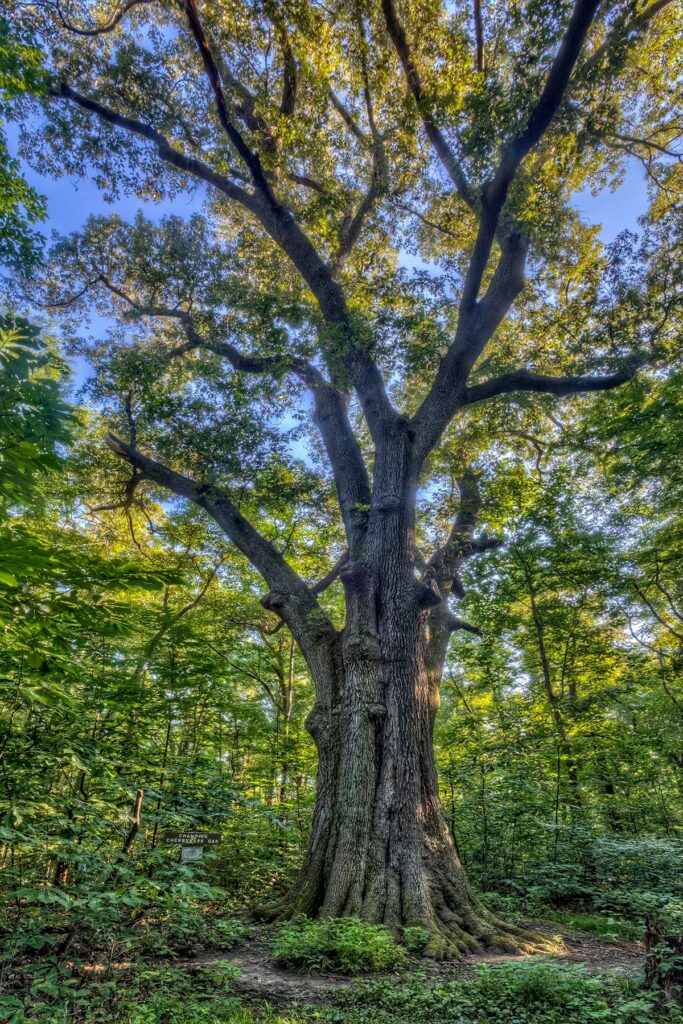
All oaks belong to the genus Quercus, part of the beech family, Fagaceae. Worldwide estimates place the total number of species between 275 and 500, depending on how researchers classify regional variants.
Botanists typically sort oaks into three broad groups: white oaks, red and black oaks, and the live or evergreen oaks. Species within each group tend to resemble one another under a microscope, according to USDA Forest Products Laboratory records.
Every oak produces acorns, a nut held in a scaly cup. White oak acorns mature in a single season, while red oak acorns typically take two years to ripen. That timing difference is one of the clearest ways to separate the two main groups.
Leaves matter too. White oaks generally have rounded lobes, while red and black oaks carry bristle-tipped, pointed lobes. Once you notice this pattern, oak identification becomes far less intimidating.
North America holds an enormous share of this diversity. Roughly 90 oak species grow in the United States, while Mexico hosts around 160 species, with 109 found nowhere else on Earth, based on regional botanical mapping data.
ALSO READ: Red Oak Tree Pros and Cons: Everything to Know Before You Plant
Why Oak Identification Matters Right Now
Here is something that genuinely surprised me. Oak wilt, a fungal disease, kills hundreds of thousands of oak trees in forests, woodlots, and home landscapes every year, according to the U.S. Forest Service.
The disease is merciless toward red oaks specifically. Once a red oak becomes infected, it will die, typically within three to eight months, with no available cure once symptoms appear.
White oaks fare somewhat better. They show more natural resistance and lower mortality rates, though they are not entirely immune to infection.
In Central Texas alone, oak wilt has killed oaks across 73 counties, according to Texas A&M Forest Service records, prompting a cooperative suppression project that has run continuously since 1988.
Knowing which oak group you are looking at, white versus red, is not just academic trivia. It directly affects how a tree should be managed, pruned, and protected from spreading disease.
ALSO READ: White Oak vs Red Oak Tree: Comparison + Which One To Choose
Let us walk through the 30 types now, starting with the white oak group.
White Oak Group
1. White Oak (Quercus alba)
White oak is one of the most recognized trees in the eastern United States, known for its light gray bark and rounded leaf lobes. It grows slowly but can live for centuries once mature.
This species is prized for shipbuilding, furniture, and whiskey barrels, thanks to wood that resists water penetration. Its large taproot makes it sensitive to road salt, so it rarely thrives as a street tree in urban settings.
White oak also produces some of the most reliable acorn crops for wildlife, feeding deer, turkeys, and squirrels each fall. Mature trees can reach 80 to 100 feet, with broad, spreading crowns that make them poor choices for tight residential lots.
2. Bur Oak (Quercus macrocarpa)
Bur oak stands out for its thick, corky bark, an adaptation that helps it survive wildfires far better than most hardwoods. It once dominated oak savannas across the Midwest before agriculture reshaped the landscape.
Its acorns are among the largest in the genus, often capped with a fringed, shaggy cup. Bur oak also tolerates both drought and clay soil, making it a dependable choice for tough planting sites.
It grows slowly, sometimes taking a full century to reach maturity, but the payoff is a lifespan that can stretch past 300 years. Bur oak’s deep taproot also makes it remarkably wind-resistant compared to shallower-rooted shade trees.
3. Swamp White Oak (Quercus bicolor)
Swamp white oak is easy to identify by its exfoliating, heavily textured bark and leaves with silvery undersides. Fall color turns a warm yellow, adding real seasonal interest.
As the name suggests, it tolerates wet, poorly drained soil better than most white oaks. Landscapers often recommend it for low-lying yards where other oak species would struggle.
It typically grows 50 to 60 feet tall with a rounded, open crown that casts moderate shade. Swamp white oak also transplants more easily than many other oaks, a practical advantage for nursery growers and municipal planting programs.
4. Chestnut Oak (Quercus montana)
Chestnut oak gets its name from leaves that resemble American chestnut foliage, with wavy, rounded teeth instead of deep lobes. It favors dry, rocky ridgetops where competition from other trees is limited.
Its bark is deeply furrowed and unusually thick, once harvested commercially for tannin used in leather production. This species handles poor, acidic soil better than almost any other oak.
It typically reaches 60 to 70 feet, favoring steep, well-drained slopes over flat, fertile ground. Chestnut oak also shows solid resistance to gypsy moth defoliation compared to many other Appalachian hardwoods.
5. Chinkapin Oak (Quercus muehlenbergii)
Chinkapin oak carries sharply toothed leaves that look more like a chestnut than a typical oak. It thrives on warmer, south-facing slopes and limestone-rich soil across its range.
It grows in association with white oak, black oak, and northern red oak throughout much of the eastern and central United States. Chinkapin oak is rarely the dominant tree in a stand, but it fills gaps other species leave behind.
Its sweet, relatively low-tannin acorns are considered among the most palatable in the entire genus, both to wildlife and historically to people. The tree typically grows 40 to 60 feet tall with a rounded, open canopy.
6. Post Oak (Quercus stellata)
Post oak earns its name from its historical use as fence posts, thanks to rot-resistant wood. Its leaves have a distinctive cross-shaped lobing pattern that makes identification fairly simple.
It tolerates poor, dry, rocky soil that would stunt most other oaks. Early Midwestern settlers relied heavily on post oak to build miles of fencing across Ohio, Indiana, and Kentucky.
Growth is notably slow, often taking 300 years to reach full maturity in poor soil conditions. Post oak typically stays under 50 feet, making it a modest presence compared to its towering white oak relatives.
ALSO READ: 15 Fast Growing Oak Trees: Identification and Care Tips
7. Overcup Oak (Quercus lyrata)
Overcup oak produces acorns almost entirely enclosed by their cup, a rare trait among white oaks. It grows naturally in floodplains and bottomland forests across the southeastern United States.
This species tolerates seasonal flooding exceptionally well, often standing in standing water for weeks at a time. Its wood is used similarly to white oak, though it is less commercially harvested.
Its floating acorns are actually an adaptation for water dispersal, allowing seeds to travel downstream to new floodplain sites. Overcup oak typically reaches 50 to 60 feet, with a rounded crown suited to open wetland edges.
8. Gambel Oak (Quercus gambelii)
Gambel oak dominates dry, rocky slopes across the American Southwest, often forming dense thickets rather than single-trunked trees. It rarely exceeds 30 feet in height.
Its acorns are an important food source for deer, turkey, and black bears in the region. Gambel oak also resprouts vigorously after wildfire, helping it recover faster than many neighboring species.
Because it spreads through root suckers as well as seed, Gambel oak often forms dense, clonal thickets across hillsides. This growth habit makes it valuable for erosion control on steep, arid Southwestern terrain.
9. Oregon White Oak / Garry Oak (Quercus garryana)
Oregon white oak, known as Garry oak in Canada, stretches from southwestern British Columbia down to southern California. It typically grows at elevations between 300 and 1,800 meters further south.
This is the only native oak found in much of the Pacific Northwest, making it ecologically irreplaceable there. Garry oak woodlands now rank among the most threatened habitat types in the region due to development pressure.
It grows slowly, often taking decades to reach even modest height, and can live for several centuries once established. Conservation groups across Washington and British Columbia now actively restore Garry oak meadows lost to urban sprawl.
10. Valley Oak (Quercus lobata)
Valley oak is the largest oak species native to North America, with mature trees sometimes exceeding 100 feet. It requires year-round access to groundwater, which limits it to valley floors and riverbanks.
Its thick, deeply furrowed bark and sprawling canopy make it one of California’s most iconic native trees. Indigenous communities historically relied on its acorns as a staple food source.
Some individual valley oaks are estimated to be over 600 years old, standing as living witnesses to California’s changing landscape. Its deep taproot system allows it to survive the state’s long, dry summers without irrigation.
11. Blue Oak (Quercus douglasii)
Blue oak takes its name from the bluish-gray tint of its leaves, a useful clue when identifying it in California’s oak woodlands. It grows almost exclusively in the state’s foothill regions.
This species tolerates extreme summer drought better than nearly any other California oak. Its acorns support a wide range of wildlife, from acorn woodpeckers to mule deer.
Blue oak typically stays under 60 feet, with a rounded, somewhat sparse canopy adapted to intense sun exposure. Researchers consider it a useful climate indicator species, since its range shifts noticeably as regional rainfall patterns change over time.
12. Arizona White Oak (Quercus arizonica)
Arizona white oak grows across the mountainous borderlands of Arizona, New Mexico, and northern Mexico. It often appears semi-evergreen, holding onto some leaves through mild winters.
It thrives in oak-grassland transition zones at moderate elevation. Ranchers in the Southwest have long valued the shade it provides for grazing cattle during hot summer months.
Growth is slow and steady, with mature trees usually reaching 40 to 60 feet over many decades. Its acorns mature within a single season, distinguishing it clearly from the red oak species found in the same borderland region.
ALSO READ: 10 Common Pin Oak Tree Problems: Identification, Symptoms, and Proven Solutions
Red and Black Oak Group
13. Northern Red Oak (Quercus rubra)
Northern red oak grows fast compared to most oaks, often adding two feet of height per year when young. Its leaves carry sharp, bristle-tipped lobes typical of the red oak group.
It is widely planted as a landscape and street tree thanks to its tolerance of urban pollution. Northern red oak is also highly susceptible to oak wilt, making proper care essential in infected regions.
Mature trees typically reach 60 to 80 feet with a broad, rounded crown that provides excellent shade. Its wood is a major commercial timber source, widely used for flooring, cabinetry, and furniture across the eastern United States.
14. Southern Red Oak (Quercus falcata)
Southern red oak, sometimes called Spanish oak, grows across the southeastern United States on dry, sandy uplands. Its leaves have deeply cut, curved lobes with a distinctive drooping shape.
This species tolerates poor, acidic soil that would challenge many other hardwoods. Its timber is commonly sold alongside other red oaks for flooring and furniture manufacturing.
It typically grows 70 to 80 feet tall, with a somewhat irregular, open crown compared to its northern relative. Wildlife including deer and wild turkey rely heavily on its acorn crops throughout the southeastern forest range.
15. Black Oak (Quercus velutina)
Black oak produces a yellow-orange inner bark once used commercially to make a dye called quercitron. Its dark, blocky outer bark gives the species its common name.
It grows on dry ridges and poor soil where few other oaks compete effectively. Black oak hybridizes readily with other red oak group members, which occasionally complicates field identification.
It typically reaches 50 to 60 feet, slower growing than northern red oak but similarly long-lived. Its acorns are notably bitter due to high tannin content, requiring extensive leaching before Indigenous communities historically used them as food.
16. Scarlet Oak (Quercus coccinea)
Scarlet oak delivers some of the most vivid fall color in the entire genus, turning a brilliant scarlet-red each autumn. Its leaves have deep, narrow lobes with wide sinuses between them.
It prefers dry, sandy, or rocky soil and struggles in heavy clay. Scarlet oak is a popular ornamental choice specifically for its dependable, showy fall display.
Growth is fast for a red oak, with young trees often adding well over a foot per year in good conditions. Scarlet oak typically stays under 70 feet, making it a manageable size for suburban yards seeking strong autumn color.
17. Pin Oak (Quercus palustris)
Pin oak is instantly recognizable by its distinctive branching pattern, with lower limbs drooping downward while upper branches point upward. It is one of the most widely planted landscape oaks in North America.
It tolerates wet, compacted urban soil better than most oaks, explaining its popularity along streets and in parking lot islands. Pin oak also grows relatively fast for a member of the oak family.
One downside is its tendency toward iron chlorosis in alkaline soil, causing yellowing leaves that need correction with soil amendments. Mature pin oaks typically reach 60 to 70 feet with a distinctly pyramidal shape when young.
18. Shumard Oak (Quercus shumardii)
Shumard oak closely resembles northern red oak but tolerates heat and alkaline soil noticeably better. It grows across the southern and central United States, often along riverbanks and bottomlands.
Its acorns are among the largest in the red oak group. Landscapers increasingly favor Shumard oak in southern climates where northern red oak struggles to establish.
It typically grows 60 to 80 feet tall with a strong central leader and dependable red fall color. Shumard oak also shows good resistance to many common oak pests, adding to its growing popularity in southern landscaping.
19. Water Oak (Quercus nigra)
Water oak carries an unusual leaf shape for an oak, often spatula-like with little to no lobing at all. It grows quickly and commonly along stream banks across the southeastern United States.
Despite its name, water oak tolerates a fairly wide range of soil moisture. It is shorter-lived than many oaks, typically reaching only 60 to 80 years before decline sets in.
Its rapid growth and semi-evergreen habit in mild winters make it a common shade tree across Gulf Coast cities. However, weak wood makes it more prone to storm damage than slower-growing oak species nearby.
20. Willow Oak (Quercus phellos)
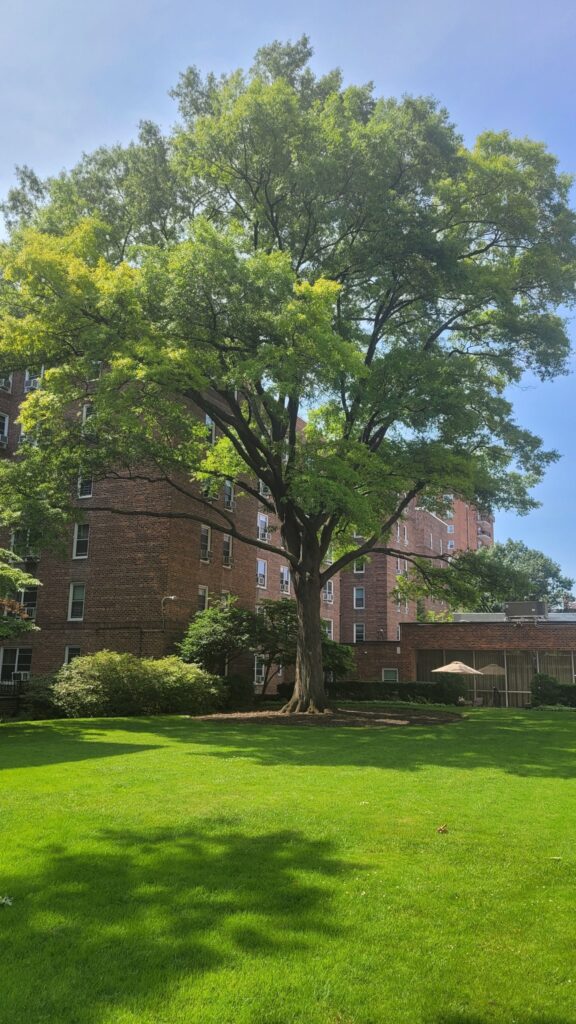
Willow oak has narrow, willow-like leaves entirely without lobes, a rare look among oaks. It grows fast and adapts well to compacted urban soil, making it a favorite street tree across the South.
Its fine-textured canopy casts lighter shade than most oaks, allowing grass to grow more easily underneath. Willow oak also produces smaller acorns, favored by songbirds over larger-seeded oak species.
It typically reaches 60 to 100 feet with a symmetrical, pyramidal shape when young that rounds out with age. Willow oak has become one of the most commonly planted street trees in southern cities, thanks to its clean form and tolerance of poor soil.
21. Nuttall Oak (Quercus texana)
Nuttall oak grows in bottomland forests across the lower Mississippi River valley, tolerating seasonal flooding with ease. Its leaves resemble pin oak but with slightly broader lobes.
This species has become popular in wildlife management areas, since its acorns are a favored food source for ducks in flooded timber habitat. It also grows notably fast compared to other red oaks.
Nuttall oak typically reaches 60 to 80 feet with excellent tolerance for heavy, poorly drained clay soil. Its strong wildlife value has made it a preferred choice for reforestation projects across Mississippi River bottomlands.
22. Northern Pin Oak (Quercus ellipsoidalis)
Northern pin oak thrives on poor, sandy soil across the upper Midwest, often in areas too dry for northern red oak. Its leaves are deeply cut with narrow lobes, similar in look to scarlet oak.
It rarely reaches the towering size of its red oak relatives, typically staying under 70 feet. Its consistent, reliable fall color still makes it a solid landscaping choice in colder climates.
Sometimes called Hill’s oak, this species is often confused with pin oak due to similar leaf shape, though its acorns and preferred dry habitat clearly set it apart. It tolerates cold northern winters better than most red oak group members.
23. Blackjack Oak (Quercus marilandica)
Blackjack oak grows in some of the poorest, driest soil any oak can tolerate, often alongside post oak on abandoned farmland. Its leaves are broad and wedge-shaped, unlike the deeply lobed foliage of most red oaks.
It rarely grows into an attractive shade tree, staying gnarled and relatively short. Foresters generally consider it a marker species for degraded, low-fertility land.
Typically reaching only 30 to 50 feet, blackjack oak often persists on sites too poor even for post oak. Its dense, hard wood historically made excellent firewood and charcoal for rural communities across the southern United States.
24. California Black Oak (Quercus kelloggii)
California black oak grows through mountain forests across California and into southern Oregon. It is deciduous, unlike many of its evergreen California relatives, and produces vivid yellow fall color.
Its acorns were historically a critical food staple for Indigenous communities throughout California. This species also plays an important role supporting black bear and mule deer populations in Sierra Nevada forests.
It typically grows 40 to 80 feet tall depending on elevation and site conditions. California black oak also tends to regenerate well after moderate wildfire, an important feature as prescribed burns become more common across western forest management.
Live Oak and Evergreen Group
25. Live Oak (Quercus virginiana)
Live oak is the iconic tree of the American South, known for sprawling limbs draped in Spanish moss. Unlike most oaks, it stays green through winter, shedding old leaves only briefly each spring.
Its wood is exceptionally dense and was historically prized for shipbuilding, especially in early American naval vessels. Live oak also tolerates coastal salt spray better than nearly any other oak species.
Mature trees often spread wider than they are tall, with canopies exceeding 100 feet across in favorable growing conditions. Live oak can live for several centuries, and many famous specimens across the South are documented well past 300 years old.
26. Coast Live Oak (Quercus agrifolia)
Coast live oak grows along California’s coastline, forming dense, rounded canopies with spiny, holly-like leaves. It stays evergreen year-round, providing consistent shade in an otherwise dry landscape.
This species is highly susceptible to sudden oak death, a separate pathogen from oak wilt that has killed large numbers of coastal California oaks since the 1990s. Conservation groups continue monitoring its spread closely.
It typically grows 30 to 70 feet, often twisted and wind-sculpted along exposed coastal bluffs. Coast live oak also plays a critical fire-adapted role in California ecosystems, resprouting from its base after low-intensity burns.
27. Canyon Live Oak (Quercus chrysolepis)
Canyon live oak grows across steep, rocky canyons throughout California and into the Southwest. Its leaves often have golden, fuzzy undersides, giving the species its scientific name, chrysolepis, meaning golden scale.
It tolerates extremely thin, rocky soil where few other trees survive. This adaptability allows canyon live oak to grow at a wider elevation range than almost any other California oak.
It can appear as either a sprawling shrub on exposed ridges or a tall, single-trunked tree in sheltered canyons, depending on local conditions. Its acorns mature over two seasons, an unusual trait for a species in the live oak group.
ALSO READ: Understanding White Oak (Quercus alba): Identification, Uses, Problems and Cultivation Details
European and International Oak Species
28. English Oak (Quercus robur)
English oak, also called common or pedunculate oak, has been cultivated across North America since the 1600s. Its acorns grow on distinctive long stalks, which is where the species gets its common name.
It can live for centuries, with some specimens across Europe documented past 2,000 years old, according to Encyclopaedia Britannica’s botanical records. English oak has long symbolized strength and endurance throughout British culture and folklore.
Mature trees typically reach 70 to 100 feet with a broad, rounded crown and short, stout trunk. Its acorns provide an important food source for European wildlife, including wild boar, deer, and numerous bird species.
29. Sessile Oak (Quercus petraea)
Sessile oak, also called Cornish or durmast oak, grows widely across Iran, Anatolia, and much of Europe. Unlike English oak, its acorns sit directly on the twig without a long stalk.
It serves as a national emblem in both Cornwall and Wales and grows natively throughout Ireland. Sessile oak has long been used for fuel, grazing land shade, and traditional timber framing.
It typically grows taller and straighter than English oak, often exceeding 100 feet in favorable woodland conditions. Sessile oak also tends to prefer well-drained, slightly acidic soil more than its low-lying, floodplain-tolerant relative.
30. Cork Oak (Quercus suber)
Cork oak is the source of nearly all commercial cork, harvested from its thick, spongy bark without killing the tree. It grows natively across the western Mediterranean, especially in Portugal and Spain.
Farmers can harvest cork from the same tree roughly every nine years once it matures. This renewable harvesting method has made cork oak forests an unusually sustainable agricultural resource for centuries.
It typically grows 40 to 60 feet tall and can live for over 200 years under proper cork-harvesting management. Cork oak forests, known as montados in Portugal, also support one of Europe’s richest woodland ecosystems for birds and mammals.
How to Identify Oak Trees in the Field
Start with the leaf lobes. Rounded lobes generally mean white oak group, while pointed, bristle-tipped lobes signal red or black oak group membership.
Next, check the acorn cup. Overcup and bur oak nearly enclose their nut entirely, while most other species show a shallow, saucer-like cap covering less than half the acorn.
Bark texture also helps narrow things down. Light gray and flaky usually points toward white oak, while dark, blocky bark often signals black oak or one of its close relatives.
Finally, consider the habitat. Wetland soil suggests swamp white oak, overcup oak, or water oak, while dry, rocky ridges favor chestnut oak, blackjack oak, or post oak.
The Bigger Picture: Oaks Under Pressure
I will be candid here. Oaks face real, ongoing threats despite their reputation for toughness and longevity.
Oak wilt continues expanding northward as the climate warms, according to U.S. Forest Service researchers, threatening oak forests that once seemed outside its range entirely.
Sudden oak death, a separate but equally serious pathogen, has devastated coast live oak and tanoak populations across California since it was first identified in the 1990s.
Foresters and tribal partners, including the Menominee Tribal Enterprises in Wisconsin, are actively testing new suppression techniques like girdling and targeted herbicide application to slow oak wilt’s spread.
If you own mature oaks, avoid pruning during the high-risk spring season when sap beetles are most active. Immediately sealing any fresh wounds can prevent infection during this vulnerable window.
Frequently Asked Questions
How many types of oak trees exist worldwide?
Estimates range from 275 to 500 Quercus species, depending on classification methods. Roughly 90 grow natively in the United States, with Mexico hosting the highest species count in North America.
What is the difference between white oak and red oak?
White oaks have rounded leaf lobes and acorns that mature in one season. Red oaks have pointed, bristle-tipped lobes, with acorns that typically take two years to fully develop.
Can oak wilt be cured once a tree is infected?
No. Once a red oak shows symptoms of oak wilt, there is no available treatment to save that specific tree. Preventive fungicide injections and root-graft disruption can protect nearby healthy oaks instead.
Which oak species live the longest?
English oak is documented living past 2,000 years in some European specimens. White oak and bur oak in North America can also comfortably exceed 300 to 400 years under favorable conditions.
Why do some oaks keep their leaves in winter?
Live oak, coast live oak, and canyon live oak are evergreen or semi-evergreen, shedding old leaves gradually rather than all at once each fall. This adaptation suits their milder, longer growing seasons.
Final Thoughts
Thirty types of oak trees, and I still feel like this only opens the door to a genus this genuinely vast. From the corky bark of bur oak to the moss-draped limbs of live oak, each species tells a slightly different survival story.
Oaks have shaped shipbuilding, whiskey production, wildlife habitat, and entire ecosystems for centuries. Learning to recognize even a handful of these species changes how you see a forest.
Next time you walk beneath an oak, look closely. Check the leaf shape, the bark, and the acorn cup. You might be standing under a tree with a story stretching back centuries.
References
- Utah State University Extension. Oaks in the Landscape. https://extension.usu.edu/yardandgarden/research/oaks-in-the-landscape
- U.S. Forest Service. Oak Wilt Suppression Technique Showing Promise Combating Disease. https://www.fs.usda.gov/inside-fs/delivering-mission/sustain/oak-wilt-suppression-technique-showing-promise-combating
- Michigan Department of Natural Resources / Michigan.gov. Invasive Species: Oak Wilt. https://www.michigan.gov/invasives/id-report/disease/oak-wilt
- Penn State Extension. Oak Wilt in Eastern Forests. https://extension.psu.edu/oak-wilt-in-eastern-forests
- Minnesota Department of Natural Resources. Oak Wilt Management. https://www.dnr.state.mn.us/treecare/forest_health/oakwilt/management.html
- USDA Forest Service Research and Development. Containing Oak Wilt With Girdling and Herbicide. https://research.fs.usda.gov/nrs/articles/containing-oak-wilt-girdling-and-herbicide
- USDA Forest Products Laboratory. Quercus spp. Technical Sheet. https://www.fpl.fs.usda.gov/documnts/TechSheets/HardwoodNA/htmlDocs/quercussp.html

Tim M Dave is a gardening expert with a passion for houseplants, particularly cacti and succulents. With a degree in plant biology from the University of California, Berkeley, he has vast experience in gardening. Over the years, he has cultivated a vast collection of desert plants and learned a great deal about how to grow and care for these unique companions.