60 Types of Calathea (Prayer Plant Varieties, With Pictures)
I still remember the first time I saw a calathea leaf curl upward at dusk. It looked as if the plant were folding its hands. That small movement made me want to know every variety I could find.
If you are searching for types of calathea, you probably want three things. You want to know which ones exist, how they differ, and which one suits your home. This guide covers all three.
Before You Start: What “Calathea” Really Means Today
Most of the plants sold as calathea belong to the family Marantaceae. Botanists have changed their names in recent years. A 2012 study in Systematic Botany split the old genus in two.
According to the current botanical record, Calathea now holds around 60 accepted species. About 200 species once placed in it were moved to the genus Goeppertia. The same study made 246 new name combinations for those plants.
Shops and growers still use the old name. So I use “calathea” here for both groups, and I note the newer name where it matters.
60 Types of Calathea
1. Calathea orbifolia
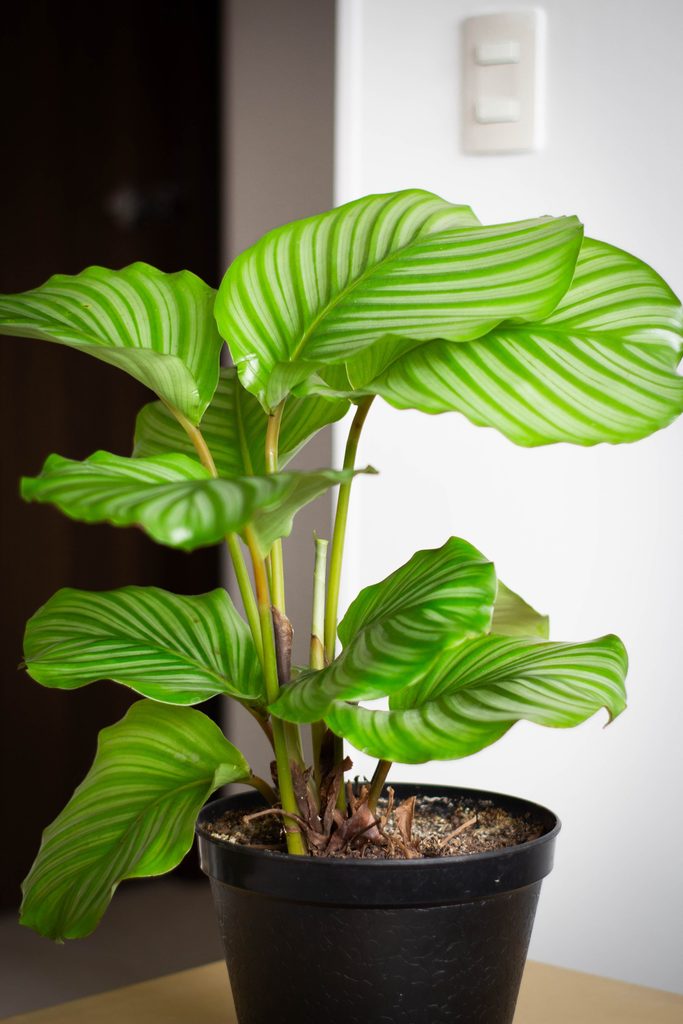
Calathea orbifolia is the star of many plant shelves. Its leaves are broad and round, with soft silver stripes on a sage-green background. It is one of the largest calatheas you can grow indoors.
The big leaves lose water quickly. They show dry air fast, usually as crisp brown edges. I find this plant very honest about its needs.
Give it bright, indirect light and steady moisture. Wipe the leaves with a damp cloth to remove dust.
2. Calathea ornata (Pinstripe Plant)
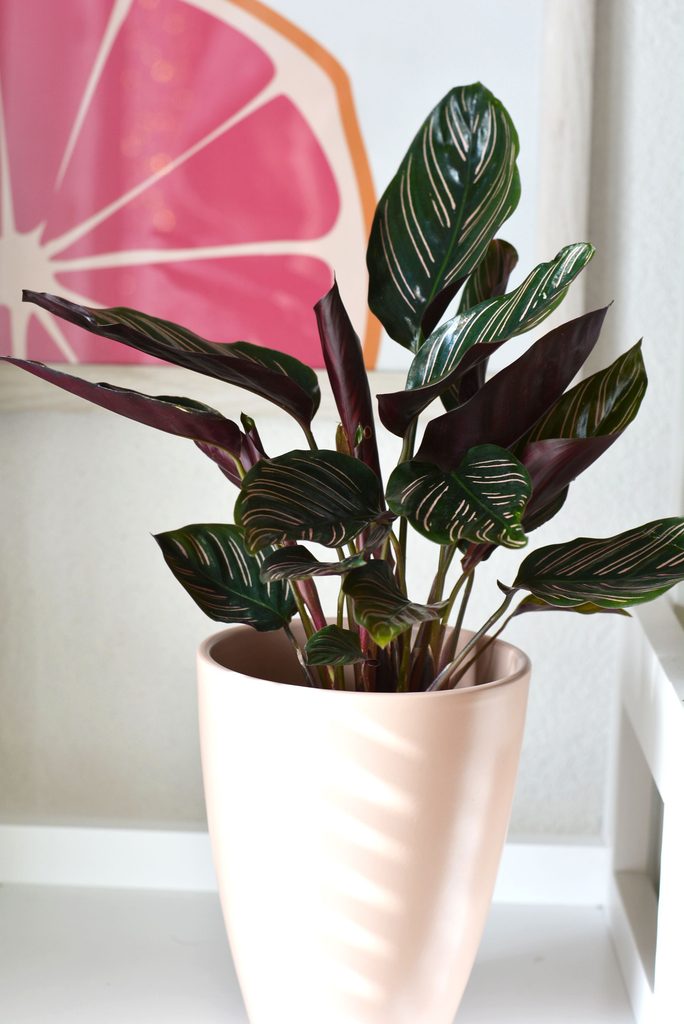
Calathea ornata is known for thin pink or white lines on dark green leaves. The lines look hand-painted. It is one of the classic prayer plants.
Young plants show the brightest stripes. As the leaves age, the pink often fades to white. This is normal and not a sign of illness.
Keep it out of direct sun and away from cold drafts. Use filtered or rainwater if your tap water is hard.
3. Calathea ornata ‘Sanderiana’
‘Sanderiana’ is a well-known form of pinstripe calathea. Its stripes are pink and rather bold. Many growers consider it the most colorful version.
It is not a separate species. It is a selected form, so its care is the same as for C. ornata. That makes it easy to learn if you already own a pinstripe.
Place it in medium light. Too much light bleaches the pink lines quickly.
4. Calathea ornata ‘Beauty Star’
‘Beauty Star’ is a cultivar often listed under the ornata group. Its leaves are slender and dark, with fine pink and white stripes. It looks neat and tidy in a small pot.
It stays smaller than many other calatheas. That suits desks, shelves and bathroom ledges.
Keep the soil lightly moist. Raise the humidity if the leaf tips begin to brown.
5. Calathea lancifolia (Rattlesnake Plant)
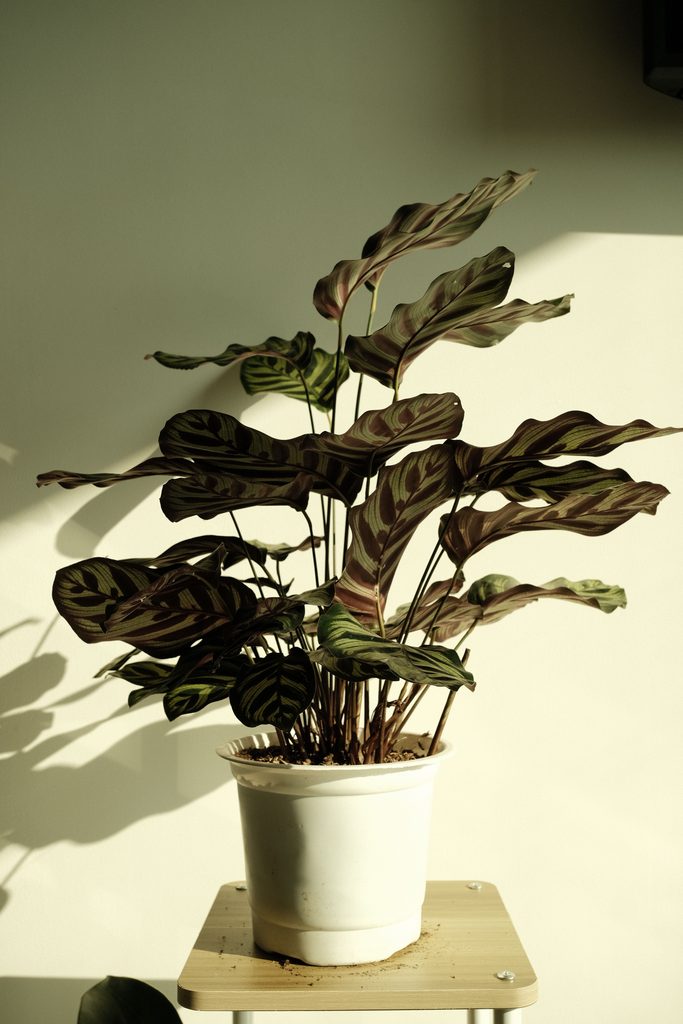
The rattlesnake plant has long, narrow leaves with wavy edges. Dark green spots run along a pale green surface. The undersides are a rich purple.
The common name comes from the pattern, which looks like snakeskin. Some databases now list it under Goeppertia insignis. Shops still sell it as Calathea lancifolia.
It is one of the easier types to grow. I often suggest it to beginners who want a calathea that forgives small mistakes.
6. Calathea makoyana (Peacock Plant)
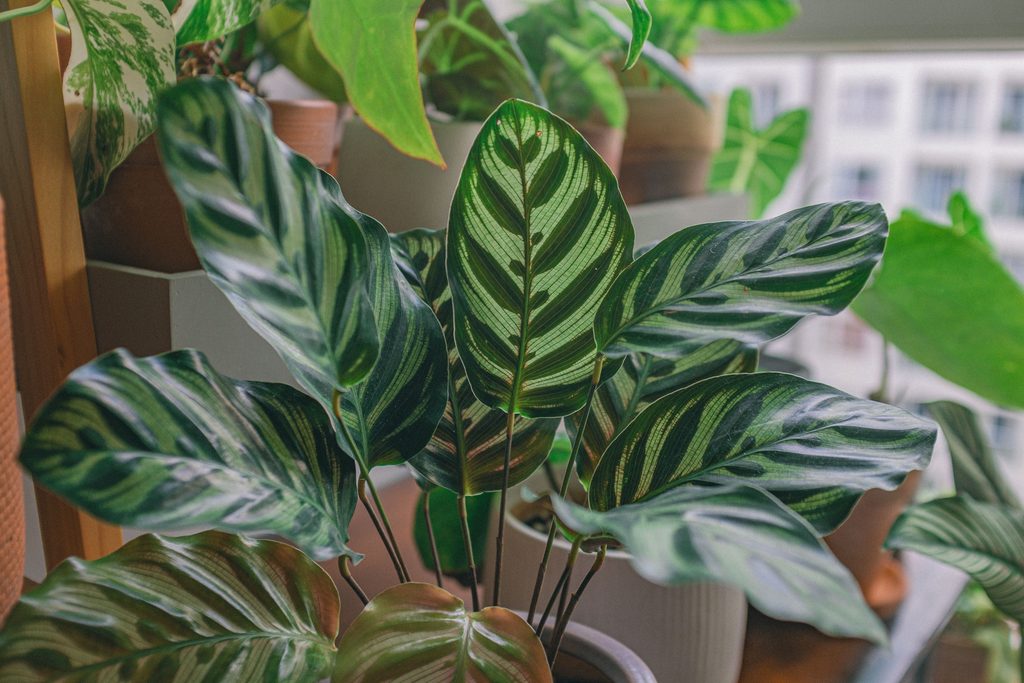
The peacock plant has rounded leaves with feather-like dark marks. The pattern looks like a peacock’s tail. The undersides are a deep burgundy.
It is a lovely plant but a fussy one. It dislikes dry air, cold water and direct sun. Brown edges are common in homes with heating or air conditioning.
Try placing it in a bright bathroom. The extra moisture often helps it more than frequent watering.
7. Calathea zebrina (Zebra Plant)
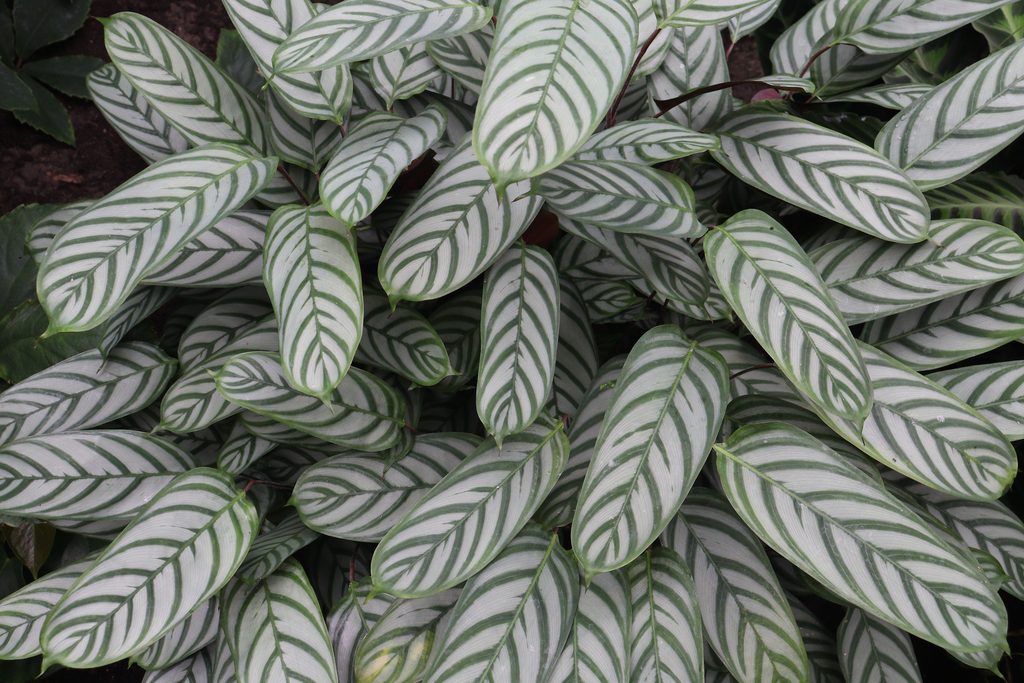
Calathea zebrina has large, velvety leaves with bold stripes. The stripes alternate between light and dark green. The undersides are often purple-tinted.
It can grow tall for a calathea, with leaves that stand upright. It makes a strong statement on a floor stand.
Give it indirect light and steady humidity. Rotate the pot now and then so that it grows evenly.
8. Calathea roseopicta ‘Dottie’
‘Dottie’ has dark, almost black-purple leaves. A thin pink line edges each leaf and follows the pattern inside. It looks dramatic and rich.
The color is strongest in medium light. In deep shade the leaves turn plain green. In harsh light the pink edge fades.
Keep it humid and avoid cold windows. It is a favorite among collectors, and I understand why.
9. Calathea roseopicta ‘Medallion’
‘Medallion’ has round, glossy leaves. They carry a dark green pattern on top, with a soft pink-purple underside. The name suggests an ornate coin.
This form is hardy for the group. It tolerates average indoor conditions better than some relatives.
Water when the top layer of soil feels slightly dry. Keep the plant away from vents.
10. Calathea roseopicta ‘Rosy’
‘Rosy’ shows a clear pink band around a dark center. The leaves are rounded and slightly ruffled. It brings gentle color to a green collection.
The pink looks best on new growth. Older leaves tend to dull a little.
Place it in bright, indirect light. Feed lightly during the growing season.
11. Calathea roseopicta ‘Corona’
‘Corona’ has wide leaves with a pale green edge and a darker green center. The contrast looks like a crown, hence the name. The undersides are deep purple.
It is a compact form. It works well in a room with limited space.
Use a light, airy potting mix. Check the soil often, because this plant dislikes both drought and soggy roots.
12. Calathea roseopicta ‘Illustris’
‘Illustris’ is a bright form with creamy-yellow or light green markings. The leaves are bold and eye-catching. It stands out among darker plants.
The light colors can scorch more easily than the dark forms. Protect it from strong sun.
Keep humidity steady. Dry air shows up quickly on these pale patterns.
13. Calathea warscewiczii
Calathea warscewiczii has long, velvety leaves. They are deep green with a lighter central feather pattern. The undersides are purple.
The velvet texture sets it apart. Water droplets sit on the surface and can leave marks, so avoid misting it.
Give it warmth and filtered light. It enjoys steady conditions and dislikes sudden change.
14. Calathea warscewiczii ‘Jungle Velvet’
‘Jungle Velvet’ is sold for its soft, plush foliage. The leaves are large and the color is rich green. It adds a tropical feel to a room.
Its needs match those of the main species. It is not an easy plant, but good humidity makes it manageable.
Wipe dust with a soft, damp cloth. Use a gentle touch, since the leaves bruise easily.
15. Calathea musaica (Network Plant)
The network plant has a fine, mosaic-like pattern. Yellow-green lines form a grid over deep green leaves. It looks like stained glass.
NC State Extension notes that this plant is native to the Brazilian rainforest. It lists it as Goeppertia kegeljanii and says it reaches about one to two feet tall and wide. That makes it a tidy choice for a small space.
It is sensitive to dry air. Keep it humid and out of direct sun.
16. Calathea micans
Calathea micans is a small, delicate plant. Its leaves are narrow and softly shiny. The undersides are often reddish.
NC State Extension lists it as the miniature calathea and notes its former names. It suits terrariums and bright shelves.
It likes constant moisture, but never standing water. A small pot with good drainage is ideal.
17. Calathea louisae ‘Maui Queen’
‘Maui Queen’ is a graceful plant with light green leaves. Darker green marks run along the midrib. The overall look is soft and fresh.
It is a good choice if you want a calmer pattern. It will not shout for attention, yet it looks elegant.
Give it medium light. Keep the soil evenly damp and the air moist.
18. Calathea louisae ‘Thalia’
‘Thalia’ shows narrow leaves with a lively green pattern. The undersides are purple. It looks light and airy.
This form grows in a clump. Over time it can fill a pot nicely.
Divide it in spring if it becomes crowded. Use fresh, well-draining soil for the new plants.
19. Calathea concinna ‘Freddie’
‘Freddie’ has bright green leaves with dark green stripes. MasterClass describes it as a low-maintenance, classic prayer plant. The leaves are slightly wavy.
It is a friendly plant for new owners. It copes with average homes better than many fussy types.
Keep it out of strong sun. A weekly check of the soil is usually enough.
20. Calathea vittata
Calathea vittata has long, pointed, dark green leaves. Light green, elliptical stripes run along them. The look is bold and clean.
It grows low and spreads gently. It suits a table or a plant stand.
Give it indirect light and regular moisture. Trim damaged leaves at the base.
21. Calathea crocata (Eternal Flame)
Calathea crocata is one of the few calatheas grown for its flowers. It produces bright orange bracts that last for weeks. The leaves are dark green with purple undersides.
Flowering indoors needs good light and humidity. I think it is worth the effort, since the orange color is striking.
Avoid wetting the flowers. Remove them once they fade.
22. Calathea rufibarba (Furry Feather)
Calathea rufibarba has slim, wavy leaves with a soft, hairy underside. The top is a clean green. The look is more textured than most.
It is often easier than the patterned types. Its plain leaves also hide small marks well.
Water with filtered water when possible. Keep it away from cold windows.
23. Calathea rufibarba ‘Blue Grass’
‘Blue Grass’ has narrow, grass-like leaves. They are slightly bluish-green. The plant looks light and modern.
It grows in a tight clump. This makes it a good filler for a mixed display.
Give it medium light. Keep the pot evenly moist in the growing season.
24. Calathea lutea (Cigar Calathea)
Calathea lutea has large, paddle-shaped leaves. They are plain green on top, with a pale underside. It grows tall and bold.
It needs space. It suits a bright corner or a large room.
Give it warmth and strong humidity. Dry air will dull its leaves quickly.
25. Calathea majestica ‘White Star’
‘White Star’ has long leaves with a white central stripe. The stripe stands out against dark green. The look is clean and sharp.
It is also sold under other names in some shops. Check the label if you want this exact form.
Keep it in medium light. Strong sun can fade the white stripe.
26. Calathea picturata ‘Argentea’
‘Argentea’ has silver-green leaves with a darker edge. The shine looks almost metallic. It is a quiet, refined beauty.
The silver pattern is lovely under soft light. In dim rooms it loses some of its brightness.
Water when the surface feels lightly dry. Keep the humidity steady.
27. Calathea picturata ‘Vandenheckei’
‘Vandenheckei’ has dark green leaves with a silver central band. The contrast is crisp. The undersides are purple.
It is a compact plant. It fits shelves and desks.
Avoid hard tap water if you can. Salt build-up often shows as brown leaf tips.
28. Calathea picturata ‘Silver Plate’
‘Silver Plate’ has rounded leaves with a broad silver sheen. The edge is dark green. It looks like polished metal.
It is a strong pick for modern interiors. Its color pairs well with white or gray pots.
Use bright, indirect light. Keep the soil moist but never soaked.
29. Calathea leopardina
Calathea leopardina has long leaves with dark green markings. The pattern resembles a leopard’s spots. The leaves are lightly glossy.
It stays moderate in size. It grows well in a bright, humid room.
Watch for spider mites in dry air. A gentle shower helps keep the leaves clean.
30. Calathea bachemiana
Calathea bachemiana has silver-green leaves with dark green edges. The shapes are narrow and elegant. It is less common than many others.
It rewards patient care. The leaves look best when the air is steady and humid.
Keep it away from heaters. Use a pot with good drainage.
31. Calathea cylindrica
Calathea cylindrica has rounded, wavy leaves. They are dark green with a lighter pattern. The shape is distinct and sculptural.
It is a smaller plant. It suits a terrarium or a closed display case.
Give it filtered light. Keep humidity high and avoid cold drafts.
32. Calathea ‘Eclipse’
‘Eclipse’ is a named cultivar with a bold, dark pattern. The leaves show strong contrast between light and dark green. It is listed among known calathea cultivars.
Its look is dramatic yet not too fussy. It fits well in a shaded corner.
Keep it away from direct sun. Water with care and let excess water drain away.
33. Calathea ‘Misto’
‘Misto’ is another named cultivar. Its leaves have a soft, blended pattern. It brings a gentle look to a plant group.
Cultivars like this are often bred for tidy size and color. They suit modern homes well.
Provide steady humidity. Rotate the pot so that growth stays even.
34. Calathea ‘Indri’
‘Indri’ is a cultivar listed among the known forms. It shows the typical calathea pattern with a fresh color. It is not as widely sold as the classics.
If you find one, treat it like other patterned calatheas. Consistent care matters more than any trick.
Use filtered light and moist, not wet, soil. Feed lightly in spring and summer.
35. Calathea ‘Mia’
‘Mia’ is a smaller cultivar with soft, elegant leaves. It is also found on lists of named forms. It can suit small spaces.
Small plants dry out faster. Check the soil often.
Keep it in a stable spot. Calatheas dislike being moved around.
36. Calathea lietzei
Calathea lietzei has rounded leaves with a bold pattern. The color is dark green with lighter markings. It is a handsome plant for shaded rooms.
It is related to several popular forms. Many cultivars trace back to this group.
Keep it warm and humid. Wipe the leaves regularly.
37. Calathea burle-marxii ‘Blue Ice’
‘Blue Ice’ has pale, cool-toned leaves. They are marked with soft green stripes. The look is calm and fresh.
It is a bit different from the dark, dramatic types. I like it for bright, airy rooms.
It likes steady humidity. Keep it out of strong afternoon sun.
38. Calathea ecuadoriana
Calathea ecuadoriana is named for its Ecuadorian origin. Its leaves have a graceful, patterned look. It is less common in shops.
Collectors seek it out for its rarity. Expect to pay more and search longer.
Care is similar to other rainforest calatheas. Warmth, shade and moisture are the keys.
39. Calathea crotalifera (Rattle Shaker)
Calathea crotalifera has large, plain green leaves. Its flower spikes are yellow and look like a rattle. This is the source of its common name.
It grows tall and bold. It needs room and good light.
It is one of the types grown more for its form than its pattern. Give it humidity and space to spread.
40. Calathea veitchiana
Calathea veitchiana has rounded leaves with strong markings. It is a known parent of several popular forms. The look is rich and ornate.
It is a sturdy plant when conditions are right. Warmth and humidity bring out its best.
Keep it in bright shade. Water with soft or filtered water.
41. Calathea allouia (Leren)
Calathea allouia is the type species of the genus. It is also grown for food in the Caribbean, where people eat its edible tubers. It is a useful plant, not only an ornamental one.
PlantaeDB describes it as a tropical American perennial. The edible side surprised me when I first read about it.
It is rarely sold as a houseplant. You are more likely to meet it in botanical gardens.
42. Calathea ‘Elgergrass’
‘Elgergrass’ is a cultivar with slim, light leaves. It looks different from the broad, round types. The leaves have a grass-like feel.
It is a quiet, elegant plant. It works well with other textures.
Keep the soil lightly moist. Provide bright, filtered light.
43. Calathea ‘Fusion White’
‘Fusion White’ is a bright cultivar with white and green marbling. The look is eye-catching and fresh. It is popular for its high contrast.
White areas of the leaf burn quickly in sun. Place it in soft light only.
Keep humidity steady. Remove old leaves to keep it tidy.
44. Calathea ‘Wavestar’
‘Wavestar’ has narrow, wavy leaves. It belongs to the rufibarba group. The edges ripple in a lovely way.
It is a good choice if you like texture. It looks great near a bright window with sheer curtains.
Give it even moisture. Avoid cold water on the leaves.
45. Calathea marantina
Calathea marantina is recorded in the GBIF taxonomy. It was published in the 1850s. It is a tropical species of the Marantaceae family.
It is mainly of interest to botanists and collectors. You are unlikely to see it in a store.
If you do find one, follow the usual rainforest care rules. Warmth, shade and moisture are the foundations.
46. Calathea lateralis
Calathea lateralis is an accepted species in the genus. It was described long ago and is native to tropical America. It appears in the current species lists.
It is not a common houseplant. It lives mostly in botanical collections.
Its needs follow the general rule for the group. Keep it warm and humid.
47. Calathea lasiostachya
Calathea lasiostachya is another accepted species in the genus. It was named by the botanist Donnell Smith. Its name refers to its hairy flower spike.
It is a plant for specialists. Most home growers will never meet it.
Still, it shows how varied the genus is. Not every calathea is a patterned houseplant.
48. Calathea anderssonii
Calathea anderssonii is a species named by the botanist Helen Kennedy. Kennedy worked for decades on this group. Her name appears on many species.
It is part of the wild diversity of the genus. It lives in tropical American forests.
Collectors rarely have it. It is mainly of scientific interest.
49. Calathea barryi
Calathea barryi is an accepted species described by Kennedy. It is listed among the genus names. It is native to the tropical Americas.
Species like this show how large the group once was. They remind me that houseplants are just a small part of the story.
Look for these names in herbarium records or botanical gardens.
50. Calathea brenesii
Calathea brenesii was described by the botanist Paul Standley. It is also native to Central America. It is a rarely cultivated species.
Costa Rican plant studies include many Marantaceae species. A Duke University flora work noted that Calathea is the largest and most widespread neotropical genus in its family.
It is best seen in the wild or in a botanical garden.
51. Calathea caesariata
Calathea caesariata is another Kennedy species. It is accepted in current lists. It grows in tropical forest habitats.
Not every species has a popular name. Many are known only by their Latin names.
It is a plant for researchers more than for home growers.
52. Calathea lanicaulis
Calathea lanicaulis is a Kennedy species with a woolly stem, as its name suggests. A TreeBASE study mentions the lanicaulis group as part of the genus. It helps scientists understand how the family is related.
It matters for plant science. It is not a plant you will buy.
It shows the depth of the genus beyond shop shelves.
53. Calathea lanibracteata
Calathea lanibracteata is another accepted species. The name points to woolly bracts. These are the leaf-like parts around the flowers.
It is native to tropical America. It is rare in any collection.
Knowing such names helps when you read plant databases. They tell a bigger story.
54. Calathea anulque
Calathea anulque is a species named by Kennedy. It appears in the current list of accepted names. Its common name, if any, is not widely used.
It belongs to the wild side of the group. It grows in humid forests.
Home growers can enjoy the idea even if they cannot grow it.
55. Calathea asplundii
Calathea asplundii is an accepted species. It honors a botanist who collected plants in the Americas. It is part of the genus’s long history.
Such names show how plants carry human stories. I find that part of botany very moving.
It is not available in stores.
56. Calathea jondule
Calathea jondule is a species described by Kennedy and Hammel. Barry Hammel wrote about Marantaceae of Costa Rica. The name appears in the species list.
It is another rare, wild type. It lives in humid forest.
You may only see it in a scientific paper.
57. Calathea jerome
Calathea jerome is a species named by Kennedy. It is accepted in the current genus list. Its name stands out among the Latin ones.
It reminds us that botanists often honor friends and colleagues. Each name has a small story behind it.
It is not a known houseplant.
58. Calathea louisae (Species)
Calathea louisae is the species behind forms like ‘Maui Queen’ and ‘Thalia’. It is a lighter-toned type with a clumping habit. It is more widely known through its cultivars.
Many growers do not realize their plant has a wild parent. Knowing this helps you understand its needs.
It enjoys warm, humid shade like its relatives.
59. Calathea neblinensis
Calathea neblinensis was described by Helen Kennedy in 1990. A paper in Phytologia, from the University of British Columbia herbarium, introduced it. It comes from the Cerro de la Neblina region of Venezuela.
The name points to a remote mountain area. It shows how much of this genus grew in hard-to-reach places.
Check current databases for its accepted status, since names change.
60. Calathea cannoides
Calathea cannoides was moved into Calathea by Kennedy in the same 1990 paper. It was first described under another genus name. The paper called it unusual and distinctive.
Its odd flower structure caught scientists’ attention. It is a good example of how plant names shift over time.
It is a species for study, not for the windowsill.
How to Choose the Right Calathea
Start with your light. Soft, indirect light suits almost every type. Strong sun is the fastest way to ruin a calathea.
Next, think about humidity. Beginners do better with lancifolia, ‘Freddie’, rufibarba and ‘Medallion’. Fussier plants such as makoyana and orbifolia need more attention.
Finally, consider pets. The ASPCA lists calatheas as non-toxic to cats and dogs. I still suggest keeping plants out of reach, because chewing hurts the leaves.
Quick Care Basics for Every Calathea
Most calatheas are understory plants from tropical rainforests. They like soft light, steady warmth and moist air. Strong sun fades and scorches their leaves.
Humidity matters most. University of Nebraska–Lincoln Extension reports that most houseplants suffer when humidity falls below 20 percent. It recommends 40 to 60 percent for good growth. Many homes drop below that in winter.
You can raise humidity in simple ways. Group plants together, use a pebble tray, or run a humidifier. University of Wisconsin Extension notes that misting alone is not an effective fix.
Use even moisture and a well-draining mix. Avoid soggy soil, which leads to root rot. Never leave the pot standing in water.
Final Thoughts
Calatheas are not the easiest plants. They ask for steady humidity, gentle light and patience. In return, they give some of the most beautiful leaves in the plant world.
Start with one or two types from this list. Learn how they respond, then add more. Over time you will understand why these plants win such loyal fans.
References
- NC State Extension. Goeppertia kegeljanii (Network Prayer Plant). https://plants.ces.ncsu.edu/plants/goeppertia-kegeljanii
- NC State Extension. Goeppertia micans (Miniature Calathea). https://plants.ces.ncsu.edu/plants/goeppertia-micans/common-name/miniature-calathea/
- University of Nebraska–Lincoln Extension. G2205 Guide to Growing Houseplants. https://extensionpubs.unl.edu/publication/g2205/html/view
- University of Minnesota Extension. Winter Houseplant Tips. https://extension.umn.edu/about/our-stories/news/winter-houseplant-tips
- Iowa State University Extension. How to Care for Houseplants. https://yardandgarden.extension.iastate.edu/how-to/how-care-houseplants
- University of Missouri Extension. G6510 Houseplants. https://extension.missouri.edu/g6510
- University of Wisconsin–Madison Extension. Gardening Indoors with Houseplants. https://chippewa.extension.wisc.edu/2023/11/29/gardening-indoors-with-houseplants/

Tim M Dave is a gardening expert with a passion for houseplants, particularly cacti and succulents. With a degree in plant biology from the University of California, Berkeley, he has vast experience in gardening. Over the years, he has cultivated a vast collection of desert plants and learned a great deal about how to grow and care for these unique companions.