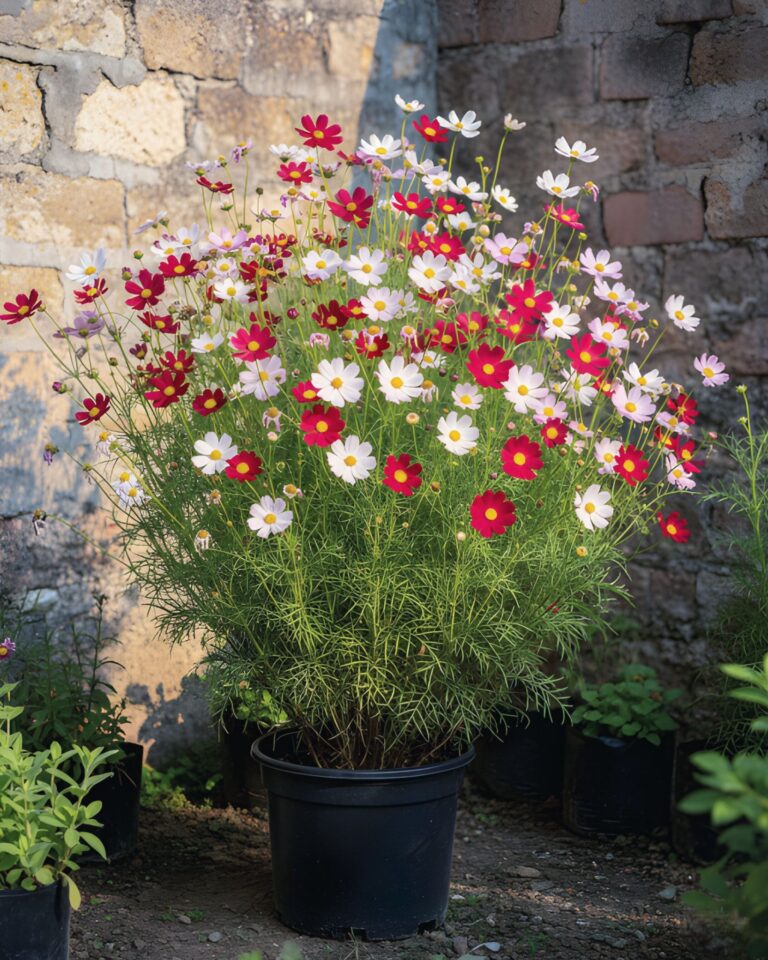
45 Oregon Native Flowers (With Growing Details)
Oregon is one of the richest wildflower states in the country. OregonFlora, the state’s leading botanical database, has catalogued more than 4,700 vascular plant species growing here without cultivation.
I have hiked through Willamette Valley meadows in April and watched camas turn entire fields blue. I have crouched on a Coast Range trail to photograph a single fairy slipper orchid, half-hidden under fern litter. Each flower on this list earned its place because it grows wild, unaided, in Oregon soil.
This guide covers 45 native flowers, with bloom times, habitats, and a few facts that surprised even me.
The Native Plant Society of Oregon notes that over 500 native species in the state are currently listed as threatened or endangered, so treating wild blooms gently matters more than ever.
Let’s walk through them.
Woodland and Forest Floor Flowers
1. Oregon Grape (Mahonia aquifolium)
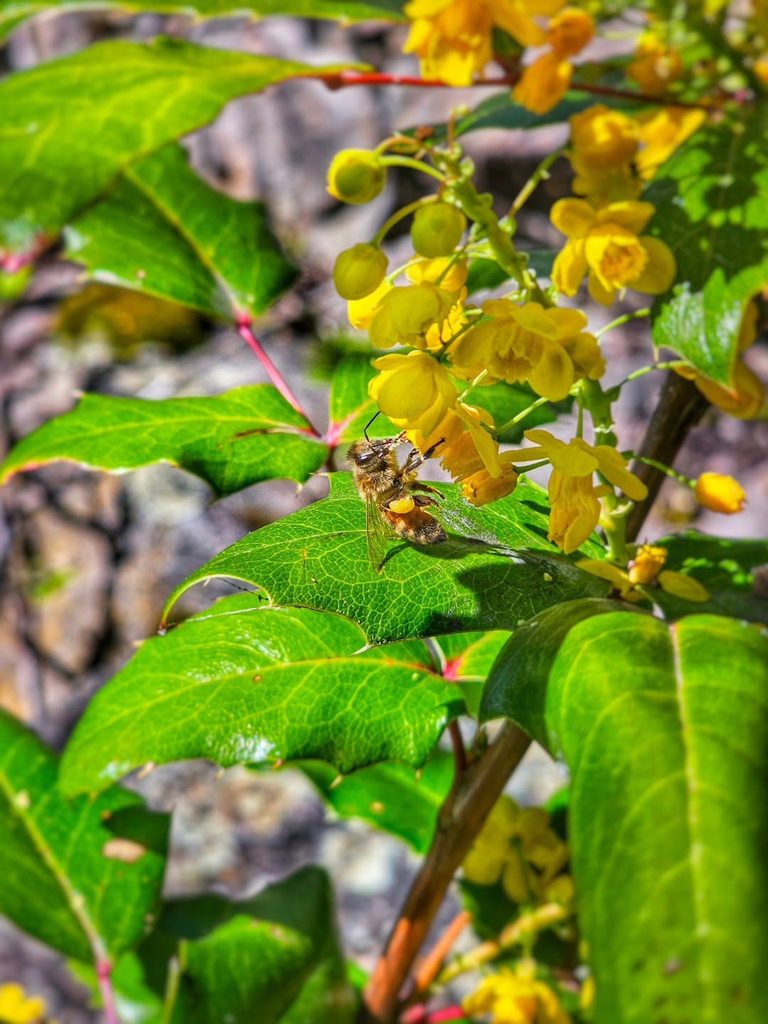
Oregon Grape has been the official state flower since 1899, and it earns the title. Its holly-shaped leaves stay glossy through winter, and clusters of small yellow flowers appear in early spring.
By late summer, those flowers turn into dusty blue berries. Birds love them, and so do jam makers, though the fruit is tart enough to make you wince first.
This shrub grows in shaded forests across the entire state, from the Coast Range to the Blue Mountains. It tolerates poor soil better than almost anything else on this list.
2. Pacific Rhododendron (Rhododendron macrophyllum)
This is Oregon’s largest native rhododendron, and it can grow taller than a person. Its pink to rose-purple blossoms open in late spring, usually May through June.
You will find it thriving in the shaded understory of coastal and Cascade forests. It prefers acidic, well-drained soil under a canopy of conifers.
Coos County even holds an annual rhododendron festival to celebrate the bloom. That should tell you how much locals value this plant.
3. Common Camas (Camassia quamash)
Camas turns entire Willamette Valley meadows a striking shade of blue-purple each April and May. It is one of the most photographed native wildflowers in the state.
Indigenous peoples across the Pacific Northwest cultivated camas bulbs as a major food source for thousands of years, roasting them slowly to make the starch digestible.
Today, camas prairies are rare because most valley grassland has been converted to farmland. Seeing a healthy camas field is genuinely a special sight now.
4. Western Trillium (Trillium ovatum)
Trillium is easy to recognize: three white petals, three green leaves, nothing else quite like it. It blooms from March through May in moist, shaded forests.
Here’s a small quirk I find charming. The flower ages from white to pink to deep purple over about a week, so a single patch can show all three colors at once.
Please resist picking trillium. Removing the flower can kill the plant, since it channels energy back into the root for years before blooming again.
5. Chocolate Lily (Fritillaria affinis)
Also called checker lily, this flower has mottled brown-and-yellow petals that genuinely look like a checkerboard pattern up close. It blooms in April and May.
Despite the name, it does not smell like chocolate. Some say it has a faint, musky scent, which makes sense given it relies on flies and beetles for pollination rather than bees.
You will spot it in grassy meadows and open woodlands, mostly west of the Cascades.
ALSO READ: 25 Oregon Native Trees (With Growing Details)
6. Fireweed (Chamerion angustifolium)
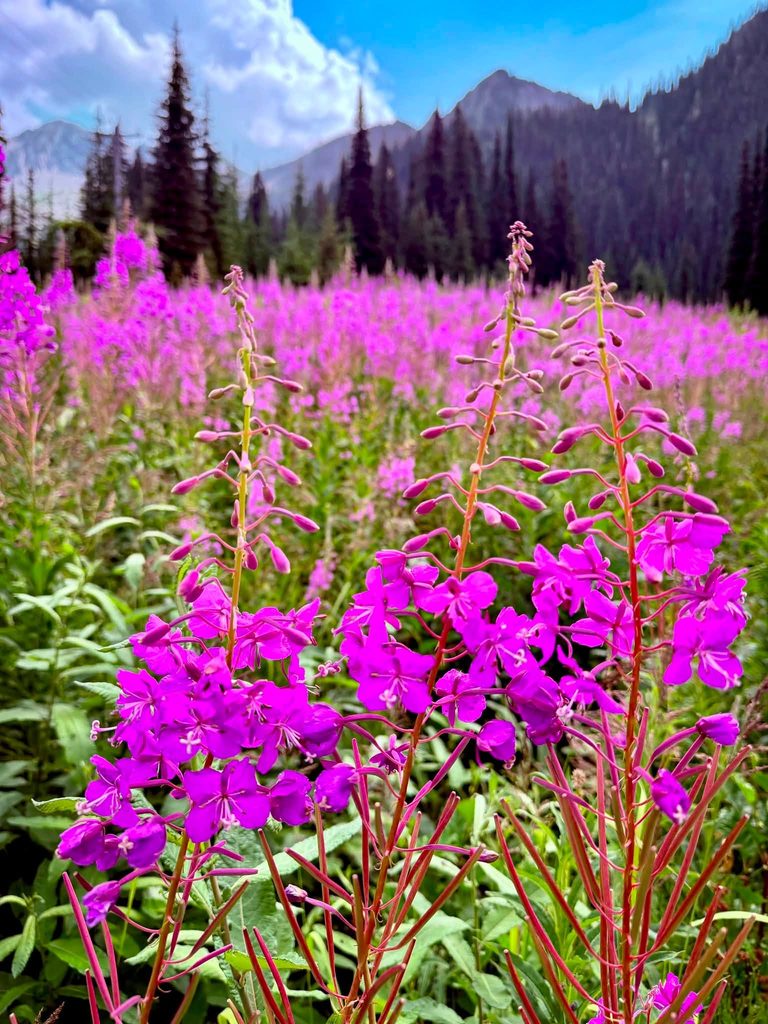
Fireweed is famous for being the first bright bloom to appear after wildfires, hence the name. Its tall spikes of pink-magenta flowers can reach six feet.
It blooms from June through September, later than most spring wildflowers, which makes it a valuable late-season nectar source for bees and hummingbirds.
I always think of fireweed as nature’s optimism. It shows up right after devastation and turns burned hillsides purple within a year or two.
Iris, Lily, and Bulb Flowers
7. Oregon Iris (Iris tenax)
Oregon Iris has slender, grass-like leaves and delicate lavender-to-purple petals with darker veining. It blooms in April and May across meadows and open woods.
The species name “tenax” means tough, referring to the fibrous leaves that Indigenous communities twisted into strong cordage and rope.
It grows almost exclusively west of the Cascades, particularly in the Willamette Valley and Coast Range foothills.
8. Columbia Tiger Lily (Lilium columbianum)
This lily’s orange, spotted, downward-facing petals curl backward dramatically, giving it a fiery, almost tropical look despite being entirely native to the Pacific Northwest.
It blooms in June and July, favoring open woods and forest edges at low to mid elevations.
Deer find it delicious, unfortunately, which is part of why healthy tiger lily populations are becoming harder to find in some areas.
9. Few-Flowered Shooting Star (Primula pauciflora)
Shooting star flowers point their petals backward and their stamens forward, creating the illusion of a tiny comet streaking through the grass. They bloom March through May.
The magenta-and-yellow coloring is striking against wet meadows and streambanks, where this species prefers consistently moist soil.
It disappears quickly after blooming, going dormant by summer, so timing a visit right matters if you want to see it.
10. Washington Lily (Lilium washingtonianum)
Despite the name, this lily grows widely in Oregon’s Cascade and Siskiyou mountains. Its white, trumpet-shaped flowers age to pink and carry a strong, sweet fragrance.
It blooms from June through August at mid to high elevations, often in dry, open coniferous forest.
I once caught its scent on a trail before I even saw the flower. That fragrance carries surprisingly far on a warm afternoon.
11. Scarlet Fritillary (Fritillaria recurva)
Scarlet fritillary is one of the more dramatic native lilies, with nodding, bell-shaped red-orange flowers speckled yellow inside. It blooms April through June.
Hummingbirds are drawn strongly to the red coloring, and this species is one of the few fritillaries pollinated primarily by them rather than insects.
It favors dry, rocky slopes in southwestern Oregon, particularly the Siskiyou and Klamath regions.
12. Ookow / Cluster Lily (Dichelostemma congestum)
Ookow produces a tight cluster of purple, tubular flowers atop a single tall, leafless stem. It blooms in late spring, typically May and June.
The name comes from the Chinook Jargon trade language, reflecting how long Indigenous peoples in the region have known and used this plant.
Its bulbs, called corms, were historically an important food source, similar in role to camas.
13. Fairy Slipper Orchid (Calypso bulbosa)
This is one of the smallest and most delicate native orchids you will find. A single pink-purple flower rises from one broad leaf, blooming March through May.
Finding one still stops me mid-step every time. It grows in deep, mossy conifer forest and depends on specific fungal relationships in the soil to survive.
Because of this fungal dependency, transplanting fairy slipper orchids almost always fails. Enjoy them where they grow.
14. Douglas Iris (Iris douglasiana)
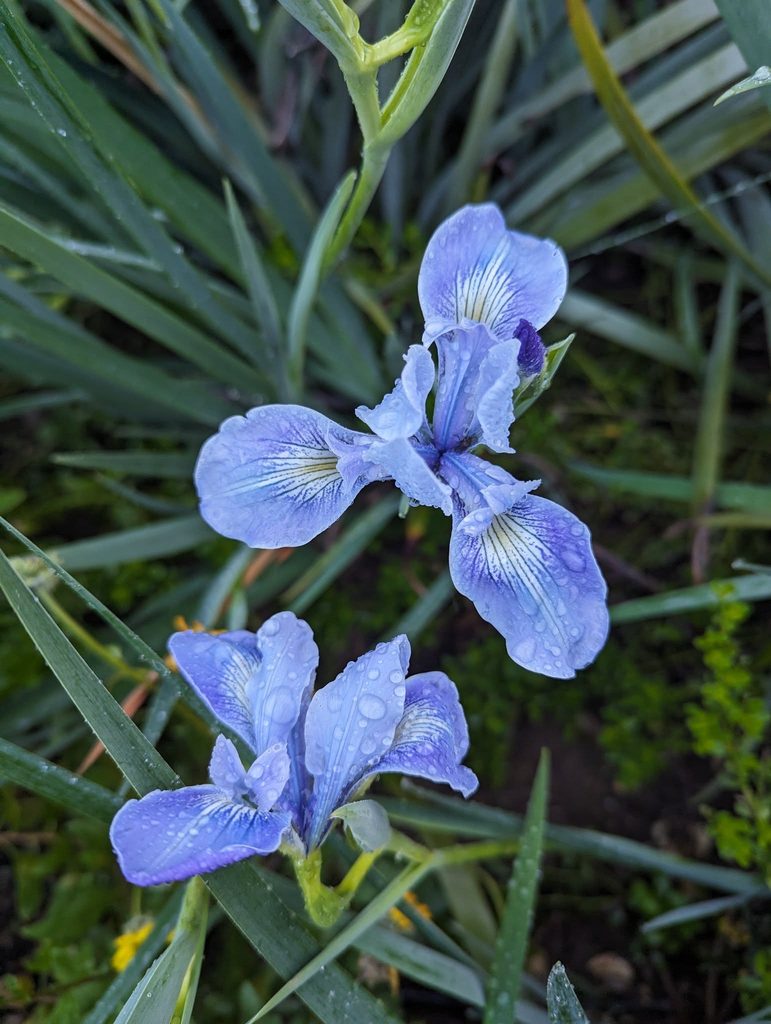
This coastal iris shows a wide range of color, from deep purple to pale cream, sometimes within the same population. It blooms March through May.
It thrives in coastal bluffs, grasslands, and open woods along the southern Oregon coast, tolerating salt spray better than most flowering plants.
15. Slender-Tubed Iris (Iris chrysophylla)
A smaller, paler cousin of Oregon Iris, this species has cream to pale lavender petals with a long, narrow floral tube. It blooms April through June.
It grows in dry, open forest understory, mostly in southwestern Oregon, and tends to bloom slightly later at higher elevations.
Meadow and Prairie Flowers
16. Oregon Sunshine (Eriophyllum lanatum)
Oregon Sunshine looks exactly like its name suggests: bright yellow, daisy-like flowers atop silvery, woolly foliage. It blooms May through August.
This is one of the most drought-tolerant native wildflowers in the state, which is why it has become popular in xeriscaping and pollinator gardens.
Bees and butterflies flock to it heavily, making it a genuinely important nectar source through the driest months of summer.
17. Farewell-to-Spring (Clarkia amoena)
This flower carries a bittersweet name, since it blooms in June and July, right as spring transitions into summer heat. Its pink petals often show a darker red-purple blotch.
It grows in open grasslands and coastal bluffs, and its cheerful color makes it a favorite in native wildflower seed mixes.
18. Cascade Penstemon (Penstemon serrulatus)
Cascade Penstemon produces spikes of tubular, deep purple-blue flowers that hummingbirds and bumblebees both favor equally. It blooms June through August.
It grows well in rocky meadows and forest clearings at mid to high elevation throughout the Cascade Range, tolerating both sun and partial shade.
19. Broadleaf Lupine (Lupinus latifolius)
Lupine spikes of blue-purple pea-like flowers are a familiar sight along Oregon roadsides and meadows from June through August.
As a legume, lupine fixes nitrogen in the soil, quietly improving conditions for the plants that grow around it. It is one of nature’s better neighbors.
It is also the primary host plant for several native butterfly species, including some rare fritillaries that depend on it entirely for larval food.
ALSO READ: 50 Different Types of Cherries (Sweet, Tart, and Ornamental Varieties)
20. Wood Violet (Viola glabella)
This small, bright yellow violet with purple-veined lower petals blooms in moist forest understory from March through May.
It spreads readily by both seed and rhizome, forming loose colonies along shaded streambanks and seepy forest slopes.
21. Oregon Checkermallow (Sidalcea oregana)
Checkermallow produces tall spikes of pink, hollyhock-like flowers from June through August in wet meadows and streamside habitats.
Several checkermallow species in Oregon are now rare or endangered due to wetland habitat loss, making healthy populations worth protecting where they still exist.
22. Idaho Blue-Eyed Grass (Sisyrinchium idahoense)
Despite its grass-like leaves, this is actually a member of the iris family. Small, six-petaled violet-blue flowers with yellow centers bloom April through June.
It grows in moist meadows and grasslands statewide, often overlooked because the flowers close by afternoon on hot days.
23. Western Buttercup (Ranunculus occidentalis)
Glossy yellow petals give this early bloomer a slightly waxy shine that catches sunlight well. It flowers March through May in grasslands and open woods.
Like most buttercups, it contains compounds mildly toxic to grazing animals, though livestock generally avoid eating it if better forage is available.
24. Western Yarrow (Achillea millefolium)
Yarrow’s flat clusters of small white flowers sit atop feathery, aromatic foliage. It blooms from May well into September, longer than most native wildflowers.
Traditionally, many Indigenous communities used yarrow for its medicinal properties, and it remains a staple in herbal medicine today.
25. Western Wallflower (Erysimum capitatum)
Bright orange-yellow, four-petaled flowers cluster at the top of upright stems, blooming April through July across dry meadows, rocky slopes, and roadsides.
It has a light, sweet fragrance that becomes noticeable on warm afternoons, drawing in a steady stream of native bees.
Coastal and Wetland Flowers
26. Nootka Rose (Rosa nutkana)
This is Oregon’s most widespread native wild rose, with pale pink, five-petaled flowers blooming May through July across nearly every habitat type in the state.
Its bright red hips persist into winter, providing critical food for birds when little else is available.
27. Pacific Dogwood (Cornus nuttallii)
Technically what you see are large white bracts surrounding tiny true flowers, but the effect is stunning: showy white blooms covering the tree in April and May.
It grows in forest understory and edges throughout western Oregon, and a second, smaller bloom sometimes appears in early autumn.
28. Beargrass (Xerophyllum tenax)
Tall spikes of tiny, densely packed white flowers rise from grass-like clumps, blooming June through August at higher elevations.
Beargrass does not bloom every year, and populations often flower together in mass synchronized events, creating spectacular hillside displays when conditions align.
29. Western Skunk Cabbage (Lysichiton americanus)
This wetland plant produces a bright yellow, hood-shaped bract around a small flower spike, blooming as early as February in swampy, low-elevation areas.
Yes, it smells exactly like the name suggests. That odor attracts flies and beetles, which pollinate the flower in exchange for an early-season meal.
ALSO READ: 15 Types of Ninebark Shrubs (With Pictures, and Care Tips)
30. Douglas Aster (Symphyotrichum subspicatum)
Purple-blue, daisy-like flowers with yellow centers bloom late in the season, from August through October, in wet meadows and streambanks.
It is one of the last native wildflowers standing as autumn approaches, making it a critical late nectar source for migrating butterflies.
31. Canada Goldenrod (Solidago canadensis)
Tall, feathery plumes of tiny yellow flowers bloom July through September along moist meadows, ditches, and streambanks statewide.
Contrary to common belief, goldenrod does not cause hay fever. Ragweed, which blooms at the same time, is the actual culprit, but goldenrod gets unfairly blamed.
32. Harsh Paintbrush (Castilleja hispida)
The bright red-orange “flowers” are actually colored bracts, with the true flowers tucked inside, blooming April through July in open meadows and grasslands.
Paintbrush is hemiparasitic, tapping into the roots of nearby grasses and shrubs for extra nutrients, which makes it notoriously difficult to grow from seed alone.
33. Siberian Candy Flower (Claytonia sibirica)
Small, five-petaled white to pink flowers with pink veining bloom March through July in moist, shaded forest understory.
Despite the name, it is fully edible, and the young leaves have a mild, slightly succulent flavor sometimes used in foraged salads.
34. Coast Manroot / Wild Cucumber (Marah oregana)
This vigorous vine produces small, star-shaped white flowers in spring, followed by large, spiny seed pods that give it its cucumber nickname.
It grows a massive underground tuber that can weigh over a hundred pounds, one of the more surprising facts I came across researching this list.
35. Wapato / Broadleaf Arrowhead (Sagittaria latifolia)
Wapato produces clusters of white, three-petaled flowers on tall stalks emerging from shallow water, blooming June through September.
Its starchy tubers were a staple food for Indigenous peoples along the Columbia and Willamette rivers long before European settlement.
36. Pacific Silverweed (Argentina egedii)
Bright yellow, buttercup-like flowers bloom on this low, spreading plant found in coastal marshes and tidal meadows from May through August.
Its silvery, divided leaves give the plant its name and help it tolerate the salty spray common along Oregon’s shoreline.
ALSO READ: 25 Stunning Bushes That Attract Butterflies (With Pictures, and Care Tips)
Alpine and High-Elevation Flowers
37. Avalanche Lily (Erythronium montanum)
This striking white lily often blooms right at the edge of melting snowbanks in July and August, giving it its evocative name.
It grows in subalpine meadows across the Cascades, and its bloom timing shifts year to year depending entirely on snowmelt patterns.
38. Mountain Marsh Marigold (Caltha leptosepala)
White, buttercup-shaped flowers with a yellow center bloom near snowmelt streams and wet alpine meadows from June through August.
It thrives in consistently cold, saturated soil, making high-elevation seeps and stream edges its preferred habitat throughout the summer.
39. Twinflower (Linnaea borealis)
Delicate pairs of pink, bell-shaped, fragrant flowers droop from thin stems creeping along the forest floor, blooming June through August.
This species was reportedly the favorite flower of botanist Carl Linnaeus, who developed the modern system of naming plants and animals.
40. Oregon Stonecrop (Sedum oreganum)
Bright yellow, star-shaped flowers bloom atop fleshy, succulent foliage from June through August on rocky outcrops and cliff faces.
Its thick leaves store water efficiently, allowing it to survive in shallow, dry soil pockets where few other flowering plants could take root.
Shrub and Vine Flowers
41. Salmonberry (Rubus spectabilis)
Bright magenta-pink flowers appear as early as February and March, making salmonberry one of the very first native shrubs to bloom each year.
Its berries, ranging from yellow to deep red, follow soon after and are an important early food source for birds and small mammals.
42. Western Red Columbine (Aquilegia formosa)
Distinctive red-and-yellow, nodding flowers with backward-pointing spurs bloom April through August, attracting hummingbirds almost immediately after opening.
Every part of this plant, particularly the seeds, contains compounds toxic if ingested, so admiring it visually is the safer approach.
ALSO READ: 30 Best Shrubs That Grow in Shade (Bushes Identification, With Pictures)
43. Pacific Bleeding Heart (Dicentra formosa)
Clusters of pink, heart-shaped flowers dangle from arching stems above delicate, fern-like foliage, blooming March through June in shaded forest.
Ants play a surprising role in its life cycle, carrying the seeds away to their nests and inadvertently helping the plant spread through the forest.
44. Western Wild Ginger (Asarum caudatum)
This low, spreading groundcover has heart-shaped leaves that hide small, maroon, star-shaped flowers close to the ground, blooming April through July.
The flowers grow near soil level intentionally, since they rely on ground-dwelling beetles and flies for pollination rather than flying insects.
45. Redwood Sorrel (Oxalis oregana)
Delicate pink to white, five-petaled flowers rise above clover-like leaves that fold down flat in bright light and reopen in shade.
This light-sensitive folding behavior happens within minutes, which makes redwood sorrel one of the more visibly responsive native wildflowers you can observe in real time.
Frequently Asked Questions
What is Oregon’s official state flower? Oregon Grape (Mahonia aquifolium) has held that title since 1899.
When is the best time to see Oregon wildflowers? Peak bloom runs from April through July in most lowland areas, though coastal and alpine zones bloom later, sometimes into September.
Are Oregon native wildflowers protected by law? Many species are protected on public lands, and picking flowers in state parks and national forests is generally discouraged or prohibited. Always check local regulations before collecting any plant material.
Where can I see the most wildflowers in one trip? The Columbia River Gorge, Willamette Valley prairies, and Rowena Crest are among the most reliable spots for dense, diverse spring wildflower displays.
Final Thoughts
Forty-five flowers barely scratches the surface of what grows wild across this state. Oregon’s landscape shifts from coastal bluffs to high desert to alpine meadow within a few hours’ drive, and each zone carries its own floral signature.
What struck me most while writing this list is how many of these flowers carry practical history. Camas, wapato, and ookow fed people for generations before anyone wrote the names down in Latin.
If you plan to photograph or forage any of these, stick to trails and avoid picking rare species. With over 500 native Oregon plants already listed as threatened or endangered, a little restraint goes a long way toward keeping these blooms around for the next person on the trail.
Whichever season you visit, something on this list will likely be blooming somewhere in the state. That is the real joy of Oregon wildflowers: there is rarely a bad time to go looking.

Tim M Dave is a gardening expert with a passion for houseplants, particularly cacti and succulents. With a degree in plant biology from the University of California, Berkeley, he has vast experience in gardening. Over the years, he has cultivated a vast collection of desert plants and learned a great deal about how to grow and care for these unique companions.