25 Oregon Native Trees (With Growing Details)
I remember driving through the Coast Range for the first time and feeling genuinely small under the canopy. Douglas-fir trees stacked up on both sides of the road like green walls. Oregon does not do subtle forests, and I mean that as a compliment.
Forests cover more than 30.5 million acres of Oregon, over half the entire state. Few places in the country pack this much tree diversity into one set of borders.
Oregon is home to 30 native coniferous species and 37 native broadleaf species, according to the Oregon Forest Resources Institute. That range comes from the state’s wild swings in elevation, rainfall, and soil.
This guide covers 25 native Oregon trees, grouped by region and habitat, so you can identify what towers over you on a hike or choose the right species for your own yard.
Why Oregon’s Native Trees Matter
Oregon’s forests are not just backdrop for hiking photos. They anchor a major industry, protect salmon streams, and support wildlife across dramatically different landscapes within one state.
Douglas-fir alone accounts for more than one-third of Oregon’s forested area and over half of the state’s total forest volume, according to U.S. Forest Service inventory data.
Three-fourths of Oregon’s forest volume sits on the wetter west side of the state, while the drier east side supports very different species built for heat and low rainfall.
With that context in mind, here are 25 native Oregon trees worth knowing.
The State Tree and Its Conifer Neighbors
1. Douglas-Fir (Pseudotsuga menziesii)
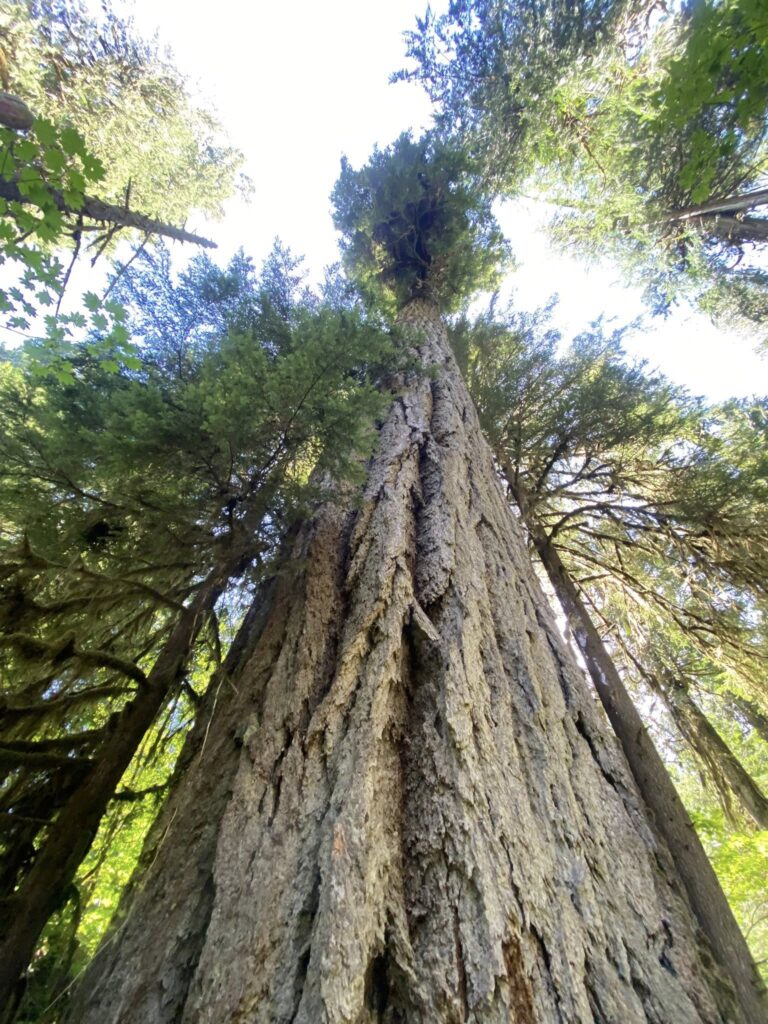
Douglas fir is Oregon’s official state tree, and it dominates the timber economy more than any other species in the Pacific Northwest. It is not technically a true fir at all.
Mature trees can exceed 250 feet, with thick, deeply furrowed bark that helps older specimens survive wildfire better than many other conifers.
This single species makes up more than half of Oregon’s total forest volume, an extraordinary share for one tree across such a large and varied state.
Its cones are easy to identify by the distinctive, three-pointed bracts poking out between the scales, often described as resembling tiny mouse tails.
2. Western Hemlock (Tsuga heterophylla)
Western hemlock thrives in the cool, shaded understory of Oregon’s coastal and Cascade forests, tolerating deep shade better than Douglas-fir ever could.
Its drooping leader, the very top of the tree, gives it a graceful, slightly floppy silhouette that makes identification easy from a distance.
This species often takes over as the dominant tree in old-growth stands, since it can regenerate in shade where Douglas-fir seedlings struggle to survive.
Short, flat needles of uneven length line each twig, a helpful detail for telling it apart from true firs and spruces.
3. Sitka Spruce (Picea sitchensis)
Sitka spruce grows largest right along Oregon’s foggy coastline, where consistent moisture and mild temperatures push it to record-setting heights.
Sharp, stiff needles radiate around each twig, making this tree noticeably prickly to handle compared to the softer needles of hemlock or fir.
Its wood is prized for guitar soundboards and aircraft frames, valued historically for an unusually high strength-to-weight ratio among conifers.
This species rarely thrives far from coastal fog and moisture, which is why it stays concentrated in a narrow band along Oregon’s Pacific edge.
4. Western Redcedar (Thuja plicata)
Western redcedar carries deep cultural significance for Pacific Northwest Indigenous peoples, who used its rot-resistant wood for canoes, totem poles, and longhouses.
Flattened, scale-like foliage releases a distinctive, pleasant aroma when crushed, a quick way to confirm identification in the field.
This species thrives in consistently moist soil and often grows alongside western hemlock in Oregon’s coastal and low-elevation Cascade forests.
Naturally decay-resistant wood remains popular today for outdoor construction, fencing, and roofing shingles across the region.
5. Ponderosa Pine (Pinus ponderosa)
Ponderosa pine dominates Oregon’s dry east side, and the state holds the nation’s second-largest area of ponderosa pine forest, after California, with roughly 4.7 million acres.
Long needles, bundled in groups of three, and thick, puzzle-piece bark give mature trees a warm, orange-brown color that stands out sharply against blue sky.
Older bark famously smells like vanilla or butterscotch when you lean in close, a small but genuinely delightful identification trick.
This species tolerates drought and fire far better than most Pacific Northwest conifers, thanks to thick bark and deep, well-developed root systems.
Coastal and Low-Elevation Broadleaf Trees
6. Bigleaf Maple (Acer macrophyllum)
Bigleaf maple produces the largest leaves of any native maple in North America, sometimes reaching a foot across on vigorous young growth.
Fall color turns a warm, golden yellow, brightening Oregon’s often-gray coastal and valley forests during the transition into winter.
Mossy branches are a common sight on older specimens, since the mild, wet climate encourages heavy epiphyte growth on established bark.
This tree tolerates both full sun and shade, and its dense canopy makes it a favorite shade tree in Willamette Valley yards.
7. Red Alder (Alnus rubra)
Red alder grows fast, often reaching 40 to 80 feet, and gets its name from the reddish dye traditionally made from its bark.
This species fixes nitrogen in the soil, improving fertility for other plants and making it one of the first trees to colonize disturbed or logged ground.
Smooth, gray bark and simple, serrated leaves distinguish it from Oregon’s other native hardwoods at a glance.
Red alder is short-lived compared to conifers, typically declining after 60 to 100 years, but its ecological role during that window is significant.
8. Oregon Ash (Fraxinus latifolia)
Oregon ash is the only native ash species found west of the Rocky Mountains, growing primarily in wet bottomlands and seasonal floodplains.
Compound leaves with five to seven leaflets set it apart from Oregon’s other broadleaf trees, most of which have simple, single-blade foliage.
Emerald ash borer has not yet reached Oregon, but state agencies are monitoring closely, given the devastation this invasive pest has caused elsewhere in the country.
This species tolerates seasonal flooding exceptionally well, making it a key player in the state’s riparian forest ecosystems.
9. Black Cottonwood (Populus trichocarpa)
Black cottonwood is the largest native poplar in North America, capable of reaching well over 150 feet along Oregon’s river corridors.
Fast growth and a preference for wet, sandy soil make it a common sight lining the Willamette, Columbia, and other major Oregon rivers.
Its sticky, fragrant spring buds release a resinous scent that many longtime Oregonians associate strongly with the arrival of warmer weather.
This tree provides critical nesting habitat for bald eagles and other large raptors along the state’s major waterways.
10. Pacific Madrone (Arbutus menziesii)
Pacific madrone stands out immediately for its smooth, reddish-orange bark, which peels away in thin curls to reveal fresh green bark underneath.
Evergreen leaves stay glossy year-round, and clusters of white, urn-shaped flowers in spring give way to bright orange-red berries loved by birds.
This species thrives on dry, rocky slopes, particularly in southern Oregon’s Rogue Valley and the foothills of the Coast Range.
Madrone is notoriously difficult to transplant, so most successful plantings start from seed or very young nursery stock rather than mature specimens.
Oaks and Woodland Trees
11. Oregon White Oak (Quercus garryana)
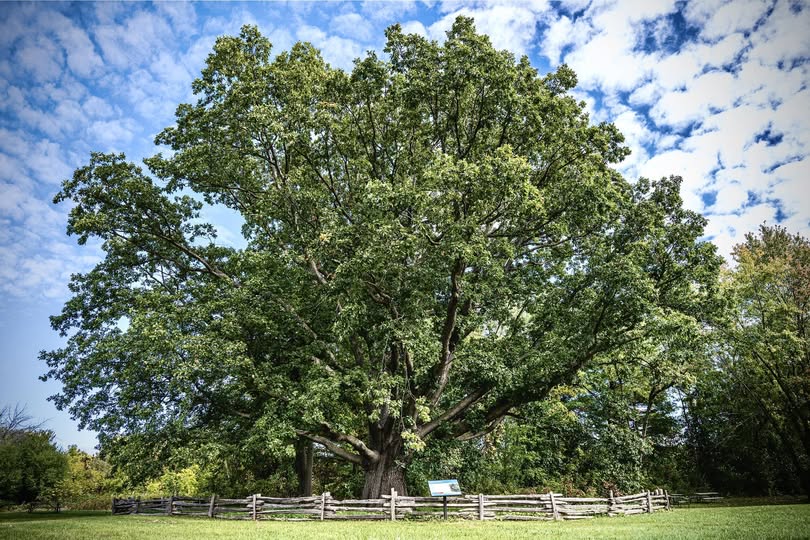
Oregon white oak, also called Garry oak, once dominated vast oak savannas across the Willamette Valley before agriculture and development reduced its range dramatically.
This species tolerates drought far better than most native trees, thanks to a deep taproot that reaches water other roots cannot access.
Acorns feed deer, squirrels, and numerous bird species, and Indigenous communities historically relied on this tree’s acorns as a significant food source.
Remaining oak savanna habitat is now considered rare and ecologically valuable, prompting active restoration efforts across the Willamette Valley.
12. California Black Oak (Quercus kelloggii)
California black oak reaches its northern range limit in southern Oregon, thriving in the drier, warmer forests of the Rogue and Umpqua valleys.
Deeply lobed, bristle-tipped leaves distinguish it from Oregon white oak’s rounded lobes, a useful detail for telling the two species apart.
Acorns from this species are notably large and were historically an important food source for Indigenous peoples throughout its range.
Fall color turns a warm gold to brown, adding welcome seasonal contrast to southern Oregon’s predominantly evergreen forests.
13. Pacific Dogwood (Cornus nuttallii)
Pacific dogwood produces large, showy white bracts in spring, often considered one of the most beautiful native tree blooms in the entire Pacific Northwest.
It grows as an understory tree beneath taller conifers, thriving in the dappled light found along forest edges and stream corridors.
Red berries follow the spring bloom, providing an important food source for band-tailed pigeons and other native birds through late summer.
Dogwood anthracnose, a fungal disease, has affected populations in parts of Oregon, making disease-resistant nursery stock a smart choice for new plantings.
14. Oregon Crabapple (Malus fusca)
Oregon crabapple, sometimes called Pacific crabapple, grows slowly, typically topping out around 36 feet at full maturity.
Fragrant white and pink blossoms in spring give way to small, tart fruit that attracts cedar waxwings, finches, and other songbirds.
This species tolerates heavy clay soil, making it a genuinely practical choice for difficult, poorly drained sites near wetland edges.
Fall foliage turns yellow-orange to red, adding late-season color to the moist woodland edges where this tree typically grows.
15. Golden Chinquapin (Chrysolepis chrysophylla)
Golden chinquapin produces spiny, chestnut-like seed capsules and evergreen leaves with a distinctive golden underside that flashes in the wind.
This species grows primarily in southwest Oregon’s mixed conifer forests, often alongside Douglas-fir, tanoak, and Pacific madrone.
Its edible nuts, similar in flavor to chestnuts, were historically gathered and eaten by Indigenous communities throughout the tree’s range.
Golden chinquapin can grow as either a large shrub or a substantial tree, depending on site conditions and available light.
High-Elevation and Cascade Range Species
16. Noble Fir (Abies procera)
Noble fir grows at higher elevations in Oregon’s Cascade Range, prized commercially as one of the most popular Christmas tree species in the country.
Stiff, upward-curving needles and large, upright cones distinguish it from other native firs found at similar elevations.
This species can live for several hundred years and often reaches impressive heights in undisturbed old-growth stands within protected wilderness areas.
Its strong branch structure and excellent needle retention explain its continued popularity in the commercial Christmas tree industry statewide.
17. Pacific Silver Fir (Abies amabilis)
Pacific silver fir thrives in cool, wet, high-elevation forests, often found growing alongside noble fir and mountain hemlock in the Cascades.
Flattened needles with silvery undersides give this species its common name, visible clearly when a branch flips in the wind.
This tree tolerates heavy winter snowpack better than many lower-elevation conifers, an adaptation essential for survival at Cascade Range elevations.
Dense, symmetrical branching makes mature specimens genuinely striking, especially when viewed against a backdrop of fresh mountain snow.
18. Mountain Hemlock (Tsuga mertensiana)
Mountain hemlock grows at Oregon’s highest forested elevations, often forming the treeline boundary where forest gives way to alpine meadow.
Its drooping leader and blue-green needles resemble western hemlock, though this species tolerates far colder, snowier conditions overall.
Heavy snow loads bend young trees into distinctive curved shapes, a visible record of the harsh conditions this species survives every winter.
This tree grows slowly at high elevation, and some individual specimens are known to exceed 500 years in age.
19. Subalpine Fir (Abies lasiocarpa)
Subalpine fir grows in Oregon’s highest, coldest forests, often forming the classic narrow, spire-shaped silhouette associated with alpine mountain scenery.
Its tightly packed branches and narrow crown help shed heavy snow efficiently, an important survival trait at extreme elevation.
This species grows slowly and can survive genuinely harsh conditions, including short growing seasons and thin, rocky mountain soil.
Mature stands often mix with mountain hemlock and whitebark pine near Oregon’s highest treeline boundaries in the Cascade and Wallowa ranges.
20. Whitebark Pine (Pinus albicaulis)
Whitebark pine grows at Oregon’s most extreme high-elevation sites, often twisted into gnarled, wind-sculpted shapes by decades of harsh mountain weather.
This species is currently listed as threatened under the Endangered Species Act, due to combined pressure from white pine blister rust, mountain pine beetle, and climate change.
Its large, nutritious seeds are a critical food source for Clark’s nutcracker, a bird species that also plays a key role in dispersing the tree’s seeds.
Conservation programs across the Pacific Northwest are actively working to breed and plant rust-resistant whitebark pine seedlings for future restoration.
Eastern Oregon and High Desert Trees
21. Western Juniper (Juniperus occidentalis)
Western juniper dominates much of Oregon’s high desert, thriving in dry, rocky soil where few other trees can survive at all.
Scale-like, blue-green foliage and small, blue, berry-like cones distinguish it clearly from the pines and firs found elsewhere in the state.
This species has expanded significantly across eastern Oregon rangeland over the past century, raising concerns among land managers about water competition with native grasses.
Some individual western junipers are genuinely ancient, with a documented specimen believed to exceed 1,600 years old in eastern Oregon.
22. Quaking Aspen (Populus tremuloides)
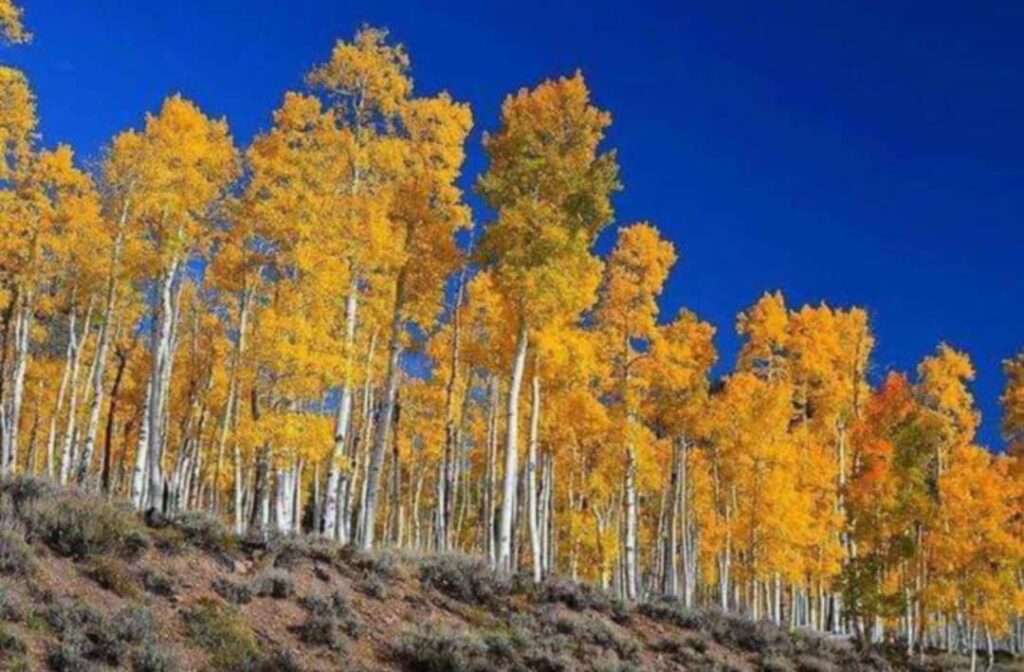
Quaking aspen produces leaves that flutter constantly in even the lightest breeze, thanks to flattened leaf stems that allow this unusual motion.
This species often grows as a single connected organism, spreading through shared root systems that can span acres and produce genetically identical clones.
Fall color turns a brilliant gold across eastern Oregon’s high country, creating one of the state’s most photographed autumn landscapes each year.
Aspen groves provide critical habitat diversity in landscapes otherwise dominated by conifers, supporting a wider range of birds and understory plants.
23. Lodgepole Pine (Pinus contorta)
Lodgepole pine grows across a wide elevation range in Oregon, from coastal dune forests to high subalpine sites in the Cascades and eastern mountains.
Its cones can remain sealed shut for years, only opening when exposed to the intense heat of a wildfire, a trait called serotiny.
This fire adaptation allows lodgepole pine to regenerate quickly after major burns, often forming dense, even-aged stands across recently disturbed ground.
Straight, slender trunks historically made this species popular for log cabin construction and fence posts across the American West.
24. Grand Fir (Abies grandis)
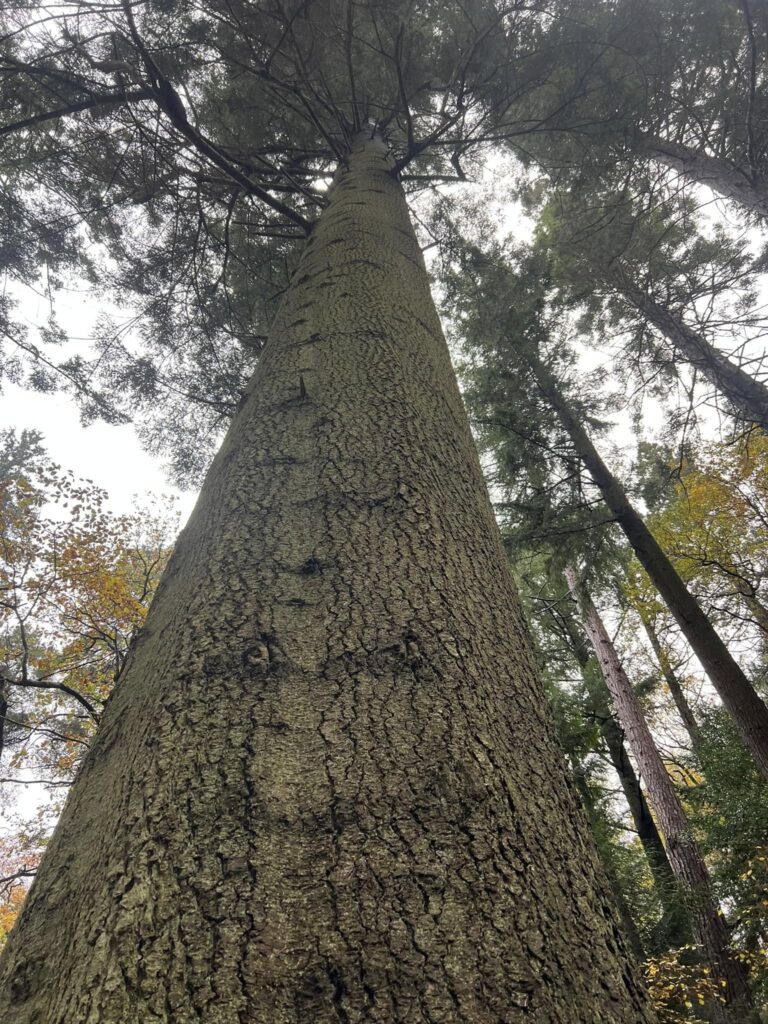
Grand fir grows across a wide range of Oregon habitats, from moist coastal forests to drier interior sites in the Blue Mountains.
Flattened needles arranged in a distinct, flat spray along each branch make this species relatively easy to identify at close range.
This tree can grow remarkably fast for a true fir, sometimes outpacing Douglas-fir in height growth during its first several decades.
Its wood is commercially valuable for lumber and pulp, contributing meaningfully to Oregon’s broader timber economy across multiple regions.
25. Water Birch (Betula occidentalis)
Water birch grows along eastern Oregon’s streams and wetland margins, tolerating conditions that most desert-adapted trees simply cannot handle.
Dark, reddish-brown bark distinguishes it from the paper birch found elsewhere in the Pacific Northwest, along with its typically smaller, shrubbier form.
This species plays an important role stabilizing streambanks in eastern Oregon’s riparian zones, helping protect water quality in an otherwise arid region.
Its presence often signals a healthy, functioning stream corridor, making it a useful indicator species for land managers monitoring watershed health.
Final Thoughts
Twenty-five trees only begin to cover a state supporting 67 native tree species across wildly different climates, but this list represents the ones you are most likely to encounter.
Match the tree to your region, not the other way around. Oregon’s coast, valleys, Cascades, and high desert each demand genuinely different species.
The Oregon Department of Forestry and Oregon Forest Resources Institute both offer detailed planting guidance for landowners across every part of the state.
Every native tree planted adds a small piece back to a landscape that has shaped Oregon’s economy, wildlife, and identity for generations.
References
- Oregon Department of Forestry – About Oregon’s Forests, Forest Benefits: https://www.oregon.gov/odf/forestbenefits/pages/aboutforests.aspx
- Oregon Department of Forestry – State Forests, Forest Resources: https://www.oregon.gov/odf/working/pages/stateforests.aspx
- Oregon Department of Forestry – Native Plants and Trees of Oregon: https://www.oregon.gov/ODF/Documents/AboutODF/NativeTreesPlants.pdf
- Oregon Department of Forestry – Oregon’s Native Pines: https://www.oregon.gov/odf/Documents/forestbenefits/pines-of-oregon.pdf
- USDA Forest Service, Pacific Northwest Research Station – Oregon Forest Statistics: https://www.fs.fed.us/pnw/rma/fia-topics/state-stats/Oregon/index.php
- USDA Forest Service – Oregon’s Forest Resources, 2006–2015 Ten-Year FIA Report: https://research.fs.usda.gov/treesearch/57274
- Oregon Forest Resources Institute – Trees of Oregon’s Forests: https://oregonforests.org/trees-oregons-forests

Tim M Dave is a gardening expert with a passion for houseplants, particularly cacti and succulents. With a degree in plant biology from the University of California, Berkeley, he has vast experience in gardening. Over the years, he has cultivated a vast collection of desert plants and learned a great deal about how to grow and care for these unique companions.