36 Weeds With Yellow Flowers (Identification, With Pictures)
A patch of yellow in the lawn can look cheerful at first. Then it spreads. Within a season, a few blooms become a full invasion.
I have seen this happen in gardens, pastures and roadside verges. Many yellow-flowered weeds look alike, so people often treat the wrong plant or act too late.
This guide covers 36 weeds with yellow flowers, where they grow, and what to do about it. Some are harmless, others are toxic to livestock or legally regulated, so correct identification matters.
The 36 Weeds With Yellow Flowers
1. Common Dandelion (Taraxacum officinale)
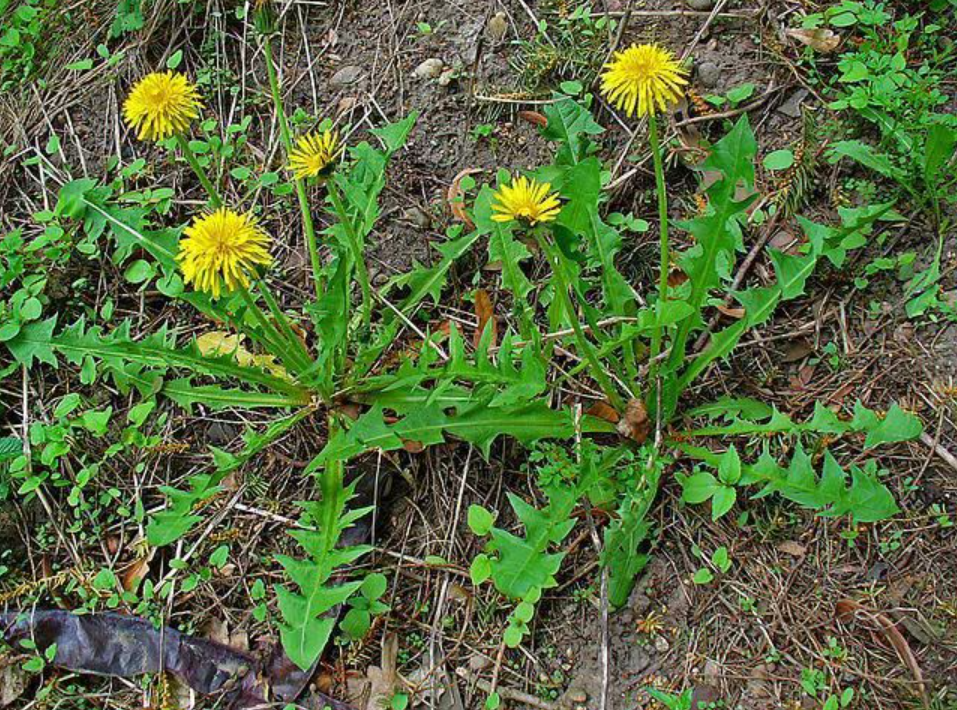
Dandelion is the weed most people picture first. It has a rosette of toothed leaves and a single bright flower on a hollow stalk. The flower turns into a white seed puff.
Dandelion is native to Eurasia, was well established in America by 1672, and now grows on every continent except Antarctica. That reach comes from windblown seed.
Roots matter most here. A plant can regrow from as little as a quarter inch of root. Dig out the full taproot, or the weed returns.
2. Yellow Starthistle (Centaurea solstitialis)
Yellow starthistle is a gray-green annual with spiny flower bases. The blooms are golden yellow and thistle-like. It grows two to three feet tall and has woolly, whitish stems.
It is a serious problem in the western United States. Reports indicate it infests 10 to 15 million acres in California. It drains soil moisture and crowds out forage.
It is toxic to horses. Minnesota lists it as a prohibited noxious weed that must be reported and destroyed. Never move or compost it.
3. Tansy Ragwort (Jacobaea vulgaris)
Tansy ragwort has flat-topped clusters of daisy-like yellow flowers. The leaves are deeply lobed. It usually lives two years.
King County lists it as a Class B noxious weed, so control is required there. It is common in pastures and along roads.
Livestock poisoning is the main risk. The flowers are the most toxic part. Pull plants before they set seed, and wear gloves.
4. Leafy Spurge (Euphorbia esula)
Leafy spurge carries small yellow-green bracts that look like flowers. The leaves are narrow and bluish-green. It forms thick patches.
Break a leaf and white sap appears. This sap can irritate eyes and sensitive skin. Wash well after any contact.
Hand-pulling rarely works. The roots run very deep, so the plant regrows. Grazing sheep or goats, plus beneficial flea beetles, can help on larger sites.
ALSO READ: 35 Weeds With White Flowers (Names, With Pictures)
5. Yellow Toadflax (Linaria vulgaris)
Often called butter-and-eggs, yellow toadflax has snapdragon-like flowers. They are bright yellow with an orange center and a long spur. The leaves are narrow and grass-like.
It flowers from May through August and spreads by both seed and creeping roots. That double strategy makes it hard to remove.
Small patches can be pulled by hand. Colorado State Extension notes herbicide works best at the flowering stage. Repeat removal for several seasons.
6. Dalmatian Toadflax (Linaria dalmatica)
Dalmatian toadflax looks like a bigger cousin of yellow toadflax. The leaves are broad, waxy and clasp the stem. The flowers are large and lemon-yellow.
It thrives on dry, rocky or disturbed ground. It also spreads by roots, so a single plant can grow into a dense stand.
Waxy leaves resist many sprays. Persistence is the answer. Combine cutting, pulling and well-timed treatment, and monitor the site yearly.
7. Common Mullein (Verbascum thapsus)
Mullein is easy to spot. First-year plants form a rosette of thick, velvety gray leaves. The second year brings a tall spike packed with yellow flowers.
The spike can reach six feet or more. Each plant produces thousands of tiny seeds. Those seeds can stay viable in soil for many years.
It is a biennial, so timing helps. Remove rosettes in the first year. Cut flower spikes before seed forms if you miss that window.
8. Creeping Buttercup (Ranunculus repens)
Creeping buttercup has glossy, five-petaled yellow flowers. The leaves are lobed and often blotched. Runners root at every node.
It loves wet, compacted soil. I often find it in lawns with poor drainage. Fixing the drainage helps more than any spray.
Fresh plants can harm grazing animals. Pull runners by hand in small areas. Improve soil structure to discourage regrowth.
9. Yellow Woodsorrel (Oxalis stricta)
Yellow woodsorrel looks like clover with yellow flowers. It has notched, heart-shaped leaves and appears in pastures and home landscapes. Leaves fold at night.
The seed pods burst when ripe. They fling seeds several feet. That is why it pops up in nearby beds.
Thick turf is the best defense. NC State Extension advises a healthy turf stand and proper fertilization to prevent it. Pull plants before the pods mature.
10. Wild Parsnip (Pastinaca sativa)
Wild parsnip has flat clusters of tiny yellow flowers. They sit on stems up to five feet tall. The leaves are compound and toothed.
Handle it with great care. The sap reacts with sunlight and can cause painful burns and blisters. Cover your skin fully before working near it.
Cut plants at the base before they flower. Do the work on a cloudy day, and wash exposed skin right away.
11. Common Tansy (Tanacetum vulgare)
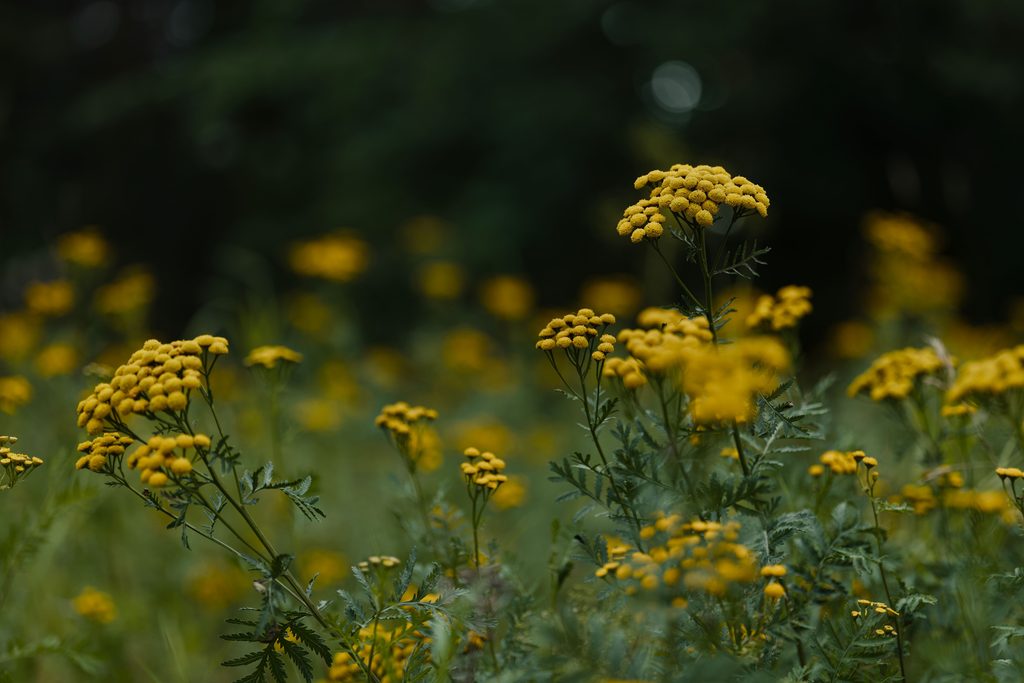
Common tansy has button-like yellow flower heads in dense clusters. The leaves are fern-like and strongly scented. It often forms big stands along ditches.
It is easy to confuse with tansy ragwort. Tansy has button-like blooms with no outer petals, while ragwort has daisy-like flowers.
Do not let livestock eat it. Dig out the roots and bag the tops. Montana lists common tansy among its regulated noxious weeds.
12. Cressleaf Groundsel (Packera glabella)
Cressleaf groundsel is a spring weed with clusters of small yellow flowers. It is common in no-till fields. Purdue notes it reaches about three feet and is the most common yellow weed in Indiana crop fields.
It is a winter annual. Seeds sprout in fall and the plant flowers early the next spring.
Fall control works best. Treat seedlings before winter. Livestock should not eat it, as it contains toxic compounds.
13. Black Medic (Medicago lupulina)
Black medic is a low, spreading plant with small round yellow flower heads. The leaves have three leaflets. A tiny point tips the middle leaflet, which separates it from clover.
It grows in thin, compacted or low-fertility lawns. It is a legume, so it adds a little nitrogen to the soil.
Feed the lawn and it fades. Raise mowing height and fertilize on schedule. Hand-pull the taproot in small patches.
14. Meadow Hawkweed (Hieracium caespitosum)
Meadow hawkweed has dandelion-like yellow flower clusters on leafless stems. The leaves are hairy and form a basal rosette. It spreads by seed and creeping stems.
It invades pastures and meadows. Montana lists meadow hawkweed as a priority noxious weed that must be managed.
Catch it early. Small colonies can be dug out. Remove every bit of stem and root, then watch the spot for two seasons.
15. Bird’s-Foot Trefoil (Lotus corniculatus)
Bird’s-foot trefoil has bright yellow, pea-like flowers in small clusters. The seed pods spread like a bird’s foot. The leaves have five leaflets.
It is planted as forage and for erosion control. But it can spread into natural areas and crowd out native plants.
Check before you plant it. If it escapes, mow before seeds set. Repeated cutting weakens established patches.
16. Scotch Broom (Cytisus scoparius)
Scotch broom is a shrub with green stems and masses of bright yellow flowers in spring. The blooms look like small peas. Tough pods pop open in summer.
Seeds can stay in the soil for years. Dense thickets crowd out young trees and native plants.
Pull young plants when the soil is moist. Larger shrubs need cutting at the base. Montana lists it as a priority noxious weed.
ALSO READ: 25 Types of Lawn Weeds (With Photos, and Expert Control Tips)
17. Common St. John’s Wort (Hypericum perforatum)
St. John’s wort has clusters of five-petaled yellow flowers. Hold a leaf to the light and you see tiny see-through dots. Petals also show small black dots.
It is known as a medicinal herb. Yet it is a weed in pastures. It can make livestock sensitive to sunlight and cause skin damage.
Control it by pulling or by grazing management. Beneficial beetles have helped in some western regions.
18. Yellow Goatsbeard (Tragopogon dubius)
Yellow goatsbeard has pale yellow flowers with long, narrow bracts. The grass-like leaves clasp the stem. The seed head is a huge, round puff.
The flowers often close by midday. That is a handy clue when you check at different times. It grows on roadsides and dry fields.
It is a biennial. Pull it before the seed puff forms. Mowing at flowering stops most spread.
19. Annual Sowthistle (Sonchus oleraceus)
Annual sowthistle has soft, lobed leaves with prickly edges. The yellow flowers resemble small dandelions. Cut a stem and milky sap runs out.
It grows fast in gardens, bare soil and field edges. A single plant makes many wind-borne seeds.
Hoe it young. Remove seedlings before flowering. Mulch helps by blocking light from new seeds.
20. Prickly Lettuce (Lactuca serriola)
Prickly lettuce grows tall with a spiny midrib on the underside of the leaves. Small yellow flowers sit in loose clusters. The sap is milky.
Its leaves often twist to face north and south. That is why people call it the compass plant. I find it a useful field trick.
Remove plants before the flowers open. Wear gloves because of the prickles. Mulch and dense planting limit new seedlings.
21. Hairy Cat’s Ear (Hypochaeris radicata)
Hairy cat’s ear looks like a dandelion. Look closer, though. Its flower stalks branch and carry tiny scale-like bracts. The leaves are hairy and lobed.
It grows in lawns, pastures and roadsides, especially in poor soil. It spreads by seed on the wind.
Dig the taproot out. Improve lawn density with proper feeding and mowing. Thick grass keeps seedlings from taking hold.
22. Yellow Rocket (Barbarea vulgaris)
Yellow rocket is an early spring weed in the mustard family. It forms glossy, lobed leaves and dense clusters of small yellow flowers with four petals.
It thrives in moist fields, ditches and gardens. Fields can turn bright yellow in April and May.
Cut it before seed set. Hand-pull in small patches. Mowing early in bloom reduces the seed bank.
23. Wild Mustard (Sinapis arvensis)
Wild mustard has four-petaled yellow flowers and coarse, lobed leaves. Seed pods are slender and beaked. It is common in cropland and disturbed soil.
Purdue notes wild mustard is rare in Indiana and more common in northern states near the Canadian border. Its range depends on climate.
Control it while young. Seeds persist in soil for years. Crop rotation and early cultivation reduce the problem.
24. Common Groundsel (Senecio vulgaris)
Common groundsel is a small annual with tiny yellow flower heads. The blooms often stay half closed. The leaves are lobed and fleshy.
It can flower and seed in just a few weeks. It produces fluffy white seed heads that blow around gardens.
Hoe it often. Never let it set seed. It is toxic to livestock, so keep it out of hay and pasture.
25. Sulphur Cinquefoil (Potentilla recta)
Sulphur cinquefoil has pale yellow, five-petaled flowers. The leaves are hand-shaped, with five to seven toothed leaflets. Stems are hairy and upright.
It invades rangeland and dry pastures. Livestock avoid it, so it spreads while grazing animals eat other plants.
Dig out the crown and roots. Repeat in later years. Healthy grass cover is your best long-term protection.
26. Common Evening Primrose (Oenothera biennis)
Evening primrose has large, lemon-yellow flowers with four petals. They open in the evening and fade by the next day. Plants stand two to six feet tall.
It is native to North America. Many gardeners welcome it. Even so, it self-seeds heavily and can crowd out other plants.
Remove rosettes in the first year. Cut flower stalks before the seed capsules ripen if you want to keep the plant in check.
ALSO READ: 15 Weeds That Look Like Grass: How to Identify and Deal With Each One
27. Dyer’s Woad (Isatis tinctoria)
Dyer’s woad has clusters of tiny yellow flowers on branched stems. The seeds hang in flat, dark pods. Leaves are blue-green and arrow-shaped.
People once used it to make blue dye. Today it is a problem in the West. Montana ranks it in its top priority for eradication.
Report it if you find it. Pull plants before seed forms and bag them. Contact your county weed office.
28. Puncturevine (Tribulus terrestris)
Puncturevine is a mat-forming annual with small yellow flowers. The leaves are divided into many tiny leaflets. Hard, spiny burs follow the blooms.
Those burs can puncture bike tires and hurt bare feet. Dogs and livestock can also suffer injuries.
Pull it before burs form. Wear heavy gloves. Rake the area afterward to collect any burs that dropped.
29. Perennial Sowthistle (Sonchus arvensis)
Perennial sowthistle has larger yellow flowers than the annual form. The flower stalks have sticky hairs. It spreads through deep, creeping roots.
It grows in fields, gardens and waste ground. Cutting the stem alone rarely helps because the roots resprout.
Persistence wins here. Repeat cutting weakens the root system over time. Smothering with thick mulch or tarps also works on small areas.
30. Coltsfoot (Tussilago farfara)
Coltsfoot flowers appear in very early spring, before any leaves. The yellow blooms look like small dandelions on scaly stalks. Hoof-shaped leaves follow later.
It prefers damp, disturbed ground such as ditches and roadsides. It spreads by seed and by underground rhizomes.
Dig rhizomes out where possible. Mowing the leaves repeatedly in summer can drain its energy.
31. Lesser Celandine (Ficaria verna)
Lesser celandine forms a carpet of glossy, heart-shaped leaves. The yellow, star-like flowers open in early spring. By early summer, the plant disappears.
It is a serious woodland weed in parts of the eastern United States. It spreads by small tubers and bulblets.
Act early. Dig out the whole patch with the soil, and bag it. Moving soil can spread the tubers to new sites.
32. Yellow Flag Iris (Iris pseudacorus)
Yellow flag iris grows in wet places. It has tall, sword-shaped leaves and showy yellow flowers. It forms dense clumps along ponds and streams.
It spreads by thick rhizomes and floating seeds. The plant sap can irritate skin, and parts are poisonous if eaten.
Wear gloves and eye protection. Remove rhizomes entirely. Dispose of them away from water, or they can root again.
33. Rush Skeletonweed (Chondrilla juncea)
Rush skeletonweed has wiry, branching stems with few leaves. Small yellow flowers sit along the stems. Stems have milky sap.
It is a tough invader of rangeland and wheat fields. Montana ranks it as a limited-presence weed that requires eradication or containment.
Report new sites quickly. Cutting the root only triggers regrowth from fragments, so use professional guidance.
34. Velvetleaf (Abutilon theophrasti)
Velvetleaf has large, heart-shaped leaves with a soft, velvety feel. Small yellow-orange flowers grow in the leaf axils. Seed pods look like little cups.
It is a major weed in corn and soybean fields. The seeds can stay alive in soil for decades.
Prevent seed production. Hand-pull plants before pods ripen. Crop rotation and early canopy cover reduce losses.
35. Gorse (Ulex europaeus)
Gorse is a spiny evergreen shrub covered in bright yellow flowers. The blooms smell faintly of coconut. It can flower in many months of the year.
It forms dense, thorny thickets. Dry gorse burns easily, so it adds to wildfire risk.
Take care when clearing it. Wear thick gloves and long sleeves. Cut at the base and treat the stump to prevent regrowth.
36. Yellow Bedstraw (Galium verum)
Yellow bedstraw is a leafy perennial with fine, needle-like leaves. Leaves grow in whorls of 8 to 12, and plants reach 20 to 50 inches. The flowers are tiny and frothy.
It prefers sunny roadsides, fields and pastures, and the flowers are only about an eighth of an inch wide with four petals.
Report it where required. University of Minnesota Extension says there is not yet enough data to judge its ecological threat. Cut before seeding while you wait.
How to Identify Yellow-Flowered Weeds Quickly
Start with the flower shape. Is it a daisy-like head, a small cup, or a spike? Then check the leaves: lobed, heart-shaped, whorled, or spiny.
Next, look at the stem. Milky sap, hairy stems and square stems are strong clues. Also note where the plant grows, because wetlands, lawns and rangeland each host different species.
Finally, check your local rules. Some yellow weeds are listed as noxious, which means you may be required to control or report them. Your county extension office can confirm an ID.
Practical Tips for Controlling Yellow Weeds
Prevention beats cure. A thick lawn, mulch in beds and well-managed pastures leave little room for weeds. Healthy soil is your best herbicide.
Time your work well. Remove plants before they set seed, ideally at or before flowering. One missed week can mean thousands of new seeds.
Always read the label if you use herbicide. Some plants need repeated visits. For regulated species, contact your local weed office first.
Final Thoughts
Yellow flowers do not always mean trouble. Evening primrose and bird’s-foot trefoil are useful in the right place. Others, like starthistle and gorse, are real threats.
Start with correct identification. Then match your response to the plant. Please take a clear photo to your county extension office if you are unsure.
I hope this list saves you time and frustration. A little early action keeps small patches from becoming large problems.
References
- University of Florida IFAS, Mid-Florida Research and Education Center. “Florida Weed Species with Yellow Flowers.” https://mrec.ifas.ufl.edu/resources/weedsbyflowercolor/yellow
- University of Minnesota Extension. “Yellow starthistle.” https://extension.umn.edu/identify-invasive-species/yellow-starthistle
- Colorado State University Extension, Adams County. “Yellow Toadflax.” https://adams.extension.colostate.edu/?p=826
- NC State Extension, Lee County Center. “Weed Identification: Yellow Woodsorrel.” https://lee.ces.ncsu.edu/2023/05/weed-identification-yellow-woodsorrel/
- U.S. Forest Service, Fire Effects Information System. “Taraxacum officinale, common dandelion.” https://research.fs.usda.gov/feis/species-reviews/taroff
- U.S. National Park Service, Kenai Fjords. “Fighting the Insidious Invasion.” https://www.nps.gov/kefj/blogs/fighting-the-insidious-invasion.htm
- King County, Washington. “Tansy ragwort.” https://kingcounty.gov/en/dept/dnrp/nature-recreation/environment-ecology-conservation/noxious-weeds/identification-control/tansy-ragwort

Tim M Dave is a gardening expert with a passion for houseplants, particularly cacti and succulents. With a degree in plant biology from the University of California, Berkeley, he has vast experience in gardening. Over the years, he has cultivated a vast collection of desert plants and learned a great deal about how to grow and care for these unique companions.