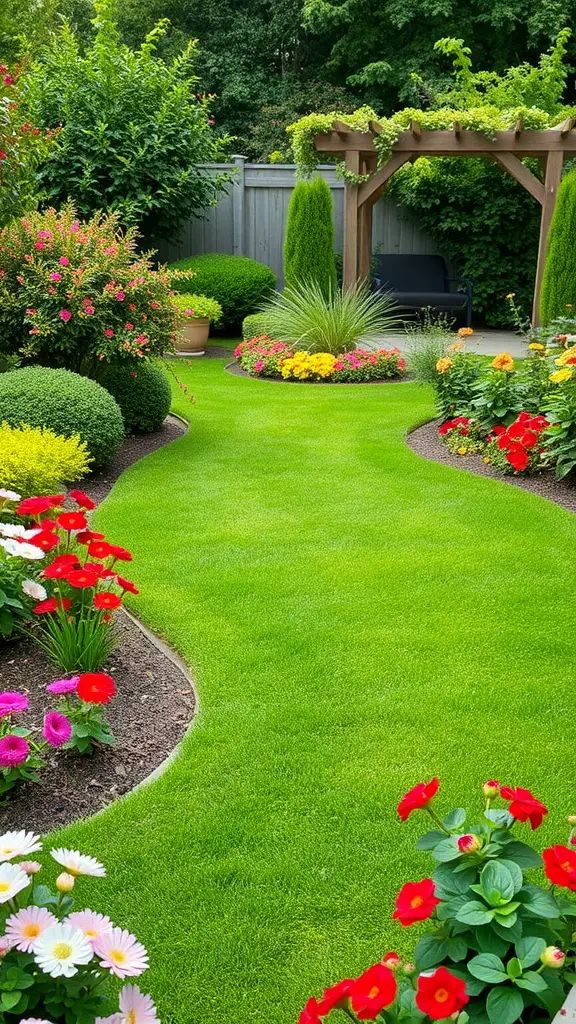
25 Types of Lawn Weeds (With Photos, and Expert Control Tips)
I have spent enough weekends crouched over a patchy lawn to know one thing for certain: not all weeds are the enemy, but all of them deserve a name. Once you can name a weed, you can understand why it showed up and what your lawn is trying to tell you.
This guide walks through 25 of the most common lawn weeds found across home lawns in the United States. You will learn what each one looks like, when it grows, and why it keeps coming back.
Why Lawn Weeds Matter More Than You Think
Lawns are not a small hobby. Turfgrass covers an estimated 40 to 50 million acres across the United States, making it one of the largest irrigated “crops” in the country, according to NASA satellite research.
Scientists who mapped fractional lawn coverage using satellite data found that more surface area nationwide is devoted to lawns than to any other single irrigated crop, including more than three times the acreage covered by irrigated corn.
That is a lot of ground for weeds to compete on. A weed is simply a plant growing where you did not plant it, and it grows there because your grass left an opening.
Weeds do not just look messy. They pull water, sunlight, and nutrients away from your turf. Broadleaf weeds emerge from seed with two leaves, have netlike veins, and many, like dandelion or white clover, produce showy flowers that quickly reseed themselves.
Left alone, a handful of weeds can spread across an entire yard within a single season. That is why early identification saves so much work later.
Broadleaf vs. Grassy vs. Grass-Like Weeds
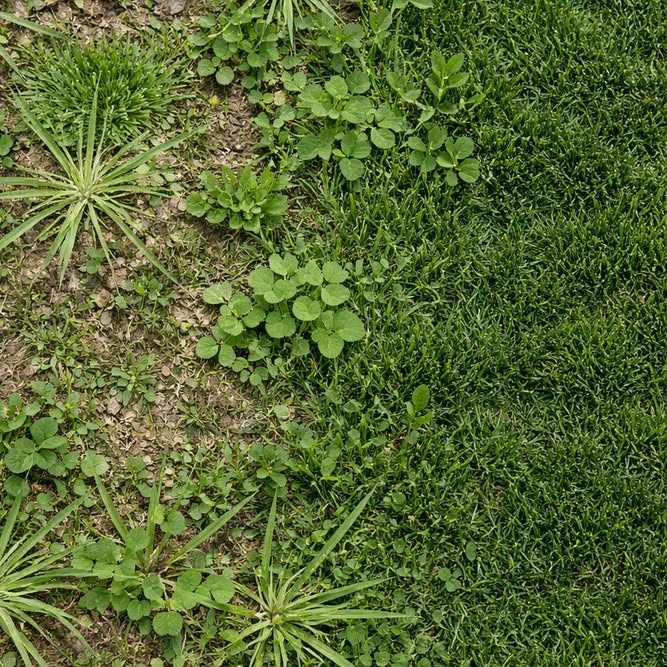
Before jumping into the list, it helps to understand the three broad categories. Grassy weeds emerge from seed as a single leaf, with leaf blades longer than they are wide and parallel veins, while broadleaf weeds emerge with two leaves and netlike veins.
Grass-like weeds, such as sedges, resemble turfgrass but have triangular stems and a different growth pattern. Knowing this difference guides which control method actually works.
I have grouped all 25 weeds below into these three families. This makes it easier to scan and find the exact intruder sitting in your yard right now.
Broadleaf Lawn Weeds
Broadleaf weeds are the most visible troublemakers. They flower, they spread by seed or runners, and they are usually the first thing homeowners notice.
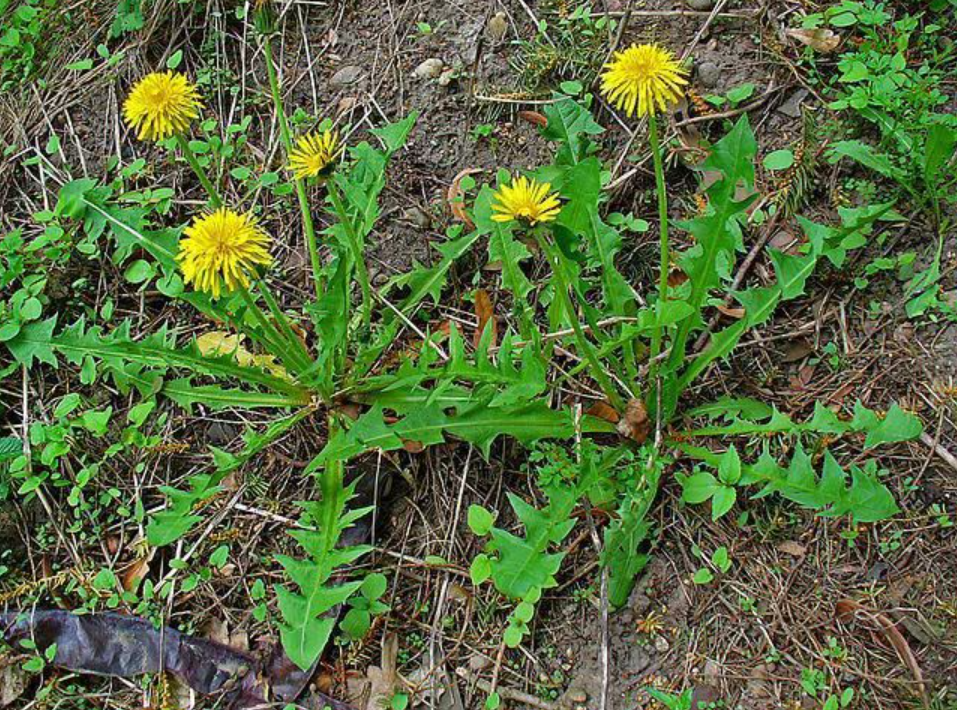
1. Dandelion (Taraxacum officinale)
The dandelion is probably the most recognized lawn weed on the planet. Its bright yellow flower turns into a white seed puff that can travel for miles on the wind.
Dandelion seeds blow in the wind, allowing this perennial weed to become a frequent invader of home lawns. A single plant can produce thousands of seeds in one season.
Its deep taproot makes hand-pulling frustrating. Snap the top off, and the root simply grows another flower within weeks.
2. White Clover (Trifolium repens)
White clover forms low, creeping mats with three-part leaves and small white or pink flower balls. Older lawn seed mixes actually included it on purpose.
Dutch white clover is a high-quality forage plant for pollinators and other beneficial insects, particularly early in the season when not much else is blooming. Many extension experts now say it is fine to let clover share the lawn.
Clover thrives in low-nitrogen soil, so a thin, hungry lawn practically invites it in.
3. Broadleaf Plantain (Plantago major)
This weed forms a low rosette of wide, oval leaves with thick parallel veins. A tall, narrow flower spike rises from the center in summer.
Broadleaf plantain is a perennial weed that reproduces by seeds, producing a rosette of leaves at ground level with a fibrous root system. It tolerates foot traffic exceptionally well, which is why it loves paths and worn patches.
4. Buckhorn Plantain (Plantago lanceolata)
Also called narrow-leaved plantain, this cousin of broadleaf plantain has long, lance-shaped leaves instead of round ones. Its leaves are narrow and lance-shaped, often twisted or curled, with raised parallel veins on the underside.
It shares the same tough, low-growing habit and shows up in compacted, poorly maintained turf.
5. Ground Ivy (Glechoma hederacea)
Known as creeping Charlie, this weed spreads through square stems that root wherever they touch soil. It has scalloped, round leaves and a minty smell when crushed.
Ground ivy is a creeping perennial sometimes referred to as creeping Charlie, gill-on-the-ground, and gill-on-the-hedge. It loves shade and moisture, so it often marks a drainage or sunlight problem.
6. Common Chickweed (Stellaria media)
Chickweed forms dense, low mats with small, oval leaves and tiny white star-shaped flowers. Common chickweed usually has a low growing habit and tends to spread, making it appear like mats or patches.
It thrives in cool, moist weather, which is why it explodes in early spring and fall.
7. Henbit (Lamium amplexicaule)
Henbit has square stems, scalloped leaves, and small purple tubular flowers. It grows in many areas, including lawns, landscape plantings, nursery containers, and unmanaged sites.
Bees love it in early spring, but it fades fast once summer heat arrives.
8. Purple Deadnettle (Lamium purpureum)
Purple deadnettle looks almost identical to henbit but has more triangular, purplish-tinted top leaves. Both are winter annuals that germinate in fall.
They grow together often, carpeting bare or thin lawns in a soft purple haze by March. Dense turf is usually enough to keep both out.
9. Black Medic (Medicago lupulina)
This low, spreading weed resembles clover but has small yellow flower clusters instead of white ones. It signals dry, compacted, low-fertility soil.
Black medic is a summer annual, meaning it completes its life cycle and dies within one growing season, only to reseed the following year.
10. Common Purslane (Portulaca oleracea)
Purslane has thick, fleshy, reddish stems and small paddle-shaped leaves. It hugs the ground and survives brutal heat with ease.
Common purslane grows during the hottest months of the year due to its ability to store water while surviving drought-like conditions. This makes midsummer the peak season for spotting it.
11. Common Lambsquarters (Chenopodium album)
Lambsquarters grows upright with diamond-shaped, grayish-green leaves dusted in a fine white powder. It prefers disturbed, bare soil patches.
It is a shallow-rooted herbaceous summer annual weed, often found in disturbed soil, and hoeing or mulches can be an effective control in small plots.
12. Wild Violet (Viola sororia)
Wild violet has heart-shaped leaves and small purple, white, or blue flowers in spring. It spreads through underground rhizomes as well as seed.
It is notoriously hard to eliminate once established, since even small root fragments regrow into full plants.
13. Yellow Woodsorrel (Oxalis stricta)
Often mistaken for clover, oxalis has heart-shaped leaflets and small yellow flowers, followed by upright seed pods that explode on touch. This is exactly how it spreads so fast.
Its clover-like look fools many homeowners until the seed pods appear and scatter across the entire bed.
14. Spotted Spurge (Euphorbia maculata)
Spotted spurge forms a dense, ground-hugging mat with small leaves marked by a reddish spot in the center. Break a stem and it oozes a milky sap.
It thrives in hot, dry, thin turf, particularly along driveways and sidewalk cracks where soil temperatures run high.
15. Common Mallow (Malva neglecta)
Mallow has round, lobed leaves resembling small geranium leaves and pale pink or white flowers. Its deep taproot makes pulling a real workout.
It tolerates poor soil and drought exceptionally well, which explains why it often appears where grass has already struggled.
16. Corn Speedwell (Veronica arvensis)
This tiny winter annual has small rounded leaves and pale blue flowers barely visible from standing height. Corn speedwell is a winter annual, common in landscapes and lawns, and also found in fields left fallow.
It belongs to the same family as other weedy speedwells and often hides among thicker turf until bloom time.
17. Hairy Bittercress (Cardamine hirsuta)
Hairy bittercress forms a basal rosette with small white flowers on thin stalks. It is common in lawns and gardens, growing predominantly in spring but capable of germinating and growing year-round in suitable conditions.
Its seed pods, like oxalis, snap open and fling seeds several feet away, spreading the weed rapidly.
18. Canada Thistle (Cirsium arvense)
Canada thistle has spiny, deeply lobed leaves and purple, globe-shaped flower heads. Despite advances in modern agriculture, thistles continue to enjoy notoriety as one of the most troublesome and difficult weeds to control today.
Its extensive underground root system means mowing alone will never remove it. New shoots simply rise from the same root network.
ALSO READ: 10 Best Weed Killers That Won’t Kill Grass: Safe Selective Herbicides for Lawn
Grassy Lawn Weeds
Grassy weeds blend into turf far more easily than broadleaf weeds. They usually reveal themselves through a different texture, color, or growth pattern.
19. Crabgrass (Digitaria species)
Crabgrass is the single most complained-about lawn weed in America. It spreads low and wide, with thick blades radiating out from a central point like crab legs.
Large crabgrass has leaf blades that are densely hairy on both surfaces and keeled below, with an open, hairy leaf sheath. It germinates once soil warms in spring and dies at the first frost.
Research shows that mowing fescue lawns to 3 to 4 inches and seeding bare spots reduces crabgrass infestations significantly, making mowing height one of the simplest control tools available.
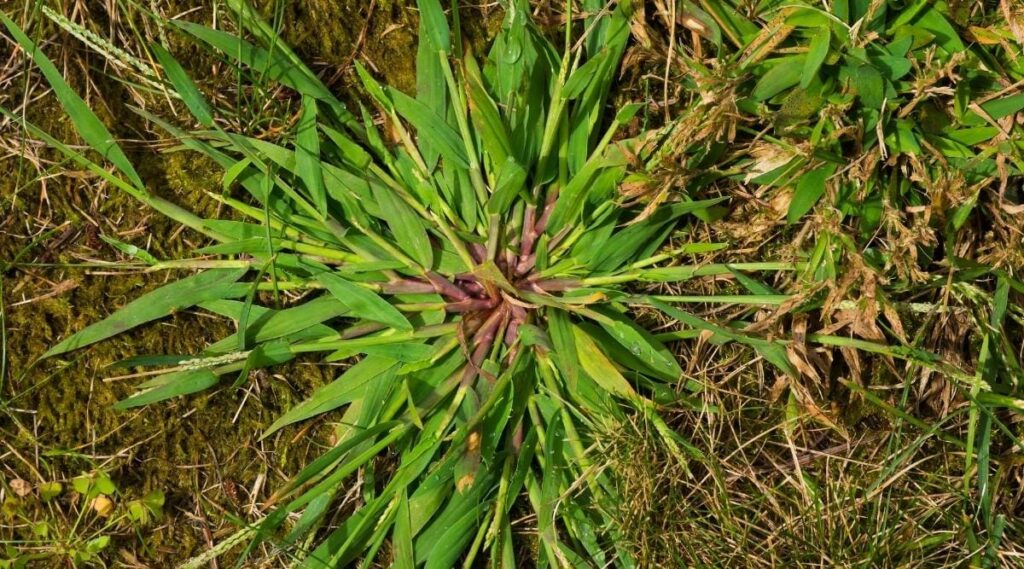
20. Goosegrass (Eleusine indica)
Goosegrass looks similar to crabgrass but grows in a flatter, whitish-silver rosette at the center. It tends to invade compacted soil, especially near paths and driveways.
It germinates later in the season than crabgrass and tolerates foot traffic better than almost any other lawn weed.
21. Annual Bluegrass (Poa annua)
Annual bluegrass is a winter annual weed that produces white seed heads during late spring. It has a lighter green color than most turfgrasses, making it stand out once it flowers.
It thrives in cool, moist conditions and often appears in shaded, compacted lawn areas during fall and winter.
22. Quackgrass (Elymus repens)
Quackgrass is a persistent perennial that spreads through extensive underground rhizomes. Older quackgrass leaves bear a pair of claw-like auricles, and new plants can arise from the whitish rhizomes as well as from seed.
Because it regrows from root fragments, tilling or hand-pulling alone often makes an infestation worse rather than better.
23. Foxtail (Setaria species)
Foxtail produces a distinctive bristly seed head resembling a fox’s tail. Green foxtail has leaf blades relatively free of hairs on both surfaces, with a hairy, open leaf sheath and overlapping margins.
It is a summer annual, so it germinates as temperatures rise and finishes its life cycle before the first hard frost.
Grass-Like Weeds
These weeds mimic turfgrass at a glance but behave very differently once you look closer.
24. Yellow Nutsedge (Cyperus esculentus)
Nutsedge grows faster than surrounding turfgrass, giving lawns an uneven, spiky look within days of mowing. Its stem is triangular, not round, which is the easiest way to confirm identification.
Nutsedge often signals soil that stays too wet, so correcting drainage is usually the first real step toward control. Herbicides labeled specifically for sedges are required, since regular broadleaf products will not touch it.
25. Wild Garlic and Wild Onion (Allium vineale and Allium canadense)
These weeds send up thin, hollow, round leaves from an underground bulb, and both release a strong onion or garlic smell when cut. They stay green through winter, standing out starkly against dormant lawns.
Wild onions and garlic are best treated during November and again during February using a three-way herbicide, since timing around their growth cycle matters far more than the product chosen.
READ MORE: 15 Weeds That Look Like Grass: How to Identify and Deal With Each One
Why Weeds Keep Coming Back: The Root Cause
I used to think weeds were random bad luck. They are not. Every weed on this list is answering a specific weakness in the lawn beneath it.
Thin turf, compacted soil, poor drainage, low mowing height, and nutrient-starved grass all open the door. A dense, healthy lawn is still the single best weed barrier you can build.
Practices that significantly reduce weeds in lawns include soil testing to check and maintain proper soil fertility and pH. Getting the soil right often solves half the weed problem before you even touch a herbicide.
Practical Weed Control Tips That Actually Work
Mow high, not low. Taller grass shades the soil, which blocks the sunlight many weed seeds need to germinate in the first place.
Water deeply, not often. Frequent shallow watering trains grass roots to stay near the surface, which is exactly where weeds thrive too.
Feed the lawn, not the weeds. A properly timed fertilization schedule strengthens turf density, closing the gaps weeds depend on.
Identify before you treat. Identifying the weed correctly is very important in determining the next step, since different weeds point to different underlying soil conditions.
Spot-treat when possible. Weeds can be spot-treated with organic herbicides instead of broadcasting chemicals across the whole yard, saving money and reducing unnecessary chemical use.
A Note on Pesticide Use
Herbicide use on American lawns is not a small industry footnote. Federal estimates have placed home and garden herbicide use in the tens of millions of pounds annually, making turf pesticide application one of the largest urban uses of these chemicals today.
This is worth knowing before reaching for the spray bottle. Cultural fixes, like mowing height and proper watering, often reduce the need for repeated chemical treatments.
READ MORE: 10 Ways to Get Rid of a Lawn Full of Weeds
Seasonal Weed Calendar: When Each Type Shows Up
Timing changes everything in weed control. Spraying the right herbicide at the wrong time of year is close to wasting your money entirely.
Early spring brings winter annuals to full bloom. Henbit, purple deadnettle, chickweed, and corn speedwell all flower before the heat arrives, then die back once summer temperatures climb.
Late spring into summer is crabgrass and goosegrass season. Seed germination begins in early to mid-spring, when soil temperatures have risen to 55 to 60 degrees Fahrenheit for about a week, which is exactly when pre-emergent herbicides need to go down.
Peak summer favors heat-loving weeds like purslane, spotted spurge, and spurge relatives. These plants store water efficiently and shrug off drought that would stress out ordinary turfgrass.
Late summer through fall is prime time for perennial weeds to build root reserves. More than two applications throughout the year, including in late summer, may be needed to control dandelion and plantain, since these perennial weeds store extra carbohydrates in their taproots.
Fall also triggers wild garlic, wild onion, and annual bluegrass germination, all of which stay visibly green through winter dormancy of the surrounding turf.
Cool-Season vs. Warm-Season Lawns: Does It Change the Weed List?
Not every weed bothers every lawn equally. Cool-season lawns, such as tall fescue and Kentucky bluegrass, tend to battle chickweed, henbit, and annual bluegrass more heavily during their dormant winter phase.
Warm-season lawns, including bermudagrass, zoysia, and St. Augustinegrass, face a different set of pressures. Doveweed, for example, thrives in overly moist soil caused by poor drainage or frequent irrigation, often smothering large patches of turf before homeowners even notice it.
This regional difference is exactly why a weed control plan written for Minnesota rarely works well in South Carolina, and vice versa. Always match your approach to your specific turf species and climate zone.
The Cost of Ignoring Lawn Weeds
Turf is a bigger part of the American landscape than most people realize. Satellite-based mapping from NASA researchers puts lawn coverage well ahead of any other irrigated land use in the country, corn included.
That scale means weed pressure is not just a backyard nuisance. Herbicide treatment remains one of the largest categories of pesticide use on managed turf, covering millions of acres of home lawns, parks, and sports fields every year.
Left unchecked, a single untreated weed patch can double in size within one growing season. That is the real cost of skipping identification and control early on.
Frequently Asked Questions
What is the most common lawn weed in the US? Crabgrass and dandelion are consistently named the two most reported lawn weeds by university extension offices across the country.
Are all lawn weeds bad? Not necessarily. White clover, for example, feeds pollinators and fixes nitrogen in the soil, and many experts now recommend tolerating it.
When do most lawn weeds germinate? Summer annuals like crabgrass germinate as soil warms in spring, while winter annuals like chickweed and henbit sprout in fall.
Can a healthy lawn prevent weeds without chemicals? Yes. Proper mowing height, deep watering, and correct fertilization close the openings weeds need to establish themselves.
Final Thoughts
Every weed in your lawn is trying to tell you something about the soil beneath it. Learning to read that message turns weed control from a constant battle into a manageable, almost predictable routine.
Start with identification, fix the underlying soil or mowing habit, and treat only what remains. That order, in my experience, is what actually keeps a lawn clean season after season.
References
- University of Maryland Extension. Common Home Lawn Weeds in Maryland. https://extension.umd.edu/resource/common-home-lawn-weeds-maryland
- Penn State Extension. Weed Identification and Control. https://extension.psu.edu/insects-pests-and-diseases/pest-disease-and-weed-identification/weed-identification-and-control
- Clemson University Home & Garden Information Center. Broadleaf Weeds (HGIC 2301). https://hgic.clemson.edu/factsheet/broadleaf-weeds/
- University of Minnesota Extension. Annual Grass Weeds Identification Guide. https://extension.umn.edu/weed-identification/annual-grass-weeds
- West Virginia University Extension. Weeds: Identification and Control. https://extension.wvu.edu/lawn-gardening-pests/weeds
- NASA Earth Observatory. Lawn Surface Area in the United States. https://earthobservatory.nasa.gov/images/6019/lawn-surface-area-in-the-united-states
- USDA National Agricultural Statistics Service. Maryland Turfgrass Industry Report. https://www.nass.usda.gov/Statistics_by_State/Maryland/Publications/Miscellaneous/turfgrass2006.pdf

Tim M Dave is a gardening expert with a passion for houseplants, particularly cacti and succulents. With a degree in plant biology from the University of California, Berkeley, he has vast experience in gardening. Over the years, he has cultivated a vast collection of desert plants and learned a great deal about how to grow and care for these unique companions.