75 Types of Pine Trees: Identificatifying Popular Varieties, With Pictures
The genus Pinus contains roughly 110 to 126 recognized species worldwide, depending on the classification system used. This article covers 75 of the most recognized, planted, and ecologically important types, spanning North America, Europe, Asia, and the Mediterranean.
Pines fall into two main subgenera: hard pines (subgenus Pinus) and soft pines (subgenus Strobus). That single distinction explains most of what separates a scrubby coastal pine from a soft, five-needled mountain species.
This guide walks through 75 distinct types of pine trees, organized by region and growth habit, with details on hardiness zones, mature size, growth rate, and basic care for each one.
What Exactly Is a Pine Tree?
A pine belongs to the genus Pinus, part of the Pinaceae family. It is an evergreen conifer with needle-shaped leaves bundled into clusters called fascicles.
Most pines are native to the Northern Hemisphere. A few species stretch just south of the equator in Sumatra, but true wild pine forests are almost entirely a northern phenomenon.
Pines are also remarkably long-lived. Many species reach 100 to 1,000 years old, and one individual has changed how scientists think about tree age altogether.
Fast fact: The Great Basin bristlecone pine known as Methuselah has a verified age of 4,857 years, making it one of the oldest living organisms ever documented.
ALSO READ: 15 Pine Tree Diseases (With Pictures, And How to Treat)
How to Identify a Pine Tree in Under a Minute
I always start with three features, in this order: needles, cones, then bark. It rarely fails me.
- Needle count per bundle — usually 1 to 5 needles per fascicle, and this alone narrows down the species fast.
- Cone shape and armor — some cones carry sharp prickles, others are smooth and rounded.
- Bark texture — thick and plated in older hard pines, thinner and flaking in many soft pines.
Hard pines typically carry 2 or 3 needles per bundle, with cones that open soon after maturing. Soft pines usually carry 5 needles per bundle, with more flexible, less armored cones.
Hard Pines (Subgenus Pinus) of North America
Hard pines dominate much of the American South, the Rocky Mountains, and the Pacific coast. Their wood tends to be denser and more resinous than soft pine timber, which is exactly why they are prized for construction lumber.
Most species in this group want full sun and tolerate poor, acidic, or sandy soil far better than richer garden loam. A handful even depend on wildfire to reproduce, which is worth knowing before you plant one near a structure.
1. Ponderosa Pine (Pinus ponderosa)
Hardy in zones 3 to 7, ponderosa pine grows 60 to 125 feet tall on average, with a champion specimen recorded at 235 feet. Growth is moderate to fast once established, and the tree forms a broad, open crown with age.
Needles come in bundles of three, reaching up to 10 inches long, and the cinnamon-colored bark splits into jigsaw-like plates that smell faintly of vanilla in warm weather. Plant it in full sun on well-drained soil, since it handles drought far better than soggy ground.
2. Loblolly Pine (Pinus taeda)
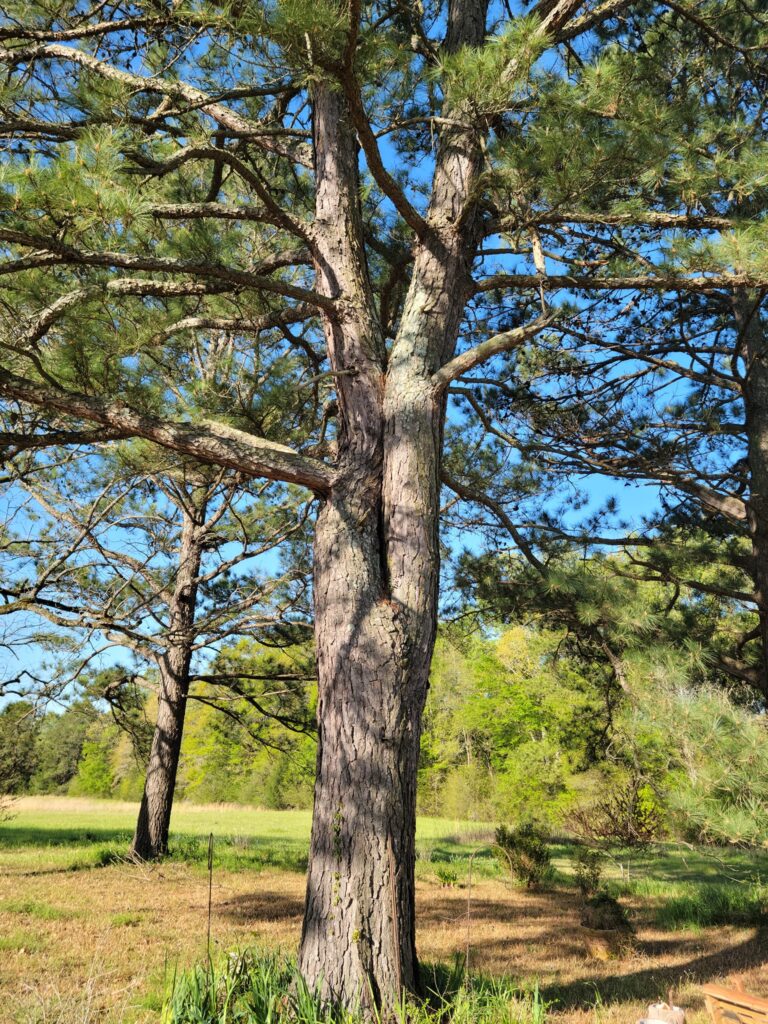
Loblolly pine thrives in zones 6 to 9 and is one of the fastest-growing pines in the South, often adding 2 to 3 feet per year while young. Mature trees reach 90 to 110 feet with a fairly narrow, oval crown.
Needles grow in bundles of three, 6 to 9 inches long, and the reddish-brown bark develops rounded plates over time. Loblolly pine tolerates heavy clay and poorly drained soil better than most conifers, which explains why it dominates southern timber plantations.
3. Longleaf Pine (Pinus palustris)
Native to zones 7 through 9, longleaf pine can reach 80 to 100 feet, though it spends its early years in a slow “grass stage” close to the ground before shooting upward. Once established, growth speeds up considerably.
Its needles are the giveaway, stretching up to 18 inches in bundles of three. This species evolved alongside fire, and land managers still use controlled burns to keep young stands healthy and free of competing hardwoods.
4. Shortleaf Pine (Pinus echinata)
Shortleaf pine suits zones 6 to 9 and typically reaches 80 to 100 feet with moderate growth. It is one of the few pines that can resprout from its base if the top is killed by fire while young.
Needles measure 3 to 5 inches in bundles of two or three, and the tree adapts well to rocky, nutrient-poor soils. It prefers full sun and does best with good air circulation to limit fungal issues.
5. Slash Pine (Pinus elliottii)
Suited to zones 8 to 10, slash pine grows fast, often reaching 60 to 100 feet within a few decades. It produces glossy cones and develops attractive, flaky orange-brown bark as it matures.
Needles are glossy and up to 10 inches long, usually in bundles of two or three. Unlike many pines, slash pine tolerates seasonally wet, poorly drained soil, making it a common choice for lowland southern plantations.
6. Virginia Pine (Pinus virginiana)
Virginia pine is hardy in zones 4 to 8 and stays relatively small, usually 15 to 40 feet, though older trees can approach 70 feet. Its crown flattens out with age, giving it a distinctive silhouette.
Needles are short, twisted, and yellow-green, growing 1.5 to 3 inches in bundles of two. It tolerates poor, rocky, or eroded soil better than almost any other eastern pine, which makes it a popular reforestation and Christmas tree species.
7. Pitch Pine (Pinus rigida)
This tough species handles zones 4 to 7 and grows 40 to 60 feet, occasionally reaching 80 feet on favorable sites. One unusual trait sets it apart: pitch pine sprouts new needles directly from its trunk after fire damage.
Needles come in twisted bundles of three, 2.5 to 5 inches long. It tolerates sandy, rocky, and nutrient-poor soils with ease, and full sun is essential for healthy, dense growth.
8. Table Mountain Pine (Pinus pungens)
Found in zones 4 to 7, Table Mountain pine reaches 40 to 65 feet and grows slowly on the rocky Appalachian ridges it calls home. Its irregular crown carries heavy branches and clusters of spiny, persistent cones.
Needles grow in twisted pairs, stout and yellow-green. This species relies on fire to open its serotinous cones, so it thrives on exposed, fire-prone ridgelines rather than sheltered garden settings.
9. Pond Pine (Pinus serotina)
Pond pine suits zones 6 to 9 and reaches 40 to 70 feet, favoring the wet pocosins and boggy lowlands of the coastal Southeast. Growth is slow to moderate given the challenging, waterlogged soil it often grows in.
Needles grow in bundles of three or four. Its cones stay sealed with resin for years, only opening when a wildfire melts the glue, which makes this species a genuine fire specialist.
10. Jack Pine (Pinus banksiana)
One of the hardiest pines around, jack pine survives zones 2 to 6 and typically grows 35 to 50 feet tall. It grows fast on poor, sandy soil where few other conifers can compete.
Needles are short, just 0.75 to 1.5 inches, in bundles of two. Its serotinous cones need temperatures above 122°F to open, a trait tied closely to the endangered Kirtland’s warbler, which nests almost exclusively in young jack pine stands.
11. Red Pine (Pinus resinosa)
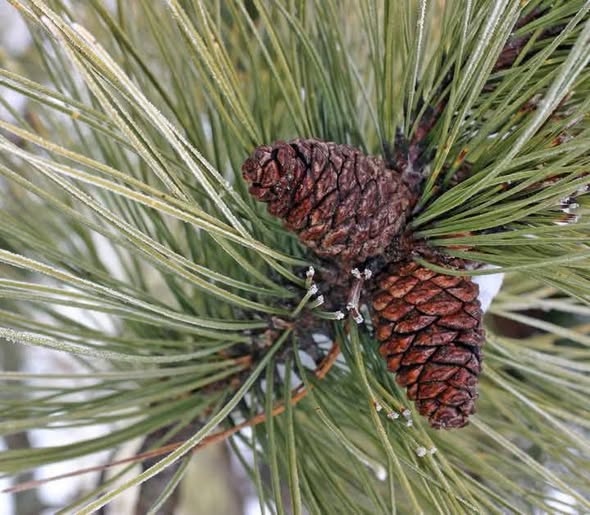
Red pine grows well in zones 2 to 7, reaching 50 to 80 feet with a straight trunk and reddish, plated bark. Growth is moderate, and the tree prefers full sun on sandy, well-drained soil.
Needles measure 4 to 6 inches in bundles of two and snap cleanly when bent, a handy identification trick. This species has been planted extensively across the northern US and Canada for reforestation and windbreaks.
12. Jeffrey Pine (Pinus jeffreyi)
Jeffrey pine handles zones 5 to 8 and grows 60 to 130 feet at higher elevations in the Sierra Nevada and Cascades. Growth is slow to moderate, matching the harsh mountain conditions it prefers.
Needles are blue-green, 5 to 10 inches long, in bundles of three, and the thick bark smells distinctly of vanilla or butterscotch on a warm day. It is highly drought tolerant once established, which suits its dry, rocky native range.
13. Coulter Pine (Pinus coulteri)
Suited to zones 7 to 9, Coulter pine reaches 40 to 80 feet with a moderate growth rate. It is best known for producing the heaviest cones of any pine species, sometimes weighing over 10 pounds.
Needles are stout and gray-green, 6 to 12 inches long in bundles of three. This species is highly drought tolerant and thrives on dry chaparral slopes, but planting it near walkways requires some caution given falling cones.
14. Monterey Pine (Pinus radiata)
Monterey pine grows in zones 7 to 10 and can exceed 100 feet with unusually fast growth for a pine. Its native range is tiny, limited to just a few groves in coastal California, yet it is the most widely planted plantation pine on Earth.
Needles are bright green, 4 to 6 inches, in bundles of two or three. Countries like New Zealand, Chile, and Australia rely heavily on this species for commercial forestry, prizing its rapid timber yield.
15. Bishop Pine (Pinus muricata)
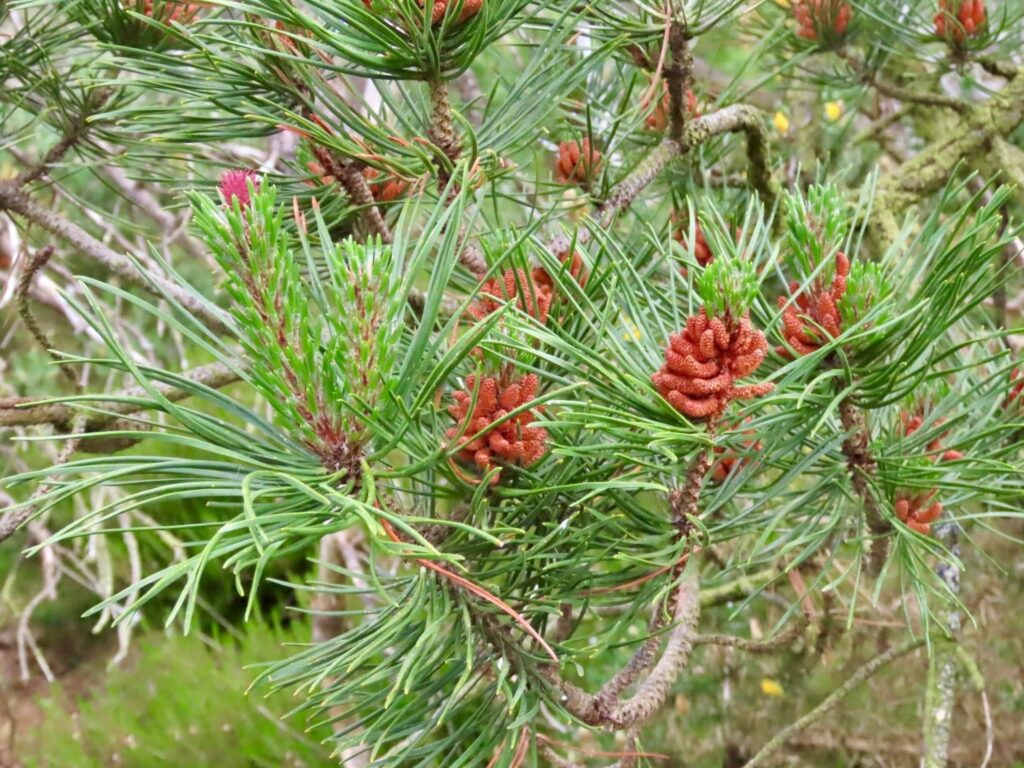
Bishop pine is hardy in zones 7 to 9 and grows 40 to 80 feet, favoring the foggy coastal belt of California. Growth is moderate, and the tree tolerates salt spray with ease.
Needles grow in stout, twisted pairs, and cones are noticeably lopsided and serotinous, staying closed for years until fire triggers release. Coastal gardeners appreciate its tolerance for wind and salty air.
16. Knobcone Pine (Pinus attenuata)
This species suits zones 6 to 9, reaching 20 to 80 feet depending on site conditions. Growth is variable, often stunted on the thin, poor soils it typically inhabits.
Needles grow in bundles of three, 3 to 7 inches long. Its cones cluster tightly in whorls along the trunk and branches, staying sealed shut for decades until fire finally opens them, a trait that borders on extreme even among fire-adapted pines.
17. Gray Pine, also called Digger Pine (Pinus sabiniana)
Gray pine grows in zones 7 to 9, reaching 40 to 70 feet with an open, sparse crown. Growth is slow, matching the dry foothill woodlands where it typically grows alongside oaks.
Needles are long, drooping, and distinctly gray-green, 8 to 12 inches in bundles of three. The heavy cones carry sharp, hooked scales, so this is another species best kept away from foot traffic.
18. Lodgepole Pine (Pinus contorta)
Lodgepole pine spans zones 2 to 7 depending on the subspecies, with coastal shore pine forms staying shorter and Rocky Mountain forms reaching 80 feet or more. Growth is moderate, and the species often forms dense, even-aged stands after fire.
Needles are short and twisted, growing in pairs, and the bark stays thin throughout the tree’s life. Its straight trunks were historically used by Indigenous peoples to build tepee frames, which is where the common name comes from.
19. Apache Pine (Pinus engelmannii)
Apache pine is suited to zones 7 to 9 and reaches 50 to 70 feet in the sky-island mountain ranges of the Southwest and Mexico. Growth is moderate, and the species handles low-intensity fire well.
Needles are unusually long, 8 to 15 inches, typically in bundles of three but occasionally five. The overall look is almost tropical, with a dense tuft of needles at each branch tip.
20. Chihuahua Pine (Pinus leiophylla)
Chihuahua pine grows in zones 7 to 9 and reaches 40 to 70 feet in the oak-pine woodlands of the Southwest and Mexico. Growth is slow to moderate.
Needles are short, 2 to 4 inches, in bundles of three. Its cones take an unusual two full growing seasons to mature, which is longer than most North American hard pines.
21. Arizona Pine (Pinus arizonica)
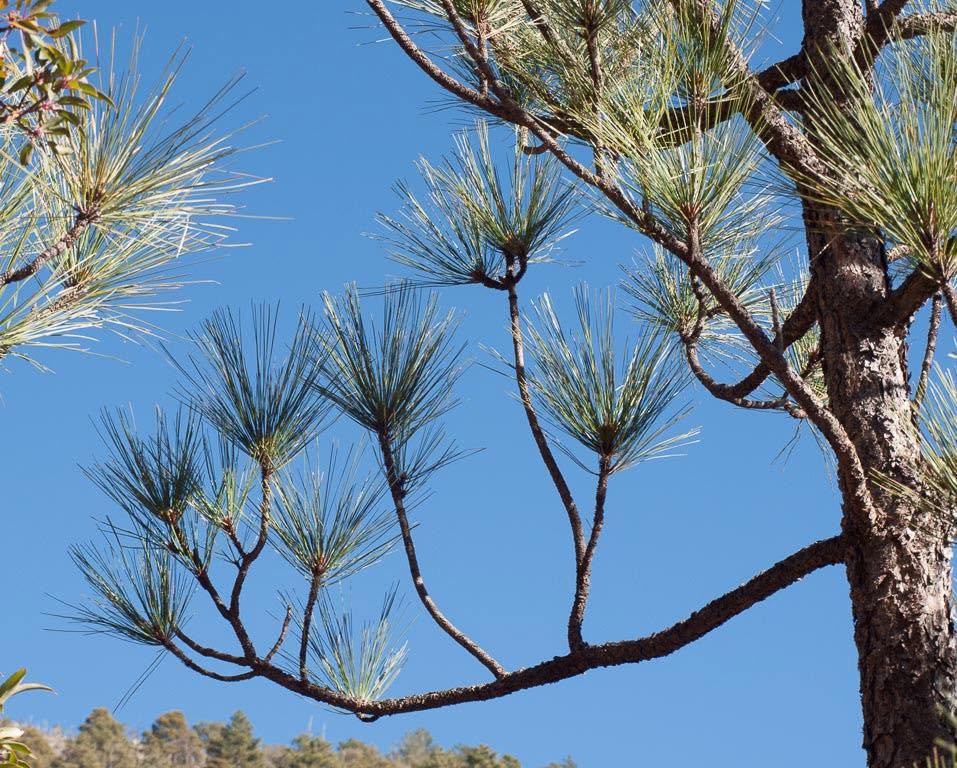
Arizona pine is often treated as a variety of ponderosa pine and shares its zones 6 to 8 range, reaching 60 to 100 feet with moderate to fast growth. It grows across southwestern mountain ranges.
The clearest identifying feature is its needle count, usually five per bundle rather than the three typical of standard ponderosa pine, along with slightly longer needles overall.
22. Torrey Pine (Pinus torreyana)
Torrey pine suits zones 8 to 10, growing 30 to 60 feet, though wind-exposed coastal individuals often stay shrubby. It is one of the rarest pines in the wild, restricted to two small populations in Southern California.
Needles are long and stiff, 8 to 13 inches, in bundles of five, and the tree produces unusually large edible seeds. It tolerates salt spray well, which suits its narrow coastal bluff habitat.
23. Sand Pine (Pinus clausa)
Sand pine handles zones 8 to 10 and stays relatively small, 15 to 30 feet, occasionally reaching 50 feet. Growth is fast but the tree is short-lived compared to most pines on this list.
Needles are short and twisted, in bundles of two. This species is a true pioneer, adapted specifically to the deep, dry sand ridges of central Florida where little else survives.
24. Spruce Pine (Pinus glabra)
Spruce pine grows in zones 7 to 9, reaching 60 to 100 feet with unusually smooth, gray bark for a hard pine. Growth is moderate, and it is one of the few pines that tolerates partial shade.
Needles are slender, 1.5 to 3.5 inches, in bundles of two. It typically grows in southern bottomlands alongside hardwoods, favoring richer, moister soil than most of its hard pine relatives.
One species stands out here. According to USDA fire ecology records, longleaf pine forests once covered an estimated 59 to 87 million acres across the southeastern United States. Today, only about 5 to 10 million acres remain, largely due to logging and fire suppression.
Soft Pines (Subgenus Strobus) of North America
Soft pines carry softer wood, gentler needles, and cones without the sharp prickles common in hard pines. Many grow at higher, colder elevations and prefer well-drained soil over anything heavy or waterlogged.
Several species in this group are also among the longest-lived trees on the planet, so patience matters more than fast results when you plant one.
25. Eastern White Pine (Pinus strobus)
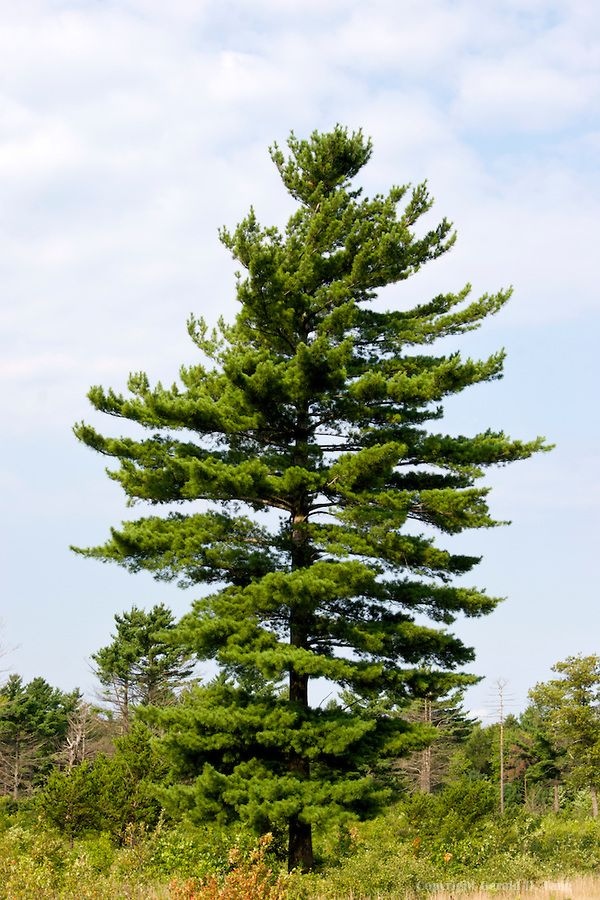
Eastern white pine is hardy in zones 3 to 8 and grows fast for a soft pine, reaching 50 to 80 feet in cultivation and up to 150 feet historically in old-growth stands. Its soft, blue-green needles are the softest of any major North American pine.
Needles grow in bundles of five, 3 to 5 inches long. The species tolerates a wide range of soils but is prone to white pine blister rust and weevil damage, so good air circulation and site selection help keep it healthy.
26. Western White Pine (Pinus monticola)
This species suits zones 5 to 8 and reaches 100 to 150 feet with moderate growth on moist mountain slopes. It is the state tree of Idaho and once dominated large stretches of the Pacific Northwest.
Needles grow in bundles of five, 2 to 4 inches long. Like its eastern cousin, it is susceptible to blister rust, and disease-resistant cultivars are now preferred for restoration planting.
27. Sugar Pine (Pinus lambertiana)
Sugar pine is the tallest pine species on record, reaching 130 to 200 feet or more in zones 6 to 8. Growth is moderate, and the tree needs well-drained mountain soil to thrive.
Needles grow in bundles of five, 2.5 to 4 inches long, and this species produces the longest cones of any conifer, sometimes stretching close to 20 inches. It is long-lived but, like other white pines, vulnerable to blister rust.
28. Limber Pine (Pinus flexilis)
Limber pine handles zones 4 to 7 and stays relatively compact at 30 to 50 feet, with slow growth suited to harsh, windswept, high-elevation sites. Its name comes from branches that bend rather than snap in strong wind.
Needles grow in bundles of five, 1.5 to 3.5 inches long. It is extremely drought and cold tolerant, making it a good choice for exposed rock gardens in colder climates.
29. Whitebark Pine (Pinus albicaulis)
Whitebark pine grows in zones 3 to 7, usually staying 20 to 50 feet tall, though treeline individuals often twist into low, wind-shaped forms known as krummholz. Growth is slow.
Needles come in bundles of five. Its cones do not open on their own, relying almost entirely on Clark’s nutcracker to crack them open and disperse seeds. Blister rust and bark beetles have pushed this species onto the US threatened species list.
30. Foxtail Pine (Pinus balfouriana)
Foxtail pine is suited to zones 6 to 8, reaching 20 to 50 feet with extremely slow growth on rocky, high-elevation sites. Its needles cluster densely along the branch, giving a bottlebrush appearance that inspired the common name.
Needles grow in bundles of five. This species is a close relative of bristlecone pine and shares its impressive longevity, with some individuals documented at over 3,000 years old.
31. Great Basin Bristlecone Pine (Pinus longaeva)
Growing in zones 4 to 7, this species stays short and gnarled, typically 15 to 30 feet, with extraordinarily slow growth in dry, rocky, high-elevation terrain. It is the oldest known living tree species on Earth.
Needles grow in bundles of five. Its dense, resinous wood resists decay so effectively that dead trees can remain standing, essentially unrotted, for thousands of years after death.
32. Rocky Mountain Bristlecone Pine (Pinus aristata)
This species suits zones 4 to 7, reaching 20 to 40 feet with slow growth on subalpine rocky slopes in Colorado, New Mexico, and Arizona. Needles show characteristic white resin flecks that give the foliage a speckled look.
Needles grow in bundles of five. Documented individuals exceed 2,000 years of age, making this one of the longest-lived tree species in North America, though not quite as extreme as its Great Basin cousin.
33. Southwestern White Pine (Pinus strobiformis)
Southwestern white pine handles zones 5 to 8 and reaches 40 to 80 feet with moderate growth in the mountain forests of Arizona, New Mexico, and northern Mexico. It naturally hybridizes with limber pine where their ranges overlap.
Needles grow in bundles of five, slender and blue-green. It adapts to a range of well-drained mountain soils and tolerates cold winters reasonably well for a species from a relatively warm region.
Sugar pine is worth pausing on. It produces the longest cones of any conifer, often stretching close to two feet, and it can grow taller than any other pine species on record.
Pinyon and Nut Pines
Pinyon pines are shrubby, slow-growing, and famous for one thing above all: edible pine nuts. Communities across the American Southwest and Mexico have harvested them for centuries, and many of these species can take decades before they begin producing seed.
Because pinyons grow so slowly, patience is the main “care requirement.” Full sun, sharp drainage, and minimal fertilizer suit them far better than rich, wet garden soil.
34. Colorado Pinyon (Pinus edulis)
Colorado pinyon is hardy in zones 4 to 8 and rarely exceeds 10 to 35 feet, growing so slowly that a tree may take 25 years before it starts producing cones. It is the state tree of New Mexico.
Needles are short and stout, usually in bundles of two. It tolerates drought exceptionally well and can live for 400 years or more, with seeds that remain a prized, commercially harvested food source.
35. Singleleaf Pinyon (Pinus monophylla)
This species suits zones 5 to 8, reaching 15 to 25 feet with slow growth across the dry mountain ranges of the Great Basin. It is the only pine species in the world with a single needle per fascicle rather than a bundle.
Its stout, blue-gray needles make it easy to identify at a glance. Seeds were historically a major food source for Indigenous communities across its native range.
36. Mexican Pinyon (Pinus cembroides)
Mexican pinyon handles zones 7 to 9, staying shrubby at 15 to 30 feet with slow growth. Needles typically grow in bundles of three, shorter and thinner than those of Colorado pinyon.
This species is widely and commercially harvested for pine nuts throughout Mexico. It is highly drought tolerant and prefers rocky, well-drained slopes over any richer soil type.
37. Parry Pinyon (Pinus quadrifolia)
Parry pinyon grows in zones 7 to 9, reaching 15 to 30 feet with slow growth in the dry chaparral-to-desert transition zones of Southern California and Baja California. Its needles usually grow in bundles of four, an unusual count that helps distinguish it from other pinyons.
The tree forms a rounded, bushy crown and tolerates extended drought once its root system is established.
38. Border Pinyon (Pinus discolor)
Border pinyon suits zones 7 to 9, reaching 15 to 30 feet with slow growth in the transitional desert-woodland zones of Arizona, New Mexico, and northern Mexico. Needles grow in bundles of two or three.
It is closely related to Mexican pinyon and shares similar drought tolerance, favoring rocky, sun-exposed slopes with minimal competition from other trees.
39. Papershell Pinyon (Pinus remota)
This species handles zones 7 to 9 and stays compact at 15 to 25 feet with slow growth. It is limited to the limestone hills of the Texas Trans-Pecos region and northern Mexico.
The defining trait is its unusually thin, easily cracked seed shell, which makes the nuts simpler to process than those of most other pinyon species.
40. Potosi Pinyon (Pinus culminicola)
Potosi pinyon is restricted to a handful of high mountain peaks in Nuevo León, Mexico, typically at elevations above 10,000 feet. It usually stays under 15 feet, often growing as a sprawling shrub rather than a true tree.
Growth is extremely slow given the harsh, high-altitude conditions. This species is considered rare, and its narrow range makes it vulnerable to any habitat disturbance.
41. Big-Cone Pinyon (Pinus maximartinezii)
Big-cone pinyon grows in zones 8 to 9, reaching 15 to 25 feet with slow growth. It has an extremely restricted native range limited to Zacatecas, Mexico.
This species produces the largest seeds of any pinyon pine, roughly the size of a small bean. Habitat loss has left it considered endangered in the wild, though it is increasingly cultivated for conservation.
European Pines
Europe’s pines range from the icy taiga of Scandinavia to sun-baked Mediterranean coastlines. Their diversity reflects a continent with wildly different climates packed into a small footprint.
Northern European species generally want cold winters and tolerate poor, sandy soil, while Mediterranean pines lean toward heat and drought tolerance instead.
42. Scots Pine (Pinus sylvestris)
Scots pine is remarkably adaptable, hardy in zones 2 to 7, and reaches 50 to 90 feet with moderate growth. It has the widest natural range of any pine species on Earth, stretching from Scotland to the Russian Pacific coast.
Needles are blue-green and twisted, growing in pairs 1.5 to 3 inches long, and the upper bark turns a distinctive orange-red with age. It tolerates poor sandy soil with ease and needs full sun to keep its form tidy.
43. Austrian or Black Pine (Pinus nigra)
Austrian pine handles zones 4 to 7 and grows 40 to 60 feet with moderate growth. It is one of the most pollution-tolerant conifers available, which is why cities plant it as a street and windbreak tree so often.
Needles are stiff and dark green, 3 to 6 inches, in bundles of two. It also tolerates road salt and coastal spray better than most pines, making it a reliable choice for tough urban sites.
44. Mugo Pine (Pinus mugo)
Mugo pine is hardy in zones 2 to 7 and stays compact, typically 4 to 20 feet depending on the cultivar, since many dwarf forms are widely sold for landscaping. Growth is slow, and the shrubby, mounding form suits foundation plantings well.
Needles are curved, dark green, in bundles of two. Full sun keeps the growth dense, while shade tends to produce a looser, less attractive shape.
45. Swiss Stone Pine (Pinus cembra)
This alpine species suits zones 3 to 7, reaching 30 to 70 feet with extremely slow growth. Young trees form a neat, narrow, symmetrical crown that broadens with age.
Needles grow in bundles of five, and the tree produces edible seeds similar to pine nuts. It is exceptionally cold hardy, built for harsh alpine winters in the Alps and Carpathians.
46. Aleppo Pine (Pinus halepensis)
Aleppo pine thrives in zones 8 to 10, growing 30 to 60 feet with moderate growth in hot, dry Mediterranean conditions. Needles are thin and bright green, usually in bundles of two.
This species is highly drought tolerant and fire-adapted, with serotinous cones that open after wildfire passes through. It is one of the most common ornamental and reforestation pines across the Mediterranean Basin.
47. Italian Stone Pine (Pinus pinea)
Also called umbrella pine, this species grows in zones 8 to 10, reaching 40 to 80 feet with a wide, flat-topped, iconic canopy that develops as the tree matures. Growth is moderate.
Needles grow in pairs. This is the source of commercial pignoli pine nuts used in pesto and other Mediterranean dishes, and the tree tolerates both salt spray and drought with ease.
48. Maritime Pine (Pinus pinaster)
Maritime pine suits zones 8 to 10 and grows fast, reaching 60 to 100 feet on poor, sandy coastal soils where many other trees struggle. Needles are notably stout, 6 to 9 inches, in bundles of two.
Historically, this species was a major source of resin used for turpentine and pitch. It remains an important timber tree along the Atlantic coast of France, Spain, and Portugal.
49. Corsican Pine (Pinus nigra subsp. laricio)
Corsican pine handles zones 6 to 8 and grows taller and straighter than typical black pine, often reaching 100 to 130 feet. Growth is moderate to fast, and the tree is prized for high-quality timber.
Needles are slightly longer than standard Austrian pine needles, and the overall form is narrower and more upright, which is part of why foresters value it for straight-grained lumber.
50. Macedonian Pine (Pinus peuce)
This Balkan native suits zones 4 to 8, reaching 60 to 100 feet with moderate growth. Needles grow in bundles of five and stay a rich blue-green year-round.
One trait makes this species particularly valuable to breeders: strong natural resistance to white pine blister rust, a disease that devastates many other five-needle pines. It is increasingly planted as an ornamental for this reason.
51. Bosnian Pine (Pinus heldreichii)
Bosnian pine grows in zones 5 to 8, reaching 50 to 90 feet with slow to moderate growth and a neat, symmetrical form that ornamental growers appreciate. Needles are stiff and dark green, in bundles of two.
This species tolerates poor, rocky, even alkaline soils with ease. It is also remarkably long-lived, with individuals in the Balkans documented at over 1,000 years old.
52. Calabrian Pine (Pinus brutia)
Calabrian pine suits zones 8 to 10, growing 50 to 80 feet with moderate to fast growth. It closely resembles its relative, Aleppo pine, and is native to the eastern Mediterranean and Turkey.
Needles grow in pairs. Like Aleppo pine, it is fire-adapted and highly drought tolerant, making it a reliable choice for hot, dry landscaping in Mediterranean-climate regions.
Scots pine holds a striking record. Its natural range stretches from northern Scotland all the way to the Russian Pacific coast, making it the most widely distributed pine species on the planet.
Asian Pines
Asia hosts some of the most botanically distinct pine species anywhere, shaped by monsoons, high plateaus, and cold northern forests. Ornamental and bonsai cultivation has made several of these species famous well beyond their native range.
Growing conditions vary enormously across this group, from subarctic Siberia to tropical Sumatra, so always check a species’ native climate before assuming it will thrive in yours.
53. Japanese Black Pine (Pinus thunbergii)
This coastal species handles zones 6 to 9 and ranges from 20 to 80 feet in the wild, though it is frequently kept small through pruning in gardens and bonsai. Growth is moderate.
Needles are stiff and dark green, in pairs, with striking white winter buds that contrast against the trunk. It tolerates salt spray exceptionally well, which is why it is such a common coastal ornamental in Japan.
54. Japanese Red Pine (Pinus densiflora)
Japanese red pine suits zones 4 to 7, growing 60 to 100 feet with moderate growth. Its orange-red, flaking bark is especially striking on the upper trunk, giving the species strong ornamental appeal.
Needles are slender and blue-green, in pairs. It is a favorite in traditional Japanese garden design, often trained and pruned for a windswept, artistic silhouette.
55. Japanese White Pine (Pinus parviflora)
This species handles zones 4 to 7, typically reaching 25 to 50 feet in the wild, though cultivated forms usually stay much smaller. Growth is slow, which makes it especially popular for bonsai.
Needles are short, twisted, blue-green, in bundles of five. Countless dwarf cultivars exist, offering compact forms suited to smaller gardens and container growing.
56. Korean Pine (Pinus koraiensis)
Korean pine is cold hardy across zones 3 to 7 and can reach 100 to 150 feet in native forest settings, with slow to moderate growth. Needles grow in bundles of five.
This species produces large, edible pine nuts that support a significant commercial nut industry across Korea, Manchuria, and Japan. It handles harsh winters far better than most ornamental pines.
57. Chinese Red Pine (Pinus tabuliformis)
Chinese red pine suits zones 4 to 8, reaching 50 to 80 feet, and develops a distinctive flat-topped, umbrella-like crown as it matures. Growth is moderate.
Needles grow in pairs. It tolerates both drought and cold reasonably well, which has made it a common reforestation species across northern China for decades.
58. Chinese White Pine (Pinus armandii)
This species handles zones 5 to 8, growing 50 to 100 feet with moderate growth. Needles are soft, in bundles of five, giving the foliage a gentle, feathery texture.
It is grown ornamentally for its attractive form and large cones. Chinese white pine prefers well-drained mountain soil similar to its native habitat.
59. Yunnan Pine (Pinus yunnanensis)
Yunnan pine grows in zones 8 to 9, reaching 80 to 100 feet in the subtropical highlands of southwest China. Growth is moderate to fast.
Needles grow in bundles of three and are notably long. This species is a major timber source regionally, valued for straight growth and adaptability to varied mountain soils.
60. Masson’s Pine (Pinus massoniana)
Masson’s pine suits zones 7 to 9, growing 60 to 80 feet with fast growth. Needles are thin and drooping, in pairs, giving the tree a soft, graceful appearance.
This species is an important source of resin and pulpwood in southern China. It tolerates poor, acidic soils that many other timber species avoid.
61. Himalayan Blue Pine (Pinus wallichiana)
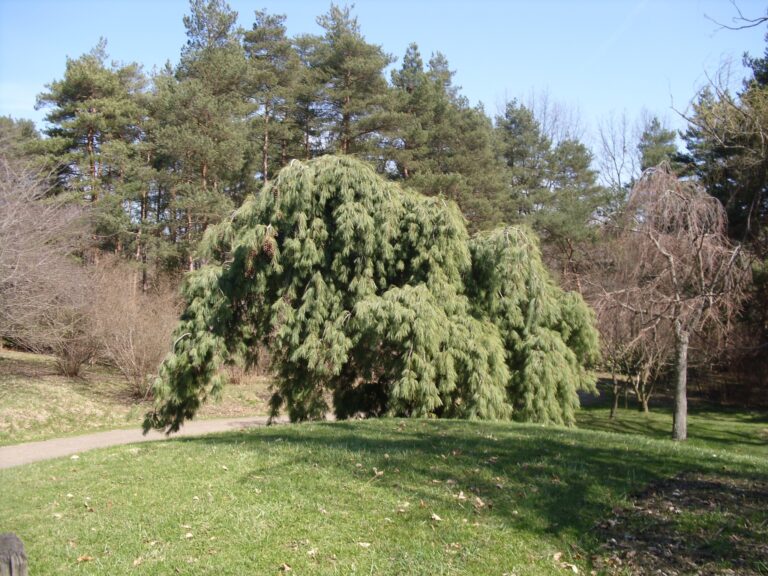
Also called Bhutan pine, this species handles zones 6 to 8, reaching 100 to 150 feet with moderate growth. Needles are long, drooping, and blue-green, in bundles of five, giving the tree a graceful, weeping habit.
It is widely planted ornamentally for its distinctive color and elegant form. In its native Himalayan range, it grows across a broad elevation band with reliable moisture.
62. Chir Pine (Pinus roxburghii)
Chir pine suits the warmer end of the scale, roughly zones 8 to 10, and reaches 100 to 150 feet in the Himalayan foothills. Growth is moderate to fast.
Needles are notably long, up to 12 inches, in bundles of three. This species is tapped commercially for resin across its native range and tolerates low-intensity fire reasonably well.
63. Siberian Pine (Pinus sibirica)
Siberian pine is extraordinarily cold hardy, surviving zones 2 to 6 and temperatures as low as -60°F. It grows 60 to 100 feet with slow growth and a dense, pyramidal form while young.
Needles grow in bundles of five. It produces edible nuts similar to Korean pine and is well suited to harsh, continental climates with long, brutal winters.
64. Merkus Pine (Pinus merkusii)
This tropical species suits zones 9 to 11, reaching 100 to 150 feet with moderate to fast growth. Needles grow in pairs.
Merkus pine holds a unique distinction: it is the only pine species with populations that naturally cross into the Southern Hemisphere, found in parts of Sumatra. It is tapped commercially for resin across Southeast Asia.
65. Khasi Pine (Pinus kesiya)
Khasi pine grows in zones 9 to 10, reaching 100 to 130 feet with fast growth in tropical highland climates. Needles are long, in bundles of three.
This species is widely planted for reforestation across Southeast Asia, prized for its rapid establishment on cleared or degraded land.
66. Taiwan Red Pine (Pinus taiwanensis)
Taiwan red pine is endemic to Taiwan’s high mountains, suited to zones 8 to 9, and reaches 60 to 90 feet with moderate growth. Needles grow in pairs.
Its orange-red bark gives strong seasonal color, and the species handles the cooler, wetter conditions found at higher elevations on the island.
67. Dwarf Siberian Pine (Pinus pumila)
This extreme cold specialist survives zones 1 to 6 and rarely exceeds 3 to 10 feet, growing as a prostrate, ground-hugging shrub rather than a tree. Growth is extremely slow.
Needles grow in bundles of five. Found across the alpine zones of northeast Asia and Japan, it tolerates brutal wind and cold that would kill most other conifers, and it is a favorite for rock gardens in cold climates.
Mediterranean, Mexican, and Central American Pines
This group bridges warm coastal climates with volcanic highlands, producing pines built for heat, wind, and rugged terrain. Several species here grow surprisingly fast for pines, which is why they dominate tropical plantation forestry.
68. Canary Island Pine (Pinus canariensis)
This species suits zones 9 to 11, reaching 60 to 100 feet with moderate to fast growth. Needles are very long, 8 to 12 inches, drooping, bright green, in bundles of three.
Canary Island pine has a rare ability among conifers: it can resprout new needles and branches directly from its trunk after a wildfire. It is highly drought tolerant, well suited to its volcanic island origins.
69. Mexican Weeping Pine (Pinus patula)
Mexican weeping pine handles zones 8 to 10 and grows fast, reaching 60 to 100 feet. It is prized ornamentally for its long, graceful, drooping needles, usually in bundles of three or four.
The tree is frost sensitive compared to many pines on this list, so it performs best in mild, subtropical climates without hard freezes.
70. Montezuma Pine (Pinus montezumae)
This Mexican highland species suits zones 8 to 10, reaching 60 to 100 feet with moderate growth. Its most striking feature is needle count, five to eight per bundle, unusually high and giving the foliage a dramatic, tufted look.
Needles can grow up to 12 inches long. It is native to cloud forest elevations and prefers consistent moisture over dry, exposed sites.
71. Smooth-Bark Mexican Pine (Pinus pseudostrobus)
This species handles zones 8 to 10, growing fast to reach 80 to 130 feet. Its grayish, relatively smooth bark is unusual among pines, most of which develop thick, deeply furrowed bark with age.
Needles grow in bundles of five. It is a valuable timber species across Mexico and Central America, appreciated for straight growth and workable wood.
72. Ocote Pine (Pinus oocarpa)
Ocote pine suits zones 9 to 11 and grows fast, reaching 60 to 100 feet. Needles grow in bundles of five, and the tree tolerates poor tropical soils reasonably well.
This species is planted extensively across Central America for resin and pulpwood production, making it one of the more commercially important pines in the region.
73. Hartweg’s Pine (Pinus hartwegii)
Hartweg’s pine survives at extreme elevation, often above 13,000 feet on Mexican volcanoes, in a range roughly equivalent to zones 7 to 9. It reaches 50 to 90 feet, though growth is slow given the harsh, thin-aired altitude it tolerates.
Needles are short and stout, in bundles of five. It is highly cold and wind tolerant, often forming the true timberline on the mountains where it grows.
74. Caribbean Pine (Pinus caribaea)
Caribbean pine suits zones 9 to 11 and grows fast, reaching 60 to 100 feet with a straight, uniform trunk. Needles grow in bundles of three.
This is a major tropical plantation species, widely introduced across the tropics for pulp and construction lumber thanks to its rapid growth and reliable form.
Several tropical relatives on this list, including ocote and Caribbean pine, have been planted far outside their native range. In South Africa alone, more than 80 of the world’s roughly 111 pine species have been introduced since the late 1600s, primarily for forestry.
A Rare Standout Worth Knowing
75. Cuban Pine (Pinus cubensis)
Cuban pine is restricted to zones 10 to 11 and the mountain ranges of eastern Cuba, growing 50 to 80 feet with moderate growth. Needles grow in bundles of two or three, closely resembling those of its relative, Caribbean pine.
This species is considered vulnerable due to its limited natural range and ongoing habitat pressure. Its scarcity outside Cuba makes it one of the least commonly cultivated pines on this entire list.
ALSO READ: 10 Common Norfolk Pine Problems: Identification, Treating, and Preventing Every Major Issue
Pine Trees by the Numbers
A few statistics stood out to me while researching this piece, and I think they help put the whole genus into perspective.
- 110 to 126 — the accepted range of living Pinus species worldwide, depending on the taxonomy used.
- 4,857 years — the verified age of Methuselah, a Great Basin bristlecone pine, one of Earth’s oldest known living organisms.
- 59 to 87 million acres — the historical range of longleaf pine forest in the southeastern US, now reduced to roughly 5 to 10 million acres.
- 235 feet — the maximum recorded height of a ponderosa pine, among the tallest pines in North America.
- 11 pounds — the maximum weight of a single Coulter pine cone, the heaviest of any pine species.
Why Pines Matter Beyond Landscaping
Pines are not just decorative. They anchor entire ecosystems, especially in cold or nutrient-poor soils where broadleaf trees struggle to survive.
Timber and paper industries depend heavily on fast-growing species like loblolly, radiata, and Caribbean pine. These three alone supply a large share of the world’s softwood lumber.
Wildlife relies on pines too. Clark’s nutcracker birds and pinyon jays actively plant whitebark and pinyon seeds by burying them for later, unintentionally regenerating entire forests.
Fire plays an unusual role in many pine life cycles. Species like jack pine and pond pine hold their cones sealed shut with resin until a wildfire melts the seal, releasing seeds onto freshly cleared, nutrient-rich ground.
Frequently Asked Questions
How many types of pine trees are there in total? Botanists recognize between 110 and 126 species in the genus Pinus, though the exact number shifts slightly as genetic research reclassifies certain populations.
What is the oldest pine tree in the world? A Great Basin bristlecone pine named Methuselah, located in California’s White Mountains, has a verified age of 4,857 years.
What is the difference between hard pines and soft pines? Hard pines usually carry 2 or 3 needles per bundle and thicker, more armored cones. Soft pines typically carry 5 needles per bundle with softer, less prickly cones.
Which pine tree grows the tallest? Sugar pine, native to California and Oregon, is generally recognized as the tallest pine species, with mature trees exceeding 200 feet.
Are pine nuts edible from every pine species? No. Only certain species, mainly pinyon pines along with a few others like Italian stone pine and Korean pine, produce seeds large enough to be commercially worthwhile as food.
What hardiness zone is best for planting a pine tree? It depends entirely on the species. Cold-climate pines like jack pine and Siberian pine tolerate zone 2, while Mediterranean and tropical species like Aleppo pine and Caribbean pine need zone 8 or warmer to survive.
Final Thoughts
I find it remarkable that one genus can stretch from a wind-battered dwarf shrub in Siberia to a 250-foot giant in California. That range is really the story of pines: an entire family built around adapting to whatever hostile ground it’s handed.
Whether you’re identifying a backyard specimen or planning a reforestation project, the species above cover the vast majority of pines you will ever encounter, wild or planted.
References
- USDA Forest Service — Silvics Manual, Volume 1: Conifers. https://www.srs.fs.usda.gov/pubs/misc/ag_654/table_of_contents.htm
- USDA Forest Service — Fire Effects Information System, Pinus palustris (Longleaf Pine). https://www.fs.usda.gov/database/feis/plants/tree/pinpal/all.html
- USDA Forest Service — Fire Effects Information System, Pinus flexilis (Limber Pine). https://www.fs.usda.gov/database/feis/plants/tree/pinfle/all.html
- USDA Forest Products Laboratory — Wood Identification Technical Sheet, Pinus echinata. https://www.fpl.fs.usda.gov/documnts/TechSheets/SoftwoodNA/pdf_files/pinusechmet.pdf
- Virginia Tech Department of Forest Resources and Environmental Conservation — Dendrology Fact Sheet, Ponderosa Pine. https://dendro.cnre.vt.edu/dendrology/syllabus/factsheet.cfm?ID=108
- Virginia Tech Department of Forest Resources and Environmental Conservation — Dendrology Fact Sheet, Whitebark Pine. https://dendro.cnre.vt.edu/dendrology/syllabus/factsheet.cfm?ID=176
- University of Arkansas Cooperative Extension Service — Plant of the Week, Bristlecone Pine. https://www.uaex.uada.edu/yard-garden/resource-library/plant-week/bristlecone-pine.aspx

Tim M Dave is a gardening expert with a passion for houseplants, particularly cacti and succulents. With a degree in plant biology from the University of California, Berkeley, he has vast experience in gardening. Over the years, he has cultivated a vast collection of desert plants and learned a great deal about how to grow and care for these unique companions.