The Japanese Maple Tree (Acer palmatum): History, Varieties, Problems and Care
The Japanese maple tree (Acer palmatum) is one of the most elegantly beautiful ornamental trees in the world. With its finely lobed leaves, graceful branching habit, and extraordinary seasonal colour, it transforms any garden into something spectacular.
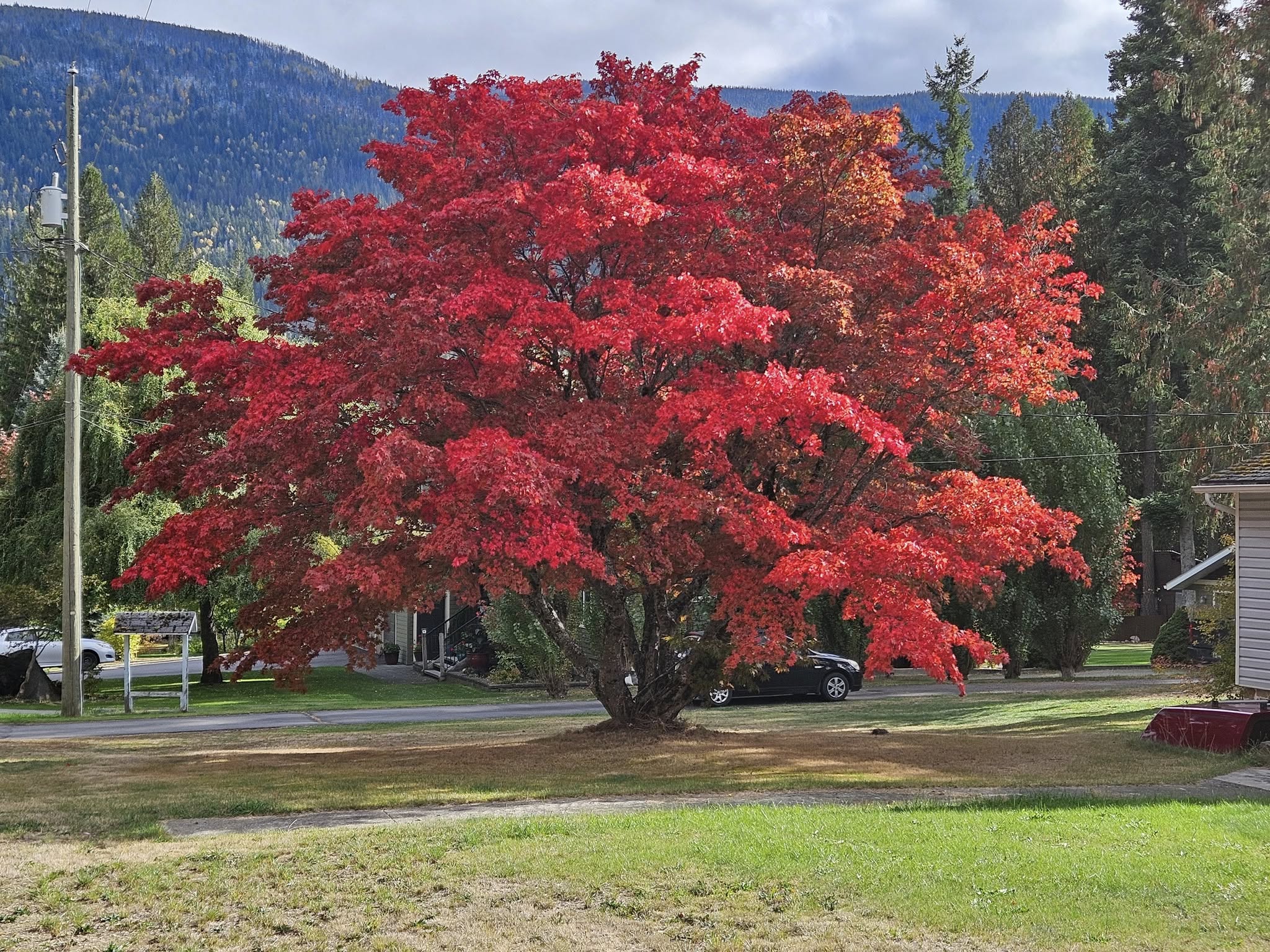
I have stood in front of Japanese maples in late October and felt an involuntary stillness. Few trees earn that reaction. The crimson and gold of a mature specimen in full autumn display is simply one of the finest sights in horticulture.
The Japanese maple is not merely decorative — it is botanically fascinating, ecologically valuable, and culturally profound. It has shaped Japanese gardens for over a thousand years and continues to influence landscape architects and home gardeners worldwide.
This article covers everything you need to know: its origins, the best varieties, how to grow and maintain it, its landscape uses, and how to keep it healthy for decades.
| Common Name | Japanese Maple |
| Scientific Name | Acer palmatum |
| Family | Sapindaceae |
| Native Range | Japan, Korea, China, eastern Mongolia, southeastern Russia |
| USDA Hardiness Zones | 5–9 |
| Mature Height | 2–10 metres (varies by cultivar) |
| Mature Spread | 2–10 metres |
| Growth Rate | Slow to moderate (15–30 cm per year) |
| Leaf Shape | Palmate, 5–9 lobes |
| Flower Colour | Small, reddish-purple (spring) |
| Fruit Type | Samara (winged seed) |
| Bark | Smooth grey-brown; develops character with age |
| Soil pH | 5.5–6.5 (slightly acidic) |
| Sun Requirement | Full sun to partial shade |
| Water Needs | Moderate; consistent moisture preferred |
| Toxicity | Non-toxic to humans and animals |
| RHS Award | Award of Garden Merit (multiple cultivars) |
Origins and Natural Habitat
Acer palmatum is native to a broad swath of East Asia, including the mountain forests of Japan, Korea, China, and parts of eastern Russia. In its natural state, it grows as an understorey tree — sheltered beneath the canopy of taller forest trees, where dappled light and cool, moist, humus-rich soils define its habitat.
This origin matters enormously for cultivation. Understanding where a plant comes from is the first step in understanding what it needs. The forest understorey is cool, moist, and sheltered — conditions that the Japanese maple will always prefer over hot, dry, exposed environments.
In Japan, the tree is called momiji (紅葉), a word that also broadly refers to the phenomenon of autumn leaf colour. The cultural significance is immense — momiji-gari (autumn leaf viewing) is a centuries-old Japanese tradition comparable in social importance to cherry blossom viewing.
Cultural and Historical Significance
The Japanese maple has been cultivated in Japan for well over 1,200 years. It features prominently in classical Japanese poetry, painting, and garden design.
The Heian-period aristocracy (794–1185 CE) considered momiji viewing a refined and poetic pursuit, a way of meditating on impermanence — the concept known as mono no aware.
Traditional Japanese garden styles — particularly the kaiyū-shiki (stroll garden) — were designed to frame seasonal tree displays, with Japanese maples as centrepieces of the autumn composition.
The tree was introduced to European horticulture in the early 19th century. By 1820, Acer palmatum was being grown in British gardens, and by the end of the century, hundreds of named cultivars had been selected and catalogued. Today, the Royal Horticultural Society lists well over 200 cultivars in its plant database.
ALSO READ: Japanese Maple Bonsai: History, Styling, and Caring for Acer palmatum in Miniature
Botanical Description
This is how to identify a Japanese maple tree.
Leaves
The leaves of Acer palmatum are palmate — shaped like an open hand — with typically 5 to 9 pointed lobes radiating from a central point. They are arranged oppositely on the stem.
Leaf size varies considerably between cultivars, ranging from as small as 2 cm across to over 12 cm in some large-leafed forms.
In spring, many cultivars emerge in shades of bright green, chartreuse, or vivid red. In summer, foliage can shift subtly toward deeper tones. Autumn brings the most dramatic transformation: yellows, oranges, scarlets, and burgundies that can last for several weeks.
Flowers
The flowers of a Japanese maple tree are small and relatively inconspicuous — produced in drooping clusters (corymbs) in spring, typically in shades of reddish-purple to dark maroon.
Though not the primary ornamental feature, they add subtle textural interest at close range and are visited by early pollinators, particularly bees.
Fruit
The fruit is a paired samara — the familiar winged seed structure common to maples — that ripens in autumn and disperses on the wind. The samaras of Acer palmatum are relatively small, typically reddish or tan, and add a further layer of seasonal interest.
Bark and Form
Young trees have smooth, grey-green bark. As the tree matures, the bark develops subtle texture and the branching structure becomes increasingly ornamental in its own right. The winter silhouette of a mature Japanese maple is considered one of the most graceful in the temperate tree palette.
Key Varieties and Cultivars
With over 1,000 named cultivars of Acer palmatum recorded worldwide, selection can feel overwhelming. The following represent some of the most widely grown and award-winning varieties, grouped by primary ornamental characteristic.
Red and Purple Foliage Cultivars
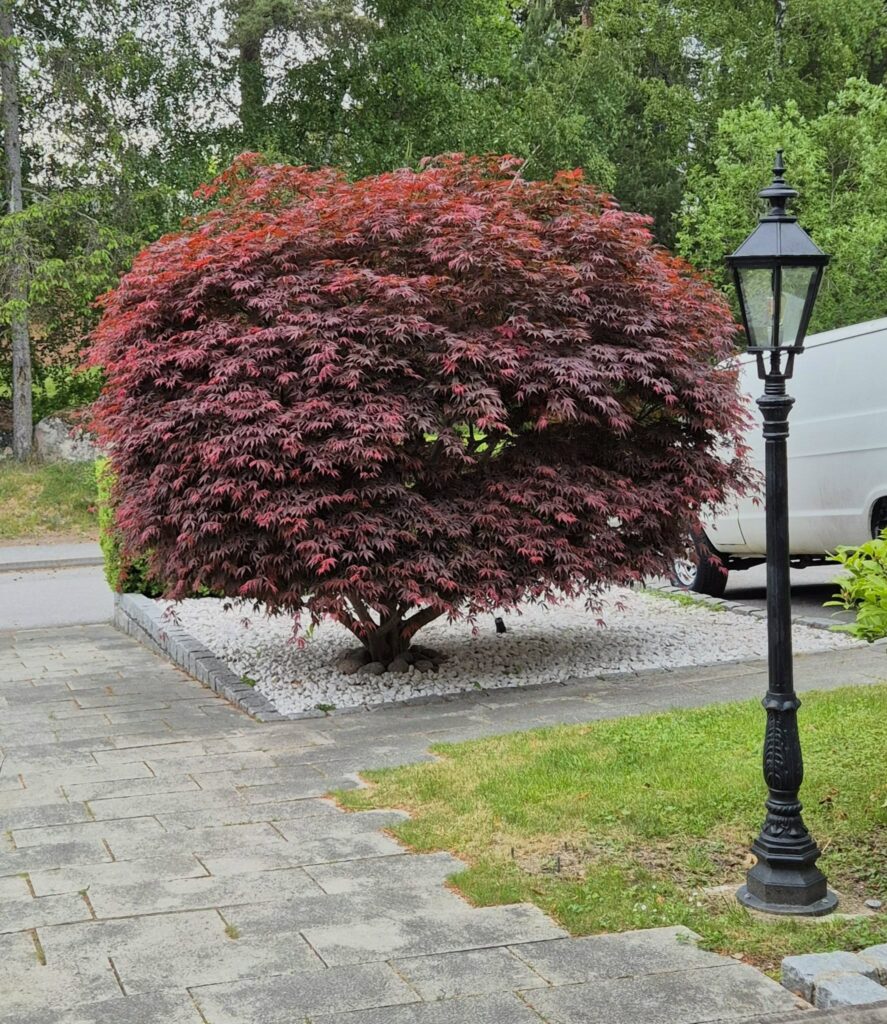
‘Bloodgood‘ — Perhaps the most widely planted Japanese maple in the world. It produces deep burgundy-red foliage that holds its colour well through summer heat, turning brilliant crimson in autumn. It reaches 4–6 metres at maturity and has received the RHS Award of Garden Merit.
‘Deshojo’ — A Japanese classic, producing vivid scarlet new growth in spring that mellows to dark reddish-green by summer, then burns brightly again in autumn. Beloved by bonsai growers and garden designers alike.
‘Atropurpureum’ — A reliable, widely available cultivar with purple-red foliage. It is more variable than ‘Bloodgood’ (it is often seed-grown) but robustly hardy and vigorous.
Green Foliage with Spectacular Autumn Colour
‘Osakazuki’ — Consistently rated among the finest Japanese maples for autumn colour. The summer foliage is a clean, mid-green, but in autumn it transforms into a blazing, uniform scarlet. The RHS has awarded it the Award of Garden Merit.
‘Sango-kaku’ (Coral Bark Maple) — Grown as much for its coral-pink young stems as for its foliage. In winter, the bare stems glow against frost or snow. Leaves are light green in summer, turning soft gold and apricot in autumn.
Dissectum (Threadleaf) Cultivars
‘Garnet’ — A widely grown dissectum with deeply cut, lacy, reddish-purple foliage and a gracefully weeping habit. It forms a mounded, mushroom-shaped plant, rarely exceeding 2–3 metres.
‘Viridis’ — The most popular green dissectum cultivar. Its finely cut, bright green leaves turn gold and yellow in autumn. It has a softer, more naturalistic appearance than red dissectums.
‘Crimson Queen‘ — A deeply weeping dissectum with finely cut, dark red leaves that hold their colour better than many dissectum cultivars in summer heat.
Variegated Cultivars
‘Butterfly’ — A striking cultivar with small, grey-green leaves edged in creamy white and pink. It is upright in habit and slower-growing than many other cultivars. Best sited away from harsh afternoon sun to prevent leaf scorch on the margins.
‘Ukigumo’ — An unusual cultivar with green leaves heavily speckled and streaked in white and pale pink. The name means “floating cloud” in Japanese, and the foliage effect genuinely earns that description.
Growing Conditions
Japanese maples thrive under the following conditions:
Climate and Hardiness
Japanese maples are rated for USDA Hardiness Zones 5–9, which corresponds broadly to RHS Hardiness Rating H5–H6. They tolerate winter temperatures down to approximately -20°C (-4°F) in their hardiest forms, though many cultivars — particularly the finely cut dissectums — prefer milder winters.
Young trees are more vulnerable to cold than established specimens, as their root systems have not yet developed sufficient mass to buffer against temperature extremes. In Zone 5, young trees benefit from a mulch layer over the root zone through their first two or three winters.
Late frosts present a significant risk. New spring growth can be damaged by a sharp frost even when the mature tree is fully hardy. A sheltered planting position that delays bud break slightly — such as a north-facing slope — can meaningfully reduce this risk.
Light
Japanese maples perform well in full sun to partial shade. The ideal exposure depends significantly on climate. In cooler, northern climates (UK, northern Europe, Pacific Northwest USA), full sun is generally beneficial and enhances autumn colour.
In hotter climates (southern USA, Mediterranean regions), afternoon shade is important. The delicate foliage — particularly of dissectum and variegated cultivars — scorches readily under intense afternoon sun when combined with dry conditions.
Morning sun with afternoon shade is a useful rule of thumb for gardeners in warmer regions.
Soil
Japanese maples prefer moist, well-draining, slightly acidic soil with a pH between 5.5 and 6.5. They are well-suited to soils rich in organic matter, which mirrors their native forest habitat.
They do not tolerate waterlogged soils. Prolonged root saturation leads to root rot and rapid decline. If your soil is heavy clay, improve drainage before planting by incorporating grit and organic matter, or consider a raised bed.
Highly alkaline soils (pH above 7.0) cause chlorosis — a yellowing of leaves due to iron and manganese deficiency. If planting on alkaline soil is unavoidable, acidify the area with sulphur chips and use acid-formulated fertilisers to compensate.
Soil Moisture
Consistent moisture is important, particularly during the establishment period (the first 2–3 years after planting) and during summer drought. Japanese maples are not drought-tolerant once planted in free-draining soils.
Apply a 5–8 cm layer of organic mulch — composted bark, leaf mould, or wood chip — around the root zone, keeping it away from direct contact with the trunk. This retains moisture, moderates soil temperature, and gradually improves soil structure as it breaks down.
ALSO READ: 15 Stunning Dwarf Japanese Maple Varieties (With Pictures and Growing Tips)
Planting Guide
Here is how to grow and care for Japanese maples.
When to Plant
The best time to plant a Japanese maple is in autumn or early spring, when the soil is workable but temperatures are moderate. Autumn planting allows the root system to establish during the cooler months before the demands of spring growth begin.
Container-grown specimens can technically be planted at any time of year, but avoid planting during periods of intense summer heat or hard frost.
Where to Plant
Choose a sheltered position — particularly away from strong, cold, drying winds. Wind causes physical leaf damage and dramatically increases water loss through transpiration, stressing the tree. A position beside a wall, fence, or larger tree canopy can provide effective shelter.
Avoid frost pockets — low-lying areas where cold air settles on still, clear nights. Frost damage to new spring growth is one of the most common causes of poor performance in otherwise well-sited trees.
How to Plant
- Dig a planting hole approximately twice the width of the root ball and the same depth.
- Loosen the sides and base of the hole with a fork to aid root penetration.
- If soil pH is too high, incorporate sulphur chips and acidic compost.
- Place the tree at the same depth it was growing in its container — never deeper.
- Backfill with a mixture of the excavated soil and composted organic matter.
- Water thoroughly to settle the soil around the roots.
- Apply a 5–8 cm mulch layer over the root zone, avoiding the trunk.
- Water regularly through the first growing season, particularly during dry spells.
Watering
Established Japanese maples in good soils require moderate watering. During the growing season — particularly through spring and summer — water deeply once or twice a week in the absence of rainfall, rather than shallowly and frequently.
Deep, infrequent watering encourages roots to grow downward, increasing the tree’s drought resilience over time. Shallow watering creates a superficial root system dependent on surface moisture.
Young trees and container-grown specimens require more frequent attention. A container-grown Japanese maple may need watering daily in hot summer weather. Check the compost moisture by hand — do not rely on visual appearance alone.
Feeding and Fertilising
Japanese maples are not heavy feeders. Excessive nitrogen causes rapid, soft growth that is susceptible to frost damage and aphid attack. Fertilise carefully and moderately.
A light application of a balanced, slow-release fertiliser in early spring as growth begins is generally sufficient for established garden trees. If growth appears weak or foliage colour is poor, a second application in early summer can be added.
For trees on alkaline soils or showing signs of chlorosis, use an ericaceous (acid-loving plant) fertiliser, which contains acidifying compounds and chelated iron for better nutrient availability.
Do not fertilise after midsummer. Late-season feeding promotes soft growth that will not harden before autumn frosts.
Pruning
Japanese maples require minimal pruning when planted in appropriate spaces. The natural form of the tree is part of its beauty, and unnecessary pruning detracts from rather than enhances it.
When pruning is needed — to remove dead, damaged, or crossing branches, or to shape the crown — observe the following:
Prune in late autumn or winter when the tree is fully dormant and leafless. This is the safest time as it minimises sap loss and disease risk.
Avoid pruning in spring. Japanese maples bleed sap profusely when cut in spring, which weakens the tree and can attract pests.
Always use clean, sharp tools. Ragged cuts heal slowly and are vulnerable to fungal entry. Cut back to a fork, bud, or the branch collar — never leave stubs.
For light shaping of young trees, midsummer pruning (after the first flush of growth has hardened) is also acceptable. This is sometimes used to maintain a desired size or to encourage denser branching.
Common Problems, Pests, and Diseases
The following are common challenges for Japanese maple trees.
Verticillium Wilt
Verticillium wilt is the most serious disease threat to Japanese maples. Caused by the soilborne fungi Verticillium dahliae and V. albo-atrum, it blocks the tree’s vascular system, causing wilting, branch dieback, and eventually death.
According to the University of California Agriculture and Natural Resources, there is no chemical cure — infected wood must be removed promptly and tools sterilised.
Tar Spot (Rhytisma acerinum)
Tar spot is a common, visually striking fungal disease that produces black, raised spots on the foliage in late summer. It is largely cosmetic and rarely causes serious harm to an otherwise healthy tree.
Management: Collect and dispose of fallen leaves in autumn to reduce the overwintering spore reservoir.
Aphids
Soft, sap-sucking aphids are common on Japanese maples in spring. They cluster on new growth, producing honeydew that can lead to sooty mould on leaves below.
Management: In most cases, natural predators (ladybirds, lacewings) control aphid populations without intervention. If infestations are severe, a targeted spray of insecticidal soap or neem oil is effective.
Horses’ Tail Mite (Vasates quadripedes)
This microscopic mite causes a distinctive crimson galling on the upper leaf surface, with corresponding hollow projections beneath. It is more of a cosmetic concern than a serious health threat, but heavy infestations can weaken the tree.
Scorch
Leaf scorch — brown, dried margins on leaves — is often caused by wind exposure, drought, or excessively alkaline soil rather than disease. Addressing the underlying condition is the most effective response.
Root Rot (Phytophthora spp.)
Overwatering or poorly draining soils invite Phytophthora root rot. The tree will appear wilted even when soil is moist — a diagnostic signal of root rather than drought-related stress. Improving drainage and reducing irrigation are the primary remedies.
ALSO READ: 7 Common Japanese Maple Bark Problems and How to Fix
Landscape and Garden Uses
The Japanese maple’s versatility as a landscape plant is genuinely impressive. It functions beautifully across a wide range of design contexts.
As a specimen tree — A single, well-chosen Japanese maple planted in a lawn or courtyard garden can anchor the entire design. Its year-round interest (structure in winter, fresh foliage in spring, shade in summer, colour in autumn) provides a visual centrepiece that few other small trees can match.
In Japanese and woodland gardens — The Japanese maple is perhaps most at home in a naturalistic or Japanese-inspired design, where it can be partnered with ferns, mosses, acers, and stone lanterns to evoke the atmosphere of a mountain woodland garden.
In containers — Smaller cultivars, particularly the dissectums, are outstanding container plants for courtyards, terraces, and balconies. A well-chosen container emphasises the tree’s elegant form and allows precise control of soil conditions.
As a wall shrub or espalier — In sheltered gardens, some cultivars can be trained flat against a wall, creating a dramatic living tapestry of foliage.
Beneath larger trees — Reflecting their natural understorey origin, Japanese maples make excellent companions for large oak, beech, or birch trees, thriving in the dappled shade and leaf-mould soils these larger trees create.
Japanese Maple in Containers
Growing Japanese maples in containers is a practical and popular option, particularly for gardeners with limited outdoor space or alkaline garden soil.
Container cultivation requires more attentive watering and feeding than open-ground planting. The restricted root volume means moisture depletes quickly in warm weather, and nutrients are progressively washed from the compost with each watering.
Use a large, frost-resistant container with drainage holes. An ericaceous (acidic) compost is strongly recommended. Top-dress annually in spring with fresh compost and a slow-release fertiliser. Repot the tree into a slightly larger container every 3–5 years, or root-prune and return to the same container to maintain size.
In cold climates, move containers to a sheltered, unheated position through the coldest winter weeks — roots in containers are more exposed to frost than those in the ground, and even hardy cultivars can suffer root damage at temperatures below -10°C.
Statistical Facts about Japanese Maples
- According to the Royal Horticultural Society, Acer palmatum and its cultivars consistently rank among the top 10 most searched ornamental trees on the RHS plant finder.
- The global ornamental plant market — within which Japanese maples are a significant segment — was valued at over USD $70 billion in 2023, according to data cited by the American Nursery and Landscape Association.
- Over 1,000 named cultivars of Acer palmatum are recorded in international botanical registries, according to the American Conifer Society and the Maple Society.
- The Japanese maple can live for over 200 years in suitable conditions. Specimens over 150 years old are documented in the collections of the Arnold Arboretum, Harvard University.
- Research from North Carolina State University indicates that Acer palmatum cultivars perform best in USDA Zones 5–7, with optimal growth and colour development occurring at annual average temperatures of 8–15°C.
- In the UK, the RHS notes that late frost damage is the single most common cause of poor performance in Japanese maples, affecting an estimated 30–40% of garden specimens in susceptible sites in any given year.
Japanese Maple vs Other Ornamental Maples
Gardeners often compare Acer palmatum with its close relatives. Here is a brief comparison of the most commonly planted ornamental maples:
Japanese Maple (Acer palmatum) — Finest leaf texture, most cultivar diversity, most demanding in terms of siting. Best for sheltered gardens and containers.
Trident Maple (Acer buergerianum) — More tolerant of urban conditions, drought, and root restriction. Excellent bonsai subject and underused garden tree. Less dramatic than palmatum but extremely reliable.
Paperbark Maple (Acer griseum) — Grown primarily for its extraordinary cinnamon-coloured, peeling bark. Autumn colour is also excellent. Less common but highly distinctive.
Snakebark Maple (Acer davidii and related species) — Grown for striped, green-and-white bark. Good autumn colour. More vigorous than palmatum.
Fullmoon Maple (Acer shirasawanum ‘Aureum’) — Closely related to palmatum, with rounder, golden-yellow leaves. Similar care requirements but distinct appearance.
Companion Planting
Japanese maples pair beautifully with plants that share their preference for moist, acidic, sheltered conditions. Thoughtful companion planting enhances the overall garden composition and supports the tree’s health.
Excellent companions include Japanese forest grass (Hakonechloa macra), which echoes the maple’s delicate texture and turns gold in autumn. Hardy ferns — Dryopteris, Polystichum, and Athyrium species — provide year-round evergreen groundcover beneath the canopy.
Rhododendrons and azaleas share the same acidic soil preference and provide spring flower colour that contrasts beautifully with the maple’s fresh spring foliage. Hostas are natural woodland companions, offering bold leaf texture as a contrast to the maple’s fine form.
Avoid shallow-rooted, aggressive companions that compete directly for moisture in the tree’s root zone. Ornamental grasses planted too close can also harbour slugs that damage the maple’s new growth.
ALSO READ: 8 Japanese Maple Tree Garden Ideas: A Complete Guide
Autumn Colour: Why Japanese Maples Are Unmatched
No other genus of temperate tree produces the breadth and intensity of autumn colour that Acer offers — and within the genus, Acer palmatum represents the pinnacle. This is worth examining scientifically for a moment.
Autumn colour is produced by anthocyanin pigments, which are synthesised in the leaf as chlorophyll breaks down. The intensity of colour is influenced by temperature, light levels, and soil conditions.
Cool nights combined with sunny days in autumn produce the most vivid displays — the same conditions that make Japan’s mountain maple forests so spectacular.
Soil pH and nutrient levels also influence colour. Research from the University of Vermont Extension shows that slightly acidic soils with good phosphorus availability support more intense autumn pigmentation in Acer species.
For gardeners wishing to maximise autumn colour: plant in full sun, maintain slightly acidic soil, avoid excessive nitrogen in summer, and ensure good soil drainage. These four factors collectively have more influence on colour quality than cultivar selection alone.
Conclusion
The Japanese maple tree is not simply an ornamental choice — it is a commitment to beauty, patience, and attentiveness. It rewards the gardener who takes time to understand it with decades of extraordinary seasonal display.
From the vivid scarlet emergence of a ‘Deshojo’ in April to the incandescent golds of an ‘Osakazuki’ in November, no other small tree in the temperate world offers this range of ornamental experience across all four seasons.
Its cultural heritage stretches back more than a millennium. Its botanical diversity — over 1,000 cultivars selected across centuries of careful horticulture — is unmatched in ornamental tree culture. And its adaptability, when sited thoughtfully, makes it an achievable choice for gardeners from Zone 5 to Zone 9.
Plant it in the right place, give it what it needs, and a Japanese maple will outlive you. It may well outlive several generations. That alone, I think, justifies giving it your best soil, your most sheltered corner, and your most patient attention.
References
- Royal Horticultural Society (RHS) – Cultivation guide, cultivar database, and Award of Garden Merit listings: https://www.rhs.org.uk/plants/acer/palmatum/details
- Missouri Botanical Garden – Detailed plant finder entry including hardiness, ecology, and landscape use: https://www.missouribotanicalgarden.org/PlantFinder/PlantFinderDetails.aspx?taxonid=242627
- University of California Agriculture and Natural Resources (UC ANR) – Verticillium Wilt of ornamental trees: https://ipm.ucanr.edu/PMG/PESTNOTES/pn74122.html
- North Carolina State University Extension (NC State) – Acer palmatum plant toolbox entry with growing requirements: https://plants.ces.ncsu.edu/plants/acer-palmatum/

Tim M Dave is a gardening expert with a passion for houseplants, particularly cacti and succulents. With a degree in plant biology from the University of California, Berkeley, he has vast experience in gardening. Over the years, he has cultivated a vast collection of desert plants and learned a great deal about how to grow and care for these unique companions.