Japanese Maple Bonsai: History, Styling, and Caring for Acer palmatum in Miniature
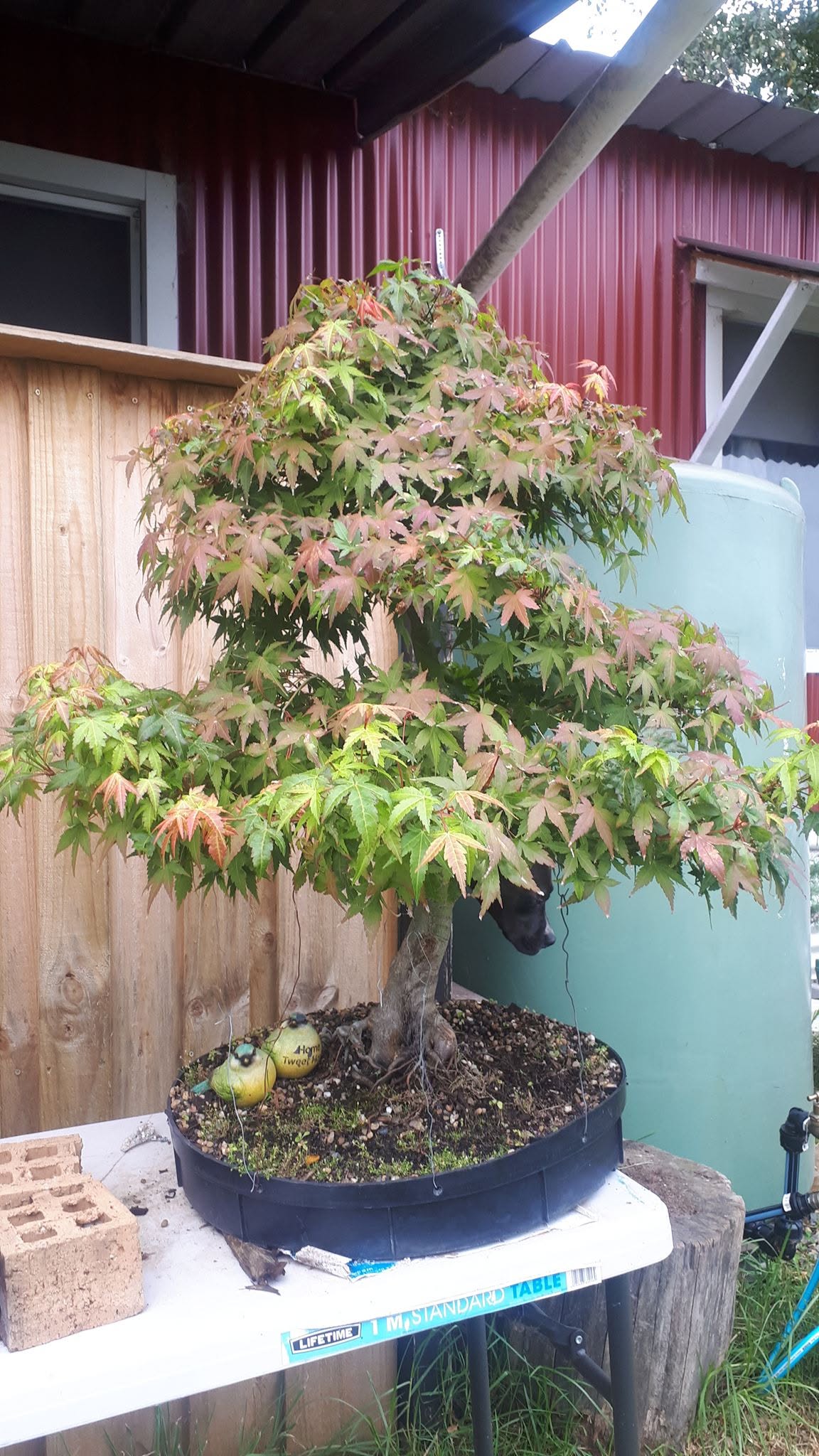
The Japanese maple bonsai is one of the most breathtaking living art forms a gardener can pursue. Grown from one of the most celebrated ornamental trees — this bonsai variety presents delicate, palmate leaves, brilliant seasonal colour, and gracefully fine branching structure.
Unlike many bonsai species that demand technical expertise before any beauty emerges, the Japanese maple offers visual reward early — its foliage alone is stunning even on a young specimen. Whether displayed indoors or on a patio, it commands immediate attention.
Brief History of the Japanese Maple Bonsai
Bonsai as an art form traces its roots to ancient China, where it was known as penjing (盆景), meaning “tray scenery.” It was introduced to Japan around the 6th century CE and gradually developed into its own refined tradition.
Acer palmatum has been cultivated in Japan for over 1,200 years. The tree is deeply embedded in Japanese aesthetics, particularly the concept of mono no aware — the bittersweet awareness of impermanence. The maple’s brilliant autumn display embodies this principle perfectly.
The use of Japanese maple specifically as a bonsai subject became widespread during the Edo period (1603–1868), when Japanese horticulture flourished. Today, specimens collected from mountainous regions of Japan — known as yamadori — are among the most valued bonsai in the world.
According to the National Bonsai Foundation (USA), some Japanese maple bonsai on public display are over 150 years old, a testament to what diligent care can achieve.
Species and Varieties Suitable for Bonsai
Not every Japanese maple cultivar is equally suited to bonsai culture. Some varieties are particularly prized for their compact growth, small leaf size, or vivid colour.
Acer palmatum (Japanese Maple)
This is the standard species and the most widely used. Its leaves naturally reduce well under bonsai cultivation, and it tolerates pruning with resilience.
Acer palmatum ‘Deshojo’
This is personally one of my favourites. It produces striking crimson-red foliage in spring that gradually mellows to green in summer, then erupts again in autumn. It is exceptionally popular among bonsai enthusiasts.
Acer palmatum ‘Kiyohime’
A dwarf cultivar with naturally small leaves — ideal for smaller bonsai sizes. Its leaves turn golden yellow in autumn.
Acer palmatum var. dissectum (Threadleaf Maple)
Known for its deeply cut, lacy leaves and weeping habit. It is more challenging to style into classical bonsai forms but can produce remarkably elegant results.
Acer buergerianum (Trident Maple)
While technically a different species, it is closely related and frequently grouped with Japanese maple bonsai. It is more beginner-friendly due to its greater tolerance for root pruning and drought.
ALSO READ: 15 Stunning Dwarf Japanese Maple Varieties (With Pictures and Growing Tips)
Growing Conditions and Environment
The following are key conditions for growing a Japanese maple bonsai.
Light Requirements
Japanese maple bonsai thrive in full morning sun with afternoon shade, particularly in climates with hot summers. In temperate climates, full sun throughout the day is generally acceptable and even beneficial.
Direct, intense summer sun can scorch the delicate leaves — especially in varieties like ‘Deshojo’. A location receiving 4–6 hours of direct sunlight daily is often ideal.
Temperature and Dormancy
This is a temperate species and requires a period of winter dormancy. Without it, the tree weakens over time. Dormancy is triggered by shortening daylight hours and cooling temperatures.
In USDA Zones 5–7, the tree may need protection from frost below -10°C (14°F). In Zones 8–9, winter dormancy still occurs, though temperatures rarely reach dangerous lows.
Do not keep Japanese maple bonsai in heated indoor spaces year-round. They are not tropical trees. I have seen many trees decline simply because their owners refused to let them go dormant in winter.
Humidity
Japanese maples prefer moderate to high humidity. In dry climates or during heated indoor winters, place the pot on a humidity tray filled with water and gravel. Misting the foliage can help, though it should be done in the morning to prevent fungal issues.
Soil Composition
Getting the soil right is foundational. Japanese maple bonsai require excellent drainage combined with adequate moisture retention.
A recommended bonsai soil mix for Japanese maples:
- Akadama – 50% (Japanese fired clay for water retention and structure)
- Pumice – 25% (improves drainage and aeration)
- Decomposed granite or Kiryu – 25% (improves drainage)
Avoid standard potting compost as the primary component. It retains too much moisture and compacts over time, depriving roots of oxygen.
The soil pH should remain slightly acidic, ideally between 5.5 and 6.5. This closely mirrors the natural forest soils of the Japanese highlands where the tree evolved.
Watering Japanese Maple Bonsai
Watering is the most critical skill in bonsai care — and the most commonly misunderstood. Japanese maples prefer consistent moisture but cannot tolerate waterlogged roots.
Water thoroughly when the top layer of soil begins to dry slightly. In hot summer months, this may mean watering once or even twice daily. In cooler months, watering every 2–3 days may be sufficient.
Always water until water flows freely from the drainage holes. This ensures the entire root mass receives moisture and flushes accumulated salts.
Never let the root ball dry out completely. Japanese maples are less drought-tolerant than many other bonsai species. A single episode of severe dryness can cause leaf scorch, branch dieback, or worse.
Fertilising
Japanese maples benefit from regular feeding during the growing season. A balanced fertiliser supports healthy growth and vibrant foliage colour.
Recommended fertilising schedule:
- Early spring – High nitrogen fertiliser to support the flush of new growth
- Summer – Balanced fertiliser (equal N-P-K ratio) to sustain growth without excessive extension
- Late summer/early autumn – Low nitrogen, higher phosphorus and potassium to harden growth and prepare for dormancy
- Winter – No fertilising required during dormancy
Organic fertilisers such as biogold pellets — widely used in Japanese bonsai culture — are gentle and release nutrients slowly, reducing the risk of root burn.
According to research from the Royal Botanic Gardens, Kew, balanced nutrient provision correlates with improved autumn colour intensity in Acer species, which is an important factor for display bonsai.
Repotting Japanese Maple Bonsai
Repotting refreshes the soil and controls root growth. Young Japanese maple bonsai (under 10 years) should be repotted every 2–3 years. Older, more established specimens can go 3–5 years between repottings.
The best time to repot is late winter to early spring, just as buds begin to swell but before full leaf break. This timing minimises stress on the tree.
Steps for repotting:
- Remove the tree carefully from its pot.
- Comb out the roots using a root hook.
- Prune back up to one-third of the root mass, focusing on long, circling roots.
- Clean the pot thoroughly or use a new pot.
- Place a mesh over drainage holes, add a thin layer of fresh soil.
- Position the tree and fill around roots with fresh bonsai soil.
- Water thoroughly and place in a sheltered, shaded location for 2–4 weeks.
Avoid repotting when the tree is stressed, diseased, or during periods of extreme heat or cold.
Pruning and Styling Techniques
Pruning is where bonsai becomes art. Shaping a Japanese maple bonsai requires patience, a clear vision, and knowledge of the tree’s growth habits.
Structural Pruning
Structural pruning is best performed in late winter, while the tree is dormant and leafless. At this stage, the branch structure is fully visible, making design decisions easier.
Remove crossing branches, branches growing downward, and any that detract from the overall design. Always cut back to a fork or bud, using clean, sharp tools to prevent tearing.
Maintenance Pruning
During the growing season, pinch or trim new shoots to 2–3 leaf pairs once they have extended. This encourages finer ramification — the development of dense, delicate secondary and tertiary branching that is so admired in mature specimens.
Do not prune Japanese maples in autumn as the cuts heal poorly in cooler temperatures and may become entry points for disease.
Defoliation
Defoliation — the deliberate removal of leaves mid-season — is a technique used to promote smaller leaf size and increase ramification. It is typically performed once, in early summer, only on healthy, vigorous trees.
Not all trees should be defoliated. Weak or recently repotted trees should never undergo defoliation, as it places significant stress on the plant.
Wiring
Japanese maple branches are relatively brittle compared to conifers. Use aluminium wire rather than copper, as it is gentler and less likely to bite into the bark.
Wire in autumn or winter when leaves have dropped and the branches are most flexible. Check wired branches regularly — Japanese maple bark scars easily if wire is left on too long.
ALSO READ: 8 Japanese Maple Tree Garden Ideas: A Complete Guide
Common Bonsai Styles for Japanese Maple
Japanese maple’s elegant form lends itself to several classical bonsai styles:
- Moyogi (Informal Upright) – The most common and forgiving style. The trunk tapers upward with gentle, natural curves. This is generally the best starting style for beginners.
- Chokkan (Formal Upright) – A perfectly straight trunk with symmetrical branching. This demands exceptional material from the outset and is less commonly achieved with Japanese maple.
- Kengai (Cascade) – Branches and foliage fall dramatically below the pot rim, mimicking a tree on a cliff edge. The Japanese maple’s weeping cultivars are particularly suited to this style.
- Yose-ue (Forest Planting) – Multiple trees planted together in a shallow tray to create a miniature woodland scene. Forest plantings using Japanese maple are among the most visually compelling in bonsai, particularly in autumn.
- Literati (Bunjin) – A sparse, elegant style with a slender, dynamic trunk. Advanced and highly artistic.
Pests and Diseases (Problems)
The following are some of the challenges you may face growing the Japanese maple bonsai.
Aphids
Aphids are among the most common pests on Japanese maple bonsai. They cluster under leaves and at new shoot tips, sucking sap and potentially transmitting viral diseases.
Treatment: Spray with insecticidal soap or neem oil. Introduce natural predators such as ladybirds (ladybugs) where possible.
Scale Insects
Scale insects appear as small bumps on branches and stems. They are easy to overlook until populations are significant.
Treatment: Remove manually with a soft brush, then apply horticultural oil. Systemic insecticides may be required for severe infestations.
Verticillium Wilt
This soilborne fungal disease (Verticillium dahliae) causes sudden wilting and branch dieback. It enters through roots and blocks the tree’s vascular system. According to the University of California Agriculture and Natural Resources, Verticillium wilt is one of the most serious diseases affecting Acer species.
There is no cure for Verticillium wilt. Remove and destroy affected branches immediately, sterilise tools, and avoid reusing contaminated soil.
Powdery Mildew
A fungal condition that appears as a white, powdery coating on leaves. It is favoured by humid conditions with poor air circulation.
Treatment: Improve airflow around the tree, reduce overhead watering, and apply a sulphur-based fungicide.
Root Rot
Usually caused by overwatering or poorly draining soil. Roots become brown, mushy, and eventually die.
Prevention is the best cure. Use well-draining bonsai soil and water only when needed. If root rot is found during repotting, trim affected roots, dust with fungicide, and replant in fresh, clean soil.
ALSO READ: 7 Common Japanese Maple Bark Problems and How to Fix
Winter Care and Dormancy
Winter care is arguably the most misunderstood aspect of Japanese maple bonsai management — particularly for growers in warm climates.
The tree must go dormant. This is non-negotiable for long-term health. However, the roots — being exposed in a pot rather than insulated in the ground — are more vulnerable to extreme cold than those of a garden-grown maple.
In zones where temperatures drop below -5°C (23°F) for extended periods, protect the pot by:
- Placing it in an unheated garage, shed, or cold greenhouse
- Burying the pot in a garden bed up to the rim
- Wrapping the pot (not the tree) with horticultural fleece or bubble wrap
Do not bring the tree into a heated home. Warm indoor temperatures will break dormancy prematurely and exhaust the tree’s stored energy before spring properly arrives.
Water the tree sparingly during dormancy — enough to prevent the root ball from desiccating, but not so much as to encourage root rot in the cold.
Pot Selection
The choice of pot is an artistic decision, not merely a practical one. A well-chosen pot completes the composition and elevates the bonsai from a potted plant to a work of art.
For Japanese maple bonsai, consider the following:
- Colour: Earth tones — grey, tan, unglazed terracotta — work well for green-leafed varieties. A dark navy or slate glaze can complement red-leafed forms beautifully.
- Shape: Oval or rectangular pots with clean lines suit the maple’s elegance. Avoid overly ornate pots that compete with the tree.
- Depth: Japanese maples have moderate root systems. A pot depth roughly equal to the trunk diameter at the base is a useful starting guideline.
- Material: Unglazed stoneware allows gas exchange through the pot walls, benefiting root health.
Quality handmade Japanese or Chinese bonsai pots can be expensive, but they last indefinitely and genuinely enhance the artistic value of the display.
Propagation Methods
Japanese maple bonsai can be propagated by several methods:
From Seed
Growing from seed is the most time-consuming path — it can take 8–15 years to develop a tree of any bonsai merit. However, it offers the opportunity to develop ideal nebari (surface roots) and trunk taper from the very beginning.
Seeds require cold stratification — a period of cold and moist conditions mimicking winter — before they will germinate. Soak seeds for 24 hours, then place in moist peat in a sealed bag in the refrigerator for 60–90 days before sowing in spring.
From Cuttings
Semi-hardwood cuttings taken in early summer have a reasonable success rate. Using a rooting hormone powder significantly improves strike rates. Keep cuttings in a humid environment until roots develop (typically 4–8 weeks).
Air Layering
Air layering is an excellent technique for developing bonsai material with excellent nebari from the outset. A section of a desirable branch is encouraged to root while still attached to the parent tree.
The University of Florida IFAS Extension provides detailed guidance on air layering techniques for woody ornamentals, including maples.
Nursery Stock
Purchasing nursery-grown Acer palmatum — particularly those with interesting trunk movement — is the most practical route for most hobbyists. Start with a nursery specimen 2–5 years old for the best balance between raw material and development time.
Displaying Japanese Maple Bonsai
The display of a bonsai tree is considered as important as its cultivation in traditional Japanese aesthetics.
Japanese maple bonsai are ideally displayed on a stand (tokonoma) that elevates the tree to approximately eye level when seated. The stand should be simple and unobtrusive, drawing attention to the tree rather than itself.
Seasonal display is particularly meaningful with this species. In spring, the fresh, bright new foliage can be displayed with a small accent planting of wild grasses. In autumn, the fiery reds and oranges of the maple leaves can stand alone — no accent is needed.
Avoid cluttered backgrounds. A plain wall or natural screen allows the tree’s silhouette and colour to dominate.
Beginner Tips: What I Wish I Had Known
Having spent considerable time with Japanese maple bonsai, there are a few lessons I consider particularly valuable for those starting out:
- Do not rush styling. The worst thing a beginner can do is over-prune a young tree in an attempt to create instant bonsai. Let the tree build strength first.
- Water more carefully than you think necessary. Most beginners overwater in winter and underwater in summer. Check the soil before watering — not the calendar.
- Learn the dormancy requirement. I have spoken with many frustrated growers whose trees declined year after year because they kept them in warm indoor environments through winter. Cold dormancy is not optional.
- Start with nursery stock, not seeds. Seeds are rewarding long-term but will test a beginner’s patience beyond reasonable limits.
- Join a local bonsai club. The knowledge shared informally among experienced growers is often more practical and immediately applicable than anything found in books.
Conclusion
The Japanese maple bonsai is, without question, a tree worth dedicating years — perhaps a lifetime — to understanding and cultivating. It rewards patience with extraordinary beauty at every season.
It is a living tree, not a decoration. It responds to care, repays attention, and asks only that its fundamental needs — light, water, nutrients, and the cold rest of winter — be consistently met.
For the beginner, it offers enough visual reward to sustain motivation through the learning curve. For the advanced practitioner, it offers endless refinement — of ramification, of leaf size, of the slow, deliberate thickening of the trunk over decades.
Few plants in the world offer this depth of engagement. That, I believe, is why the Japanese maple bonsai has endured as an art form for over a thousand years.
References
- Royal Horticultural Society (RHS) – Growing guide and cultivar database for Japanese maple: https://www.rhs.org.uk/plants/acer/palmatum/details
- University of Florida IFAS Extension – Bonsai propagation and care guides for woody ornamentals: https://edis.ifas.ufl.edu/publication/EP001
- University of California Agriculture and Natural Resources (UC ANR) – Verticillium Wilt of shade trees and ornamentals: https://ipm.ucanr.edu/PMG/PESTNOTES/pn74122.html
- National Bonsai Foundation (USA) – Collections and historical documentation: https://www.bonsai-nbf.org
- Missouri Botanical Garden – Acer palmatum plant finder with hardiness and ecology data: https://www.missouribotanicalgarden.org/PlantFinder/PlantFinderDetails.aspx?taxonid=242627
- University of Vermont Extension, Plant Science – Soil-nutrient-colour relationships in ornamental maples: https://www.uvm.edu/extension/mastergardener

Tim M Dave is a gardening expert with a passion for houseplants, particularly cacti and succulents. With a degree in plant biology from the University of California, Berkeley, he has vast experience in gardening. Over the years, he has cultivated a vast collection of desert plants and learned a great deal about how to grow and care for these unique companions.