30 Types of Christmas Trees: (Names with Pictures)
Every December, millions of families face the same happy dilemma: which tree deserves a spot in the living room? I have stood in enough tree lots, cold hands wrapped around a cup of cider, to know this decision matters more than people expect.
The right tree holds its needles. It smells the way Christmas should smell. It survives clumsy toddlers and overly ambitious ornament collections. The wrong tree sheds by December 20th and leaves you vacuuming needles into February.
This guide covers 30 types of Christmas trees, real and artificial, so you can pick with confidence. I have grouped them by category: firs, spruces, pines, cedars and cypresses, and artificial varieties, because that is how growers and buyers actually think about them.
Why Tree Type Actually Matters
Every year, between 25 and 30 million real Christmas trees are sold in the United States alone, according to the National Christmas Tree Association and USDA survey data. That is a lot of living rooms, and a lot of very different trees.
Species selection affects four things: needle retention, fragrance, branch strength, and shape. A family with heavy glass ornaments needs a tree with stout branches. A household chasing that classic piney scent wants a different species entirely.
In 2022, U.S. Christmas tree farms harvested more than 14.5 million trees, generating $553 million in sales, according to the USDA’s Economic Research Service. Oregon and North Carolina alone accounted for more than half of that harvest.
Knowing your options is not just trivia. It shapes how your tree looks, smells, and lasts through the season.
Fir Trees: The Classic Christmas Choice
Firs dominate the Christmas tree market for good reason. Their needles are soft, their shape is naturally full, and most hold onto their needles far longer than pines.
1. Fraser Fir
Fraser fir is often called the “Cadillac of Christmas trees.” It is native to the high elevations of North Carolina and named after the botanist John Fraser.
I love how sturdy the branches are. They hold ornaments without bending, and the tree keeps a tidy, symmetrical shape. North Carolina State Extension notes that 96% of the state’s Christmas tree production is Fraser fir, and the state ranks second nationally in total trees harvested.
2. Noble Fir
Noble fir is Oregon’s pride. More than half of all Christmas trees sold in Oregon are Noble firs, according to Oregon State University Extension. Growers sometimes call it the “King of Christmas Trees.”
Its branches are evenly spaced and remarkably strong, which makes it a favorite for heavy ornaments and thick garlands.
3. Douglas Fir
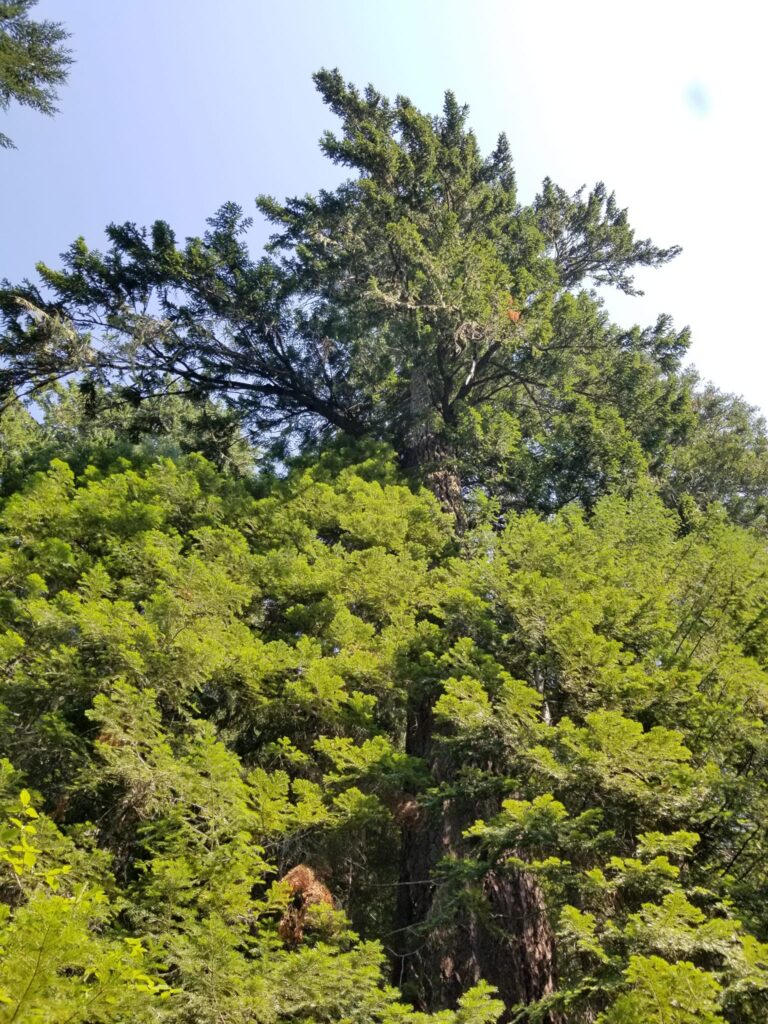
Technically not a true fir at all. Its hyphenated name (Douglas-fir) is a hint, since botanists have historically classified it as a pine, spruce, and hemlock at different points. Its scientific name is Pseudotsuga menziesii.
Douglas-fir has been the top-selling Christmas tree species in the United States since the 1920s. The needles release a sweet scent when crushed, and the soft foliage sticks out in all directions from the branch.
4. Balsam Fir
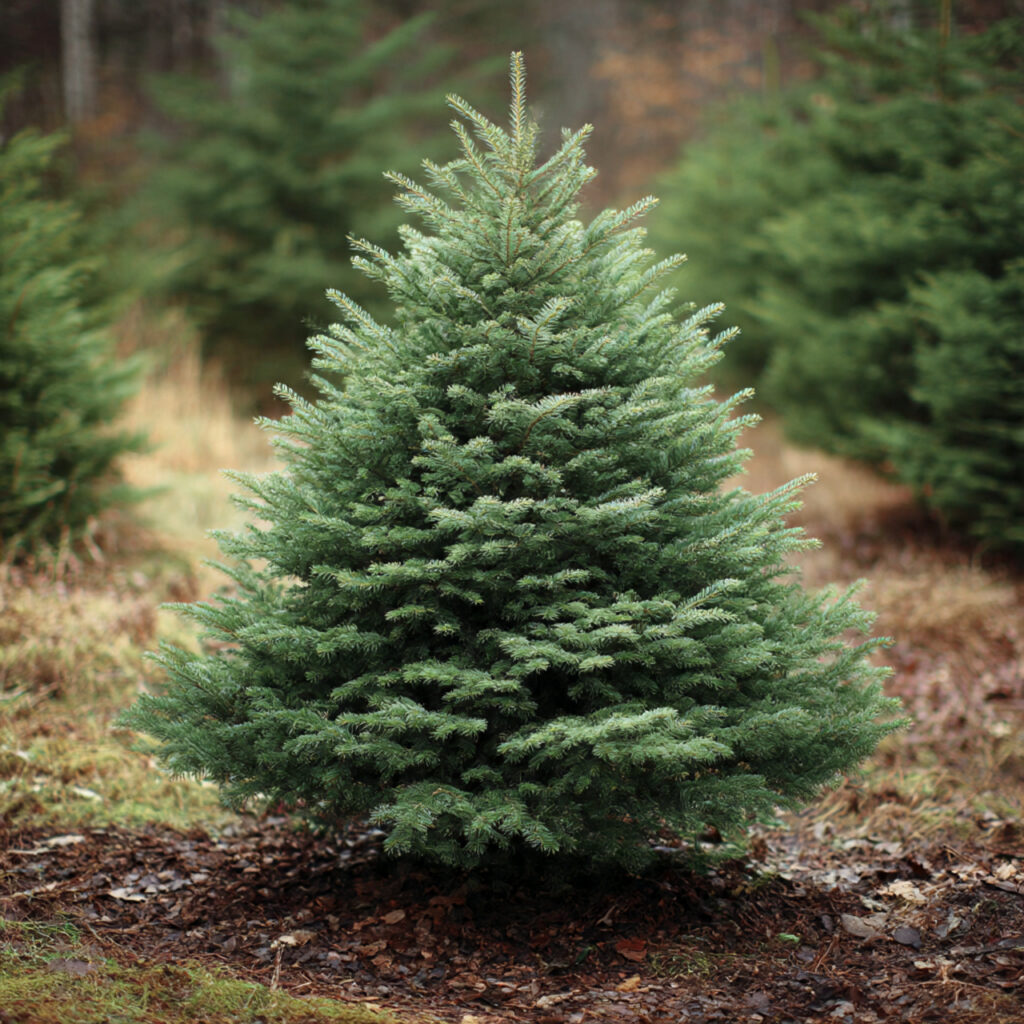
Balsam fir is the tree many people picture when they think of a New England Christmas. Dark green needles, a strong pine fragrance, and a narrow, elegant shape define this species.
It is a top pick in Wisconsin, which produces over 2 million trees annually, many of them balsam fir, per USDA regional data.
5. Grand Fir
Grand fir is known as the most fragrant Christmas tree species available. Its glossy, dark green needles grow in two flat rows, giving each branch a lush, feathery look.
It thrives from British Columbia down through Idaho and Montana, and remains a major species in those states even though it plays a smaller role in Oregon.
6. Nordmann Fir
Nordmann fir is Europe’s answer to the Fraser fir. It holds its needles exceptionally well and rarely drops them even in a warm, dry room.
Oregon State Extension notes Nordmann fir can stay fresh through the entire month of December if watered properly, making it a smart pick for early shoppers.
7. Turkish Fir
Turkish fir shares many traits with Nordmann fir, since the two species are closely related. Dark, glossy needles and excellent keepability make it a rising favorite in commercial lots.
Growers in the Pacific Northwest increasingly plant Turkish fir because it tolerates a wider range of soil and climate conditions than some native species.
8. Canaan Fir
Canaan fir grows naturally in the Canaan Valley of West Virginia, giving it a hardiness that many firs lack. It combines the soft needles of Fraser fir with the strong branches of balsam fir.
It has become popular with growers who want a species that adapts well to less-than-perfect soil conditions.
9. Concolor Fir
Also called white fir, Concolor fir stands out for one surprising reason: it smells like citrus when the needles are crushed. Long, soft, silvery-blue needles give it a distinctive look on the lot.
North Carolina Extension lists it among the species grown in the state’s diversified Christmas tree industry.
10. Korean Fir
Korean fir is a smaller, ornamental option often used as a tabletop tree. Its purple cones stand upright, adding visual interest even before decorating begins.
It suits apartments and smaller homes where a 7-foot tree simply will not fit.
11. Shasta Fir
Shasta fir is a natural hybrid between noble fir and red fir, found mostly in the mountains of Northern California and southern Oregon. It shares noble fir’s strong branch structure.
Growers value it as a genetic bridge species, useful for breeding programs aimed at improving needle retention.
12. Trojan Fir
Trojan fir is a variety closely related to Nordmann and Turkish fir, sometimes grouped together by growers because of overlapping characteristics. It offers similarly strong needle retention.
It remains less common commercially but appears in specialty seed orchard research in the Pacific Northwest.
Spruce Trees: Bold Color, Classic Shape
Spruce trees bring a distinct silvery or blue-green color to the tree lot. They are known for a strong, traditional conical shape, though their needles are sharper to handle than fir needles.
13. Colorado Blue Spruce
This is the tree with that unmistakable silvery-blue color. It holds its shape beautifully and is often planted as a living Christmas tree that gets replanted after the holidays.
NC State Extension lists Colorado blue spruce among the most popular living tree species, though it is not well suited to warmer, low-elevation climates.
14. Norway Spruce
Norway spruce is one of the oldest Christmas tree traditions in Europe. It has a classic pyramid shape and drooping branchlets that give it graceful movement.
Its needle retention is weaker than firs, so it suits people who put their tree up closer to Christmas Day itself.
15. White Spruce
White spruce offers dense branching and a pleasant, if faint, scent when the needles are crushed. It grows well in colder northern climates.
Wisconsin and Michigan both include white spruce in their regional Christmas tree mix, alongside balsam fir and Scotch pine.
16. Black Hills Spruce
Black Hills spruce is a slower-growing variety of white spruce, prized for its dense, compact form. It needs less shearing than many other species to keep a full shape.
It is a regional favorite across the northern Great Plains states.
17. Serbian Spruce
Serbian spruce has a narrow, elegant silhouette with two-toned needles, dark green on top and silvery underneath. It is less common on tree farms but valued for its graceful appearance.
Botanical gardens often grow it as an ornamental specimen tree outside of its Christmas tree use.
18. Red Spruce
Red spruce grows naturally in the Appalachian mountains and has occasionally served as the National Christmas Tree in Washington, D.C. A tree named “Ruby,” harvested from Pisgah National Forest, held that honor in a recent year, according to North Carolina Cooperative Extension.
Its dense, dark green needles create a rich, full look.
Pine Trees: Fragrance and Flexibility
Pines bring long needles, strong branches, and often the boldest fragrance of any Christmas tree category.
19. Scotch Pine
Scotch pine (also called Scots pine) was America’s top-selling Christmas tree for decades before Douglas-fir and noble fir gained ground. Its needles stay attached even after the tree dries out, which made it a reliable choice for real tree lots.
Michigan continues to grow it in large volumes today.
20. White Pine
Eastern white pine has soft, flexible needles in bundles of five, each nearly three inches long. NC State Extension describes it as having a softer texture with more pliable limbs than Fraser fir.
It suits households with light ornaments, since its branches bend under heavier decorations.
21. Virginia Pine
Virginia pine is a popular choose-and-cut farm tree in the American South. Its twisted needles grow in pairs, about two inches long, and its branches are notably stout.
It carries a rich, traditional pine fragrance that many people associate with childhood memories of the holidays.
22. Austrian Pine
Austrian pine has dark green, stiff needles and a sturdy structure. It tolerates poor soil and urban pollution better than most other Christmas tree species, making it useful in regions with harsher growing conditions.
23. Monterey Pine
Monterey pine grows well in milder coastal climates, including parts of California, New Zealand, and Australia, where colder-climate firs struggle to survive. It offers a bright green color and soft texture.
24. Eastern Hemlock
Not a true pine, but often grouped with softwood conifers used for Christmas trees. Eastern hemlock has short, flat needles and delicate, drooping branches, giving it a graceful, almost lace-like appearance.
Oregon State University’s “Trees to Know” identification guide lists it among alternative species people sometimes choose from native forests.
Cedars, Cypresses, and Southern Favorites
Warmer climates cannot easily grow firs and spruces, so growers in the South and Southwest turned to cedars and cypresses instead.
25. Leyland Cypress
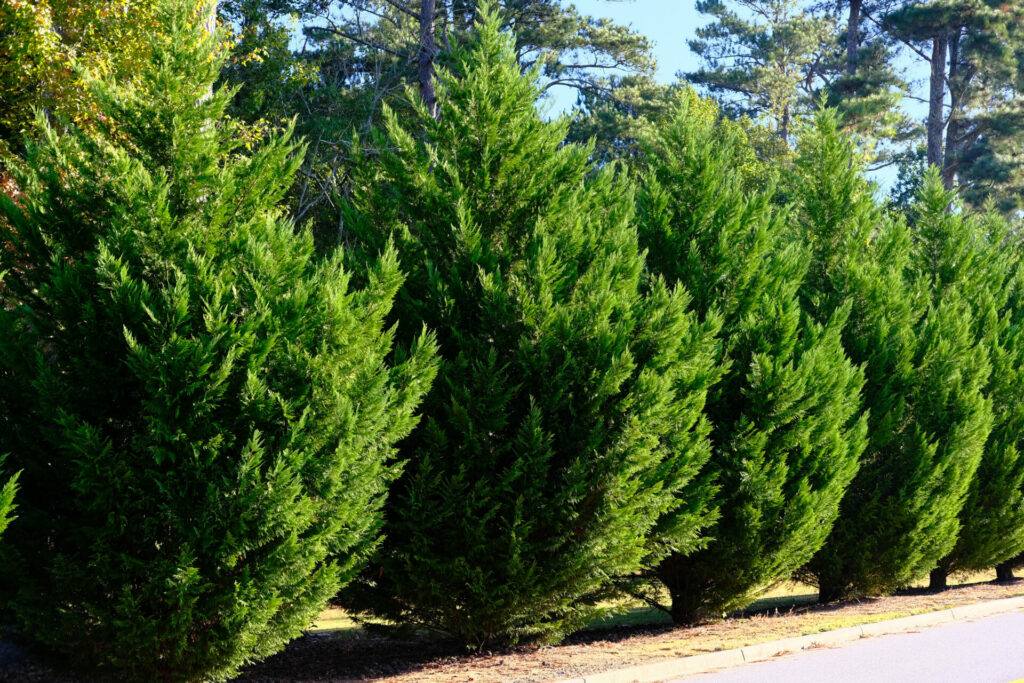
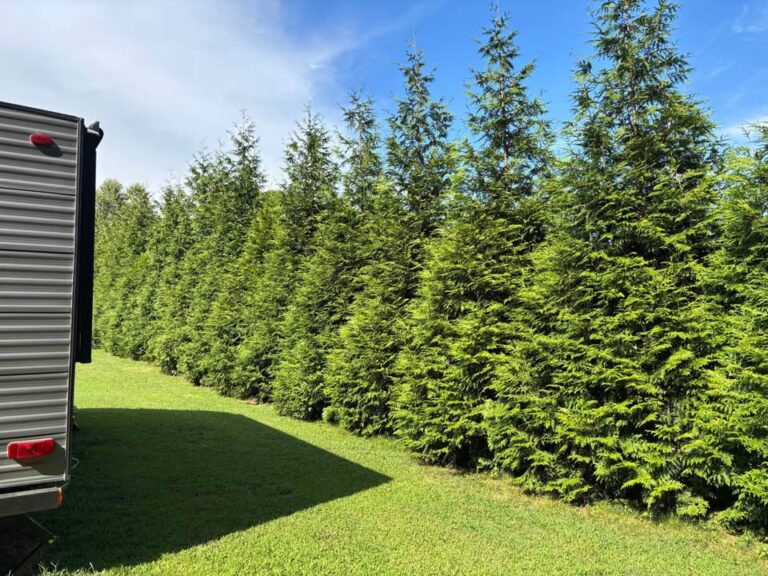
Leyland cypress has become the go-to choice across the American South. It has no strong pine scent, which some allergy-sensitive families actually prefer, and it tolerates heat and humidity far better than firs.
NC State Extension recommends it specifically for the Piedmont and Coastal Plain regions, where mountain species cannot survive.
26. Eastern Redcedar
Eastern redcedar was, for generations, the traditional Christmas tree of the American South before Fraser fir shipping made mountain trees widely available. Its foliage grows in soft sprays rather than distinct needle rows.
Many older adults specifically request it, remembering it from their own childhood holidays.
27. Arizona Cypress
Varieties like ‘Blue Ice’ and ‘Carolina Sapphire’ bring a striking silvery-blue color to warm-climate tree farms. Arizona cypress needs more shaping than mountain species to keep its Christmas tree form, but it thrives where firs cannot.
28. Green Giant Arborvitae
Green Giant arborvitae grows extremely fast and adapts to a wide range of soils. It is increasingly used as an alternative living Christmas tree, since it can later be planted as a privacy hedge in the yard.
Specialty and Artificial Christmas Trees
Not every household wants a farm-grown conifer. Two more categories round out the full picture.
29. Norfolk Island Pine
Norfolk Island pine is a houseplant, not a true pine, often sold as a small tabletop Christmas tree during the holidays. It suits apartments, dorm rooms, or anyone wanting a tree that survives well past January as an indoor plant.
30. Artificial (PVC and PE) Christmas Trees
Artificial trees remain a massive part of the market. Around 80% of artificial Christmas trees sold worldwide are manufactured in China, according to the U.S. Commerce Department, and roughly 12 to 15 million are purchased annually in the United States.
Modern versions use PE (polyethylene) branch tips molded from real tree branches for a more realistic look, mixed with PVC for fuller, denser sections. A good one lasts 10 to 15 years with proper storage.
How to Choose the Right Type for Your Home
I always tell people to start with three questions before falling in love with a shape on the lot.
First, think about your climate. Firs and spruces need cooler conditions; cedars and cypresses handle heat far better.
Second, consider your ornaments. Heavy glass pieces need firm branches like noble fir or Fraser fir. Lightweight ornaments work fine on softer pines.
Third, factor in scent sensitivity. Leyland cypress and artificial trees offer a nearly scent-free option, while Virginia pine and balsam fir deliver the strongest traditional fragrance.
A Quick Word on Freshness
A fresh tree should feel flexible, not brittle. NC State Extension recommends lifting the tree a couple of inches and dropping it on the cut end. If green needles fall off in noticeable numbers, the tree is already drying out.
Trees are perishable, much like produce. Buying local, from a choose-and-cut farm or a reputable lot, generally means fresher stock than trees shipped long distances.
Environmental Notes Worth Knowing
Real Christmas trees are a renewable, fully recyclable crop. For every tree harvested, growers typically plant one to three seedlings the following spring, according to industry data compiled by the National Christmas Tree Association.
There are close to 350 million Christmas trees currently growing on American farms, quietly absorbing carbon dioxide for years before they ever reach a living room. Farmland dedicated to Christmas tree production also preserves nearly 300,000 acres of open, undeveloped space nationwide, per Farm Bureau market analysis.
Frequently Asked Questions
What is the most popular type of Christmas tree in the United States? Douglas-fir has held the title of top-selling species since the 1920s, though Fraser fir and Noble fir now compete closely for the top spot in premium markets, especially on the East and West Coasts.
Which Christmas tree has the best needle retention? Fraser fir, Nordmann fir, and Noble fir are consistently ranked highest for needle retention. Oregon State Extension notes that Nordmann and Turkish firs can stay fresh through the entire month of December if watered daily.
What type of Christmas tree smells the strongest? Balsam fir and Virginia pine are known for the boldest, most traditional pine fragrance. Grand fir is often cited as the most fragrant species overall, with a scent some describe as citrusy when crushed.
Which Christmas tree is best for hot or humid climates? Leyland cypress, eastern redcedar, and Arizona cypress tolerate southern heat far better than firs and spruces, which prefer cooler mountain climates.
How long does a real Christmas tree actually last? With daily watering and placement away from heat sources, most fresh-cut trees stay vibrant for four to five weeks. Species like Nordmann fir and Fraser fir tend to outlast softer-needled trees like Norway spruce.
Is a real or artificial Christmas tree better for the environment? Real trees are biodegradable and recyclable, and farms replant one to three seedlings for every tree harvested. Artificial trees, mostly made of PVC plastic, can last 10 to 15 years, which offsets their manufacturing footprint if reused for many seasons.
Comparing Tree Categories at a Glance
Firs offer the softest needles and the best overall needle retention, which explains their dominance in premium markets.
Spruces bring bold color and a classic silhouette, though their sharper needles and faster drying time make them better suited to trees purchased closer to Christmas Day.
Pines deliver the strongest traditional fragrance and the sturdiest branches for heavy ornaments, at the cost of a less uniform shape compared to firs.
Cedars and cypresses thrive where cold-climate species cannot, giving southern households a genuine option for a locally grown, farm-fresh tree.
Understanding these broad patterns makes the choice easier before you even step onto the lot. From there, personal preference, budget, and regional availability usually decide the final pick.
Final Thoughts
Thirty options is a lot to weigh, but the decision usually comes down to three things: how it smells, how it holds up, and how it looks under your lights. Personally, I never get tired of that first breath of balsam or Fraser fir when the box comes off the tree stand.
Whatever you choose this year, buy fresh, water daily, and enjoy the tradition. It is one of the small rituals that makes the season feel real.
References
- North Carolina State University Extension. Selecting the Right Tree – Christmas Trees. https://christmastrees.ces.ncsu.edu/christmastrees-selecting-the-right-tree/
- North Carolina State University Extension. North Carolina Christmas Trees by the Numbers. https://christmastrees.ces.ncsu.edu/christmastrees-nc-christmas-trees-by-the-numbers/
- North Carolina Cooperative Extension, Union County Center. How to Select a Christmas Tree. https://union.ces.ncsu.edu/2022/12/how-to-select-a-christmas-tree/
- Oregon State University Extension Service. Developing Quality Christmas Trees in the Pacific Northwest (PNW 684). https://extension.oregonstate.edu/catalog/pnw-684-developing-quality-christmas-trees-pacific-northwest-0
- Oregon State University Newsroom. ‘Trees to Know’ Guidebook Helps Identify Christmas Trees. https://news.oregonstate.edu/news/%E2%80%98trees-know%E2%80%99-guidebook-helps-identify-christmas-trees
- United States Department of Agriculture, Economic Research Service. 2022 Census of Agriculture: U.S. Tree Farms Cut More Than 14.5 Million Christmas Trees in 2022. https://www.ers.usda.gov/data-products/charts-of-note/chart-detail?chartId=110530
- Oregon Department of Agriculture. Introducing… Oregon Christmas Trees. https://www.oregon.gov/oda/agriculture/Documents/Product%20Sheets/OREGON%20CHRISTMAS%20TREES.pdf

Tim M Dave is a gardening expert with a passion for houseplants, particularly cacti and succulents. With a degree in plant biology from the University of California, Berkeley, he has vast experience in gardening. Over the years, he has cultivated a vast collection of desert plants and learned a great deal about how to grow and care for these unique companions.