35 Different Types of Banana Plants: Identification, With Pictures
I have spent years pulling suckers out of soggy pots, losing leaves to a stray cold snap, and still coming back for more banana plants. There is something about that huge, paddle-shaped leaf unfurling in the morning sun that never gets old.
If you are chasing the same feeling, or simply trying to pick the right variety for your yard, this guide walks you through 35 types of banana plants, from supermarket staples to rare botanical curiosities.
Bananas are not trees. They are the largest herbaceous flowering plants on Earth, built from tightly rolled leaf sheaths instead of wood.
According to the Missouri Botanical Garden, a single pseudostem lives long enough to flower once, fruit once, and then die back so new suckers, called pups, can take over. That single fact changes how you should plan, prune, and harvest every variety below.
Banana is also the fourth-largest fruit crop in the world, trailing only apples, citrus, and grapes, and roughly 80 percent of all bananas grown globally are actually starchy cooking types, not the sweet dessert fruit found in supermarkets.
Keep that in mind as you read; “banana” covers a wildly diverse plant family, and the differences between entries below go far beyond just peel color.
I have tried to give each variety enough real detail that you could walk into a nursery, point at a tag, and know exactly what you are getting into. That means origin, appearance, flavor or ornamental use, and the specific conditions each one needs to actually thrive rather than just survive.
What Makes a Banana a Banana?
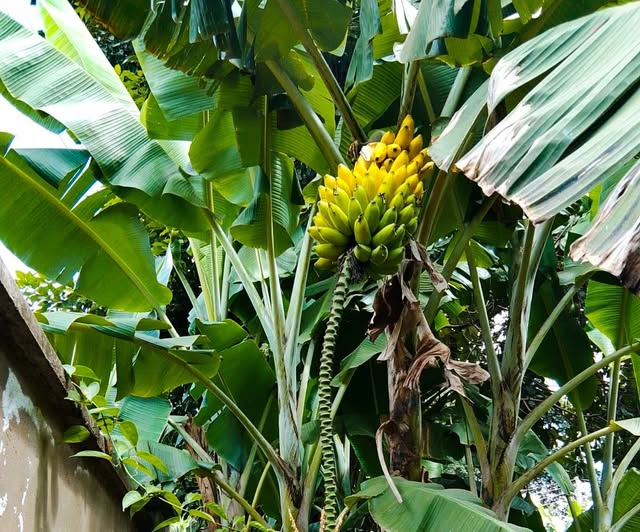
Every cultivated banana belongs to the genus Musa, and almost all edible types trace back to two wild, seeded ancestors: Musa acuminata (the “A” genome) and Musa balbisiana (the “B” genome). Botanists label cultivars by genome combination, so you will see AAA, AAB, ABB, and even AAAB in the descriptions below.
This matters for care. AA and AAA cultivars tend to be sweeter and less cold-hardy, since they lean almost entirely on the more delicate acuminata parent. B-genome hybrids handle stress, drought, and poor soil far better, which is why plantains and cooking bananas dominate subsistence farming across Africa and Asia rather than the dessert types found in Western supermarkets.
Ploidy, the number of chromosome sets a cultivar carries, also shapes performance. Diploids (AA, AB, BB) tend to be smaller and more delicate, while the triploids (AAA, AAB, ABB) that dominate commercial and home cultivation generally grow more vigorously and yield larger bunches.
Tetraploids like AAAB are rarer and usually the product of deliberate breeding programs aimed at disease resistance.
With that groundwork laid, here are the 35 types of banana plants worth knowing, grouped roughly from common edible cultivars to rare ornamentals and fiber species.
1. Dwarf Cavendish (Musa acuminata, AAA)
This is the banana most people picture first. Dwarf Cavendish stays compact at 6 to 8 feet, which makes it perfect for patios, containers, and small backyards where a full-size fruiting banana simply will not fit.
Its short stature does not mean small fruit. Bunches can still weigh 40 pounds or more, and the individual fingers taste identical to the yellow bananas sold in nearly every grocery store worldwide, since this cultivar and its taller Cavendish relatives supply most of the global export market.
Growing tips: Give it full sun, rich well-drained soil, and consistent moisture. It thrives in USDA zones 9 to 11 and tolerates a container life better than most fruiting types, though pots should hold at least 15 to 20 gallons of soil once mature.
Fertilize every two to three months with a balanced feed rich in potassium and nitrogen, and expect fruit within 10 to 15 months of planting a healthy sucker. Watch closely for banana borer weevils, which target the base of the pseudostem, and remove old leaves promptly to reduce hiding spots.
2. Grand Nain (Musa acuminata, AAA)
Grand Nain is a taller Cavendish subgroup cultivar, reaching 10 to 12 feet, and it is the variety most large commercial plantations actually export under the generic “Cavendish” label sold in stores.
Its extra height means a longer, heavier flowering stalk, and the fruit is nearly identical in taste to Dwarf Cavendish, just produced in larger volume per plant. Growers who want maximum yield from a single mat often prefer Grand Nain over the dwarf form for this reason.
Growing tips: It needs more wind protection than the dwarf form because of its height and top-heavy fruit bunch. Stake young plants in exposed locations, mulch heavily to retain root moisture, and space mats at least 8 to 10 feet apart to prevent competition for nutrients.
Because the plant is tall, harvesting the bunch safely usually requires two people: one to support the stalk while the other cuts. Plan for this in advance so the heavy bunch does not fall and bruise the fruit.
3. Williams Banana (Musa acuminata, AAA)
Williams is another Cavendish-type export cultivar, prized for reliable yields and a classic sweet flavor close to what most shoppers expect from a supermarket banana.
It closely resembles Grand Nain in height and growth habit, and the two are frequently confused in nursery catalogs, but Williams is generally considered slightly hardier against minor cold snaps and slightly more consistent in fruit size across a bunch.
Growing tips: Feed every two to three months with a balanced fertilizer high in potassium. Potassium deficiency is the single most common reason home-grown Cavendish types under-perform, showing up first as yellowing along leaf margins.
Keep the soil pH between 5.5 and 7.0 for best nutrient uptake, and irrigate deeply once or twice weekly rather than with frequent shallow watering, which encourages shallow, weak root systems.
4. Valery Banana (Musa acuminata, AAA)
Valery is a slightly more vigorous Cavendish selection, often chosen where soil fertility is inconsistent because it tolerates a broader nutrient range than Grand Nain or Williams.
Historically, Valery was one of the replacement cultivars planted after Gros Michel collapsed under Panama disease, since it shares Cavendish resistance to the original strain of that pathogen while still producing commercially acceptable fruit quality.
Growing tips: Space plants at least 8 feet apart. Crowded mats compete for water and light, which delays flowering and shrinks the fruit bunch considerably over successive growing cycles.
Limit each mat to three pseudostems of different ages, and remove excess suckers promptly. This single practice does more for fruit size and quality than almost any other maintenance step.
5. Gros Michel (Musa acuminata, AAA)
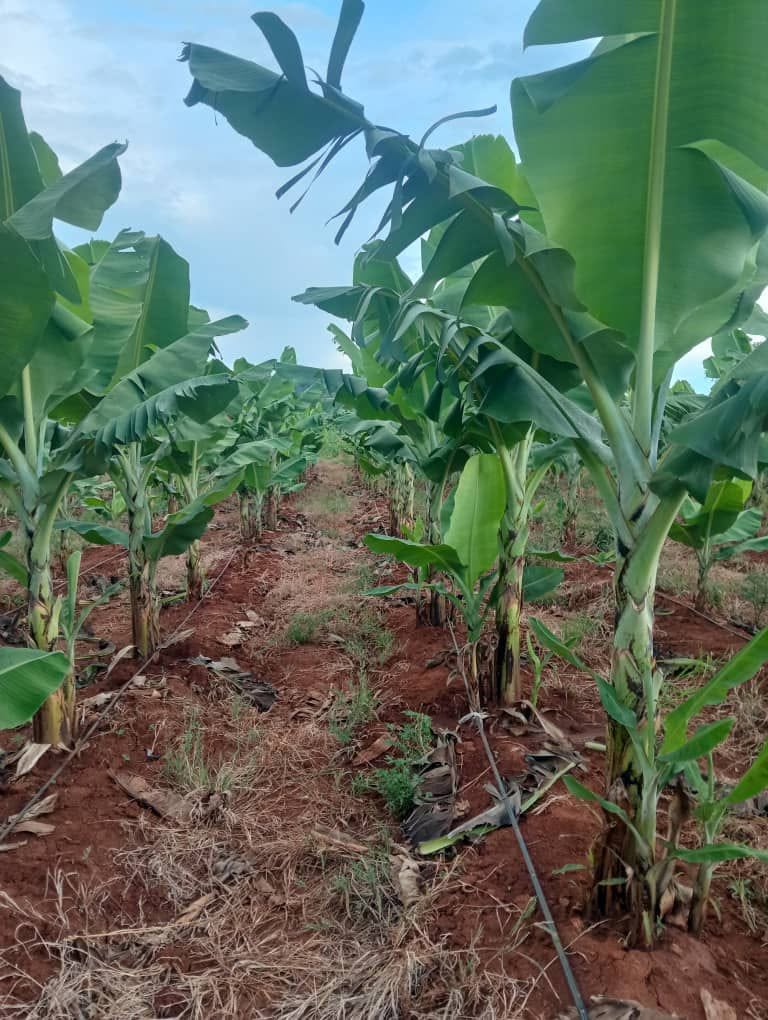
Gros Michel was the original commercial banana before Panama disease wiped out plantations worldwide in the mid-20th century, forcing the industry to switch to the more resistant Cavendish group. I still think its richer, more aromatic flavor beats the modern standard, and many growers who have tasted both agree.
The fruit is larger, sweeter, and reportedly more resistant to bruising during shipping than Cavendish, which is part of why its commercial loss was such an economic blow. Small pockets of Gros Michel still survive in home gardens and isolated plantations where Panama disease has not reached.
Growing tips: It is highly susceptible to Fusarium wilt (Panama disease), so plant only certified disease-free rhizomes or tissue-cultured stock in fresh, untainted soil, ideally somewhere with no history of banana cultivation.
Avoid replanting Gros Michel in soil where any banana has previously died from wilting symptoms, since the fungus persists in soil for decades. Good drainage and avoiding overwatering also reduce root stress that can invite infection.
6. Lady Finger / Sucrier (Musa acuminata, AA)
Lady Finger produces small, thin-skinned, intensely sweet fruit and is widely considered one of the best-tasting home garden bananas by Florida extension horticulturists, often compared favorably to candy for its concentrated sugar content.
The fingers are noticeably smaller than Cavendish fruit, rarely thicker than a finger’s width, but the flavor is far more pronounced. This is a diploid AA cultivar, meaning it carries only two chromosome sets rather than three, which contributes to its more delicate growth habit.
Growing tips: It grows fast and fruits within 10 to 15 months, often faster than triploid cultivars under warm conditions. Protect it from frost since AA diploids are generally less cold-tolerant than triploid types like Cavendish.
Because the plant and fruit are smaller, Lady Finger performs well in tighter garden spaces and large containers, but it still needs full sun and rich, moisture-retentive soil to produce a full-sized bunch.
7. Manzano / Apple Banana (Musa acuminata × balbisiana, AAB)
Manzano bananas carry a distinct tangy, apple-like note and a firmer texture than standard dessert bananas, which is exactly how the cultivar earned its common name across the Caribbean and Central America.
The fruit is shorter and chunkier than Cavendish, with a peel that often develops black speckling even while the flesh remains firm and only just ripe. It is a favorite in home gardens because it holds up to overripening better than most sweet cultivars.
Growing tips: This hardy hybrid tolerates USDA zones 8b through 11 and handles average garden soil well, making it one of the easier fruiting types for beginners who do not want to fuss over soil amendments.
It grows 6 to 12 feet tall depending on conditions, fits comfortably into a mixed tropical border, and generally shows good resistance to wind damage compared with taller Cavendish subgroup cultivars.
8. Blue Java / Ice Cream Banana (Musa acuminata × balbisiana, ABB)
Nicknamed the “ice cream banana” for its creamy, custard-like texture and faint vanilla flavor, Blue Java also happens to be one of the more cold-hardy edible types available, which explains its growing popularity among home growers outside the deep tropics.
The unripe peel carries a genuine pale blue-silver bloom, a rare trait among bananas, which fades to ordinary yellow as the fruit matures. The flesh stays white and notably smooth, closer in texture to soft-serve than a typical banana.
Growing tips: Plants reach 10 to 15 feet and can produce bunches weighing 40 to 60 pounds, so allow generous space and sturdy support for the flowering stalk as fruit develops.
Give it deep, infrequent watering and a wind-sheltered spot, and mulch generously in cooler climates since the root system’s cold tolerance is one of this cultivar’s biggest selling points over standard Cavendish types.
9. Red Banana (Musa acuminata, AAA)
Red bananas have a reddish-purple peel and a sweeter, slightly raspberry-like flesh compared to standard yellow types, with a noticeably softer, creamier texture once fully ripe. They are smaller and more delicate to transport, which is why they rarely show up outside specialty grocers despite being widely grown in home gardens.
The plant itself often carries a reddish tint through the pseudostem and midrib, making it visually distinct even before fruit appears, and many gardeners grow it partly for this ornamental quality.
Growing tips: Red banana plants prefer full sun and consistently moist, fertile soil, reaching heights of 10 to 15 feet under good conditions. They are more sensitive to cold than Cavendish types, so mulch the root zone before winter in any zone below 9b.
Harvest the bunch while fingers are still plump and green-tinged rather than waiting for full color change on the plant, since red bananas ripen best off the stalk in a shaded, cool space.
10. French Plantain (Musa × paradisiaca, AAB)
The true plantain is starchy, low in sugar when green, and central to cuisines across West Africa, Latin America, and the Caribbean. Nutritionally, it behaves more like a potato than a dessert fruit, and it is almost always cooked rather than eaten raw.
Plants grow tall, often 15 to 25 feet, with broad leaves and a heavy, angular fruit bunch that can weigh considerably more than a comparable Cavendish bunch. The fruit itself is longer and thicker-skinned than dessert bananas, with a texture that stays firm even after boiling or frying.
Growing tips: Plantains handle heavier, less fertile soils better than dessert bananas, and generally show no serious disease problems according to horticultural cultivar records, though anthracnose and mosaic virus can appear under stressed conditions.
Harvest fingers while still green for cooking as tostones or plantain chips, or let them ripen fully to black for a much sweeter, dessert-like preparation. Either stage requires cutting the whole hand from the stalk before ripening on the counter.
11. Saba Banana (Musa balbisiana hybrid, BBB)
Saba is a cooking banana enormously popular in the Philippines, prized for its blocky, angular fruit and starchy, slightly tangy flesh that holds up remarkably well to frying, boiling, or grilling without turning mushy.
Unlike most triploids on this list, Saba carries a BBB genome, meaning all three chromosome sets come from the tougher Musa balbisiana parent rather than the sweeter acuminata. This genetic makeup is a large part of why it tolerates neglect so well.
Growing tips: This B-genome-dominant hybrid tolerates poorer soils and more general neglect than most dessert types, making it a solid choice for low-maintenance tropical gardens or beginner growers in marginal soil.
It grows to a moderate 10 to 20 feet and produces heavy, boxy bunches. Because the fruit is almost always cooked, harvest can happen well before full ripeness without any loss of culinary value.
12. Rajapuri Banana (Musa acuminata × balbisiana, AAB)
Rajapuri is unusually cold-hardy for a fruiting hybrid and is popular among growers pushing the limits of what USDA zone 8 can support, since it recovers from light frost damage faster than most AAB cultivars.
The fruit is medium-sized with a pleasant, mild sweetness, and the plant itself is comparatively compact, rarely exceeding 8 to 10 feet, which suits gardeners who want real fruit production without a towering plant dominating the yard.
Growing tips: It fruits reliably in under a year in warm climates, sometimes as quickly as 9 to 12 months from a healthy sucker. In marginal zones, grow it in a large container you can move indoors before the first frost.
Keep soil consistently moist through the growing season and reduce watering somewhat in cooler months to avoid root rot while the plant is semi-dormant.
13. Namwah / Pisang Awak (Musa acuminata × balbisiana, ABB)
Namwah is one of the most drought- and cold-tolerant edible bananas, widely grown across Southeast Asia, with a honey-sweet flavor whether eaten raw, fried, or used in traditional desserts like banana in coconut milk.
The plant is a vigorous, heavy-suckering type, meaning it produces new pups quickly and can fill a garden bed faster than more restrained cultivars. This makes it useful for gardeners who want a continuous, self-renewing harvest with minimal replanting.
Growing tips: It tolerates partial shade better than most cultivars, which makes it a useful choice for gardens without full-day sun exposure, though fruit quality and bunch size improve noticeably in full sun.
Thin suckers regularly to prevent the mat from becoming overcrowded, since Namwah’s fast-suckering habit can quickly turn into a dense thicket that reduces airflow and invites fungal problems.
14. Goldfinger / FHIA-01 (Hybrid, AAAB)
Goldfinger was bred specifically for disease resistance and can reportedly yield 55 to 80 pounds of sweet, tart, apple-toned fruit per bunch, according to horticultural cultivar records, making it one of the more productive disease-resistant options available to home growers.
It was developed by the Honduran Foundation for Agricultural Research (FHIA) as part of a broader effort to create bananas resistant to both Panama disease and black Sigatoka, two of the most destructive banana pathogens worldwide.
Growing tips: UF/IFAS Extension in Miami-Dade County recommends Goldfinger as one of the top disease-resistant cultivars for home landscapes, particularly where Sigatoka leaf spot is a recurring problem in humid climates.
Beyond disease resistance, Goldfinger also shows notably high wind tolerance and cold tolerance once established, making it a strong all-around choice where multiple environmental stresses are a concern.
15. Praying Hands Banana (Musa × paradisiaca, AAB)
This novelty cultivar fuses two adjacent hands of fruit together, creating a shape that genuinely resembles praying hands. It is not just a gimmick; the fruit carries a subtle vanilla note when fully ripe, and individual fingers can be carefully separated from one another once ripe.
Known regionally by names like “Uht Kapakap” in Micronesia and “Inabaniko” in the Philippines, this variety has spread among collectors largely because of its conversation-piece appearance as much as its flavor.
Growing tips: Give it wind protection since the fused fruit clusters are heavier and more prone to snapping in storms than standard bunches, and stake the flowering stalk if your garden sees regular strong wind.
It grows to a moderate height similar to other AAB cultivars and shows reasonable overall wind resistance for the plant itself, even though the fruit cluster needs extra care.
16. Burro Banana (Musa acuminata × balbisiana, ABB)
Burro bananas are short, squarish, and tangy with a hint of lemon, and they hold their shape well when cooked, which is why they show up often in Latin American kitchens both fried and boiled.
The fruit is noticeably more angular than a standard Cavendish banana, almost rectangular in cross-section, and the flesh stays firmer for longer after ripening, making it forgiving for growers who cannot harvest at the exact right moment.
Growing tips: This variety tolerates cooler nights better than pure AAA types, thanks to its ABB genome leaning more heavily on the hardier balbisiana parent. Keep soil consistently moist but never waterlogged.
It typically reaches 10 to 15 feet and benefits from the same three-to-four pseudostem pruning rule that applies across most cultivars, keeping the mat from becoming overcrowded and unproductive.
17. Orinoco Banana (Musa acuminata × balbisiana, ABB)
Orinoco is a triangular-fruited plantain-banana hybrid that is remarkably cold-tolerant and a common backyard choice across the southern United States, where growers value its ability to bounce back after a light freeze.
The fruit can be eaten raw when fully ripe, though many growers prefer to cook it while still slightly green, treating it more like a plantain than a dessert banana. Its triangular fruit shape makes it easy to distinguish from rounder Cavendish-type bananas.
Growing tips: It can survive brief dips below freezing at the root zone if heavily mulched, even though the top growth will die back and need to regrow from the base the following season.
Because top growth regularly dies back in marginal climates, do not expect annual fruiting in zones cooler than 9a; instead, treat it as a multi-year investment that eventually produces once the mat is well established.
18. Mysore Banana (Musa acuminata × balbisiana, AAB)
Mysore is a major cultivar across India, valued for being only slightly susceptible to Sigatoka leaf spot, according to University of Florida disease-resistance data, which places it among the most naturally resilient banana cultivars grown for eating.
The fruit has a mildly tart, aromatic flavor distinct from Cavendish sweetness, and the plant is a reliable performer across a range of soil types, which explains its enduring popularity in South Asian home gardens and small farms.
Growing tips: Because of its natural disease tolerance, Mysore needs less fungicide intervention than Cavendish or Pome types, even in humid climates prone to fungal pressure.
It grows to a moderate height, generally under 15 feet, and responds well to standard banana fertilizing practices: a balanced feed every two to three months during active growth.
19. Silk Banana (Musa acuminata × balbisiana, AAB)
Silk bananas have a soft, almost silky texture and a rich, slightly tart-sweet flavor. They carry intermediate susceptibility to Sigatoka, sitting between the hardy Mysore and the vulnerable Cavendish group in terms of disease pressure.
This cultivar is closely related to the Pome group and is sometimes confused with it in casual conversation, though Silk bananas are generally considered to have a more delicate, aromatic flavor profile than standard Pome types.
Growing tips: Plant in fertile, well-drained soil and monitor leaves regularly during humid seasons for early leaf-spot symptoms, since intermediate susceptibility means problems can develop faster than with more resistant cultivars.
Regular sanitation, meaning prompt removal of old or diseased leaves, goes a long way toward keeping Silk banana healthy without heavy reliance on fungicide treatments.
20. Bluggoe Banana (Musa balbisiana hybrid, ABB)
Bluggoe is a robust, starchy cooking banana with intermediate disease resistance, grown widely across the Caribbean as a staple cooking ingredient, often boiled, mashed, or fried much like a green plantain.
The plant is a heavy producer, generally more forgiving of inconsistent care than dessert-type cultivars, and it has long served as a reliable food source in regions where soil quality and rainfall are unpredictable.
Growing tips: It tolerates a wider soil pH range than dessert cultivars, which is useful if your garden soil runs alkaline or you are unsure of your exact soil chemistry.
Give it full sun and adequate spacing from neighboring mats, since Bluggoe tends to sucker vigorously and can quickly form a dense clump if suckers are not thinned periodically.
21. Musa basjoo (Japanese Fiber Banana)
Musa basjoo is, by a wide margin, the most cold-hardy banana available to home gardeners. The Missouri Botanical Garden lists it as hardy to USDA zone 5, since its roots survive winter lows near -10°F when well mulched, a trait no other variety on this list comes close to matching.
Despite the common name, recent research places its true origin in Sichuan, China, rather than Japan, though it has long been cultivated there for its fiber, which is woven into a traditional cloth. The fruit itself is small, green, and inedible, so this species is grown entirely for foliage and cold tolerance.
Growing tips: Plant in organically rich, medium-moisture soil in full sun with some afternoon shade in intense heat. In zones 5 through 8, expect the top growth to die back each winter and regrow from the roots in spring.
In warmer zones 9 and 10, Musa basjoo stays essentially evergreen year-round and can eventually flower, producing its characteristic pendulous, torpedo-shaped bloom. Watch for aphids, spider mites, mealybugs, and scale, and note it is susceptible to anthracnose, wilt, and mosaic virus.
22. Musa ornata (Flowering Banana)
Grown purely for ornamental impact, Musa ornata produces orange-yellow flowers wrapped in pink bracts and small, seedy, mostly inedible fruit, native to northern India where it grows as a robust herbaceous perennial.
The plant is comparatively slow to mature, sometimes taking 10 to 20 years to reach its full height of around 9 feet with a 7-foot spread, and container specimens cut back each fall may never flower at all.
Growing tips: It is not frost-hardy, so gardeners outside the tropics typically grow it in containers that come indoors before the first cold snap, treating it much like a large tropical houseplant during winter months.
Watch for aphids, spider mites, mealybugs, thrips, and fruit flies, especially indoors or in greenhouse conditions, and note that it shares the same susceptibility to anthracnose, wilt, and mosaic virus common across the Musa genus.
23. Musa coccinea (Scarlet Banana)
Musa coccinea is grown almost exclusively for its brilliant red-orange flower bracts rather than its fruit, and it brings genuine drama to a tropical border with color that few other foliage plants can match.
Native to Vietnam and southern China, this compact species stays smaller than many ornamental Musa relatives, making it a reasonable choice for gardeners who want striking color without a towering plant dominating the landscape.
Growing tips: It prefers warm, humid conditions with bright but filtered light and resents both drought and waterlogging in equal measure, so consistent, moderate moisture is the key to keeping it healthy.
Because it is frost-tender, treat it as a container plant in any climate outside the true tropics, bringing it under cover whenever temperatures threaten to drop below the mid-40s Fahrenheit.
24. Musa velutina (Pink Velvet Banana)
This is one of the loveliest ornamental species you can grow, staying under 6 feet with fuzzy, bright pink fruit that self-peels when ripe. The catch: the fruit is packed with hard black seeds, so it is grown for looks, not eating, despite technically being edible.
The plant produces creamy flowers with pink bracts in late summer, quickly followed by clusters of the signature velvety pink fruit, and it is native to the East Himalaya through Assam region, where it grows in subtropical forest margins.
Growing tips: According to NC State Extension, Musa velutina is hardy to zone 7b through 11 and has no serious pest or disease problems, making it genuinely low-maintenance compared with most fruiting cultivars.
It attracts birds and butterflies to the garden and performs well in containers or in-ground plantings alike, tolerating full sun and typical garden soil without much fuss.
25. Blood Banana / Musa acuminata ‘Zebrina’
Blood banana earns its name from dramatic maroon-red splashes across dark green leaves, making it one of the most photographed ornamental Musa cultivars and a favorite for adding bold color to a mixed tropical planting.
Unlike many purely ornamental species, Zebrina can still produce edible fruit under the right conditions, though it is grown almost universally for its foliage rather than any fruiting potential, since the bananas themselves are small and unremarkable.
Growing tips: It grows well in large containers and rewards bright, indirect light indoors during colder months, then moves outside once nights stay reliably above 50°F.
Rotate the container periodically if grown indoors so the leaves develop evenly, and repot every year or two as the rhizome expands, since crowded roots noticeably slow leaf coloration and overall vigor.
26. Musa sikkimensis (Darjeeling Banana)
Native to the cool foothills of the Himalayas, Darjeeling banana is unusually cold-tolerant for an ornamental species and often displays striking maroon leaf undersides, particularly in cultivars selected for garden use like ‘Red Tiger.’
Its natural habitat at higher elevation means it experiences cooler summer temperatures than most Musa species tolerate well, which is precisely why it performs so reliably in temperate gardens where other bananas struggle through cool, damp summers.
Growing tips: It handles cooler summers better than most Musa species, which makes it a strong option for temperate gardens outside true tropical zones, particularly in maritime climates with mild but not scorching summers.
Give it rich, moisture-retentive soil and some shelter from harsh midday sun in warmer climates, since its Himalayan origin means it is adapted to filtered mountain light rather than intense equatorial sun.
27. Musa balbisiana (Wild Seeded Banana)
One of the two parent species behind nearly all cultivated bananas, Musa balbisiana grows wild across Tropical Asia and India and produces hard, seed-filled fruit that is not eaten fresh, though the plant itself has considerable ornamental and ecological value.
It has been introduced to Hawaii and other tropical regions beyond its native range, and its underground stems are sometimes eaten as a vegetable, while the male flower clusters and inner stem are used in curries across parts of its native distribution.
Growing tips: NC State Extension notes it tolerates extended flooding and a wide range of soil types, making it one of the toughest species on this list for wet, low-lying gardens where other bananas would struggle.
It grows into a substantial plant, 7 to 18 feet depending on conditions, and does best in full sun to partial shade with consistently moist, organically rich soil and protection from strong winds given its large paddle-shaped leaves.
28. Musa yunnanensis (Yunnan Banana)
A tall, waxy-leaved species that can reach 16 feet, Musa yunnanensis produces fruit favored by bats and birds far more than by humans, making it more of a wildlife-support planting than an edible crop in most garden settings.
Native to southern China, it is a relatively recently documented species that remains uncommon in general cultivation, appearing mostly in botanical collections and among specialist Musa enthusiasts rather than typical nurseries.
Growing tips: It prefers consistently humid conditions and moist, well-drained soil, and it establishes best when transplanted while young, since larger specimens can be slower to recover from root disturbance.
Because of its height and broad leaves, give it a sheltered position away from strong wind, and expect it to draw visiting bats and birds once fruiting begins, so plant it away from areas where fallen fruit debris would be inconvenient.
29. Musa ochracea
First formally described in 2011, Musa ochracea is a relatively recent botanical discovery from Southeast Asia known for unusual conical, off-red fruiting structures that give the plant an almost surreal, sculptural appearance in the garden.
Its late discovery reflects how much diversity still exists within the Musa genus even today, and it remains one of the least documented species on this list in terms of long-term cultivation data from home gardeners.
Growing tips: As a newer species in cultivation, stock can be hard to source; when you find it, treat it like other warm-climate ornamental Musa species with filtered light and steady moisture.
Expect slower establishment than common nursery cultivars, since propagation material is still relatively limited, and be prepared to source rhizomes or tissue-cultured plantlets from specialist tropical plant nurseries rather than big-box garden centers.
30. Musa itinerans
This wide-ranging wild species from southern China and Southeast Asia shows notable genetic diversity across its range, a fact that plant breeders have used in disease-resistance research aimed at strengthening commercial banana cultivars against emerging pathogens.
Because it spans such a broad natural range, from lowland tropical zones to cooler upland areas, individual populations of Musa itinerans can vary considerably in size, cold tolerance, and fruit characteristics depending on where the original stock was collected.
Growing tips: It tolerates a broad range of elevations and temperatures compared with many wild Musa species, so it adapts reasonably well to varied garden conditions within warm climates.
Give it standard Musa care, full sun, rich moist soil, and reasonable wind protection, and expect performance to vary somewhat depending on which regional population your particular specimen was sourced from.
31. Musa laterita (Orange-Bracted Banana)
Musa laterita produces striking orange-red bracts and is grown almost entirely as an ornamental accent plant in tropical and subtropical borders, valued for the way its color contrasts against typical garden greenery.
Native to Southeast Asia, it stays modest in size compared with many wild Musa relatives, which makes it easier to integrate into a designed garden bed rather than a dedicated tropical jungle planting.
Growing tips: It stays relatively compact, so it suits smaller garden beds better than towering species like Musa yunnanensis or Musa balbisiana, without sacrificing the bold tropical look gardeners plant bananas for in the first place.
Provide bright light, consistent moisture, and protection from frost, since like most ornamental Musa species it has little tolerance for temperatures near or below freezing.
32. Musa mannii (Dwarf Assam Banana)
Native to northeastern India, this dwarf species rarely exceeds a few feet in height, making it a popular choice for pot culture and small ornamental collections where space is at a genuine premium.
Its small size does not come at the expense of character; the plant still displays the classic Musa paddle-shaped leaves and can produce small, seedy fruit under the right conditions, though it is grown chiefly as a curiosity and collector’s item.
Growing tips: Because of its small size, Musa mannii dries out faster in containers than larger species, so check soil moisture more frequently during hot weather, especially in terracotta or unglazed pots.
Bright, indirect light and warm, humid air suit it best, and given its diminutive size it makes a genuinely practical indoor specimen where larger Musa species would quickly outgrow the space.
33. Musa thomsonii
A lesser-known wild species from the eastern Himalayan region, Musa thomsonii is primarily cultivated by collectors and botanical gardens rather than home growers, and detailed cultivation records remain relatively scarce.
Like its Himalayan relative Musa sikkimensis, it likely shows some tolerance for cooler temperatures compared with lowland tropical Musa species, though this has not been as extensively documented in horticultural literature.
Growing tips: Treat it like other Himalayan-origin Musa species: cooler nights, humid days, and protection from both harsh sun and standing water in the root zone.
If you can source it, expect to rely more on trial and observation than established guidelines, since this species has not been studied as thoroughly as commercially significant cultivars.
34. Musa textilis (Abaca / Manila Hemp)
Abaca is grown not for its fruit but for the exceptionally strong fiber in its leaf sheaths, historically used for rope, tea bags, and specialty paper. The Philippines remains the world’s leading producer of this fiber crop, supplying the majority of the world’s abaca fiber for both traditional and industrial applications.
The plant closely resembles an ornamental banana, with tall pseudostems and broad leaves, but growers harvest it by cutting the pseudostem down before fruiting diverts energy away from fiber production, treating it fundamentally differently from fruit-focused cultivars.
Growing tips: Abaca prefers rich, well-drained volcanic or loamy soil and high humidity, and commercial growers harvest the pseudostem for fiber rather than waiting for fruit, typically on a rotational cutting schedule.
Home growers interested in abaca purely as an ornamental specimen can simply let it grow and flower like any other banana, reserving the traditional fiber-stripping process for those specifically interested in fiber crafts.
35. Ensete ventricosum (Abyssinian / False Banana)
Technically not a true Musa, Ensete ventricosum belongs to the same family, Musaceae, and is a dietary staple in parts of Ethiopia, where the starchy pseudostem and corm, not the fruit, are fermented and eaten in a dish known locally as kocho.
The plant is a single, non-suckering specimen unlike true bananas, meaning it does not spread via pups the way Musa species do, and it must be grown from seed or division of an existing corm, which makes propagation somewhat slower.
Growing tips: UF/IFAS Gardening Solutions notes that Ensete tolerates cold better than many true bananas and is often grown purely for its bold, upright ornamental form rather than for food in most climates outside East Africa.
Give it full sun to partial shade and deep, fertile soil, and expect an especially dramatic single specimen rather than a spreading clump, since its non-suckering habit makes it more of a solitary landscape statement plant.
General Care Rules That Apply to Nearly Every Type
A few rules repeat across almost all 35 varieties, so I want to pull them out here rather than bury them in every entry.
Sunlight: Nearly every banana, edible or ornamental, wants six to eight hours of direct sun daily. Less light means slower growth and smaller fruit, though a handful of ABB hybrids like Namwah tolerate partial shade reasonably well.
Soil and water: Rich, well-drained, organically amended soil is the universal preference. Water deeply and less frequently rather than shallow daily sprinkles, since Musa root systems can extend nearly 5 feet laterally and up to 1.5 meters deep in good soil.
Temperature: Growth slows below 53°F and stalls entirely above 100°F, based on published cultivar data. Pseudostems are typically damaged below 33°F unless the species is specifically cold-bred, like Musa basjoo or Blue Java.
Fertilizing: Bananas are heavy feeders, and most home landscapes need supplemental fertilizer four to six times per year, particularly in sandy or nutrient-poor soils, using a balanced formula that includes adequate potassium.
Pruning the mat: Limit each planting to three or four pseudostems of different ages, roughly a mature fruiting stalk, a half-grown follow-up stalk, and one or two young suckers. Overcrowding delays flowering and shrinks bunch size, according to UF/IFAS Extension guidance.
One fruiting per stalk: Every pseudostem flowers and fruits exactly once, then it should be cut down and chopped into small pieces left as mulch so a new sucker can take over cleanly without competing with a dying stem.
Pest and disease watch: Across nearly every variety, keep an eye out for banana borer weevils, burrowing and spiral nematodes, and fungal issues like Sigatoka leaf spot and anthracnose, all of which are best managed through sanitation and disease-free planting material rather than reactive treatment.
Choosing the Right Banana for Your Garden
If you want fruit fast in a small space, Dwarf Cavendish or Lady Finger are the easiest entry points, since both fruit within about a year and tolerate container life without much fuss. If cold winters worry you, Musa basjoo or Blue Java will forgive far more than a tender Cavendish ever would.
For pure visual drama without any interest in eating the fruit, Musa velutina, Musa coccinea, or Blood Banana deliver the most color for the least effort. And if you are simply a plant collector at heart, working through wild species like Musa balbisiana, Musa itinerans, or Musa sikkimensis gives you a genuinely rare backyard collection that few neighbors could match.
If your goal is feeding a household rather than decorating a patio, plantains, Saba, and Bluggoe offer the most food value per square foot, since their starchy fruit stores and cooks far more like a staple crop than a snack.
Frequently Asked Questions
How many types of banana plants exist worldwide? The genus Musa includes roughly 70 to 83 recognized species, and when cultivated hybrids and cultivars are counted separately, the total number of named banana varieties runs into the hundreds.
Which banana variety is easiest for beginners? Dwarf Cavendish and Apple (Manzano) bananas are widely recommended by extension horticulturists as the most forgiving choices for new growers, thanks to compact size and tolerance for average garden conditions.
Can banana plants survive frost? Most tropical cultivars cannot, but Musa basjoo survives root temperatures down to -10°F when mulched, and several ABB hybrids like Blue Java and Orinoco tolerate brief cold snaps better than pure AAA dessert types.
Do all banana plants produce edible fruit? No. Many ornamental species, including Musa velutina, Musa ornata, and Musa coccinea, are grown for foliage and flowers rather than fruit, and their seeded fruit is generally unpleasant to eat.
Why does my banana plant die after fruiting? This is normal, not a sign of failure. Each pseudostem is genetically programmed to flower and fruit only once before dying back, while the underground rhizome sends up new suckers to continue the plant’s life cycle.
Final Thoughts
Thirty-five varieties is still only a fraction of what exists in the genus Musa, but it covers the ground most home gardeners, collectors, and curious readers actually care about. I always tell people the same thing: pick the banana that matches your climate first, your patience second, and your taste in fruit last. Get that order right, and almost any variety on this list will reward you.
References
- United States Department of Agriculture, PLANTS Database — Musa × paradisiaca classification profile: https://plants.usda.gov/home/classification/31069
- University of Florida IFAS Extension, EDIS Publication MG040/HS10 — Banana Growing in the Florida Home Landscape: https://ask.ifas.ufl.edu/publication/MG040
- University of Florida IFAS Gardening Solutions — Bananas: https://gardeningsolutions.ifas.ufl.edu/plants/edibles/fruits/bananas/
- Purdue University, Center for New Crops and Plant Products — Morton, J., Fruits of Warm Climates: Banana: https://www.hort.purdue.edu/newcrop/morton/banana.html
- Missouri Botanical Garden, Plant Finder — Musa basjoo: https://www.missouribotanicalgarden.org/PlantFinder/PlantFinderDetails.aspx?kempercode=d442
- North Carolina State University Extension Gardener Plant Toolbox — Musa acuminata: https://plants.ces.ncsu.edu/plants/musa-acuminata/
- North Carolina State University Extension Gardener Plant Toolbox — Musa basjoo: https://plants.ces.ncsu.edu/plants/musa-basjoo/

Tim M Dave is a gardening expert with a passion for houseplants, particularly cacti and succulents. With a degree in plant biology from the University of California, Berkeley, he has vast experience in gardening. Over the years, he has cultivated a vast collection of desert plants and learned a great deal about how to grow and care for these unique companions.