30 Types of Pineapple Plants: Identification, With Pictures
I have spent years pulling crowns off supermarket pineapples and sticking them in pots, just to see what would happen. Some grew into plain green rosettes. Others surprised me with pink and cream stripes. That curiosity is what pushed me to map out every pineapple type worth knowing.
This guide covers all 30 types of pineapple plants, both the fruit-bearing kinds and the purely ornamental ones. You will find origin stories, plant descriptions, fruit characteristics, and detailed growing and care tips for each one.
Quick fact: researchers recognize approximately 30 cultivars of Ananas comosus grown commercially across tropical and subtropical countries worldwide. That number is not a coincidence with our title. It is the real, documented scale of pineapple diversity.
Pineapple is also the third most cultivated tropical fruit after bananas and citrus, which explains why so many regional strains exist. Every growing culture shaped its own version of the plant, and I have tried to capture that history alongside the practical growing advice.
How Pineapple Varieties Are Classified
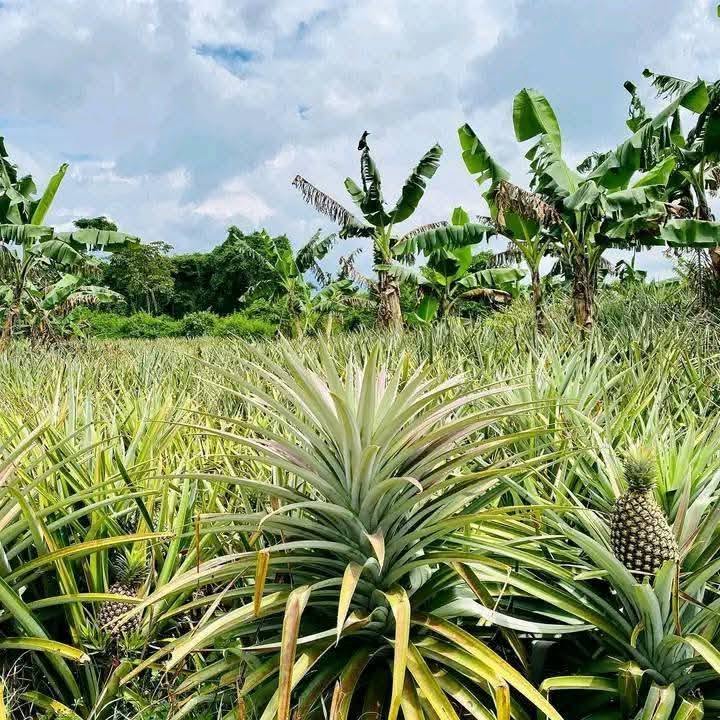
Before listing individual types, it helps to understand the framework. Commercially, pineapple cultivars are grouped into four main classes: Smooth Cayenne, Red Spanish, Queen, and Abacaxi, even though real variation exists inside each class.
A fifth class, Motilona or Perolera, is also commercially important in South America. I include it here because it explains several Colombian and Venezuelan varieties later on this list.
The Cayenne group alone accounts for roughly 90 percent of processing pineapple grown worldwide, which tells you how thoroughly one lineage has come to dominate the canning and juicing industries. The Queen group, by contrast, is prized mainly for fresh eating rather than processing.
Spanish-group cultivars carry lower sugar and acid than Cayenne or Queen types, which limits their appeal in premium fresh markets. Their real advantage is toughness: they tolerate poor soil, rough handling, and long transport better than almost anything else in the genus.
Separate from all of this sit the ornamental Ananas types, grown for foliage and decorative fruit rather than eating. I have grouped those toward the end of the article.
Botanically, pineapple is an herbaceous perennial, slow-growing and clump-forming, native to tropical South America, and belongs to the Bromeliaceae family. Every variety below shares that same basic biology, even when the fruit, leaf color, and spine pattern look nothing alike.
Part 1: Commercial and Edible Pineapple Varieties
1. Smooth Cayenne
This is the pineapple most people have actually eaten, whether they know its name or not. Smooth Cayenne dominates canned and fresh pineapple production around the globe, and has done so for well over a century.
The plant has no spines except occasionally at the leaf tip, which makes it far easier to harvest by hand than older spiny cultivars. Leaves grow in a dense, upright rosette, and a mature plant can reach one to two meters across.
The fruit is ovoid, medium-sized, weighing 1.5 to 2.5 kilograms, and it ripens gradually from base to top. That progressive color change is actually useful commercially, since pickers can judge ripeness at a glance from the field.
Flesh is firm, close-textured, juicy, pale-yellow to yellow, with acid ranging 0.5–1.0% and soluble solids between 12° and 16° Brix. That balance of sugar and acidity is exactly why it works so well for both canning and fresh slicing.
Growing tips: Give it full sun, well-drained sandy soil, and warm temperatures between roughly 20°C and 30°C. Because the plant is a poor producer of shoots and slips, commercial growers propagate it mainly by crowns, and home growers should do the same rather than waiting on suckers that may never appear.
Feed it lightly but regularly with a balanced fertilizer, since Smooth Cayenne responds well to nitrogen during early vegetative growth and to potassium as it approaches flowering. Expect fruiting roughly eighteen to twenty-four months after planting a crown.
2. Red Spanish
‘Red Spanish’ is the tough, travel-friendly cousin in the pineapple family. Historians trace its roots to the Caribbean, likely Hispaniola, from where Spanish colonizers spread it across Central and South America centuries ago. It carries a reputation for durability rather than sweetness.
The plant carries noticeably spiny leaves, shorter and stiffer than Smooth Cayenne’s, and grows into a medium-sized, hardy rosette that tolerates neglect better than most cultivated types.
The fruit itself is 2 to 4 pounds, pale-yellow fleshed, with a pleasant aroma and a distinctly squarish shape that made it easy to pack tightly for old-fashioned shipping routes. Flavor leans acidic and fibrous rather than delicately sweet.
Growing tips: Because the leaves are spiny, wear gloves during repotting or harvest; the tips can genuinely puncture skin. This variety tolerates poorer soil and more neglect than Smooth Cayenne, which is exactly why it remained popular for generations of small farmers who lacked irrigation infrastructure.
It also handles drought stress well once established, so avoid overwatering. Reduce watering frequency compared with sweeter, more delicate cultivars, and expect a longer time to maturity given its rugged, slow-growing nature.
3. Queen
‘Queen’ pineapples are smaller, sweeter, and more aromatic than the Cayenne group, and they carry a completely different growth habit. Historically, the Queen type traces back to Brazil before spreading to South Africa’s Natal region and Queensland, Australia, where it became a major fresh-market crop.
The plant itself is described as spiny, dwarf, and compact, with better cold and disease resistance than many other cultivars. That resilience makes it a favorite among home gardeners in borderline climates where a Smooth Cayenne might struggle.
Fruit is conical, deep yellow inside, and noticeably sweeter and more fragrant than Cayenne-type fruit, though smaller in overall size. The eyes tend to be deeper set, which makes peeling slightly more work.
Growing tips: Because ‘Queen’ plants stay compact, they suit container growing exceptionally well, even on a sunny apartment balcony. Keep soil consistently moist but never soggy, and expect a shorter, stockier plant than Cayenne types, rarely exceeding sixty centimeters in height.
Its improved cold tolerance means it can handle brief dips below what would stress a Cayenne plant, though it still cannot survive frost. Watch for its related cultivar, ‘Ripley Queen’, grown widely in Australia and closely related in appearance and care needs.
4. Natal Queen
A regional strain of the Queen group, ‘Natal Queen’ carries a story of migration. It is grown predominantly in South Africa, identified by small to medium, conical fruit with deep golden-yellow skin and vivid yellow flesh, and it remains one of the country’s premium dessert pineapples.
The flesh is crisp, very sweet, aromatic, and low in acid, with small, shallow eyes that make peeling considerably easier than most other cultivars on this list. Many South African growers consider it superior in flavor to anything grown for export.
The plant itself has narrow, spiny leaves and stays smaller overall than commercial Cayenne strains, giving it an almost ornamental appearance even before fruiting begins.
Growing tips: This variety rewards patience. It stays smaller than commercial Cayenne strains, so plant it where a compact rosette will not be crowded by faster-growing neighbors, and give it slightly acidic, sandy soil similar to South Africa’s Eastern Cape and KwaZulu-Natal growing regions.
Because the fruit is prized specifically for fresh eating, avoid harsh handling near harvest time; bruised Natal Queen fruit loses much of its market and eating appeal quickly.
5. Abacaxi (Pernambuco / Eleuthera)
I find this one genuinely delightful once you taste it fresh. ‘Pernambuco’, part of the wider Abacaxi group named for a region in Brazil, produces 1 to 2 kilogram fruit with pale yellow to white flesh that is sweet and melting, but poorly adapted for shipping.
That last point matters. This is a variety meant for the backyard, not the export container, and Brazilian growers have historically kept it close to local and regional markets rather than exporting it internationally.
The plant itself tends to be tall and somewhat lanky compared with Cayenne, with a looser rosette form, and the fruit shape is typically tall and cylindrical with unusually large, deep-set eyes.
Growing tips: Plant it if you intend to eat the fruit within your own household rather than store or transport it. Its short shelf life is the tradeoff for outstanding fresh flavor, so plan your harvest timing around immediate consumption.
Give it warm, humid conditions and avoid handling the fruit roughly, since the tender flesh bruises far more easily than Cayenne or Red Spanish. A humid greenhouse or sheltered patio spot suits it better than an exposed, windy garden bed.
6. MD-2 (‘Del Monte Gold’)
This is the pineapple sitting in most grocery stores today. MD-2, also branded ‘Del Monte Gold’, ‘Extra Sweet’, ‘Super Sweet’, or ‘Tropical Gold’ depending on the market, has largely replaced Smooth Cayenne in fresh export production over the past three decades.
Its leaves run about 3 feet long and are generally spineless except at the tip, growing into a fairly compact, manageable rosette compared with older field cultivars. The plant tolerates intensive fertilization programs well, which is part of why it became the global standard for commercial fresh-market growers.
A key commercial advantage is shelf life; industry sources note MD2 fruit can hold a shelf life of roughly 30 days, well beyond older cultivars, which is exactly why it succeeded in long-distance export markets stretching to Japan, Canada, and France.
Flesh is golden-yellow, notably low in acidity compared with Smooth Cayenne, and consistently sweet even when harvested slightly underripe for shipping. That predictability is precisely what made supermarket chains adopt it so widely.
Growing tips: MD-2 needs consistent warmth and fertility to develop its signature low acidity and golden color. Home gardeners rarely match commercial results, but a sunny patio spot with regular feeding gets you reasonably close.
Because commercial MD-2 production relies on carefully timed hormone treatments to force uniform flowering, expect less predictable flowering timing at home. Patience and steady care matter more here than any special trick.
7. Sugarloaf
‘Sugarloaf’ stays green even when perfectly ripe, which confuses first-time growers expecting a golden fruit. Its origin traces to West Africa, later refined and popularized in Hawaii’s Kona region, and it is now grown across parts of the Caribbean and Central America as well.
Underneath that green skin is creamy, ultra-sweet flesh with an edible core, a rare trait among pineapples where the core is normally tough and fibrous. The plant itself has smooth, spineless leaves, making it pleasant to handle.
The fruit’s soft texture limits how well it ships, so it remains largely a local, fresh-market variety rather than an export crop, similar in that regard to Abacaxi and Pernambuco.
Growing tips: Harvest by fragrance and slight give at the base, not by color, since the skin will not turn deep yellow the way Cayenne or Queen fruit does. Relying on color alone will leave you harvesting either far too early or letting fruit overripen on the plant.
Handle the fruit gently at every stage; its tenderness bruises easily during harvest and transport. Give it warm, humid, sheltered growing conditions, ideally with some protection from strong wind that could damage the soft fruit.
8. Kona Sugarloaf
A Hawaiian refinement of the Sugarloaf type, ‘Kona Sugarloaf’ fruit is 2.5 to 3 kilograms, white-fleshed, with no woodiness in the center, cylindrical in shape, high in sugar but with essentially no measurable acid.
Growers describe it as so mild it reportedly does not cause the tongue soreness associated with most pineapples, thanks to that near-zero acidity, which comes from bromelain-related enzymatic activity in more acidic cultivars.
The plant grows with smooth, waxy-looking leaves and large, flat eyes on the fruit surface, making it visually distinct from spinier commercial types even before it ripens.
Growing tips: This variety demands warm, humid conditions similar to its native Hawaiian slopes, ideally with rich volcanic-style soil that drains well but retains some moisture. It is a specialty crop, so expect slower commercial availability of planting material outside Hawaii.
Because it commands a premium price precisely due to its rarity, treat any crown or sucker you manage to obtain carefully; losing a Kona Sugarloaf start is a bigger setback than losing a common Smooth Cayenne slip.
9. Perolera (Motilona, Tachirense, Capachera, Lebrija)
Grown across the Andean highlands of Colombia and Venezuela, ‘Perolera’ answers to several regional names depending on where you encounter it. It is entirely smooth-leaved with no spine at the leaf tip, producing yellow, large, 3 to 4 kilogram cylindrical fruit.
Notably, ‘Perolera’ has high vitamin C content, resists fusariosis disease, and is commonly used as a breeding parent in modern pineapple improvement programs. That disease resistance is a real asset for organic or low-spray growers.
The plant produces long, arching leaves and a genuinely vigorous growth habit, often outpacing Cayenne types in sheer biomass production under favorable Andean conditions.
Growing tips: Because of its spineless leaves, this variety is easier to handle without gloves than almost anything else on this list. It also tends to throw numerous slips and crownlets, giving you plenty of new plants to propagate from a single mother plant.
Give it the cooler, higher-altitude tropical conditions it evolved in if possible; it performs best in the moderate temperatures typical of Andean valleys rather than blazing lowland heat.
10. Singapore Spanish
Bred from early Southeast Asian pineapple lines, ‘Singapore Red’ (often listed alongside Singapore Spanish as a closely related strain) produces green leaves with a reddish stripe at the leaf end, and reddish, cylindrical, small fruit with golden-yellow flesh.
It is prized for being disease and pest-resistant and well-suited for canning, which kept it commercially relevant across Southeast Asia even as newer hybrids emerged.
The plant is compact and hardy, tolerating a wider range of soil conditions than more delicate fresh-eating cultivars, and its fruit is small and fragrant with a mildly sweet flavor rather than an intensely sugary one.
Growing tips: This variety’s toughness makes it forgiving for beginners. Give it standard tropical growing conditions and expect fewer pest problems than more delicate cultivars, which also makes it a reasonable choice for organic growing setups.
Because it was bred partly for canning consistency, do not expect dramatic flavor complexity; its strength is reliability rather than gourmet sweetness.
11. Giant Kew
Popular across India, ‘Giant Kew’ lives up to its name in a way few cultivars do. The fruit averages 2.75 kilograms, often reaching 4.5 kilograms and occasionally up to 10 kilograms under favorable conditions, making it one of the largest pineapple types grown anywhere.
That massive size creates one real drawback for processors: the core is large, and its extraction leaves too big a hole in canned slices, which limits its usefulness for industrial canning compared with smaller-cored cultivars.
The plant itself needs considerable space and nutrients to support fruit of that size, growing into a large, sprawling rosette with substantial leaf mass.
Growing tips: If you want an impressive specimen fruit for fresh eating rather than processing, this is a strong choice. Give it ample space and rich, well-fertilized soil to support that fruit size, since undernourished plants will simply produce smaller fruit despite the variety’s genetic potential.
Stake or support very heavy fruiting stems if your plant is producing near the upper end of its size range, since the weight can occasionally strain the peduncle.
12. Charlotte Rothschild
Second only to Giant Kew in size within Indian cultivation, ‘Charlotte Rothschild’ tapers toward the crown, turns orange-yellow when ripe, and is aromatic and very juicy, making it a favorite for fresh eating in regions where it is grown.
The plant tends to crop earlier in the season than many other large-fruited cultivars, which is a genuinely useful trait for growers trying to stagger their harvest calendar.
Growing tips: This one comes in early in the season, so plan your propagation timeline a bit ahead of later-maturing cultivars if you want a staggered harvest across your growing area. Give it the same rich soil and generous spacing that Giant Kew requires, since fruit size demands similar resources.
Because it is grown mainly in India, seek planting material from tropical fruit nurseries with South Asian sourcing if you want to try it outside that region.
13. Baron Rothschild
A Cayenne strain grown in Guinea, ‘Baron Rothschild’ produces a smaller fruit, 0.8 to 2 kilograms, marketed fresh rather than processed, and its compact size sets it apart from many other Cayenne-lineage cultivars on this list.
The plant shares much of Smooth Cayenne’s general growth habit and leaf structure, being largely spineless, though its overall stature tends to run smaller.
Growing tips: Its compact fruit size suits smaller container setups where a full-sized Smooth Cayenne plant might feel oversized. Treat it much like Smooth Cayenne, since it shares that lineage, using similar sandy, well-drained soil and full sun exposure.
Because commercial availability is limited outside West Africa, treat any planting material you find as somewhat precious, and propagate multiple crowns or slips as insurance against loss.
14. Mordilona (Manzana Group)
‘Mordilona’ is defined by a curious leaf trait: a “piping” leaf margin, where the lower epidermis folds over the edge to create a completely spineless leaf, unusual among pineapple types that are not part of the smooth-leaved Cayenne lineage.
Fruit in this group is irregular and cylindrical, large at 1.5 to 3 kilograms, with attractive yellow to orange peel on a long peduncle, and numerous crownlets protrude from the base of the crown, giving mature plants a distinctive, almost crowded look at the fruit’s top.
The related ‘Manzana’ cultivar, meaning apple in Spanish, produces a smaller, rounded fruit with green rind and golden, low-fiber flesh, and is closely associated with coastal Ecuador.
Growing tips: Expect abundant propagation material from crownlets and slips. This makes Mordilona-type plants an easy source of new starts for your own garden, since a single fruiting plant can yield several viable offshoots.
Grow it in warm, sunny, humid conditions typical of the northeastern Andes and coastal Ecuador where these types originate, and expect a genuinely long peduncle supporting the fruit, so stake young plants if wind exposure is a concern.
15. Josapine
A Malaysian hybrid, ‘Josapine’ emerged from breeding efforts led by Malaysian agricultural researchers aiming to improve flavor, fruit size, and disease tolerance for smallholder farmers. It sits alongside ‘Maspine’ and MD2 as part of Malaysia’s modern pineapple lineage developed through the country’s national fruit-breeding programs.
The plant produces medium-sized fruit with a notably aromatic, sweet flavor profile that helped it gain popularity domestically as a fresh-eating variety, distinct from the more processing-oriented cultivars grown historically in the region.
Growing tips: Josapine performs well in humid tropical lowlands similar to Peninsular Malaysia’s growing regions. Match it with the fertile, well-drained soils typical of Malaysian pineapple belts for the best results, and expect reasonably vigorous growth compared with older heirloom cultivars.
Because it was bred specifically with smallholder farming in mind, it tends to be relatively forgiving of moderate care lapses, making it a reasonable choice for less experienced home growers in tropical climates.
16. Maspine
Released after ten years of research between 1993 and 2004 by Malaysia’s Ministry of Agriculture and Agro-based Industry, ‘Maspine’ is a genuine breeding achievement, originally developed under the research code “Line 73-50.”
It inherits vigor from Queen, high sugar content from Cayenne, golden-yellow flesh and fruit shape from Singapore Spanish, disease resistance from Pernambuco, and non-spiny leaves from Perolera. That is five parent traits deliberately combined into one plant through a decade of selective breeding.
The variety belongs to what breeders call the “Manzanah” group, and it shows a strong flowering response, with roughly 80 percent or more of treated plants producing the desired inflorescence within about five weeks of hormone application in commercial settings.
Growing tips: This hybrid vigor generally translates to easier home cultivation than many older, less-refined cultivars. Expect strong flowering response and reliable performance in warm, humid climates similar to Malaysia’s Johor growing region.
Because it seldom produces excessive stem, aerial, or ground shoots compared with older varieties, expect fewer volunteer plants around the base, which actually simplifies bed maintenance for growers who dislike constant thinning.
17. Hilo
Named for the Big Island city in Hawaii, ‘Hilo’ produces medium-sized, cylindrical fruit with golden skin that deepens in color as it ripens, and bright yellow, juicy flesh with a moderate level of acidity that balances its sweetness nicely.
The plant fits comfortably alongside other Hawaiian cultivars in terms of size and general growth habit, without the extreme sweetness of Kona Sugarloaf or the size of Giant Kew.
Growing tips: Its balanced sweetness and acid make it versatile for both fresh eating and cooking, unlike more one-note sweet cultivars. Standard Hawaiian-style care, meaning ample water, warmth, and well-drained volcanic-style soil, suits it well.
Because it maintains a pleasant tang alongside sweetness, avoid over-fertilizing with nitrogen late in the fruiting cycle, since that can push sugar development at the expense of the acidity that gives Hilo its characteristic flavor balance.
18. Selangor Green
A traditional Malaysian variety, ‘Selangor Green’ is instantly recognizable by unusually deep green skin that barely changes color even at full ripeness, with pale yellow to cream, very soft, extraordinarily sweet flesh and almost no perceptible acidity.
The plant is grown mainly for local Malaysian markets rather than export, given how easily its ripeness cues can confuse unfamiliar buyers who expect a golden-skinned fruit.
Growing tips: Do not judge ripeness by color here; rely on fragrance and slight softening at the base instead, since the skin misleads even experienced growers who are used to other cultivars. A gentle squeeze test near the base is more reliable than watching the rind.
Grow it in the same humid, tropical lowland conditions favored by other traditional Malaysian cultivars, and avoid harvesting purely by calendar date, since ripeness signals are subtler than usual.
19. Cabezona
Puerto Rico’s signature variety, ‘Cabezona’ means “big head” in Spanish, describing a large, broad, somewhat squat fruit with a rounded top that gives it an immediately recognizable, oversized silhouette compared with more elongated cultivars.
Historically, it holds real cultural weight on the island, having been grown there for generations before more export-focused hybrids arrived, and it remains associated with traditional Puerto Rican fresh-fruit markets.
Growing tips: This historically significant cultivar suits growers wanting an authentic Caribbean heirloom variety in their collection. Give it warm coastal-style conditions similar to Puerto Rico’s climate, including consistent humidity and full sun exposure.
Because its broad, heavy fruit shape places real weight on the peduncle, provide light support during the final weeks before harvest if your plant is producing an especially large specimen.
20. Green Spanish
Related to Red Spanish but distinguished by its color, ‘Green Spanish’ shares the general hardiness of its family group. University extension sources list it among varieties that may be difficult to find for planting today, since it has become considerably less commercially common than it once was.
The plant carries spiny leaves similar to Red Spanish and a comparably squarish fruit shape, but with a greener rind that persists further into ripeness.
Growing tips: If you locate planting material, treat it like Red Spanish: tolerant of moderate soil quality, spiny leaves requiring glove protection during handling, and a squarish fruit shape that ships reasonably well.
Because commercial nurseries rarely stock it, expect to source crowns or slips through specialty tropical fruit collectors or heirloom-focused growers rather than mainstream suppliers.
21. Brecheche
A distinctive Venezuelan type, ‘Brecheche’ pineapples are small, cylinder-shaped, and olive colored, produced from a completely spike-free plant, with yellow, very fragrant, juicy flesh and a notably small core compared with most cultivars.
The plant’s spineless nature sets it apart from many Venezuelan and Colombian relatives on this list, most of which retain at least some leaf-tip spines.
Growing tips: The spineless foliage makes this an easy, low-hassle plant to maintain and handle around children or pets, unlike thornier cultivars such as Red Spanish or Ananas bracteatus.
Grow it in warm, humid conditions typical of Venezuelan lowlands, and expect a relatively small, manageable plant size that suits smaller garden beds or large containers without much difficulty.
22. Bumanguesa
Likely a mutation of Perolera, ‘Bumanguesa’ fruit is red or purple externally, cylindrical with square ends, shallow eyes, deep-yellow flesh, and a very slender core, giving it a striking appearance compared with typical yellow-skinned cultivars.
Despite its attractive coloring, the variety fell out of favor commercially because of one specific growth trait explained below.
Growing tips: This variety tends to produce excessive slips around the crown and too many basal slips, which complicated its adoption for modern mechanized commercial requirements. For home growers, though, that same trait actually means easy, abundant propagation from a single mother plant.
Grow it much like Perolera, in warm Andean-adjacent conditions, and expect to spend more time removing or replanting excess slips than you would with more restrained cultivars.
23. Monte Lirio
Found across Mexico and Central America, ‘Monte Lirio’ has smooth leaves with no terminal spine, and produces a rounded, white-fleshed fruit with good aroma and flavor. Costa Rica has historically exported it fresh to European markets, showing it handles transport reasonably well despite its tender flesh.
The plant’s rounded fruit shape distinguishes it visually from the more common cylindrical or conical shapes seen in Cayenne, Queen, and Spanish types.
Growing tips: Its export success shows it tolerates handling reasonably well despite the tender white flesh, though it should still be handled more carefully than tough-skinned Red Spanish fruit.
Standard tropical fresh-fruit cultivation applies here: full sun, warm temperatures, and well-drained soil. Given its Central American origins, it adapts comfortably to conditions similar to Costa Rica’s lowland growing regions.
24. Santa Marta
A Colombian type named for the coastal city of Santa Marta, this variety is subject to cracking of the core in hot, dry weather, which is a useful and important warning for anyone growing it outside consistently humid tropical conditions.
The plant otherwise resembles other Colombian cultivars in this guide, with moderate leaf spininess and a cylindrical fruit shape.
Growing tips: Keep humidity and irrigation consistent, especially during fruit development, to prevent that core-cracking problem from ruining your harvest right before it matures. Mulching around the base can help retain the soil moisture this variety needs.
Avoid growing it in arid or highly seasonal climates unless you can supplement irrigation reliably; inconsistent watering is precisely what triggers the cracking issue this cultivar is known for.
25. Criolla
An old Peruvian landrace, ‘Criolla’ persists because it can be sold fresh and is not easily damaged in shipment, even though modern Peruvian canning now relies on Smooth Cayenne instead for industrial processing.
The plant represents a genuinely traditional, locally adapted strain rather than a modern breeding product, and its resilience during transport reflects generations of informal farmer selection for exactly that trait.
Growing tips: Consider Criolla a resilient heirloom choice if you value shipping durability over refined sweetness or uniform appearance. It suits growers who want a genuinely traditional variety with a real agricultural history behind it.
Because it was never bred for intensive commercial systems, expect somewhat variable fruit size and shape from plant to plant, which is part of its heirloom character rather than a flaw to correct.
Part 2: Ornamental Pineapple Plants
These varieties exist for foliage and decoration, not the dinner table. Many gardeners grow them purely for tropical landscaping impact, and some come from an entirely different species than the edible pineapple altogether.
26. Ananas comosus var. Variegatus (Variegated / Ivory Pineapple)
This is likely the ornamental pineapple you have seen at a garden center. It measures 2 to 3 feet tall and 3 to 4 feet wide, with grayish-green leaves variegated lengthwise with yellowish-white stripes running the full length of each blade.
University extension sources note it is grown for its gorgeous green and creamy-white striped foliage and pinkish-variegated fruit, which forms after the plant matures and produces its typical violet-red bromeliad flower spike.
The fruit itself is technically edible, though it is grown almost entirely for appearance rather than flavor, since the striking foliage is the real draw for most gardeners who plant it.
Growing tips: Bright, indirect light preserves the variegation best. Full, harsh sun can scorch the pale stripes, while too little light causes the plant to revert toward solid green, losing the very trait that makes it worth growing.
Keep soil consistently moist but well-drained, similar to standard pineapple care, and expect a slower growth rate than plain green edible cultivars, since variegated tissue photosynthesizes less efficiently than solid green leaves.
27. Ananas comosus var. microstachys (Dwarf Pineapple / ‘Champaca’)
Grown as a novelty houseplant with reddish foliage, this dwarf type stays small enough for a windowsill, rarely growing beyond a modest, compact rosette even at full maturity. Locally it is often sold as ‘Champaca’, described as the most commonly available mini-pineapple in garden centers.
Its miniature fruit is more of a decorative curiosity than a food source, typically only a few inches tall, sitting atop a proportionally small plant.
Growing tips: Because it is naturally compact, avoid overpotting; a container that is too large encourages excess root growth at the expense of flowering. A snug container actually encourages better flowering and fruiting in bromeliads like this one.
Provide bright light, modest but consistent watering, and normal room temperatures if grown indoors, since this variety adapts especially well to houseplant conditions compared with larger edible types.
28. Ananas bracteatus (Red Pineapple)
A completely different species from the edible pineapple, ‘Red Pineapple’ is valued for the beauty of its foliage and inflorescence, plus how easily it is cultivated as an ornamental bromeliad in gardens and containers alike.
It is native to Brazil, Bolivia, Argentina, Paraguay, and Ecuador, typically found at elevations between 140 and 320 meters, and its sharp-spined leaves make it useful as a protective hedge for home security when planted along vulnerable boundaries.
The fruit is a genuinely striking reddish-pink, held above the foliage, and while not usually eaten, it adds significant ornamental value that persists for weeks once it develops.
Growing tips: Plant it away from walkways given how sharp those spines are; this is not a plant to brush past casually. It handles container life indoors in colder regions and thrives outdoors in warm climates without much fuss.
Give it full sun to partial shade and well-drained soil, and expect a genuinely low-maintenance plant once established, since it was specifically praised by growers for how easily it tolerates cultivation compared with fussier ornamental bromeliads.
29. Ananas bracteatus ‘Tricolor’ / ‘Striatus’ / ‘Ivory Coast’
The variegated forms of red pineapple deserve their own entry because they look so different from the plain green species. ‘Ivory Coast’ shows arching leaves variegated in creamy white, green, and pale pink tones, arguably the most colorful foliage of any pineapple type on this list.
‘Striatus’ and ‘Tricolor’ are essentially recognized names for the variegated version of the same species, each with slightly different striping intensity and pink coloration depending on light exposure and individual plant genetics.
Growing tips: These require very little maintenance once established, but their leaf spines are, in the words of one grower, “striking but deadly sharp.” Handle with thick gloves, and site the plant well away from foot traffic.
Bright light intensifies the pink and cream variegation, while shade causes the foliage to shift toward plainer green, so position it where it gets strong, filtered sun for the best color display throughout the year.
30. Ananas nanus (Miniature Pineapple, ‘Mongo’)
The true miniature of the pineapple world, ‘Mongo’ produces tiny, decorative fruit rather than anything meant for eating. It is grown purely as a curiosity piece in bromeliad collections, prized by enthusiasts for its genuinely small proportions relative to standard Ananas species.
Related miniature types sold under names like ‘Royal Hawaiian’ and ‘Lava Burst’ belong to a closely associated species sometimes labeled Ananas lucidus, sharing the same appeal as compact, collectible novelty plants.
Growing tips: Because of its small footprint, this is one of the easiest ornamental pineapples to grow on a bright windowsill or in a terrarium-style display, requiring far less space than any edible cultivar on this list.
Water lightly and let the growing medium dry slightly between waterings, since miniature bromeliads are more prone to rot in constantly soggy soil than their larger, more vigorous relatives.
General Care Guide That Applies to Every Type
Regardless of which of these 30 varieties you choose, the underlying care principles stay remarkably consistent. I have grown several types side by side, and the fundamentals never really change.
Light: Most edible types want full sun. Ornamental variegated forms prefer bright, indirect sunlight to protect their coloring from scorching, since direct harsh sun can bleach or burn pale variegated tissue.
Soil: Pineapples need consistently moist, slightly acidic, well-drained soil, rich in organic matter or sandy in texture. Soggy roots invite rot quickly, so good drainage matters more than rich fertility in most home growing setups.
Water: Established plants tolerate drought reasonably well. Commercial guidance recommends roughly 60 centimeters of evenly distributed rainfall per year as adequate for healthy growth, supplemented by irrigation during dry spells.
Temperature: Pineapples do not tolerate freezing temperatures below 28°F, and growth slows outside the 68°F to 86°F range. Bring container plants indoors well before frost threatens, since chilling injury can show up as scorched leaves and rotting fruit even without an actual freeze.
Propagation: Nearly every variety can be started from the crown cut from the top of the fruit, slips from the axils of the fruiting stem, or suckers from the leaf axils on the main stem. Crowns take the longest to fruit but are the most universally available starting material.
Fertilizing: Established plantations often apply fertilizer monthly during early growth, shifting to more frequent applications as the plant approaches flowering, then stopping fertilizer sprays once the inflorescence emerges, since late feeding can injure developing flowers and reduce fruit yield.
Pests: Ornamental and edible pineapples alike can suffer from root rot, mealybugs, and spider mites. Inspect leaf axils regularly, since pests hide there, and treat early infestations with insecticidal soap rather than waiting for a heavier infestation to develop.
Patience: Pineapples are slow. A crown-started plant typically needs eighteen months to two years before fruiting, and that wait is part of the charm, honestly. Watching a rosette mature into a fruiting plant feels earned in a way that fast-growing vegetables never quite match.
Why So Many Varieties Exist
I think the sheer number of pineapple types reflects something bigger than horticulture. Pineapple is widely grown across Asia, South and Central America, with Brazil as the world’s largest producer, followed by Thailand, the Philippines, and Costa Rica.
Hawaii and Southeast Asia together still account for roughly a third of world pineapple production, even after decades of shifting agricultural investment, which shows how deeply entrenched certain regional strains have become in global supply chains.
Each growing region bred its own strain to match local soil, rainfall, and market demands. That is why a Colombian Perolera looks nothing like a Malaysian Josapine, even though both descend from the same wild ancestor domesticated in South America thousands of years ago.
Trade patterns mattered too. Pineapple has been traded internationally since the early nineteenth century, and every wave of colonial and commercial expansion carried particular cultivars to new regions, where farmers then selected local variants suited to their specific climate and market.
Frequently Asked Questions
How many types of pineapple plants are there? Around 30 cultivars are grown commercially worldwide, though hundreds of minor local strains and ornamental forms also exist beyond that commercial core.
Which pineapple variety is sweetest? Sugarloaf-type cultivars, including Kona Sugarloaf, are typically the sweetest and lowest in acid, though they rarely ship well and are mostly enjoyed fresh near where they are grown.
Can I grow an ornamental pineapple indoors? Yes. Dwarf types like Ananas comosus var. microstachys and Ananas nanus adapt readily to bright windowsills and containers, and generally need less space than edible fruiting cultivars.
Do all pineapple plants produce edible fruit? No. Ananas bracteatus and its variegated forms produce decorative, non-edible fruit grown strictly for landscaping appeal, since they belong to a different species than the common food crop.
What is the most widely eaten pineapple variety today? MD-2, also sold as Del Monte Gold, dominates fresh supermarket sales worldwide because of its long shelf life and consistent sweetness compared with older cultivars like Smooth Cayenne.
Final Thoughts
Thirty pineapple varieties later, my own conclusion is simple: this plant rewards curiosity. Whichever type you choose, from a tough Red Spanish to a delicate Kona Sugarloaf or a purely decorative Ivory Coast, the basic care stays approachable for any gardener willing to wait.
Start with a crown from your kitchen counter if you want the cheapest entry point. Within two years, you might just have your own small pineapple grove.
References
- North Carolina State University Extension Gardener Plant Toolbox. Ananas comosus (Ananas, Pina, Pineapple). https://plants.ces.ncsu.edu/plants/ananas-comosus/
- University of Florida IFAS Extension. Pineapple Growing in the Florida Home Landscape (HS7/MG055). https://ask.ifas.ufl.edu/publication/MG055
- University of Florida IFAS Extension, Charlotte County. The Other Pineapple – The Ornamental Pineapple – A Landscape Jewel. https://blogs.ifas.ufl.edu/charlotteco/2021/07/06/the-other-pineapple-the-ornamental-pineapple-a-landscape-jewel/
- University of Hawaiʻi at Mānoa, College of Tropical Agriculture and Human Resources (CTAHR). Pineapple Cultivation in Hawaii (Fruits and Nuts F&N-7). https://www.ctahr.hawaii.edu/oc/freepubs/pdf/f_n-7.pdf
- Australian Government, Office of the Gene Technology Regulator. The Biology of Ananas comosus var. comosus (Pineapple). https://www.ogtr.gov.au/sites/default/files/files/2021-07/the_biology_of_pineapple.pdf
- United States Department of Agriculture. Crop Profile for Pineapples in Hawaii. https://health.hawaii.gov/heer/files/2021/07/USDA2000.pdf
- Kerala Agricultural University, Pineapple Research Station, Vazhakkulam. Pineapple Varieties. https://prsvkm.kau.in/book/variety

Tim M Dave is a gardening expert with a passion for houseplants, particularly cacti and succulents. With a degree in plant biology from the University of California, Berkeley, he has vast experience in gardening. Over the years, he has cultivated a vast collection of desert plants and learned a great deal about how to grow and care for these unique companions.