30 Types of Grapes: Growing Zones, Variety Features, and Care Tips
I planted my first grapevine against a fence I barely trusted to hold it up. Three years later, that scrawny cutting was pulling down the top rail under the weight of Concord clusters. Grapes have a way of rewarding patience like almost nothing else in the garden.
This guide walks through 30 types of grapes, covering classic wine varieties, everyday table grapes, cold-hardy hybrids, and the native muscadine group. For each one, you will find the growing zone, real plant characteristics, and care tips grounded in research.
Quick fact: grape hardiness zones are not arbitrary. A vine described as hardy to Zone 7 can withstand a minimum winter temperature of 0°F, while one hardy to Zone 5 can survive down to minus 20°F. That single number tells you almost everything about where a vine belongs.
There are three broad species behind most cultivated grapes: the European bunch grape Vitis vinifera, the American bunch grape Vitis labrusca, and the native muscadine, Vitis rotundifolia. Everything on this list traces back to one of those three, or a deliberate cross between them.
How Grape Varieties Are Classified
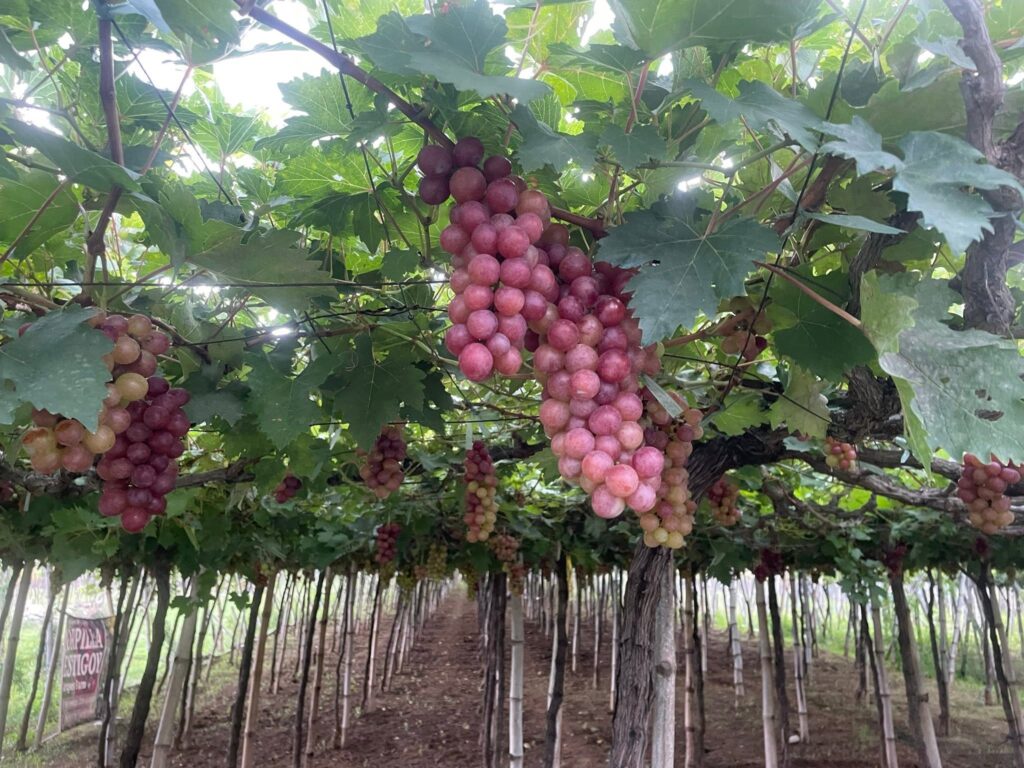
Understanding grape families makes the individual listings much easier to follow. Grapes fall into four broad practical groups: American, European, French-American hybrids, and muscadine.
American bunch grapes, mostly Vitis labrusca, are the hardiest of the four groups and often carry greater insect and disease resistance than European types. They are used mainly for juice and jelly, with only limited fresh-eating appeal.
European grapes, Vitis vinifera, are the most widely grown grapes on the planet and are prized for wine and premium table fruit. As a group they are only marginally cold-hardy, and their skins cling tightly to the flesh rather than slipping free.
French-American hybrids were bred specifically to combine American cold-hardiness and disease resistance with European fruit quality. Many of the modern cold-climate wine grapes on this list belong to that hybrid category.
Muscadine grapes, native to the southeastern United States, form a category entirely their own. I have grouped them at the end of this guide since their growing needs differ so much from bunch grapes.
Part 1: Classic Wine Grapes (Vitis vinifera)
1. Cabernet Sauvignon
Widely regarded as one of the most important red wine grapes in the world, Cabernet Sauvignon thrives wherever red wine grapes are grown, apart from the coolest northern fringes of Europe.
Growing zone: USDA zones 7 to 10, with California, Washington, and Texas among the strongest performing regions in the United States.
Plant characteristics: The vine is vigorous and upright, producing small, thick-skinned black berries in compact clusters. Research from Washington State University found that at budswell, Cabernet Sauvignon sustained no damage down to 25°F, making it one of the more cold-tolerant vinifera varieties at that growth stage.
Care tips: Plant it in well-drained, even nutrient-poor soil, since overly rich ground pushes excess foliage at the expense of fruit quality. Give it full sun and space vines 6 to 10 feet apart. Cane-prune each winter, and expect a genuinely long ripening season before harvest in early to mid-fall.
2. Chardonnay
Chardonnay is the most popular white wine grape grown today, valued for how adaptable it is across different soils and climates.
Growing zone: USDA zones 6 to 9, performing well in cool coastal regions like Oregon as well as warmer inland California valleys.
Plant characteristics: The vine produces small, round, greenish-yellow berries in fairly compact clusters. It shows genuinely useful winter hardiness for a vinifera type; WSU cold hardiness research found bud damage did not become serious until temperatures dropped to 24°F to 25°F.
Care tips: Chardonnay tolerates a wide range of soils but performs best in loamy ground with good drainage. It benefits from careful canopy management to prevent overcrowding, which reduces the mildew risk this variety is somewhat prone to in humid climates.
3. Merlot
Softer and rounder than Cabernet Sauvignon, Merlot has become one of the most widely planted red wine grapes in the world over the past several decades.
Growing zone: USDA zones 7 to 9, growing especially well in Washington’s Columbia Valley and across much of California.
Plant characteristics: Berries are medium-sized, blue-black, and thinner-skinned than Cabernet Sauvignon, which makes the vine somewhat more vulnerable to cold. WSU research recorded slight bud, phloem, and xylem damage at 25°F, with more serious injury appearing at 23°F.
Care tips: Because of that comparative sensitivity, site Merlot in a location with good air drainage to avoid cold pockets. It prefers warm days and cooler nights, and benefits from moderate irrigation rather than deep, infrequent watering.
4. Pinot Noir
Named for the pinecone shape of its cluster, Pinot Noir has been cultivated in Burgundy since the first century AD, making it one of the oldest named wine grapes still grown commercially.
Growing zone: USDA zones 6 to 9, with Oregon’s Willamette Valley standing out as a premier cool-climate growing region in the United States.
Plant characteristics: This is a genuinely finicky vine, producing small, thin-skinned berries in tight, compact clusters that are prone to rot in humid conditions. UC Davis records over 225 distinct Pinot Noir selections maintained in its foundation vineyard collection, reflecting just how much clonal variation this grape has developed over centuries.
Care tips: Give Pinot Noir a cool, foggy-morning-and-sunny-afternoon climate if at all possible. Prune for an open canopy to maximize airflow, since tight clusters and humid air are a genuine recipe for bunch rot.
5. Riesling
Germany’s signature grape, Riesling is prized for its aromatic intensity and its ability to balance sugar with steely acidity.
Growing zone: USDA zones 5 to 8, with New York’s Finger Lakes region especially well suited thanks to its moderating lake effect.
Plant characteristics: The vine produces small, round, yellow-green berries in loose to medium clusters. Riesling is genuinely one of the hardier vinifera grapes, tolerating roughly minus 10°F, which is part of why it succeeds in the Finger Lakes despite occasional harsh winters.
Care tips: Riesling appreciates cooler sites and a long, slow ripening period, which helps it retain the acidity that defines its character. Avoid overly fertile soil, and monitor for winter injury in colder years even though the variety is comparatively hardy.
6. Sauvignon Blanc
Crisp, herbaceous, and instantly recognizable, Sauvignon Blanc originated in France and is now grown across nearly every serious wine region in the world.
Growing zone: USDA zones 7 to 10, performing particularly well in sandy, well-drained soils.
Plant characteristics: The vine produces small to medium greenish-yellow berries, and it adapts well to lower water retention soils thanks to its efficient root system.
Care tips: Sandy soils actually suit this variety better than rich, moisture-retentive ground. Add organic matter sparingly to improve water retention without overfeeding the vine, since excess vigor dulls the crisp character this grape is known for.
7. Syrah (Shiraz)
The signature grape of France’s Northern Rhône Valley, Syrah (called Shiraz in Australia) drives much of that country’s red wine industry today.
Growing zone: USDA zones 7 to 10, thriving in warm, sunny conditions with well-drained soil.
Plant characteristics: Berries are small, dark blue-black, and thick-skinned, producing deeply colored, full-bodied wine. The vine is vigorous and generally productive once established.
Care tips: Give Syrah full sun and a long, warm growing season to develop its characteristic peppery, dark-fruited flavor. It tolerates rocky, well-drained soils particularly well, since deep root systems can chase nutrients other varieties cannot reach.
8. Zinfandel
Once known as California’s mystery grape until genetic research traced its origins, Zinfandel has become closely associated with bold, jammy, high-alcohol red wines.
Growing zone: USDA zones 7 to 10, thriving especially well in California’s warm inland valleys.
Plant characteristics: Clusters are notably uneven in ripening, with berries on the same bunch sometimes reaching different sugar levels simultaneously, a trait growers must manage carefully at harvest. UC Davis maintains over 100 distinct Zinfandel selections in its collection.
Care tips: Because of that uneven ripening, some growers thin clusters or hand-select fruit at harvest for quality. Give the vine full sun and moderate water, and expect strong vigor that benefits from a bit of restraint in fertilization.
9. Cabernet Franc
Often the quiet, dependable partner in Bordeaux-style blends, Cabernet Franc matures earlier than Cabernet Sauvignon and handles cooler climates noticeably better.
Growing zone: USDA zones 6 to 9, increasingly popular across eastern North America, including Virginia and New York’s Finger Lakes.
Plant characteristics: This is one of the more winter-hardy vinifera varieties, producing medium-sized, blue-black berries with a distinctive peppery, herbaceous character.
Care tips: Cabernet Franc is a reasonable entry point for growers in marginal vinifera climates who still want a true European wine grape. Give it a warm site with good air drainage, and expect earlier harvest than Cabernet Sauvignon by several weeks.
10. Gewürztraminer
Known for its intensely aromatic character, Gewürztraminer produces wines with distinctive notes of rose petal, lychee, and peach that make it instantly recognizable among white wine grapes.
Growing zone: USDA zones 5 to 8, grown successfully in Alsace, Germany, and the cooler parts of the U.S. West Coast and New York.
Plant characteristics: The vine produces small, pinkish-tan berries, an unusual coloring among white wine grapes, and it carries a somewhat lower yield than more vigorous varieties like Chardonnay.
Care tips: Gewürztraminer prefers cooler growing sites where its aromatics can develop slowly without turning flat or overly sweet. Because it is genuinely more cold-sensitive than Riesling, give it a sheltered site with good air drainage, and avoid excessive summer heat, which can mute its signature aromatic profile.
Part 2: Popular Table Grapes for Fresh Eating
11. Thompson Seedless
The grape most Americans picture when they hear the word “grape,” Thompson Seedless originated in Turkey and was introduced to California by grower William Thompson, whose name it still carries.
Growing zone: USDA zones 7 to 10, needing a genuinely warm climate with significant summer heat to ripen properly.
Plant characteristics: Berries are oval, pale green, thin-skinned, and seedless, borne in large, well-filled clusters. Federal grading standards classify it among the seedless varieties requiring a minimum berry diameter of nine-sixteenths of an inch for top commercial grades.
Care tips: Thompson Seedless produces abundant, sweet fruit with relatively minimal care once established, making it a strong beginner choice in warm climates. It is also the variety most commonly dried into raisins, so consider leaving a portion of the crop on the vine slightly longer if you want to try drying your own.
12. Flame Seedless
Developed from Thompson Seedless and Cardinal parentage, Flame Seedless delivers a bright red, crunchy alternative to the classic green table grape.
Growing zone: USDA zones 7 to 10, thriving alongside Thompson Seedless in warm growing regions.
Plant characteristics: Berries are round, plump, medium-sized, and colored from bright red to purplish-red, with a firm, crisp texture that holds up well after picking.
Care tips: Grow it under the same warm, sunny conditions as Thompson Seedless. Because the fruit is prized for crunch, avoid excess nitrogen late in the season, which can soften berries and reduce shelf life.
13. Crimson Seedless
A later-season variety, Crimson Seedless is known for its beautiful ruby-red skin, elongated shape, and a flavor that balances mild sweetness with a hint of tartness.
Growing zone: USDA zones 7 to 10, typically ripening in early October in California’s Central Valley growing regions.
Plant characteristics: The berries are firm-skinned and hold their crispness well in storage, which is part of why this variety became a fresh-market favorite.
Care tips: Because Crimson Seedless ripens later than many other table grapes, plan for a longer growing season and delay your final irrigation cutback until closer to harvest to help the fruit finish properly.
14. Red Globe
Living up to its name, Red Globe produces very large, round, seeded berries that are prized more for visual impact and sweetness than for refinement.
Growing zone: USDA zones 7 to 10, requiring warm growing conditions similar to other major California table grape cultivars.
Plant characteristics: Clusters are large and heavy, with thick-skinned berries that ship and store exceptionally well, a trait that made this variety popular for export markets.
Care tips: Because clusters can grow quite heavy, provide sturdy trellising and support. Thin clusters if the vine is overloaded, since Red Globe’s large berry size demands more energy per cluster than smaller-fruited varieties.
15. Cotton Candy
A genuinely modern novelty, Cotton Candy grapes were developed over more than a decade by crossing a large-seeded Concord-type grape with a classic seedless Vitis vinifera variety.
Growing zone: USDA zones 7 to 10, grown commercially in California under controlled breeding programs rather than widely available as home nursery stock.
Plant characteristics: Berries are medium to large, green-skinned, and seedless, with a genuinely crunchy texture and a flavor that closely mimics spun-sugar cotton candy.
Care tips: Because this hybrid cannot reproduce seeds on its own, home propagation is essentially impossible; commercial growers rely on laboratory-grown embryos. If you want to grow something similar at home, look instead for Concord or Thompson Seedless as accessible parent-type alternatives.
16. Moon Drops
Distinctive for their elongated, finger-like shape, Moon Drops grapes carry deep purple to black skin and a sweet, earthy flavor reminiscent of grape jelly.
Growing zone: USDA zones 7 to 10, grown commercially in California under the Grapery brand’s specialty breeding program.
Plant characteristics: Berries are seedless, medium to large, and notably longer than they are wide, giving clusters an unusual, eye-catching appearance compared with standard round table grapes.
Care tips: As with Cotton Candy, this is a proprietary hybrid grown primarily in commercial settings rather than home gardens. If you do find nursery stock, treat it like other warm-climate seedless vinifera hybrids: full sun, well-drained soil, and consistent moisture during fruit development.
17. Black Monukka
An old and historically important cultivar, Black Monukka is one of the original sources of the seedless trait that modern breeders used to create today’s popular seedless grapes.
Growing zone: USDA zones 7 to 9, needing less summer heat to ripen than Thompson Seedless.
Plant characteristics: Berries are large, purplish-black, sweet, and crisp, self-fruitful, and suited to either fresh eating or raisin production.
Care tips: Because it needs less heat than Thompson Seedless, Black Monukka suits slightly cooler growing regions within its zone range. Prune it by cane or spur method, and expect early to midseason ripening.
18. Autumn Royal
A large-berried black seedless grape, Autumn Royal produces deep purple to black fruit that is genuinely crunchy, firm, and flavorful in large, well-filled bunches.
Growing zone: USDA zones 7 to 10, ripening later in the season than many other black table grapes.
Plant characteristics: Clusters are notably large, and the berries hold their firm texture well, which makes this variety a strong choice for growers wanting extended harvest and storage life.
Care tips: Give it the same warm, sunny growing conditions as other late-season California table grapes. Thin clusters if the vine sets an especially heavy crop, since berry size can suffer under overproduction.
19. Champagne Grapes (Black Corinth)
Despite the name, these tiny grapes have nothing to do with actual Champagne wine. Black Corinth, commonly sold as “champagne grapes,” produces some of the smallest cultivated grape berries anywhere.
Growing zone: USDA zones 7 to 9, though the variety is genuinely prone to powdery mildew and needs careful management.
Plant characteristics: Berries are tiny, seedless, and black-skinned, borne in dense, small clusters that are used whole in cooking, baking, and as a garnish.
Care tips: Because this variety suffers notably from powdery mildew, prioritize good airflow through the canopy and consider a proactive fungicide program in humid climates. It matures midseason and rewards attentive disease monitoring more than most other table grapes.
20. Interlaken
A hybrid of Thompson Seedless and American grape parentage, Interlaken was bred specifically to bring cold hardiness to a Thompson-style eating experience.
Growing zone: USDA zones 5 to 8, considerably more cold-tolerant than its Thompson Seedless parent.
Plant characteristics: Berries are pale green, sweet, and crisp, requiring less heat to ripen than Thompson Seedless and maturing early in the season.
Care tips: Interlaken suits home gardeners in cooler regions who still want a Thompson-style eating grape. Cane-prune it each winter, and expect self-fruitful production without needing a second pollinator variety.
Part 3: American and Cold-Hardy Hybrid Grapes
21. Concord
Described by newspaper editor Horace Greeley as “the grape for the millions,” Concord remains the most iconic American grape, developed from wild Vitis labrusca stock in Concord, Massachusetts.
Growing zone: USDA zones 4 to 8, though it suffers marginal hardiness below minus 20°F and is best suited to more southern portions of its range in the coldest states.
Plant characteristics: Vines are vigorous, hardy, and productive, bearing medium-sized clusters of large, blue-black berries with a distinctive “foxy” flavor caused by naturally occurring methyl anthranilate.
Care tips: Concord is genuinely one of the easiest grapes for beginners, tolerating a wide range of soils and care levels. It ripens quite late in the season, so give it the longest possible growing window, and cane-prune annually to manage its vigorous growth habit.
22. Niagara
The leading green grape grown in the United States, Niagara is used both as a fresh table grape and for juice and sweet wine production.
Growing zone: USDA zones 5 to 8, sharing much of Concord’s hardiness range.
Plant characteristics: The vine is attractive, productive, and vigorous, with large slipskin berries that separate easily from the flesh and carry a strong, distinctly foxy flavor similar to Concord’s.
Care tips: Grow Niagara alongside Concord if you want both a red-purple and green option from the same American grape lineage. It tolerates similar soil and care conditions and benefits from the same annual cane pruning regimen.
23. Catawba
A dual-purpose grape suited to both fresh eating and winemaking, Catawba has a long history in American viticulture, particularly in the eastern United States.
Growing zone: USDA zones 5 to 8, performing well in the same general regions as Concord and Niagara.
Plant characteristics: Berries are pinkish-red to coppery, with a distinctive musky, labrusca-type flavor that made it historically important in early American wine production.
Care tips: Catawba often requires balanced fertilization and careful pruning to optimize both fruit yield and wine quality if you intend to use it for both purposes. Give it full sun and good air circulation to reduce disease pressure.
24. Canadice
Derived from Himrod, Canadice is an early-ripening red seedless grape prized specifically for its extreme winter hardiness.
Growing zone: USDA zones 4 to 8, described by breeders as a first-choice seedless grape for cold winter climates.
Plant characteristics: Berries are red, seedless, and sweet, borne on a genuinely productive, cold-tolerant vine that represents one of the real improvements in seedless grape breeding for northern growers.
Care tips: Canadice is self-fruitful and suited to spur pruning. Plant it if you live in a colder region and still want a genuinely seedless grape rather than settling for a seeded cold-hardy variety.
25. Mars
A productive Concord-flavored seedless grape, Mars produces medium-sized clusters of berries that shift from crimson to deep blue as they mature.
Growing zone: USDA zones 5 to 8, best suited to production in zone 5a and warmer according to university extension trial data.
Plant characteristics: The vine is vigorous and very productive, with a notably thick slipskin that resists cracking, and it shows resistance to mildew but some susceptibility to black rot.
Care tips: Because Mars carries some black rot susceptibility, monitor closely during humid weather and apply fungicide proactively if that disease has appeared in your area before. It holds well on the vine, allowing a somewhat extended harvest window.
26. Reliance
One of the most widely sold cold-hardy seedless grapes, Reliance produces small to medium red berries with thin, tender skin that can be prone to cracking in wet weather.
Growing zone: USDA zones 4 to 8, though it performs somewhat better in milder cold-climate sites than the very toughest zone 3 and 4 varieties.
Plant characteristics: Berries carry a delicate labrusca-type flavor and aroma without noticeable seed remnants, and clusters are large with round, medium-sized fruit.
Care tips: Because of its cracking tendency, avoid heavy irrigation right before harvest, especially following rain. Give it good drainage and consistent, moderate watering rather than large fluctuations in soil moisture.
27. Marquette
Rapidly becoming the most popular northern red wine grape, Marquette was developed through the University of Minnesota’s grape breeding program specifically for cold-climate viticulture.
Growing zone: USDA zones 3 to 8, tolerating winter lows that would destroy most vinifera vines outright.
Plant characteristics: The vine produces grapes with high sugar content and moderate acidity, capable of complex wines with attractive ruby color and pronounced tannins, often showing notes of cherry, berry, and black pepper.
Care tips: Marquette needs roughly 2,000 growing degree days to reach full maturity, so site it where it gets maximum sun exposure through the growing season. It requires far less winter protection than vinifera varieties but still benefits from a sheltered site with good air drainage.
28. Frontenac
Another cornerstone of cold-climate viticulture, Frontenac produces grapes with genuinely high sugar and high acidity, used for dry red wine, rosé, and even port-style production.
Growing zone: USDA zones 3 to 8, among the most reliable choices for USDA zone 3 growing conditions.
Plant characteristics: Wines typically present aromas of cherry and other red fruits, though the variety’s naturally high acidity often requires acid-reducing techniques during winemaking.
Care tips: Frontenac is a strong choice for growers in genuinely harsh winter climates who still want a true wine grape rather than a table variety. Site it on a sunny slope with good air drainage, since even cold-hardy hybrids benefit from avoiding low-lying frost pockets.
29. Traminette
A Gewürztraminer hybrid, Traminette produces wine remarkably similar to its aromatic parent but with far greater winter hardiness.
Growing zone: USDA zones 5 to 8, considerably hardier than true Gewürztraminer while retaining much of its spicy character.
Plant characteristics: Wines are distinctive and spicy, and can be finished dry or semi-dry depending on winemaker preference, with the same rose-petal and lychee aromatics associated with its vinifera parent.
Care tips: Traminette suits growers who want an aromatic white wine grape without the cold-sensitivity of true Gewürztraminer. Give it full sun and moderate fertility, and expect solid disease resistance compared with many European aromatic varieties.
Part 4: Native Muscadine Grapes
30. Muscadine (Scuppernong)
Unlike everything else on this list, Muscadine grapes belong to an entirely separate species, Vitis rotundifolia, native to the southeastern United States and cultivated there for more than 400 years.
Growing zone: USDA zones 7 to 10, thriving in the heat and humidity of the American South where European and American bunch grapes often struggle badly.
Plant characteristics: The muscadine vine prefers full sun to partial shade and grows in nearly any well-drained soil. Over 300 cultivars are sold across the Southeast, and most are female, requiring a self-fertile or “perfect-flowered” variety nearby for pollination.
The most famous cultivar, ‘Scuppernong’, was named for North Carolina’s Scuppernong River and is now the official state fruit of North Carolina. It was first selected from the wild before 1760 by a grower named Isaac Alexander in Tyrrell County.
Care tips: Muscadines tolerate a genuinely wide range of soils as long as drainage is good, and established vines show real drought tolerance once settled in. They are remarkably low-maintenance, needing little to no pesticide input compared with European or American bunch grapes.
Train them on a single overhead wire trellis system for the best results, and expect real cold hardiness down to about minus 10°F once mature. Watch for black rot and bitter rot as the main disease concerns, both manageable with timely fungicide applications if needed.
General Care Guide That Applies to Every Type
Regardless of which of these 30 grape varieties you choose, several care fundamentals stay consistent across nearly the entire genus. I have grown several types side by side over the years, and these basics rarely change.
Sunlight: Nearly every grape variety wants full sun. Fruit set and quality both decline noticeably if a vine is shaded for more than a few hours daily during the growing season.
Soil: Loamy, well-drained soil suits most varieties best, though sandy soils work well for early-ripening types and rocky soils can concentrate flavor in varieties with deep root systems.
Spacing: Space standard bunch grape vines 6 to 10 feet apart, and give muscadine vines considerably more room, up to 16 feet, since they grow far more vigorously over time.
Pruning: Nearly all grapes require annual dormant-season pruning, either by cane or spur method depending on variety. Skipping this step leads to overcrowded canopies, poor airflow, and reduced fruit quality within just a few seasons.
Cold protection: Match your variety to your actual winter minimum temperature, not just your general regional reputation, since microclimates, elevation, and snow cover all affect real-world hardiness significantly.
Disease management: Powdery mildew, black rot, and Pierce’s disease are the most common threats to bunch grapes, especially in humid regions. Muscadine varieties largely sidestep Pierce’s disease, which is precisely why they dominate home gardens across the humid Southeast.
Patience: Most grapevines need two to three years before producing a meaningful crop, and it can take four or five years to reach full production. That wait is part of what makes the first real harvest feel so satisfying.
Why Grape Varieties Vary So Much by Region
I think the sheer diversity across these 30 grapes reflects how stubbornly climate shapes agriculture. A vine that shrugs off minus 30°F winters in Minnesota would never survive, let alone ripen fruit, in the same conditions that make Napa Valley famous for Cabernet Sauvignon.
Breeding programs at Cornell University, the University of Minnesota, and North Dakota State University continue actively developing new cold-hardy cultivars, expanding where serious viticulture is even possible. That work has genuinely changed what “wine country” can mean in northern regions.
Meanwhile, native muscadines solved an entirely different problem: how to grow grapes at all in the hot, humid, Pierce’s disease-prone Southeast, where classic European and American bunch grapes often fail outright within a few short years.
Frequently Asked Questions
What is the easiest grape variety to grow for beginners? Concord and Thompson Seedless are widely considered beginner-friendly thanks to their tolerance for a range of soils and minimal specialized care requirements.
Which grape varieties are best for cold climates? Marquette, Frontenac, Canadice, and Somerset Seedless rank among the most reliable choices for USDA zones 3 and 4, where winter lows can reach minus 30°F or colder.
Can I grow wine grapes and table grapes on the same property? Yes, as long as your USDA zone and site conditions suit both. Many home growers plant a cold-hardy wine hybrid alongside a seedless table variety for a mix of uses.
Why do muscadine grapes grow so well in the South? Muscadines are native to the region and naturally resistant to Pierce’s disease, which devastates European and American bunch grapes in hot, humid climates.
Do all seedless grapes actually have zero seeds? Not entirely. Some seedless varieties, including Jupiter, can contain soft, barely noticeable seed remnants even though they are marketed and generally experienced as seedless.
Final Thoughts
Thirty grape varieties later, my honest takeaway is that the “right” grape has everything to do with your actual winter low temperature and almost nothing to do with which variety sounds most impressive.
A Marquette vine thriving in Minnesota will always beat a struggling, frost-damaged Cabernet Sauvignon planted somewhere it was never meant to survive.
Match the vine to your zone first, then choose based on flavor and purpose. Whether you end up with a fence full of Concord or a few rows of Frontenac, the reward is the same: a harvest that took real patience to earn.
References
- North Carolina State University Extension Gardener Plant Toolbox. Vitis rotundifolia (Muscadine Grape, Scuppernong Grape, Southern Fox Grape). https://plants.ces.ncsu.edu/plants/vitis-rotundifolia/
- North Carolina State University Extension Publications. Muscadine Grapes in the Home Garden. https://content.ces.ncsu.edu/muscadine-grapes-in-the-home-garden
- University of Minnesota Extension. Table Grape Varieties for Minnesota. https://extension.umn.edu/commercial-fruit-production/table-grape-varieties-minnesota
- Utah State University Extension. Grape Varieties for Utah. https://extension.usu.edu/yardandgarden/research/grapes-in-utah
- Washington State University, Viticulture & Enology Program. Grapevine Cold Hardiness. https://wine.wsu.edu/extension/cold-hardiness/
- United States Department of Agriculture, Agricultural Marketing Service. Table Grapes (European or Vinifera Type) Grades and Standards. https://www.ams.usda.gov/grades-standards/table-grapeseuropean-or-vinifera-type-grades-and-standards
- University of California, Davis, Foundation Plant Services. US Grapes: The Pinots. https://fps.ucdavis.edu/grapebook/winebook.cfm?chap=PinotNoir

Tim M Dave is a gardening expert with a passion for houseplants, particularly cacti and succulents. With a degree in plant biology from the University of California, Berkeley, he has vast experience in gardening. Over the years, he has cultivated a vast collection of desert plants and learned a great deal about how to grow and care for these unique companions.