Celeste Fig Tree: Size, Growth Rate, Problems, and Cultivation Details
Called the “sugar fig” by generations of Southern gardeners, the Celeste fig tree (Ficus carica ‘Celeste’) is known for its extraordinary sweetness, compact size, and remarkable disease resistance.
I have seen Celeste fig trees growing in front yards in Mississippi, in walled kitchen gardens in Virginia, and in large terracotta pots on patios in Georgia — and in every case, the tree was thriving.
There is a reason this variety has been passed down through Southern families for generations, sometimes as cuttings from trees that are decades old.
This guide covers everything you need to grow and care for a Celeste fig tree — from choosing the right site to harvesting the sweetest figs you have ever tasted.
Celeste Fig Tree at a Glance
The Celeste fig is a cultivar of the common edible fig (Ficus carica). It has been grown across the southeastern United States for well over a century, and it remains one of the top-recommended fig varieties by university extension services from Georgia to Virginia.
What makes Celeste stand out is not just one quality — it is the rare combination of traits that rarely appear together in a single variety.
It is sweet, compact, cold-tolerant, disease-resistant, and early-ripening. For the home gardener who wants a low-maintenance, high-reward fig tree, it is hard to find a better option.
The tree itself is naturally smaller than many other fig varieties, which makes it suitable for gardens where space is limited. Its tidier growth habit also makes pruning less demanding than with larger, vigorous varieties like Brown Turkey or Black Mission.
The Celeste fig goes by several regional names — including Sugar Fig, Blue Celeste, Celestial Fig, and sometimes Malta — which can create confusion at nurseries. Always verify the cultivar name before purchasing.
| Common Name | Celeste Fig, Sugar Fig, Blue Celeste, Celestial Fig |
| Scientific Name | Ficus carica ‘Celeste’ |
| Plant Family | Moraceae |
| Origin | Mediterranean; widely naturalized in the American South |
| Plant Type | Deciduous fruit tree or large multi-stemmed shrub |
| Mature Height | 7–15 feet (compact; can be kept smaller with pruning) |
| Mature Spread | 8–12 feet |
| USDA Hardiness Zones | 7–10 (with protection, tolerates zone 6b) |
| Sun Requirement | Full sun — minimum 8 hours daily |
| Soil Preference | Well-drained loam or sandy loam; pH 6.0–6.5 |
| Watering Needs | Moderate; drought-tolerant once established |
| Pollination Type | Parthenocarpic (self-fertile; no pollinator needed) |
| Fruit Size | Small to medium |
| Fruit Color | Violet-brown to light purple skin; amber to rose-pink flesh |
| Flavor Profile | Exceptionally sweet, honey-like; very low acidity |
| Eye Type | Tightly closed (resistant to dried fruit beetle infestation) |
| Fruit Season | July–August (primarily main crop; unreliable breba) |
| Growth Rate | Moderate (1–1.5 feet per year) |
| Time to Bear Fruit | 1–2 years from cuttings; 3–5 years from seed |
| Lifespan | 50–100+ years |
| Container-Friendly | Yes — excellent for pots due to compact habit |
| Disease Resistance | High — notably resistant to fig rust and splitting |
| Common Pests | Birds, squirrels, fig beetles; relatively pest-resistant |
History and Cultural Significance
Brought over by European settlers — likely from the Mediterranean or the Canary Islands — Celeste figs became fixtures of plantation gardens and farmstead orchards throughout the region during the 18th and 19th centuries.
In many Southern families, Celeste fig trees are passed down through generations — not as purchased plants, but as rooted cuttings taken from a grandparent’s or great-grandparent’s tree.
There is something profoundly touching about that continuity. A cutting from a tree planted in 1890 can still be growing in someone’s backyard today.
The variety’s nickname “sugar fig” is not marketing language — it reflects genuine flavor. Celeste figs contain notably high natural sugar concentrations. This is why they were historically one of the most popular varieties for drying, preserving, and eating fresh straight from the tree.
Outside the United States, Celeste is less commonly found in commercial nurseries, though it is grown by specialty growers and fig enthusiasts in the UK, Australia, and parts of Europe who specifically seek it out for its flavor and compact habit.
Key Characteristics of the Celeste Fig
The Celeste fig produces small to medium-sized fruit — smaller than Brown Turkey or Black Mission, but size is not where this variety competes. It competes on flavor.
The skin is a violet-brown to light purple, sometimes with a slight blush of blue depending on sun exposure and ripeness. The flesh inside ranges from pale amber to a warm rose-pink, depending on the particular tree and growing conditions.
The flavor is exceptional. Celeste figs are widely regarded as one of the sweetest and most delicately flavored fig varieties in existence. The taste is honey-like, clean, and low in acidity — which makes them pleasant even for people who typically find figs too intense or too earthy.
The Closed Eye: A Major Advantage
One of the most underappreciated characteristics of the Celeste fig is its tightly closed eye — the small opening at the base of the fruit.
Many fig varieties have a partially open eye, which allows the dried fruit beetle to enter and damage the fruit from inside, often going undetected until harvest.
Celeste’s closed eye physically excludes this pest, giving it a natural advantage over open-eye varieties without any chemical intervention. This is a major benefit that experienced growers value enormously.
Growth Habit
The Celeste fig tree is naturally more compact than most other fig varieties. Left unpruned, it typically reaches 10–15 feet in height — modest by fig standards.
With annual pruning, it is easily maintained at 6–10 feet, making it an excellent choice for smaller gardens, urban yards, and container culture.
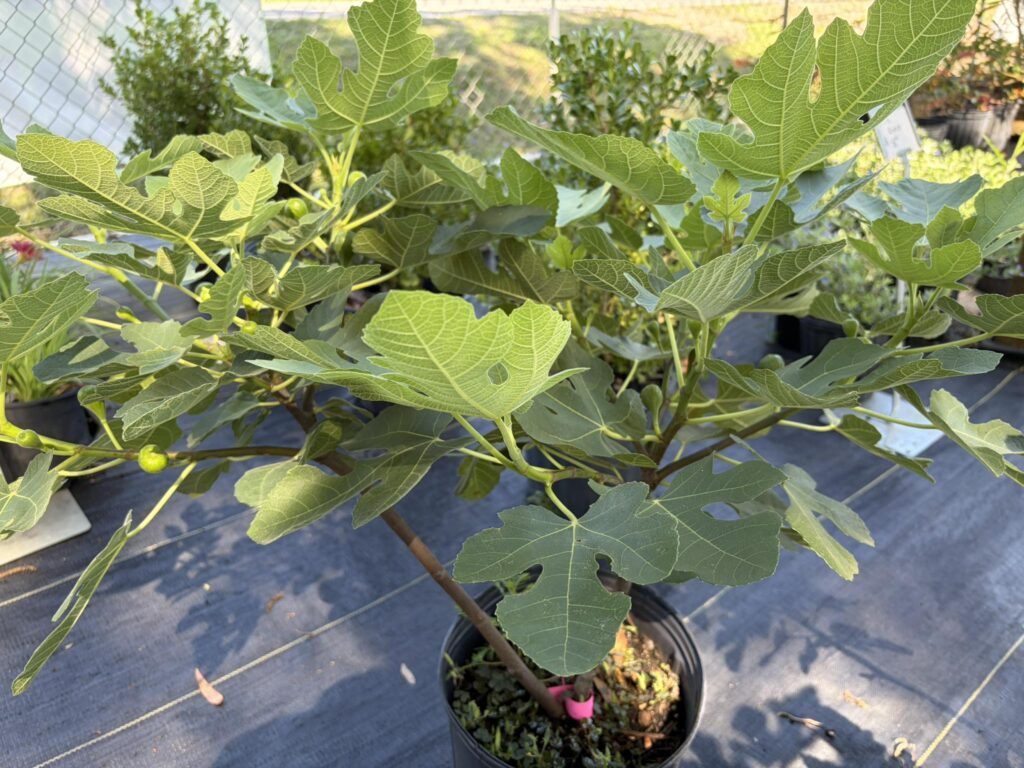
The tree has a graceful, rounded canopy and produces the characteristic large, deeply lobed fig leaves that give all fig trees their distinctive tropical appearance.
In autumn, as the leaves drop, the smooth grey bark and elegant branching structure provide year-round garden interest.
Ripening Season
Celeste is an early-ripening variety, with the main crop typically ready from July through August in most of the southeastern United States. This is earlier than many other figs, which is a distinct advantage in regions with unpredictable autumn weather.
Unlike Brown Turkey, Celeste does not reliably produce a breba crop (the early crop on last year’s wood). Gardeners should expect one main crop per season. However, that one crop is typically generous, consistent, and of exceptional quality.
Climate and Hardiness
Celeste is rated for USDA hardiness zones 7 through 10, and with proper winter protection, it can perform in zone 6b as well. It is one of the cold-hardier fig varieties available to home gardeners, though it is not quite as cold-tough as Chicago Hardy.
It is particularly well-adapted to the heat and humidity of the American Southeast — zones 7b through 9 — where it has been grown for generations.
Unlike many other figs, Celeste does not suffer unduly in high humidity, and its natural disease resistance means it handles Southern growing conditions better than more susceptible varieties.
In very hot, dry climates (zones 9–10 in the Southwest), Celeste can be grown successfully with adequate irrigation, though it is not considered the optimal choice for desert-type conditions. Brown Turkey and Kadota tend to perform better in extreme heat and low humidity.
Cold Hardiness in Practice
The wood of established Celeste fig trees can survive brief dips to around 10°F to 15°F (-9°C to -12°C) without significant damage, though consistent exposure below these temperatures will cause die-back.
In most of zone 7, the tree may lose some top growth in a particularly harsh winter but will typically resprout vigorously from the protected root zone in spring.
Protecting the root zone is the single most important act of winter care for Celeste fig trees in colder regions. A well-insulated root system ensures recovery even when the above-ground portion of the tree sustains cold damage.
Planting the Celeste Fig Tree
Timing
- In zones 8–10: Plant in early spring or late autumn when temperatures are mild.
- In zones 6b–7: Plant in spring, after the final frost, to give the tree maximum establishment time before winter.
- Container-grown nursery stock can be planted any time during the growing season, provided irrigation is maintained consistently during the establishment period.
Choosing a Site
Sunlight is the most critical factor in fig productivity. Celeste needs a minimum of 8 hours of direct sun per day to produce well.
In the American Southeast, this is rarely a limiting factor — but in shadier northern gardens, inadequate light is the most common reason fig trees fail to fruit.
Choose a location that offers:
- Full sun exposure from mid-morning through late afternoon.
- Protection from harsh north or northwest winter winds, which accelerate moisture loss and cold damage during dormancy.
- Excellent air circulation to reduce humidity-related fungal disease, while avoiding wind tunnels that can desiccate new growth.
- Adequate space for the mature canopy — at least 10–12 feet from buildings, fences, or other trees.
Like all fig varieties, Celeste has a vigorous root system. Avoid planting near septic systems, water mains, or building foundations.
Soil Preparation
Celeste fig trees are relatively forgiving of soil quality, but poor drainage is their greatest enemy. Waterlogged roots lead to root rot, poor fruit set, and eventually tree death.
Ideal conditions:
- Well-drained loamy or sandy loam soil
- Soil pH between 6.0 and 6.5 — slightly acidic to neutral
- Good organic matter content to support microbial activity and moisture regulation
If your soil is heavy clay, amend the planting area with coarse sand and compost, or plant on a raised bed. In sandy soils with very low organic content, incorporate generous amounts of mature compost before planting.
Step-by-Step Planting
- Dig a hole two to three times wider than the root ball and the same depth.
- Loosen the soil at the base and sides of the hole.
- Amend the excavated soil with up to 25% mature compost by volume.
- Set the tree so the root crown sits at or just above ground level — never plant figs too deep.
- Backfill and firm gently around the roots to eliminate air pockets.
- Water deeply and thoroughly immediately after planting.
- Apply a 3 to 4-inch layer of organic mulch (wood chips, straw, or shredded leaves) over the root zone, keeping mulch a few inches away from the trunk.
Watering
Consistent soil moisture produces the best Celeste figs. Inconsistent watering — wet and dry extremes in alternating cycles — causes fruit to split, drop prematurely, or taste diluted and bland.
Watering Schedule
- Newly planted trees (year one): Water deeply two to three times per week. The root zone should remain evenly moist but never waterlogged.
- Established trees (year two onward): Water deeply once a week during dry periods. Let the top 2–3 inches of soil dry between waterings to avoid overwatering.
- Container-grown trees: Check daily during summer heat. Containers lose moisture rapidly and even a day of severe wilting can impact the developing fruit.
- During dormancy: Reduce watering significantly. A dormant tree needs very little water — just enough to prevent the roots from completely drying out.
Irrigation Methods
Drip irrigation is the most efficient and effective method for fig trees. It delivers water directly to the root zone, avoids wetting the foliage (which reduces fungal disease risk), and can be automated for consistent delivery. Soaker hoses laid around the drip line are a simple, low-cost alternative.
Fertilizing Celeste Figs
Celeste fig trees are light to moderate feeders. They do not require heavy fertilization, and in many garden soils enriched with regular compost, they need very little supplemental feeding at all.
Over-fertilizing — particularly with nitrogen-heavy products — is one of the most common mistakes fig growers make.
Excess nitrogen pushes the tree into vigorous vegetative growth. The result is a dense, leafy canopy with minimal fruiting — exactly the opposite of what you want.
Recommended Fertilizing Program
- Early spring (just as new growth begins): Apply a balanced slow-release granular fertilizer (NPK 10-10-10 or 8-8-8) at the label-recommended rate, spread evenly under the tree’s canopy.
- Late spring: A top-dressing of mature compost or aged manure around the drip line provides gentle, sustained nutrition and improves soil structure.
- After the main crop: Apply no fertilizer. Allow the tree to begin its natural wind-down toward dormancy.
If your Celeste tree is producing lush, dark green leaves but few or no figs, withhold all fertilizer for the next growing season and address drainage before anything else.
Soil Testing
Every two to three years, it is worth conducting a basic soil test through your county’s cooperative extension service or a certified lab.
Soil tests reveal pH, nutrient levels, and organic matter content — information that removes the guesswork from fertilization. They are inexpensive and highly informative.
Pruning
Celeste fig trees have a more manageable, naturally compact growth habit than many other fig varieties, which makes pruning a less daunting task. That said, annual pruning is still important for maintaining productivity, health, and tree structure.
When to Prune
The correct time to prune is late winter, just before the tree breaks dormancy — typically late February through mid-March in most of the tree’s growing range. At this point:
- The tree is fully dormant and not actively growing.
- The branch structure is clearly visible without leaves.
- Pruning wounds heal rapidly as new growth begins in spring.
Do not prune heavily in autumn. Late-season pruning stimulates tender new growth that is highly vulnerable to winter cold damage.
Pruning Goals
The objective of annual pruning is to maintain an open, well-structured canopy — ideally with 3–5 main scaffold branches radiating outward and upward from a central point, leaving the center of the tree open to light and air.
Each pruning session should address:
- Dead or damaged wood: Remove entirely any branches that died during winter or were damaged by disease or pests.
- Crossing and rubbing branches: Select the stronger of two crossing branches and remove the weaker one. Constant friction creates open wounds that invite disease.
- Inward-growing shoots: Any shoot directed toward the center of the tree increases crowding and shade. Remove promptly.
- Basal suckers: Shoots emerging from below the soil line or graft union should be removed as soon as they appear.
- Overly long leaders: Head back long, extending branches by one-quarter to one-third to encourage lateral branching where the following year’s fruit will form.
Aim to remove no more than 20–25% of the canopy in a single pruning session to avoid stressing the tree.
Pruning Compact or Container Celeste Trees
Because Celeste is naturally smaller, it requires less aggressive pruning than larger varieties. The focus should be on maintaining the open structure, removing dead and crossing wood, and keeping the overall height manageable for harvest.
Many gardeners maintain container Celeste trees at a very tidy 5–7 feet with minimal effort.
Mulching
Mulching around the base of a Celeste fig tree is simple, cheap, and genuinely transformative for tree health.
A 3 to 4-inch layer of organic mulch — shredded wood chips, pine straw, straw, or shredded autumn leaves — applied over the root zone provides the following benefits:
- Moisture retention: Reduces evaporation significantly, cutting down on watering frequency during summer.
- Temperature regulation: Keeps root zone cooler in summer heat and insulates against brief cold snaps in winter.
- Weed suppression: Prevents weeds from competing with the tree for water and soil nutrients.
- Soil improvement: As mulch breaks down, it contributes organic matter that feeds soil microorganisms and gradually improves soil structure.
Always keep mulch several inches away from the trunk to prevent moisture accumulation at the bark, which encourages fungal rot and creates habitat for boring insects.
Winter Care and Cold Protection
While Celeste is among the hardier fig varieties, protecting it through winter — especially in zones 6b and 7 — significantly reduces the risk of die-back and ensures a strong, productive tree the following season.
For In-Ground Trees in Zones 7 and Colder
- After leaf drop, following the first hard frost: Wrap the trunk and main branches with horticultural fleece, burlap, or old blankets. Avoid plastic, which traps moisture and promotes rot.
- Stuff the interior of the wrapped canopy with dry straw for additional thermal insulation.
- Mound 8–12 inches of dry mulch over the root zone to protect the crown and roots — the most critical area to insulate.
- In zone 6b, consider adding a wire cage filled with dry leaves around the entire tree for maximum insulation.
For Container Trees
Move potted Celeste fig trees into an unheated but frost-protected structure — a garage, garden shed, or cool basement — before temperatures drop below 20°F (-7°C).
The storage environment should remain above freezing but below 45°F (7°C) to maintain dormancy without exposing the roots to damaging cold.
Water lightly once a month during storage. Do not place the tree in a warm, brightly lit room — it will break dormancy prematurely and struggle when moved back outdoors.
Pests and Diseases
One of the most valued traits of the Celeste fig is its exceptional resilience. Compared to many other fig varieties, it is notably resistant to both pests and disease — a significant advantage for gardeners who prefer minimal intervention.
Fig Rust (Cerotelium fici)
Fig rust is the most common fungal disease affecting figs. It causes orange-yellow spots on upper leaf surfaces and rusty-brown spore masses on the undersides. Severe infections cause early defoliation, which weakens the tree and can reduce the following season’s crop.
Management: Remove and dispose of infected leaves promptly (do not compost them). Avoid overhead irrigation. In humid regions, apply a preventive copper-based fungicide from late spring onward.
Celeste is less susceptible to fig rust than many other varieties, particularly in well-ventilated sites. Good air circulation around the canopy is the first line of defense.
Dried Fruit Beetles (Carpophilus spp.)
These small beetles enter figs through the eye opening and damage the interior fruit, often introducing yeast and molds that cause internal rot.
As noted earlier, Celeste’s tightly closed eye is a natural barrier against this pest — one of the variety’s most practical advantages.
Root-Knot Nematodes (Meloidogyne spp.)
In warm, sandy soils common throughout the Southeast, root-knot nematodes can be a persistent problem. They invade roots, form galls, and disrupt nutrient and water uptake. Symptoms include stunted growth, pale leaves, and poor fruiting despite adequate care.
Management: Improve soil organic matter content, which supports nematode-suppressing biological activity. Solarize heavily infested soils before replanting. Choose planting sites with diverse soil biology and avoid monoculture planting.
Birds and Squirrels
As is the case with every sweet fruit tree, wildlife can be the biggest harvesting competition. Birds in particular can strip a Celeste tree quickly, since the sweet, light-colored flesh is highly attractive.
Bird netting placed over the tree during the final 2–3 weeks of ripening is the most effective protection. Choose nets with small enough mesh to exclude common garden birds without harming them.
Harvesting Celeste Figs
Because Celeste is an early-ripening variety, the harvest window typically arrives before the late-summer heat peaks — a welcome advantage in the South, where August temperatures can damage over-ripe fruit rapidly.
Recognizing Ripe Celeste Figs
Celeste figs give several clear signals when they are ready to pick:
- The fruit droops noticeably on the stem, tilting downward rather than pointing upright.
- The skin color deepens from greenish-purple to a rich violet-brown or light purple.
- The fruit feels noticeably soft when pressed gently — not mushy, but yielding.
- A small drop of nectar may appear at the closed eye.
- In hot weather, very slight skin wrinkling near the base is a reliable ripeness indicator.
Figs do not continue ripening after they are picked. Harvest only when fully ripe — there is no advantage to picking early.
Harvesting Technique
Wear gloves, as the milky sap in fig stems and leaves can irritate sensitive skin. Gently twist and pull downward — a ripe fig detaches cleanly and easily at the stem junction. Rough handling bruises the delicate skin, so pick carefully and place into a shallow container rather than dropping into a deep bucket.
Storage and Preservation
Fresh Celeste figs are highly perishable — best eaten within 24–48 hours of picking, though they can be refrigerated for up to a week. They do not transport well, which is why commercially available figs rarely approach the flavor of home-grown ones.
For longer storage:
- Drying: Halve the figs and dehydrate at 135°F (57°C) for 8–12 hours. Dried Celeste figs are intensely sweet and excellent in baked goods and cheese boards.
- Freezing: Freeze whole or halved on a tray first, then transfer to bags. Frozen figs keep well for up to six months.
- Preserves: Celeste fig jam, fig butter, and fig chutney are exceptional. The natural sweetness of this variety means less added sugar is needed compared to more acidic fruits.
Culinary Uses of Celeste Figs
The exceptional sweetness of Celeste figs, combined with their low acidity and honey-like undertone, makes them one of the most culinarily versatile fig varieties available.
Fresh applications:
- Serve halved with ricotta, honey, and toasted walnuts.
- Pair with aged prosciutto and sharp cheese on a charcuterie board.
- Layer into salads with arugula, goat cheese, and balsamic.
- Simply eat straight from the tree — no preparation required.
Cooked and preserved:
- Celeste fig jam with cardamom and vanilla is a revelation.
- Roasted Celeste figs with thyme and olive oil pair beautifully with pork or duck.
- Fig galettes and tarts benefit enormously from their natural sweetness.
- Fig butter spread on fresh bread is a simple, unforgettable combination.
Dried and baked:
- Add dried Celeste figs to granola, muesli, or energy bars.
- Incorporate into holiday bread, fruitcakes, and stuffings.
- Pair with dark chocolate for confectionery applications.
Growing Celeste Figs in Containers
The Celeste fig’s compact growth habit makes it one of the most suitable fig varieties for container cultivation.
Unlike Brown Turkey or Black Mission — which can become very large and vigorous — Celeste stays naturally manageable, making it a practical choice for patios, balconies, and small garden spaces.
Container Selection
Choose a container of at least 15–20 gallon capacity with adequate drainage holes. Fabric grow bags are an increasingly popular choice — they air-prune roots naturally and prevent the tree from becoming severely root-bound.
Potting Mix
Use a well-draining, slightly acidic potting mix. A blend of quality potting compost, coarse perlite (30%), and a small amount of aged bark provides excellent drainage while retaining enough moisture for consistent growth.
Feeding Container Trees
Container figs need more frequent fertilization than in-ground trees because nutrients leach out with each watering. Apply a balanced liquid fertilizer every two to three weeks throughout the growing season, reducing to monthly in the shoulder seasons and stopping entirely in late summer.
Repotting
Every two to three years, assess whether the tree needs a larger container. If roots are emerging from drainage holes or circling densely around the root ball, it is time to pot up to the next size.
Alternatively, root-prune the tree back into the same container with fresh potting mix — an effective way to refresh the soil without increasing pot size.
Propagating Celeste Fig Trees
Celeste fig trees root easily from hardwood cuttings, allowing gardeners to multiply their trees at no cost. This is the primary reason Celeste cuttings are commonly traded among fig enthusiasts and passed down through families.
Hardwood Cutting Method
- In late winter (late February–March), select pencil-thick stems from last season’s growth on a healthy tree.
- Cut 8–12 inch sections, making a clean diagonal cut just below a node at the bottom and a straight cut just above a node at the top.
- Allow cuttings to rest for 2–4 hours to seal the cut sap.
- Dip the basal 1–2 inches in rooting hormone powder or gel.
- Insert into a container filled with moist perlite or a 50:50 mix of perlite and coco coir.
- Place in a warm location (65–75°F / 18–24°C) out of direct sun until roots form.
- Roots typically develop within 4–8 weeks.
- Pot on into a larger container once roots are well-established before transitioning to the garden.
Celeste roots readily and dependably — even for first-time propagators. It is one of the more forgiving varieties to work with.
Frequently Asked Questions
Is Celeste the sweetest fig variety?
Celeste is widely regarded as one of the sweetest fig varieties available to home gardeners. Its high sugar content and low acidity give it a distinctly honey-like flavor that few other varieties match.
How big does a Celeste fig tree get?
Without pruning, Celeste typically reaches 10–15 feet in height — compact by fig standards. With annual pruning, most gardeners keep it at 6–10 feet, which is very manageable. It is considerably smaller than Brown Turkey or Black Mission at maturity.
Does Celeste produce two crops a year?
Celeste does not reliably produce a breba crop (the early summer crop on last year’s wood). Expect one main crop per year, ripening in July–August in most of its growing range. That single crop, however, is typically generous and consistently high in quality.
Is Celeste fig cold-hardy enough for zone 6?
With proper winter protection — mulching the root zone, wrapping the trunk, and using insulating materials around the canopy — Celeste can survive zone 6b winters. However, zone 7 is the reliable lower limit without protection, and even there, some winter die-back is possible after particularly harsh winters.
Why won’t my Celeste fig tree fruit?
Common reasons include: insufficient sunlight (fewer than 8 hours daily), over-fertilization with nitrogen, a young tree not yet mature enough to fruit, improper pruning at the wrong time of year, or root stress from poor drainage. Address these factors in sequence — sunlight is always the first thing to check.
Final Thoughts
There is a reason the Celeste fig has been growing in Southern gardens for more than two centuries without ever going out of fashion. It is not a fashionable novelty — it is a proven performer that has earned its place in kitchen gardens, backyard orchards, and container collections alike.
Its flavor is genuine. Its reliability is consistent. Its needs are modest. For anyone looking to grow an edible fig tree that rewards without overwhelming, the Celeste is a near-perfect choice.
Plant one in a sunny spot, give it decent soil, water it consistently, prune it annually, and protect it in its first few winters. Do those things, and the Celeste fig tree will return the favor for decades — sweet, generous, and dependable, season after season.
References
- University of Florida IFAS Extension — Figs for the Home Landscape https://edis.ifas.ufl.edu/publication/MG055
- University of California Agriculture & Natural Resources — UC IPM — Fig: Integrated Pest Management Guidelines https://ipm.ucanr.edu/agriculture/fig/
- North Carolina State University Cooperative Extension — Plant Toolbox: Ficus carica https://plants.ces.ncsu.edu/plants/ficus-carica/
- Purdue University New Crops Resource Online Program — Morton, J. (1987). Fig. In: Fruits of Warm Climates. https://www.hort.purdue.edu/newcrop/morton/fig.html

Tim M Dave is a gardening expert with a passion for houseplants, particularly cacti and succulents. With a degree in plant biology from the University of California, Berkeley, he has vast experience in gardening. Over the years, he has cultivated a vast collection of desert plants and learned a great deal about how to grow and care for these unique companions.