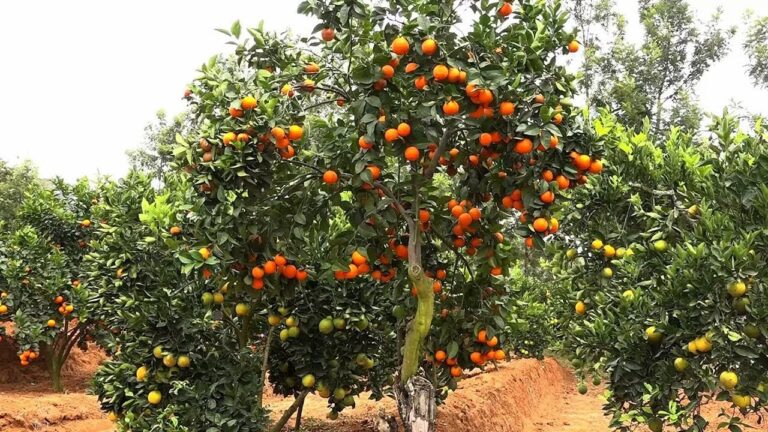
Citrus Tree Summer Maintenance: Watering, Fertilization, Mulching, Pests, and More
Summer is, without question, the most demanding season for citrus trees. The heat intensifies, soil dries out faster, pests become bolder, and the tree itself is working hard — pushing growth, setting fruit, and managing stress all at once.
If you have a lemon, orange, lime, grapefruit, or any other citrus in your garden, summer is not the time to step back and relax.
Done right, summer maintenance sets the foundation for a rich harvest. Neglect it, and you risk poor fruit quality, pest outbreaks, and a tree that struggles well into autumn.
This guide covers everything you need — from watering schedules to fertiliser timing, pruning decisions, pest management, and soil care.
Why Summer Care Is Critical for Citrus Trees
Citrus trees are subtropical by nature. They love warmth and sunshine. But there is a significant difference between thriving in summer and struggling through it.
During summer, a citrus tree is simultaneously managing:
- Active vegetative growth (new shoots and leaves)
- Fruit development from the spring flush
- Increased water loss through transpiration
- Higher pest and disease pressure
- Potential heat and drought stress
Miss one element of care, and the rest suffers. A water-stressed citrus, for example, becomes vulnerable to spider mites. A tree lacking nitrogen will shed fruit prematurely.
Understanding these connections is what separates casual gardeners from those who consistently harvest well.
Also Read: 10 Best Small Citrus Trees for Gardens: Identification With Full Care Guides
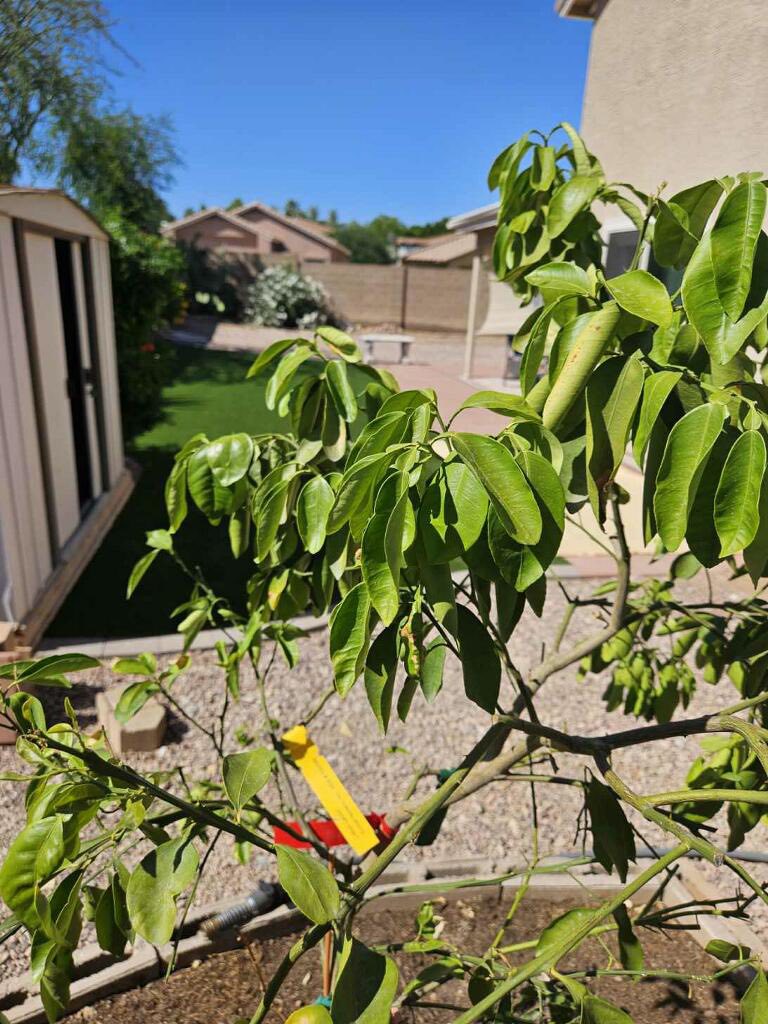
1. Watering: The Single Most Important Summer Task
If I had to name one thing that makes or breaks citrus in summer, it would be watering — not how much you water, but how consistently and deeply you do it.
How Often to Water
- In-ground trees: Water deeply every 7–10 days during mild summer weather. In extreme heat (above 35°C / 95°F), increase to every 5–7 days.
- Container trees: These dry out faster. Check the soil every 2–3 days and water when the top 2–3 cm (1 inch) feels dry.
How to Water Correctly
Always water at the base of the tree, not overhead. Wetting the foliage in summer heat encourages fungal disease and can scorch leaves.
Water deeply and slowly. Shallow watering encourages shallow roots, which makes the tree more susceptible to drought stress. Aim for moisture to penetrate at least 30–45 cm (12–18 inches) into the soil.
A drip irrigation system or a slow-running garden hose left at the drip line (the outer edge of the canopy) for 30–45 minutes is ideal. This mimics natural rainfall and encourages roots to grow outward and downward.
Signs of Underwatering vs. Overwatering
| Symptom | Likely Cause |
| Yellowing, curling leaves | Underwatering or heat stress |
| Leaf drop (yellowing then falling) | Overwatering / root rot |
| Wilting despite moist soil | Root rot from poor drainage |
| Dry, cracking soil pulling away from edges | Severely underwatered |
| Soft, mushy stem base | Overwatering / fungal collar rot |
Consistency matters more than volume. Irregular watering — drought followed by flooding — causes fruit to split and drop. It is one of the most common mistakes home gardeners make.
2. Summer Fertilisation: Feed the Fruit
Citrus trees are heavy feeders. They are sometimes described as the “hungriest” of the common fruit trees, and summer is the season when their nutritional needs are at their peak.
Nitrogen Is the Priority
Nitrogen drives leafy growth and supports fruit development. A citrus tree deficient in nitrogen during summer will produce pale, undersized fruit and may drop it prematurely.
Use a citrus-specific fertiliser or a balanced slow-release granular fertiliser with a high first number (N-P-K ratio like 12-6-6 or 13-7-4). Apply in early summer, and again in mid-summer if the tree is showing pale foliage or slow growth.
Secondary Nutrients to Watch
- Iron and Manganese: Deficiencies show as yellowing between leaf veins (interveinal chlorosis). This is common in alkaline soils. Use a chelated iron spray or soil drench if symptoms appear.
- Magnesium: Deficiency causes older leaves to yellow from the inside out. Epsom salt (magnesium sulphate) dissolved in water and applied to the soil can help.
- Zinc: Deficiency causes small, mottled leaves. A micronutrient spray that includes zinc can correct this quickly.
Application Tips
- Water the tree first, then apply granular fertiliser around the drip line. Never apply to dry soil — it can burn roots.
- Do not over-fertilise. Too much nitrogen late in summer pushes a flush of tender new growth that becomes highly attractive to pests, especially citrus leafminer.
- Container trees need more frequent feeding — every 4–6 weeks with a liquid fertiliser — because nutrients leach out with each watering.
3. Mulching: Protect the Soil, Protect the Tree
Mulching is one of the most underrated summer tasks. A good mulch layer around your citrus tree does several things at once:
- Retains soil moisture, reducing watering frequency
- Moderates soil temperature, protecting roots from extreme heat
- Suppresses weeds, which compete for water and nutrients
- Gradually improves soil structure as organic mulch breaks down
How to Mulch Correctly
Apply a 5–10 cm (2–4 inch) layer of organic mulch — wood chips, shredded bark, straw, or compost — around the base of the tree. Spread it out to the drip line.
Critical rule: keep mulch away from the trunk. A gap of at least 15–20 cm (6–8 inches) around the base must remain clear. Mulch piled against the trunk traps moisture and creates the perfect environment for collar rot and bark disease, which can kill a tree.
4. Summer Pruning: Less Is More
Citrus trees do not require heavy pruning the way deciduous fruit trees do. In summer, the goal is light, targeted pruning — not a dramatic reshape.
What to Prune in Summer
- Dead, diseased, or damaged branches: Remove these immediately. Dead wood harbours pests and disease.
- Suckers: These are vigorous shoots that grow from below the graft union (near the base). They are from the rootstock, not the fruiting variety, and will sap energy from the tree. Remove them entirely.
- Water sprouts: Vertical shoots growing straight upward from main branches. These rarely fruit well and crowd the canopy.
- Crossing or rubbing branches: These create wounds that become entry points for disease.
What NOT to Prune in Summer
Avoid removing large amounts of healthy canopy during peak heat. The leaves provide shade to the bark, and sunburned bark is a serious problem in exposed citrus trees. If you must remove a large limb, apply diluted white latex paint or a commercial tree wound protector to the exposed bark.
Timing tip: The best time for any significant pruning is late winter or early spring. Summer pruning should be limited to corrective work only.
5. Pest Management: Stay Vigilant
Warm temperatures and lush summer growth attract a range of pests. The earlier you spot them, the easier they are to manage.
Common summer pests include:
Citrus Leafminer (Phyllocnistis citrella)
Citrus leafminer is a tiny moth that lays eggs on new leaves. The larvae tunnel through the leaf tissue, leaving characteristic silvery, winding trails. Severely affected leaves curl and harden.
Management: Avoid excessive nitrogen fertilisation in late summer, which promotes the tender new growth leafminer prefers. Apply spinosad-based sprays or horticultural oil on new growth if infestations are heavy.
Aphids
Aphids cluster on new growth, sucking sap and secreting sticky honeydew that encourages sooty mould.
Management: A strong jet of water dislodges most colonies. Neem oil or insecticidal soap sprays are effective for heavier infestations.
Spider Mites
Spider mites are more common during hot, dry periods. Look for fine webbing on leaf undersides and a stippled, bronze appearance to leaves.
Management: Increase humidity around the tree by misting leaves in the morning. Neem oil or miticide sprays work well. Avoid broad-spectrum pesticides that kill natural predators like predatory mites.
Scale Insects
Scale insects appear as small bumps on branches and leaves. They suck sap and weaken the tree over time.
Management: Horticultural oil applied in summer smothers scale effectively. In severe cases, a systemic insecticide may be warranted.
Citrus Psyllid (Diaphorina citri)
Citrus psyllid is a critical pest in many regions because it vectors Huanglongbing (HLB), also known as citrus greening disease — a fatal bacterial disease with no cure. Look for the waxy, white, tubular secretions of nymph colonies on new growth.
Management: Report suspected HLB infections to your local agricultural authority immediately. In countries like Kenya, South Africa, and across Asia, this pest is under active monitoring.
General Pest Prevention Tips
- Inspect your tree weekly during summer. Turn leaves over and look at stems.
- Encourage beneficial insects like ladybirds, lacewings, and parasitic wasps by avoiding broad-spectrum pesticides.
- Keep ants away from the tree. Ants protect aphids and scale from predators. Use a sticky tree band around the trunk to block ant access.
6. Disease Prevention and Management
Summer heat and humidity create conditions for fungal and bacterial diseases, particularly when water is mismanaged.
Root Rot (Phytophthora spp.)
This is the most devastating disease of citrus globally. It thrives in waterlogged, poorly drained soils.
Prevention is everything: ensure excellent drainage, do not overwater, and keep mulch away from the trunk. If root rot is suspected (collar area appears dark and water-soaked, bark peels easily), expose the root crown to air and apply a phosphonate fungicide drench.
Sooty Mould
This black, powdery coating on leaves is a secondary issue caused by the honeydew secreted by aphids, whiteflies, and scale. It blocks sunlight and reduces photosynthesis.
Fix the pest problem first, then wipe affected leaves with a damp cloth or apply a diluted neem oil spray to break down the mould.
Greasy Spot (Mycosphaerella citri)
This fungal disease causes yellow-brown, oily-looking spots on the underside of leaves, eventually causing leaf drop. It is common in humid, warm climates.
Management: Apply copper-based fungicide in early summer and maintain good canopy airflow by removing dense, crossing growth.
7. Heat Stress Management
In regions with intense summer heat — such as East Africa, the Middle East, South Asia, and parts of the American Southwest — citrus trees can suffer genuine heat stress above 38°C (100°F).
Signs of heat stress include:
- Leaf curl (leaves rolling lengthwise to reduce exposed surface area)
- Premature fruit drop
- Yellowing of older leaves
- Sunscald on exposed bark or fruit
How to Reduce Heat Stress
- Shade cloth: A 30–40% shade cloth over container trees or young trees during peak afternoon heat provides meaningful protection.
- Increase watering frequency: During heat waves, water every 3–5 days even for in-ground trees.
- Avoid fertilising during extreme heat. Wait until temperatures drop below 35°C before feeding.
- Apply reflective mulch (like light-coloured straw) to keep soil temperatures down.
8. Container Citrus: Special Summer Considerations
If your citrus is growing in a pot — which is increasingly popular for home gardeners in urban settings and cooler climates — summer management requires extra attention.
- Move containers away from reflective surfaces like white walls and concrete, which amplify heat.
- Elevate pots on feet or bricks to ensure drainage and airflow underneath.
- Repot if root-bound. A root-bound citrus cannot uptake water effectively, which becomes dangerous in summer. Roots circling the base of the pot are a sign to move up one pot size.
- Water more frequently than in-ground trees, sometimes daily in peak heat.
- Feed every 4 weeks with a balanced liquid citrus fertiliser.
9. Fruit Thinning and Development
If your citrus set a heavy crop in spring, summer is when the fruit is actively developing. Larger fruits like grapefruit and navel oranges benefit from fruit thinning — removing some fruit to allow the remaining ones to grow larger and better-flavoured.
Aim for approximately one fruit every 15–20 cm (6–8 inches) along fruiting branches. This is more relevant for heavy-bearing varieties and younger trees that could be overburdened.
Do not be alarmed by June drop — a natural mid-summer shedding of small, immature fruit. This is the tree self-regulating its load. It is normal and healthy, provided the tree is not stressed.
Final Thoughts
Summer citrus maintenance is not complicated — but it does demand regularity and attention. I have found that the trees that perform best year after year are not necessarily the ones given the most expensive inputs. They are the ones tended consistently, with problems caught early and addressed promptly.
Water deeply and regularly. Feed at the right time. Watch for pests every week. Keep the soil cool with mulch. Do these things, and your citrus tree will reward you with healthy growth, clean foliage, and a fruit set that makes the effort entirely worthwhile.
Whether you are growing a lemon on a balcony in Nairobi, a naval orange orchard in California, or a backyard lime tree in Queensland, the principles are the same. Citrus trees are generous — give them what they need in summer, and they will give back in abundance.
References and Further Reading
- University of Florida IFAS Extension — Citrus Resource Centre https://edis.ifas.ufl.edu/topic_citrus
- University of California Agriculture and Natural Resources (UC ANR) — Citrus https://ucanr.edu/
- Texas A&M AgriLife Extension — Citrus for the Home Garden https://aggie-horticulture.tamu.edu/citrus/
- USDA National Agricultural Library — Citrus Fruits https://www.nal.usda.gov/
- Clemson Cooperative Extension — Home & Garden Information Centre https://hgic.clemson.edu/
- University of Arizona Cooperative Extension https://extension.arizona.edu/
- Oregon State University Extension Service — Tree Fruit and Irrigation Resources https://extension.oregonstate.edu/

Tim M Dave is a gardening expert with a passion for houseplants, particularly cacti and succulents. With a degree in plant biology from the University of California, Berkeley, he has vast experience in gardening. Over the years, he has cultivated a vast collection of desert plants and learned a great deal about how to grow and care for these unique companions.