Brown Turkey Fig Tree: Size, Growth Rate, Problems, and Cultivation
Of all the edible fig varieties available to home gardeners today, Brown Turkey (Ficus carica ‘Brown Turkey’) stands apart as one of the most adaptable, cold-tolerant, and reliably fruitful options in cultivation.
I have grown several fig varieties over the years, and Brown Turkey remains my first recommendation to anyone just starting out. It does not ask for perfection. It rewards consistency. And once established, it produces abundantly with very little fuss.
This guide covers everything from planting and pruning to pest control and harvest, with enough detail to help you grow a healthy, productive Brown Turkey fig tree regardless of where you live.
Brown Turkey Fig Tree at a Glance
The Brown Turkey fig is a cultivar of Ficus carica, the common edible fig. It is one of the most widely grown fig varieties in the world — popular across the United States, the United Kingdom, Australia, and much of Europe.
What sets it apart is a combination of qualities rarely found in a single plant: cold tolerance, self-fertility, prolific fruiting, and adaptability to a wide range of soils and climates.
It thrives from coastal gardens in the Pacific Northwest to the heat of Texas and the temperate gardens of southern England.
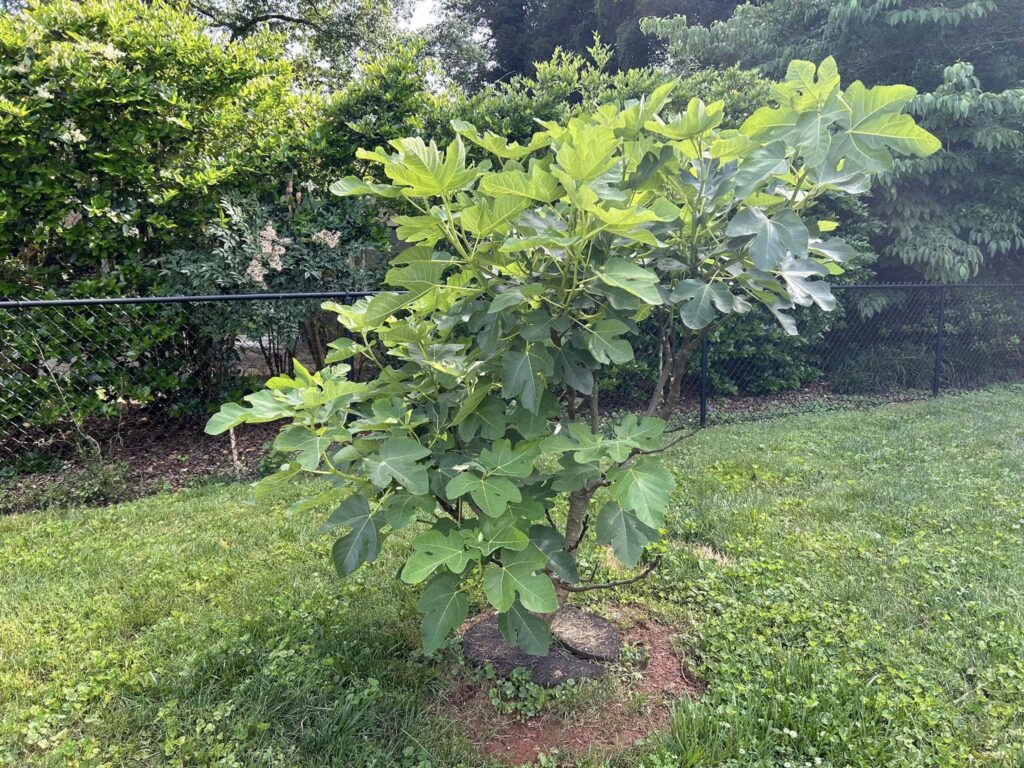
The tree itself is a striking ornamental as well as a productive fruit tree. Its large, deeply lobed leaves — sometimes reaching 10 inches across — give the garden a lush, Mediterranean feel.
The smooth, silver-grey bark and spreading canopy add character and shade. Even without fruit, a mature Brown Turkey fig is a beautiful tree to have in any landscape.
| Common Name | Brown Turkey Fig |
| Other Names | Common Brown Fig, Blue Celeste (in some regions), Texas Everbearing |
| Scientific Name | Ficus carica ‘Brown Turkey’ |
| Plant Family | Moraceae |
| Origin | Mediterranean basin; widely cultivated globally |
| Plant Type | Deciduous tree or large multi-stemmed shrub |
| Mature Height | 15–30 feet (untrained); 8–12 feet (with annual pruning) |
| Mature Spread | 15–25 feet |
| USDA Hardiness Zones | 7–11 (survives brief cold to 10°F / -12°C) |
| Sun Requirement | Full sun, minimum 8 hours daily |
| Soil Preference | Well-drained loam or sandy loam; pH 6.0–6.5 |
| Watering Needs | Moderate; drought-tolerant once established |
| Pollination Type | Parthenocarpic (self-fertile; no pollinator required) |
| Fruit Color | Brownish-purple to copper skin; pink-to-amber flesh |
| Fruit Season | June–July (breba crop); August–October (main crop) |
| Flavor Profile | Mildly sweet, less intense than Black Mission; jammy texture |
| Time to Bear Fruit | 1–2 years from cuttings; 3–5 years from seed |
| Growth Rate | Moderate to fast (1–2 feet per year) |
| Lifespan | 50–100+ years |
| Container-Friendly | Yes — excellent in large pots |
| Common Pests/Diseases | Fig rust, root-knot nematodes, fig beetles, leaf blight |
History and Background
The common fig (Ficus carica) has one of the longest cultivation histories of any fruit crop. It originated in the fertile crescent of Western Asia and spread throughout the Mediterranean thousands of years before the Common Era.
The Brown Turkey cultivar has been grown in Europe since at least the 18th century. It was brought to the Americas by early settlers and missionaries and became particularly popular in the American South, where its heat tolerance and generous cropping made it a kitchen garden staple.
Today, it is sold under several names depending on the region — including Texas Everbearing in parts of the South and Blue Celeste in some nurseries — which can create confusion. Always check the botanical cultivar name when purchasing to ensure you are getting the genuine Brown Turkey variety.
Key Characteristics of the Brown Turkey Fig
Understanding what makes this variety distinctive helps you grow it better.
Fruit
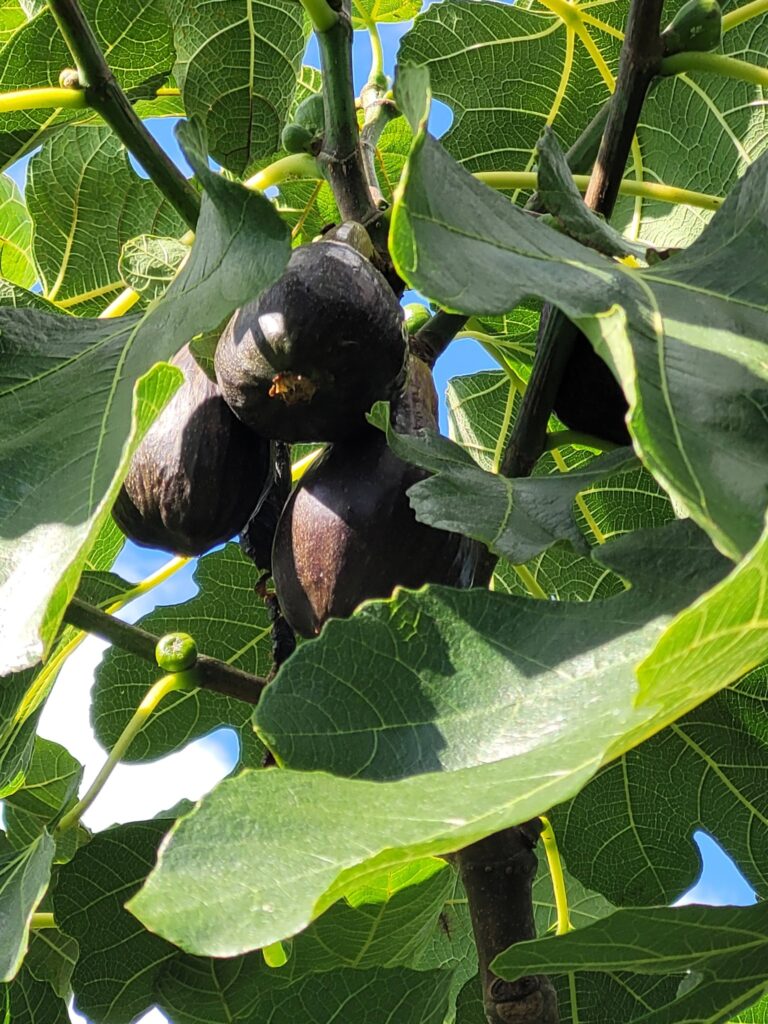
The fruit is medium to large in size, with brownish-purple to copper-toned skin and pale pink to amber flesh inside. The flavor is mild and pleasantly sweet — less intensely rich than Black Mission figs, but more versatile as a result.
The skin is thin and edible. The flesh has a jammy, slightly melting texture when fully ripe.
Brown Turkey figs are excellent for fresh eating, drying, baking, and preserving. Their milder flavor makes them popular with people who find darker figs too sweet or intense.
Two Crops Per Year
One of the most valued traits of the Brown Turkey fig is its ability to produce two distinct crops per season:
- Breba crop — Figs that develop on the previous year’s wood in early summer (June to July). These tend to be larger but fewer in number.
- Main crop — The primary harvest that develops on the current season’s new growth, ripening from August through October.
Not every climate supports both crops reliably. In shorter growing seasons, the breba crop may be cut back in a cold winter. But in zones 8 and warmer, both crops can be expected regularly.
Self-Fertile
Brown Turkey is parthenocarpic, meaning it sets fruit without pollination. You do not need a second tree, and you do not need the presence of the fig wasp (Blastophaga psenes) required by wild and Smyrna-type figs. This makes it ideal for home gardens of any size.
Growth Habit
The tree naturally grows as a spreading, multi-stemmed shrub or tree with a rounded canopy. Without pruning, it can reach 25–30 feet in height over many years.
With annual pruning — which most home gardeners should practice — it is easily kept at 8–15 feet, making fruit harvest far more manageable.
Climate and Hardiness Zones
Brown Turkey is rated for USDA hardiness zones 7 through 11, which covers a significant portion of the continental United States, the British Isles, coastal Europe, and much of Australia and New Zealand.
It can tolerate brief exposure to temperatures as low as 10°F (-12°C) — which is notably lower than most other fig varieties.
However, this cold tolerance applies primarily to the roots and the base of established trees. Young, unestablished trees and top growth are more vulnerable and may die back to the ground in a hard freeze.
The good news: even when top growth dies back, a well-established Brown Turkey fig will almost always resprout from the roots in spring, making it more resilient than most gardeners expect.
In zones 6 and colder, Brown Turkey can still be grown successfully with proper winter protection or in containers that are moved indoors during the coldest months.
A Note for UK Gardeners
Brown Turkey is the most commonly grown fig in the United Kingdom, where it is considered reliably hardy in most of England and Wales. It has been cultivated in British walled kitchen gardens for centuries.
In the UK climate, it typically produces one reliable crop per year (main crop in September), though warm summers can encourage a small breba crop as well.
Also Read: Understanding Celeste Fig Tree: Size, Growth Rate, Problems, and Cultivation Details
Planting the Brown Turkey Fig Tree
Getting the planting right is the single most important step for long-term success.
Best Time to Plant
- Spring planting (after last frost) is ideal in most climates. The tree has the full growing season to establish its root system before winter.
- Autumn planting works well in mild climates (zones 9–11) where winters are frost-free.
- Container-grown trees can be planted any time during the growing season with adequate irrigation.
Site Selection
Choose the sunniest spot in your garden. Brown Turkey figs need at minimum 8 hours of direct sunlight daily to fruit well. Less sun means fewer, lower-quality figs.
Additional considerations:
- Avoid low-lying areas where cold air settles — frost pockets are particularly damaging to new growth in spring.
- South-facing walls and slopes are ideal in temperate climates. The reflected heat extends the season and improves fruit ripening.
- Keep away from water pipes, drains, and building foundations. Fig roots are vigorous and can cause structural damage if planted too close to infrastructure.
Planting Hole and Soil Preparation
- Dig a hole approximately three times the width of the root ball and equal in depth.
- Loosen the base and sides of the hole to encourage root penetration.
- Mix excavated soil with up to 25% mature compost by volume to improve structure and nutrition.
- If your soil drains poorly, plant on a raised mound 12–18 inches above the surrounding grade, or in a raised bed.
- Place the tree so the root crown sits at or slightly above ground level — never below.
- Backfill, firm gently, and water deeply.
- Apply a 3–4 inch mulch ring extending to the drip line, keeping mulch several inches clear of the trunk.
Root Restriction
An old English technique for improving fig fruit production involves restricting root spread by planting the tree in a confined space — such as a large concrete trough, a brick-lined pit, or a heavy container sunk into the ground. Limiting root spread diverts the tree’s energy from vegetative growth into fruit production.
This practice is especially effective in areas with long, warm summers where unrestricted figs tend to grow rampantly at the expense of fruiting.
Watering Brown Turkey Figs
Consistent watering produces better, larger, and sweeter fruit. Erratic moisture — cycles of drought and flooding — is the primary cause of fruit splitting, premature fruit drop, and substandard flavor.
Guidelines by Growth Stage
- First year after planting: Water deeply two to three times per week. Keep the root zone evenly moist but not waterlogged. The goal is root establishment, not soil saturation.
- Year two and beyond (established trees): Water once a week during dry spells. Allow the top two to three inches of soil to dry slightly between waterings. Deep, infrequent irrigation is far better than frequent shallow watering.
- Container trees: Check daily during summer. Containers dry out quickly in heat and wind. Water until it drains freely from the base.
- During dormancy (winter): Dramatically reduce watering. A dormant tree without leaves needs very little moisture — just enough to prevent the roots from completely desiccating.
Drip Irrigation
Drip irrigation is the gold standard for fig trees. It delivers water directly to the root zone, keeps the foliage dry (reducing fungal disease risk), and makes it easy to maintain consistent moisture levels throughout the season.
Feeding and Fertilizing
Brown Turkey figs are not heavy feeders. In many home garden soils enriched with regular compost, they need very little supplemental fertilization. Over-fertilizing — particularly with nitrogen-rich products — promotes excessive leaf and stem growth at the direct expense of fruit.
Recommended Schedule
- Early spring: Apply a balanced slow-release granular fertilizer (10-10-10 NPK) at the rate recommended on the product label, spread under the canopy.
- Late spring to early summer: A light side-dressing of mature compost or aged manure around the drip line is beneficial.
- Midsummer onward: Stop all fertilization. Allow the tree to transition naturally toward dormancy.
If your tree produces abundant, dark-green foliage but few figs, this is a clear sign of excess nitrogen. Skip fertilizer for the next season and improve drainage.
Annual applications of well-rotted compost are often all the feeding a mature, in-ground Brown Turkey fig truly needs.
Pruning the Brown Turkey Fig Tree
Pruning is essential for keeping Brown Turkey figs productive, manageable, and healthy. The variety’s naturally vigorous growth habit means it can quickly become crowded and difficult to harvest without regular attention.
When to Prune
Prune in late winter, just before bud break — typically late February to mid-March in the Northern Hemisphere. At this point, the tree is dormant, the branch structure is clearly visible, and wounds heal rapidly as growth resumes.
Avoid heavy pruning in autumn. It stimulates late growth that is vulnerable to frost damage.
How to Prune
The goal is to create an open, vase-shaped structure with 4–6 main scaffold branches and adequate spacing between them for sunlight and airflow.
Each year, prune to:
- Remove all dead, crossing, or rubbing branches first. Start with the obvious cuts.
- Take out inward-growing shoots that crowd the center of the tree.
- Head back the main scaffold branches by one-quarter to one-third to encourage lateral branching where fruit will form.
- Remove all suckers emerging from the base or from below any graft line.
- Thin out crowded branch tips — dense growth shades developing fruit and creates conditions for fungal disease.
In established trees, aim to remove no more than 25–30% of the canopy in a single season. Excessive pruning can shock the tree and reduce the following season’s crop.
Pruning for Container Trees
Container-grown Brown Turkey figs can be pruned more aggressively. Because their roots are confined, they are naturally less vigorous. Annual pruning to 6–8 feet tall keeps them compact, productive, and easy to manage.
Tool Hygiene
Always use clean, sharp, quality tools. Disinfect pruning shears between trees — and between cuts if you encounter diseased wood — using a diluted bleach solution (1:9 bleach to water ratio) or 70% isopropyl alcohol.
Winter Care and Cold Protection
While Brown Turkey is the hardiest of the commonly grown fig varieties, extra protection in zones 7 and cooler pays dividends — especially for younger trees in their first two winters.
In-Ground Trees
- After the first hard frost has caused leaf drop, wrap the main trunk and scaffold branches with burlap or horticultural fleece, securing it loosely with twine. Do not use plastic — it traps moisture and causes rot.
- Fill the wrapped canopy with dry straw for added insulation.
- Mound 6–12 inches of dry mulch around the base to protect the root zone.
- In zones 6 and colder, some gardeners tie all the branches together, wrap the entire tree, and create an insulated column — a technique known colloquially as “bundling.”
Container Trees
Move container-grown trees into an unheated but frost-free structure (garage, garden shed, basement) before temperatures drop below 20°F (-7°C). The tree needs cold (below 45°F / 7°C) to complete dormancy, but not damaging freeze.
Light monthly watering during storage prevents root desiccation without triggering premature growth.
Common Pests and Diseases
The following are some of the common problems with Brown Turkey Figs:
Fig Rust (Cerotelium fici)
The most widespread disease affecting Brown Turkey figs, fig rust causes orange-yellow spots on the upper leaf surface and rusty pustules on the undersides. Severe cases lead to early defoliation and reduced fruit quality. The disease is fungal and spreads readily in humid conditions.
Management: Remove infected leaves immediately. Avoid overhead irrigation. Apply copper-based fungicide preventively during humid weather periods.
Root-Knot Nematodes (Meloidogyne spp.)
Microscopic soil pests that invade roots and form swollen galls, disrupting water and nutrient uptake. Trees show general decline — stunted growth, pale leaves, and poor fruiting — despite regular watering and feeding.
Management: Improve soil organic matter. Solarize heavily infested soils before replanting. Use certified nematode-free nursery stock.
Fig Mosaic Virus
A viral disease spread by the fig bud mite (Aceria ficus). It causes irregular yellow mosaic patterns on leaves and distorted fruit. There is no cure.
Management: Remove and destroy severely affected trees. Purchase certified virus-free planting material from reputable nurseries.
Fig Beetles (Cotinis mutabilis) and Dried Fruit Beetles
These beetles are attracted to overripe or split figs and can cause significant damage during harvest season.
Management: Harvest fruit promptly and consistently. Remove any fallen or overripe fruit from the ground. Bird netting also helps reduce beetle entry.
Birds and Squirrels
As with most fruit trees, birds and squirrels can strip a Brown Turkey fig tree before a single fruit reaches the kitchen. Lightweight bird netting draped over the tree during the final weeks of ripening is the most reliable protection.
Harvesting Brown Turkey Figs
A properly ripened Brown Turkey fig is one of the great pleasures of the summer garden. Miss the window, though, and the fruit softens, splits, and ferments within days.
Signs of Ripeness
- The fruit droops noticeably on its stem, losing the upright firmness of an unripe fig.
- Skin color deepens to brownish-purple or copper, depending on sun exposure.
- The base of the fruit (called the eye) may show a small bead of nectar or slight opening.
- The fruit yields gently to the touch — soft but not mushy.
- In warm weather, slight skin cracking near the eye is a reliable indicator of peak ripeness.
Harvesting Technique
Wear gloves or be aware that the milky white latex sap in fig stems and unripe fruit can irritate sensitive skin and eyes. Twist the fig gently and pull downward. It should detach cleanly at the junction with the branch.
Storage and Use
Fresh Brown Turkey figs last 1–2 days at room temperature and up to 5–7 days in the refrigerator. They do not ship or store as well as harder fruits, which is why freshly picked home-grown figs taste nothing like store-bought ones.
For longer storage, dry them in a dehydrator at 135°F (57°C) for 8–12 hours, or freeze them whole for up to 6 months. They also make outstanding jam, preserves, chutneys, and baked goods.
Culinary Uses of Brown Turkey Figs
The mild, sweet flavor of Brown Turkey figs makes them extraordinarily versatile in the kitchen.
- Fresh: Slice over Greek yogurt, pair with soft cheeses (brie, gorgonzola, ricotta), or serve with cured meats.
- Baked: Fig tarts, galettes, and cakes benefit from the fruit’s jammy, slightly caramel texture when heated.
- Preserved: Fig jam and fig chutney are kitchen staples in Mediterranean and Middle Eastern cuisines.
- Dried: Dried Brown Turkey figs are excellent in granola, energy bars, cheese boards, and stuffings.
- Savory applications: Figs pair beautifully with roasted pork, lamb, duck, and in fig-balsamic glazes.
Growing Brown Turkey Figs in Containers
Container culture is one of the most practical ways to grow Brown Turkey figs, particularly in cool climates where winter protection is required.
Container Selection
Choose a container of at least 15–20 gallons capacity with multiple drainage holes. Terracotta pots are traditional and breathable but heavy. High-quality resin or fabric grow bags are more manageable and just as effective.
Potting Mix
Use a well-draining, slightly acidic potting mix — a blend of quality potting compost, coarse perlite, and a small amount of aged bark works well. Avoid mixes with excessive peat that compact over time.
Feeding Container Figs
Container figs exhaust soil nutrients faster than in-ground trees. Feed with a balanced liquid fertilizer every two to three weeks during the growing season, stopping in late summer.
Repotting
Every two to three years, repot into a container one size larger. Alternatively, root-prune the tree — remove it from the pot, trim the outer 2–3 inches of roots and potting mix, and replant into fresh mix in the same pot. This refreshes nutrients and prevents the tree from becoming hopelessly pot-bound.
Propagating Brown Turkey Figs
Like most common fig varieties, Brown Turkey is remarkably easy to propagate from cuttings — one of its most endearing qualities. A single mature tree can yield 20–30 usable cuttings each year.
Hardwood Cutting Method (Best Results)
- In late winter, select healthy, firm wood from last season’s growth, approximately pencil-thick.
- Cut 8–12 inch sections with a clean diagonal cut just below a node at the base and a straight cut above a node at the top.
- Allow cut ends to dry for 2–4 hours to seal the latex sap.
- Dip the base in rooting hormone powder or gel (indole-3-butyric acid, or IBA).
- Insert into a pot filled with moist perlite or a 50:50 perlite/coco coir mix.
- Place in a warm location (65–75°F / 18–24°C) with bright indirect light.
- Keep the medium consistently moist. Roots typically form in 4–8 weeks.
- Pot on into larger containers once roots are well-established.
Softwood cuttings taken in early summer can also work, though they require slightly more care to prevent wilting before rooting occurs.
Frequently Asked Questions
Is the Brown Turkey fig better than Black Mission?
They serve different purposes. Black Mission produces darker, richer, more intensely sweet figs — excellent for drying and culinary use. Brown Turkey is milder, more versatile, and far more cold-tolerant. For most home gardeners in temperate climates, Brown Turkey is the better practical choice.
How many figs does a mature Brown Turkey tree produce?
A well-established, mature tree can produce 50–100 pounds of fruit per year under ideal conditions — sometimes more. Productivity depends heavily on sunlight, consistent watering, and proper pruning.
Can I grow a Brown Turkey fig in zone 6?
Yes, with winter protection. Mulch the root zone heavily, wrap the trunk and branches with burlap, and consider bending and bundling the tree for severe winters. Even if top growth dies, the protected roots will typically resprout in spring.
Why is my Brown Turkey fig not fruiting?
Common causes include: insufficient sunlight, nitrogen excess from over-fertilizing, heavy pruning in the wrong season (summer or autumn), a very young tree still maturing, or root damage from nematodes. Ensure 8+ hours of direct sun and stop all fertilization for a season.
Are Brown Turkey fig leaves toxic to pets?
The sap and leaves of Ficus carica are mildly toxic to dogs and cats, causing skin irritation and gastrointestinal upset if ingested. Ripe fruit in small amounts is generally not harmful, but it is wise to keep pets away from the tree and fallen figs.
Closing Thoughts
The Brown Turkey fig tree is not just easy to grow — it is genuinely a joy to grow. It rewards attentive gardeners and forgives less attentive ones. It produces beautiful, flavorful fruit that most people can only find in supermarkets.
If you plant one this spring, tend it through its first season, and protect it through its first winter, you will have the foundation of a tree that could outlast you. That is a rare gift in gardening — and the Brown Turkey fig offers it freely.
References
- University of Florida IFAS Extension — Figs for the Home Landscape https://edis.ifas.ufl.edu/publication/MG055
- University of California Agriculture & Natural Resources — UC IPM — Fig Pest Management Guidelines https://ipm.ucanr.edu/agriculture/fig/
- USDA Natural Resources Conservation Service — PLANTS Database: Ficus carica L. https://plants.usda.gov/home/plantProfile?symbol=FICA
- North Carolina State University Cooperative Extension — Plant Toolbox: Ficus carica https://plants.ces.ncsu.edu/plants/ficus-carica/
- Purdue University New Crops Resource Online Program — Morton, J. (1987). Fig. In: Fruits of Warm Climates. https://www.hort.purdue.edu/newcrop/morton/fig.html

Tim M Dave is a gardening expert with a passion for houseplants, particularly cacti and succulents. With a degree in plant biology from the University of California, Berkeley, he has vast experience in gardening. Over the years, he has cultivated a vast collection of desert plants and learned a great deal about how to grow and care for these unique companions.