Kadota Fig Tree: Size, Growth Rate, Problems, and Care Details
The Kadota fig tree (Ficus carica ‘Kadota’) is one of the most celebrated fig cultivars in the world. This beautiful, yellow-green variety has won the hearts of many gardeners because of its honey-like signature taste.
If you want to grow it in your backyard, a container on your patio, or a commercial orchard, this guide covers everything you need to know — from its ancient origins to modern care practices.
| Botanical Name | Ficus carica ‘Kadota’ |
| Common Names | Kadota Fig, White Kadota, Dottato (Italy), Peter’s Honey Fig, Lemon Fig, Moscatel Branco (Portugal) |
| Plant Family | Moraceae |
| Origin | Mediterranean/Western Asia (Italy) |
| USDA Hardiness Zones | 7–11 (root hardy in zones 5–6 with protection) |
| Mature Height | 10–25 feet (3–7.5 m); smaller with pruning |
| Mature Spread | 15–25 feet (4.5–7.5 m) |
| Growth Rate | Medium |
| Fruit Skin Color | Yellow-green to golden yellow when ripe |
| Fruit Flesh Color | Amber to pale pink |
| Flavor Profile | Sweet, honey-like, mildly nutty |
| Ripening Season | Late summer through early fall (main crop); spring breba crop possible |
| Sun Requirements | Full sun (minimum 8 hours daily) |
| Water Needs | Moderate; drought-tolerant once established |
| Soil Preference | Well-drained, loamy; pH 6.0–6.5 |
| Chill Hours Required | Very low — 100 hours or less |
| Pollination | Self-fertile (no pollinator needed) |
| Bearing Age | 1–2 years after planting |
| Yield | 10–15+ lbs per plant |
| Lifespan | 50+ years |
| Best Uses | Fresh eating, drying, canning, jams, preserves, commercial processing |
| Container Suitable | Yes (minimum 15-gallon pot) |
A Tree With Thousands of Years of History
To understand the Kadota fig, you first have to appreciate its remarkable past. The common fig (Ficus carica) has been cultivated since at least 5,000 BCE, originating in the Old World tropics — specifically Asia Minor and the broader Mediterranean region.
It is one of the earliest known cultivated fruit species in human history.
The Kadota variety itself is believed to trace its roots to ancient Italy, where it is known as Dottato — its true historical name. In Portugal, it goes by Moscatel Branco, while in parts of the United States it is sometimes called Peter’s Honey Fig.
This variety may well be the most commercially important fig in the world over the past two millennia, particularly for drying.
In the United States, the Kadota’s story is specifically tied to California. Spanish missionaries introduced figs to the western coast as early as 1769, including the Kadota.
By 1946, more than fifteen percent of California’s entire fig production consisted of Kadotas. The variety had become a staple of commercial orchard farming, valued for its consistent quality, high sugar content, and suitability for canning and drying.
The credit for formally identifying and naming the Kadota in California is largely given to horticulturist Stephen H. Taft of Sawtelle, Southern California, who recognized the exceptional qualities of this variety and helped distribute it across the state.
What Does the Kadota Fig Tree Look Like?
The Kadota fig tree is a deciduous tree with stout, spreading branches and a rounded crown. Its winter silhouette — bare of leaves but marked by its distinctive branching pattern — adds quiet character to a garden even during the cold months.
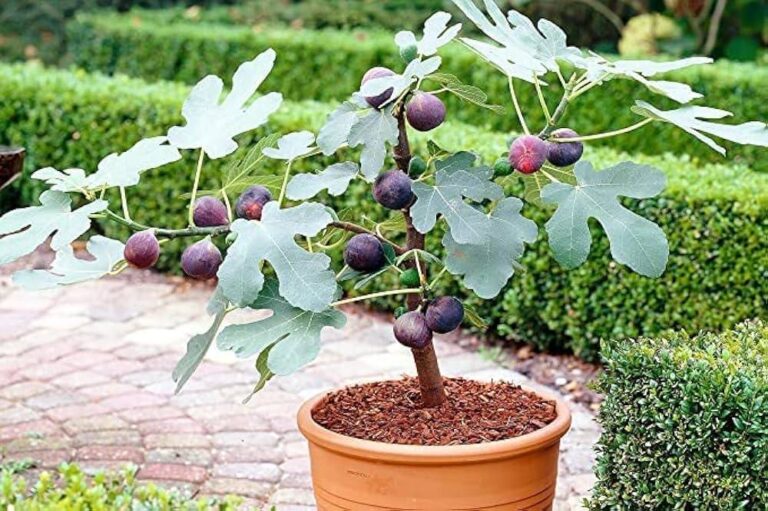
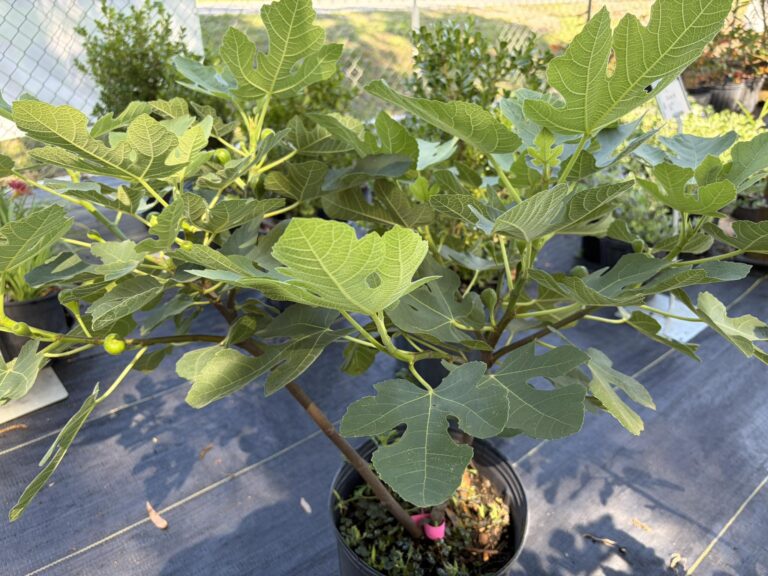
The leaves are large and deeply lobed, typically divided into three to five lobes. They are dark green on top and slightly rough to the touch due to short, stiff hairs on both surfaces. In summer, these leaves create a lush, tropical-looking canopy.
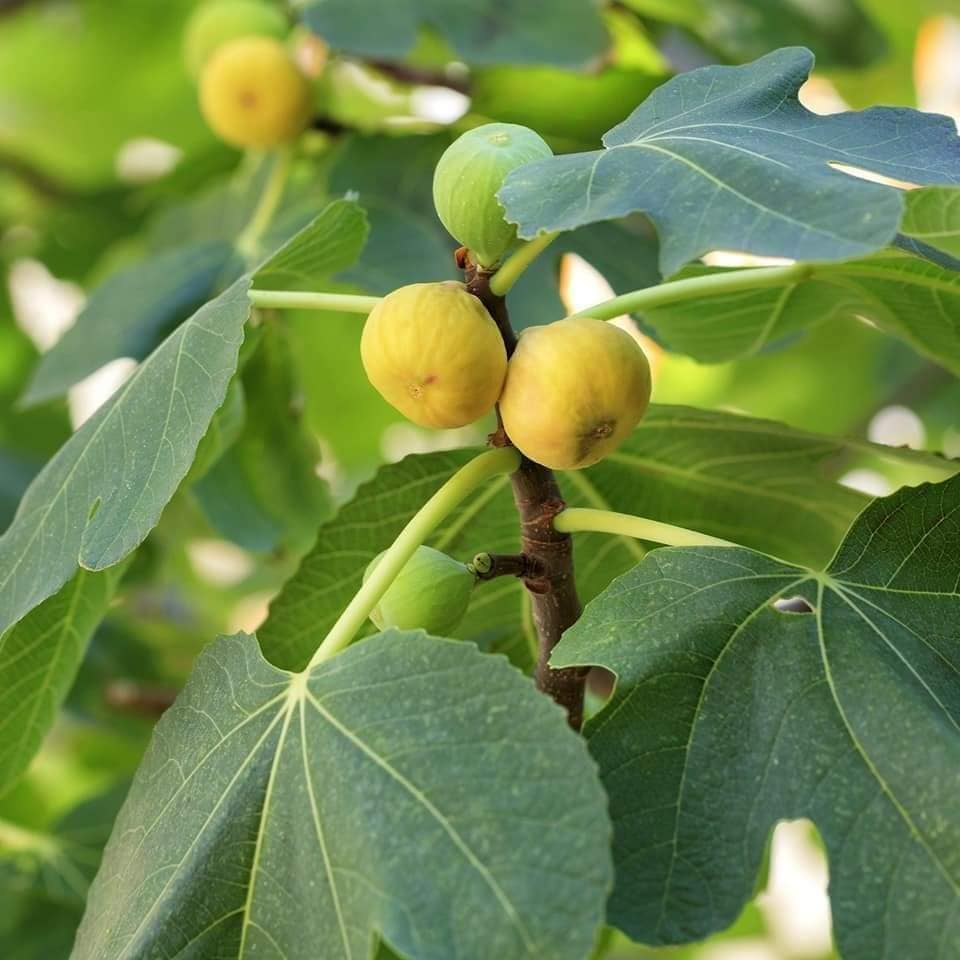
The fruit is perhaps the tree’s most distinguishing feature. Kadota figs are yellow-green to golden yellow when fully ripe. The skin is thin and smooth. Inside, the flesh is amber to pale pink, soft, and extraordinarily juicy when ripe.
The taste is honey-sweet with a mild, slightly nutty undertone — less intensely sweet than some darker fig varieties like the Brown Turkey and Black Mission, which actually makes it more versatile in cooking.
Unlike most flowering trees, the Kadota does not produce visible flowers. The flowers are formed inside the fig itself — inside a structure called a syconium — which is actually what you eat when you bite into a fig.
What appears to be a fruit is technically a hollow receptacle lined with tiny flowers.
Where Does the Kadota Fig Tree Grow Best?
The Kadota thrives in warm, Mediterranean-like climates — places with long, hot summers and mild winters. This should come as no surprise given its Italian and Mediterranean origins.
USDA Hardiness Zones
Ideal zones are 7 through 11. However, the Kadota can be root-hardy in zones 5 and 6 when planted in sheltered locations and given proper winter protection. Even if the above-ground portions die back due to frost, the roots can survive and send out new vigorous growth the following spring.
Sunlight
This is non-negotiable: the Kadota fig needs full sun. A minimum of 8 hours of direct sunlight per day during the growing season is essential. Less light leads to weaker fruit production and slower overall growth.
Planting in a south-facing, open location is ideal. If you are in a cooler climate, planting the tree against a south-facing wall can help retain radiant heat and extend the growing season.
Temperature Tolerance
The Kadota is moderately cold-hardy, tolerating temperatures as low as 10°F to 15°F (–12°C to –9°C) when fully dormant. Sudden temperature drops or prolonged freezes can damage young trees or kill branches.
In colder regions, mulching and wrapping become essential practices.
Chill Hours
One of the most remarkable features of the Kadota is how few chill hours it requires — only 100 hours or less.
This makes it an outstanding choice for gardeners in subtropical climates, warm coastal zones, or regions where most other deciduous fruit trees would fail to perform due to insufficient winter cold.
Soil Requirements
The Kadota fig is refreshingly adaptable when it comes to soil. It will grow in sandy soils, clay-heavy soils, and everything in between — as long as drainage is adequate.
That said, the ideal soil profile is:
- Well-drained and loamy
- Slightly acidic to neutral — a pH of 6.0 to 6.5 is optimal
- Rich in organic matter, though the tree can tolerate less-fertile soils
The tree is also notably tolerant of urban pollution and environmental salt, which makes it suitable for city gardens and coastal landscapes alike.
Poor drainage is the enemy. Standing water around the roots will lead to root rot, which can be fatal. If your soil drains slowly, amend it with coarse sand and organic matter, or build a raised planting mound.
How to Plant a Kadota Fig Tree
Planting correctly sets up your tree for decades of success. Follow these steps:
When to Plant
Plant in spring or early fall. Spring planting gives the tree a full growing season to establish roots before winter. Early fall planting allows root development while the soil is still warm.
Choosing a Location
Select a site that receives at least 8 hours of sun. Ensure there is enough space — a mature Kadota can spread 15 to 25 feet wide. Keep the tree away from building foundations, underground water pipes, and power lines, as fig roots can be aggressive.
Planting Steps
- Dig a hole twice as wide as the root ball and the same depth.
- Amend the backfill with compost or aged organic matter.
- Set the tree at the same depth it was growing in the nursery container — never deeper.
- Backfill carefully, gently pressing soil to eliminate air pockets.
- Water deeply immediately after planting.
- Apply a 3–4 inch layer of mulch around the base, keeping it a few inches away from the trunk.
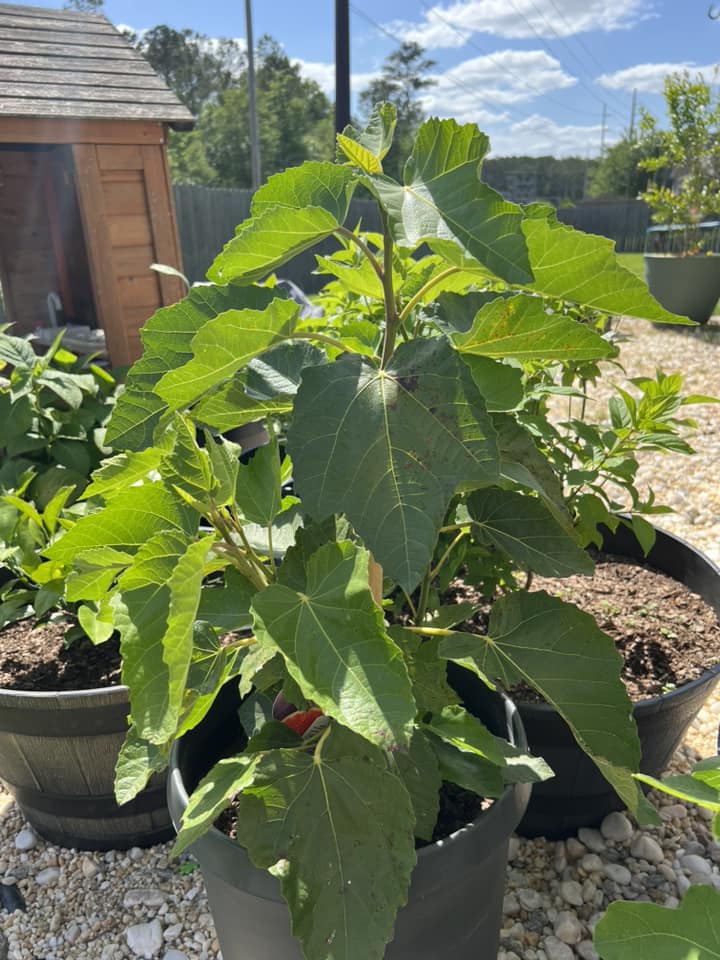
For container planting, use a pot of at least 15 gallons with drainage holes. Fill with a high-quality, well-draining potting mix.
Watering the Kadota Fig Tree
Watering needs change with the tree’s age and the season.
Young trees need consistent moisture — about 1 to 2 inches of water per week during the growing season. This helps establish a strong root system.
Mature trees are considerably more drought-tolerant but still benefit from deep, infrequent watering. Deep watering encourages roots to grow further into the ground, improving drought resilience.
The simplest way to check: insert your finger 2 inches into the soil. If it is dry, it is time to water. If it still feels moist, wait another day or two.
Reduce watering in fall and winter. The tree needs less moisture during dormancy. Overwatering during this period is a common mistake that leads to root rot.
Fertilizing for Maximum Fruit Production
Feeding the Kadota correctly encourages vigorous growth and abundant fruiting:
- Early spring (March/April): Apply a balanced fertilizer such as 10-10-10 NPK. Use approximately 1 pound per year of tree age, up to 5 pounds for mature trees.
- Early summer (June): Apply a nitrogen-heavy fertilizer (such as 21-0-0) to support fruit development. Use half the spring amount.
- Late summer (August, optional): Apply a light potassium-rich fertilizer (like 0-0-50) to improve fruit quality and prepare the tree for dormancy.
Always spread fertilizer around the drip line — not directly against the trunk — and water thoroughly afterward. Established trees generally need fertilizing every 2 to 3 years once fully mature.
Pruning the Kadota Fig Tree
Pruning is one of the most important maintenance tasks for this tree. Done right, it improves airflow, encourages new growth (where figs are produced), and keeps the tree at a manageable size.
The best time to prune is late winter — after the coldest part of winter has passed, but before new growth begins in spring. This timing minimizes stress to the tree.
Key pruning principles:
- Remove dead, damaged, or diseased wood at every pruning session.
- Cut back branches to about two-thirds of their height to encourage a strong structure.
- Thin dense interior branches to improve airflow and sunlight penetration.
- Prune laterals back to a few leaves to prevent overcrowding.
- Always use sharp, clean tools to make clean cuts and prevent disease transmission.
For container-grown trees or those in smaller gardens, more frequent, lighter pruning will keep the Kadota compact without sacrificing fruit production.
How Much Fruit Can You Expect?
The Kadota is known for producing two crops per year under favorable conditions:
- Breba crop (spring): This smaller, early crop forms on the previous year’s wood. It is typically less flavorful than the main crop.
- Main crop (late summer to early fall): This is the primary harvest — the one most growers look forward to. Ripe figs droop naturally from the branch when ready to pick. Ripening typically occurs from late September through December depending on climate and location.
Yield per tree: A healthy, mature Kadota fig tree can produce 10 to 15 pounds of fruit or more in a single season. Commercial orchards manage far higher yields with careful management.
The Kadota is self-fertile, meaning you only need one tree to produce a full crop. No pollinator tree is required.
Culinary Uses: What Can You Do With Kadota Figs?
This is where the Kadota truly shines. Its mild, honey-like sweetness and thin, edible skin make it one of the most versatile figs for both fresh eating and food processing.
Here are the best ways to enjoy Kadota figs:
- Fresh eating: Eat them straight off the tree. Their soft, juicy flesh needs nothing added.
- Drying: The Kadota’s high sugar content makes it one of the best fig varieties for drying. Dried Kadota figs are chewy, intensely sweet, and store well for months.
- Canning: This is historically the Kadota’s most commercially important use. The fruit holds its shape well during canning.
- Jams and preserves: The natural pectin and sweetness in Kadota figs make excellent spreads.
- Baking: Fold them into bread, cakes, tarts, and muffins.
- Salads and charcuterie boards: Pair with blue cheese, walnuts, honey, or prosciutto.
- Savory dishes: Roast or grill Kadota figs alongside poultry or pork for a sweet, complex flavor profile.
Interestingly, the Kadota (as Green Kadota) is also believed to have been historically used as the fig filling in Fig Newton cookies — a fun piece of culinary trivia for fig enthusiasts.
Nutritional Value of Kadota Figs
Kadota figs are not just delicious — they are genuinely nutritious. Each 2-ounce (approximately 57 g) serving provides roughly:
- Calories: ~47
- Dietary fiber: ~1.2 grams
- Potassium: ~240 mg
- Calcium: ~35 mg
- Vitamin A, Vitamin K — both present in meaningful amounts
Figs are among the highest plant sources of calcium known to exist — an important fact for those looking to support bone health through diet.
They are also rich in phenolic compounds, which have well-documented antioxidant and anti-inflammatory properties. These compounds help protect the body against oxidative stress, support cardiovascular health, and contribute to healthy digestion.
The dietary fiber in Kadota figs supports bowel regularity and cholesterol management, while the natural sugars provide a clean, sustained energy source without the crash associated with processed sweets.
Common Pests and Diseases
The Kadota fig is remarkably pest-resistant compared to many fruit trees. In most growing regions, the tree encounters very few serious threats.
Common pests to watch for:
- Birds: The biggest threat to ripening figs. Cover the tree or individual branches with bird netting as fruit begins to ripen.
- Aphids, scale, spider mites, and mealybugs: Occasional infestations are possible. Treat with insecticidal soap or neem oil.
- Root-knot nematodes: More problematic in warmer soils. Choose resistant rootstocks if nematodes are known to be present in your area.
Diseases:
- Fig Mosaic Virus (FMV): This benign virus exists in virtually all cultivated fig trees worldwide — even in the USDA’s national germplasm repository for figs. It causes yellow spotting on leaves. It is cosmetic and does not significantly impact fruit quality or tree health.
- Blight and leaf spots: Occasional, but rarely serious.
- Root rot: Caused by overwatering or poor drainage — the most preventable problem with this tree.
Good air circulation, proper drainage, and avoiding overwatering will prevent the majority of problems before they start.
Growing Kadota Figs in Containers
One of the practical joys of the Kadota fig is that it adapts beautifully to container cultivation. This makes it accessible even to gardeners with small spaces, patios, balconies, or cold climates where winter storage indoors is necessary.
Tips for container success:
- Use a pot of at least 15 gallons to give roots adequate room.
- Ensure the pot has drainage holes — this is critical.
- Use a well-draining potting mix to prevent waterlogging.
- Water more frequently than in-ground trees, as containers dry out faster.
- Bring the container indoors or to a sheltered space during hard winters in colder zones.
- Repot every 2–3 years, or when the tree becomes visibly root-bound.
Container-grown Kadota figs may produce slightly smaller yields than their in-ground counterparts, but the fruit quality remains excellent.
Winter Protection in Colder Climates
In USDA zones 5, 6, and 7, some winter protection is advisable — especially for young trees.
Practical protection methods:
- Mulch heavily: Apply a 4–6 inch layer of straw or wood chip mulch around the base to protect roots from freezing.
- Wrap branches: Use burlap or frost cloth to wrap the above-ground portions.
- Insulate with straw bales: Surround the tree with straw bales stuffed with dry leaves for extra insulation.
- Bend and bundle branches: The Kadota’s flexible wood allows branches to be gently bent and tied together, then wrapped, to reduce frost exposure.
Even if the above-ground wood is killed by a hard freeze, the insulated root system will push out vigorous new shoots in spring. Since figs fruit on new wood, you may still get a respectable crop the same year.
Frequently Asked Questions
How long does a Kadota fig tree live? Under good growing conditions, a Kadota fig tree can live for 50 years or more. Well-maintained trees often become garden landmarks.
When should I pick Kadota figs? Pick them when the fruit droops on the branch, feels soft to gentle pressure, and shows a fully golden-yellow skin. Figs do not continue to ripen after they are picked, so patience is important.
Do Kadota fig trees need a lot of water? Not excessively. Young trees need regular watering, but mature Kadotas are drought-tolerant. Deep, infrequent watering is always better than frequent shallow watering.
Can I grow a Kadota fig indoors? The Kadota can be grown in a large container indoors in a very sunny space, such as near a south-facing window or under grow lights. However, it will not reach its full potential without outdoor sunlight.
Is the Kadota fig self-pollinating? Yes. The Kadota is self-fertile. You can grow a single tree and still get a full crop of fruit each season.
Final Thoughts
After spending time learning about the Kadota, it is difficult not to be won over by this tree. It is generous in its fruiting, forgiving in its soil preferences, and remarkably low-maintenance once established.
Whether you are a first-time gardener or a seasoned orchardist, the Kadota offers a rewarding growing experience.
It is particularly well-suited for:
- Warm, dry climates with long summers
- Subtropical regions with minimal chill hours
- Container gardeners in temperate zones
- Anyone seeking a reliable, high-quality drying or canning fig
- Home gardeners wanting a beautiful, ornamental fruit tree
With proper planting, consistent care, and patience for the first couple of seasons, your Kadota fig tree can become a decades-long source of extraordinary fruit — and a living landmark in your garden.
References
- University of Florida IFAS Extension — The Fig (Ficus carica L.) https://edis.ifas.ufl.edu/publication/MG214
- Oregon State University — Landscape Plants https://landscapeplants.oregonstate.edu/plants/ficus-carica
- NC State Extension — North Carolina Extension Gardener Plant Toolbox https://plants.ces.ncsu.edu/plants/ficus-carica/
- University of Maryland Extension Growing Figs in Maryland https://extension.umd.edu/resource/growing-figs-maryland
- USDA PLANTS Database Official USDA plant profile for Ficus carica (edible fig), including distribution data, classification, and native range. https://plants.usda.gov/plant-profile/FICA

Tim M Dave is a gardening expert with a passion for houseplants, particularly cacti and succulents. With a degree in plant biology from the University of California, Berkeley, he has vast experience in gardening. Over the years, he has cultivated a vast collection of desert plants and learned a great deal about how to grow and care for these unique companions.