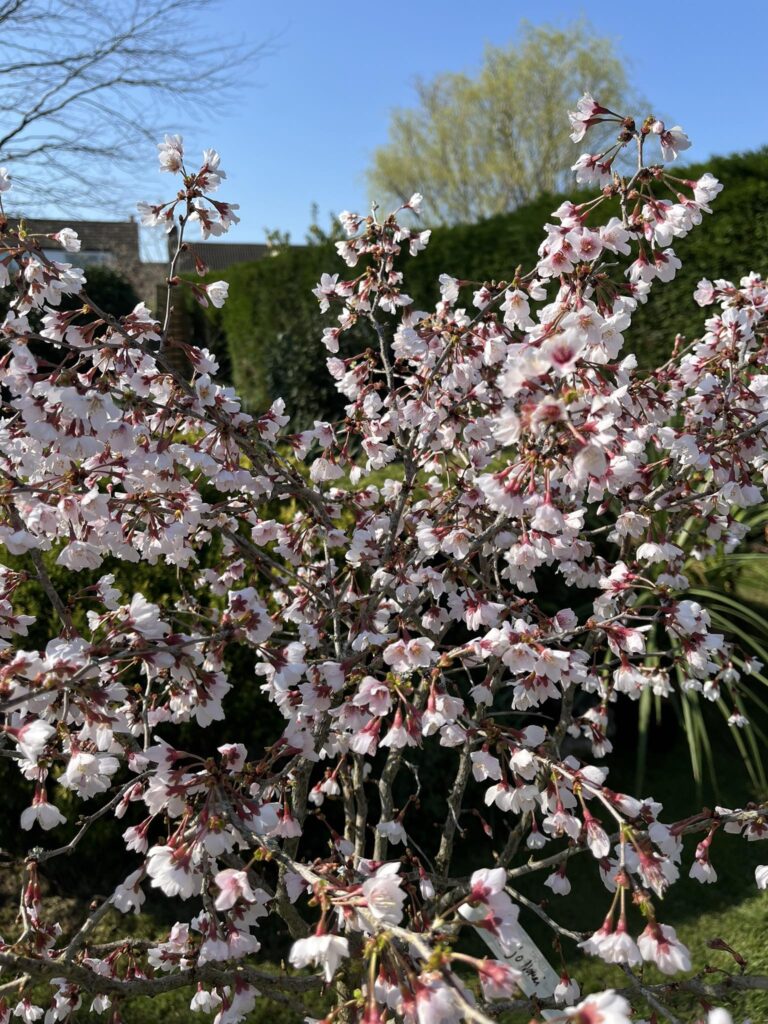
25 Cold Hardy Palm Trees That Actually Survive Winter (Identification With Pictures)
If you have ever watched a palm tree die in a hard freeze, you know how discouraging it feels. You chose it for beauty, for that tropical atmosphere — and winter took it. The good news is that not all palms are the same.
A carefully selected group of cold hardy palm trees can survive temperatures well below freezing, and some even thrive in USDA zones 6 and 7 where snow is a regular visitor.
This article covers 25 cold hardy palms in genuine detail — where they come from, how cold they can go, and what you need to know before planting.
What Makes a Palm “Cold Hardy”?
Cold hardiness in palms is not just about surviving one cold night. It depends on several factors working together:
- The duration of the cold: A palm that handles 15°F (-9°C) for two hours may fail at 22°F (-5°C) for five days.
- Soil drainage: Wet, cold roots damage palms faster than cold air alone.
- Acclimatization: A palm grown slowly in a cooling climate builds more cellular protection than one rushed from a greenhouse.
- The age and size of the plant: Larger, established palms endure cold far better than newly planted specimens.
The USDA Plant Hardiness Zone Map remains the standard reference for cold tolerance in North America. Most of the palms below are rated for zones 6 through 9, though microclimates, windbreaks, and proper siting can extend their viability beyond published limits.
ALSO READ: 15 Palm Tree Diseases (With Pictures, And How to Treat Them)
The 25 Best Cold Hardy Palm Trees
1. Needle Palm (Rhapidophyllum hystrix)
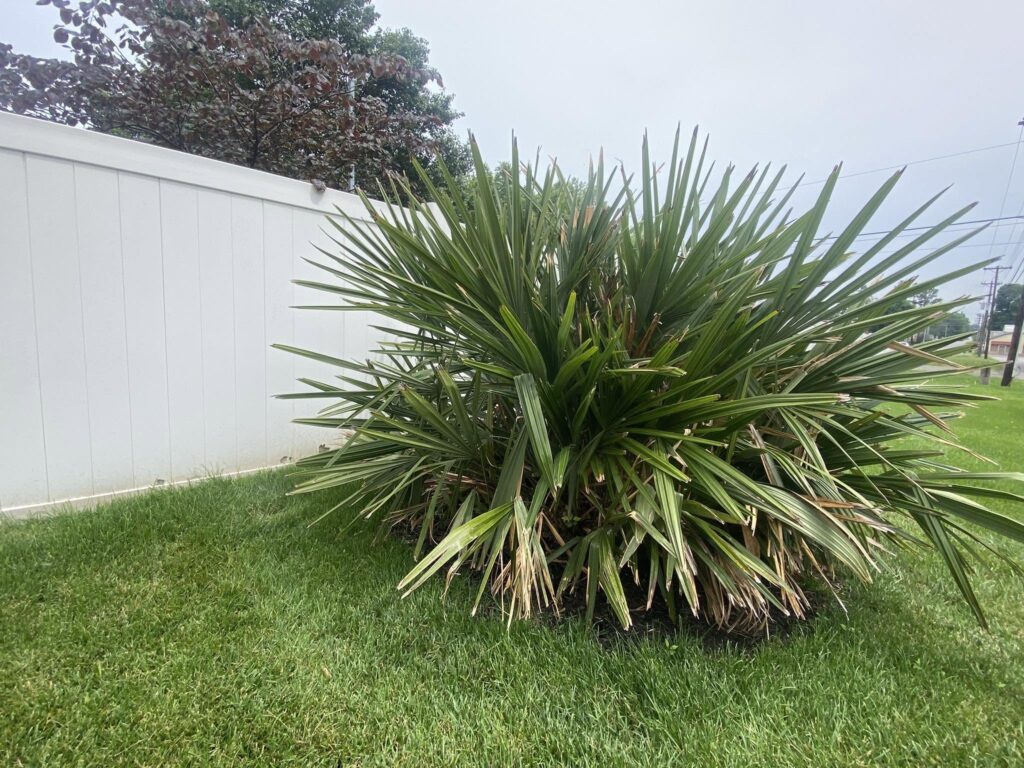
The Needle Palm holds a remarkable distinction: it is widely regarded as the most cold hardy palm in the world. Native to the southeastern United States — particularly the coastal plains of Florida, Georgia, and South Carolina — it has survived documented temperatures as low as -20°F (-29°C) in controlled conditions, though most sources list reliable hardiness to 5°F (-15°C) in zones 6b through 11.
It grows as a dense, clustering shrub rather than a classic single-trunk tree, reaching 3 to 6 feet tall. Its common name comes from the long, sharp needles concealed within the leaf bases — a natural defence that makes it nearly impenetrable to animals and intruders.
Best for: Cold climate gardeners who want an authentic palm without the risk. Excellent as a foundation plant or natural barrier.
2. Windmill Palm (Trachycarpus fortunei)
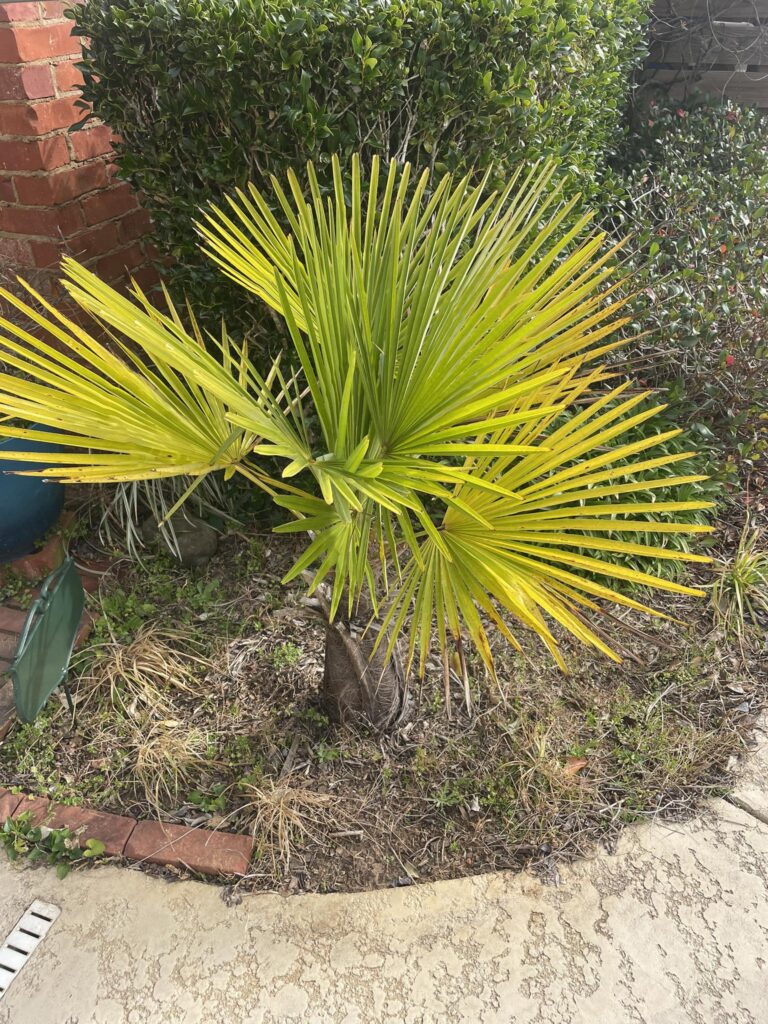
The Windmill Palm is perhaps the most widely planted cold hardy palm in the world. It originates from central China and the Himalayas — not the tropics — which explains its extraordinary cold tolerance. It handles temperatures down to 5°F to 10°F (-15°C to -12°C), making it suitable for USDA zones 7b through 11.
Its trunk is covered in a distinctive fibrous brown matting — actually old leaf base fibres — which provides natural insulation against cold. It grows slowly to 20–40 feet tall, with fan-shaped leaves up to 3 feet wide.
Best for: Gardeners in the mid-Atlantic, Pacific Northwest, and Southern UK who want a tall, elegant palm with genuine winter survival.
3. European Fan Palm (Chamaerops humilis)
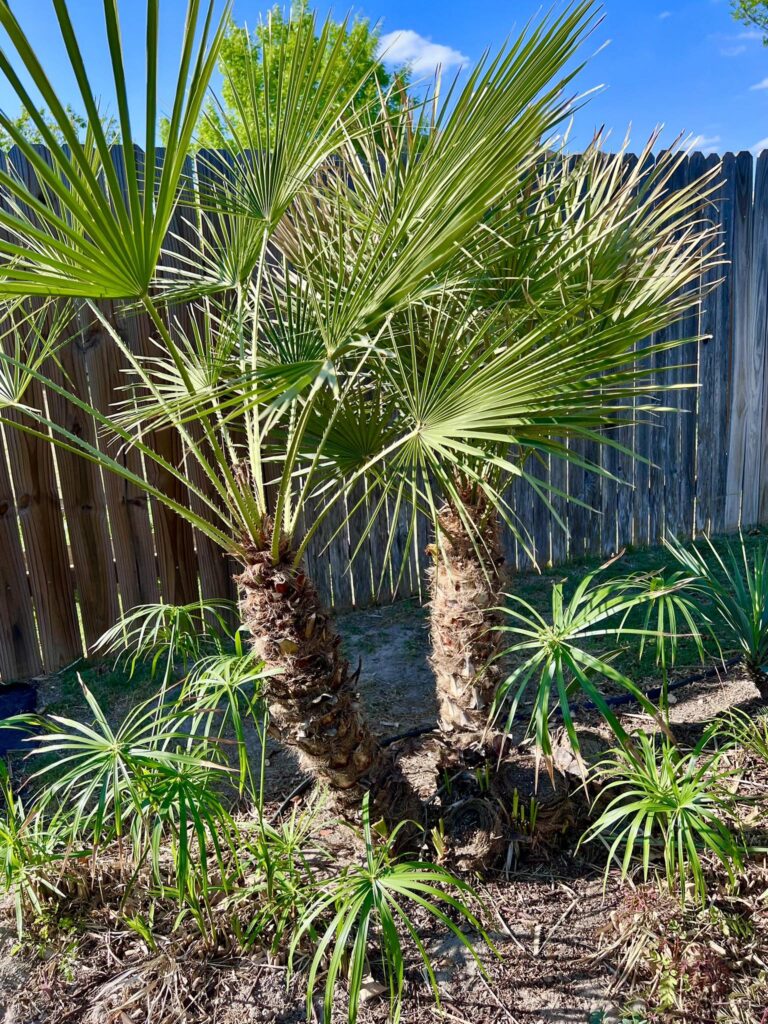
This is the only palm species native to continental Europe, growing wild in Spain, Italy, and North Africa. It tolerates temperatures as low as 10°F (-12°C) and performs well in zones 7b through 11.
It is multi-stemmed and shrubby, rarely exceeding 15 feet, with stiff blue-green or grey-green fan leaves. Its drought tolerance makes it exceptional for Mediterranean-style gardens. It also performs well in containers, which allows gardeners in colder zones to move it indoors during severe winters.
Best for: Dry climates, coastal gardens, and container growing in zones 7 and above.
4. Sabal Palm (Sabal palmetto)
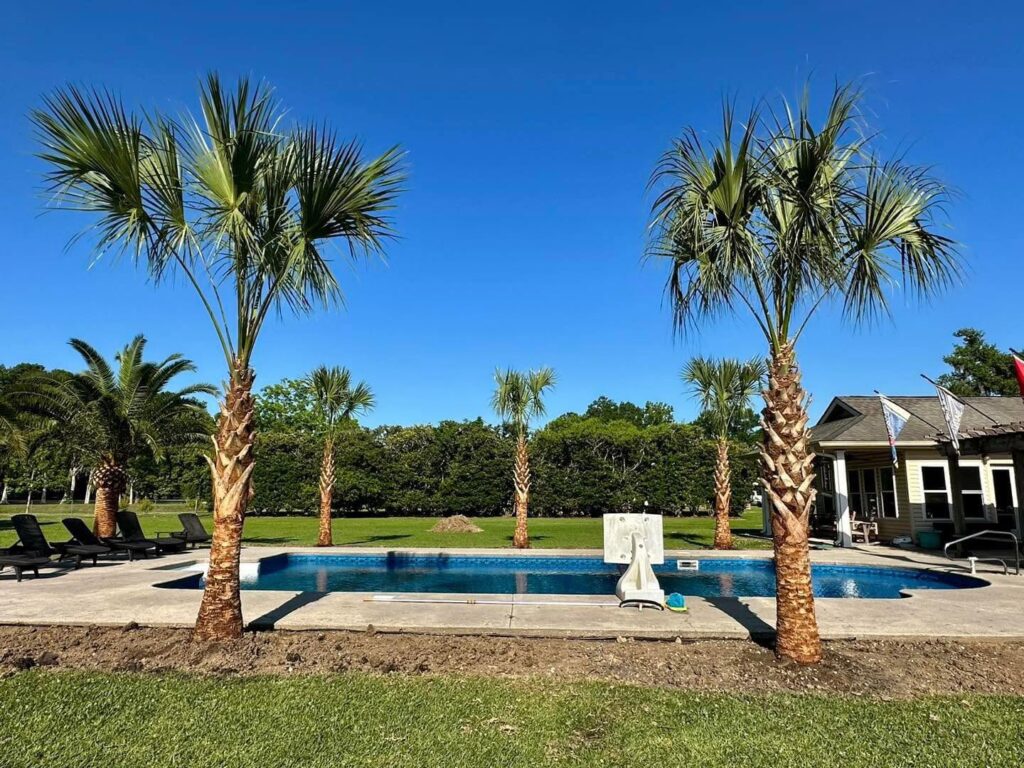
The Sabal Palm — also called the Cabbage Palm — is the state tree of Florida and South Carolina. It endures temperatures around 15°F to 20°F (-9°C to -6°C) and is hardy in zones 8 through 11.
One of its great strengths is its ability to regenerate after freeze damage. Even if the fronds die back completely in a cold event, the growing tip buried within the trunk often survives. It grows 30 to 60 feet tall, is highly salt-tolerant, and adapts to both dry and wet soils.
Best for: Coastal southeastern gardens, large landscapes, and street planting in warm-temperate climates.
5. Saw Palmetto (Serenoa repens)
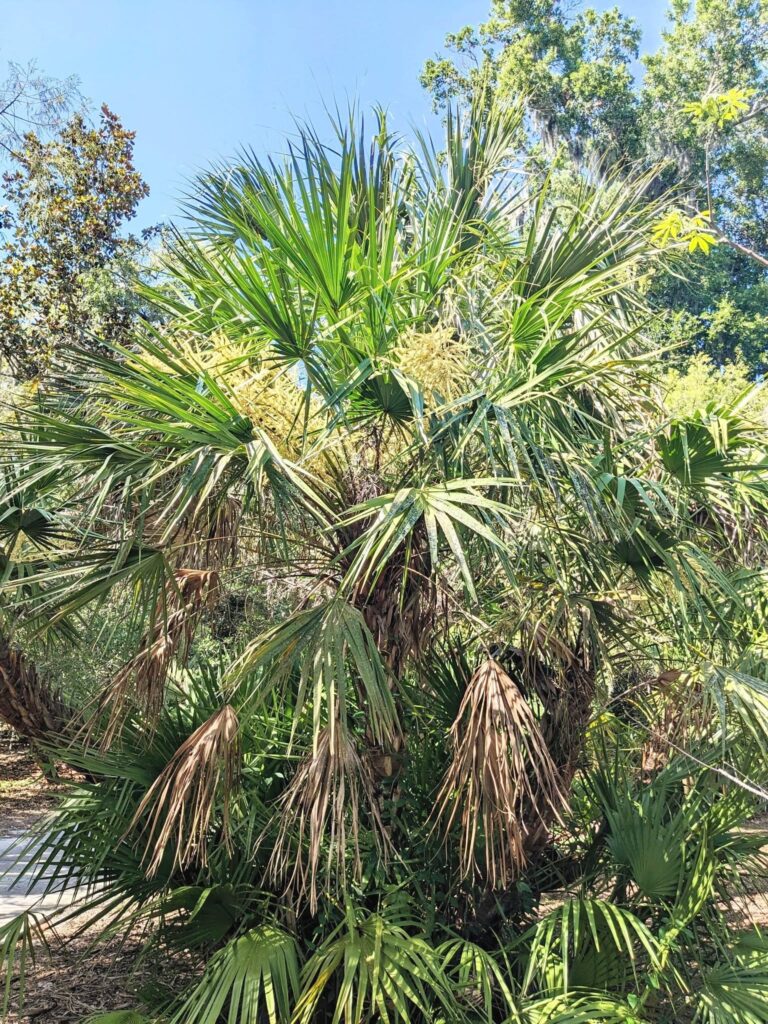
Saw Palmetto grows across the southeastern United States from South Carolina to Texas, forming low, spreading clumps rarely more than 7 feet tall. It tolerates temperatures as low as 15°F (-9°C) and thrives in zones 8 through 11.
It is extraordinarily drought-tolerant and grows in poor, sandy soils with minimal care. The silvery-blue variety (Serenoa repens ‘Cinerea’) is especially beautiful. Beyond the garden, Saw Palmetto has a well-documented role in herbal medicine, with extracts used in prostate health supplements.
Best for: Low-maintenance landscapes, naturalistic plantings, and wildlife-friendly gardens. It produces berries that support dozens of bird and mammal species.
6. Dwarf Palmetto (Sabal minor)
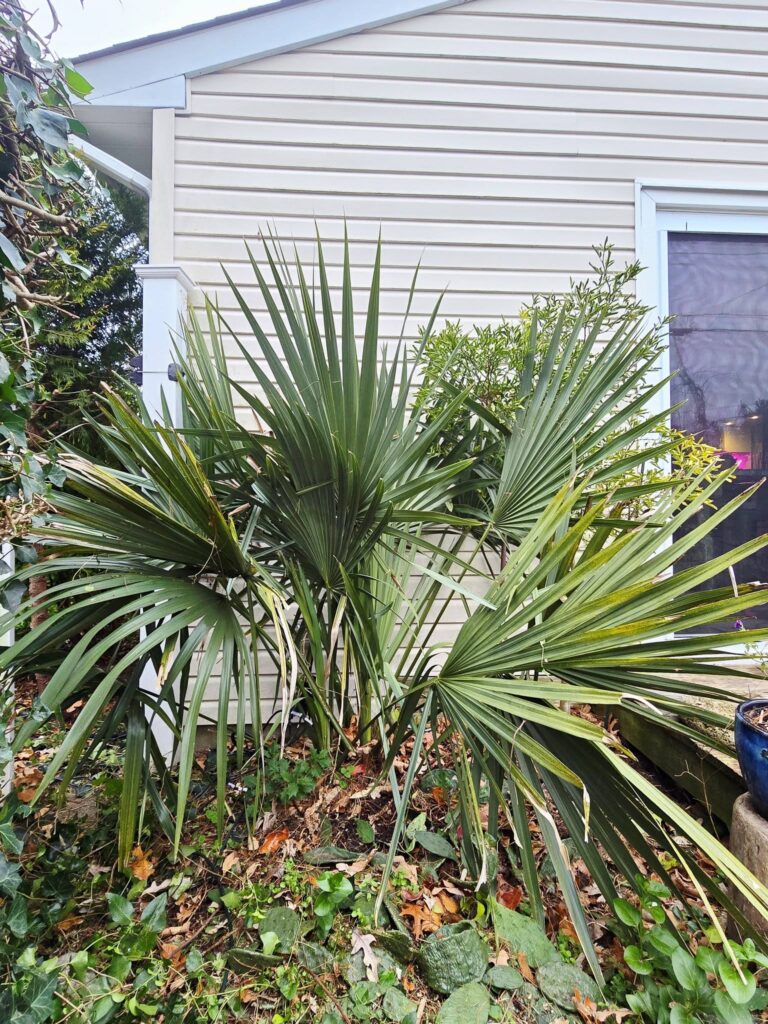
Closely related to the Sabal palmetto, the Dwarf Palmetto grows mostly underground, with only its crown emerging above the soil. This gives it extraordinary cold resilience — down to 5°F (-15°C) in zones 7 through 10.
It rarely exceeds 6 to 8 feet in height and tolerates shade better than most palms, making it suitable for woodland gardens and understory plantings. Its bluish-green, fan-shaped leaves remain attractive through mild winters.
Best for: Shaded gardens and cold climate gardeners who want a ground-level palm with genuine hardiness.
7. Pindo Palm / Jelly Palm (Butia odorata, formerly Butia capitata)
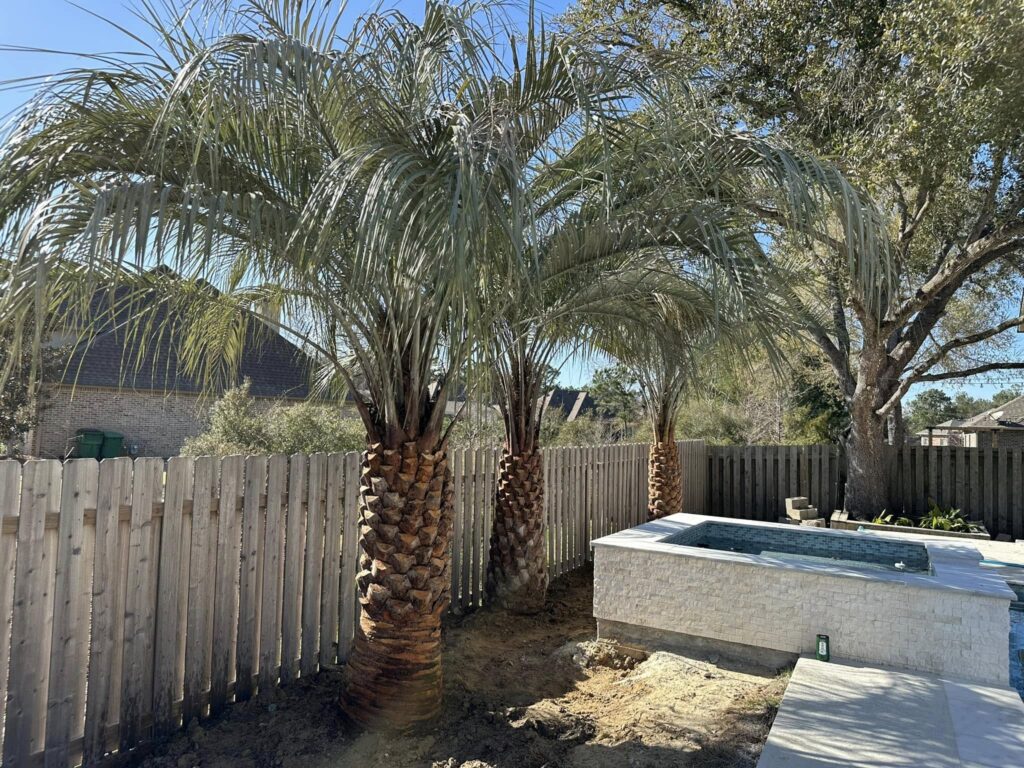
The Pindo Palm, often called the Jelly Palm, comes from South America and is one of the few feather-leafed palms with real cold tolerance. It survives temperatures down to 12°F to 15°F (-11°C to -9°C) and performs in zones 8a through 11.
It produces edible orange-yellow fruits in large hanging clusters — sweet, fibrous, and often used to make jams and jellies (hence the common name). It grows 15 to 20 feet tall with gracefully arching, blue-grey pinnate fronds.
Best for: Fruiting landscapes, coastal gardens, and anyone who wants both ornamental beauty and edible yield from their palm.
8. Chilean Wine Palm (Jubaea chilensis)
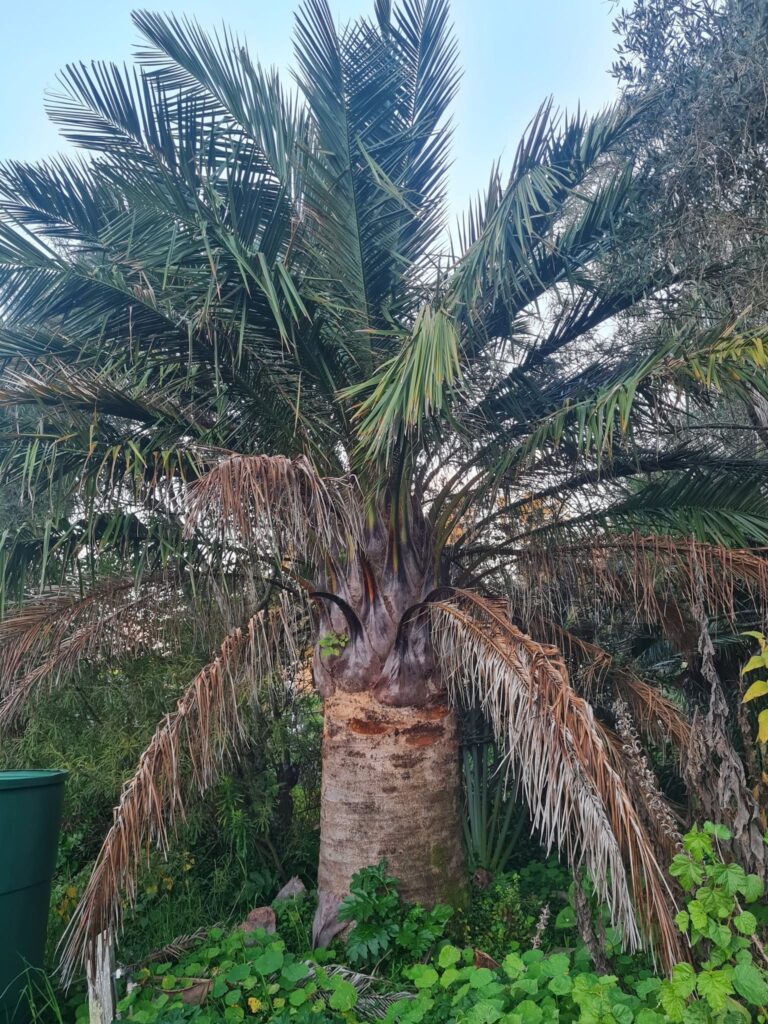
The Chilean Wine Palm is one of the most cold-tolerant feather palms in existence and deserves far more attention than it gets. It tolerates 18°F to 22°F (-8°C to -5°C) and is hardy in zones 8b through 11.
Its trunk is massive — often 3 to 5 feet in diameter — giving it a stout, prehistoric appearance. It grows very slowly, sometimes taking decades to form a visible trunk, but eventually reaches 40 to 80 feet tall. Native to central Chile, it was once tapped for its sap, which was fermented into wine or boiled into a sweet syrup.
Best for: Long-term landscape investments where size, drama, and cold resilience are all required.
9. Mediterranean Fan Palm (same as European Fan Palm, Chamaerops humilis — see No. 3)
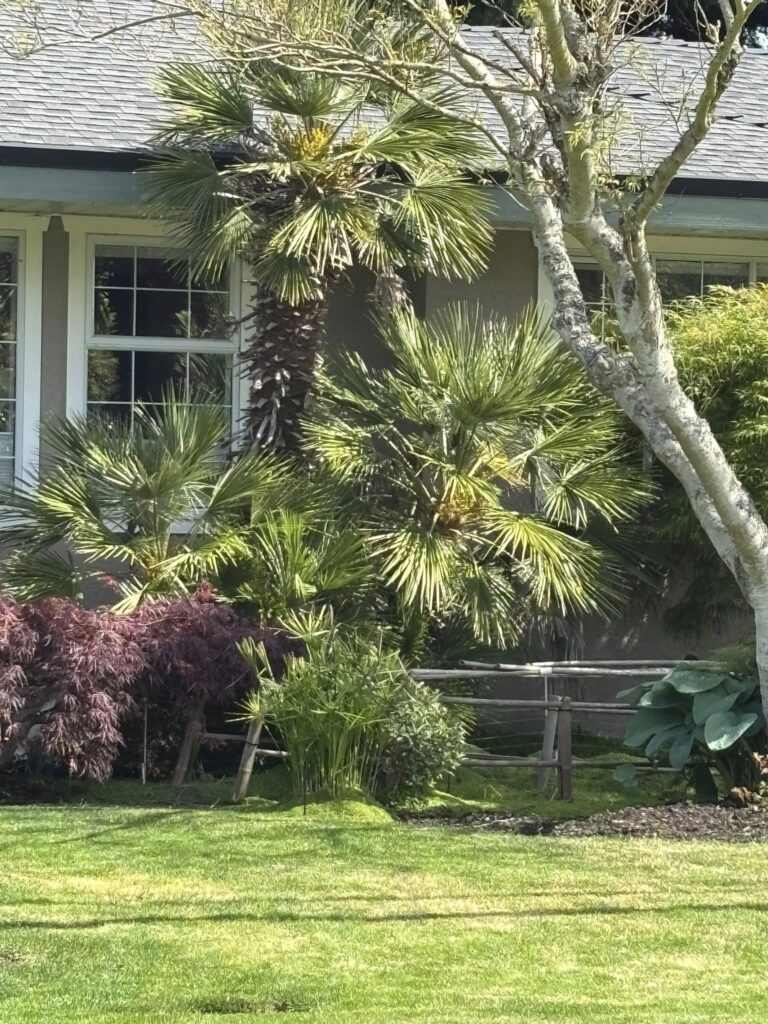
Though listed separately in many nursery catalogues under regional names, this is the same species. Variants include forms with more silvery or blue-toned leaves, marketed as ‘Silver’ or ‘Volcano’ cultivars. Cold tolerance remains essentially the same as described above.
10. Mexican Fan Palm (Washingtonia robusta)
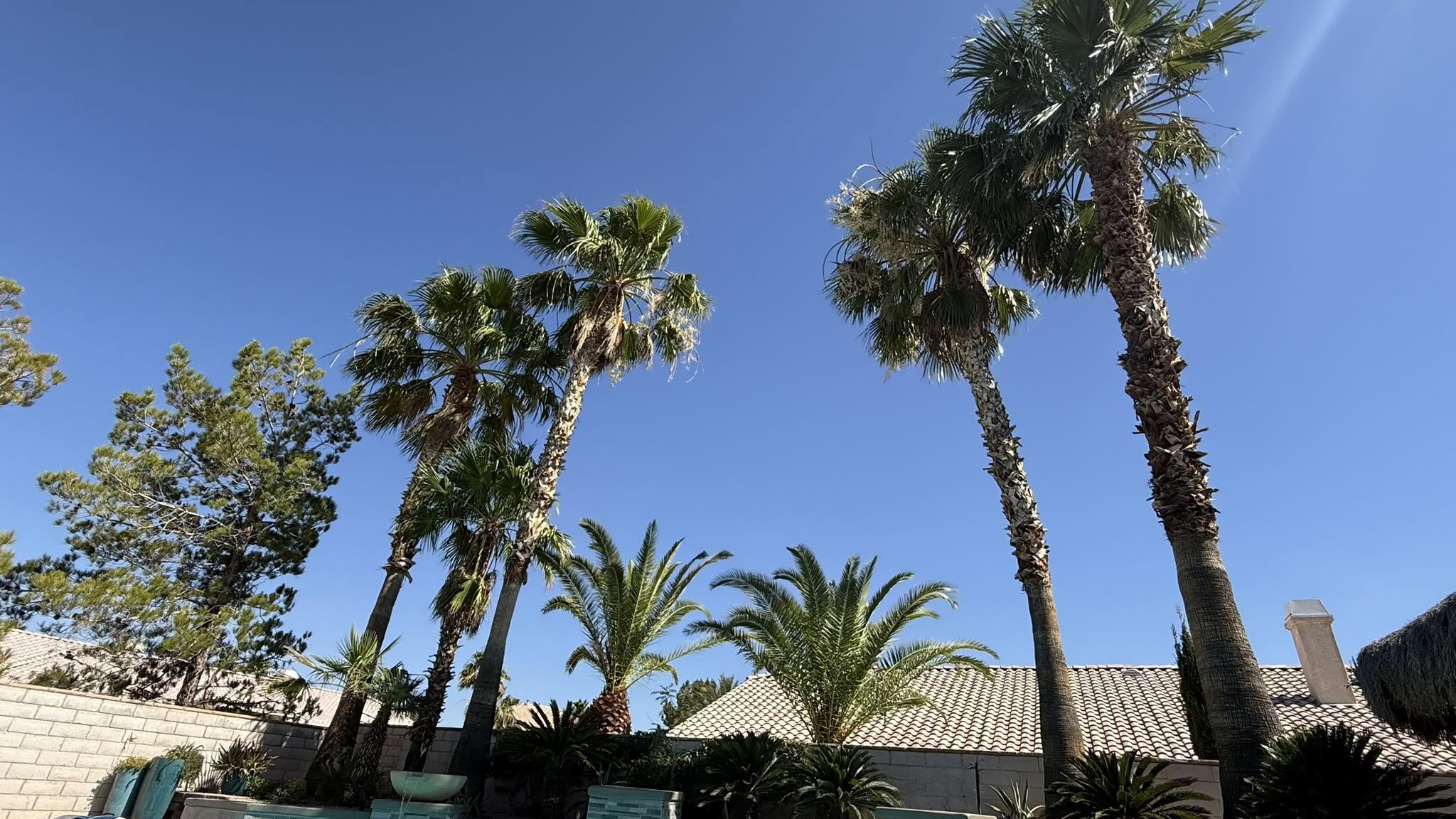
The Mexican Fan Palm is a rapid grower that reaches impressive heights — up to 80 to 100 feet — and tolerates cold down to about 22°F to 25°F (-5°C to -3°C), performing in zones 9 through 11.
It is extensively planted in southern California, Arizona, and Florida as a street tree. Its speed of growth is one of its defining traits; young plants can put on several feet per year. The old fronds hang below the crown forming a distinctive brown “skirt” of dead foliage, which is often trimmed in urban settings.
Best for: Large-scale landscapes, street planting, and mild winter climates where rapid height is desired.
11. California Fan Palm (Washingtonia filifera)
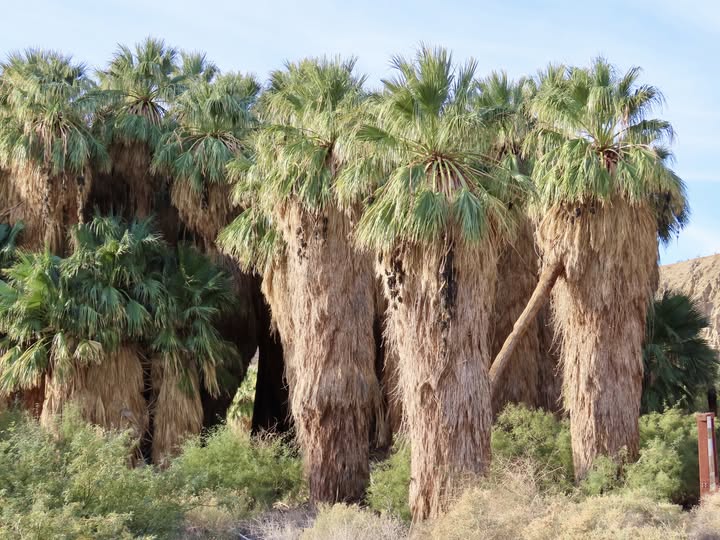
Close relative of the Mexican Fan Palm, this species is native to the desert oases of California and Arizona. It tolerates temperatures down to about 18°F (-8°C), making it slightly hardier than its Mexican cousin, and grows in zones 8b through 11.
The leaf margins produce distinctive white threads — filifera means “thread-bearing” — and the crown forms a more rounded, dense shape than W. robusta. In its native habitat, it forms iconic oasis groves.
Best for: Arid and semi-arid climates, southwestern gardens, and historic landscape restorations.
12. Blue Mediterranean Fan Palm (Chamaerops humilis var. argentea / ‘Cerifera’)
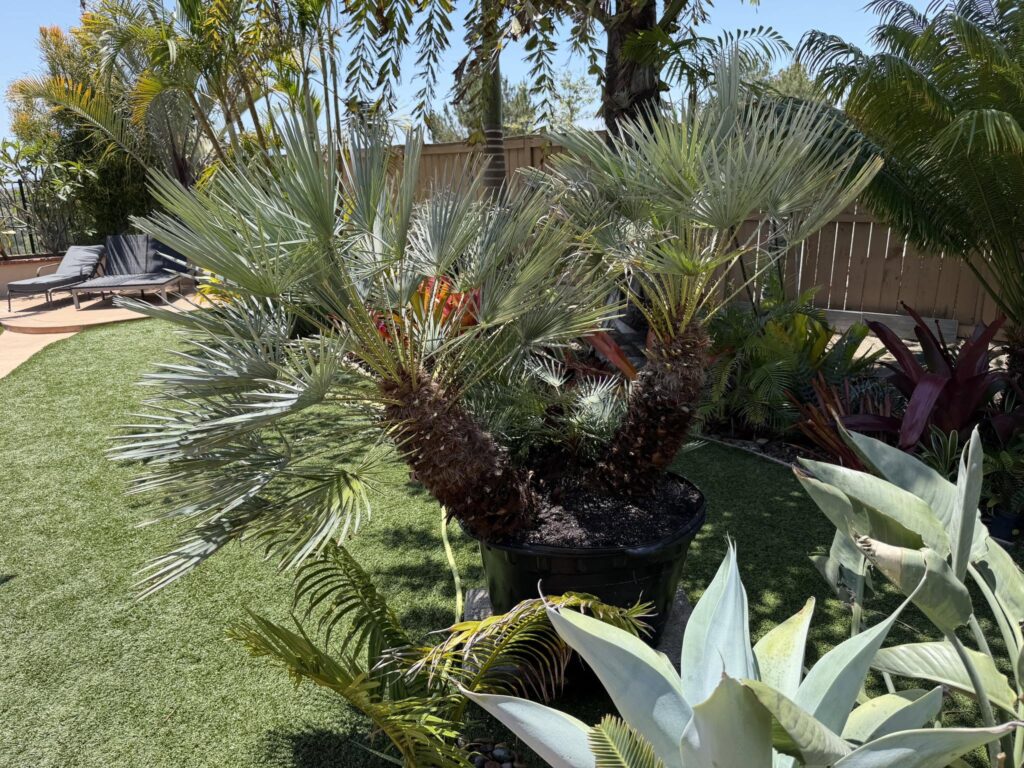
This is a striking variety of the European Fan Palm found in the Atlas Mountains of Morocco. The leaves are intensely silver-blue, and cold tolerance is comparable to the species type — around 10°F to 15°F (-12°C to -9°C), zones 8 through 11.
It grows slowly into a compact, multi-stemmed form and is highly drought tolerant. Its silver colouration makes it visually striking even in winter when many garden plants look dull.
Best for: Focal point planting, Mediterranean-style gardens, and high-contrast landscape design.
ALSO READ: 20 Stunning Types of Palm Trees: Identification and Pictures
13. Bismarck Palm (Bismarckia nobilis)
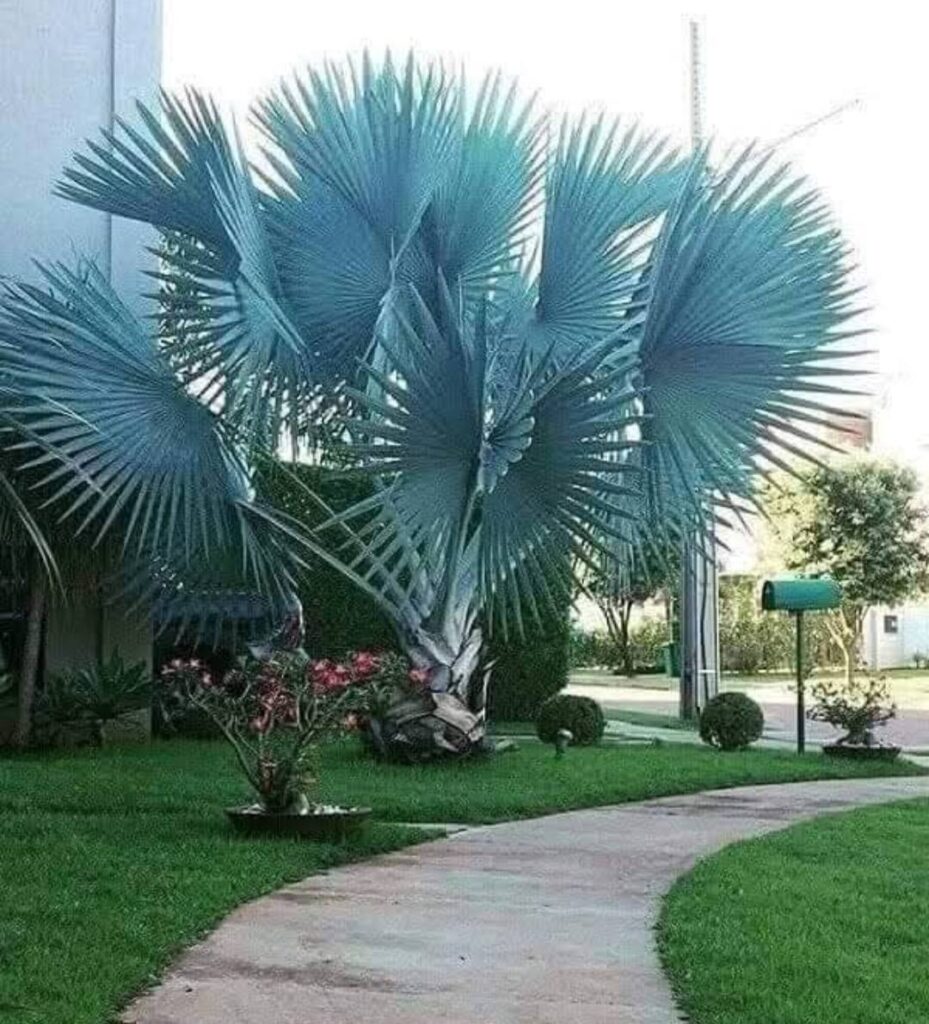
The Bismarck Palm is one of the most visually arresting palms available. Its enormous, fan-shaped leaves can reach 4 to 10 feet across and display a brilliant silver-blue colour on the popular silvery form. Cold tolerance is modest — around 25°F (-4°C) — putting it firmly in zones 9 through 11.
It is a single-trunk species native to Madagascar, growing 30 to 60 feet tall at maturity. While not among the hardiest palms, it earns a place on this list for being significantly more cold-resilient than many tropical palms that cannot tolerate even brief frosts.
Best for: Florida, southern California, coastal Texas, and subtropical areas where a dramatic statement plant is the goal.
14. Sabal Minor ‘McCurtain’ (Sabal minor ‘McCurtain’)
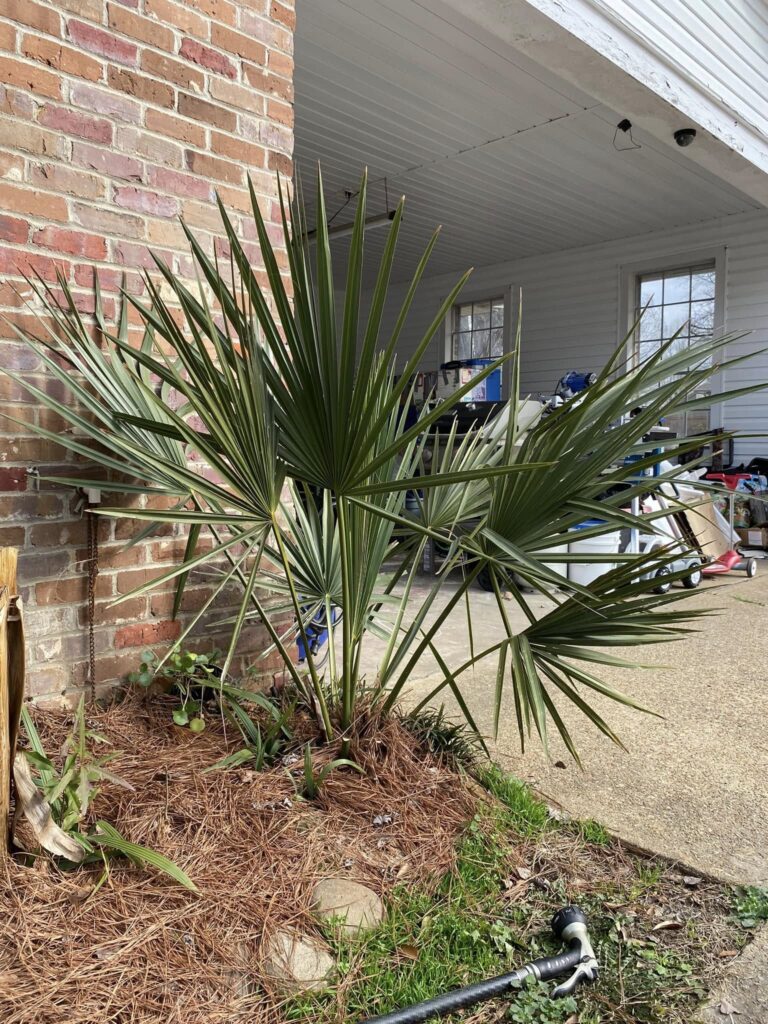
A special cold-hardy selection of Sabal minor from McCurtain County in southeastern Oklahoma — an area that experiences genuine winters. This cultivar has been reported to survive temperatures as low as -5°F (-21°C) in some sources, though most references cite reliable hardiness to about 0°F (-18°C) in zones 6b through 10.
It looks similar to the standard Sabal minor but is a genuinely exceptional performer in cold climates. Hard to find but worth the search if you are in a marginal zone.
Best for: Zone 6 and 7 gardeners who want to push the limits of palm cultivation.
15. Rhapis Palm / Lady Palm (Rhapis excelsa)
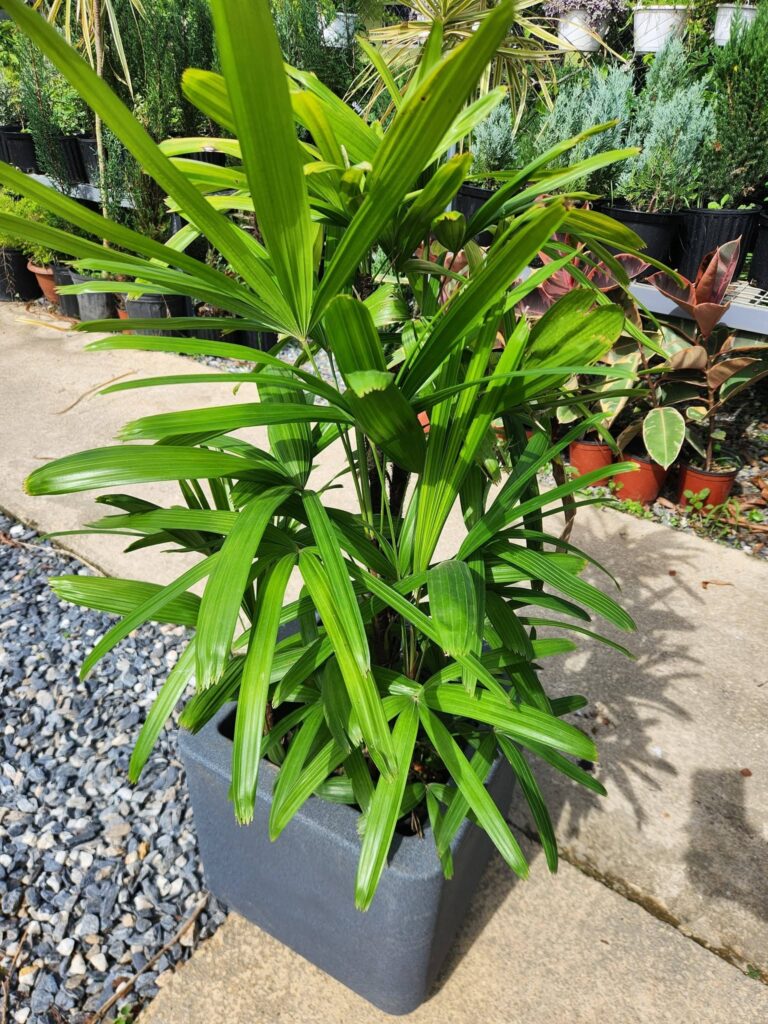
The Lady Palm is a refined, graceful palm from southern China that tolerates temperatures down to about 20°F (-7°C) in zones 8b through 11. It is multi-caned, slow-growing, and typically reaches 6 to 15 feet tall.
It performs well in shade — unusually so for a palm — and is extremely popular as both an outdoor landscape plant and an indoor specimen. Its clean, bamboo-like canes and deeply divided dark green leaves give it a distinctly elegant appearance.
Best for: Shaded courtyards, indoor atriums, and refined garden spaces where a tidy, elegant palm is wanted.
ALSO READ: Coconut Tree vs Palm Tree: Differences, Similarities, and Everything You Need to Know
16. Sago Palm (Cycas revoluta)
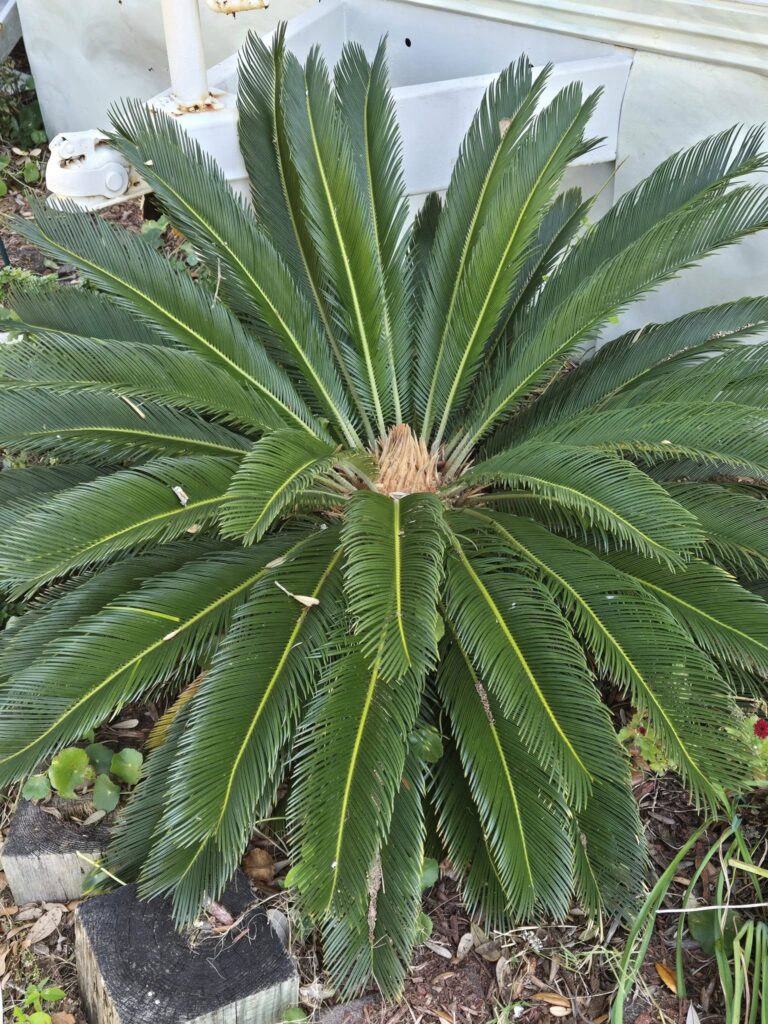
Strictly speaking, the Sago Palm is not a true palm — it is a cycad, a much older lineage of plant. However, it is universally sold, planted, and discussed alongside palms, and its hardiness deserves mention here.
It tolerates temperatures as low as 15°F (-9°C) and grows in zones 8 through 11, though established plants in protected spots have survived zone 7b winters. It grows very slowly into a bold, architectural form with stiff, dark green pinnate fronds radiating from a central crown.
Important note: All parts of Cycas revoluta are highly toxic to humans and pets.
Best for: Bold architectural effects in warm-temperate gardens. Keep away from children and animals.
17. Trachycarpus takil (Kumaon Fan Palm)
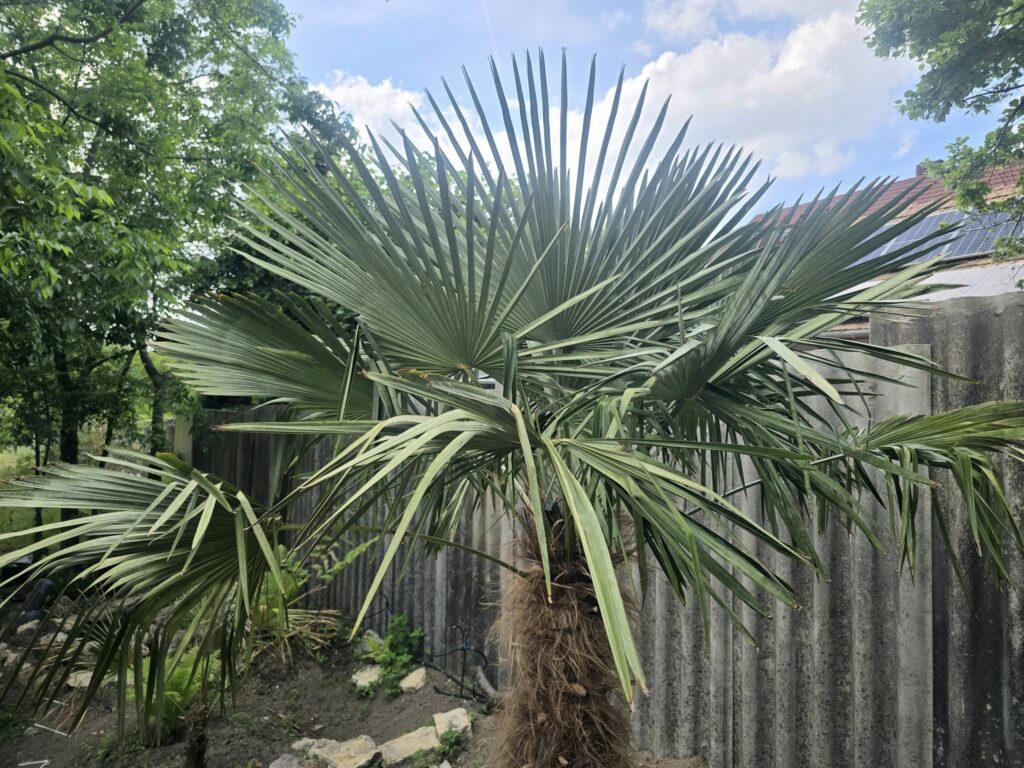
Closely related to the Windmill Palm, this species from the Kumaon Himalayas in India is considered by many experts to be even hardier than Trachycarpus fortunei, tolerating temperatures down to 0°F to 5°F (-18°C to -15°C) in zones 6b through 10.
It looks very similar to the Windmill Palm but the trunk fibres are slightly different, and the leaves are somewhat larger. It remains rare in cultivation but is increasingly available through specialist nurseries.
Best for: Cold climate enthusiasts looking to push palm growing into zone 6 territory.
18. Trachycarpus wagnerianus (Miniature Chusan Palm)
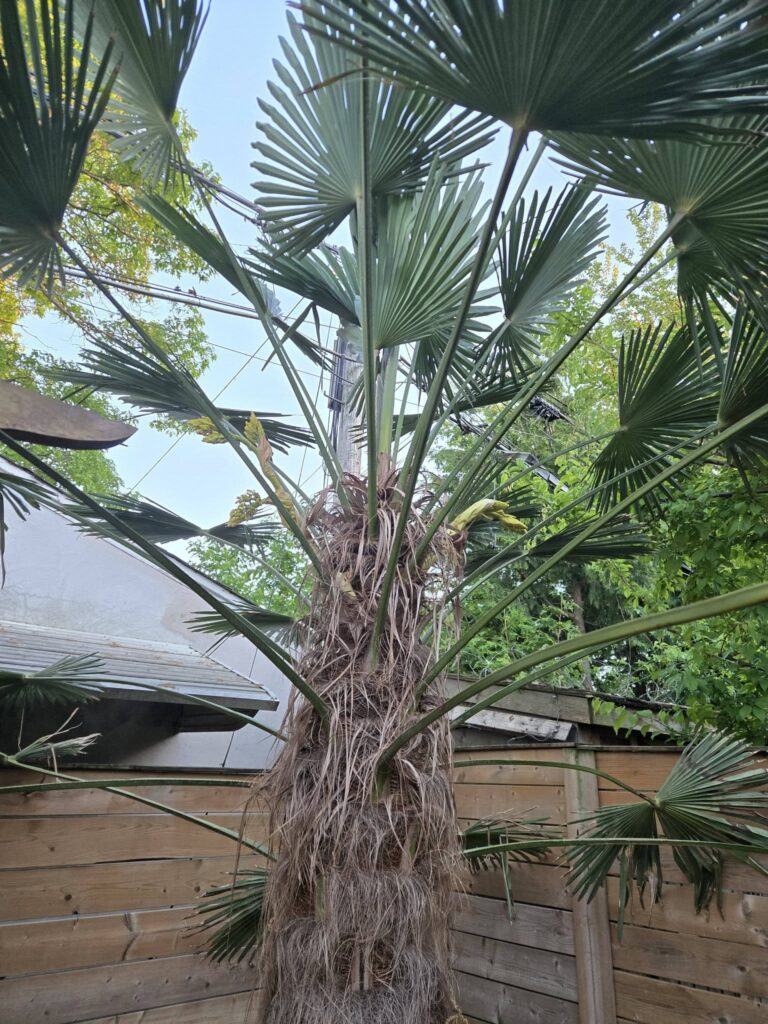
Another Trachycarpus species, this one has smaller, stiffer leaves that resist wind damage far better than the Windmill Palm. Cold tolerance is similar — around 5°F to 10°F (-15°C to -12°C) — in zones 7b through 11.
Because the leaves are smaller and more compact, they suffer less frost damage even when temperatures dip. It is an excellent choice for exposed or windy sites where larger-leafed palms would suffer cosmetic damage.
Best for: Coastal and exposed sites, smaller gardens, and situations where a neat, compact palm is preferred.
19. Sabal mexicana (Texas Palmetto)
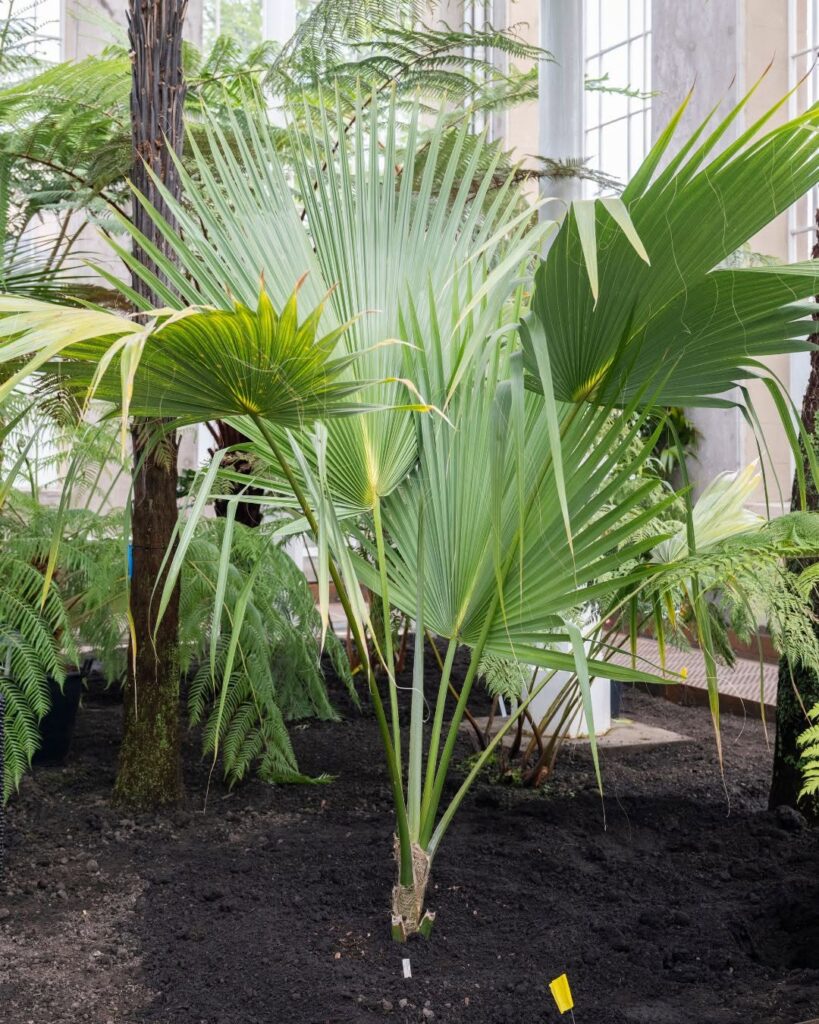
The Texas Palmetto is native to southern Texas and Mexico and is well adapted to a wide range of conditions, including cold to around 15°F (-9°C) in zones 8 through 11. It grows 30 to 50 feet tall with large, costapalmate fan leaves (a shape halfway between fan and feather).
It is highly tolerant of drought, salt, and alkaline soils — making it one of the toughest landscape palms for southern and coastal climates.
Best for: Texas, Gulf Coast, and drier southwestern landscapes.
20. Puerto Rican Hat Palm (Sabal causiarum)
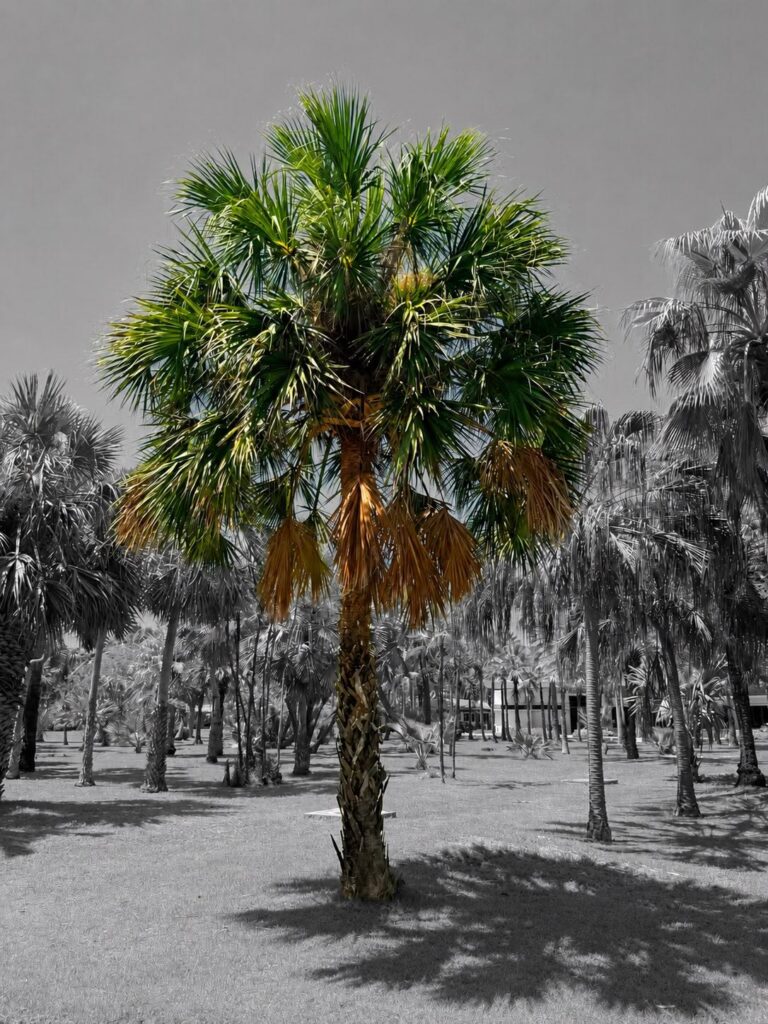
A large and impressive fan palm native to Puerto Rico and Hispaniola, the Puerto Rican Hat Palm handles temperatures around 20°F to 22°F (-7°C to -5°C) and grows in zones 9 through 11. It is among the largest Sabal species, growing 30 to 50 feet tall with exceptionally large leaves.
Its common name comes from the traditional use of its leaves to weave hats (causis = hat in Latin). It is one of the most ornamentally dramatic of the cold-tolerant palms.
Best for: Large tropical landscapes in zone 9 and warmer, where a grand, stately palm is the goal.
21. Guadalupe Palm (Brahea edulis)
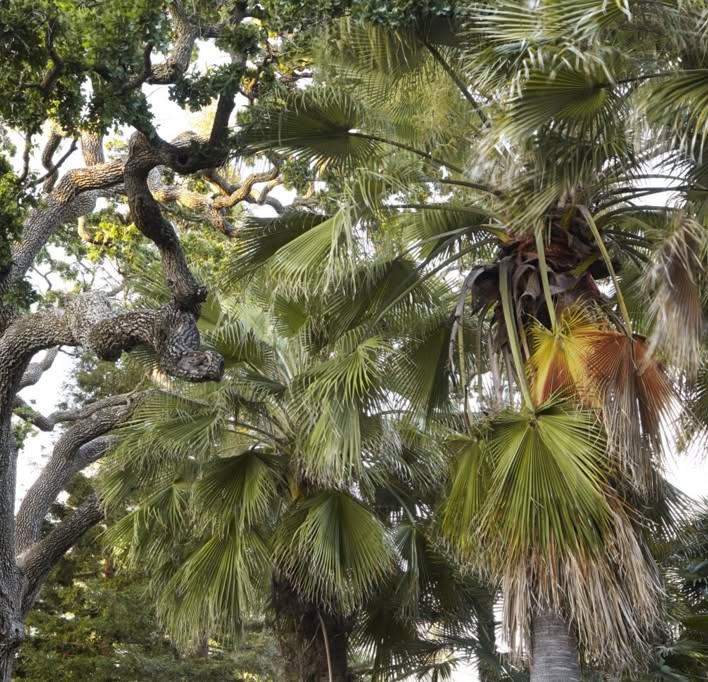
Native to Guadalupe Island off the coast of Baja California, this palm is adapted to a mild but seasonally challenging island climate. It tolerates temperatures down to about 20°F to 22°F (-6°C to -5°C) and grows in zones 9 through 11.
It produces edible fruits — sweet, date-like — and grows 20 to 30 feet tall with blue-grey fan leaves. It is closely related to the Mexican Blue Palm (Brahea armata), which is slightly less cold-tolerant.
Best for: California coastal gardens, Mediterranean climates, and edible landscape designs.
22. Mexican Blue Palm (Brahea armata)
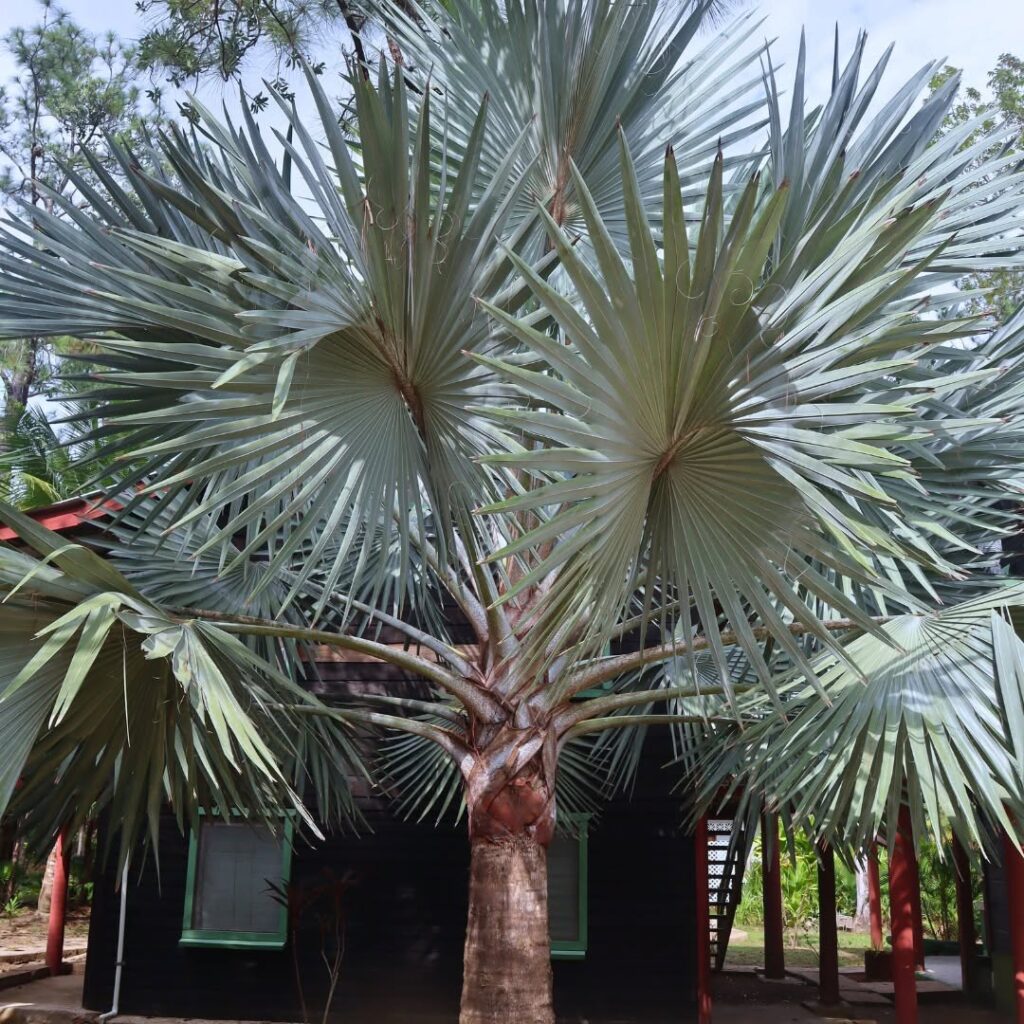
The Mexican Blue Palm is stunning. Its powder-blue, fan-shaped leaves are among the most dramatic of any palm, and the flower stalks — which extend 10 to 15 feet beyond the crown — are extraordinary in bloom.
It tolerates 18°F to 22°F (-8°C to -5°C) and grows in zones 8b through 11. Native to Baja California, it thrives in dry, rocky conditions and is extremely drought tolerant once established.
Best for: Dry, hot climates where a striking blue focal point palm is desired.
23. Canary Island Date Palm (Phoenix canariensis)
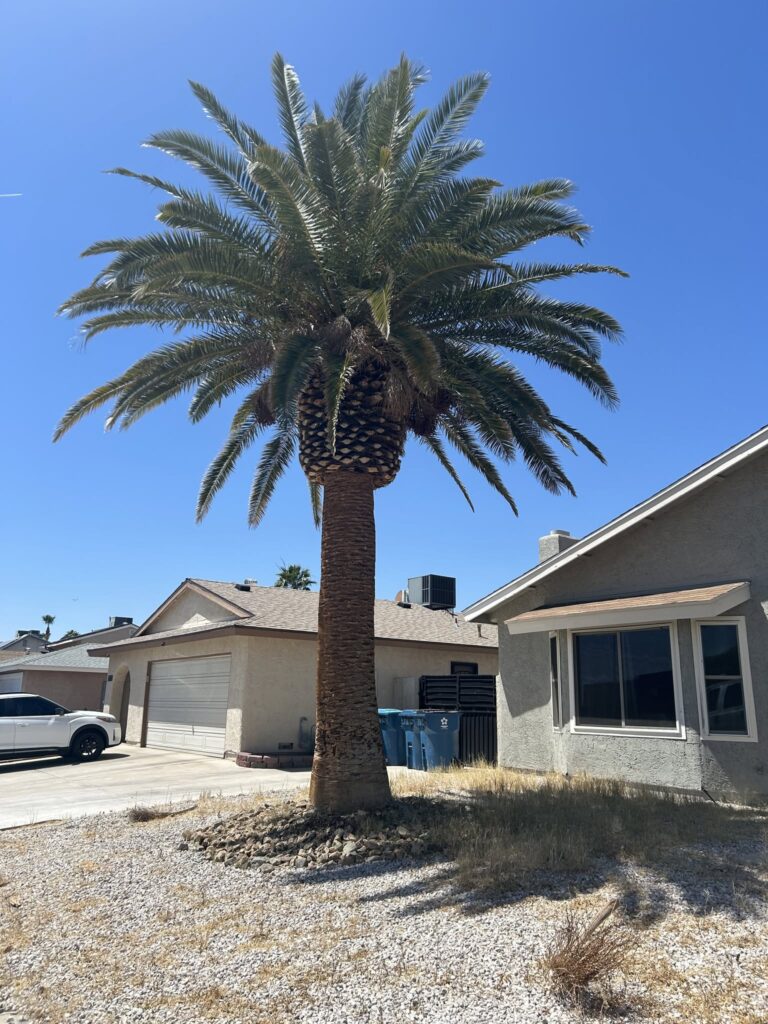
The Canary Island Date Palm is arguably the most majestic palm in common cultivation. It grows 40 to 60 feet tall with a massive trunk and an enormous crown of dark green, arching pinnate fronds that can reach 15 to 18 feet long.
Cold tolerance sits at about 20°F (-7°C) for established plants, making it suitable for zones 9 through 11 and occasionally 8b with protection. It is widely planted across the Mediterranean, California, the Gulf Coast, and Florida.
Best for: Grand boulevard planting, resort landscapes, and anywhere a truly imposing palm is wanted.
24. Date Palm (Phoenix dactylifera)
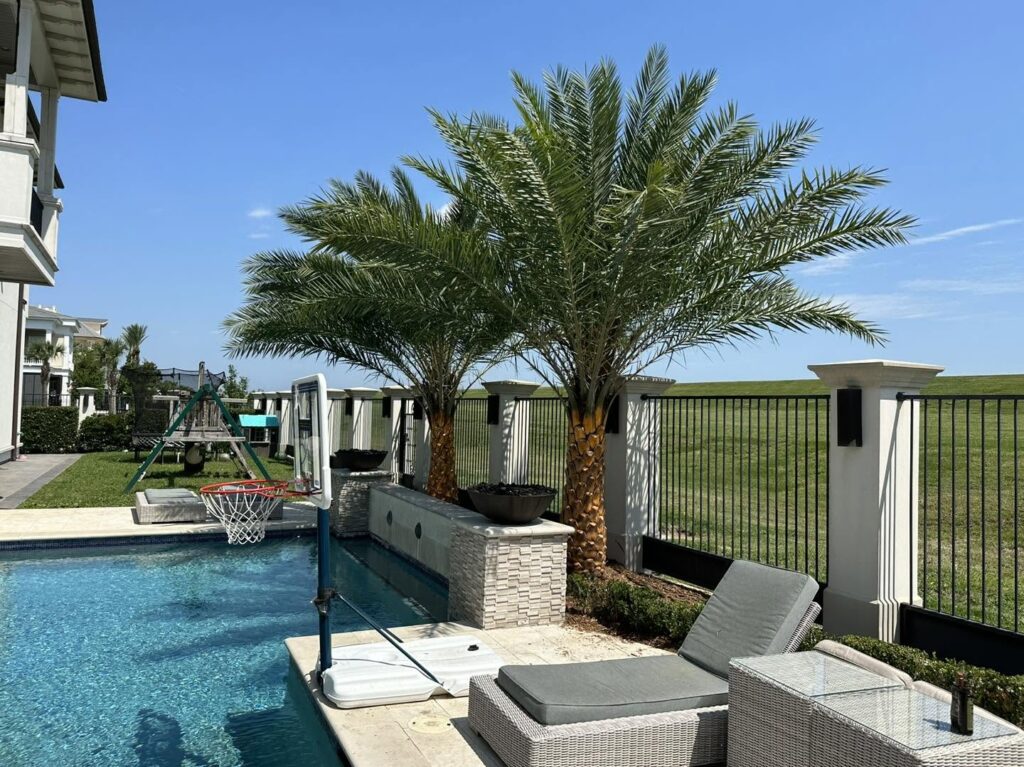
The true Date Palm — grown for thousands of years across North Africa and the Middle East — tolerates temperatures around 18°F to 22°F (-8°C to -5°C), performing in zones 9 through 11.
Beyond its ornamental value, it is one of the most commercially significant fruit crops in the world. Mature palms are highly drought-tolerant and heat-resilient. In cooler climates, unpollinated female palms or male specimens are often grown purely for ornamental effect.
Best for: Arid climates where fruit production or cultural heritage planting is a goal.
25. Mediterranean Dwarf Fan Palm (Chamaerops humilis ‘Vulcano’)
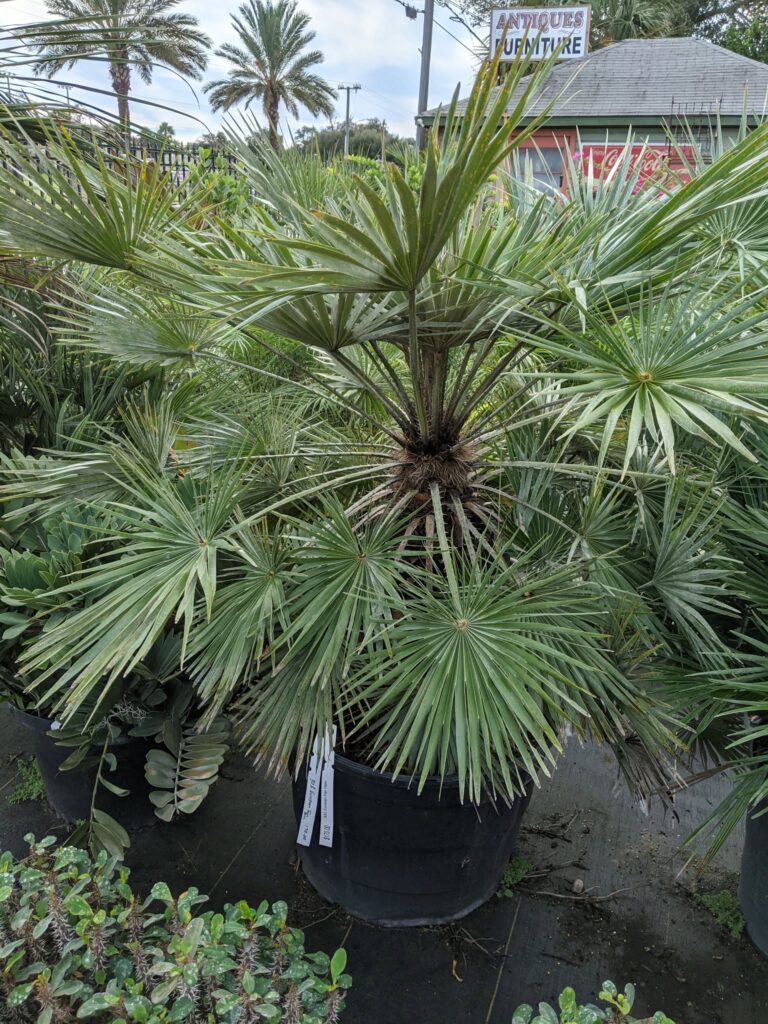
Rounding out the list is a compact, ornamental cultivar of the European Fan Palm, selected for its extremely dense, rounded form and slightly enhanced cold tolerance compared to the standard species. It handles temperatures to about 12°F (-11°C) and thrives in zones 8 through 11.
‘Vulcano’ grows very slowly — often just a few inches per year — and tends to stay compact and shrubby for many years, making it ideal for containers, rock gardens, and smaller spaces.
Best for: Container growing, small gardens, and patio planting in temperate climates.
Also Read: 20 Stunning Types of Palm Trees: Identification and Pictures
How to Help Your Cold Hardy Palm Survive Winter
Even the hardiest palms benefit from a little care before winter arrives. Here is what makes a real difference:
1. Plant in the right location. Choose a south- or west-facing wall or slope where the palm will receive reflected heat and be shielded from cold north and east winds. Urban heat islands can raise effective winter temperatures by several degrees — a meaningful margin in zone 7 or 8.
2. Ensure sharp drainage. Cold, waterlogged soil kills palms faster than cold air. Amend heavy clay soils with gravel and sand, or plant on a raised mound.
3. Mulch heavily at the base. A thick layer of mulch — 4 to 6 inches of bark or straw — insulates the root zone and dramatically reduces freeze damage to the crown and trunk base.
4. Wrap the trunk on newly planted specimens. For the first two or three winters, wrapping the trunk with horticultural fleece or burlap can prevent cell damage in young, not-yet-established palms.
5. Tie the fronds up before hard freezes. For fan palms like Windmill Palm, loosely tying the fronds upward around the growing tip — and stuffing dry straw inside — can protect the critical apical meristem (the single growing point) from freezing.
6. Do not prune until spring. Even if fronds look dead after a freeze, they may still provide some insulation and may regenerate. Wait until spring to assess true damage and prune accordingly.
Frequently Asked Questions
What is the hardiest palm tree in the world? The Needle Palm (Rhapidophyllum hystrix) is widely considered the most cold-tolerant palm species in cultivation, surviving temperatures as low as -20°F (-29°C) in extreme cases.
Can palm trees survive snow? Yes — many cold hardy palms, including the Windmill Palm, Needle Palm, and Dwarf Palmetto, can survive significant snowfall and extended freezing temperatures.
Can I grow a palm tree in zone 6? It is possible with the right selection. The Needle Palm (Rhapidophyllum hystrix), Kumaon Fan Palm (Trachycarpus takil), Sabal minor ‘McCurtain’, and Dwarf Palmetto (Sabal minor) are reported to survive zone 6 conditions with good siting and winter protection.
How do I know if my palm has died after a freeze? Check the spear leaf — the central, tightly rolled new frond. If it pulls out easily and smells rotten, the growing tip is likely dead. If it is firm and odourless, the palm is probably alive even if the older fronds look damaged.
Final Thoughts
I have always believed that gardening in a cold climate should not mean giving up on bold, tropical-looking plants. The palms on this list prove that point well. From the remarkably tough Needle Palm and the widely available Windmill Palm, to the dramatic blue leaves of the Mexican Blue Palm and the fruiting potential of the Jelly Palm — there is far more choice than most people realise.
The key is matching the right species to your specific climate, soil, and site conditions. Do not just buy the tallest palm at the garden centre and hope for the best. Research your USDA zone, study your microclimate, and pick a species whose cold tolerance genuinely matches where you live.
Plant correctly, protect wisely in the first few winters, and you may find yourself with a palm collection that surprises your neighbours — and outlasts their expectations.
References
- USDA Agricultural Research Service — USDA Plant Hardiness Zone Map https://planthardiness.ars.usda.gov
- University of Florida IFAS Extension — Palm Trees for North and Central Florida https://edis.ifas.ufl.edu/publication/MG055
- University of California Cooperative Extension — Palms for the Home Landscape https://anrcatalog.ucanr.edu
- Royal Botanic Gardens, Kew — Kew Science: Trachycarpus fortunei https://powo.science.kew.org/taxon/urn:lsid:ipni.org:names:21802-1
- North Carolina State University Extension — Plants Database: Rhapidophyllum hystrix https://plants.ces.ncsu.edu/plants/rhapidophyllum-hystrix/
- Missouri Botanical Garden — Plant Finder: Butia odorata https://www.missouribotanicalgarden.org/PlantFinder/PlantFinderDetails.aspx?kempercode=a770
- Fairchild Tropical Botanic Garden — Palm Research and Conservation https://www.fairchildgarden.org/science-conservation/plants/palms

Tim M Dave is a gardening expert with a passion for houseplants, particularly cacti and succulents. With a degree in plant biology from the University of California, Berkeley, he has vast experience in gardening. Over the years, he has cultivated a vast collection of desert plants and learned a great deal about how to grow and care for these unique companions.