15 Notable Palm Tree Diseases (With Pictures, And How to Treat Them)
Palm trees carry a certain promise. They mean warm weather, ocean breezes, and a landscape that feels a little more relaxed. So when one starts to decline, it hits differently than an ordinary tree problem.
I’ve researched enough plant pathology reports to notice a hard truth: many of the deadliest palm diseases have no cure at all. Prevention and early detection matter more here than with almost any other landscape tree.
This guide covers all 15 major palm tree diseases. You’ll find the cause, the warning signs, and the treatment steps recommended by university plant pathology departments. Some diseases are manageable. Others mean removal is the only responsible option.
Why Palm Diseases Are Different From Other Tree Problems
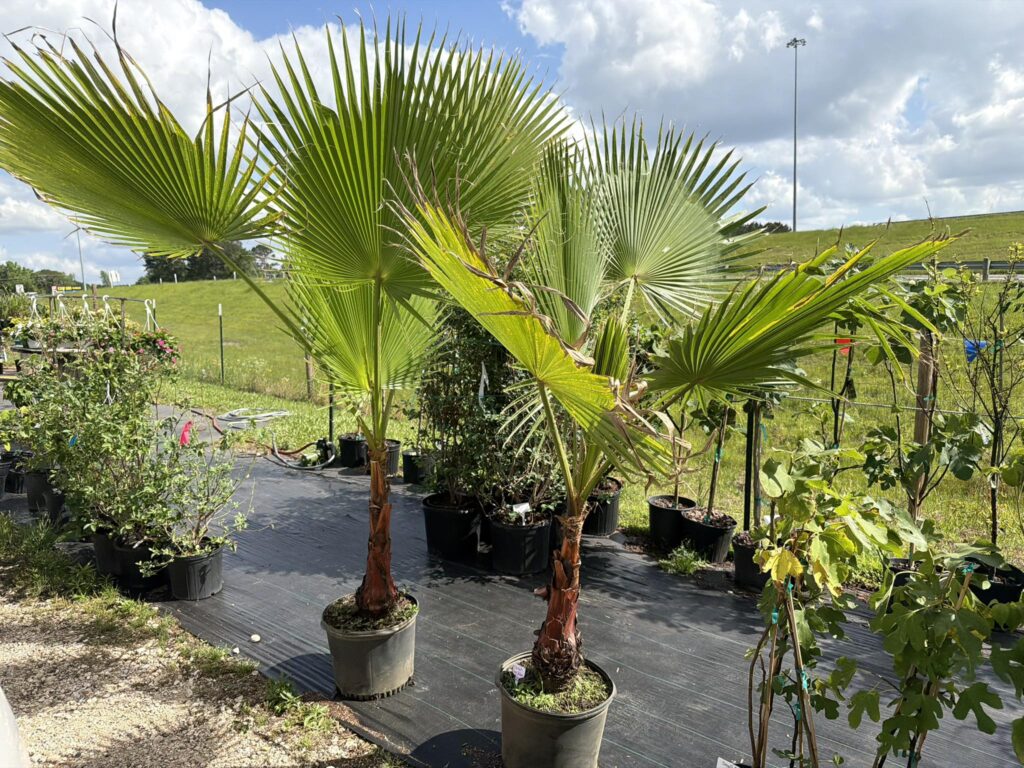
Palms aren’t true trees in the botanical sense. They’re more closely related to grasses, and that structure changes everything about how disease behaves inside them.
A palm has only one growing point, called the bud or spear leaf, at the very top of the trunk. If a pathogen kills that single bud, the entire tree dies. There’s no side branch to take over, unlike an oak or a maple.
This is why so many serious palm diseases are described as “lethal” in their very name. Once the bud is destroyed, recovery simply isn’t biologically possible.
Lethal bronzing disease alone has spread to more than 30 of Florida’s 67 counties since 2006, according to University of Florida researchers. That kind of spread shows how fast some of these pathogens move once established.
Let’s go through all 15 diseases in detail.
1. Lethal Yellowing
Lethal yellowing is one of the oldest and most devastating palm diseases on record. It’s caused by a phytoplasma, a bacteria-like organism that lives inside the tree’s phloem tissue.
History: From the 1930s through the mid-1960s, this disease killed roughly 75% of coconut palms in Key West, Florida. It remains a serious threat in the Caribbean, Mexico, and parts of Africa today.
Symptoms: Premature fruit drop, blackened flower stalks, yellowing that starts on the oldest leaves, and eventual collapse of the spear leaf. Infected palms typically die within three to seven months of symptoms appearing.
Treatment:
- There is no cure once symptoms appear; infected palms should be removed to reduce spread.
- Nearby healthy palms can receive preventive trunk injections of oxytetracycline antibiotic every four months.
- Plant lethal-yellowing-resistant varieties, such as certain Malayan dwarf coconut cultivars, in high-risk regions.
- Control the insect vector, a planthopper, through integrated pest management where feasible.
2. Lethal Bronzing Disease (Formerly Texas Phoenix Palm Decline)
Lethal bronzing is a newer cousin of lethal yellowing, first identified in Florida in 2006. It’s caused by a genetically distinct but related phytoplasma.
Symptoms: Early fruit drop, flower necrosis, and a reddish-bronze discoloration that spreads upward from the oldest leaves. Death of the spear leaf signals the tree cannot be saved.
Spread: The disease has now been isolated from more than a dozen palm species, including Phoenix, Sabal, and Queen palms.
Treatment:
- Remove and destroy confirmed infected palms immediately; there’s no reversing this disease.
- Test nearby palms and apply preventive oxytetracycline injections every three to four months for at least two years.
- The phytoplasma cannot spread through pruning tools or root contact, so sanitation alone won’t stop it; insect control is key.
- Choose resistant species when replanting in affected areas.
3. Ganoderma Butt Rot
This is one of the most feared palm diseases because it’s essentially undiagnosable until it’s too late. The fungus Ganoderma zonatum rots the lower four to five feet of the trunk from the inside out.
Symptoms: General decline, wilting, and slower growth, none of which are specific enough to confirm the disease alone. The only definitive sign is a hard, shelf-like conk growing from the base of the trunk.
A frustrating reality: Researchers have found no reliable pattern connecting soil type, mechanical injury, or growing conditions to infection risk. Healthy and stressed palms alike can succumb.
Treatment:
- There are no fungicide treatments or cultural controls proven to prevent or cure this disease.
- Remove the palm as soon as a conk appears, along with as much of the stump and root system as possible.
- Avoid planting another palm in the same spot without special soil precautions, since the fungus persists in the soil.
- Monitor nearby palm stumps regularly and remove any new conks that develop.
4. Thielaviopsis Trunk Rot
This disease is unsettling because it often gives no warning before disaster strikes. The trunk or canopy can collapse suddenly, even when the palm looked perfectly healthy days earlier.
Symptoms: Stem bleeding in some species, but otherwise few visible signs until the trunk folds over or the crown snaps off entirely.
Cause: The fungus Thielaviopsis paradoxa infects only fresh wounds on the trunk, particularly in the upper third where tissue is less lignified.
Treatment:
- There is no cure; remove the palm immediately once collapse begins or infection is confirmed.
- Prevent new wounds to the trunk, especially from pruning equipment or lawn tools.
- Destroy the diseased trunk material rather than recycling it as mulch.
- Avoid cutting green fronds too close to the trunk, since this creates fresh infection sites.
5. Fusarium Wilt
Fusarium wilt is a vascular disease that moves through a palm’s water-conducting tissue, causing a distinctive one-sided death pattern.
Symptoms: Fronds develop a freeze-dried appearance and die, but often stay upright rather than falling. One side of a leaf may die while the other side stays green, a telltale diagnostic clue.
Host specificity: Different strains of Fusarium oxysporum target different palms; the Canary Island date palm strain, for instance, doesn’t infect Queen palms.
Treatment:
- There is no cure; infected palms should be removed and destroyed.
- Sanitize pruning tools thoroughly between trees, since the fungus spreads easily on contaminated blades.
- Avoid pruning green fronds unnecessarily, which reduces wound sites for infection.
- Water and fertilize remaining healthy palms properly, since drought-stressed palms decline faster once infected.
ALSO READ: 20 Stunning Types of Palm Trees: Identification and Pictures
6. Phytophthora Bud Rot
Bud rot attacks the single growing point of the palm, which makes it especially dangerous despite being somewhat treatable if caught early.
Symptoms: Discoloration and wilting of the spear leaf, spreading from the inside of the leaf outward. In severe cases, the spear leaf can be pulled out of the bud with almost no resistance.
Cause: The fungus Phytophthora palmivora thrives after heavy rain or tropical storms and can persist in soil for years.
Treatment:
- Apply copper-based or systemic fungicides to the bud area at the first sign of spear leaf wilting.
- Remove and destroy the spear leaf if it pulls out easily, to slow fungal spread into the bud tissue.
- Improve drainage around the root zone, since prolonged soil moisture favors this pathogen.
- Palms caught early, before the bud is fully destroyed, sometimes recover with prompt fungicide treatment.
7. Pink Rot
Pink rot is often described as an opportunist. It rarely attacks a genuinely healthy palm, instead targeting trees already weakened by drought, cold, or another disease.
Symptoms: Pinkish fungal spore masses on decaying leaf bases and trunk tissue, paired with yellowing and browning fronds that progress from the older leaves upward.
Treatment:
- Apply a fungicide containing thiophanate-methyl to slow disease progression on stressed palms.
- Provide supplemental water during drought, since moisture stress is the leading trigger.
- Remove and dispose of infected plant debris promptly to reduce spore load nearby.
- Address the underlying stress factor, whether cold injury or nutrient deficiency, alongside fungicide treatment.
8. Graphiola Leaf Spot (False Smut)
This disease looks alarming under a magnifying glass but is mostly a cosmetic concern rather than a genuine health threat.
Symptoms: Tiny black, cup-shaped fruiting bodies, each under one-sixteenth of an inch, erupting through the leaf surface on the oldest fronds. Yellow spore-releasing filaments may protrude from mature spots.
Common confusion: Homeowners frequently mistake this for potassium deficiency, since both problems appear on the same old leaves at the same time.
Treatment:
- In most landscapes, no chemical treatment is necessary, since the disease rarely harms overall plant growth.
- Remove severely affected fronds if appearance is a concern, but avoid excessive pruning.
- Correct any underlying potassium or magnesium deficiency, which is often the bigger issue on Phoenix palms.
- Fungicide sprays timed to spring growth can reduce new infections if the look genuinely bothers you.
9. Pestalotiopsis Leaf Spot and Blight
Pestalotiopsis stands out among palm fungal pathogens because it can infect both the leaf blade and the petiole simultaneously, unlike most leaf spot fungi.
Symptoms: Spots that merge into larger blighted patches, often affecting the petiole and rachis at the same time as the leaf blade. Pygmy date palms are particularly susceptible.
Treatment:
- Improve growing conditions, since this pathogen frequently attacks stressed or poorly nourished palms.
- Remove severely blighted fronds to reduce spore production nearby.
- Apply a labeled fungicide if infection is severe and recurring across multiple growing seasons.
- Avoid overhead irrigation that keeps foliage wet for extended periods.
ALSO READ: 25 Cold Hardy Palm Trees That Actually Survive Winter (Identification With Pictures)
10. Bipolaris (Helminthosporium) Leaf Spot
Bipolaris is one of several fungi responsible for the broad category of palm leaf spots and blights, alongside Cercospora, Colletotrichum, and Exserohilum.
Symptoms: Small lesions surrounded by a yellow halo, which merge into larger blighted, necrotic patches as the infection advances across the leaflet.
Treatment:
- Space palms adequately to improve airflow and reduce leaf wetness duration.
- Avoid overhead watering; irrigate at the soil line instead.
- Remove and destroy heavily spotted fronds during routine maintenance.
- Fungicide treatment is rarely justified unless the palm is a young specimen or infections repeat severely each year.
11. Cercospora Leaf Spot of Palm
Cercospora is another common contributor to the palm leaf spot complex, thriving in warm, humid landscape conditions across the southeastern United States.
Symptoms: Brown to tan spots, often with a diffuse border, scattered across older fronds and occasionally merging in heavy infections.
Treatment:
- Rake and dispose of fallen fronds and leaf debris each season.
- Thin nearby vegetation to improve air circulation around the canopy.
- Maintain proper fertilization, since well-nourished palms tolerate leaf spot far better than deficient ones.
- Reserve fungicide use for high-value specimens with a documented history of severe infection.
12. Petiole (Rachis) Blight
Rachis blight is notably milder than most other diseases on this list. It’s one of the few palm diseases that rarely results in tree death.
Symptoms: Similar in appearance to Fusarium wilt, which makes lab diagnosis essential before deciding on treatment. Caused primarily by Diplodia species fungi.
Treatment:
- Confirm the diagnosis through laboratory testing, since symptoms closely mimic Fusarium wilt.
- Apply foliar fungicide applications to reduce spread onto newly emerging leaves.
- Remove and destroy severely blighted fronds as part of routine sanitation.
- Continue normal care, since the tree’s long-term survival odds remain fairly good compared with Fusarium wilt.
13. Anthracnose (Colletotrichum Species)
Anthracnose affects a wide range of ornamental landscape plants, and palms, including foxtail palms, are no exception.
Symptoms: Reddish-brown to brown leaf spots, often bordered by a narrow yellow halo. Larger blotches can develop at leaflet tips, sometimes causing entire leaflets to cup or curl.
Treatment:
- Improve air circulation and reduce leaf wetness through proper spacing and irrigation practices.
- Remove and destroy infected leaflets and fallen debris promptly.
- Apply a copper-based or labeled fungicide during periods of high humidity or heavy rain.
- Avoid excess nitrogen fertilization, which can encourage soft, more susceptible new growth.
14. Bacterial Bud Rot
Not every bud rot is fungal. Certain bacteria can cause an equally destructive rot of the palm’s single growing point, with symptoms nearly identical to Phytophthora bud rot.
Symptoms: Discoloration and wilting of the spear leaf and newest fronds, typically progressing from the leaf’s inner tissue outward. Diagnosis often requires laboratory confirmation to distinguish it from fungal bud rot.
Treatment:
- Copper-based bactericides may slow progression if applied at the earliest sign of spear leaf discoloration.
- Remove affected spear tissue carefully if it can be pulled without damaging the healthy bud beneath.
- Avoid mechanical damage to the crown, which creates entry points for bacterial infection.
- Improve drainage, since waterlogged crowns after storms are a common trigger for bud rot outbreaks.
15. Minor Fungal Leaf Spot Complex (Phyllosticta and Related Fungi)
Rounding out the list is a group of lesser fungal pathogens, including Phyllosticta, Exserohilum, Calonectria, and Stigmina, all capable of producing similar leaf spotting.
Symptoms: Small to moderate spots with tan or gray centers and darker borders, occasionally merging into larger blighted sections under humid conditions.
Treatment:
- Standard leaf spot sanitation applies: remove fallen fronds, improve airflow, and avoid wetting foliage unnecessarily.
- Fungicide treatment is rarely needed, since these pathogens typically cause cosmetic rather than structural damage.
- Keep palms properly fertilized to reduce overall susceptibility to opportunistic fungi.
- Monitor closely if spotting appears alongside other symptoms, since some of these fungi can complicate diagnosis of more serious diseases.
ALSO READ: Ravenala madagascariensis (Travellers Palm): Size, Growth Rate, Problems and Cultivation Details
General Prevention Tips That Apply Across All 15 Diseases
After working through each disease, a clear pattern shows up again and again. Stress, wounds, and standing water are the common threads behind nearly every serious palm infection.
- Avoid unnecessary pruning wounds. Many trunk and bud rot pathogens only infect fresh cuts or damaged tissue.
- Water consistently during drought. Stressed palms are far more vulnerable to pink rot and other opportunistic fungi.
- Improve soil drainage. Standing water around the root zone invites Phytophthora and bacterial bud rot.
- Sanitize pruning tools between trees. Fusarium wilt and several other pathogens spread easily on contaminated blades.
- Choose resistant species. Certain coconut and date palm cultivars show far greater resistance to lethal yellowing and lethal bronzing.
- Correct nutrient deficiencies early. Potassium and magnesium deficiency weaken palms and are frequently mistaken for disease.
When to Call a Certified Arborist or Extension Office
Several diseases on this list, including lethal yellowing, lethal bronzing, and Ganoderma butt rot, cannot be reliably diagnosed by appearance alone.
If your palm shows spear leaf collapse, a trunk conk, or sudden wilting after a storm, contact a certified arborist or your county extension office right away. Lab testing is often the only way to confirm which disease you’re actually dealing with.
Frequently Asked Questions About Palm Tree Diseases
Can a palm tree survive lethal yellowing or lethal bronzing? No. Once symptoms appear and are confirmed, the palm cannot be saved. The only useful response is removing the infected tree and protecting nearby palms with preventive antibiotic injections.
How do I know if my palm has Ganoderma butt rot? The only definitive sign is a hard, shelf-like conk growing from the base of the trunk. Wilting and decline alone aren’t specific enough to confirm this disease without seeing a conk.
Is it safe to plant a new palm where an infected one died? It depends on the disease. Ganoderma zonatum persists in soil, so replanting a palm in the exact same spot isn’t recommended without precautions. Phytoplasma diseases like lethal yellowing don’t survive in soil, so replanting is generally safer.
Why do my palm’s older leaves have black spots? This is most likely Graphiola leaf spot, also called false smut. It’s largely cosmetic, though it’s often confused with potassium deficiency, which causes similar yellow and black spotting on old leaves.
What’s the difference between bud rot and trunk rot? Bud rot destroys the single growing point at the top of the palm, which is always fatal once the bud dies. Trunk rot weakens the structural wood of the trunk itself and can cause sudden physical collapse, even in a palm that still has green fronds.
Should I fertilize a palm that’s showing disease symptoms? Proper fertilization helps prevent many diseases and supports recovery from mild leaf spot infections. However, fertilizer won’t cure a vascular or bud rot disease once it’s established; those require removal or specific fungicide treatment instead.
Final Thoughts
Palm trees ask for a different kind of vigilance than most landscape trees. Because they can’t regrow a lost growing point, early detection genuinely matters more than treatment for many of these diseases.
Keep your palm well-watered, avoid unnecessary wounds, and watch the spear leaf closely each season. That single habit catches more problems early than almost anything else you can do.
When in doubt, especially with trunk collapse or spear leaf wilting, don’t wait. Contact your local extension office. A quick lab test can be the difference between saving nearby palms and losing an entire row of them.
References
- University of Florida IFAS Extension – Ganoderma Butt Rot of Palms https://ask.ifas.ufl.edu/publication/PP100
- University of Florida IFAS Extension – Lethal Bronzing Disease (LB) https://edis.ifas.ufl.edu/publication/PP163
- Hawaii Department of Land and Natural Resources (State Government) – Lethal Palm Yellowing Disease https://dlnr.hawaii.gov/hisc/info/species/lethal-palm-yellowing-disease/
- University of Florida IFAS Extension – Thielaviopsis Trunk Rot of Palm https://ask.ifas.ufl.edu/publication/PP143
- University of Florida IFAS Extension – Graphiola Leaf Spot (False Smut) of Palm https://edis.ifas.ufl.edu/pp140
- University of Florida IFAS Extension – Leaf Spots and Leaf Blights of Palm https://ask.ifas.ufl.edu/publication/PP142
- Clemson University Home & Garden Information Center – Palm Diseases and Nutritional Problems in South Carolina https://hgic.clemson.edu/factsheet/palm-diseases-nutritional-problems/

Tim M Dave is a gardening expert with a passion for houseplants, particularly cacti and succulents. With a degree in plant biology from the University of California, Berkeley, he has vast experience in gardening. Over the years, he has cultivated a vast collection of desert plants and learned a great deal about how to grow and care for these unique companions.