15 Red Maple Tree Problems (And How to Fix Them)
Red maple is one of the most common trees in North America, and university sources describe it as one of the most abundant native trees on the continent. Popularity, though, comes with a long list of well-documented problems.
I planted a red maple in my own yard years ago, mostly for the fall color everyone talks about. Within a few seasons, I understood why extension offices get so many calls about this tree.
This guide walks through 15 red maple tree problems. Each one includes a practical fix, not just a diagnosis.
1. Weak Wood and Storm Damage
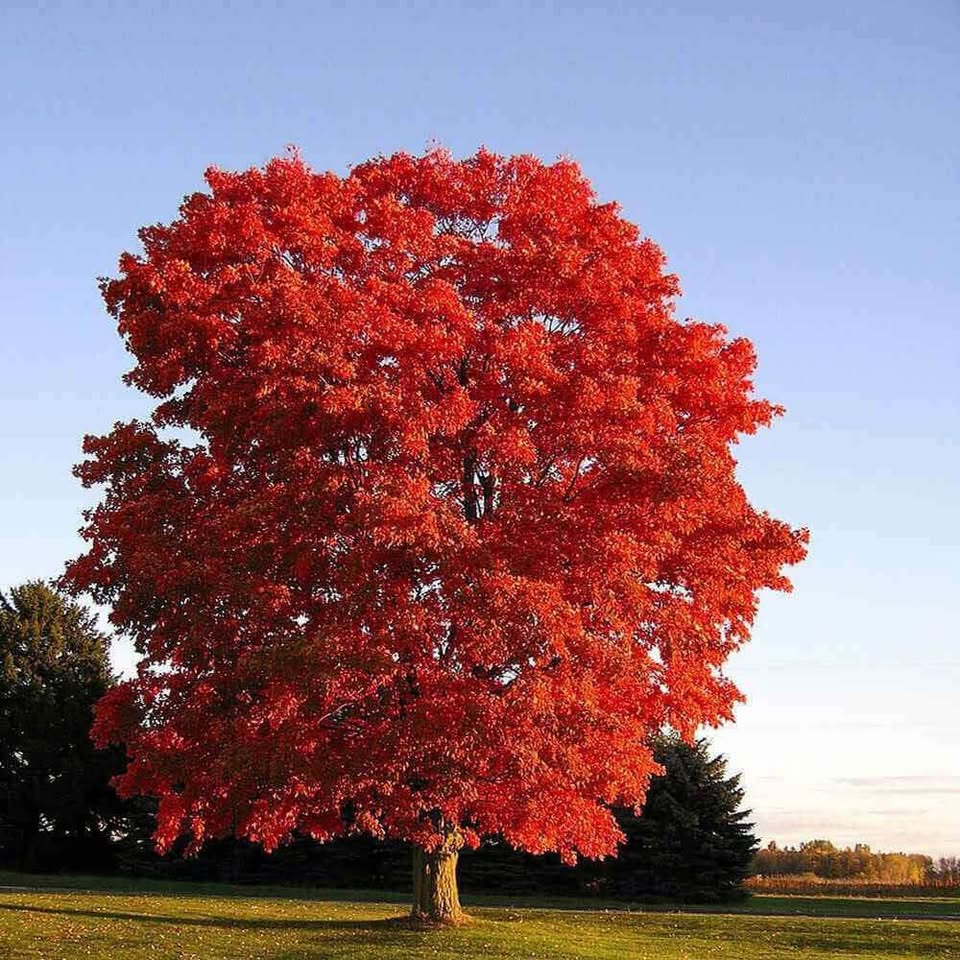
Red maple grows fast, and fast growth usually means softer wood. The University of Missouri Extension rates red maple’s resistance to storm damage as poor, despite giving it excellent marks for growth rate.
I have seen entire limbs snap off during summer thunderstorms on trees that looked perfectly healthy otherwise. This is simply a structural trait of the species, not a sign of disease.
The fix: Have a certified arborist prune young trees to establish strong branch angles early. Avoid V-shaped branch unions, and remove any competing leaders while the tree is still small.
2. Girdling Roots
This is one of the most common issues found on red maples in landscaped settings. University of Maryland Extension lists red and sugar maples among the species that most often develop this problem.
A girdling root grows in a circle around the trunk instead of spreading outward, gradually cutting off the tree’s own water and nutrient flow. Symptoms include a thin crown, early fall color, and dieback that seems to start on one side of the tree first.
The fix: Inspect the root flare a few years after planting. Small girdling roots can be cut away with a chisel, but larger ones may need an ISA-certified arborist to remove safely without damaging the trunk.
3. Verticillium Wilt
This soil-borne fungal disease is frequently named as one of the most serious threats to red maple. It infects the root system and travels upward through the tree’s water-conducting tissue.
Symptoms include sudden wilting, leaf scorch on individual branches, and dieback that can spread quickly. There is no cure once a tree is infected, only management to slow its progress.
The fix: Keep trees well-watered and unstressed, since Verticillium tends to attack weakened trees first. Remove and destroy infected branches, and avoid planting new maples in soil where an infected tree once grew.
ALSO READ: Fall Fiesta Maple Pros and Cons (With Care Tips)
4. Anthracnose
Anthracnose is a fungal disease that shows up as brown, blotchy areas on leaves, often during cool, wet spring weather. Kansas State University Extension notes this disease is common on red maples and worsens depending on the season’s weather pattern.
Infected leaves often drop early, leaving a noticeably thinner canopy by midsummer. It looks alarming, but extension sources generally consider it a cosmetic problem rather than a fatal one.
The fix: Rake and dispose of fallen leaves each autumn to reduce fungal spores overwintering nearby. Improve air circulation by thinning dense canopies, and avoid overhead watering that keeps foliage wet.
5. Tar Spot
Tar spot produces raised, black, shiny blotches on maple leaves that genuinely resemble drops of tar. Clemson Cooperative Extension identifies this as a fungal disease affecting several maple species, with symptoms appearing gradually through the growing season.
While unattractive, tar spot rarely causes serious harm to an otherwise healthy tree. It can trigger early leaf drop in heavily infected years.
The fix: Clean up and remove fallen leaves in autumn, since the fungus overwinters in leaf litter. Good sanitation over a couple of seasons usually reduces the problem noticeably.
6. Leaf Scorch
Leaf scorch shows up as browning along leaf edges and between veins, usually during hot, dry stretches of summer. Clemson Extension describes physiological leaf scorch as a stress-related disorder rather than a disease with a single cause.
Kansas State University Extension adds that scorch happens when a tree loses more water through its leaves than its roots can supply. Drought, root damage, and compacted soil all make this worse.
The fix: Water established trees deeply, about one inch per week, during hot and dry periods. Young trees under five years old need especially consistent watering while their root systems develop.
7. Bacterial Leaf Scorch
Different from physiological scorch, bacterial leaf scorch is caused by the bacterium Xylella fastidiosa and spread by leafhoppers and similar insects. North Carolina State Extension notes it produces a dull red to brown scorched appearance with a distinct halo between damaged and healthy tissue.
Over several years, this disease can cause branch dieback and eventual tree death. Unlike physiological scorch, watering will not fix it.
The fix: There is no cure for bacterial leaf scorch. Management relies on removing infected branches and general sanitation, and severely affected trees may eventually need removal.
ALSO READ: Red Maple vs Japanese Maple: Identification, Size, Growth Rate, and More
8. Nectria Canker
Nectria canker appears as dark, sunken, wet-looking patches on branches and twigs. NC State Extension notes this disease is especially common on red and sugar maples, and it tends to target trees that are newly planted or already under stress.
The canker often develops after some kind of wound, whether from pruning mistakes, storm damage, or animal activity. Widespread infection can be fatal, though otherwise healthy trees frequently live with it for years.
The fix: Prune only during dry weather with clean, sharp tools to avoid creating new infection points. Remove badly cankered branches well below the visible damage, and keep the tree’s overall stress level low.
9. Manganese and Iron Chlorosis in Alkaline Soil
Yellowing leaves with dark green veins are one of the most common complaints extension offices receive about maples. The University of Minnesota Extension explains that soil pH above 6.5 causes manganese deficiencies that produce chlorotic, stunted, and sometimes fatal symptoms in maples.
This is a soil chemistry problem, not a nutrient shortage that fertilizer alone can fix. Adding more of the missing nutrient rarely solves it if the pH itself stays high.
The fix: Test soil pH before assuming a nutrient deficiency. In alkaline soil, options include soil acidifying treatments, foliar micronutrient sprays, or accepting that a different tree species may simply be a better fit.
10. Frost Cracks and Sunscald
Thin bark on young red maples is vulnerable to sudden temperature swings in winter. University of Minnesota Extension specifically recommends tree guards for young trunks to prevent frost cracks and sunscald.
These injuries usually appear as long vertical splits or discolored patches, most often on the south or southwest side of the trunk, where winter sun warms bark during the day before it refreezes at night.
The fix: Wrap young trunks with commercial tree guards each fall and remove them in spring. This single, inexpensive step prevents a surprising share of trunk injuries in newly planted trees.
11. Poor Tolerance of Urban and Compacted Conditions
Red maple does not handle city stress well. University of Missouri Extension rates the species as having poor tolerance for hot, dry areas and poor performance under city conditions, despite its popularity as a street tree.
Compacted soil near sidewalks and parking areas restricts root growth and oxygen exchange, which compounds many of the other problems on this list.
The fix: When planting near pavement, use structural soil systems or larger planting pits designed for root expansion. Avoid heavy foot or vehicle traffic over the root zone once the tree is established.
ALSO READ: Dangerous Tree Removal: Risks and Safety Guidelines
12. Sensitivity to Road Salt
Winter de-icing salt is a serious threat to red maple health. University of Minnesota Extension flags maples generally as sensitive to salt, whether it comes from roadway spray, sidewalk treatments, or runoff pooling near the base.
Salt damage often shows up as marginal leaf burn, stunted growth, and reduced vigor over several winters of repeated exposure.
The fix: Avoid planting red maples within a few yards of heavily salted roads or walkways. If salt exposure is unavoidable, flush the root zone with extra water each spring to help leach accumulated salt from the soil.
13. Scale Insects and Aphid Infestations
Red maples can host several sap-feeding insects, including aphids and various scale species. Left untreated, heavy infestations weaken the tree and can eventually kill it if the population grows large enough.
Aphids also produce sticky honeydew that drips onto lower leaves, patio furniture, and cars, often followed by black sooty mold growing on that residue.
The fix: Monitor trees each spring and treat light infestations with horticultural oil or insecticidal soap. For heavier scale infestations, consult a certified arborist about targeted treatment timing.
14. Asian Longhorned Beetle Risk
This is the most serious threat on this list, and one that homeowners often have not heard of. The USDA’s Animal and Plant Health Inspection Service describes the Asian longhorned beetle as a destructive, wood-boring pest that feeds on maple and other hardwood trees, eventually killing them.
USDA APHIS host records list red maple among the species this beetle prefers most in the United States. Infested trees do not recover, and past outbreaks have required removing tens of thousands of trees in affected areas.
The fix: Check trunks and branches each August, which APHIS designates as Tree Check Month, for round exit holes about the size of a pencil. Report any suspected sighting to the ALB hotline at 1-866-702-9938 rather than attempting treatment yourself.
15. Heavy Seed (Samara) Litter
Red maple produces large numbers of winged seeds, commonly called samaras or helicopters, that drop in late spring. In a heavy seed year, they can blanket lawns, gutters, and garden beds within a matter of days.
This is not a health problem for the tree, but it is one of the most common homeowner complaints, especially for trees planted near patios, pools, or walkways.
The fix: Rake or mow over fallen samaras promptly to prevent them from sprouting into unwanted seedlings across the lawn. Clearing gutters after the main seed drop also prevents clogging during spring rains.
ALSO READ: 15 Stunning Dwarf Japanese Maple Varieties (With Pictures and Growing Tips)
Why Red Maple Attracts So Many Problems in the First Place
I think it helps to understand why this species shows up so often in extension case files. Red maple combines fast growth, wide soil tolerance, and broad geographic range, which makes it one of the most widely planted trees in North America.
That same popularity concentrates problems. Sources tracking invasive pest hosts note that maples are the most common street tree in many American cities and rank among the most common trees in native forests as well, which means pests and diseases that target maple have an enormous number of potential hosts close together.
Fast growth also comes at a cost. Wood produced quickly tends to be less dense, which explains why University of Missouri Extension separately rates red maple’s growth rate as excellent while rating its storm resistance as poor in the same publication.
Add in the fact that most red maples grow in managed landscapes rather than forests, often in compacted, sun-baked, or salted soil far from their preferred wet bottomland habitat, and it becomes clear why the list of problems is so long. The species itself is resilient. The typical planting site often is not.
A Closer Look at Diagnosis: Don’t Guess, Test
Several of the problems on this list look nearly identical from a distance. Chlorosis, physiological leaf scorch, and early-stage Verticillium wilt can all start with yellowing or browning foliage on a red maple.
I always recommend starting with the simplest, cheapest test first: a soil pH sample. Most state extension offices offer soil testing for a modest fee, and results usually arrive within one to two weeks.
If soil pH comes back normal and the tree still shows scorch-like symptoms, the next step is checking soil moisture and root zone compaction. A simple screwdriver test, pushing a long screwdriver into the soil near the drip line, can reveal compacted ground that a homeowner might otherwise miss.
Only after ruling out these two common causes does it make sense to suspect a systemic disease like Verticillium wilt or bacterial leaf scorch. At that point, a branch sample sent to a university plant diagnostic lab gives a far more reliable answer than visual guessing alone.
ALSO READ: 15 Low-Maintenance Maple Tree Varieties for Small Yards (Names and Pictures)
Seasonal Checklist for Red Maple Owners
I find it easier to prevent problems when they are tied to a calendar rather than treated as one-time fixes. Here is a simple seasonal rhythm that covers most of the issues above.
Early spring: Check for frost cracks or sunscald left over from winter, and remove trunk guards once temperatures stabilize. This is also the time to watch for the first signs of aphid activity on new growth.
Late spring: Rake up fallen samaras before they root into the lawn, and inspect leaves for early anthracnose or bacterial leaf scorch symptoms as the canopy fills in.
Summer: Water deeply during dry stretches, especially for trees under five years old, to prevent physiological leaf scorch. August is also USDA APHIS’s designated Tree Check Month, making it the ideal time to inspect trunks and branches for Asian longhorned beetle exit holes.
Fall: Rake and dispose of leaves affected by tar spot or anthracnose to reduce next year’s fungal spore load. This is also a good time to schedule structural pruning while the tree is heading into dormancy.
Winter: Install tree guards on young trunks before the first hard freeze, and avoid piling de-icing salt near the root zone during snow removal.
Quick Reference: Red Maple Problems at a Glance
- Structural issues: weak wood, storm damage, girdling roots
- Fungal diseases: Verticillium wilt, anthracnose, tar spot, Nectria canker
- Stress disorders: leaf scorch, bacterial leaf scorch, chlorosis from alkaline soil
- Environmental damage: frost cracks, sunscald, salt sensitivity, urban stress
- Pests: aphids, scale insects, Asian longhorned beetle
- Nuisance factor: heavy samara litter
When to Call a Professional Arborist
Some of these problems are simple maintenance tasks any homeowner can handle. Watering during drought, wrapping trunks in winter, and raking up seeds all fall into that category.
Others need a trained eye. Girdling roots, canker diseases, suspected bacterial leaf scorch, and any signs of Asian longhorned beetle activity deserve a proper inspection from an ISA-certified arborist before you decide on a treatment plan.
I would rather spend money on one solid diagnosis than guess repeatedly and lose the tree in the process. Extension offices in most states also offer free or low-cost plant diagnostic services if a private arborist visit is not in the budget.
ALSO READ: 8 Popular Types of Maple Trees: Identification, Features, and Growth Rate
How to Prevent Most Red Maple Problems From the Start
A large share of the issues on this list trace back to planting decisions made years earlier. Choosing a planting site with acidic to neutral, well-drained soil, away from heavy salt exposure and compacted foot traffic, prevents several problems before they start.
Proper planting depth matters more than most people realize. Planting too deep hides the root flare, which extension sources link directly to a higher risk of girdling roots down the line.
Consistent watering during the first three to five years builds a stronger root system that resists drought stress, storm damage, and disease later on. After that establishment period, red maple generally needs less hands-on care.
Finally, keep an eye on the trunk and canopy each season instead of waiting for obvious symptoms. Early detection is the difference between a quick fix and losing an established shade tree entirely.
Final Thoughts
Red maple earns its popularity honestly. Fast growth, adaptability to wet soils, and strong fall color make it an appealing choice for a huge range of landscapes.
But I think it is fair to go in with open eyes. This is a tree that rewards good site selection and early care, and punishes neglect faster than many other species.
Address these 15 problems as they come up, not after they have taken hold for several seasons, and a red maple can still give you decades of shade and color in return.
Frequently Asked Questions
Why are my red maple leaves turning yellow with green veins? This is a classic sign of manganese or iron chlorosis caused by alkaline soil, according to University of Minnesota Extension. A soil pH test is the right first step.
Is Verticillium wilt in red maple curable? No. There is no cure once a tree is infected. Management focuses on reducing stress and removing infected branches to slow the disease’s spread.
Do I need to worry about the Asian longhorned beetle? Yes, especially in the northeastern United States. USDA APHIS lists red maple among the beetle’s preferred hosts, and infested trees cannot be saved.
How do I stop girdling roots before they become a problem? Inspect the root flare a few years after planting and correct any circling roots while they are still small, following University of Maryland Extension guidance.
References
- USDA Animal and Plant Health Inspection Service – Asian Longhorned Beetle https://www.aphis.usda.gov/plant-pests-diseases/alb
- University of Maryland Extension – Girdling Roots https://extension.umd.edu/resource/girdling-roots
- University of Minnesota Extension – Red Maple https://extension.umn.edu/trees-and-shrubs/red-maple
- University of Missouri Extension – Publication G6800: Red Maple https://extension.missouri.edu/publications/g6800/17
- Clemson Cooperative Extension, Home & Garden Information Center – Maple Diseases & Insect Pests https://hgic.clemson.edu/factsheet/maple-diseases-insect-pests/
- North Carolina State Extension – Common Disease Pests of Maple in North Carolina https://content.ces.ncsu.edu/common-disease-pests-of-maple-in-north-carolina
- Kansas State University, Johnson County Extension – Red Maple Trees: Common Problems https://www.johnson.k-state.edu/programs/lawn-garden/agent-articles-fact-sheets-and-more/agent-articles/trees-shrubs/red-maple-problems.html

Tim M Dave is a gardening expert with a passion for houseplants, particularly cacti and succulents. With a degree in plant biology from the University of California, Berkeley, he has vast experience in gardening. Over the years, he has cultivated a vast collection of desert plants and learned a great deal about how to grow and care for these unique companions.