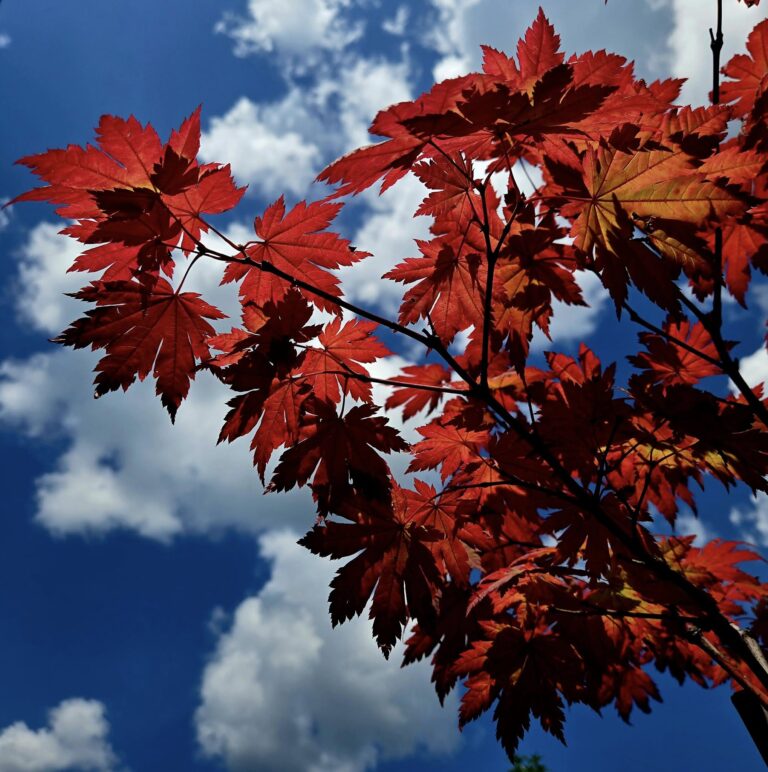
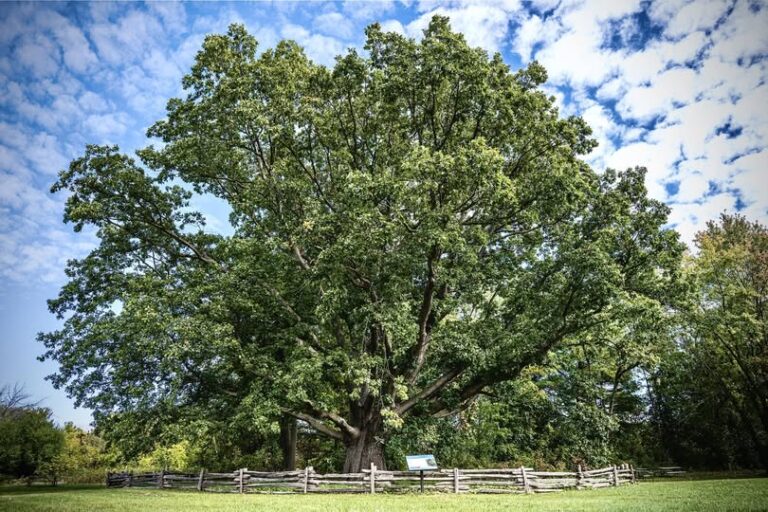
Red Maple vs Japanese Maple: Identification, Size, Growth Rate, and More
When I first stood between a blazing red maple and a delicate Japanese maple at a local arboretum, the contrast was striking. Both trees are breathtaking. But they are built for very different roles in the landscape.
Choosing the wrong one is a costly mistake — both in money and in years of waiting. This guide breaks down every difference between the two, so you can make a confident, informed decision.
What Are Red Maples and Japanese Maples?
Red maple (Acer rubrum) is a native North American species. It is one of the most abundant and widespread trees on the continent. The United States Forest Service estimates it is among the most common trees in eastern North America, growing naturally from Newfoundland to Florida.
Japanese maple (Acer palmatum) originates from Japan, Korea, and China. It has been cultivated for over 300 years in Japan and introduced to Western horticulture in the early 19th century. Today, there are more than 1,000 named cultivars of Japanese maple recognized worldwide.
Both belong to the family Sapindaceae and genus Acer, but they differ enormously in size, temperament, and garden role.
Here is a quick comparison between the two.
| Feature | Red Maple (Acer rubrum) | Japanese Maple (Acer palmatum) |
| Origin | Eastern North America | Japan, Korea, China |
| Mature Height | 40–70 feet | 6–25 feet (varies by cultivar) |
| Growth Rate | Fast (13–24 inches/year) | Slow to moderate (6–12 inches/year) |
| Hardiness Zones | USDA Zones 3–9 | USDA Zones 5–8 |
| Leaf Shape | 3–5 lobed, classic maple | 5–9 deeply dissected lobes |
| Fall Color | Brilliant red, orange, yellow | Red, orange, purple, gold |
| Sun Requirements | Full sun to partial shade | Partial shade preferred |
| Soil Preference | Adaptable; tolerates wet soil | Well-drained, slightly acidic |
| Drought Tolerance | Moderate | Low to moderate |
| Landscape Use | Shade tree, large properties | Accent, specimen, containers |
| Deer Resistance | Low | Moderate |
| Price Range | $30–$150 (typical nursery) | $50–$500+ depending on cultivar |
| Lifespan | 80–150 years | 100+ years with proper care |
Size and Growth Rate: A Major Difference
This is where most gardeners go wrong. Red maples are large shade trees. At maturity, they typically reach 40 to 70 feet in height with a canopy spread of 30 to 50 feet. Some specimens in ideal conditions exceed 100 feet.
Japanese maples are architectural accent trees. Most cultivars stay between 6 and 25 feet tall. Dwarf varieties like ‘Crimson Queen’ may reach only 4 to 8 feet over many years.
The growth rate gap is also significant. Red maples grow 13 to 24 inches per year under good conditions. Japanese maples typically add 6 to 12 inches per year. If you want fast shade, the red maple wins decisively.
For smaller gardens, patios, or near structures, a Japanese maple is far more appropriate. Planting a red maple in a small yard is a decision you — or the next owner — will regret.
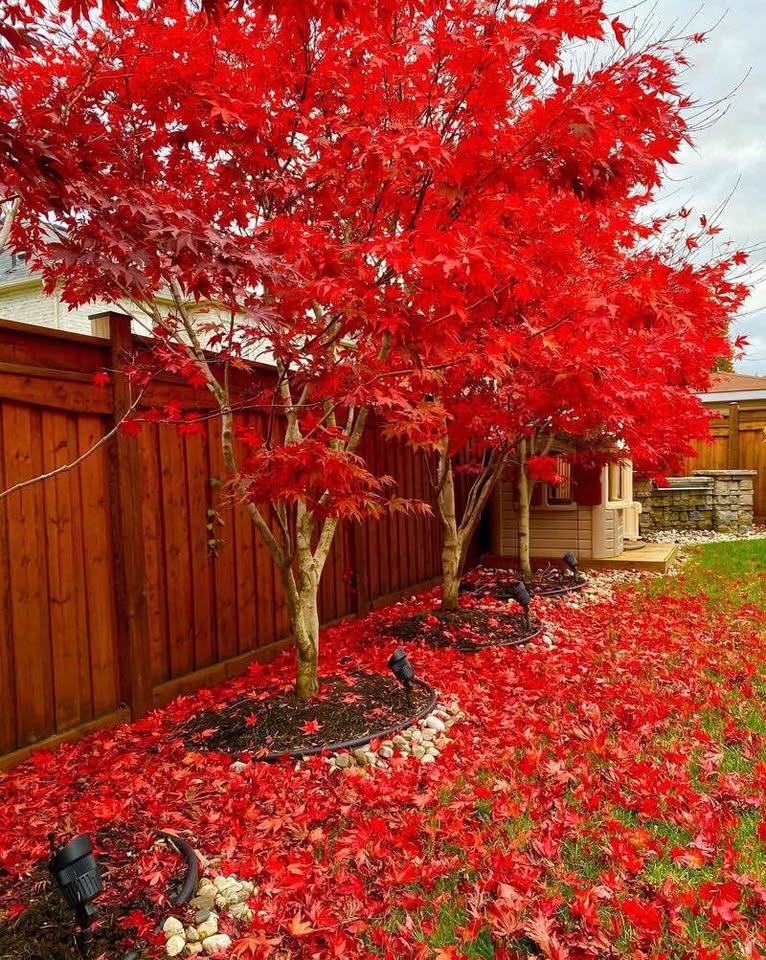
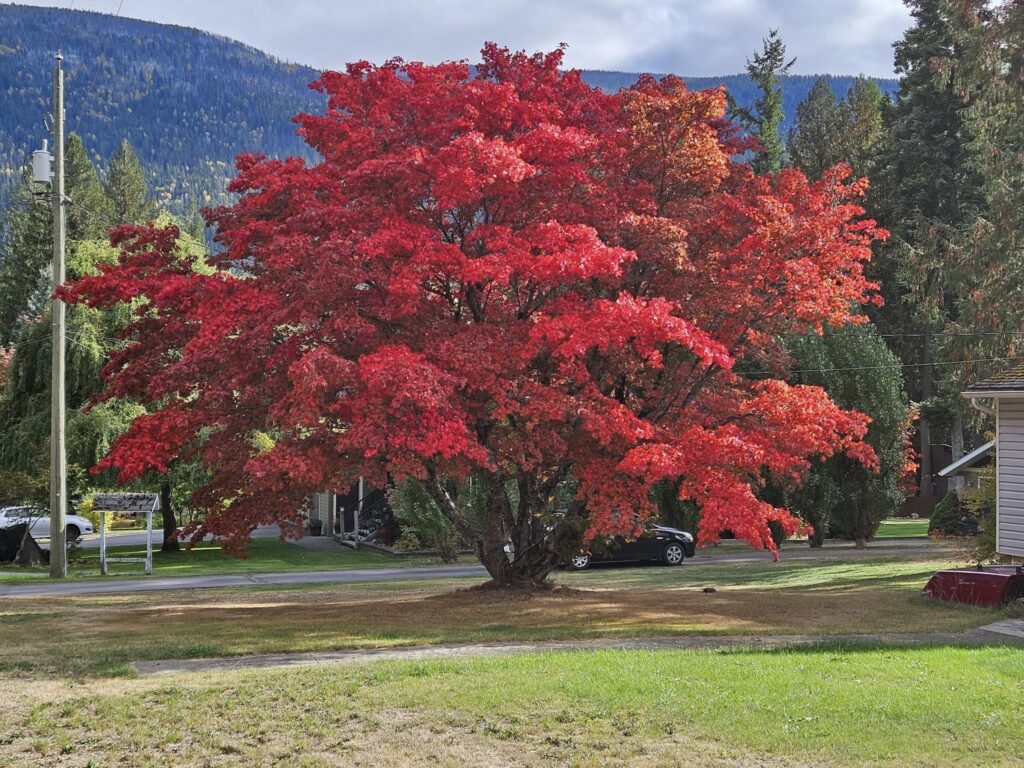
Leaf Appearance and Fall Color
Both trees are celebrated for their autumn foliage, but they look quite different up close.
Red maple leaves are 2 to 6 inches wide with three to five shallow lobes. The sinuses between lobes are relatively narrow. Leaf undersides are noticeably pale silver-green, which flickers beautifully in a breeze.
Japanese maple leaves are far more ornate. They are typically 2 to 5 inches wide with five to nine deeply cut, finger-like lobes. The dissected or “laceleaf” varieties (Acer palmatum var. dissectum) have leaves so finely divided they resemble fern fronds.
Fall color in red maples is spectacular but variable. Trees grown from seed can display anything from yellow to orange to crimson. Named cultivars like ‘Autumn Blaze’ and ‘October Glory’ are selected for consistent, vivid red fall color.
Japanese maples offer a broader color palette — deep burgundy, fiery orange, warm gold, and layered combinations. Cultivars like ‘Bloodgood’ hold rich purple-red foliage from spring through fall before transitioning to crimson in autumn.
Hardiness and Climate Adaptability
Red maple is the more climate-tolerant tree. It grows across USDA Hardiness Zones 3 through 9, making it suitable for most of the continental United States and much of Canada. It tolerates both extreme cold and moderate heat.
According to the USDA Plants Database, Acer rubrum is native to 37 states and naturalized in several others — a testament to its adaptability.
Japanese maple is more climate-sensitive. It thrives in Zones 5 through 8. In Zone 4 and below, late spring frosts can damage or kill new growth. In Zones 9 and above, intense summer heat stresses the tree significantly, causing leaf scorch.
If you live in the Deep South or a very cold northern climate, the red maple is simply more reliable. Japanese maples in challenging climates require careful siting, often in sheltered spots with afternoon shade.
Soil Requirements and Water Needs
Red maple is remarkably adaptable to soil. It grows naturally in swamps, bottomlands, dry ridges, and everything between. It tolerates wet, poorly drained soils better than almost any other landscape maple — a trait few ornamental trees share.
Japanese maple prefers well-drained, slightly acidic soil with a pH between 5.5 and 6.5. It dislikes waterlogged roots, compacted clay, and high-pH alkaline soils. Amending the planting site with organic matter is often recommended.
In terms of drought tolerance, neither tree excels, but red maple handles drought better than Japanese maple. Young Japanese maples especially need consistent moisture. In hot, dry summers, supplemental watering is essential to prevent leaf scorch and dieback.
Sun and Shade Tolerance
Red maple performs best in full sun but tolerates partial shade. In deep shade, growth slows and fall color diminishes.
Japanese maple is more flexible in this regard. It often performs better with afternoon shade, particularly in warmer climates.
Morning sun with afternoon shade is considered the ideal exposure for most Japanese maple cultivars. Too much direct summer sun can cause leaf edge burn, especially on red-leaved varieties.
The University of Florida IFAS Extension recommends that Japanese maples in Zone 8 and warmer receive no more than four to six hours of direct sun per day to prevent heat stress.
Landscape Uses: Where Each Tree Belongs
These two trees serve fundamentally different purposes in the landscape.
Red maple is a shade tree. Its primary role is to provide large-scale canopy cover, cool outdoor spaces, and seasonal color on expansive properties. It is commonly used in parks, along streets, in large suburban yards, and on rural properties.
It is not suitable for small residential lots, near utility lines, or close to foundations. Root systems are extensive and surface roots can become a maintenance issue on lawns.
Japanese maple is an accent and specimen tree. It excels as a focal point in a designed garden, on a patio, near a water feature, or in a courtyard. It is also one of the most popular trees for container planting.
Many cultivars are highly prized in Japanese garden design, used to create seasonal drama and year-round structural interest. Weeping varieties like ‘Crimson Queen’ and ‘Tamukeyama’ are especially popular for their graceful, cascading form.
Pest and Disease Considerations
Red maple is generally a robust, low-maintenance tree. It is relatively free from serious pests. Occasional issues include Verticillium wilt, aphids, scale insects, and tar spot fungal disease — none typically fatal to a healthy tree.
Japanese maple faces more potential pest and disease pressure. Verticillium wilt is a serious concern, as is Japanese beetle feeding on foliage. Aphids, scale, and mites can also cause cosmetic damage.
According to the Missouri Botanical Garden Plant Finder, Verticillium wilt is the most common and serious disease of Japanese maple in the United States. It causes sudden branch dieback and can kill affected trees within one to several seasons. Planting in well-drained soil and avoiding soil compaction around roots significantly reduces risk.
Root rot (Phytophthora spp.) is another concern for Japanese maple in wet soils — another reason why drainage is critical.
Wildlife and Ecological Value
From an ecological standpoint, red maple provides significantly more wildlife value. As a native North American species, it has co-evolved with local insects, birds, and mammals for thousands of years.
The tree produces abundant seeds (samaras) in spring — an early food source for birds and small mammals. Its early-spring flowers provide nectar for native bees before many other plants have bloomed. The National Wildlife Federation lists red maple as an important host plant for over 285 species of caterpillars across its range.
Japanese maple, as a non-native tree, provides relatively limited ecological benefit to North American wildlife. It does not serve as a significant host plant for local insects and provides minimal food resources.
This does not make it a harmful choice — it is not invasive in most regions — but gardeners focused on native plantings and wildlife habitat should consider this distinction carefully.
Cost and Availability
Red maple is widely available and affordable. A young tree in a 5-gallon container typically costs $30 to $80 at a nursery. Larger balled-and-burlapped specimens range from $100 to $300 or more. Named cultivars command somewhat higher prices.
Japanese maple pricing varies enormously based on cultivar, size, and form. Common varieties like ‘Bloodgood’ or ‘Crimson Queen’ in 3-gallon containers start around $50. Rare or large specimens — particularly mature weeping varieties with artistic form — can cost $500 to several thousand dollars.
Both trees are widely available at garden centers across North America. Japanese maples have a particularly strong market: the global Japanese maple nursery trade is estimated to be worth hundreds of millions of dollars annually, driven by collector demand for rare cultivars.
Lifespan and Long-Term Value
Both trees are long-lived when properly sited and maintained.
Red maple typically lives 80 to 150 years in landscape settings. Street trees may live shorter lives due to compaction, pollution, and physical damage. In natural forest settings, some specimens have been documented at over 200 years old.
Japanese maple is similarly long-lived. In Japan, ancient Japanese maple specimens — some over 100 years old — are preserved in famous gardens and temple grounds as living treasures. In residential landscapes, well-sited Japanese maples routinely live 100 years or more.
Both trees represent long-term investments. The key is matching the right tree to the right site from the beginning.
Notable Cultivars Worth Knowing
Red Maple Cultivars
- ‘Autumn Blaze’ (Acer × freemanii) — A hybrid of red and silver maple; exceptional fall color, fast growth, Zones 3–8.
- ‘October Glory’ — Brilliant scarlet fall color, holds leaves late into autumn.
- ‘Red Sunset’ — Consistent orange-red fall color; more drought tolerant than the species.
- ‘Brandywine’ — Improved seedless variety with vivid red fall display.
Japanese Maple Cultivars
- ‘Bloodgood’ — Classic deep burgundy foliage, 15–20 feet; the most widely planted Japanese maple.
- ‘Crimson Queen’ — Weeping laceleaf form, 8–10 feet; outstanding red fall color.
- ‘Emperor I’ — Similar to ‘Bloodgood’ but slightly more cold-hardy.
- ‘Sango Kaku’ (Coral Bark Maple) — Remarkable coral-pink winter bark; yellow fall foliage.
- ‘Tamukeyama’ — Weeping, deeply dissected deep burgundy leaves; elegant cascading habit.
- ‘Osakazuki’ — Often regarded as producing the most spectacular scarlet fall color of any Japanese maple.
Which Tree Should You Choose?
The answer depends entirely on your specific situation. Here is a practical guide:
Choose a Red Maple if:
- You need a large shade tree for a spacious property
- You live in USDA Zones 3–4 where Japanese maple may not be reliable
- Your site has wet, poorly drained soil
- You want a tree that supports local wildlife and ecology
- Budget is a primary consideration
Choose a Japanese Maple if:
- You have a small garden, courtyard, or patio
- You want a refined, ornamental specimen tree
- You are designing a Japanese-inspired or formal garden
- You want to grow a tree in a container
- Foliage texture, color, and year-round form are priorities
There is no wrong answer if the tree matches the site. I have seen red maples planted 10 feet from a foundation — a predictable disaster — and Japanese maples thriving in Phoenix with afternoon shade and drip irrigation. Site selection overrides almost every other variable.
Planting Tips for Both Trees
For Red Maple:
- Plant in fall or early spring for best establishment
- Dig a hole two to three times wider than the root ball, but no deeper
- Water deeply once or twice per week for the first two growing seasons
- Avoid fertilizing heavily — red maple is a fast grower and excessive nitrogen can cause weak wood
For Japanese Maple:
- Select a site with morning sun and afternoon shade in warm climates
- Ensure excellent drainage — raised beds or amended soil help in clay soils
- Mulch 3 to 4 inches deep to retain moisture and moderate soil temperature
- Protect from drying winds, which can cause leaf scorch
- Avoid fertilizing in late summer, which stimulates vulnerable new growth before winter
Final Thoughts
Both trees are exceptional in their own right. Red maple is a landscape workhorse — tough, fast-growing, ecologically valuable, and spectacularly colorful in autumn. Japanese maple is a work of art — refined, sculptural, and endlessly varied in form and color.
The best choice is the one that fits your space, climate, and vision. Armed with the information in this guide, you now have everything you need to make that decision with confidence.
References
- USDA Forest Service — Forest Inventory and Analysis Program Species distribution data for Acer rubrum. Available at: https://www.fs.usda.gov/research/programs/fia
- USDA PLANTS Database — Acer rubrum Native range, taxonomic data, and state distribution records. Available at: https://plants.usda.gov/plant-profile/ACRU
- Missouri Botanical Garden Plant Finder — Acer palmatum Cultivation requirements, pest and disease notes, cultivar information. Available at: https://www.missouribotanicalgarden.org/PlantFinder/PlantFinderDetails.aspx?kempercode=a124
- University of Florida IFAS Extension — Japanese Maple Regional planting guidance, heat tolerance, and cultivar selection for Florida and the Southeast. Available at: https://edis.ifas.ufl.edu/publication/ST026
- The Morton Arboretum — Red Maple (Acer rubrum) Species identification, landscape use, and horticultural notes. Available at: https://mortonarb.org/trees-plants/tree-and-plant-advice/help-yourself/red-maple/
- National Wildlife Federation — Wildlife-Friendly Plants: Red Maple Ecological value, wildlife host plant data, and native species information. Available at: https://www.nwf.org/NativePlantFinder/Plants/11
- North Carolina State University Extension — Acer palmatum (Japanese Maple) Detailed horticultural profile including soil requirements, cultivar notes, and regional performance data. Available at: https://plants.ces.ncsu.edu/plants/acer-palmatum/

Tim M Dave is a gardening expert with a passion for houseplants, particularly cacti and succulents. With a degree in plant biology from the University of California, Berkeley, he has vast experience in gardening. Over the years, he has cultivated a vast collection of desert plants and learned a great deal about how to grow and care for these unique companions.