25 Trees Native to Tennessee (With Growing Details)
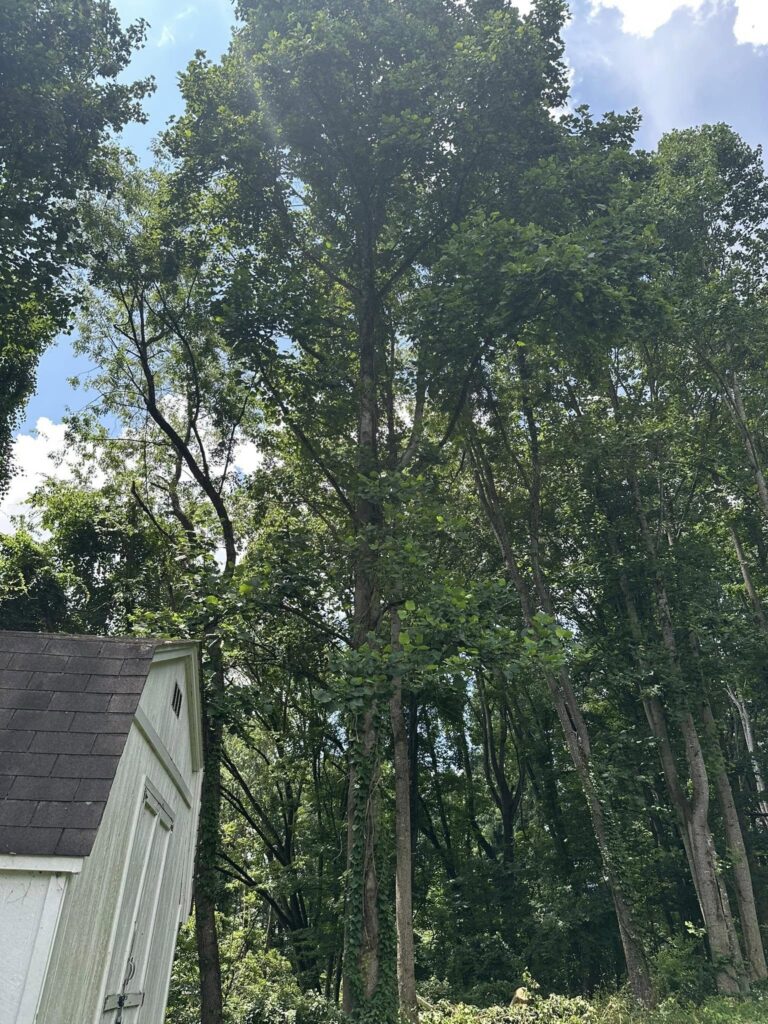
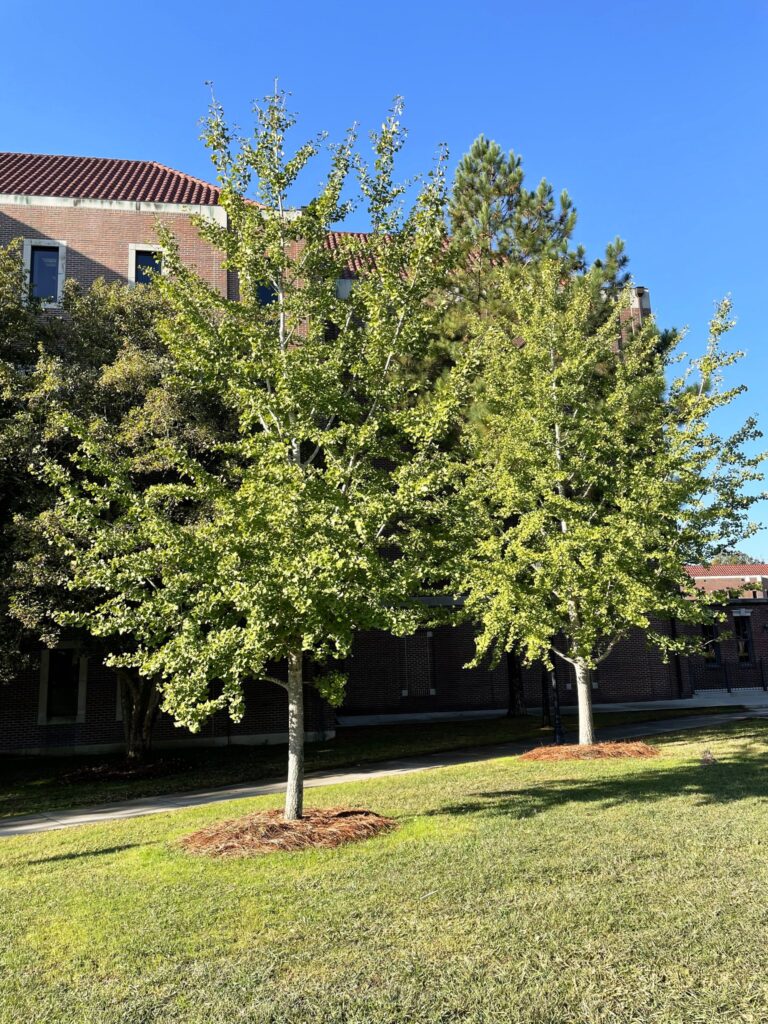
Tennessee is one of the most tree-rich states in the country. I’ve always found that a little humbling. Forests cover roughly 14 million acres, or about 52 percent of the state’s land area, according to the Tennessee Department of Agriculture Division of Forestry. That’s more than 8 billion live trees, or over 1,200 for every single Tennessean.
This guide walks through 25 trees native to Tennessee, covering towering hardwoods, flowering understory trees, and a few conifers that hold their color through winter. Each entry includes basic identification details, growing habits, and why the tree matters to the state’s ecosystem.
Why Native Trees Matter in Tennessee
Native trees have grown in Tennessee since long before European settlement. They are woven into the state’s food webs, soil chemistry, and wildlife cycles.
Birds, insects, and fungi have adapted specifically to native species. Non-native “exotic” trees often can’t offer the same ecological support, according to University of Tennessee Extension.
Tennessee is also considered the most biodiverse inland state in the country, according to the Tennessee Wildlife Federation. That diversity starts with its trees.
The 25 Trees Native to Tennessee
1. Tulip Poplar (Liriodendron tulipifera)

The Tulip Poplar is Tennessee’s official state tree, a title it earned in 1947. Early settlers prized it heavily for log cabins and furniture because of its straight trunk and workable wood.
This tree can grow past 150 feet tall, making it one of the tallest hardwoods in eastern North America. Its tulip-shaped, yellow-green flowers bloom in late spring.
I think it’s fitting that Tennessee chose a tree known for both beauty and usefulness. It really does capture the practical, sturdy character of the state’s forests.
You’ll find Tulip Poplars throughout the state, especially in moist, well-drained soils in coves and valleys.
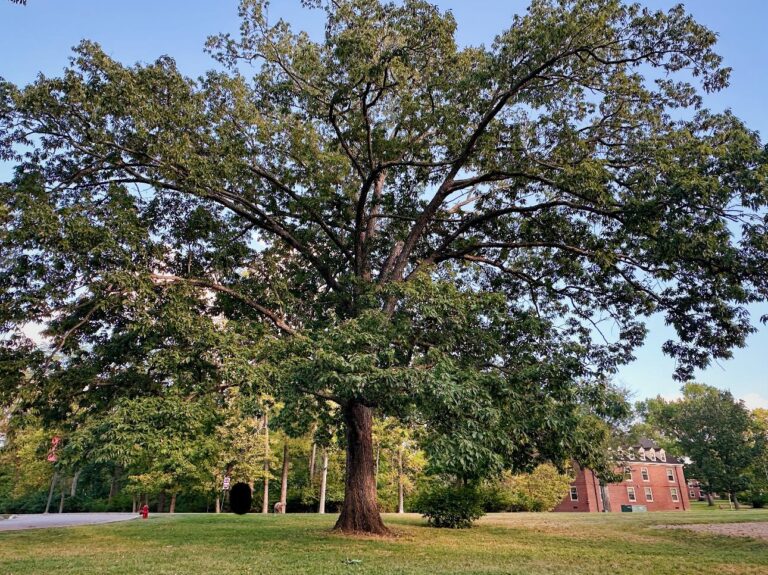
2. White Oak (Quercus alba)
White Oak is one of the most valuable hardwoods in Tennessee, prized for whiskey barrels, flooring, and furniture. Its wood is dense, durable, and naturally resistant to rot.
This species has faced declining populations in recent decades, which led to the creation of the White Oak Initiative. That program, a partnership between the Tennessee Division of Forestry, the Tennessee Forestry Association, and UT Extension, collects donated acorns for reforestation.
White Oak leaves have rounded lobes, unlike the pointed lobes of red oaks. Acorns mature in one growing season and are a critical food source for deer, turkey, and squirrels.
Mature trees can live for centuries, with some documented specimens exceeding 400 years old.
3. Northern Red Oak (Quercus rubra)

Northern Red Oak grows fast compared to most oaks, often adding two feet of height per year in good conditions. That growth rate makes it popular for reforestation projects.
Its leaves have sharp, bristle-tipped lobes, a quick way to tell it apart from White Oak. Fall color runs from deep red to russet brown.
The wood is widely used in furniture and cabinetry. Acorns take two years to mature and provide fall and winter food for wildlife across the state.
4. Shumard Oak (Quercus shumardii)
Shumard Oak thrives in the bottomlands of West Tennessee, though it grows statewide. It tolerates wet soils better than most oaks, which makes it a strong choice for low-lying landscapes.
This tree can reach 100 feet tall with a broad, rounded crown. Its deeply lobed leaves turn a vivid red in autumn.
Shumard Oak is often recommended by UT Extension foresters as a durable, adaptable shade tree for both rural and urban settings.
5. Chestnut Oak (Quercus montana)
Chestnut Oak favors dry, rocky ridges, especially in East Tennessee’s mountains. Its thick, deeply furrowed bark helps it survive fires and poor soil conditions.
The leaves resemble those of the American Chestnut, hence the name, with wavy, toothed edges rather than sharp lobes.
This tree produces some of the largest acorns among native oaks, an important fall food source for black bears and deer in the Appalachian region.
6. Sugar Maple (Acer saccharum)
Sugar Maple is famous for two things: brilliant fall foliage and maple syrup. Tennessee doesn’t have a large commercial syrup industry, but the tree still grows well in the state’s cooler, higher elevations.
Its fall color is often described as the gold standard, ranging from yellow-orange to fiery red. The wood is exceptionally hard, used for flooring, bowling alleys, and baseball bats.
Sugar Maples prefer rich, well-drained soil and can live over 300 years.
7. Red Maple (Acer rubrum)
Red Maple is one of the most adaptable native trees in Tennessee, tolerating wet soil, dry soil, sun, and shade. That flexibility has made it one of the most common trees in the eastern United States.
Its red flowers appear in late winter, often before other trees show any sign of spring. Fall color ranges from yellow to deep scarlet, depending on the individual tree.
Nature Hills nursery lists Red Maple among the top native trees recommended for Tennessee landscapes, citing its resilience and seasonal color.
8. Shagbark Hickory (Carya ovata)
Shagbark Hickory gets its name from its distinctive peeling bark, which curls away from the trunk in long strips. It’s one of the easiest native trees to identify at a glance.
The nuts are sweet and edible, historically an important food source for both people and wildlife. Squirrels, in particular, rely heavily on hickory nuts each fall.
This tree grows slowly but can live for several hundred years, eventually reaching 60 to 80 feet tall.
9. Eastern Redbud (Cercis canadensis)
Eastern Redbud is one of the first signs of spring in Tennessee. Its pink-purple flowers burst directly from bare branches, sometimes even from the trunk itself, weeks before the leaves emerge.
I’ve always thought Redbud does more with less. It’s a small tree, rarely over 30 feet tall, but its early bloom makes it stand out against a still-brown landscape.
The heart-shaped leaves turn yellow in fall. Redbud is a favorite for landscaping because of its manageable size and reliable spring color.
10. Flowering Dogwood (Cornus florida)
Flowering Dogwood produces showy white or pink bracts each spring, followed by red berries that birds rely on through fall and winter. It’s a classic understory tree in Tennessee’s forests.
This species faced a decline from dogwood anthracnose disease in past decades, but it remains widely planted and naturally regenerating across the state.
The City of Knoxville specifically recommends Flowering Dogwood among its native tree list for local landscaping projects.
11. American Beech (Fagus grandifolia)
American Beech has smooth, gray bark that stays relatively unmarked even as the tree ages, unlike the rough bark of most hardwoods. That smoothness, unfortunately, makes it a common target for carved initials.
Its leaves often stay on the tree through winter in a pale, papery form, a trait called marcescence. Beechnuts are an important food source for wildlife, including turkey and black bear.
Beech trees prefer rich, moist soils and are common in Tennessee’s older, undisturbed forests.
12. Black Walnut (Juglans nigra)
Black Walnut produces one of the most valuable hardwoods in North America, prized for furniture, gunstocks, and veneer. A single high-quality veneer log can be worth thousands of dollars.
The tree also produces a chemical called juglone, which suppresses the growth of many other plants nearby. That’s worth knowing before planting a garden underneath one.
Black Walnut is listed among Tennessee’s key native trees by UT Extension, valued both for timber and for its edible nuts.
13. Sassafras (Sassafras albidum)
Sassafras is easy to identify by its leaves, which come in three distinct shapes on the same tree: oval, mitten-shaped, and three-lobed. That variety alone makes it a favorite for teaching tree identification.
Historically, its roots were used to flavor root beer and sassafras tea, though the safrole compound they contain is no longer considered safe for regular consumption.
The tree’s brilliant orange and red fall foliage makes it a standout in mixed forests across Tennessee.
14. Black Gum (Nyssa sylvatica)
Black Gum, also called Black Tupelo, is often the first tree to turn color in fall, sometimes as early as late August. Its leaves shift to a deep, glossy red that’s hard to miss.
This tree tolerates wet soils well, often found near streams and swampy areas. Its small, dark blue fruits are a favorite of migrating birds.
Nature Hills nursery names Black Gum among its top picks for Tennessee native landscaping, citing its wildlife value and reliable fall display.
15. Eastern Hemlock (Tsuga canadensis)
Eastern Hemlock is one of Tennessee’s few native evergreen conifers, common in cool, shaded ravines and along mountain streams in East Tennessee. Its short, flat needles and small cones set it apart from pines.
This species has struggled against the hemlock woolly adelgid, an invasive insect that has killed large numbers of hemlocks across the Appalachians in recent decades.
Where it survives, Eastern Hemlock provides year-round shade and habitat, especially important for cooling mountain streams that support native trout.
16. Eastern White Pine (Pinus strobus)
Eastern White Pine is the tallest native pine in the eastern United States, capable of reaching over 150 feet. Its soft, blue-green needles grow in bundles of five, a helpful identification clue.
Historically, this tree was harvested for ship masts because of its long, straight trunks. Today it remains a popular choice for lumber and Christmas trees.
White Pine grows well across most of Tennessee, though it’s most common in the eastern and middle regions.
17. Shortleaf Pine (Pinus echinata)
Shortleaf Pine is native to Tennessee’s oak-hickory-pine forests, particularly in the Cumberland Plateau and Highland Rim regions. It has a unique survival trait: the ability to resprout from its base after fire or damage.
Its needles grow in bundles of two or three, shorter than those of Eastern White Pine. The bark forms distinctive rectangular plates as the tree matures.
This species plays an important role in Tennessee’s timber economy and in restoring fire-adapted pine woodlands.
18. American Sycamore (Platanus occidentalis)
American Sycamore is easy to spot from a distance thanks to its mottled, peeling bark that reveals patches of white, gray, and green underneath. It’s one of the largest native trees by trunk diameter in Tennessee.
This tree grows along rivers and streams throughout the state, often reaching massive size in floodplain soils. Some old sycamores develop hollow trunks large enough for wildlife dens.
Its large, maple-like leaves and round seed balls make it a distinctive presence in bottomland forests.
19. Yellow Birch (Betula alleghaniensis)
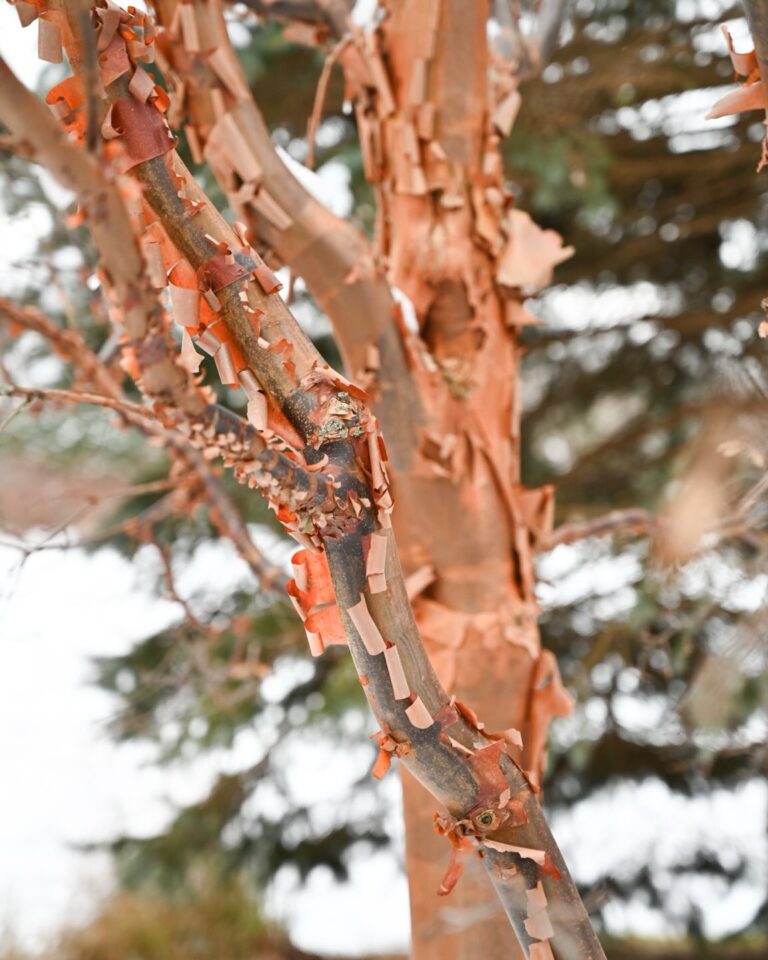
Yellow Birch is found mainly in the cooler, higher elevations of East Tennessee, including parts of the Great Smoky Mountains. Its curling, golden-bronze bark is one of its most recognizable features.
This tree often germinates on fallen logs or stumps, a behavior known as growing on “nurse logs.” Over time, the roots can appear to straddle the ground on stilts.
Yellow Birch wood is used for furniture and flooring, valued for its strength and fine grain.
20. Downy Serviceberry (Amelanchier arborea)
Downy Serviceberry is often one of the earliest native trees to bloom, producing white flowers in early spring before most other trees leaf out. Its small, sweet berries ripen by early summer.
The City of Knoxville includes Serviceberry on its official list of native trees recommended for local landscaping.
This small understory tree works well in gardens with limited space, offering spring flowers, summer fruit, and orange-red fall color in one compact package.
21. American Holly (Ilex opaca)
American Holly is one of Tennessee’s few broadleaf evergreens, keeping its glossy, spiny leaves year-round. It’s a familiar sight during the holiday season for good reason.
Female trees produce bright red berries in winter, an important food source for birds when other options are scarce. Male and female flowers grow on separate trees, so both are needed for fruit production.
This tree is included on the City of Knoxville’s official native tree list and grows well in partial shade throughout the state.
22. Common Persimmon (Diospyros virginiana)
Common Persimmon produces small, orange fruits that are famously astringent until fully ripe, usually after the first frost. Once ripe, they turn sweet and are used in jams, puddings, and traditional Southern desserts.
The bark is distinctive, broken into small, square, blocky plates that make identification straightforward even without leaves or fruit.
This tree is listed by UT Extension among Tennessee’s notable native species and remains a favorite for wildlife gardens.
23. Red Buckeye (Aesculus pavia)
Red Buckeye stands out each spring with tubular red flowers that attract hummingbirds returning from migration. It’s one of the earlier native trees to leaf out.
This small tree, usually under 20 feet tall, works well in shaded understory plantings. Its glossy, palmate leaves are easy to recognize.
UT Extension includes Red Buckeye among its recommended native trees for Tennessee landscapes, particularly for pollinator gardens.
24. Fringe Tree (Chionanthus virginicus)
Fringe Tree earns its name from its delicate, ribbon-like white flowers that hang in loose clusters each spring. The blooms have a light, pleasant fragrance.
This small tree rarely exceeds 20 feet and works well as an ornamental specimen. Female trees produce dark blue, olive-like fruits that birds readily eat.
The City of Knoxville lists Fringe Tree among its recommended native species for regional landscaping.
25. Sourwood (Oxydendrum arboreum)
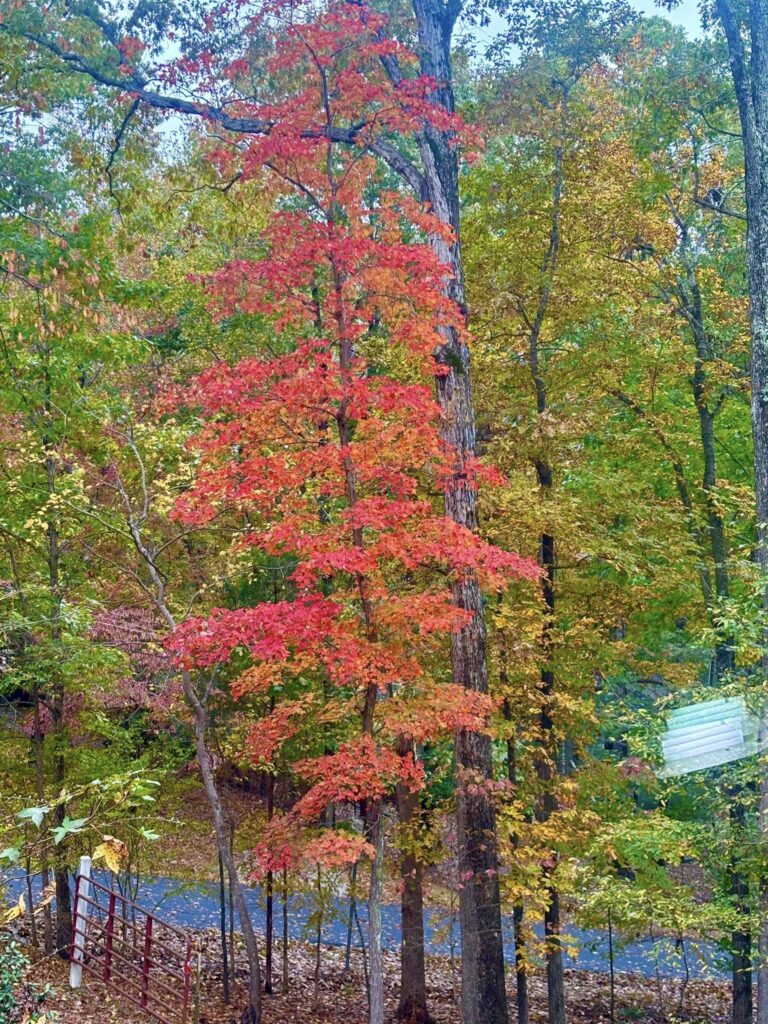
Sourwood is known for two standout features: drooping clusters of white, bell-shaped flowers in summer, and some of the most vivid red fall foliage of any native Tennessee tree.
Beekeepers prize Sourwood highly, since its flowers produce a distinct, sought-after honey. In parts of Appalachia, Sourwood honey is a regional specialty.
This tree grows best in acidic, well-drained soil and is common in the state’s ridge and mountain forests.
A Few Notes on Where These Trees Grow Best
Tennessee’s geography ranges from Mississippi River bottomlands in the west to the Appalachian peaks in the east. Not every tree on this list will thrive everywhere in the state.
Cove hardwoods like Yellow Birch and Eastern Hemlock favor the cooler, higher elevations of East Tennessee. Bottomland species like American Sycamore and Shumard Oak do better near rivers and in West Tennessee’s floodplains.
Before planting, it’s worth checking with a local County Extension office or forester. They can confirm which native species will actually succeed in your specific soil and climate conditions.
Why Planting Native Trees Makes a Difference
Native trees ask for less. They’re already adapted to Tennessee’s rainfall patterns and soil types, which generally means less watering and fewer pest problems.
They also support local wildlife in ways that imported ornamental trees simply cannot. Birds, pollinators, and small mammals recognize and depend on native species for food and shelter.
Only about 1 percent of Tennessee’s forests are harvested each year, according to the Tennessee Department of Agriculture, and new growth consistently outpaces that harvest. Planting native trees on private land adds to that ongoing balance.
Frequently Asked Questions
What is Tennessee’s state tree? The Tulip Poplar (Liriodendron tulipifera) has been Tennessee’s official state tree since 1947.
How many native tree species grow in Tennessee? The Great Smoky Mountains National Park alone is home to about 100 native tree species, and the number climbs higher when counting the entire state.
What percentage of Tennessee is forested? Roughly 52 percent of the state, or about 14 million acres, is covered by forest, according to the Tennessee Division of Forestry.
Are hickories and oaks the most common Tennessee trees? Yes. Oak-hickory forest types make up an estimated 73 percent of Tennessee’s forested land, according to state forestry data.
Final Thoughts
Twenty-five trees only scratch the surface of what grows across Tennessee’s forests, but this list covers the species most people are likely to encounter, plant, or ask about. From the towering Tulip Poplar to the modest Fringe Tree, each one plays a specific role in the state’s ecosystem.
If you’re planning to plant one of these trees, I’d genuinely encourage checking with a local Extension office first. Matching the right tree to the right soil and light conditions makes all the difference in whether it thrives for decades or struggles from the start.
References
- University of Tennessee Extension. SP515: Native Trees for Tennessee. https://uthort.tennessee.edu/wp-content/uploads/sites/228/2023/11/SP515%20Native%20Trees%20for%20Tennessee.pdf
- University of Tennessee, Tennessee Smart Yards Program. Native Plants. https://tnyards.utk.edu/category/native-plants/
- Tennessee Department of Agriculture, Division of Forestry. Forests. https://www.tn.gov/agriculture/forests.html
- Tennessee Department of Agriculture, Division of Forestry. About the Division of Forestry. https://www.tn.gov/agriculture/forests/about.html
- Tennessee Department of Agriculture, Division of Forestry. State Forests. https://www.tn.gov/agriculture/forests/state-forests.html
- U.S. National Park Service. Great Smoky Mountains National Park. https://www.nps.gov/articles/greatsmoky.htm
- U.S. National Park Service, Great Smoky Mountains National Park. Trees and Shrubs Checklist. https://www.nps.gov/grsm/learn/nature/trees-shrubs-list.htm

Tim M Dave is a gardening expert with a passion for houseplants, particularly cacti and succulents. With a degree in plant biology from the University of California, Berkeley, he has vast experience in gardening. Over the years, he has cultivated a vast collection of desert plants and learned a great deal about how to grow and care for these unique companions.