26 Native Missouri Trees (With Growing Details)
Missouri’s forests cover roughly 15.4 million acres, or about a third of the state, and that green blanket is made up of an incredibly diverse mix of hardwoods and conifers.
According to a Washington University in St. Louis guide, there are around 119 common species of native Missouri trees, and honestly, trying to learn them all at once would overwhelm anyone.
That’s why I’ve narrowed this guide down to the 26 trees you’re most likely to encounter, whether you’re hiking the Ozarks, walking a city park in St. Louis, or planting a windbreak on a farm near Columbia.
I’ve spent time walking these woods myself, and I still get a small thrill spotting a shagbark hickory’s peeling bark or a redbud blooming before anything else wakes up in spring. This list blends practical identification details with the kind of context that makes each tree memorable.
Why Native Trees Matter in Missouri
Native species are adapted to Missouri’s climate, soils, and rainfall patterns in ways that imported ornamentals simply are not. Per the Missouri Department of Natural Resources, native species tend to do better than exotic species on Missouri lands in the long term, since exotics often fail to survive as well or don’t live as long as native species.
Planting native also supports local wildlife. Birds, pollinators, and mammals across Missouri evolved alongside these specific trees, so the food and shelter they provide simply cannot be replicated by non-native alternatives.
With that foundation set, let’s walk through the 26 trees every Missourian should be able to recognize.
1. Flowering Dogwood (Cornus florida)
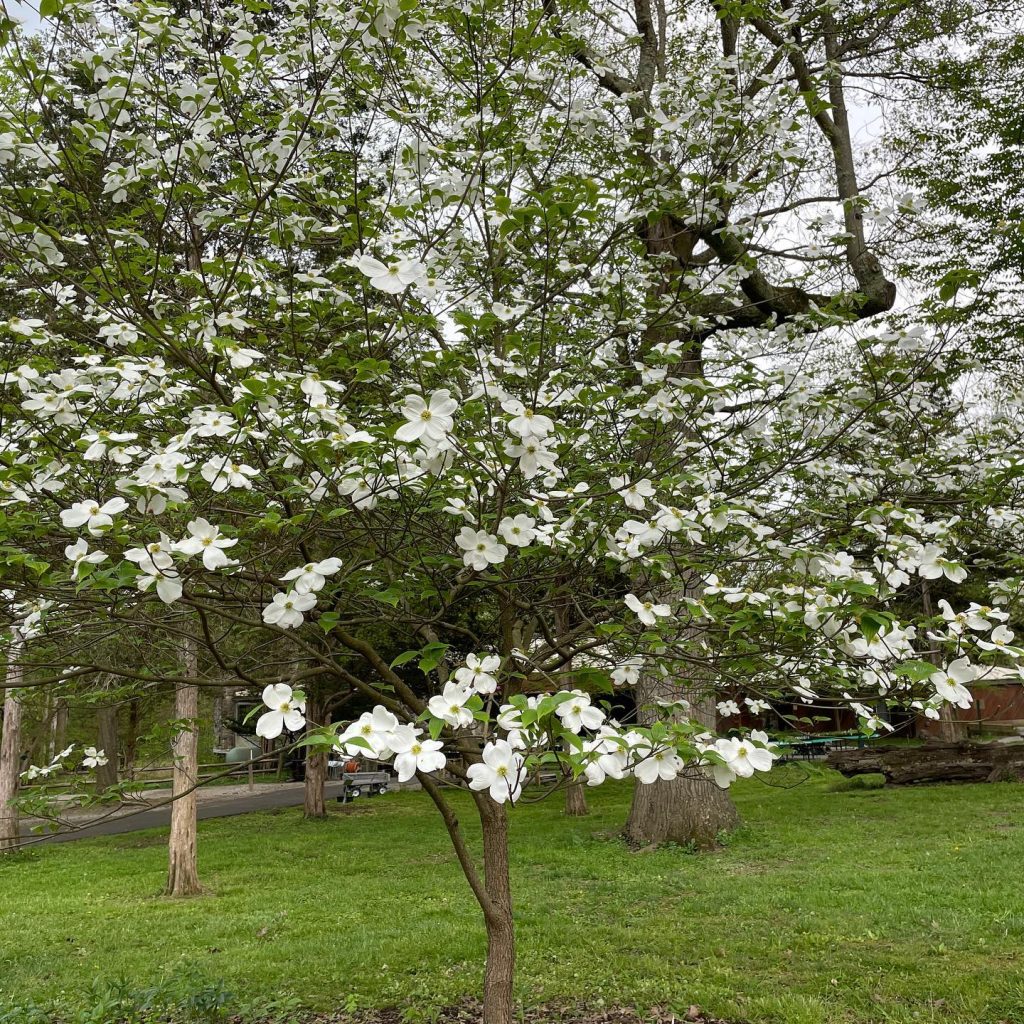
Missouri’s official state tree, the flowering dogwood, is impossible to miss each April. Its white or pink bracts light up the understory of hardwood forests across the entire state, especially in the Ozark region.
The tree rarely grows taller than 25 to 30 feet, making it a manageable choice for home landscaping. Its bark develops a distinctive blocky, alligator-hide texture as it matures, which is a handy identification clue in winter.
In fall, dogwoods produce clusters of red berries that songbirds and small mammals rely on heavily. The foliage itself turns a deep burgundy, adding another season of visual interest.
I always think of dogwood season as Missouri’s quiet answer to cherry blossom season elsewhere. It doesn’t get the same fame, but locals know exactly when to look for it.
2. Eastern Redbud (Cercis canadensis)
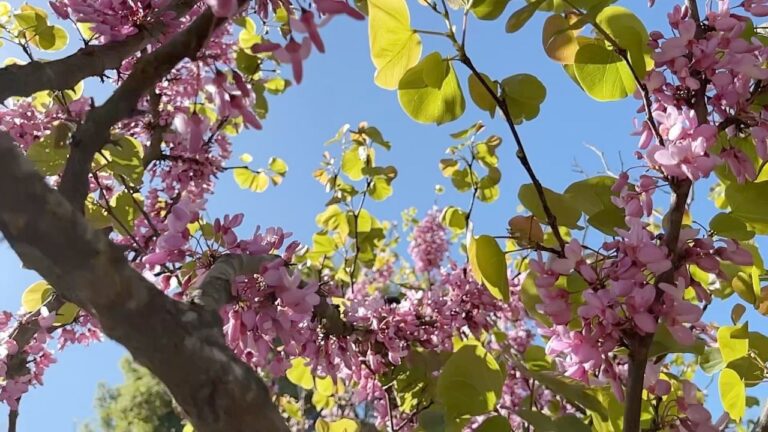
Redbud is the tree that tells Missourians spring has truly arrived, often blooming even before the dogwoods. This species is found throughout the state, with a simple alternate leaf pattern and leaves that are shiny on top and furry underneath.
Redbuds commonly live between 50 and 75 years, which is relatively short for a tree but long enough to anchor a landscape for a generation. Its magenta-pink flowers cluster directly on bare branches and even the trunk, a trait called cauliflory.
Heart-shaped leaves follow the blooms, giving the tree a soft, rounded canopy through summer. Redbud tolerates partial shade well, so it thrives at the edge of woodlands rather than in open sun.
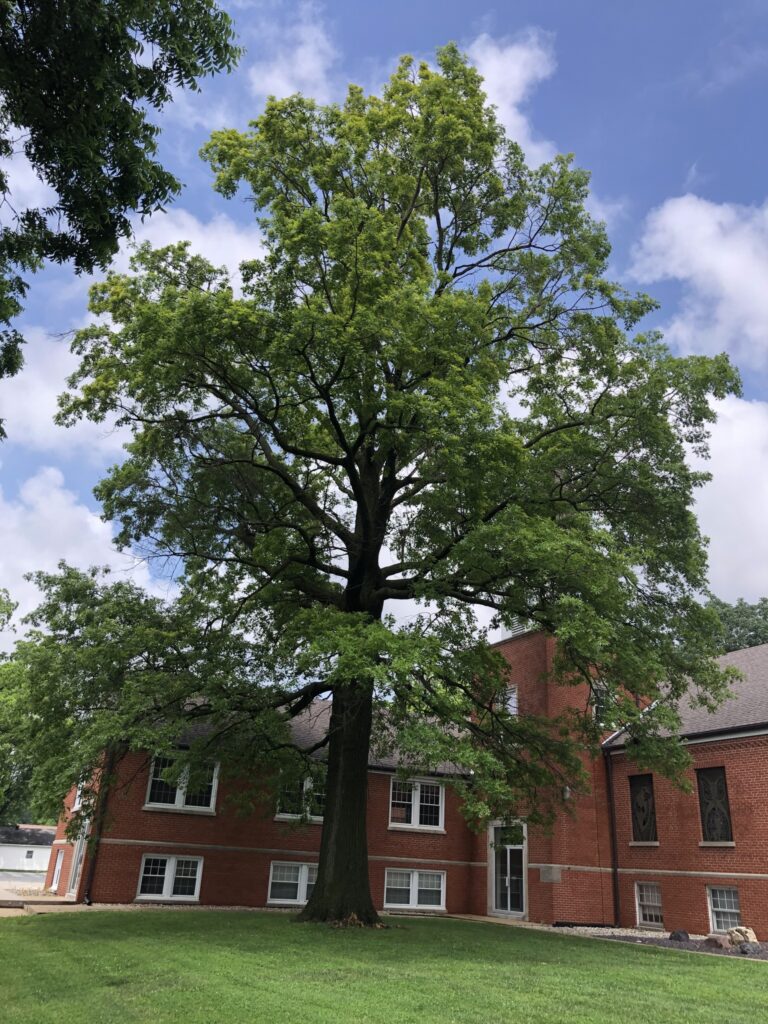
3. White Oak (Quercus alba)
White oak is arguably the most economically and ecologically important tree in Missouri. The state’s wood product manufacturers are internationally known for supplying white oak barrels, a niche that supports the bourbon and wine industries nationwide.
This oak can live for centuries and often reaches heights of 80 to 100 feet. Its bark is pale gray and scaly, while its rounded-lobe leaves lack the sharp bristle tips seen on red oaks.
White oak acorns mature in a single season, unlike red oak acorns, which take two years. That single detail makes fall identification much easier once you know what to look for.
Oak and hickory remain the most common tree species across Missouri’s forested state land, and white oak sits at the top of that group in both volume and value.
4. Northern Red Oak (Quercus rubra)
Red oak grows faster than white oak and is prized for lumber, flooring, and furniture. Its leaves have pointed, bristle-tipped lobes, a quick way to separate it from the rounded white oak family at a glance.
The bark features distinctive shiny stripes running down the trunk, almost like ski tracks. This texture becomes more obvious as the tree matures past 30 years old.
Red oak acorns are bitter and take two growing seasons to ripen, but wildlife still depend on them heavily during lean winters. Deer, turkey, and squirrels all rely on this mast crop.
5. Shagbark Hickory (Carya ovata)
Shagbark hickory earns its name honestly. Long, curling strips of bark peel away from the trunk, giving mature trees a shaggy, almost unkempt appearance that’s oddly beautiful once you get used to it.
This tree produces some of the sweetest, most edible nuts of any native hickory. Squirrels compete fiercely with human foragers every autumn across Missouri’s oak-hickory forests.
Shagbark hickory grows slowly but can live well past 200 years. Its wood is famously used for smoking meat, giving Missouri barbecue much of its signature flavor.
6. Black Walnut (Juglans nigra)
Black walnut is one of Missouri’s most valuable timber species, prized worldwide for its rich, dark heartwood used in furniture and gunstocks. Mine land reclamation projects in western Missouri specifically favor black walnut because forest resources there are limited in extent and value.
The tree releases a chemical called juglone from its roots, which suppresses the growth of many nearby plants, including tomatoes. Gardeners in Missouri learn this lesson quickly, sometimes the hard way.
Black walnut leaves are compound, featuring up to 23 leaflets per stem, and they release a distinct, almost spicy scent when crushed. The husked nuts stain hands and driveways a stubborn brown every fall.
7. Shortleaf Pine (Pinus echinata)
Shortleaf pine is Missouri’s only widespread native pine and the signature tree of the Ozark hills. It’s specifically noted alongside oak and hickory as an important species found on state forest land.
This pine once dominated vast stretches of southern Missouri before heavy logging between 1880 and 1920 reduced its range dramatically. Restoration efforts continue today across Ozark public lands.
Shortleaf pine needles grow in bundles of two or three, and mature bark forms irregular reddish-brown plates. Unlike many pines, it can resprout from its base after fire damage.
8. Eastern Red Cedar (Juniperus virginiana)
Eastern red cedar is technically a juniper, not a true cedar, but the name has stuck for generations of Missourians. It’s one of the most drought-tolerant native evergreens in the state.
This tree spreads aggressively into abandoned pastures and glades, which foresters sometimes consider a management challenge. Its aromatic red heartwood is a favorite for closets and chests because it naturally repels moths.
Female trees produce small blue, berry-like cones that cedar waxwings and other birds eat throughout winter. The dense, year-round foliage also makes it an excellent windbreak choice for rural properties.
9. Sugar Maple (Acer saccharum)
Sugar maple provides some of the most dramatic fall color found anywhere in Missouri, turning brilliant orange and red each October. It thrives in the rich, moist soils of northern and eastern Missouri forests.
This species can be tapped for syrup, though Missouri’s climate produces a shorter sap season than states farther north. Some hobbyists still tap backyard sugar maples successfully each late winter.
Sugar maple grows slowly but can reach 100 feet with a dense, rounded canopy. Its opposite leaf arrangement and classic five-lobed shape make it one of the easiest trees for beginners to identify.
10. Silver Maple (Acer saccharinum)

Silver maple grows remarkably fast, often adding several feet of height per year in good conditions. That speed makes it popular for quick shade, though the wood is notably weaker than sugar maple’s.
Its deeply cut, silvery-backed leaves flash and shimmer in the wind, which is where the common name comes from. You’ll often spot silver maple lining Missouri riverbanks and floodplains.
Because branches are brittle, this tree is prone to storm damage as it ages. Many arborists recommend it for naturalized areas rather than spaces close to homes or driveways.
11. Black Cherry (Prunus serotina)
Black cherry produces fragrant white flower clusters in spring, followed by small dark fruits that birds strip from branches within days. Its blossoms are famously very fragrant, a trait foresters use for quick identification in the field.
The wood is highly valued for furniture making, prized for its warm reddish tone that deepens with age. Mature bark develops a rough, scaly texture often compared to burnt potato chips.
This tree grows throughout Missouri, from fencerows to forest edges. Its fruit, while tart raw, has long been used in jellies, wines, and traditional medicine remedies across the Ozarks.
12. Sassafras (Sassafras albidum)
Sassafras is instantly recognizable by its three distinct leaf shapes on the same tree: oval, mitten-shaped, and three-lobed. Its twigs taste like root beer, a fun and reliable field test that kids especially enjoy.
Historically, the roots were used to flavor root beer itself before safety concerns changed commercial recipes. The tree still holds cultural significance in Ozark folk traditions and herbal remedies.
Sassafras spreads through root suckers, often forming small thickets rather than standing alone. Its fall foliage turns brilliant shades of orange, yellow, and scarlet, sometimes all on one tree.
13. American Sycamore (Platanus occidentalis)
Sycamore is one of the largest native trees in Missouri, with trunks that can exceed six feet in diameter along river bottoms. Its mottled, peeling bark reveals a striking white-and-tan patchwork pattern.
This species thrives in wet soils and is commonly found lining streams and the Missouri and Mississippi River corridors. Hollow sycamore trunks historically provided shelter for wildlife and even early settlers.
Sycamore leaves are broad and maple-like but noticeably larger, sometimes reaching a foot across. Ball-shaped seed clusters hang from branches through winter, giving the tree its other common name, buttonwood.
14. Black Locust (Robinia pseudoacacia)
Black locust is a fast-growing legume tree, meaning its roots fix nitrogen and enrich surrounding soil. Its stems feature prickly stipules that make identification easy, especially on young saplings.
Fragrant white flower clusters bloom in late spring, attracting bees and producing a prized, mild honey. The extremely dense, rot-resistant wood is a favorite for fence posts across rural Missouri.
This tree spreads aggressively through root suckers and can colonize disturbed ground quickly. Because of that vigor, it’s often used in reclamation projects on old mine sites and eroded slopes.
15. American Elm (Ulmus americana)
American elm once formed graceful, vase-shaped canopies over countless Missouri streets before Dutch elm disease devastated the species in the mid-20th century. Disease-resistant cultivars have since revived interest in planting it again.
The tree’s leaves are asymmetrical at the base, a small but reliable identification detail. Elm wood resists splitting, which historically made it valuable for wagon wheel hubs and furniture joints.
Surviving mature elms are treasured landmarks in many Missouri towns. Conservation programs continue breeding resistant strains to bring this once-dominant shade tree back into wider use.
16. Osage Orange (Maclura pomifera)
Osage orange is famous for its bizarre, brain-textured green fruit, which can grow larger than a softball. Despite the name, the fruit isn’t edible for humans, though squirrels occasionally nibble at the seeds.
This tree’s wood is exceptionally hard, dense, and rot-resistant, historically prized by Native Americans for bow-making and later by settlers for fence posts and hedgerows. Sharp thorns line its branches, making it a natural living fence.
Osage orange spread widely across Missouri farmland during the 19th century as a barrier crop before barbed wire became common. You’ll still find old hedgerows of it dividing fields statewide today.
17. Bur Oak (Quercus macrocarpa)
Bur oak produces the largest acorns of any native Missouri oak, often capped with a shaggy, fringed cup that’s unmistakable once you’ve seen it. This species tolerates prairie conditions better than most oaks.
Its thick, corky bark provides excellent fire resistance, which allowed bur oak to dominate Missouri’s historic savanna and prairie-edge landscapes. Old specimens can live for several centuries.
Bur oak’s massive, wide-spreading canopy makes it a favorite shade tree for large properties. It grows slowly but rewards patience with remarkable longevity and structural strength.
18. Pin Oak (Quercus palustris)
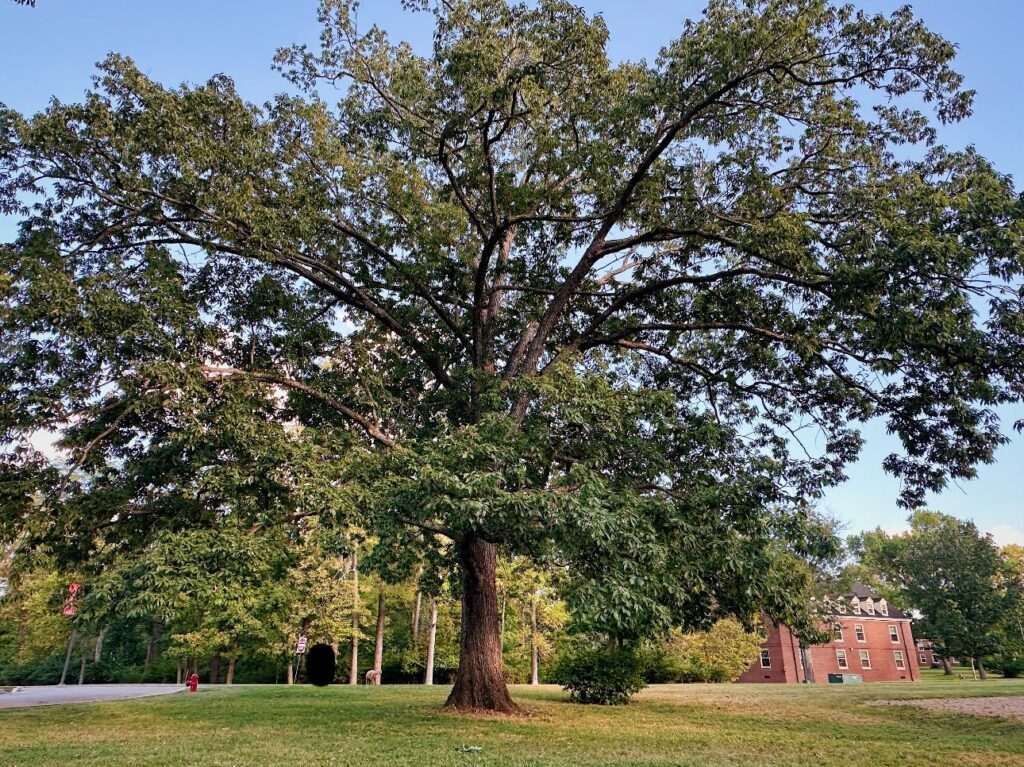
Pin oak is easy to spot thanks to its distinctive branching pattern: upper limbs point upward, middle branches grow horizontally, and lower limbs droop toward the ground. This pyramidal shape is a signature trait.
This species tolerates wet, poorly drained soils better than most oaks, which is why it’s common in Missouri floodplains and bottomland forests. It’s also a popular urban landscaping choice for the same reason.
Pin oak leaves have deep, sharply pointed lobes and turn a rich russet-red in autumn. Its acorns are small but numerous, supporting substantial wildlife populations each fall.
19. Post Oak (Quercus stellata)
Post oak is remarkably drought-tolerant and thrives on Missouri’s rockiest, driest ridgetops where few other hardwoods survive. Its leaves have a distinctive cross or Maltese-cross shape formed by the middle lobes.
Unfortunately, recent stress has hit this species hard. Post oak decline has become widespread across Missouri following a severe flash drought that marked the fourth consecutive year of late-season drought stress, according to state forestry officials.
Despite these challenges, post oak remains an important species for wildlife and rustic fence-post lumber, hence its common name. Its slow growth produces exceptionally dense, durable wood.
20. Shingle Oak (Quercus imbricaria)
Shingle oak stands apart from other Missouri oaks because of its unusual leaves. It’s the only Missouri oak with banana-shaped, unlobed leaves, which makes it one of the easiest oaks in the state to identify at a glance.
Historically, pioneers split this tree’s wood into shingles for roofing, giving the species its common name. The wood grain splits cleanly, which made it a practical building material on the frontier.
Shingle oak tolerates a wide range of soil types and often grows in mixed hardwood stands. Its leaves hold onto branches well into winter, a trait called marcescence, adding cold-season interest.
21. Honey Locust (Gleditsia triacanthos)
Honey locust is armed with some of the most intimidating thorns of any native tree, sometimes branching into clusters several inches long on the trunk. These modified branches are a reliable identification feature that sets it apart from similar species.
Thornless cultivars have become popular street trees because the species offers dappled, filtered shade rather than dense cover. This makes it easier to grow grass and other plants beneath the canopy.
Long, twisted seed pods dangle from branches through fall and winter, providing food for deer and livestock. The sweet pulp inside gives the tree its common name, though it’s unrelated to true honey production.
22. Persimmon (Diospyros virginiana)
Common persimmon produces small orange fruit that’s shockingly astringent when unripe but turns sweet and almost date-like after the first hard frost. Missouri foragers know exactly when to time their harvest each fall.
This tree’s bark is distinctively blocky, broken into small, dark rectangular plates that resemble alligator skin. It’s a useful winter identification trait when leaves and fruit are absent.
Persimmon wood is extremely hard and was historically used for golf club heads before synthetic materials took over. Wildlife, particularly opossums and deer, rely heavily on the fruit each autumn.
23. American Basswood (Tilia americana)
Basswood, also called linden, produces small, fragrant yellow flowers each June that attract enormous numbers of bees. The resulting honey has a distinct, delicate flavor prized by beekeepers across Missouri.
Its large, heart-shaped leaves create dense summer shade, and the soft, light wood is a favorite among woodcarvers for its fine, even grain. Basswood grows best in rich, moist forest soils.
This tree often sprouts multiple trunks from a single root system, forming small clumps rather than a single straight stem. It’s most common in the northern and eastern portions of the state.
24. Cottonwood (Populus deltoides)
Eastern cottonwood is one of the fastest-growing native trees in North America, capable of adding several feet in a single season along Missouri’s riverbanks. Its triangular leaves flutter constantly in the slightest breeze.
Cottonwood is specifically listed among the important tree species found on Missouri’s state forest land, particularly in bottomland and floodplain habitats near major rivers.
Female trees release masses of cottony seeds each spring, creating a snow-like drift along roadsides and yards. Despite the mess, cottonwood provides critical fast shade and erosion control on disturbed riverbanks.
25. Green Ash (Fraxinus pennsylvanica)
Green ash was once one of Missouri’s most widely planted street and yard trees, valued for its tolerance of urban conditions and attractive yellow fall color. That popularity made recent losses especially painful.
The emerald ash borer was confirmed in St. Louis County in September 2015, and this invasive beetle has since devastated ash populations throughout the state. Entire neighborhoods have lost mature street trees as a result.
Compound leaves with seven to nine leaflets distinguish green ash from most other Missouri hardwoods. Foresters continue researching treatment options and resistant strains to preserve remaining specimens.
26. Pawpaw (Asimina triloba)
Pawpaw produces the largest edible fruit native to North America, with a custardy texture and tropical, banana-mango flavor that surprises most first-time tasters. It grows as an understory tree in shaded Missouri bottomlands.
This species belongs to a mostly tropical plant family, making it a botanical oddity this far north. Its large, drooping leaves give thickets a distinctly lush, almost jungle-like appearance in summer.
Pawpaw fruit ripens in September and spoils quickly, which is why you’ll rarely find it in grocery stores. Local festivals across Missouri now celebrate the harvest each fall, drawing curious foragers statewide.
Final Thoughts
Missouri’s 26 native trees range from towering canopy giants like bur oak and sycamore to small understory specialists like redbud and pawpaw. Oak and hickory remain the dominant species statewide, but the diversity of maples, pines, and fruiting trees ensures something blooms, colors, or fruits nearly every month of the year.
Learning these 26 trees changes how you see Missouri’s landscape entirely. Once you can name what’s growing along a trail or in your own backyard, the whole state starts to feel more familiar, almost personal.
Start with the trees closest to home, then work outward toward the ones you’ll only find on a hike through the Ozarks. Before long, you’ll be spotting shagbark hickory bark and bur oak acorns without even slowing your pace.
References
- Missouri Department of Conservation, Forest Facts — https://mdc.mo.gov/trees-plants/forest-care/forest-facts
- Missouri Department of Conservation, Tree Identification — https://mdc.mo.gov/trees-plants/tree-and-plant-facts/tree-shrub-and-vine-facts/tree-identification
- Missouri Department of Conservation, About Us — https://mdc4.mdc.mo.gov/about-us
- Missouri Department of Natural Resources, Tree Species for Missouri’s Lands (PUB2084) — https://dnr.mo.gov/document-search/tree-species-missouris-lands-pub2084/pub2084
- USDA Forest Service, Missouri Forests 2018 Summary Report — https://www.fs.usda.gov/nrs/pubs/rb/rb_nrs122.pdf
- University of Missouri Extension, Missouri Economy: Forestry — https://extension.missouri.edu/media/wysiwyg/Extensiondata/Pro/ExCEED/Docs/MissouriEconomy_Forestry_25Apr2022.pdf
- Washington University in St. Louis, Common Trees of Missouri — https://sites.wustl.edu/monh/common-trees-of-missouri/

Tim M Dave is a gardening expert with a passion for houseplants, particularly cacti and succulents. With a degree in plant biology from the University of California, Berkeley, he has vast experience in gardening. Over the years, he has cultivated a vast collection of desert plants and learned a great deal about how to grow and care for these unique companions.