20 Types of Redbud Trees and Shrubs: Identification and Pictures
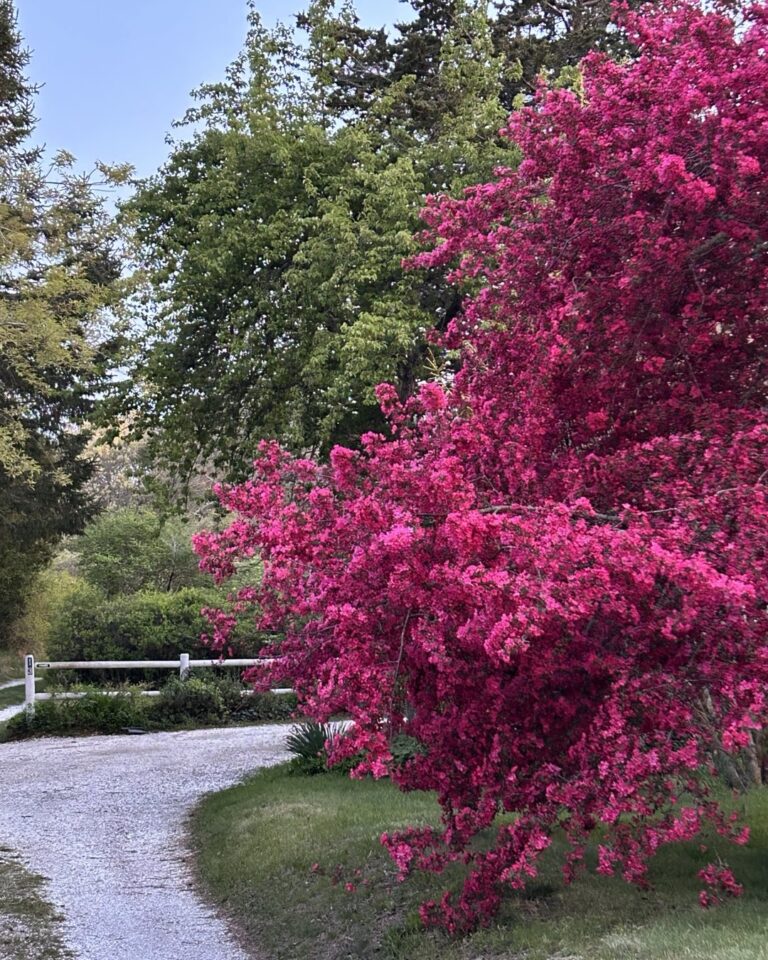
Redbuds are small to medium-sized deciduous trees or large shrubs, valued for their early spring blooms. Before a single leaf appears, its bare branches burst into vivid pink, magenta, or white bloom — creating a spectacular display.
Beyond the ornamental value, their flowers are a critical early-season food source for native bees, including bumblebees and mining bees, which emerge while few other plants are in bloom.
Let’s explore different types of redbud trees grown in various gardens and landscapes.
Types of Redbud Trees
Here are 20 types of redbud trees — spanning wild species, regional variants, and cultivated varieties.
1. Eastern Redbud (Cercis canadensis)
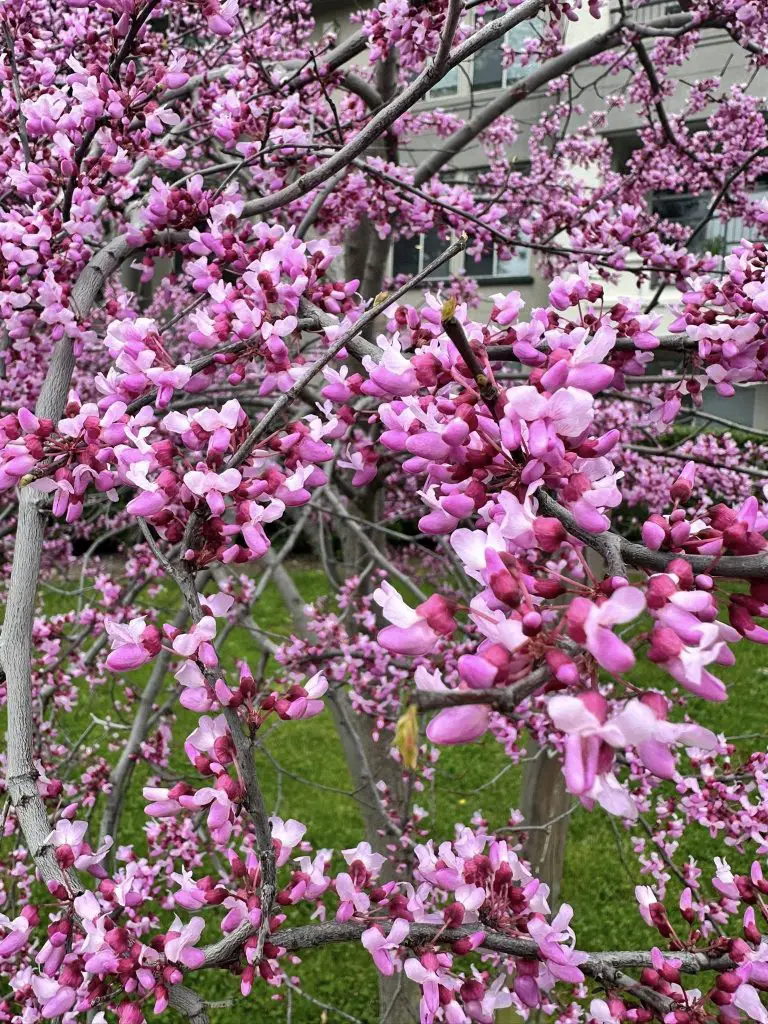
The Eastern Redbud is the most widely planted redbud in North America. It is native to the eastern United States, from New Jersey south to northern Florida and west to Nebraska. This tree grows 20–30 feet tall and equally wide, forming a graceful, often multi-trunked form.
In early spring, it is smothered in rosy-pink flowers that emerge directly from the bark — a botanical trait called cauliflory. The leaves that follow are heart-shaped, medium green in summer, and turn yellow in fall.
The Eastern Redbud thrives in USDA Hardiness Zones 4–9, making it remarkably adaptable. It is ideal for general landscaping, woodland edges, and urban gardens.
2. Western Redbud (Cercis occidentalis)
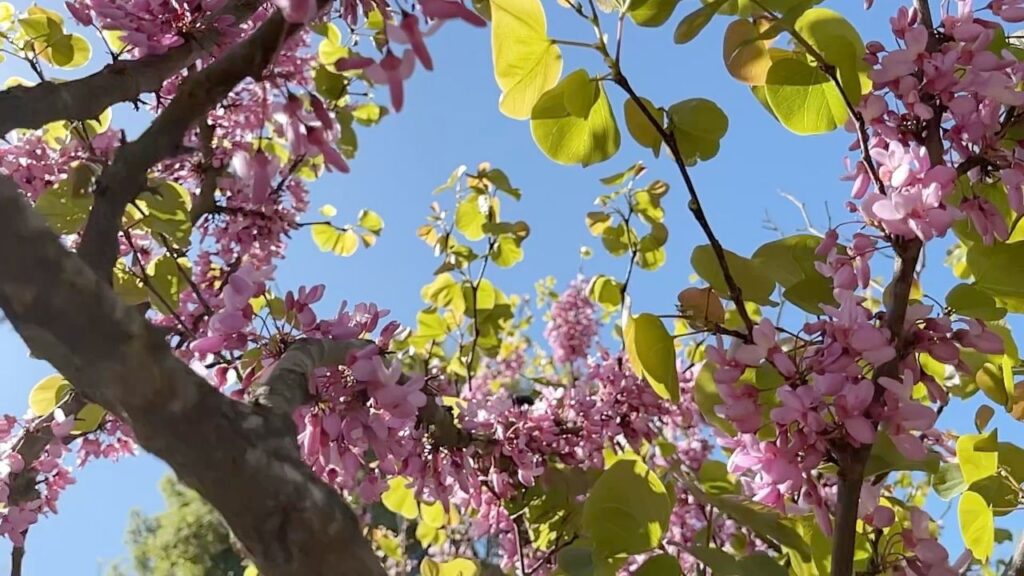
Native to California, Arizona, Utah, and parts of Nevada, the Western Redbud is the drought-tolerant cousin of the Eastern species. It typically grows as a large, multi-stemmed shrub or small tree reaching 10–18 feet in height.
Its magenta-pink spring flowers are just as striking as those of the Eastern Redbud. The foliage is blue-green and turns bright orange and red in fall — a color display rarely matched in dry-climate landscapes.
This tree is well-suited to Mediterranean-style gardens and low-water landscaping.
3. Chinese Redbud (Cercis chinensis)
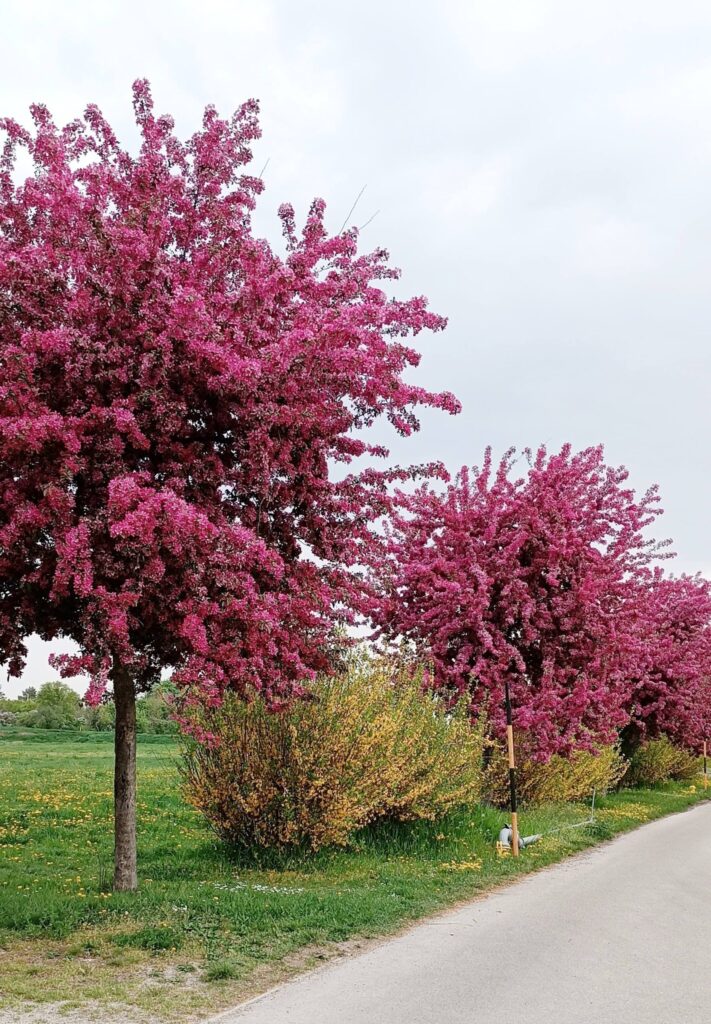
The Chinese Redbud is native to central and eastern China and is widely grown across Asia as an ornamental plant. It tends to behave more like a large multi-stemmed shrub than a tree, rarely exceeding 15 feet in height.
What makes it distinct is the intensity of its bloom color — the flowers are a deep rose-purple, noticeably richer than most North American species. The leaves are glossier than those of the Eastern Redbud.
This tree prefers USDA Zones 6–9 and does not tolerate harsh winters as well as Cercis canadensis. You can grow it as an accent shrub, specimen plant, Asian-inspired garden designs.
4. Judas Tree (Cercis siliquastrum)
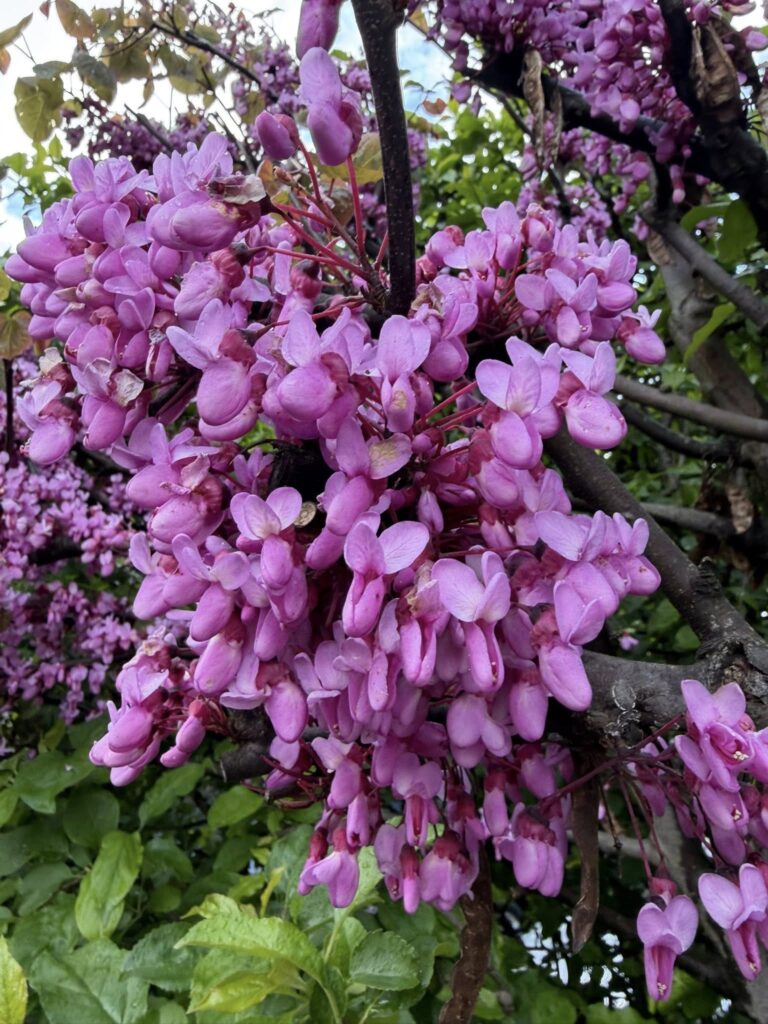
This is the Old World redbud, native to Southern Europe and Western Asia. The Judas Tree is steeped in legend — it is widely cited in Christian tradition as the tree from which Judas Iscariot hanged himself, though this claim is largely symbolic.
Horticulturally, it is a stunning small tree reaching 15–25 feet. Its flowers are a vibrant rosy-purple and bloom profusely in spring, sometimes even appearing on the trunk of old specimens.
Judas tree thrives in USDA Zones 6–9 and tolerates dry, alkaline soils well, making it a popular choice in Mediterranean landscapes.
5. Texas Redbud (Cercis canadensis var. texensis)
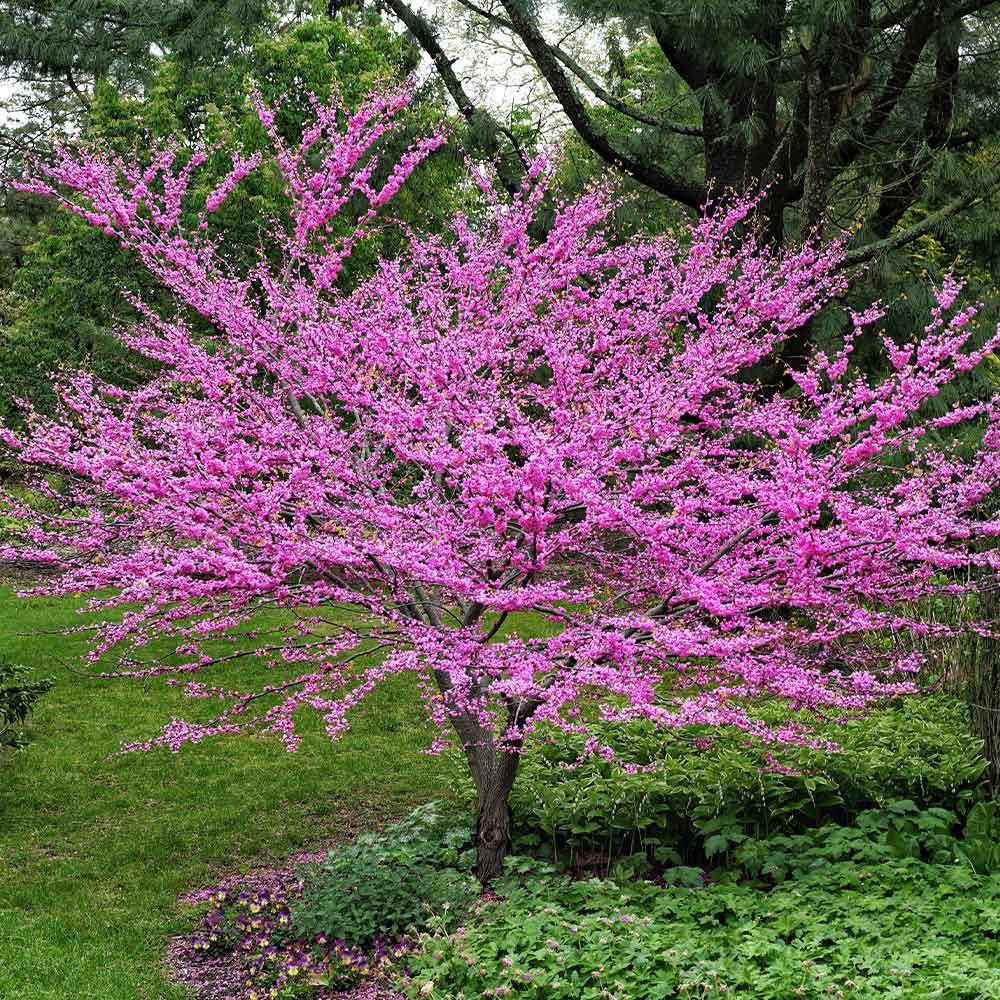
The Texas Redbud is a regional variety of the Eastern Redbud, adapted to the alkaline, rocky soils and heat of Texas and Oklahoma. It is more heat and drought tolerant than the typical Eastern Redbud, making it a preferred choice for gardens in the southern United States.
Its leaves are noticeably glossier and more waxy than the standard species, which helps reduce moisture loss in hot, dry conditions. The spring flowers are a rich pink-rose and appear in dense clusters.
This tree grows 12–20 feet tall and performs reliably in USDA Zones 6–9. It’s best suited for Southern and southwestern U.S. gardens, alkaline or rocky soils.
6. Oklahoma Redbud (Cercis canadensis ‘Oklahoma’)
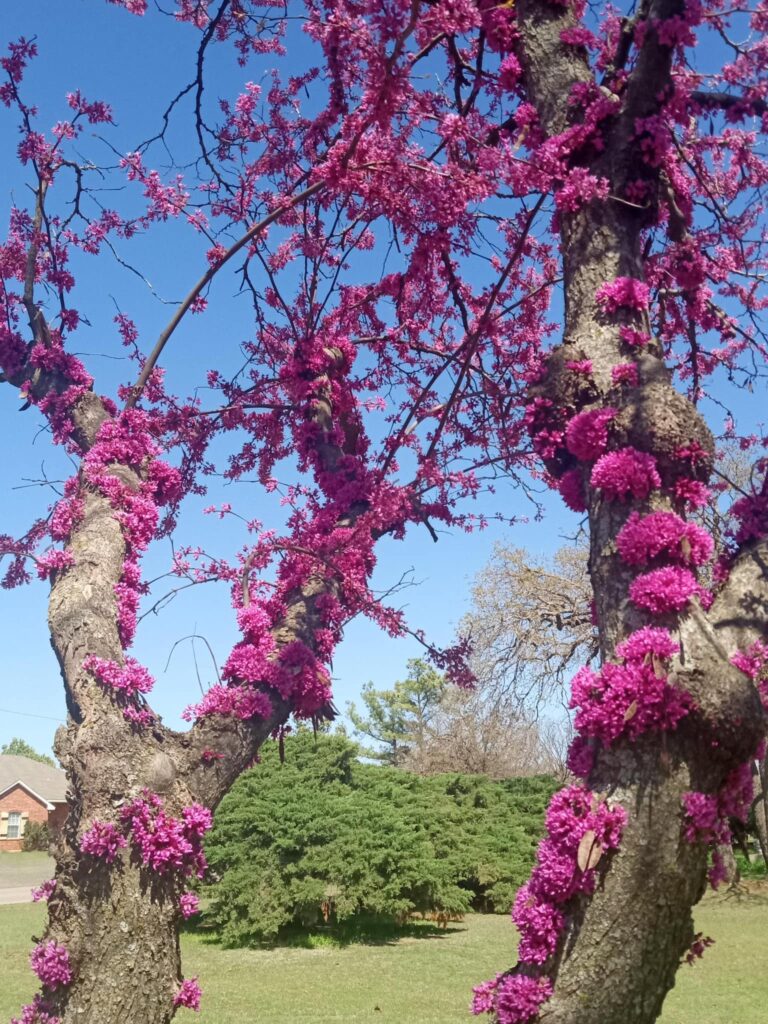
Closely related to the Texas Redbud, the Oklahoma Redbud is considered one of the most heat-tolerant redbud varieties available. It was selected for its exceptional performance in Oklahoma’s harsh, variable climate.
The flowers are a deep, vivid wine-rose — more saturated in color than many other varieties. The foliage is thick, dark green, and very glossy. It grows 12–20 feet in height and is extremely drought-resilient once established.
Gardeners in hot, dry regions consistently report this as one of the best-performing redbuds available. However, it stands as the best for hot, dry climates; southern plains states; heat-stressed urban landscapes.
7. Forest Pansy Redbud (Cercis canadensis ‘Forest Pansy’)
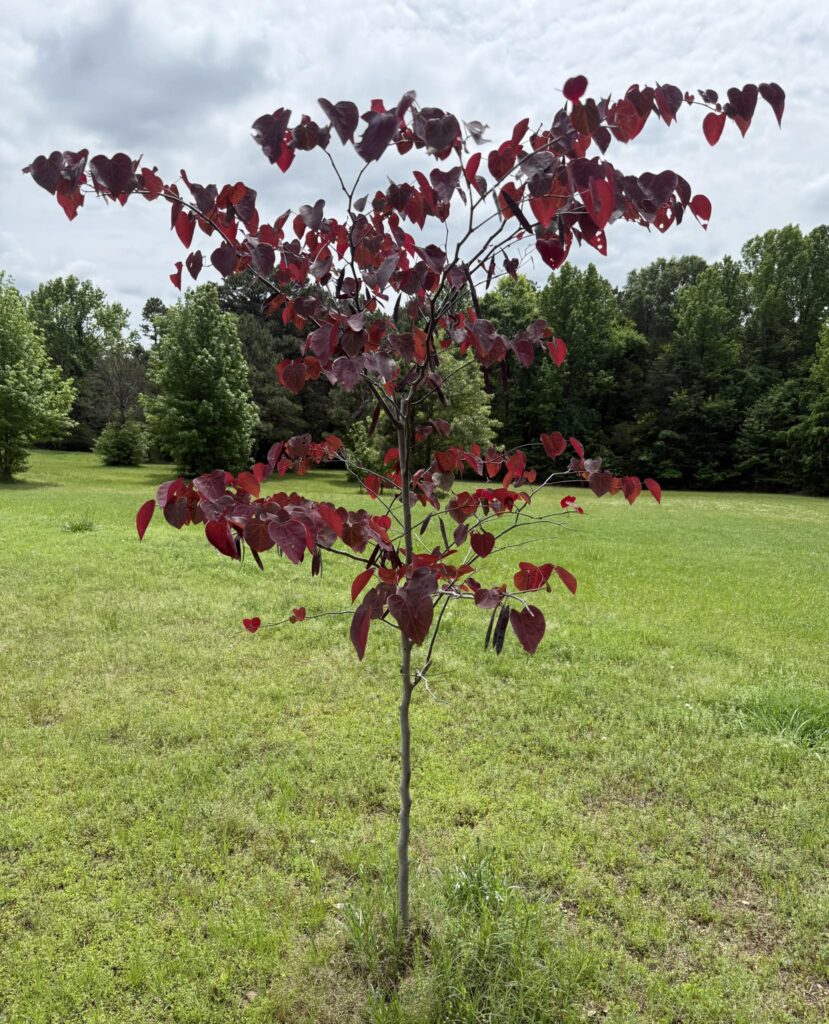
If you have ever seen a redbud with deep burgundy-purple foliage, this is likely the one. ‘Forest Pansy’ is perhaps the most famous ornamental redbud cultivar in the world, selected specifically for its extraordinary leaf color.
In spring, it opens with rich magenta-pink flowers on bare stems. As the flowers fade, the new leaves emerge in a stunning deep purple-red that gradually shifts to reddish-green by midsummer in hot climates.
In cooler regions, the foliage holds its purple tone well into autumn. It grows 20–25 feet tall and is hardy in USDA Zones 5–9.
One important note: In very hot summers, the leaf color tends to fade to greenish-purple. For sustained color, it performs best with some afternoon shade in southern regions.
8. Rising Sun Redbud (Cercis canadensis ‘The Rising Sun’)

The Rising Sun is one of the most visually dramatic redbud varieties in modern horticulture. It was introduced relatively recently and has quickly become a favorite for its multi-toned foliage.
New leaves emerge in bright apricot-orange, then mature through golden-yellow before settling into lime-green. The result is a tree that always appears to have multiple leaf colors present simultaneously — a living color gradient.
It grows 8–12 feet tall, making it ideal for smaller gardens and container growing. Thriving in USDA Zones 5–9, it provides bold foliage interest throughout the season.
9. Hearts of Gold Redbud (Cercis canadensis ‘Hearts of Gold’)

Few trees offer spring color as consistently warm as the Hearts of Gold Redbud. The foliage is a glowing golden-yellow — bright in spring and early summer, deepening slightly as the season progresses.
It was developed at North Carolina State University, which is a mark of serious horticultural vetting. The tree grows 12–15 feet tall and wide, producing the typical rosy-pink redbud flowers in spring before the golden leaves emerge. It holds its yellow color far better in heat than ‘The Rising Sun,’ making it a reliable warm-season foliage tree.
Thriving in USDA Zones 5–9, it provides consistent golden foliage throughout summer.
10. Traveller Redbud (Cercis canadensis ‘Traveller’)
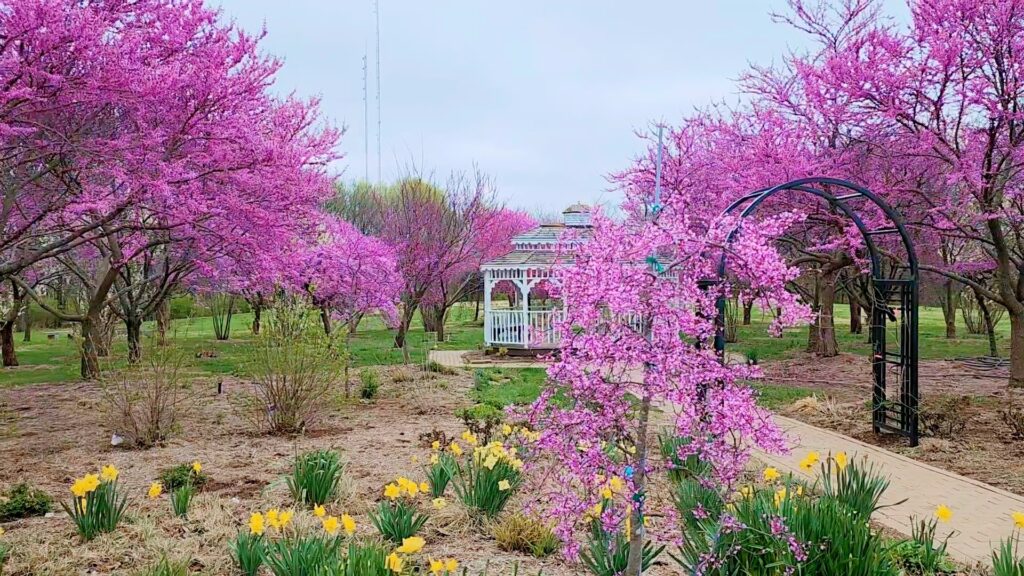
The Traveller is a weeping redbud that remains small and compact, making it a prized choice for limited garden spaces. It was discovered as a branch mutation on an Eastern Redbud and named for its tendency to “travel” along the ground when unsupported.
It grows 5–6 feet tall but spreads to about 8 feet wide, with graceful, pendulous branches that weep toward the ground. In spring, it is covered in bright pink flowers. The blue-green foliage is attractive through the growing season.
Thriving in USDA Zones 5–9, it’s a perfect fit in small spaces, rock gardens, cascading over walls or slopes, and container planting.
11. Lavender Twist Redbud (Cercis canadensis ‘Covey’)
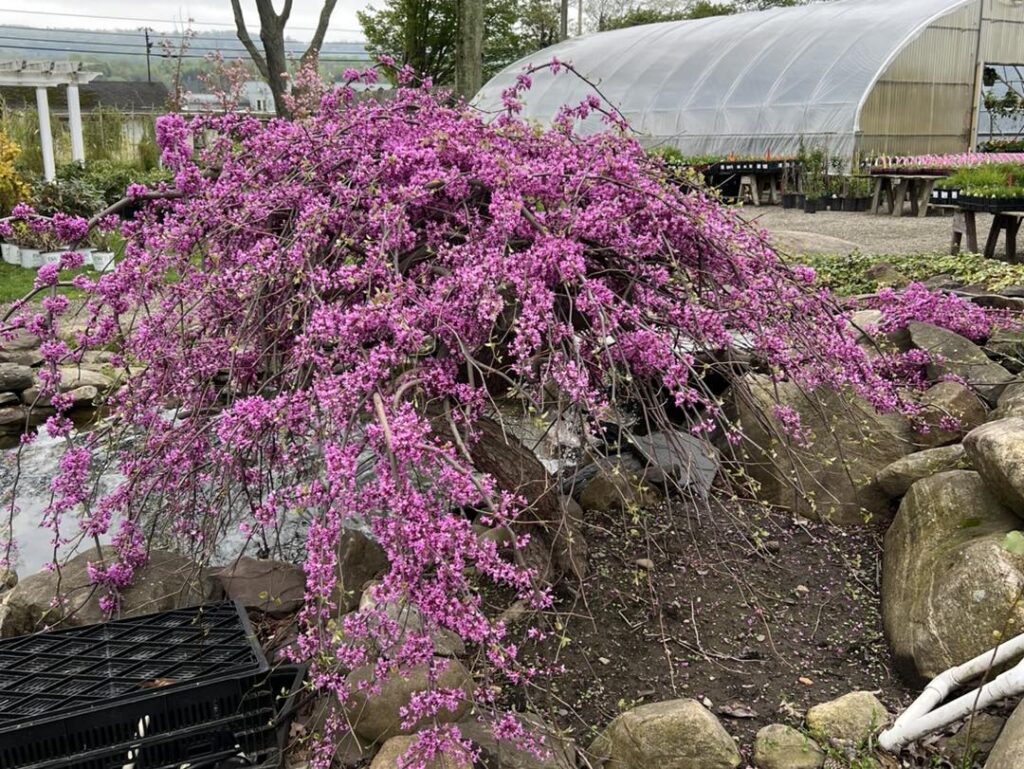
Also sold under the trade name Lavender Twist, ‘Covey’ is a weeping redbud with a distinctly twisted, contorted branching habit. When grafted onto a straight rootstock, it creates a mushroom-shaped canopy of zigzagging, cascading branches.
The spring flowers are a soft, lavender-pink — slightly cooler in tone than many redbuds. The heart-shaped leaves follow, creating a dense, shaded canopy. It reaches 5–8 feet tall and 8–10 feet wide.
Thriving in USDA Zones 5–9, this tree is a showpiece in all four seasons. Even in winter, its twisted silhouette is visually compelling.
12. Ruby Falls Redbud (Cercis canadensis ‘Ruby Falls’)
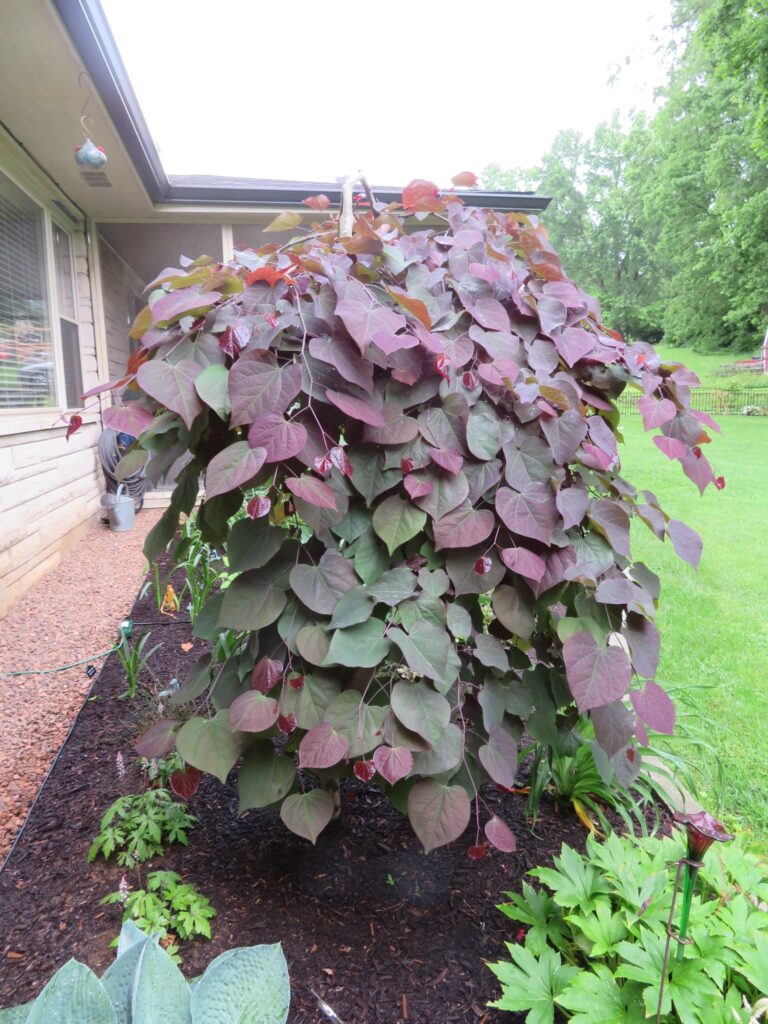
Ruby Falls combines two of the most sought-after redbud traits: weeping form and purple foliage. It is a compact, grafted tree with cascading branches draped in deep burgundy-red leaves throughout the growing season.
The spring flowers are a rich lavender-pink, offering a beautiful contrast before the dark foliage emerges. It reaches 6–8 feet tall. Its tight, controlled size and intense leaf color make it one of the most popular modern redbud introductions.
Growing inUSDA Zones 5–9, it is a great choice for small garden focal points, dramatic foliage interest, and modern landscape design.
13. Merlot Redbud (Cercis canadensis ‘Merlot’)
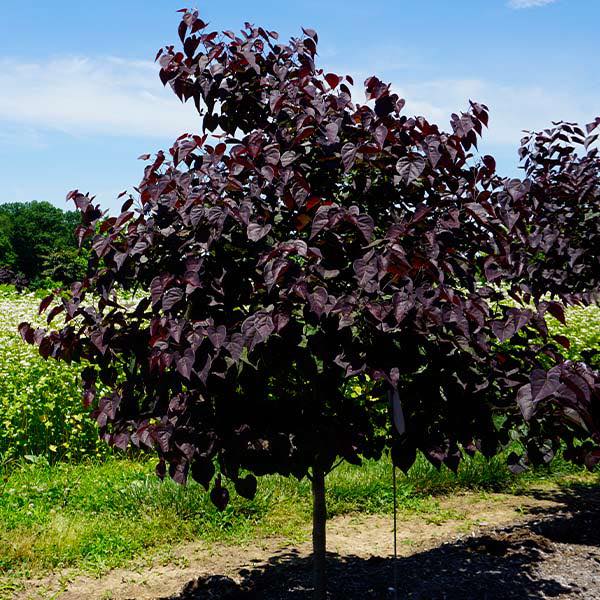
The Merlot Redbud is named for its deep wine-red foliage that persists through summer with remarkable consistency — even in hot climates where ‘Forest Pansy’ tends to fade.
It grows upright to about 12–15 feet tall, maintaining cleaner foliage color through the season. The spring flowers are the same deep pink typical of the species.
Merlot was specifically bred for improved heat tolerance and color retention, making it a superior alternative to Forest Pansy in warmer USDA Zones 7–9.
14. Ace of Hearts Redbud (Cercis canadensis ‘Ace of Hearts’)
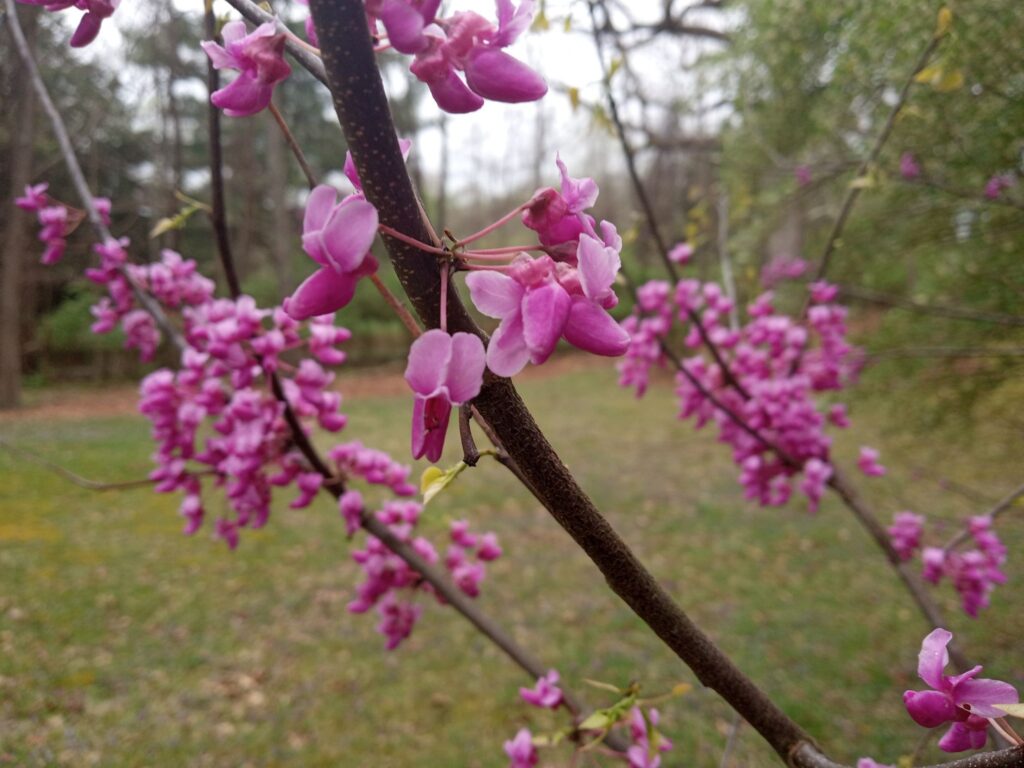
One of the best compact, upright redbuds for small gardens, ‘Ace of Hearts’ offers a tidy, rounded form that rarely exceeds 12 feet in height. The leaves are smaller and more densely arranged than the standard Eastern Redbud, giving the tree a neat, refined appearance.
The spring flower display is generous — bright pink blooms that cover the branches thoroughly before leafout. It is heat-tolerant and adapts well to a range of soil conditions.
Thriving in USDA Zones 5–9, this tree befits tight spaces, foundation plantings, and formal garden borders.
15. Silver Cloud Redbud (Cercis canadensis ‘Silver Cloud’)
For those who prefer something quieter and more unusual, Silver Cloud is a remarkable find. Its leaves are splashed and marbled with creamy white and silver variegation against a medium-green background, creating a soft, dappled effect.
Thriving in USDA Zones 5–9, it grows to about 15–20 feet, with the standard pink spring flowers. The foliage is most striking in partial shade, where the variegation remains crisp. Full sun can cause leaf scorch on the lighter portions..
16. Burgundy Hearts Redbud (Cercis canadensis ‘Burgundy Hearts’)
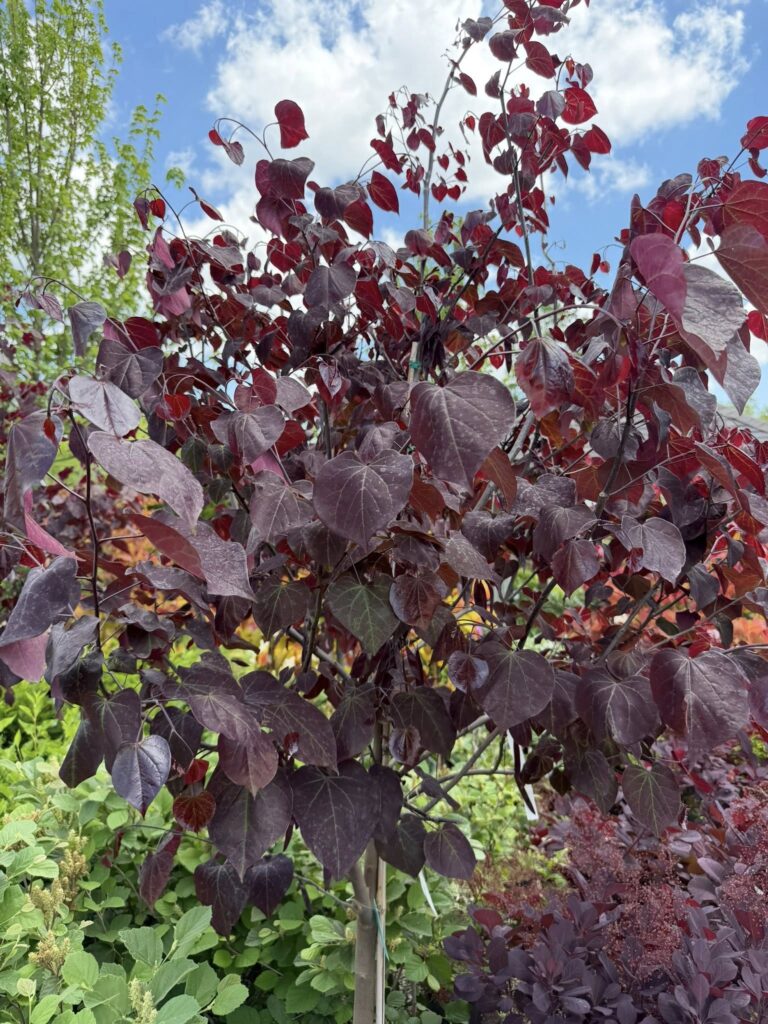
Burgundy Hearts is a newer cultivar developed for its large, heart-shaped leaves in a deep reddish-burgundy color. The foliage is notably larger than most cultivars, giving the tree a bold, tropical appearance despite being fully cold-hardy.
Thriving in USDA Zones 5–9, it grows 10–15 feet tall with an upright, vase-like form. The spring flowers are the typical rich pink. The large leaf size and deep color make it one of the most architecturally interesting redbuds available.
17. Appalachian Red Redbud (Cercis canadensis ‘Appalachian Red’)
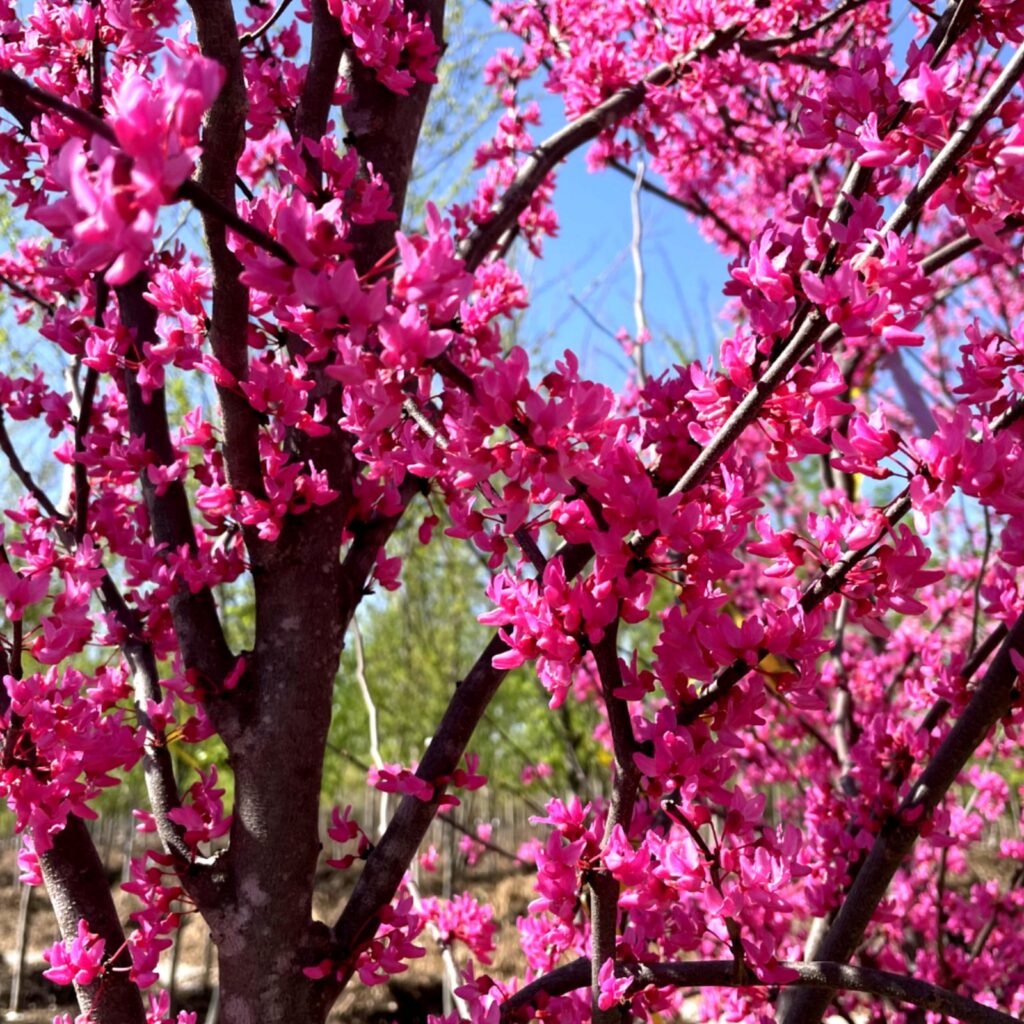
Named for its region of discovery in the Appalachian Mountains, this cultivar stands out for its unusually vivid, true-red flower buds — the closest to red that any redbud comes. When fully open, the flowers appear deep magenta-red, significantly more intense than the typical pink of the species.
The tree grows to a standard 20–25 feet with the familiar heart-shaped foliage. It is cold-hardy and vigorous, performing well in USDA Zones 4–8. For gardeners who want maximum flower intensity, this is a compelling choice.
18. Cercis racemosa (Chinese Raceme Redbud)
This lesser-known species is native to southwestern China and stands apart from other redbuds in one key structural feature: its flowers are borne in hanging raceme clusters, unlike the clustered cauliflorous blooms typical of other Cercis species.
The flowers are pink and produced in elongated, pendulous clusters that give the tree an almost wisteria-like appearance when in bloom. It grows to about 30 feet tall and prefers USDA Zones 6–9. It remains rare in Western horticulture but is valued by collectors and botanical enthusiasts.
19. Cercis griffithii (Afghan Redbud)
Native to Afghanistan, Iran, and Central Asia, Cercis griffithii is one of the hardiest and most drought-tolerant species in the genus. It typically grows as a large shrub or small tree reaching 10–15 feet.
Its flowers are a soft rose-pink, appearing in early spring before the foliage. The leaves are smaller and more rounded than those of the Eastern Redbud. It is well adapted to dry, rocky soils and alkaline conditions.
While it performs well in USDA Zones 5–8, this tree is rarely grown outside of botanical gardens and specialist collections in the West. However, it has significant potential for arid landscapes, alkaline soils, cold and dry climate zones.
20. White Redbud (Cercis canadensis ‘Alba’)
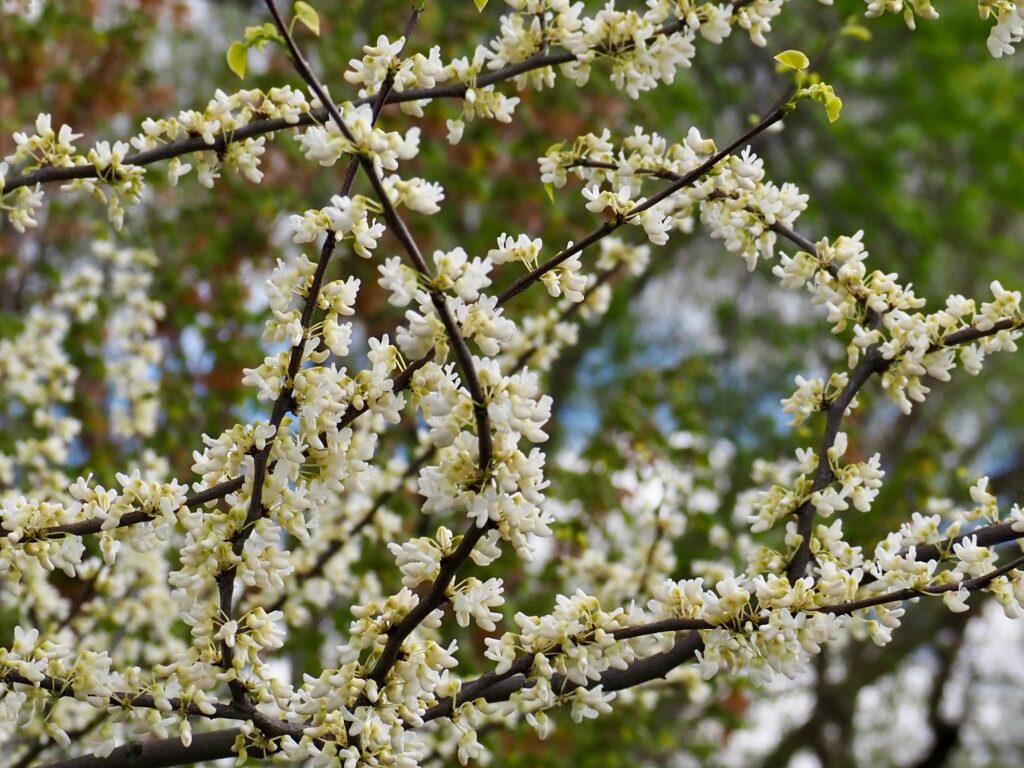
No list of redbud types is complete without mentioning the white-flowering form. ‘Alba’ — and similar white cultivars such as ‘Royal White’ and ‘Texas White’ — produce pure white flowers in spring, offering a fresh, elegant alternative to the typical pink species.
The white flowers are particularly striking against a background of dark evergreen shrubs or a deep blue sky. The foliage is standard medium-green, with a clean fall color of yellow. ‘Royal White’ is especially valued for its large, pure-white blooms and vigorous growth to 25 feet.
Thriving in USDA Zones 5–9, it is an elegant species for spring displays, moon gardens, and formal white garden themes.
How to Choose the Right Redbud Tree
With so many options, selecting the right redbud comes down to a few key factors:
- Garden size: Weeping types like Ruby Falls and Traveller suit small spaces. Standard Eastern Redbud needs room to spread.
- Climate: Texas and Oklahoma Redbuds for hot, dry regions. Cercis griffithii for cold and arid climates.
- Foliage interest: Forest Pansy, Merlot, and Rising Sun offer season-long color beyond the spring bloom.
- Flower color: Appalachian Red for intensity, White Alba for elegance, Chinese Redbud for richness.
Most redbuds prefer full sun to partial shade, well-drained soil, and moderate water. They are generally low-maintenance once established and require little pruning beyond removing dead or crossing branches.
Ecological and Cultural Value of Redbud Trees
Redbud trees are not merely decorative. They carry significant ecological weight in native ecosystems.
The flowers are edible and have historically been used in salads and as a garnish in North American and Middle Eastern cuisines. The Judas Tree’s flowers are still enjoyed in some Turkish and Levantine dishes.
From an ecological standpoint, redbuds are a keystone species for early-season pollinators. The flowers appear before most other trees bloom, providing critical nectar when bee colonies are just emerging from winter dormancy.
Multiple butterfly species, including the Henry’s Elfin butterfly, rely specifically on Cercis canadensis as a host plant.
Their seed pods also provide food for songbirds and small mammals in autumn and winter, further embedding them into local food webs.
Common Problems and How to Avoid Them
Redbuds are generally tough trees, but a few issues are worth noting:
- Canker diseases: Botryosphaeria canker is the most serious redbud disease. It enters through wounds or stress. Planting in well-drained soil and avoiding unnecessary pruning cuts reduces risk significantly.
- Verticillium wilt: This soil-borne fungal disease can kill redbuds suddenly. There is no cure, but planting in well-drained soil and avoiding over-watering helps prevent it.
- Leaf spots: Various fungal leaf spots appear in wet summers but are rarely fatal. Improving air circulation and avoiding overhead irrigation minimizes outbreaks.
- Poor drainage: Redbuds will not tolerate standing water around their roots. Always plant in well-drained soil, even if it means amending or raising the planting area.
Planting and Care Tips
The best time to plant a redbud is in early spring or fall, when temperatures are moderate and rainfall is more reliable. Here are key care points:
- Soil: Adaptable to most soils but prefers slightly acidic to neutral, well-drained ground.
- Watering: Water regularly during the first two growing seasons. Once established, most species are moderately drought-tolerant.
- Fertilizing: Light annual fertilization in early spring with a balanced fertilizer supports healthy growth. Avoid excessive nitrogen, which promotes leaf growth at the expense of flowers.
- Pruning: Prune only to remove dead, damaged, or crossing branches. Prune immediately after flowering to avoid cutting next year’s bloom buds.
- Mulching: A 3-inch mulch ring around the base retains moisture and regulates soil temperature — one of the simplest things you can do to improve a young tree’s establishment.
Quick Comparison Table
| Type | Height | Flower Color | Special Feature |
| Eastern Redbud | 20–30 ft | Rose-pink | Most widely grown |
| Western Redbud | 10–18 ft | Magenta-pink | Drought-tolerant |
| Chinese Redbud | 10–15 ft | Deep rose-purple | Rich flower color |
| Judas Tree | 15–25 ft | Rosy-purple | Old World origin |
| Texas Redbud | 12–20 ft | Rich pink-rose | Glossy leaves |
| Oklahoma Redbud | 12–20 ft | Wine-rose | Heat-tolerant |
| Forest Pansy | 20–25 ft | Magenta-pink | Purple foliage |
| Rising Sun | 8–12 ft | Pink | Multi-toned foliage |
| Hearts of Gold | 12–15 ft | Pink | Golden foliage |
| Traveller | 5–6 ft | Pink | Weeping, compact |
| Lavender Twist | 5–8 ft | Lavender-pink | Twisted weeping form |
| Ruby Falls | 6–8 ft | Lavender-pink | Weeping + purple leaves |
| Merlot | 12–15 ft | Pink | Sustained purple foliage |
| Ace of Hearts | 12 ft | Bright pink | Compact and tidy |
| Silver Cloud | 15–20 ft | Pink | Variegated leaves |
| Burgundy Hearts | 10–15 ft | Pink | Large burgundy leaves |
| Appalachian Red | 20–25 ft | Deep red-magenta | Deepest flower color |
| C. racemosa | 30 ft | Pink racemes | Hanging flower clusters |
| C. griffithii | 10–15 ft | Rose-pink | Cold and drought-hardy |
| White Redbud | 20–25 ft | Pure white | Elegant white form |
Final Thoughts
The redbud family is one of the most diverse and garden-worthy groups of trees available today. There is something quietly moving about a mature redbud in full bloom — those tight pink or white clusters erupting from bare, dark bark before any leaf appears.
Whether you choose a towering Eastern Redbud for your backyard, a compact Ruby Falls for a small patio, or the rare Cercis racemosa for a botanical collection, you are planting something that will reward you every single spring for decades to come.
The best time to plant a redbud was ten years ago. The second-best time is now.
References
- USDA Plants Database — Cercis canadensis — U.S. Department of Agriculture, Natural Resources Conservation Service. https://plants.usda.gov/plant-profile/CECA4
- NC State Extension — Cercis canadensis (Eastern Redbud), Cooperative Extension, North Carolina State University. https://plants.ces.ncsu.edu/plants/cercis-canadensis/
- The Morton Arboretum — Redbud, Cercis canadensis. https://mortonarb.org/trees-plants/tree-plant-descriptions/redbud/
- Purdue University Extension — Selecting Landscape Plants: Flowering Trees. Purdue University College of Agriculture. https://extension.purdue.edu/extmedia/HO/HO-4-W.pdf

Tim M Dave is a gardening expert with a passion for houseplants, particularly cacti and succulents. With a degree in plant biology from the University of California, Berkeley, he has vast experience in gardening. Over the years, he has cultivated a vast collection of desert plants and learned a great deal about how to grow and care for these unique companions.