Mulch for Tree Roots: Benefits, Best Options, and How to Apply
If you have ever watched a beautiful, mature tree slowly decline for no obvious reason, there is a good chance the answer was right beneath your feet — or rather, the lack of something beneath your feet.
Mulching tree roots is one of the most effective, science-backed practices in tree care, and yet it remains one of the most misunderstood.
This guide covers everything you need to know about mulch for tree roots: what it does, why it matters, how to apply it correctly, and which mistakes to avoid.
What Is Mulch and Why Do Tree Roots Need It?
Mulch is any material — organic or inorganic — spread across the soil surface around a tree or plant. Its primary job is to protect and improve the growing environment for the root system beneath.
Tree roots are far more vulnerable than most people realize. The fine, fibrous feeder roots that absorb water and nutrients typically live in the top 6 to 12 inches of soil. This shallow zone is exposed to temperature swings, compaction, drought, and competing vegetation — all of which mulch can help control.
In natural forest settings, trees are never without some form of ground cover. Fallen leaves, decaying branches, and decomposing organic matter create a built-in mulch layer year-round.
In urban and suburban landscapes, we remove all of that and expect trees to thrive on bare or turfed soil. That is, frankly, asking a lot of them.
Applying mulch to tree roots is the closest we can get to replicating those natural forest conditions.
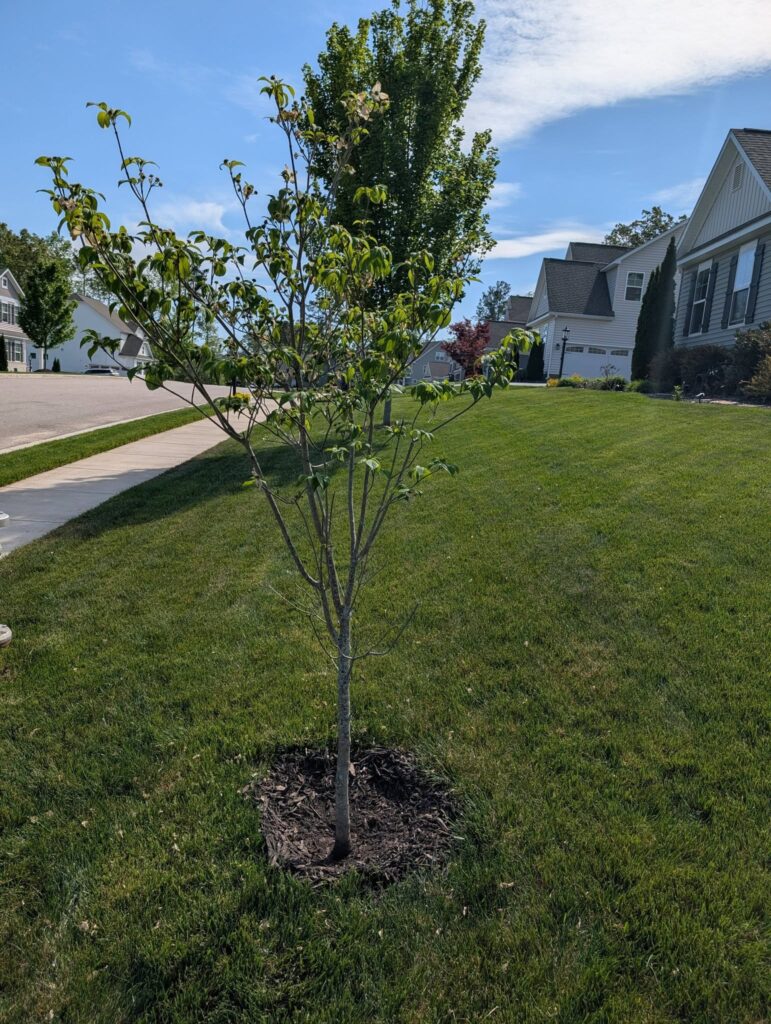
The Core Benefits of Mulching Tree Roots
Understanding why mulch works will help you apply it smarter. Here are the most significant, research-supported benefits.
1. Moisture Retention
Mulch dramatically reduces water loss from the soil surface through evaporation. Studies have shown that a properly mulched root zone can retain significantly more moisture than bare soil, especially during dry periods.
This means less frequent watering and a more stable moisture supply for roots.
For trees in hot or drought-prone climates — like much of East Africa, the American Southwest, or the Mediterranean — this alone makes mulching essential.
2. Temperature Regulation
Soil temperature fluctuations stress roots. In summer, bare soil can reach temperatures that are damaging to feeder roots. In winter, repeated freeze-thaw cycles can injure root tissue in colder regions.
A 3- to 4-inch mulch layer acts as an insulating blanket, buffering the root zone against these extremes. Roots stay cooler in summer and warmer in winter, leading to more consistent growth and less physiological stress.
3. Weed Suppression
Weeds and turf grass compete directly with tree roots for water and nutrients. This competition is a major — and often underestimated — stress factor, especially for young trees.
Mulch blocks sunlight from the soil surface, preventing most weed seeds from germinating. Eliminating this competition can have a significant positive impact on tree growth rates, particularly in the first five to ten years of a tree’s life.
4. Soil Structure and Aeration
Compacted soil is one of the leading causes of urban tree decline. When soil is compacted, oxygen levels drop, water drainage slows, and root growth is physically restricted.
Organic mulch improves soil structure over time. As it breaks down, it adds organic matter that encourages earthworm activity, improves aggregation of soil particles, and increases pore space — all of which create a healthier environment for roots to grow and breathe.
5. Nutrient Supply
As organic mulch decomposes, it releases nutrients slowly into the soil. This is not a fast-release fertilizer — it is a gentle, natural supply of carbon, nitrogen, phosphorus, and other elements that feed both the tree and the beneficial soil microorganisms around its roots.
A well-established mulch ring can reduce or even eliminate the need for synthetic fertilizers in many landscape situations.
6. Protection from Mechanical Damage
One of the most common — and most preventable — causes of tree injury is lawnmower and string trimmer damage to the base of the trunk. Even small bark wounds at the root collar can create entry points for pathogens and insects.
A proper mulch ring eliminates the need to mow or trim right up to the trunk, keeping equipment safely away from the tree’s most vulnerable area.
Types of Mulch for Tree Roots
Not all mulch is created equal. The best choice depends on your goals, your budget, and what is locally available.
Organic Mulches
Organic mulches break down over time, improving soil biology and fertility. These are generally the preferred choice for tree roots.
Wood chips
Wood chips are widely considered the gold standard for mulching trees. They decompose slowly, providing long-lasting coverage and excellent moisture retention.
Fresh wood chips — especially those from arborists — are freely available in many areas and are highly recommended by university extension services.
Shredded bark
Shredded bark is aesthetically pleasing and works well for residential landscapes. It decomposes more slowly than wood chips but provides similar benefits. Pine bark mulch is a common and effective option.
Leaf mold
Leaf mold (decomposed leaves) is an excellent, nutrient-rich mulch that closely mimics the natural forest floor. It is easy to produce at home using fallen leaves. I have used this in my own garden, and the difference in soil quality after just one season is noticeable.
Compost
Compost, when used as a mulch layer, provides the most immediate nutrient input. It should be no more than 1 to 2 inches deep if used alone, as it can compact and restrict aeration.
Straw and hay
Straw and hay are useful for new plantings and temporary situations but break down quickly and can introduce weed seeds. They are better suited for vegetable gardens than long-term tree mulching.
Pine needles
Pine needles are acidic and work particularly well around acid-loving trees like pines, oaks, blueberries, and rhododendrons. They are lightweight and allow good water penetration.
Inorganic Mulches
Inorganic mulches do not break down, meaning they provide no soil improvement — but they also require less frequent replenishment.
Gravel and stone
Gravel and stone can work around trees in arid landscapes, but they absorb and radiate heat, which can be harmful in warmer climates. They also provide no organic matter to the soil.
Rubber mulch
Rubber mulch is marketed as a long-lasting, low-maintenance option. However, research has raised concerns about its heat-retaining properties and potential leaching of compounds into the soil. Rubber mulch is generally not recommended for use around trees.
Landscape fabric
Landscape fabric is sometimes used under mulch to suppress weeds, but it is not appropriate for use around tree roots. It restricts oxygen exchange, impedes water penetration, and interferes with the natural soil ecosystem. Avoid it entirely in the root zone.
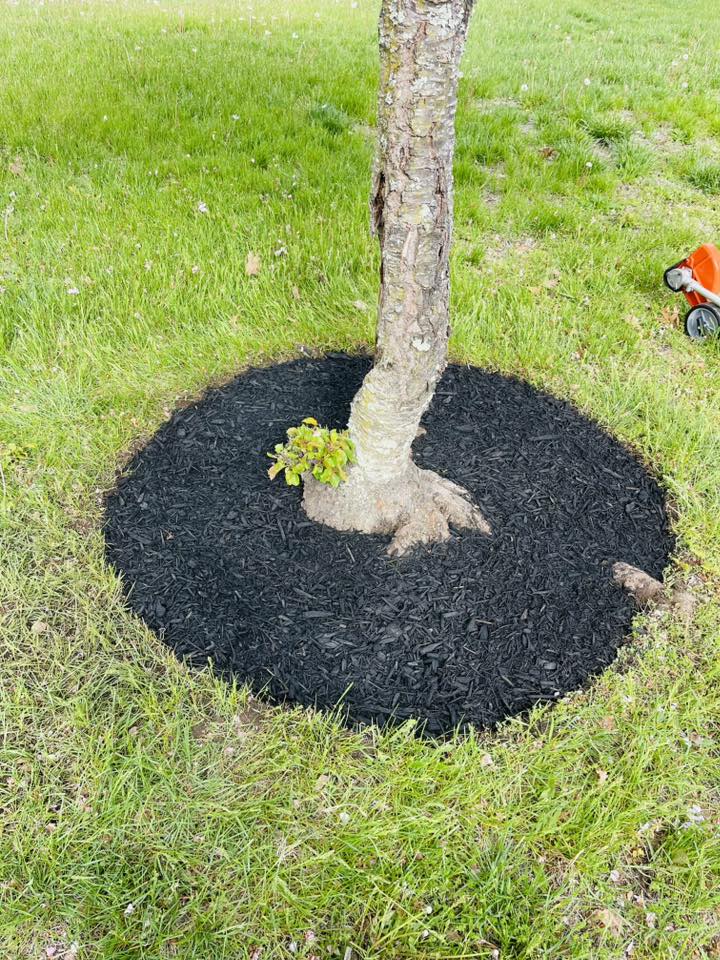
How to Apply Mulch Around Tree Roots: Step-by-Step
Correct application is just as important as choosing the right mulch. Done poorly, mulching can harm trees rather than help them.
Step 1: Clear the Area
Remove any grass, weeds, or existing ground cover from around the base of the tree. Extend the cleared area as far out as practical — ideally to the drip line (the outer edge of the canopy), though a minimum of 3 to 4 feet in radius from the trunk is recommended for young trees.
Larger trees benefit from larger mulch rings. Do not limit yourself to a small donut of mulch around just the trunk. The roots extend far beyond what most people imagine.
Step 2: Do Not Dig Into the Soil
When clearing the area, avoid deep cultivation or digging. Tree feeder roots are shallow, and aggressive raking or digging can sever them. Light hand-pulling or smothering with cardboard (then covered with mulch) works well for grass removal.
Step 3: Apply Mulch at the Correct Depth
The ideal mulch depth is 3 to 4 inches. This is deep enough to suppress weeds and retain moisture, but shallow enough to allow adequate oxygen and water to reach the roots.
More is not better. Piling mulch deeper than 4 to 6 inches creates several problems: it can prevent water from reaching the roots, reduce soil oxygen levels, and create habitat for rodents that can damage bark.
Step 4: Keep Mulch Away from the Trunk
This is critical — never pile mulch against the tree trunk. The practice of creating a mulch “volcano” (a cone of mulch banked up against the bark) is one of the most damaging things you can do to a tree.
Mulch against the trunk:
- Keeps the bark permanently moist, promoting fungal disease and rot
- Encourages roots to grow upward into the mulch, girdling the tree over time
- Creates hiding places for insects and rodents that feed on bark
Leave a 3- to 6-inch gap between the mulch and the base of the trunk. The root flare (the widening at the base of the tree) should always be visible and exposed to air.
Step 5: Extend the Mulch Ring as the Tree Grows
As a tree matures, expand the mulch ring outward. Roots grow well beyond the canopy drip line, and extending mulched areas provides increasing benefits. Where feasible, expanding the mulch ring is one of the best investments you can make in a tree’s long-term health.
How Often Should You Replenish Mulch?
Organic mulch breaks down over time — that is actually part of what makes it valuable. Most wood chip or bark mulch needs to be replenished once a year or every two years.
Before adding new mulch, check the existing layer. If it is still 3 to 4 inches deep, simply rake it to loosen it and improve aeration. Add fresh mulch only if the layer has thinned below 2 to 3 inches.
Never add new mulch on top of old without checking the total depth. Cumulative buildup over many years is a common cause of mulch-related root problems.
Common Mulching Mistakes to Avoid
Even experienced gardeners make these errors. Knowing what to avoid is just as important as knowing what to do.
Mistake 1: Mulch volcanoes. As described above, mulch piled against the trunk is one of the most widespread and damaging landscaping mistakes. I still see it constantly, even in professionally maintained commercial landscapes.
Mistake 2: Using too little mulch. A thin, 1-inch layer provides minimal benefit. It dries out quickly, does little to suppress weeds, and barely insulates the root zone.
Mistake 3: Using the wrong materials. Fresh grass clippings, compacted leaves, or dyed wood products can cause more harm than good. Fresh clippings mat together, forming an impermeable layer. Heavily dyed mulch may contain chemicals that affect soil biology.
Mistake 4: Mulching over compacted or waterlogged soil. Mulch improves soil conditions over time, but it is not a quick fix. If drainage is severely poor, address the underlying issue before mulching.
Mistake 5: Ignoring the mulch ring entirely for mature trees. Many people mulch young trees but assume established trees do not need it. In fact, mature trees in urban settings often benefit most from mulching, as decades of soil compaction, root competition, and environmental stress have taken a cumulative toll.
Best Mulch for Specific Tree Types
Different trees have different preferences, though most benefit from any quality organic mulch.
- Oak trees: Wood chips or shredded oak bark work beautifully. Oaks are adapted to forest leaf litter and respond exceptionally well to organic mulch.
- Fruit trees: Composted wood chips or straw work well. Avoid fresh, high-nitrogen mulches that can promote excessive leafy growth at the expense of fruit production.
- Conifers (pines, spruces, firs): Pine bark or pine needle mulch is ideal. These maintain slight acidity, matching the natural preference of most conifers.
- Maples: These are sensitive to compaction and drought. A wide, deep wood chip mulch ring can make a significant difference in health and longevity, especially in urban settings.
- Newly planted trees: Young trees benefit most from mulching because their root systems are still establishing. A proper mulch ring from day one gives new trees the best possible start and dramatically improves survival rates.
Mulching Trees in Different Climates
Mulching is beneficial in virtually every climate, but the timing and material choices may vary.
In hot, dry climates (like East Africa, Australia, or the American South), mulching is most critical for moisture retention. Apply mulch in early spring before the dry season begins. Deeper applications (up to 4 inches) are more effective.
In cold climates, apply mulch in late autumn after the ground has cooled but before it freezes. This helps moderate soil temperature and protects roots from freeze-thaw damage. Do not mulch too early in autumn, as it can delay the natural hardening-off process.
In temperate, moderate climates, spring application is typically ideal — it retains moisture through summer and suppresses early-season weed germination.
In wet or humid climates, be more conservative with mulch depth (2 to 3 inches) to avoid creating overly moist conditions at the soil surface. Ensure good drainage before applying.
The Science Behind Mulch and Root Growth
Research has consistently supported the value of mulching for tree roots. Studies conducted by university extension programs across the United States and internationally have documented significant improvements in root growth, soil microbiology, and tree health in mulched versus unmulched plots.
One notable area of research involves the mycorrhizal fungi that form symbiotic relationships with tree roots. These fungi extend root reach dramatically, improving water and nutrient uptake. Organic mulch supports the soil conditions that allow these fungi to thrive. Compacted, bare, or chemically treated soils suppress them.
Soil carbon is also enhanced by organic mulch. Increased soil carbon improves structure, water-holding capacity, and microbial diversity — all of which benefit tree roots indirectly but powerfully.
The message from the research is consistent: mulching tree roots is not just cosmetically helpful. It produces measurable improvements in tree health, growth rate, and longevity.
A Final Note on Getting It Right
Mulching may seem simple — and in many ways it is. But the details matter enormously. The difference between a perfectly applied mulch ring and a poorly done one can be the difference between a thriving tree and a declining one.
Start with good materials. Apply the right depth. Keep it away from the trunk. Extend the ring as far as possible. Do those four things consistently, and you will see real results.
Trees are long-term investments — in beauty, in shade, in air quality, and in ecological value. Giving their roots the protection and support they need through proper mulching is one of the most cost-effective and impactful things you can do for your landscape.
I have seen it firsthand: trees that languished for years in bare soil, transformed by nothing more than a generous ring of wood chip mulch. It is one of those rare situations in gardening where the effort is modest and the reward is lasting.
References and Further Reading
- Clemson University Cooperative Extension (HGIC) — Mulch https://hgic.clemson.edu/factsheet/mulch/
- Penn State Extension — Mulching Landscape Trees https://extension.psu.edu/mulching-landscape-trees
- USDA Forest Service — Urban Forestry — Urban Forest Management Resources https://www.fs.usda.gov/managing-land/urban-forests
- University of Florida IFAS Extension — Mulches for Landscape Plants https://edis.ifas.ufl.edu/publication/EP006

Tim M Dave is a gardening expert with a passion for houseplants, particularly cacti and succulents. With a degree in plant biology from the University of California, Berkeley, he has vast experience in gardening. Over the years, he has cultivated a vast collection of desert plants and learned a great deal about how to grow and care for these unique companions.